Selecting the Best Mala Beads for Meditation
May 31, 2026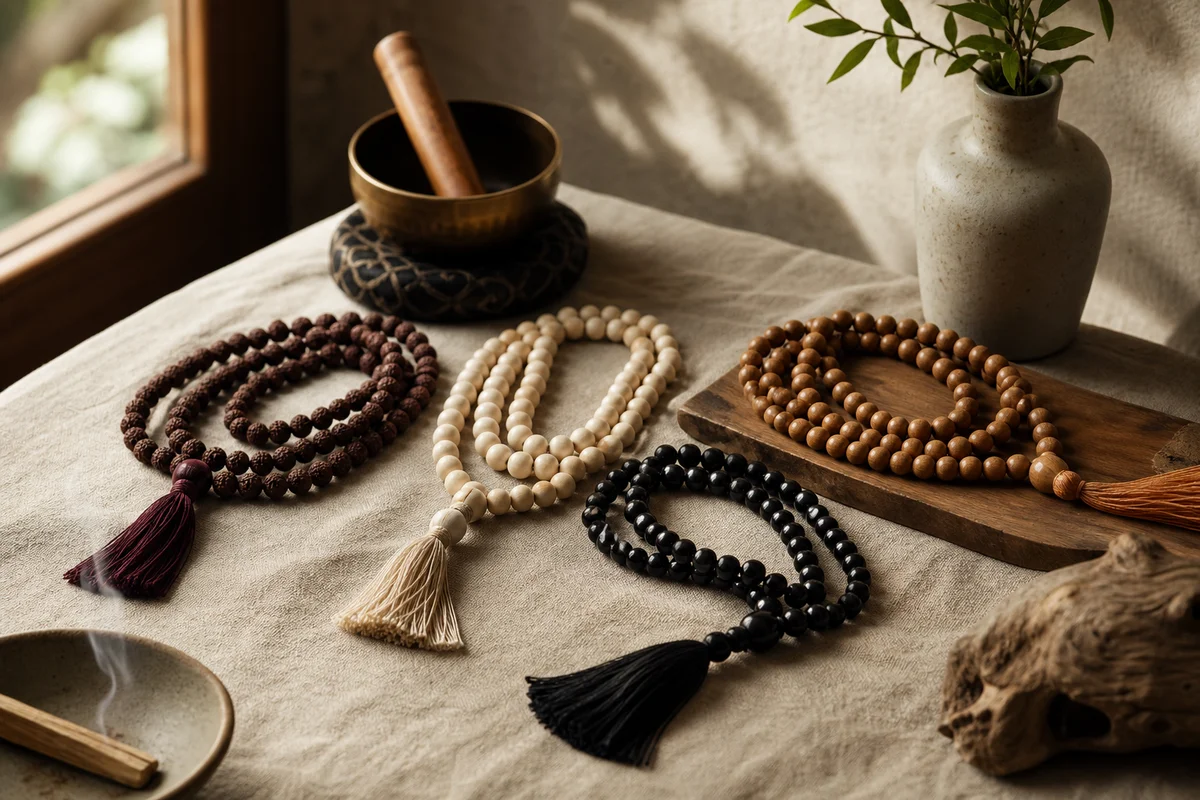
Why the Mala You Pick Actually Matters
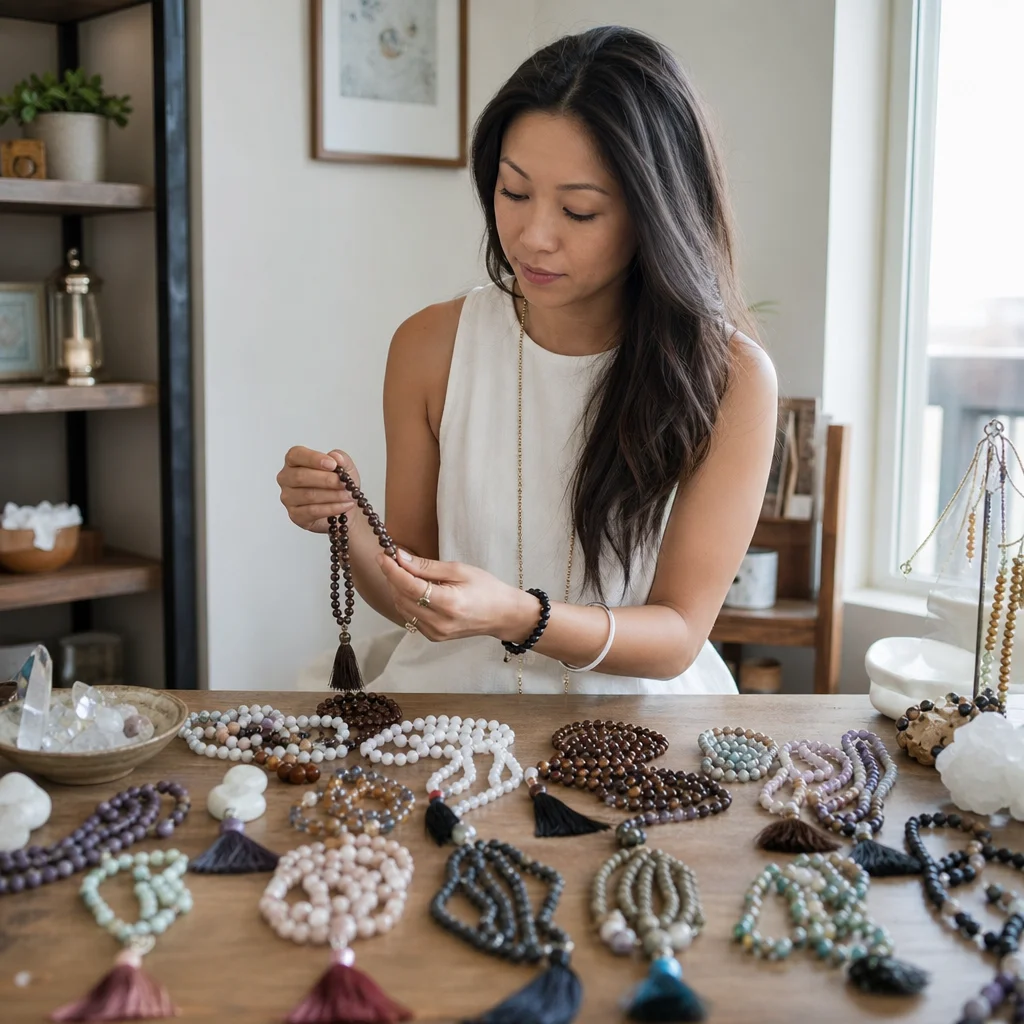
Walk into any crystal shop or scroll through an online store, and you'll find hundreds of mala options—garnet, sandalwood, rudraksha, lava stone, rose quartz, amethyst. The sheer variety can freeze you in place. I've been there, standing in front of a display wall for twenty minutes, unable to commit.
Here's the thing though: a mala isn't just jewelry. It's a tool you'll use hundreds—maybe thousands—of times during meditation. The bead material affects how it feels between your fingers, how long it lasts, and for many people, whether the practice feels meaningful at all. Choosing the right one comes down to three practical questions: What's your intention? What material suits that intention? And What fits your daily life?
Let me walk you through each one.
Start With Your Intention, Not the Prettiest Stone
It's tempting to pick the mala that looks best. I get it—turquoise and amethyst are gorgeous. But if your actual meditation goal is grounding and focus, a hematite or black tourmaline mala will serve you far better, even if it's less flashy.
Group your intention into one of these five categories:
Deepening Meditation
If you want to go deeper into your practice—longer sits, fewer distractions, sharper concentration—look for materials that have traditionally been associated with meditative clarity:
- Sandalwood — The scent alone helps anchor your attention. Mysore sandalwood is the gold standard, with a rich, lingering aroma that deepens over years of use.
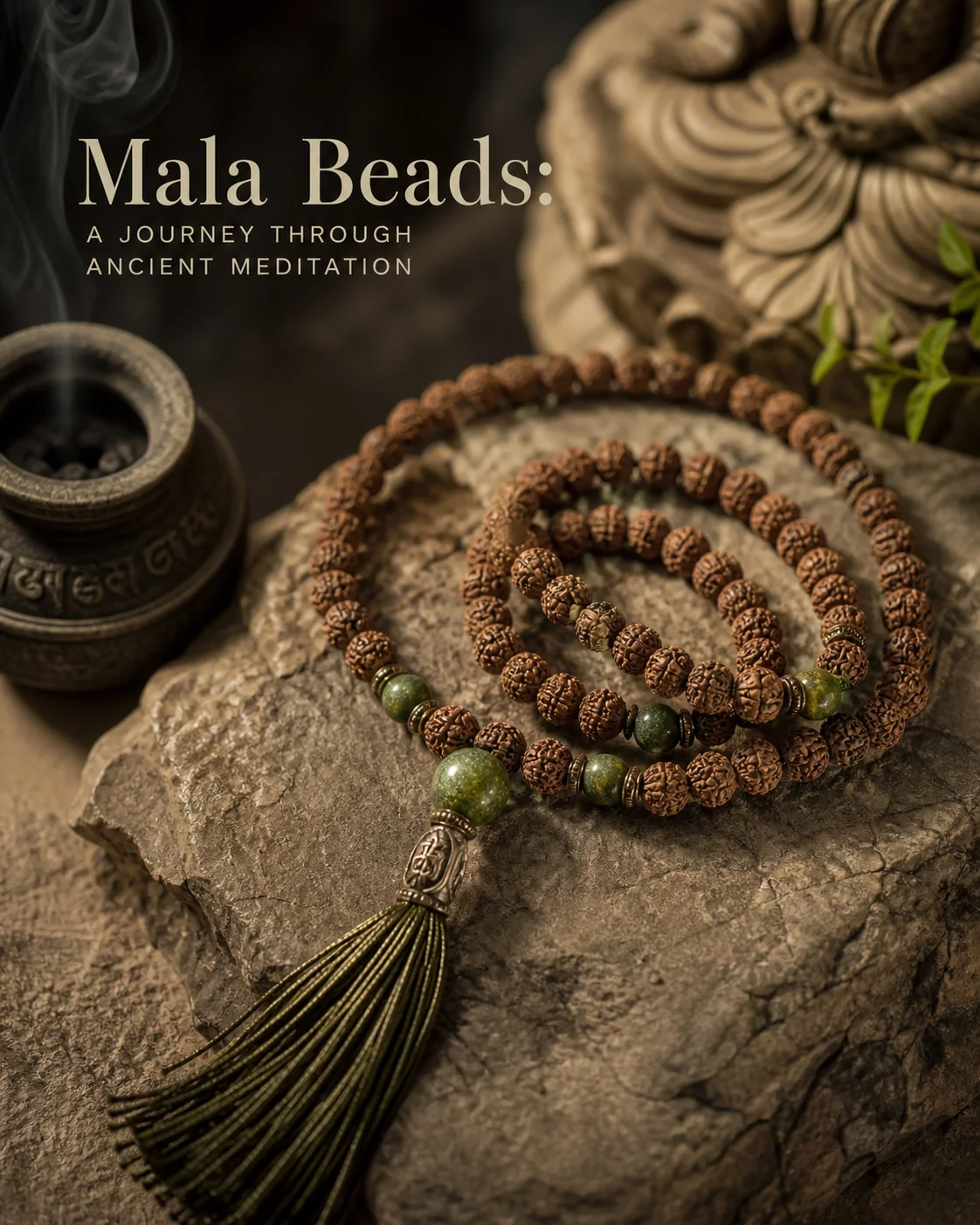
- Rudraksha — These seeds have a slightly textured surface that creates tactile feedback as you pass each bead. That physical sensation keeps your hands engaged and your mind from wandering.
- Clear quartz — In crystal traditions, clear quartz is considered an amplifier. The idea is that it intensifies whatever intention you bring to your practice.
- Lepidolite — A lithium-bearing mica mineral. Whether or not you buy into crystal properties, lepidolite has a soothing purple-pink color that many meditators find calming.
Sleep and Relaxation
If your primary goal is winding down at night or managing stress, prioritize calming materials:
- Amethyst — The most popular "calming" stone in crystal circles. Deep violet varieties are particularly sought after.
- Lepidolite — Same calming association, often used in worry stones and sleep-oriented pieces.
- Blue lace agate — A gentle banded stone in soft blue and white. It's lightweight and comfortable for nighttime wear.
- Howlite — White with grey veining, inexpensive, and commonly recommended for stress relief in crystal communities.
Protection and Grounding
Some people wear their mala as an everyday piece, wanting it to feel like a protective shield throughout the day:
- Black tourmaline — The heavyweight champion of "protection stones." It's dense, slightly heavy on the wrist, and many people report it feels stabilizing.
- Obsidian — Volcanic glass. Sharp-looking, affordable, and culturally significant across Mesoamerican traditions.
- Hematite — Metallic grey with serious heft. Grounding in the most literal sense—you feel the weight on your wrist.
- Tigers eye — Golden-brown with a silky chatoyant sheen. Often recommended for courage and confidence.
Love and Emotional Healing
If you're focusing on heart-opening practices, self-compassion, or attracting positive relationships:
- Rose quartz — The go-to love stone. Soft pink, widely available, and affordable enough that you can find a quality mala under $30.
- Rhodochrosite — Banded pink and white manganese carbonate. Rarer than rose quartz, with a warmer, more complex appearance.
- Green aventurine — Sometimes called the "stone of opportunity." Light green, translucent, and comfortable for daily wear.
- Strawberry quartz — Clear quartz with iron oxide inclusions that create a pinkish-red sparkle. Less common, often more expensive.
Energy and Motivation
For morning practices, creative work, or times when you need a boost:
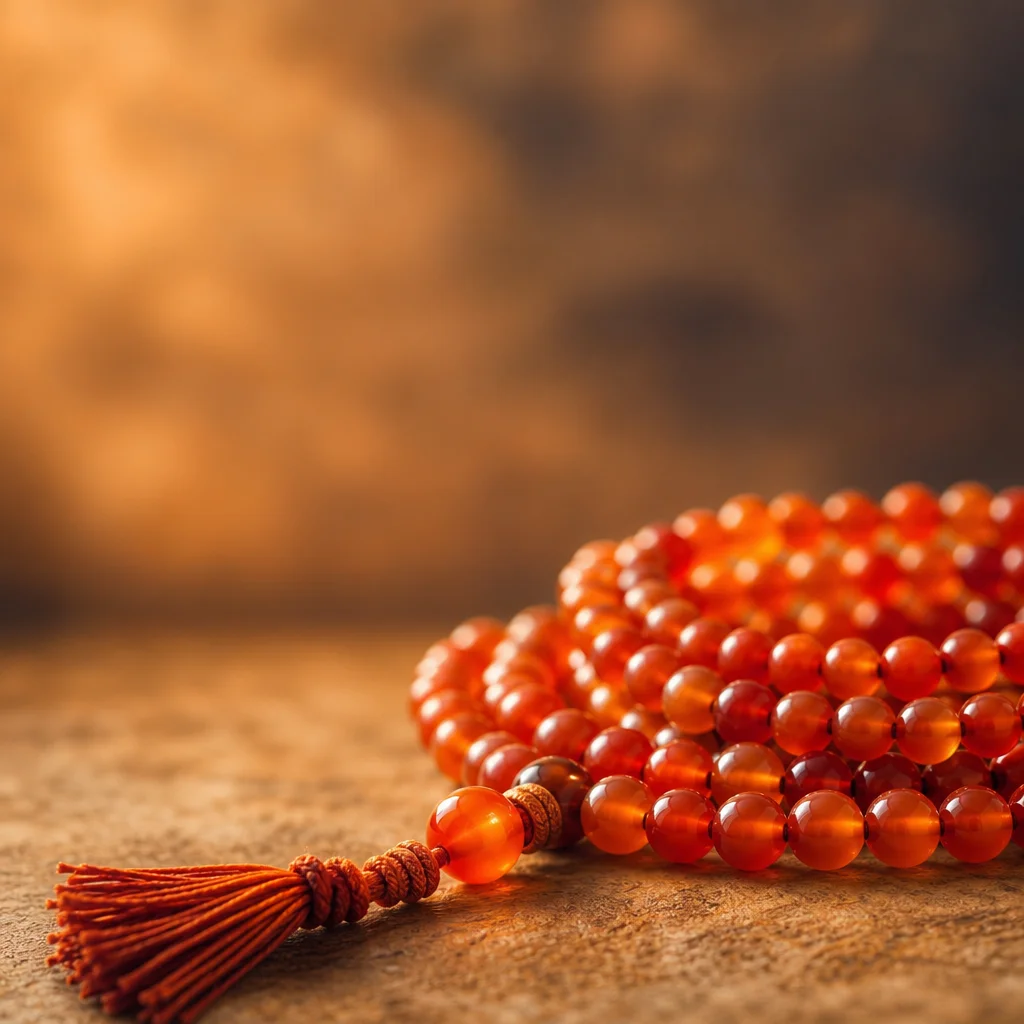
- Carnelian — Orange-red chalcedony. Warm-toned, energizing in appearance, and reasonably priced.
- Citrine — Yellow to amber. Natural citrine is rare; most on the market is heat-treated amethyst. Either way, the color is energizing.
- Sunstone — Orange with reflective inclusions of hematite or goethite that create a sparkly effect. Visually striking and less commonly seen on malas.
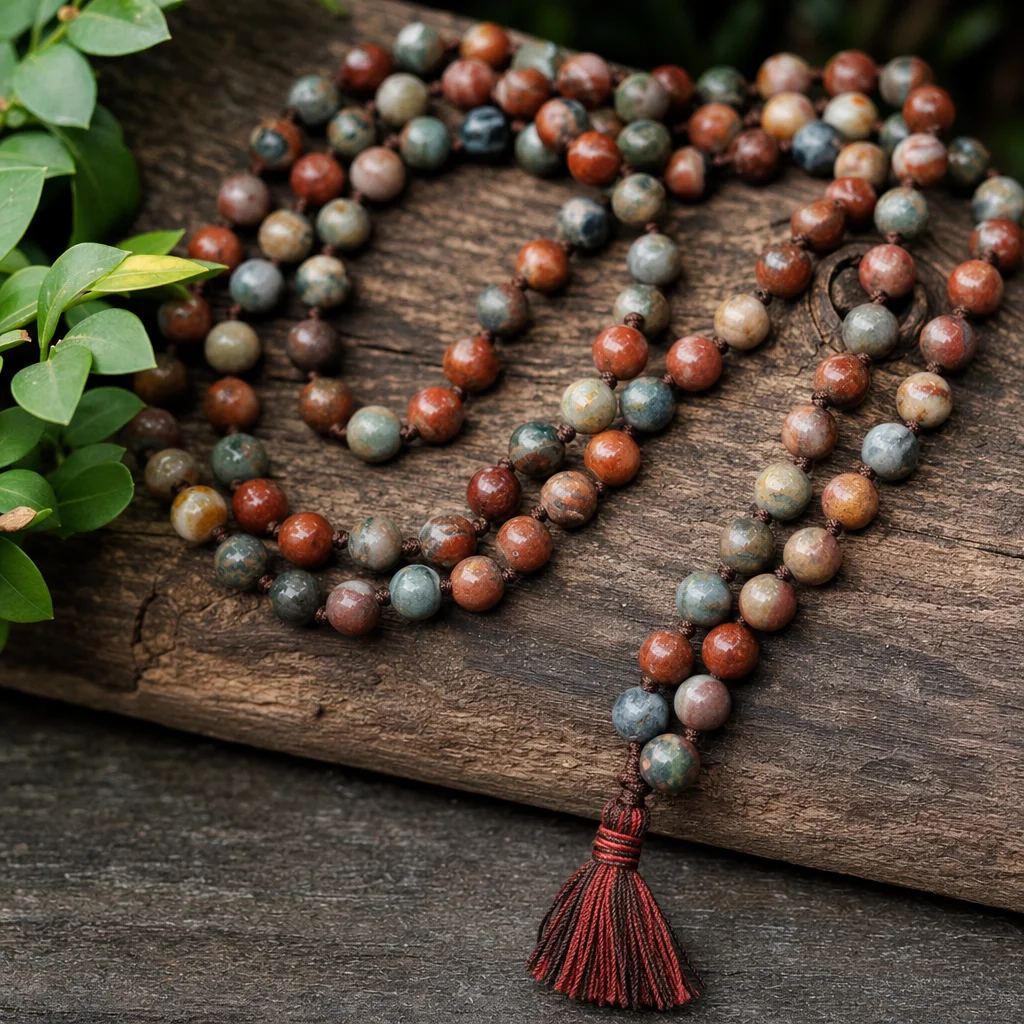
- Red jasper — Deep brick red, opaque, and very durable. A workhorse stone that can handle daily wear without worry.
Material Matters: Wood, Seed, or Stone?
Once you've narrowed your intention, the next question is which material type works for your lifestyle.
Wood Malas: Best for Scent and Simplicity
Sandalwood, rosewood, bodhi seed, and bamboo are the most common wooden malas. Their strengths are clear:
- Lightweight — you barely notice them on your wrist during long meditation sessions
- Naturally aromatic — sandalwood especially develops a richer scent over years of handling
- Affordable — most wooden malas cost $15-$40
- Durable enough for daily wear, though they can crack in very dry climates
The downside is maintenance. Wood dries out, so in arid environments you may need to apply a tiny amount of natural oil (jojoba or sandalwood oil) every few months. Avoid getting them wet repeatedly, as water can warp the beads and dull the finish.
Seed Malas: Best for Traditional Practice
Rudraksha and tulsi are the two big ones here. Rudraksha seeds have a natural uneven texture that many practitioners say helps maintain focus during japa (mantra repetition). Tulsi beads are lightweight and carry spiritual significance in Hindu traditions.
Seed malas are generally inexpensive ($10-$30) and very durable. Rudraksha in particular can last decades with minimal care. The main consideration is authenticity—fake rudraksha seeds (often carved from other woods) are common. Look for natural variations in size and shape; perfectly uniform beads are a red flag.
Stone Malas: Best for Beauty and Variety
This is the largest category and includes everything from amethyst to unakite to labradorite. Stone malas offer the most visual variety and the widest range of price points:
- Common stones (clear quartz, rose quartz, black tourmaline): $20-$50
- Mid-range (amethyst, lapis lazuli, moonstone): $40-$80
- Premium (larimar, moldavite, high-grade turquoise): $80-$200+
The trade-off is weight. A full 108-bead mala made from dense stones like hematite or obsidian can feel heavy, especially if you wear it as a wrapped bracelet. If weight is a concern, consider 6mm beads instead of 8mm, or a 54-bead half-mala.
Bead Count: 108, 54, 27, or 18?
The traditional full mala has 108 beads plus one guru bead. This number shows up across Buddhist, Hindu, and Jain traditions, and there are dozens of theories about why—108 Upanishads, 108 earthly desires in Buddhism, the distance between the earth and sun in sun diameters, and more. Practically, 108 repetitions of a mantra takes about 15-20 minutes at a relaxed pace, which is a solid meditation session length.
But you don't have to start with 108. Shorter malas have practical advantages:
- 108 beads — Full traditional length. Best for dedicated seated meditation. Wraps 4-5 times around most wrists as a bracelet.
- 54 beads — Half mala. Good for shorter sessions (8-10 minutes) or people who find 108 tedious. Wraps 2-3 times as a bracelet.
- 27 beads — Quarter mala, often worn on a single wrist wrap. Perfect for quick grounding exercises or counting breaths during a commute.
- 18 beads — Often used as a pocket mala or worn as a simple bracelet. Minimalist option.
If you're new to mala meditation, start with 27 or 54. There's no rule that says you must begin at 108. Many experienced practitioners use shorter malas for specific purposes—a 27-bead wrist mala for anxiety management throughout the day, and a 108-bead full mala for morning practice.
Bead Size: 6mm, 8mm, or 10mm?
Bead size affects both comfort and how the mala drapes:
- 6mm — Light, comfortable for wrist wrapping, less visually prominent. A 108-bead 6mm mala is about 22 inches long.
- 8mm — The most common size. Good balance of visibility and comfort. A 108-bead 8mm mala is about 33 inches long.
- 10mm — Bold and chunky. Each bead is easy to feel during practice. A 108-bead 10mm mala is about 40+ inches and can feel heavy.
For daily bracelet wear, 6mm is the sweet spot—it wraps more times and sits more comfortably. For seated meditation where the mala hangs in a loop, 8mm is ideal. Save 10mm for necklaces or if you specifically want larger, more tactile beads.
The Guru Bead: More Than Decoration
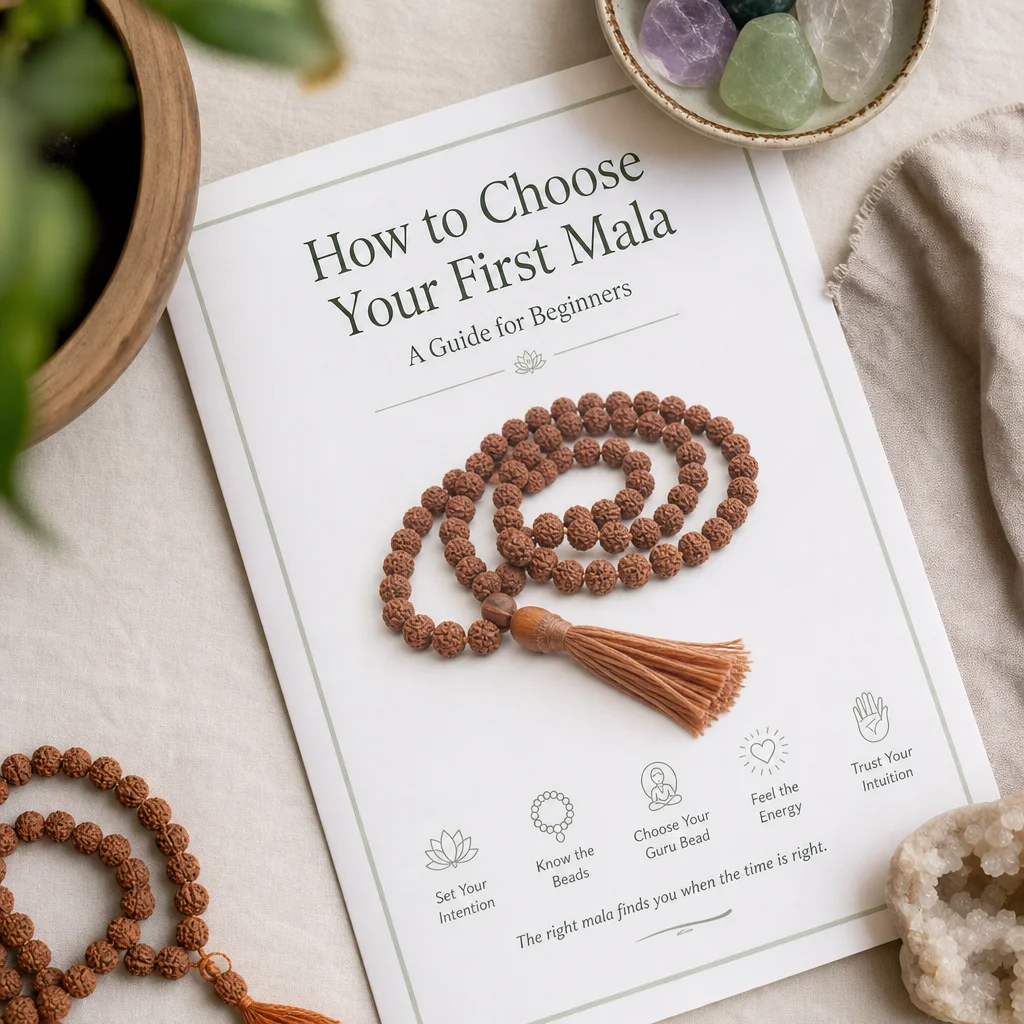
The guru bead (also called the meru bead or sumeru bead) is the larger bead at the center of a traditional mala. It marks the start and end point of your count. When you reach it during meditation, you don't pass over it—you reverse direction and go back the other way.
Common guru bead materials include:
- Matching stone/seed — Same material as the rest of the mala, just larger
- Silver or copper spacer — A metal bead or set of three small beads that clearly marks the division point
- Carved lotus or om symbol — Decorative but still functional
The tassel below the guru bead is traditional but optional. Some people prefer a clean finish without it. If the tassel gets frayed or dirty, you can carefully trim it or replace it—most attach with a simple knot underneath the guru bead.
How to Test If a Mala "Fits" You
Beyond the logical considerations of intention and material, many practitioners talk about an intuitive connection with their mala. Here's a practical way to test it:
The Three-Day Test
- Day 1 — Hold it. Sit with the mala in your hands for five minutes. Run your fingers over each bead. Notice if the texture, weight, and temperature feel pleasant or annoying.
- Day 2 — Wear it. Wear it for a full day, either wrapped on your wrist or as a necklace. Does the weight bother you? Does it snag on clothing? Does the color clash with your wardrobe in a way that would make you reluctant to wear it regularly?
- Day 3 — Practice with it. Do one full meditation session (even just 10 minutes) using the mala for mantra counting. Does the practice feel natural or forced? Do you find yourself distracted by the beads, or does counting them help you focus?
If after three days the mala feels like something you'd reach for naturally, it's a good fit. If you keep forgetting to put it on or feel relieved when you take it off, try a different material or style.
Budget Guide: What to Expect at Each Price Point
Under $25
You can find basic wood malas (non-sandalwood), seed malas (tulsi, basic bodhi seed), and common stone malas (dyed howlite, basic clear quartz, glass "crystal" malas). At this price, be cautious of misleading listings—"natural amethyst" for $12 is almost certainly dyed glass or synthetic. Stick to straightforward materials like wood and seed if you're on a tight budget.
$25-$50
This is the sweet spot for genuine stone malas. You'll find real amethyst, rose quartz, black tourmaline, tiger's eye, and basic rudraksha. Sandalwood malas start appearing around $30, though these are usually younger wood with lighter scent. Quality at this range is generally reliable from reputable sellers.
$50-$100
Premium stones enter the picture: lapis lazuli, moonstone, labradorite, high-grade amethyst, and genuine Mysore sandalwood. The craftsmanship improves too—you'll see better knotting between beads, stronger cord, and more thoughtful guru bead choices. This is where mala purchases transition from "tool" to "keepsake."
$100+
Rare materials, artisan craftsmanship, and often custom designs. Think larimar, high-grade turquoise, genuine amber, or malas with gold vermeil guru beads and silk tassels. At this level, you're paying for both the materials and the maker's skill. If you're investing this much, buy from makers who disclose exactly what you're getting—stone origin, treatment status, and bead size.
Common Mistakes When Choosing a Mala
Matching Every Chakra
Seven-chakra malas—those with seven different colored stones, one for each chakra—look appealing in photos but can feel disjointed in practice. When you're meditating, the shifting textures and colors can be distracting rather than harmonizing. Most experienced practitioners prefer a single-material mala for focused practice.
Ignoring Cord Quality
The cord holding your beads together matters more than most people think. Silk and nylon are the strongest options. Cotton looks natural but stretches and weakens over time. If a mala arrives with visible gaps between beads (string too loose), it's likely to break within months. Well-made malas should have beads sitting snugly against each other with no visible cord between them.
Buying Based on Trend
Moldavite malas were everywhere in 2023-2024, and while the stone is genuinely unusual (formed from a meteorite impact), the hype inflated prices enormously. Similarly, "super seven" (a specific mineral combination) and "aura quartz" (titanium-coated quartz) command premium prices that aren't always justified by the material. Buy what resonates with your practice, not what's trending on social media.
Getting a Mala That's Too Heavy
A 108-bead 8mm obsidian mala weighs roughly 150-200 grams. That's like wearing a small apple on your wrist all day. If you plan to wear your mala regularly, lighter materials (wood, seed, or 6mm stone beads) are far more practical.
Caring for Your Mala Once You've Chosen
Regardless of what you pick, basic care extends its life significantly:
- Store flat — Hanging a mala stretches the cord unevenly. Keep it coiled in a cloth pouch or flat on a surface.
- Keep away from water — Unless it's specifically a water-safe stone (quartz varieties), avoid wearing your mala in the shower or pool.
- Clean gently — A soft, dry cloth is usually enough. For wood malas, a tiny drop of appropriate oil every few months prevents cracking.
- Restring before it breaks — If you notice the cord fraying or gaps appearing between beads, get it restrung. Most bead shops and some jewelry repair services offer this for $10-$20.
Frequently Asked Questions
Can I use a mala even if I'm not religious?
Absolutely. Many people use malas purely as a mindfulness tool—counting breaths, setting intentions, or simply as a tactile anchor during stressful moments. The religious and spiritual associations are a tradition, not a requirement.
Should I wear my mala on my left or right wrist?
In Hindu tradition, the left hand is considered receptive, so many practitioners wear malas on the left wrist. In Buddhist practice, it varies. Practically, wear it wherever it feels comfortable—there's no universal rule, and modern practitioners generally don't worry about this.
What if I'm drawn to a mala that doesn't "match" my intention?
That pull matters. If you keep coming back to a particular mala despite it not being the "logical" choice for your stated intention, trust that. Intuition plays a genuine role in choosing objects you'll use daily. A tool you love using is always better than a tool you "should" use.
Can I combine different stone types on one mala?
Yes, and this is common with custom malas. A popular combination is rose quartz and amethyst for a love-and-calm blend. Just keep in mind that different stones have different hardnesses—soft stones like fluorite (Mohs 4) can scratch when adjacent to harder stones like quartz (Mohs 7).
Frequently Asked Questions
How do I cleanse and charge my crystal mala beads?
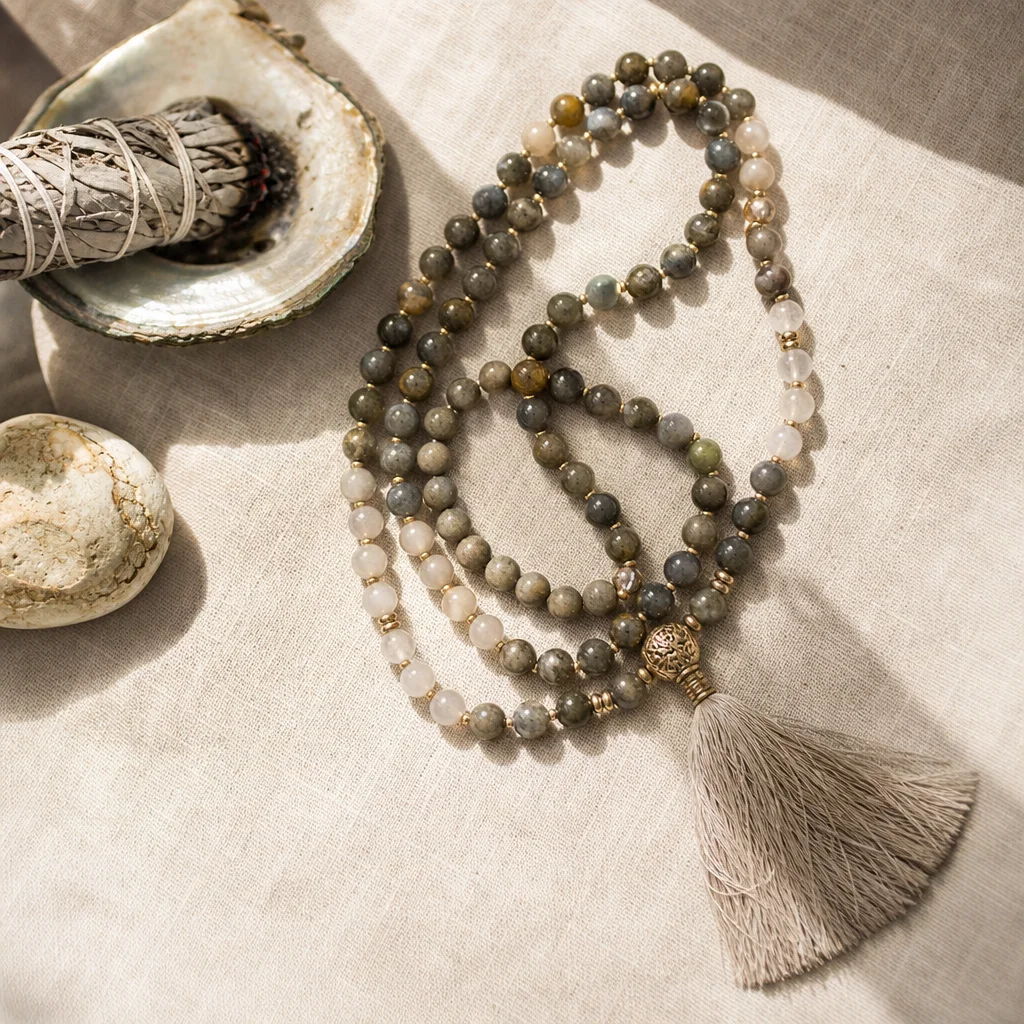
Because our handcrafted malas are made with natural stones, they absorb energy over time. To cleanse your crystal beads, you can place them in moonlight overnight, use a singing bowl, or smudge them with sage or palo santo. Avoid water, as it can damage the delicate threading cord and certain softer stones. Charging them with your specific meditation intention keeps the energy vibrant.
Comments