Mala Beads for Manifestation: Set Intentions ...
May 29, 2026
Manifestation gets a bad reputation because people treat it like a vending machine — insert wish, press button, receive outcome. That is not how it works, and it is not how mala beads were ever intended to be used. In the traditions where mala beads originated — primarily Buddhism and Hinduism — the practice of japa (repetitive recitation) is about training the mind, not ordering from the universe.
What mala meditation actually does is give you a structured way to clarify what you want, repeat it with full attention, and embed that clarity into your daily awareness. The crystal beads add a sensory and symbolic dimension. Whether or not you believe the stones have intrinsic properties, the act of choosing a specific crystal for a specific intention makes the practice more personal and more memorable.
Here is a complete guide to using mala beads for manifestation — from choosing your stone to completing your first 108-bead practice.
Choosing the Right Crystal Mala for Your Intention
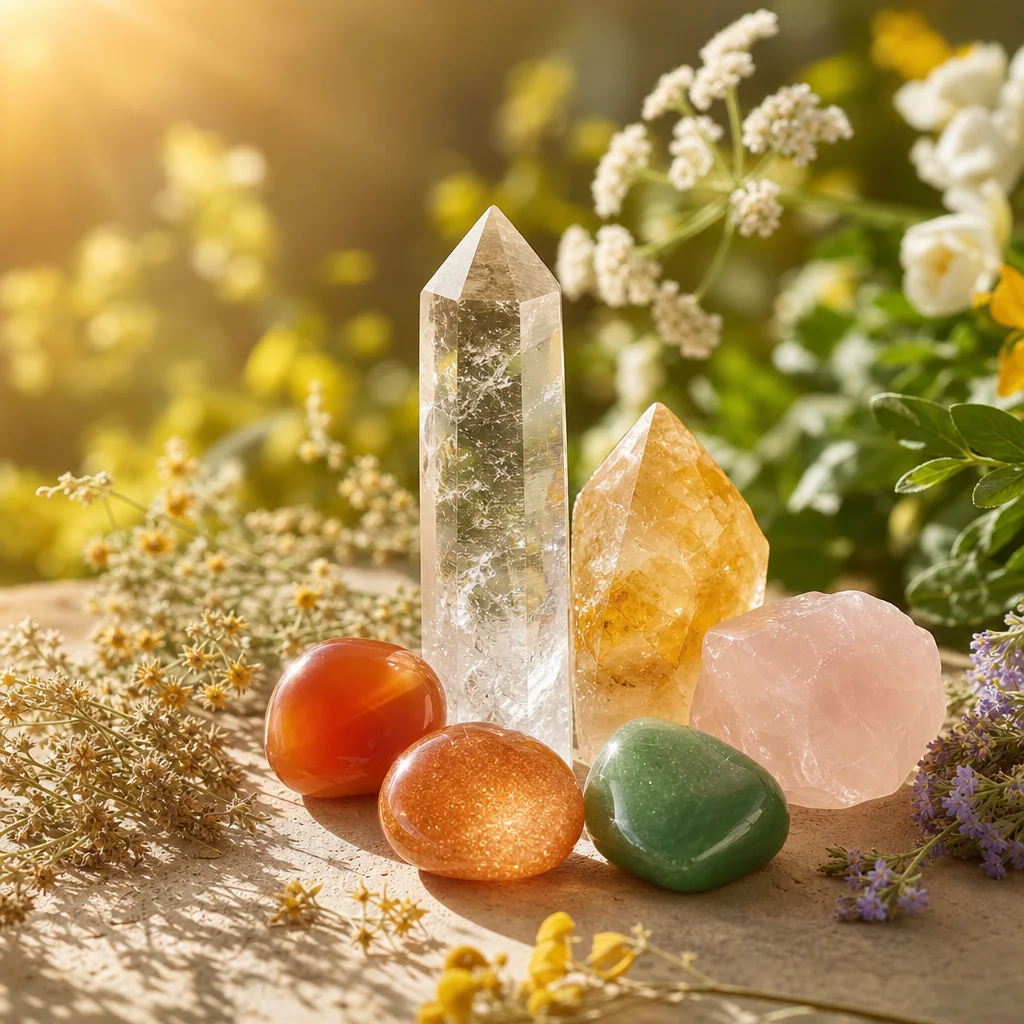
Different crystals carry different traditional associations. You do not have to follow these correspondences, but they provide a useful framework if you are new to the practice:
Citrine mala — Intention: Abundance, career success, financial goalsCitrine's golden color has been associated with prosperity across cultures. If your manifestation relates to income, career advancement, or financial security, a citrine mala gives you a warm, energizing bead to focus on.
Rose quartz mala — Intention: Love, self-compassion, relationship healingRose quartz is the classic heart stone. Use it for intentions around finding love, improving an existing relationship, or — often overlooked — cultivating self-love and self-acceptance.
Amethyst mala — Intention: Spiritual growth, intuition, breaking bad habitsAmethyst's connection to clarity and sobriety (the Greek root "amethystos" means "not intoxicated") makes it suitable for intentions around spiritual development, releasing addictions, or trusting your own judgment.
Black tourmaline mala — Intention: Protection, boundaries, releasing negativityIf your intention involves creating healthy boundaries, protecting yourself from a toxic environment, or letting go of negative thought patterns, black tourmaline provides a grounding, heavy bead that feels substantial between your fingers.
Clear quartz mala — Intention: Any goal (the universal amplifier)Clear quartz is the blank canvas of crystals. If you do not feel drawn to a specific stone, or if your intention does not fit neatly into one category, clear quartz works as an all-purpose mala material.
Lapis lazuli mala — Intention: Truth, self-expression, creative goalsLapis lazuli has been associated with communication and truth since ancient Egypt. Use it for intentions around speaking your truth, pursuing creative projects, or living authentically.
The Concept of Sankalpa (Intention)
In the yogic tradition, a sankalpa is a heartfelt intention — not a casual wish but a statement that reflects a deep truth you want to embody. The difference matters. "I want to be rich" is a wish. "I am building financial stability through disciplined action" is a sankalpa.
A good sankalpa has three qualities:
Writing Your Personal Mantra
Your mantra is the phrase you will repeat 108 times during japa meditation. It can be your sankalpa or a shortened version of it. Here are examples organized by intention type:
Abundance:
- "I attract opportunities aligned with my purpose"
- "My actions create prosperity"
- "I am worthy of financial abundance"
- "I give and receive love openly"
- "I am worthy of deep connection"
- "My heart is open to love in all forms"
- "I honor my body with healthy choices"
- "I am healing and growing stronger"
- "I release what does not serve my well-being"
- "I share my gifts with confidence"
- "My work makes a meaningful difference"
- "I am stepping into my full potential"
- "I trust my inner wisdom"
- "I am connected to something greater than myself"
- "I release attachment and embrace presence"
How to Use Mala Beads for Japa Meditation
Preparation
The Practice
Common Mistakes
- Rushing. Japa is not a speed test. If you catch yourself racing through the beads, slow down. One mantra per breath is a good pace.
- Falling asleep. If you are so relaxed that you nod off, you might be too comfortable. Try sitting in a chair instead of lying down.
- Skipping beads. It is easy to lose count when the mind wanders. If you realize you skipped, do not go back — just continue from where you are. The exact count matters less than the sustained attention.
- Overcomplicating it. You do not need incense, candles, special clothing, or a perfectly curated altar. You need a mala, a mantra, and a quiet place to sit.
The 21-Day Manifestation Challenge
If you want to build a sustained practice, try this structured approach:
Week 1 (Days 1-7): Five minutes per day, one round of 108 beads. Focus on learning the mechanics — how the beads feel, how to pace your breathing, how to handle distractions.
Week 2 (Days 8-14): Ten minutes per day. Start with one round of 108 beads, then sit in silent meditation for the remaining time. Let your mind settle after the active recitation.
Week 3 (Days 15-21): Fifteen to twenty minutes per day. Add a brief journaling session after meditation — write down any insights, shifts in perspective, or action steps that came up during practice.
After 21 days, evaluate. Did your intention become clearer? Did you notice changes in your behavior, decisions, or mindset? The "manifestation" happens not through mystical intervention but through the compound effect of daily clarity and focused attention.
Making It Your Own
The structure above is a starting point. As you develop a regular practice, you will naturally adapt it:
- Use different malas for different intentions
- Change your mantra as your goals evolve
- Meditate at different times of day to find what works best
- Combine japa with other practices (breathwork, visualization, gratitude journaling)
That is the real mechanism. Not magic — structure, repetition, and clarity.
Crystals are not a substitute for medical treatment. The traditional and cultural practices described in this article are presented for informational and educational purposes.
Frequently Asked Questions
How do I cleanse and charge my mala beads?
Cleanse your mala beads regularly to keep their energy clear and vibrant. Place them under moonlight overnight, especially during a full moon, or smudge them with sage or palo santo. You can also use sound healing with singing bowls. Trust your intuition—when your mala feels heavy or dull, it's time for a cleanse. Store your beads in a sacred space when not in use.
Which hand should I hold my mala beads during meditation?
Traditionally, mala beads are held in the right hand during Japa meditation. The mala drapes over your middle finger, and you use your thumb to move from bead to bead while reciting your mantra. The index finger stays extended and doesn't
Frequently Asked Questions
How do I choose the right crystal mala for manifestation?
Choosing the perfect handcrafted mala depends entirely on your specific goals. For example, if you want to manifest love, rose quartz is ideal, while citrine is perfect for abundance. Trust your intuition when selecting your natural stone jewelry. At SagStone, we believe the right energy will naturally draw you to the piece you need most for your daily spiritual practice.
How do I write a personal mantra for my mala beads?
Your personal mantra should be a positive, present-tense phrase that aligns with your sankalpa, or heartfelt intention. Instead of saying "I want to be confident," use "I am radiantly confident." By repeating this phrase across each of the 108 beads during your japa meditation, you deeply imprint your desires into your mind and the beautiful gemstones themselves.
Can I use the same mala for different intentions?
While you can use one mala for multiple goals, we highly recommend dedicating each artisan-crafted piece to a single intention. This prevents mixed energetic signals and allows the natural crystals to attune fully to your specific manifestation practice. Over time, your handcrafted SagStone mala becomes a powerful, focused talisman for your unique spiritual journey.

Comments