Why 108 Beads? The Sacred Meaning Behind Mala
May 28, 2026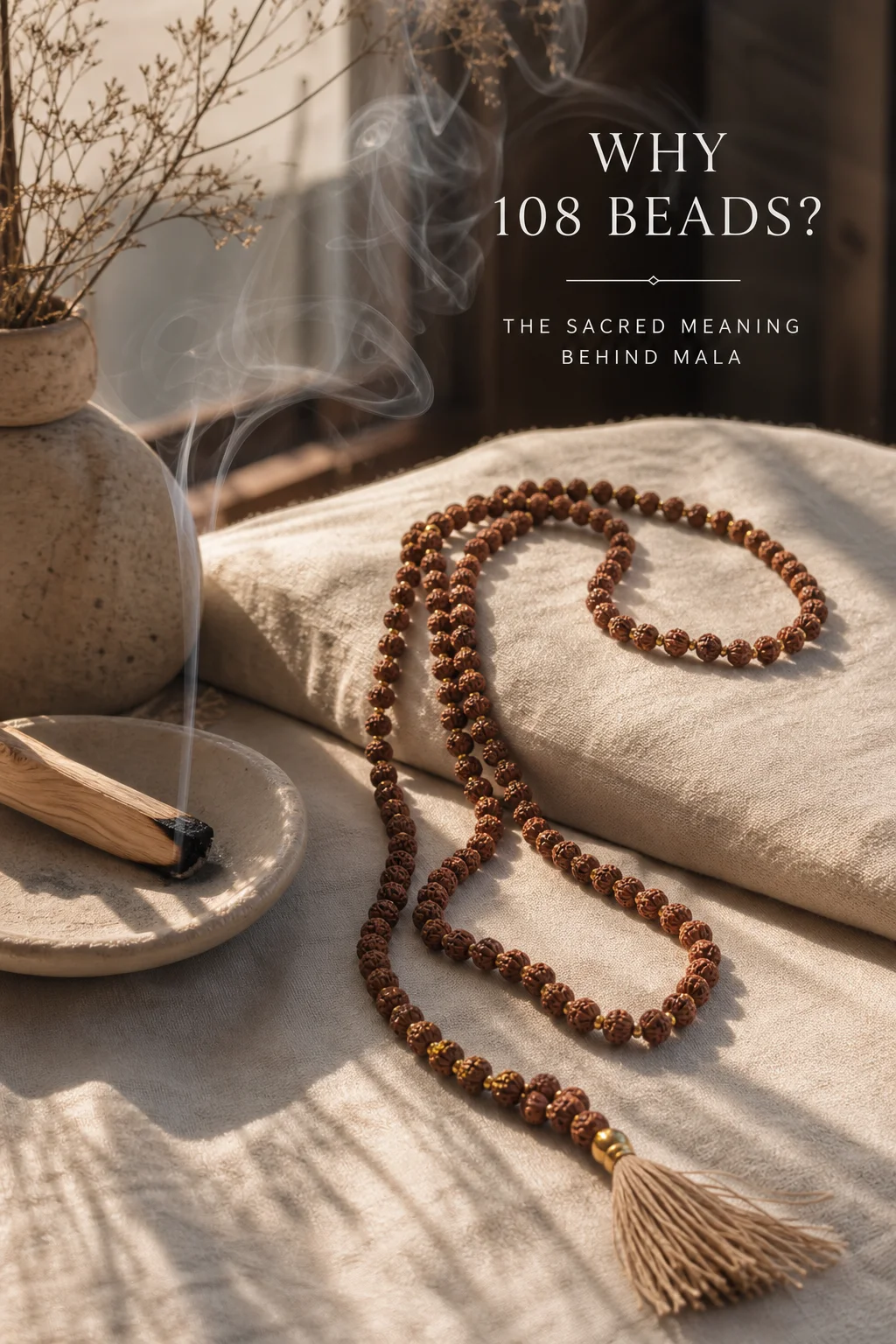
The Number That Shows Up Everywhere
If you've ever counted the beads on a traditional mala necklace, you already know the answer: 108. Not 100, not 110 — exactly 108. And if you start looking for this number in spiritual traditions, mathematics, and astronomy, you'll find it everywhere, which is exactly why it's been considered sacred across multiple cultures for thousands of years.
But here's what most articles about "108 beads meaning" get wrong: they list a bunch of coincidences (there are 108 Upanishads! The distance from the Earth to the Sun is 108 times the Sun's diameter!) and present them as if ancient people somehow knew all of these facts and chose 108 because of them. The reality is more interesting: 108 emerged independently in multiple traditions for a combination of practical, mathematical, and spiritual reasons, and the coincidences with astronomy and mathematics are genuine but probably not the original reason the number was chosen.
Let's break down the actual significance of 108 from every angle — historical, mathematical, astronomical, and practical — so you can understand not just what 108 means but why it matters for your meditation practice.
The Mathematical Significance of 108
Before we get into spiritual traditions, the mathematics of 108 is genuinely interesting on its own:
- 108 is a Harshad number — in Sanskrit, "Harshad" means "joy-giver." A Harshad number is divisible by the sum of its digits: 1 + 0 + 8 = 9, and 108 ÷ 9 = 12. This mathematical property was known to Indian mathematicians centuries before the concept was formalized in Western mathematics.
- 108 is divisible by 2, 3, 4, 6, 9, 12, 18, 27, 36, and 54 — this makes it an incredibly practical number for dividing things into equal parts. A mala of 108 beads can be divided into quarters (27 beads each), thirds (36 beads each), or halves (54 beads each), and each division still represents a meaningful count.
- 1^1 × 2^2 × 3^3 = 108 — this elegant mathematical relationship was noted by Indian mathematicians and is sometimes cited as a reason for the number's significance.
The mathematical properties of 108 make it an excellent choice for a counting tool in meditation. It's large enough to sustain a meaningful practice session but not so large that it becomes unwieldy. And its divisibility means that shorter practices (using 27 or 54 beads, which are also common mala lengths) are clean fractions of the full count.
108 in Hindu Tradition
In Hinduism, 108 appears in several specific contexts:
The 108 Upanishads
The Upanishads are the philosophical texts that form the foundation of Hindu thought. Of the over 200 known Upanishads, 108 are considered "principal" Upanishads — the core texts that have been studied and commented on by scholars across centuries. Reciting a mantra 108 times is sometimes described as paying homage to each of these 108 sacred texts.
108 Names of Deities
Most major Hindu deities have 108 names or epithets. The practice of reciting the 108 names of a deity (called a "Namavali") is a common form of devotional practice. Each name describes a different aspect or quality of the deity, and reciting all 108 is considered a complete form of worship.
The Dance of Shiva: 108 Karnas
In Hindu mythology, Shiva's cosmic dance (the Tandava) includes 108 classical poses called Karnas. The connection between dance and meditation is deeper than it might seem — both involve rhythm, repetition, and the transcendence of ordinary awareness through movement and focus.
108 Sacred Sites (Pithas)
According to Hindu tradition, there are 108 sacred pilgrimage sites (Shakti Pithas) scattered across the Indian subcontinent, each associated with a specific part of the goddess Sati's body. Completing a pilgrimage to all 108 is considered spiritually complete.
108 in Buddhist Tradition
Buddhism adopted the significance of 108 from Hindu traditions but added its own specific interpretations:
The 108 Defilements (Kleshas)
In Buddhist philosophy, there are 108 mental defilements or obstacles to enlightenment. These are categorized as follows: 3 poisons (ignorance, attachment, aversion) × 3 times (past, present, future) × 3 vehicles (thought, word, action) × 2 responses (indulging or repressing) × 2 conditions (manifest or latent) = 108. Each bead on a mala represents the purification of one defilement.
Whether you take this multiplication literally or as a symbolic framework, it's a useful way to think about mala meditation: each bead represents an opportunity to release a specific mental pattern that causes suffering.
The 108 Prostrations
In Tibetan Buddhism, practitioners often perform 108 prostrations as a preliminary practice. This physical practice — bowing completely to the ground 108 times — is both a physical discipline and a moving meditation that uses the body to cultivate humility and devotion.
108 Beads on the Tibetan Mala
Tibetan Buddhism places particular emphasis on the mala as a meditation tool. Tibetan malas traditionally include 108 counting beads plus additional marker beads (often at positions 7, 21, and 54) that help the practitioner track their progress without losing count. The guru bead (the large bead at the center where the mala closes) is not counted among the 108 — it represents the teacher or the buddha nature within.
The Astronomical Coincidences
Here's where 108 gets genuinely uncanny:
- Sun and Earth: The diameter of the Sun is approximately 108 times the diameter of the Earth. (Actual ratio: 109, but 108 is remarkably close, especially given that this relationship was noted in ancient Indian astronomical texts.)
- Sun and Moon distance: The average distance from the Earth to the Sun is approximately 108 times the Sun's diameter.
- Moon and Earth distance: The average distance from the Earth to the Moon is approximately 108 times the Moon's diameter.
- Sacred rivers: Some traditions count 108 sacred rivers in India, though different lists have different numbers.
Are these coincidences meaningful? That depends on your framework. If you're looking for evidence that ancient Indians had precise astronomical knowledge, the answer is probably not — the ratios are close but not exact, and similar coincidences can be found for other numbers if you look hard enough. But as a way to connect your meditation practice to the cosmos, the associations are genuinely beautiful and can add a dimension of wonder to your mala practice.
The Practical Reason: Why 108 Works for Meditation
Setting aside all the spiritual and mathematical associations, 108 is a practical number for meditation for several reasons:
It Takes About 15-20 Minutes
A typical mantra recitation at a comfortable pace takes about 15-20 minutes for 108 repetitions. This is consistent with meditation research showing that 15-20 minutes is an effective session length for stress reduction, improved focus, and emotional regulation. The number 108 naturally produces a meditation session of optimal length.
It's Long Enough to Settle the Mind
In meditation, the first few minutes are typically the noisiest — your mind is still chattering about your day, your to-do list, that embarrassing thing you said three years ago. By around repetition 30-40, most people notice a shift. The mind starts to settle. By repetition 70-80, you might experience genuine stillness. Reaching 108 gives you time to move through the noisy phase into the quiet phase without rushing.
Marker Beads Create Natural Rest Points
Most 108-bead malas have marker beads at the quarter points (27, 54, 81). These give you natural moments to pause, check in with your posture, and take a deeper breath. They break the practice into manageable segments rather than feeling like one long undifferentiated string of repetition.
The Structure of a 108-Bead Mala
Understanding the anatomy of a mala deepens your relationship with it:
| Component | Position | Significance |
|---|---|---|
| 108 counting beads | Main loop | One mantra repetition per bead |
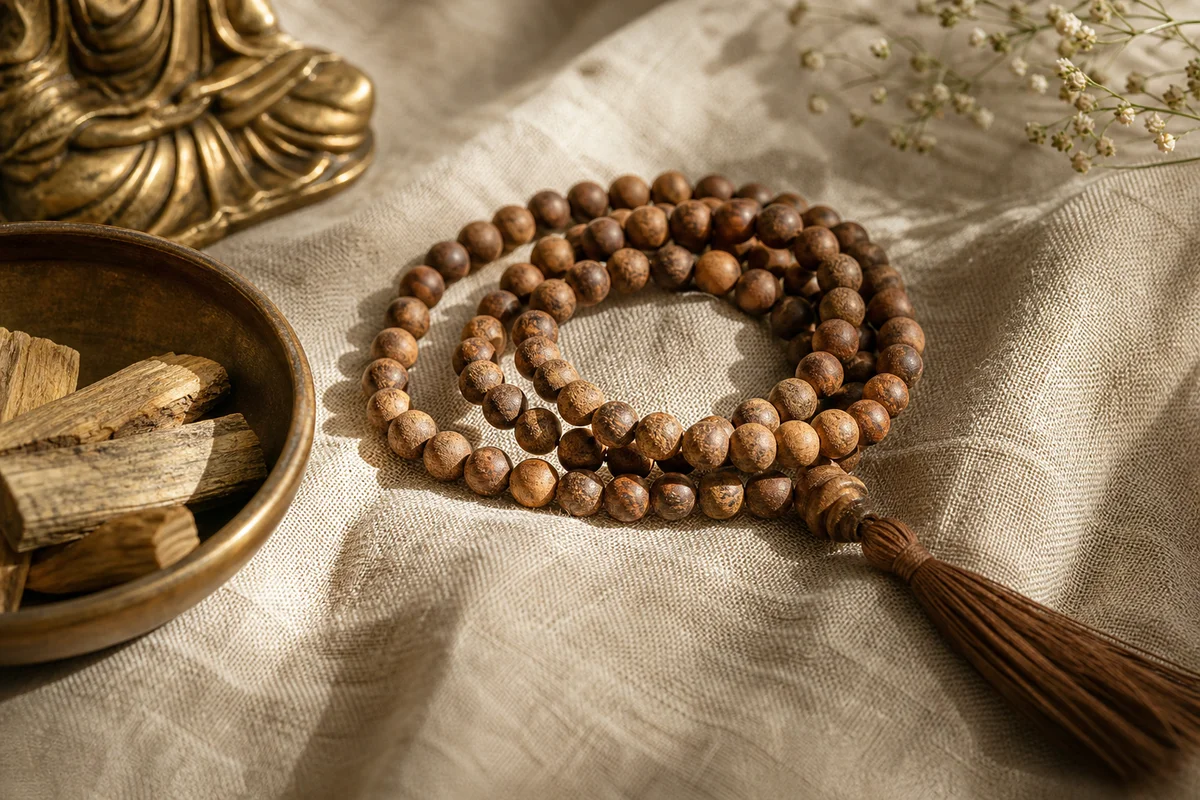
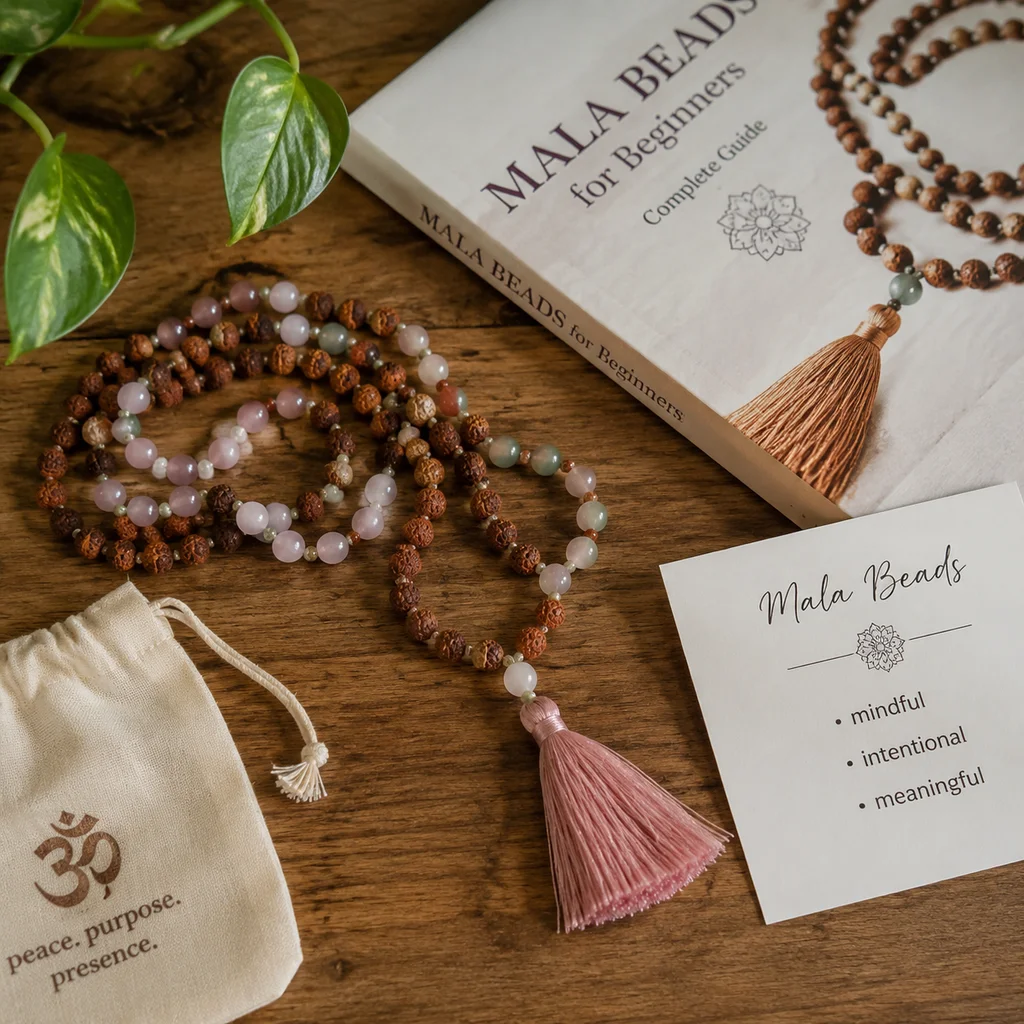
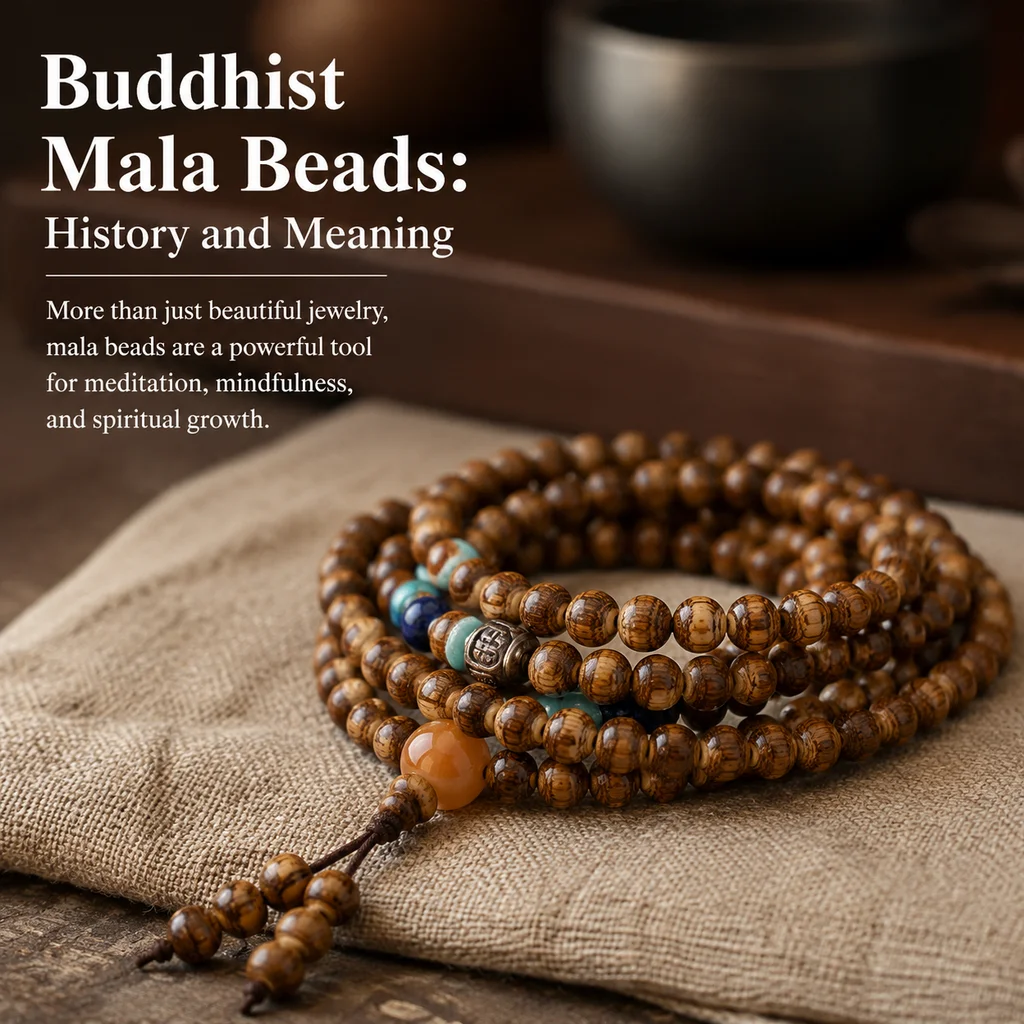
| Guru bead (Meru) | Center, where the loop closes | Represents the teacher, the divine, or your highest self. Never crossed — when you reach it, you reverse direction. |
| Marker beads | Typically at 7, 21, 27, 54, 81 | Rest points and progress trackers. In some traditions, the beads at positions 7 and 21 are for shorter practices. |
| Tassel | Below the guru bead | Represents the roots of a lotus — groundedness. Also symbolizes the connection between the practitioner and all beings. |
| Pendant/charm | Optional, on the tassel | Personal significance — a symbol of your intention or practice. |
Why You Never Cross the Guru Bead
In traditional practice, when you reach the guru bead after completing 108 repetitions, you don't cross over it to continue. Instead, you pause, express gratitude (a silent "thank you" or a bow), and reverse direction, counting back the way you came. Crossing the guru bead is considered disrespectful — it would be like walking over your teacher rather than around them.
From a practical standpoint, this reversal serves a purpose: it prevents you from losing count during extended sessions (doing multiple rounds of 108). Each reversal marks the completion of one full round.
Shorter Mala Lengths and Their Uses
Not every meditation requires all 108 beads:
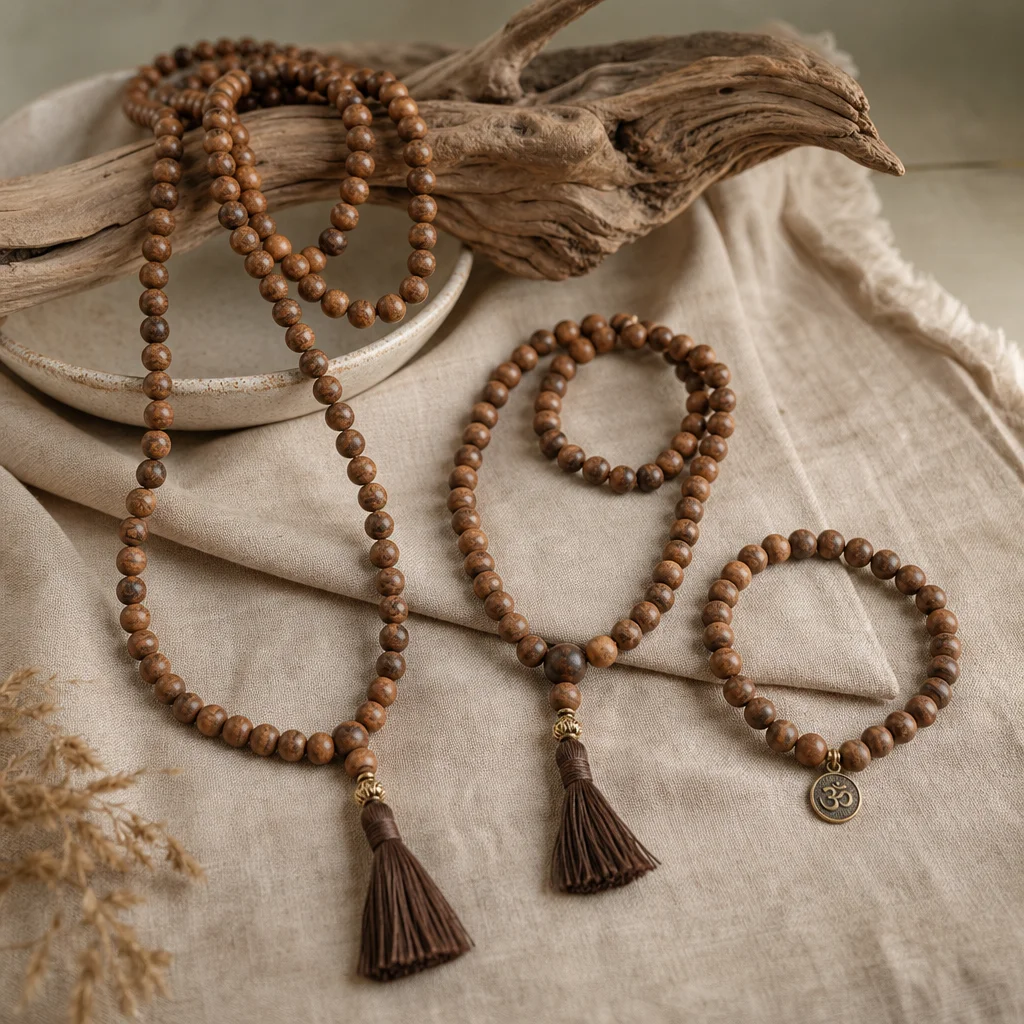
- 27 beads (wrist mala): One-quarter of 108. Perfect for quick sessions (3-5 minutes), travel, or wearing as a bracelet. Four rounds on a 27-bead mala equals one full 108-bead round.
- 54 beads: Half of 108. A common length for longer practices when you don't want the full 108. Good for evening meditation (10 minutes).
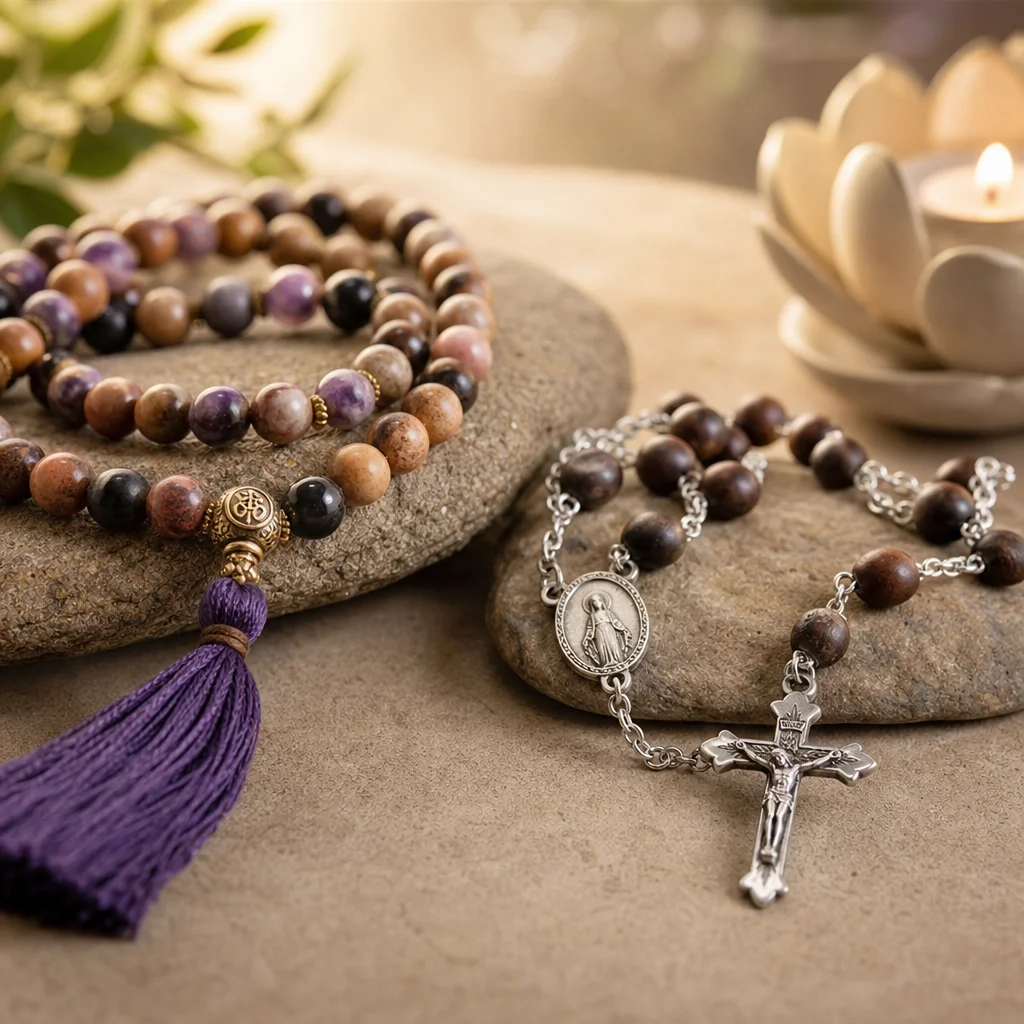
- 21 beads: Used in some Tibetan traditions for specific shorter practices. Also common in Catholic rosaries (technically not a mala, but the principle of using beads for repetitive prayer is universal).
How to Use the Significance of 108 in Your Practice
Knowing the meaning behind 108 isn't just trivia — it can genuinely enrich your meditation practice:
- Set an intention before each round. Before you begin counting, hold the guru bead and state your intention silently. This could be a specific mantra, a person you're sending compassion to, or simply "stillness."
- Use the quarter points as check-ins. When you reach a marker bead (approximately every 27 beads), pause for one breath. Check your posture. Release any tension in your jaw, shoulders, or hands. Then continue.
- Honor the guru bead. When you complete 108 repetitions and reach the guru bead, don't rush past it. Spend a moment in gratitude — for the practice, for the tradition, for the few minutes of peace you just gave yourself.
- Track your practice. Some practitioners keep a journal noting how many rounds of 108 they complete each day. The number itself becomes a measure of commitment and consistency.
108 Across Other Traditions
The significance of 108 extends beyond Hinduism and Buddhism:
- Sikhism: The Sikh mala (mala simran) traditionally has 108 beads. Sikhs use it for reciting the name of God (Waheguru).
- Jainism: Jains use 108-bead malas for reciting mantras and counting their daily practice of samayik (a period of meditation and reflection).
- Yoga: In many yoga traditions, practicing 108 Sun Salutations (Surya Namaskar) is a special practice done at the change of seasons, particularly at the spring and autumn equinoxes.
- Chinese astrology: There are 108 stars in the Chinese constellation system associated with destiny.
- Ayurveda: Traditional Ayurvedic texts identify 108 marmas (vital points) in the body.
FAQ
Q: Do I have to use all 108 beads every time I meditate?
A: Not at all. Use 27 for a quick session, 54 for a moderate one, or 108 for a full practice. The number is a guide, not a requirement. Consistency matters more than quantity.
Q: Can I use a mala that doesn't have exactly 108 beads?
A: You can, but traditional malas are 108 beads for good reason. If your mala has 109, 107, or another number, it may have been made without attention to tradition. That doesn't make it useless for meditation, but it's worth checking — quality mala makers always count precisely.
Q: Why is 108 considered a "Harshad" number?
A: "Harshad" means "joy-giver" in Sanskrit. A Harshad number is divisible by the sum of its digits: 1 + 0 + 8 = 9, and 108 ÷ 9 = 12. Ancient Indian mathematicians noticed this property and considered it auspicious.
Q: Is there a "wrong" way to count mala beads?
A: The traditional method is to use your thumb and middle finger to count each bead, pulling it toward you as you complete a repetition. Avoid using the index finger — in many traditions, the index finger represents the ego, and using it to count is considered inauspicious. But if you forget and use it anyway, your meditation still counts.
Q: What's the significance of doing 108 Sun Salutations?
A: This is a special yoga practice typically done at seasonal transitions (equinoxes and solstices). It's physically demanding — most people take 50-90 minutes to complete 108 Sun Salutations. The practice is both a physical challenge and a moving meditation that uses the body to honor the same sacred count used in seated meditation.
Frequently Asked Questions
Can I wear a 108 bead mala around my neck as jewelry?
Yes, absolutely! A handcrafted 108-bead mala makes a beautiful, meaningful necklace. Wearing your crystal mala allows you to carry the grounding energy and healing intentions of the gemstones with you throughout the day. Many people wear them as a reminder of their personal mantra or spiritual journey, taking them off only for sleeping or showering to protect the natural stones.
What is the 109th bead on a mala necklace called?
The extra bead at the end of a 108-bead mala is called the Guru bead, or bindu. It represents the student-teacher relationship, the divine, or the ultimate goal of your spiritual practice. When you reach this bead during meditation, it signals that one full cycle of your mantra repetition is complete, and you turn the mala around to continue your practice without crossing over the Guru bead.
Which hand do you use to hold mala beads during meditation?
Traditionally, mala beads are held in the right hand during meditation and mantra recitation. You gently drape the mala over your middle finger, using your thumb to pull each natural crystal bead toward you with each breath or affirmation. The index finger is avoided as it represents the ego. Holding your handcrafted SagStone mala this way allows the smooth textures to deeply anchor your focus.
Can I use a 108 bead mala for manifestation and intentions?
Absolutely! Many people use their 108-bead malas as powerful intention-setting tools rather than just for traditional prayer. By infusing each handcrafted crystal bead with a specific manifestation goal or affirmation as you move through it, you turn the jewelry into a wearable vision board. The natural gemstones naturally amplify these daily intentions, making your mindfulness practice incredibly transformative.
Do all authentic malas have exactly 108 beads?
While 108 is the traditional and most widely recognized count for a full japa mala, they can also come in shorter lengths. You will often find handcrafted mala bracelets made with 27 or 54 beads. These shorter malas represent fractions of 108 and are highly practical for on-the-go mindfulness, allowing you to complete a full meditation cycle by repeating your circuit two or four times wherever you are.
Comments