Tulsi Mala: Sacred Benefits Guide
May 31, 2026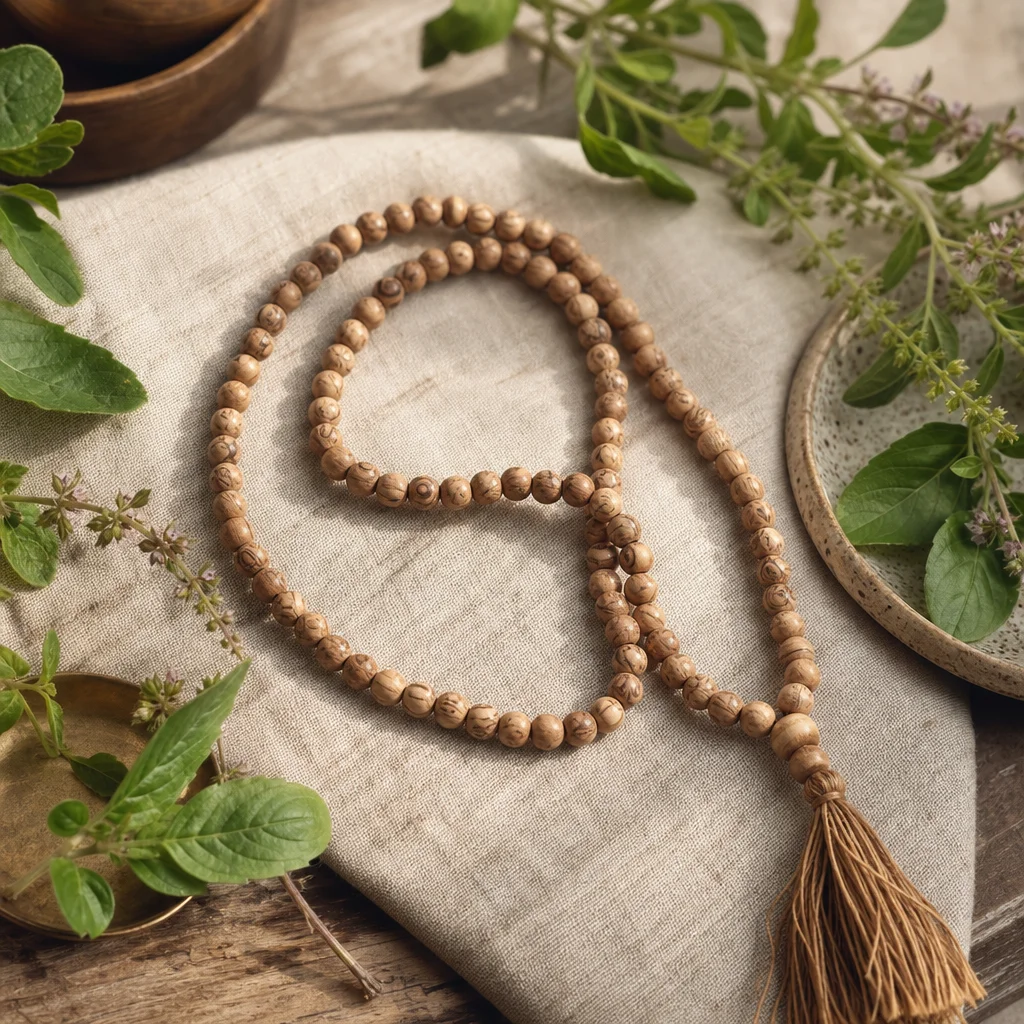
In the Hindu spiritual landscape, few plants hold the reverence that tulsi — holy basil — commands. Every Hindu home with a courtyard or balcony has a tulsi plant growing in a special pot, often positioned at the center of the household. The plant is worshipped daily, its leaves are used in rituals and offerings, and its dried stems are carved into the prayer beads known as tulsi malas. Understanding why this particular plant is considered sacred requires looking at the intersection of botany, mythology, and daily spiritual practice.
The Plant Behind the Beads
Tulsi is Ocimum tenuiflorum (also known as Ocimum sanctum), a perennial herb in the mint family (Lamiaceae) native to the Indian subcontinent. There are two primary cultivated varieties: Krishna tulsi (dark purple leaves with a stronger, more peppery aroma) and Rama tulsi (green leaves with a milder, sweeter scent). Both are used in spiritual practices, though Rama tulsi is more common for making prayer beads because its stems produce a lighter, more uniform bead.
The plant is an aromatic herb with a complex essential oil profile dominated by eugenol (the same compound that gives cloves their characteristic scent), along with β-caryophyllene, linalool, and ursolic acid. This chemistry gives tulsi its distinctive peppery-sweet fragrance and is the basis for its traditional use in Ayurvedic medicine, where it's classified as an adaptogen — a substance that helps the body manage stress.
From a practical bead-making perspective, tulsi stems are relatively soft and lightweight. When dried, the woody stems can be carved into round beads, but the material is noticeably lighter and less dense than sandalwood or rudraksha. This makes tulsi malas comfortable for extended wear and easy to carry, though it also means they're more fragile — a tulsi bead can chip or crack if dropped on a hard surface.
Why Tulsi Is Considered Sacred
The sacred status of tulsi in Hindu tradition stems from multiple cultural and mythological sources that have accumulated over thousands of years.
The Devi connection: In Hindu mythology, tulsi is considered an earthly manifestation of the goddess Tulsi (also called Vrinda or Brinda), a devotee of Vishnu. The most widely told version of her story involves a woman named Vrinda whose devotion to Vishnu was so pure that she became synonymous with the plant. The Tulsi Vivah festival, celebrated annually in many Hindu communities, ritualistically marries the tulsi plant to Vishnu (represented by a shaligram stone or Krishna image). This mythological framework elevates tulsi from a useful herb to a divine presence in Hindu households.
Purification properties: Beyond mythology, tulsi has genuine practical properties that contribute to its sacred status. The plant emits volatile oils that act as natural insect repellents, and its leaves have well-documented antimicrobial properties in Ayurvedic medicine. Growing a tulsi plant near the entrance of a home was historically associated with keeping the household air fresh and insect-free — a practical benefit that was interpreted spiritually as the plant purifying the home's energy.
Connection to Vishnu and Krishna: Tulsi is particularly associated with Vaishnavism (the worship of Vishnu and his avatars, especially Krishna). In this tradition, tulsi leaves are considered the most acceptable offering to Vishnu — more pleasing than any flower, gem, or precious substance. Wearing a tulsi mala is, in this context, an act of devotion that places the wearer in a state of ongoing connection with Vishnu consciousness.
How Tulsi Malas Are Made
The process of making a tulsi mala is itself a practice that requires patience and care.
Harvesting: Mature tulsi stems are cut from the plant — typically during the dry season when the stems have had time to lignify (become woody). Green, fresh stems contain too much moisture to form stable beads and would shrink and crack as they dry. The stems are typically 2-4mm in diameter at the time of harvest.
Drying: The cut stems are dried in shade for several days to weeks. Direct sun drying causes the stems to crack and split unevenly. Shade drying preserves the color and allows the wood to contract gradually, producing more uniform beads.
Carving: The dried stems are cut into segments and hand-carved into round beads using small files and sandpaper. Because tulsi wood is soft, power tools would damage or burn the material. Each bead is individually shaped, sanded smooth, and inspected for cracks or imperfections. The guru bead (the 109th, larger bead that marks the starting point) is often made from a thicker stem section or a cluster of smaller beads bound together.
Stringing: Traditional tulsi malas are strung on cotton thread with knots between each bead. The knots serve a dual purpose — they prevent all the beads from falling off if the thread breaks, and they keep the beads evenly spaced. A tassel of cotton threads hangs below the guru bead, marking the endpoint of each 108-count round.
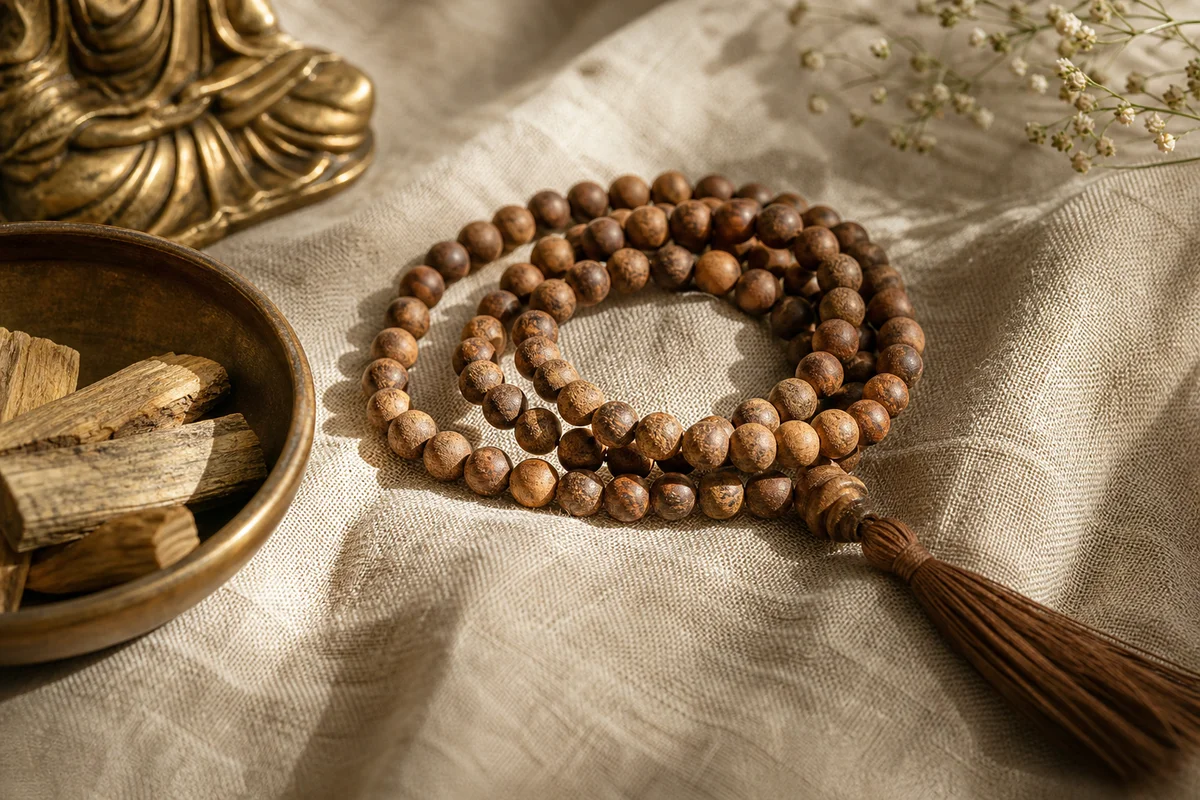
The entire process produces beads that are lightweight (a full 108-bead tulsi mala weighs about 20-30 grams, roughly half the weight of a comparable sandalwood mala) and light brown to tan in color. The fragrance is subtle but present — the peppery-sweet scent of tulsi is detectable when you hold the mala close, especially in freshly made beads.
The Benefits of Wearing a Tulsi Mala
The benefits people seek from tulsi malas operate on multiple levels — spiritual, psychological, and even physical.
Spiritual Devotion
For Hindu practitioners, wearing a tulsi mala is an expression of devotion to Vishnu/Krishna. The beads serve as a constant reminder of spiritual practice and intention. When worn around the neck, the mala is literally close to the heart — the traditional placement of japa mala is with the guru bead at the heart center.
Meditation Focus
The tactile practice of moving bead to bead during japa meditation creates a physical anchor for concentration. The lightweight, smooth texture of tulsi beads is well-suited to extended meditation sessions — heavier bead materials can cause finger fatigue after an hour or more of continuous use.
Aromatic Grounding
The subtle tulsi fragrance provides a sensory element to meditation and daily practice. In Ayurvedic tradition, tulsi's aroma is considered sattvic (pure and calming) — it promotes clarity and peace. Whether or not you subscribe to this framework, the familiar scent of tulsi can become a conditioned cue for meditation, helping your mind settle more quickly when you pick up the mala.
Traditional Health Associations
In Ayurveda, tulsi is classified as a rasayana (rejuvenating herb). The essential oils absorbed through skin contact during mala use are minimal but present. The traditional view holds that wearing tulsi promotes physical and mental well-being. From a modern perspective, the stress-reduction benefits of regular meditation practice (which a tulsi mala facilitates) are well-documented regardless of the specific bead material.
Tulsi Mala Etiquette and Precautions
In Hindu tradition, there are specific guidelines around tulsi malas that practitioners should be aware of, whether or not they personally observe all of them.
Purity: Tulsi malas are traditionally not worn during periods of impurity as defined by Hindu custom (such as during mourning or after attending a funeral). Some practitioners remove their tulsi mala before eating meat, drinking alcohol, or entering certain types of spaces. These restrictions vary widely between individuals and communities.
Water: Like all wooden malas, tulsi beads should be kept dry. The dried stem material absorbs water readily and can swell, crack, or develop mold if exposed to moisture. Remove the mala before bathing or swimming.
Wrist vs. neck: In Hindu practice, tulsi malas are traditionally worn around the neck rather than the wrist. This isn't a hard rule — many modern practitioners wear tulsi wrist malas — but the traditional placement is at the heart center (neck or upper chest).
Handling by others: In traditional practice, a personal tulsi mala should not be handled by others, as it's considered a personal sacred object. If you share a meditation space, keep your mala in a pouch or your hand to prevent others from touching it.
Tulsi Mala vs. Sandalwood vs. Rudraksha
All three materials are used in Hindu prayer bead traditions, but they serve different purposes and suit different practitioners.
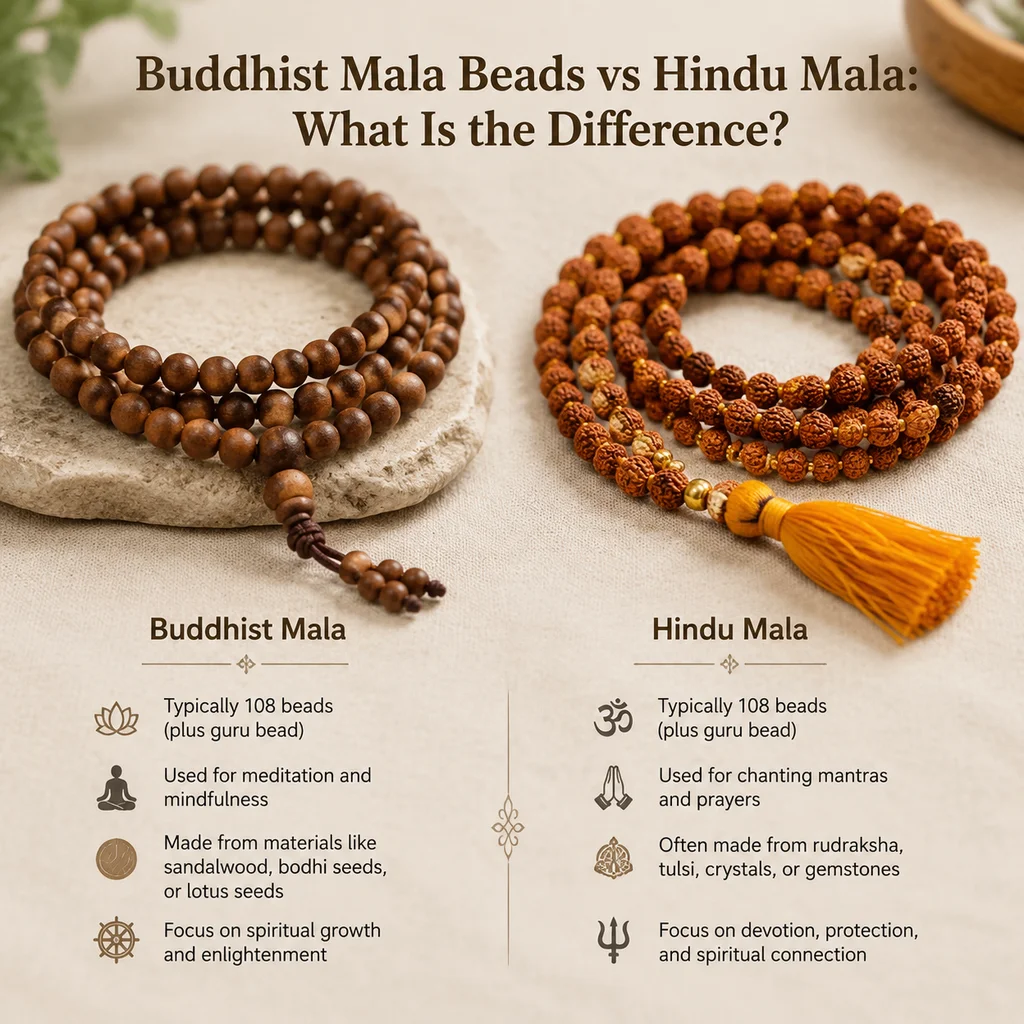
Tulsi: Lightest, most affordable ($15-40), most strongly associated with Vishnu devotion. Fragile — not ideal for rough daily wear. Best for dedicated meditation practitioners who keep their mala protected when not in use.
Sandalwood: Heavier, more durable, more expensive ($40-300 depending on species). The fragrance is warmer and more universally appealing. Best for practitioners who wear their mala throughout the day and appreciate the sensory experience.
Rudraksha: The heaviest and most durable of the three. Rudraksha seeds are associated with Shiva worship (rather than Vishnu). The texture is rougher and more tactile. Best for practitioners seeking a grounding, physical connection to their practice.
Frequently Asked Questions
Can anyone wear a tulsi mala, or is it only for Hindus?
Anyone can wear a tulsi mala. While the bead's deepest cultural and spiritual significance is within Hindu tradition, the mala itself is a meditation tool that anyone can use. If you appreciate the material, the fragrance, and the meditative practice, a tulsi mala is appropriate regardless of your religious background.
How long does a tulsi mala last?
With proper care (kept dry, stored in a pouch, handled gently), a tulsi mala lasts 3-5 years before beads start showing significant wear. The softness of tulsi wood means beads gradually develop dents and chips from daily handling. Some practitioners consider this natural aging as part of the mala's character — worn beads carry the practice's history.
Can I wear my tulsi mala while sleeping?
It's possible but not ideal. The beads can catch on bedding and get pulled, potentially breaking the string. Removing the mala at night and placing it near your meditation space or on an altar is more practical. Some practitioners like to hold their mala briefly before sleep as a transitional ritual.
Does a tulsi mala have healing properties?
In Ayurvedic tradition, tulsi is considered a healing herb, but the amount of active compound absorbed through skin contact with a mala is minimal. The primary benefits of wearing a tulsi mala come from the meditation practice it supports, the devotional connection it represents, and the grounding sensory experience of the material. Crystals are not a substitute for medical treatment.
Frequently Asked Questions
How can I tell if my Tulsi mala is authentic?
Authentic Tulsi beads carry a distinct earthy fragrance and a naturally smooth feel from artisan hand-carving. Genuine sacred wood develops a rich, warm patina over time from your skin's natural oils. At SagStone, we meticulously handcraft every mala using carefully selected, premium materials, ensuring you receive a beautifully genuine and spiritually potent piece for your daily mindful practice.
Comments