Sandalwood Mala Beads: Meditation Benefits Guide
May 31, 2026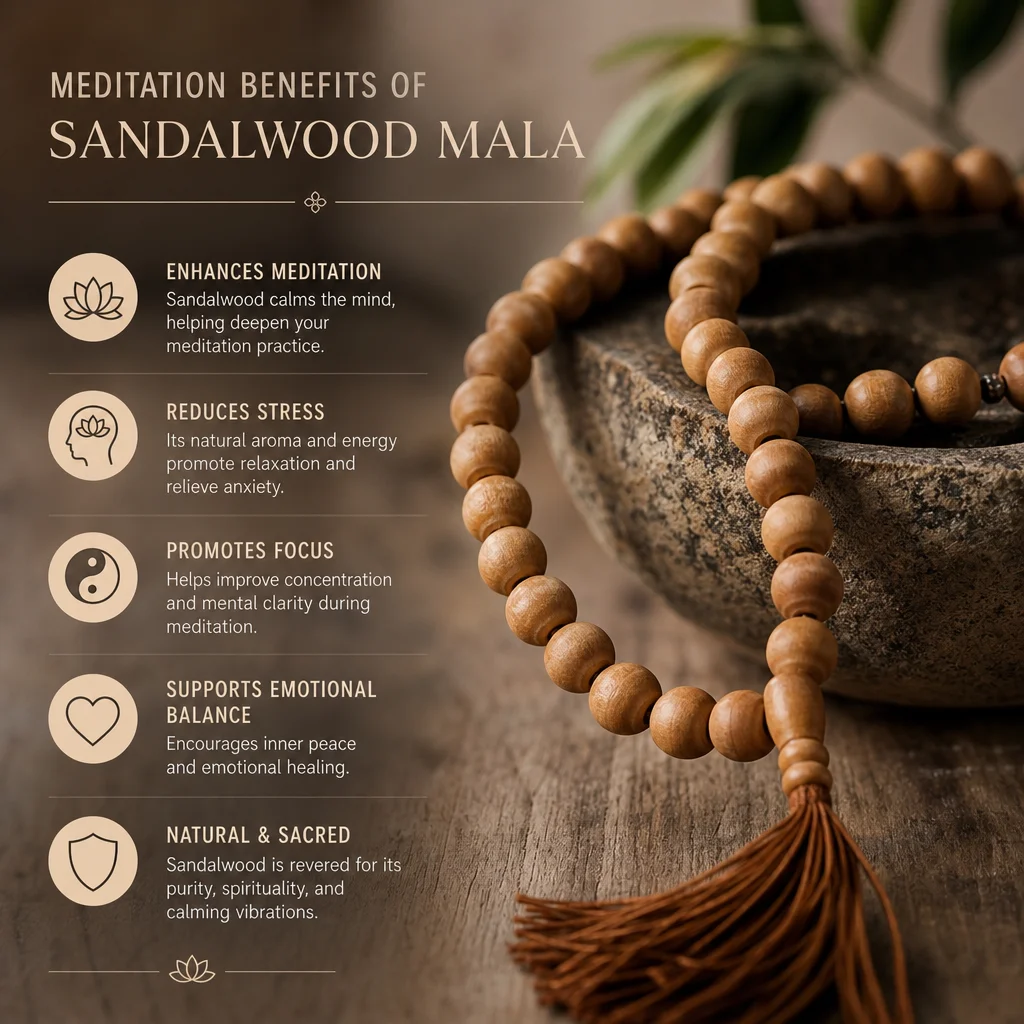
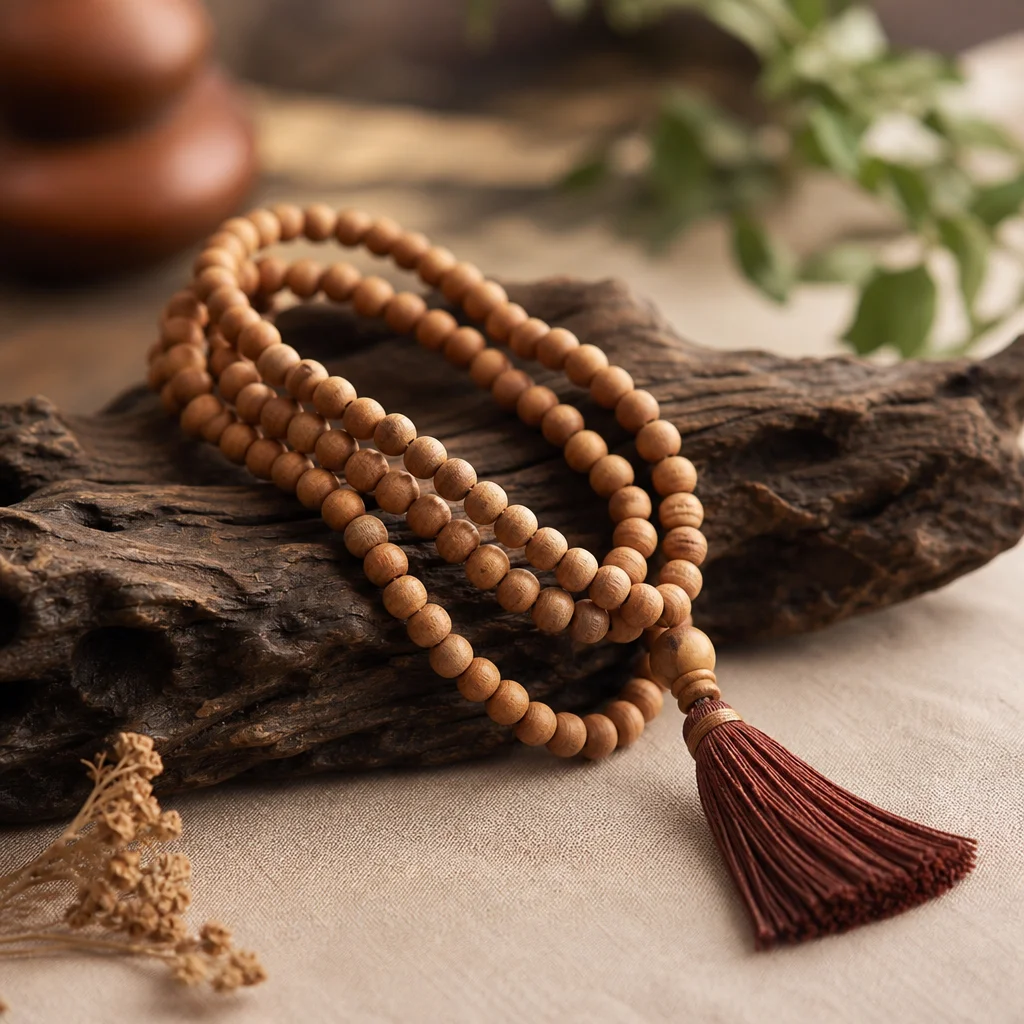
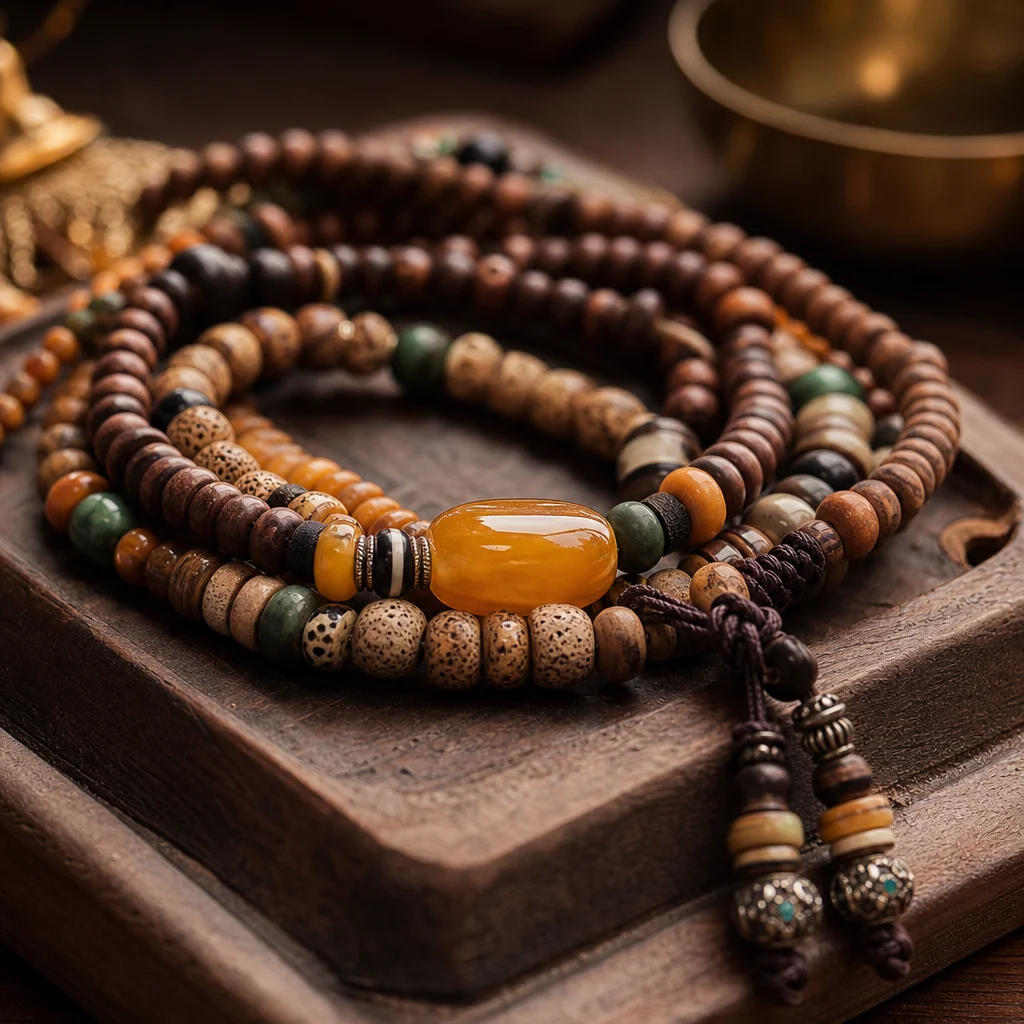
There's a sensory quality to sandalwood mala beads that sets them apart from virtually every other prayer bead material. The moment you hold a well-made sandalwood mala, the subtle, warm fragrance is already present — it doesn't need to be activated or enhanced. The smooth texture feels almost buttery against your fingers as you work through the 108 beads during japa meditation. And unlike many crystal malas that are visually striking but physically cold, sandalwood is warm to the touch from the first moment.
This combination of fragrance, texture, and temperature is why sandalwood has been a preferred mala material across Buddhist, Hindu, and other contemplative traditions for centuries. But not all sandalwood is created equal, and knowing the differences matters when you're choosing a mala you'll use daily for years.
Types of Sandalwood: What You're Actually Buying
The term "sandalwood" covers several species in the Santalum genus, and they vary significantly in fragrance, color, price, and sustainability. Understanding these differences is essential because the market is flooded with misleading labels.
Indian Sandalwood (Santalum album)
This is the gold standard — the sandalwood with the strongest, most complex fragrance and the longest history of use in incense, perfumery, and religious objects. Indian sandalwood has been harvested from the Mysore region of Karnataka for centuries, and its heartwood contains the highest concentration of santalol, the compound responsible for the characteristic scent.
Indian sandalwood is now critically endangered in the wild due to overharvesting. All legal Indian sandalwood comes from government-managed plantations, primarily in Karnataka and Tamil Nadu. The restricted supply makes genuine Indian sandalwood malas expensive — expect to pay $100-300 for a properly made 108-bead mala from authentic Indian sandalwood.
Identifying genuine Indian sandalwood: The heartwood should be yellowish-brown with a slight oil sheen. The fragrance is persistent — you can smell it from arm's length, and it lasts for years without fading. Lower-quality material has a paler, almost white color with a weak or absent scent.
Australian Sandalwood (Santalum spicatum)
Australian sandalwood is the most common commercially available sandalwood today. It's harvested primarily in Western Australia, where the industry is well-regulated and sustainable. The scent is present and pleasant but milder and simpler than Indian sandalwood — think "sandalwood essence" rather than "full sandalwood complexity."
For mala beads, Australian sandalwood is a practical middle ground. It's affordable ($40-100 for a 108-bead mala), sustainably sourced, and still carries the characteristic warm, woody fragrance. The color tends to be slightly lighter than Indian sandalwood, and the grain is often more visible.
Hawaiian Sandalwood (Santalum paniculatum)
Hawaiian sandalwood, known as iliahi in Hawaiian, has a more complex fragrance profile than Australian but is less intense than Indian. It's harvested from remnant forests on the Big Island, and conservation efforts have increased in recent decades after near-extinction in the 19th century.
Hawaiian sandalwood malas are uncommon in the mainstream market and tend to be sold by Hawaiian-based practitioners and specialty shops. The scent has tropical, slightly sweet notes that distinguish it from other varieties. Expect to pay $80-150 for a genuine Hawaiian sandalwood mala.
The Fake Problem: Scented Wood
This is the biggest issue in the sandalwood mala market. Many inexpensive "sandalwood" malas on Amazon, AliExpress, and discount crystal shops are actually made from cheaper woods (often maple, birch, or poplar) that have been soaked in synthetic sandalwood fragrance oil. The scent is often stronger than real sandalwood when new but fades within weeks to months.
Red flags for fake sandalwood: suspiciously low prices ($10-20 for a 108-bead mala), overly strong uniform scent, pale yellowish-white color without any grain variation, and a slightly oily surface feel that transfers residue to your fingers. Genuine sandalwood has a dry, smooth finish with no surface oil.
Why Sandalwood Works So Well for Japa Meditation
Japa meditation — the practice of reciting a mantra once per bead while moving through a mala — is a tactile, repetitive practice. The physical sensation of the beads matters as much as the visual or symbolic aspects. Sandalwood excels in several ways.
Consistent friction: Sandalwood is dense and fine-grained, which means it develops a smooth, even surface that glides easily between fingers. Unlike beads with visible grain or rough spots, well-finished sandalwood beads provide consistent tactile feedback bead after bead, session after session.
Temperature neutrality: Wood doesn't conduct heat the way metal or stone does. A sandalwood mala stays near body temperature, which means it feels comfortable from the first bead to the 108th, even in cold weather. Crystal malas, by contrast, can feel shockingly cold when you first pick them up.
Fragrance as a focus anchor: The sandalwood scent provides an additional sensory anchor during meditation. When your mind wanders and you bring your attention back to the mantra and the bead, the subtle fragrance reinforces the return to practice. Over time, the scent of sandalwood becomes a conditioned cue — you pick up the mala, you smell the sandalwood, and your mind begins to settle before you've even started counting.
Choosing Your Sandalwood Mala: Practical Checklist
When evaluating a sandalwood mala, check these specific points.
Bead size: Standard mala beads are 8mm diameter, which makes a 108-bead necklace about 36-40 inches long (it wraps around most necks 2-3 times). Smaller beads (6mm) make a shorter mala that fits smaller wrists better. Larger beads (10mm) are chunky and heavier — good for sitting meditation but less practical for wearing as a necklace throughout the day.
Finish quality: Run your fingers over the beads. They should be smooth with no visible sanding marks, rough patches, or sharp edges between beads. The string hole should be clean and centered. Poorly finished beads will cause calluses and irritation during extended use.
Stringing: A well-made sandalwood mala uses a durable material — silk, nylon, or cotton thread, often with knots between each bead to prevent loss if the string breaks. Silk-threaded malas with knots are the traditional standard and the most durable option. Stretchy elastic is used for wrist malas but is less appropriate for full 108-bead necklaces because it degrades faster and can't hold knots between beads.
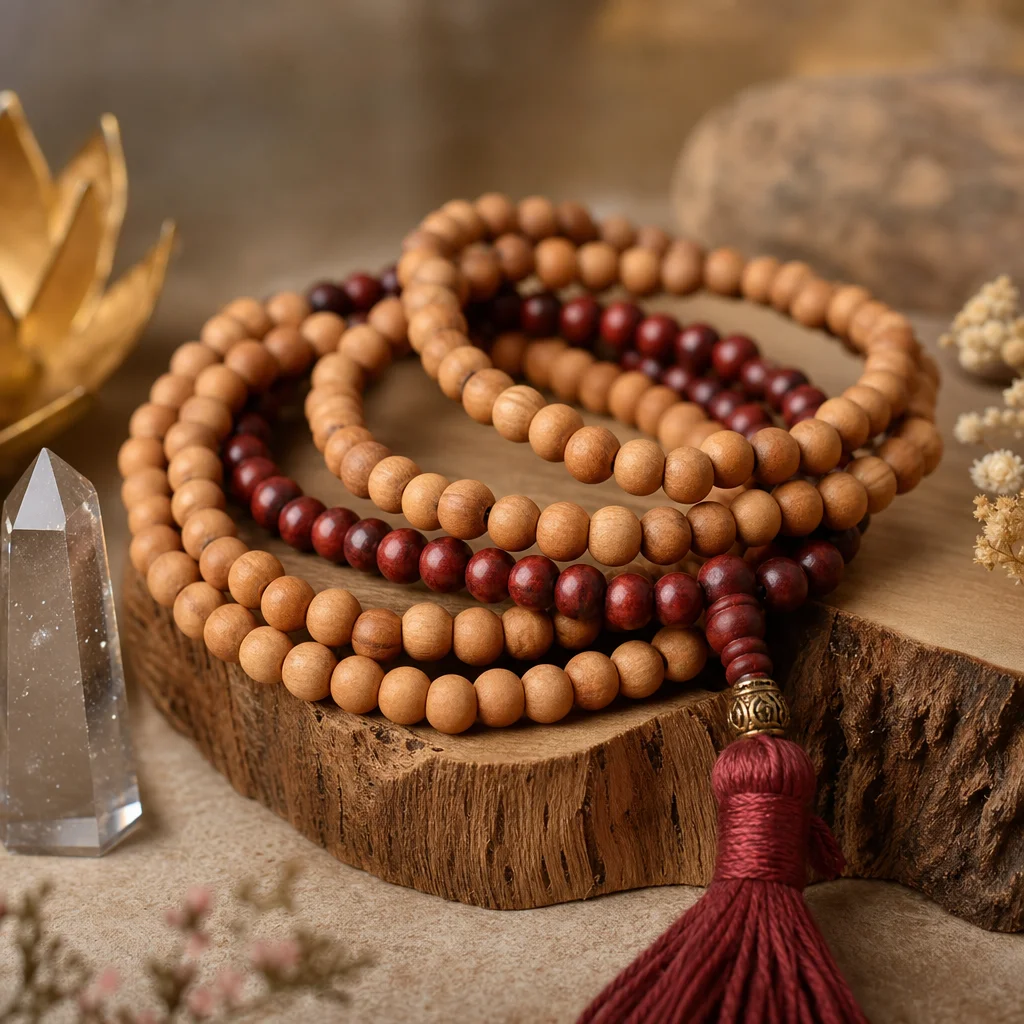
Guru bead: The guru bead (the 109th bead, typically larger or differently shaped, marking the end point of each round) should be distinct from the counting beads. In sandalwood malas, the guru bead is often a larger sandalwood bead, a different wood, or a stone bead set into the sandalwood strand.
Tassel: Traditional sandalwood malas have a cotton or silk tassel below the guru bead. The tassel serves a practical purpose — it marks the starting and ending point of your japa practice — and a decorative one. If you prefer no tassel, some makers offer tassel-free options.
Caring for a Sandalwood Mala
Sandalwood malas require more care than crystal or stone malas, primarily because wood responds to environmental conditions.
Moisture: Avoid getting your sandalwood mala wet. Prolonged moisture exposure causes the wood grain to swell, which can crack the beads or loosen the stringing. Remove the mala before swimming, bathing, or exercising heavily. If it does get wet, pat it dry immediately with a soft cloth and let it air-dry completely before storing.
Dryness: Excessively dry environments can cause sandalwood to develop small cracks. If you live in a very dry climate or use heating in winter, occasional oiling with a tiny drop of sandalwood essential oil on a cloth (rubbed gently over the beads, not applied directly) helps maintain moisture content and refreshes the fragrance.
Sunlight: Prolonged direct sunlight fades the color and evaporates the fragrant oils in sandalwood. Store your mala in a cloth pouch or covered box when not in use. A dedicated mala bag also protects it from dust and pet hair.
Fragrance maintenance: Genuine sandalwood retains its scent for years, but the intensity gradually decreases. Storing the mala in a sealed bag or box with the sandalwood shavings that come from the bead-making process helps maintain fragrance. Some practitioners add a small sandalwood chip to their storage bag for this purpose.
Sandalwood Mala in Different Traditions
In Hindu tradition, sandalwood is associated with purity and is favored for Vishnu and Shiva worship. The paste made from sandalwood is applied to the forehead in tilak markings, and the wood is burned in rituals. Sandalwood malas are often used for Vishnu-related mantras.
In Buddhist tradition, particularly Tibetan Buddhism, sandalwood malas are considered one of the four preferred materials for prayer beads (along with bodhi seed, rudraksha, and precious stones). Sandalwood's association with calming and purifying qualities makes it a common choice for peaceful abiding (shamatha) meditation practices.
In Japanese Buddhism, sandalwood — specifically muro-no-ki (a Japanese sandalwood species) — is a valued material for juzu (prayer beads), though genuine Japanese sandalwood is now rare and expensive.
Frequently Asked Questions
How can I tell if my sandalwood mala is real?
Three quick tests. First, smell it — genuine sandalwood has a complex, warm, woody scent that's present but not overwhelming. Synthetic fragrance is usually stronger and one-dimensional. Second, feel the surface — real sandalwood is smooth, dry, and slightly warm, not oily. Third, check the price — a genuine sandalwood 108-bead mala should cost at least $40-50 minimum; anything under $20 is almost certainly not real sandalwood.
How long does the sandalwood scent last?
In a genuine sandalwood mala, the scent persists for years — often decades — though it gradually becomes subtler. Regular handling and the oils from your skin actually help maintain the fragrance by slightly polishing the surface and releasing embedded aromatic compounds. If the scent disappears within weeks or months, the beads were likely treated with synthetic fragrance rather than being genuine sandalwood.
Can I wear my sandalwood mala as a bracelet?
Full 108-bead malas are typically worn as necklaces, wrapping 2-4 times around the wrist. For a dedicated wrist mala, 21 or 27 beads is more practical — it wraps once around most wrists. Some makers sell sandalwood wrist malas on elastic, though silk thread with knots is more durable for daily use.
Is sandalwood sustainable?
It depends on the source. Indian sandalwood (Santalum album) is endangered in the wild but available from legal plantations. Australian sandalwood is harvested under government regulation with replanting programs. Hawaiian sandalwood is in recovery. When buying, ask about sourcing — reputable dealers will specify the species and origin. Avoid products that don't specify, as they're often using non-sandalwood wood with synthetic fragrance.
Frequently Asked Questions
How do I activate or cleanse my sandalwood mala?
Before using your handcrafted mala, gently cleanse its energy. Because sandalwood is a delicate natural wood, avoid water. Instead, purify your beads by leaving them under moonlight overnight, passing them through incense smoke, or resting them on a selenite plate. To activate it, hold your mala, set a clear intention for your spiritual practice, and rub the beads to awaken their grounding, natural aroma.
Comments