Amethyst Mala Beads: Benefits, Uses and How to C
June 3, 2026
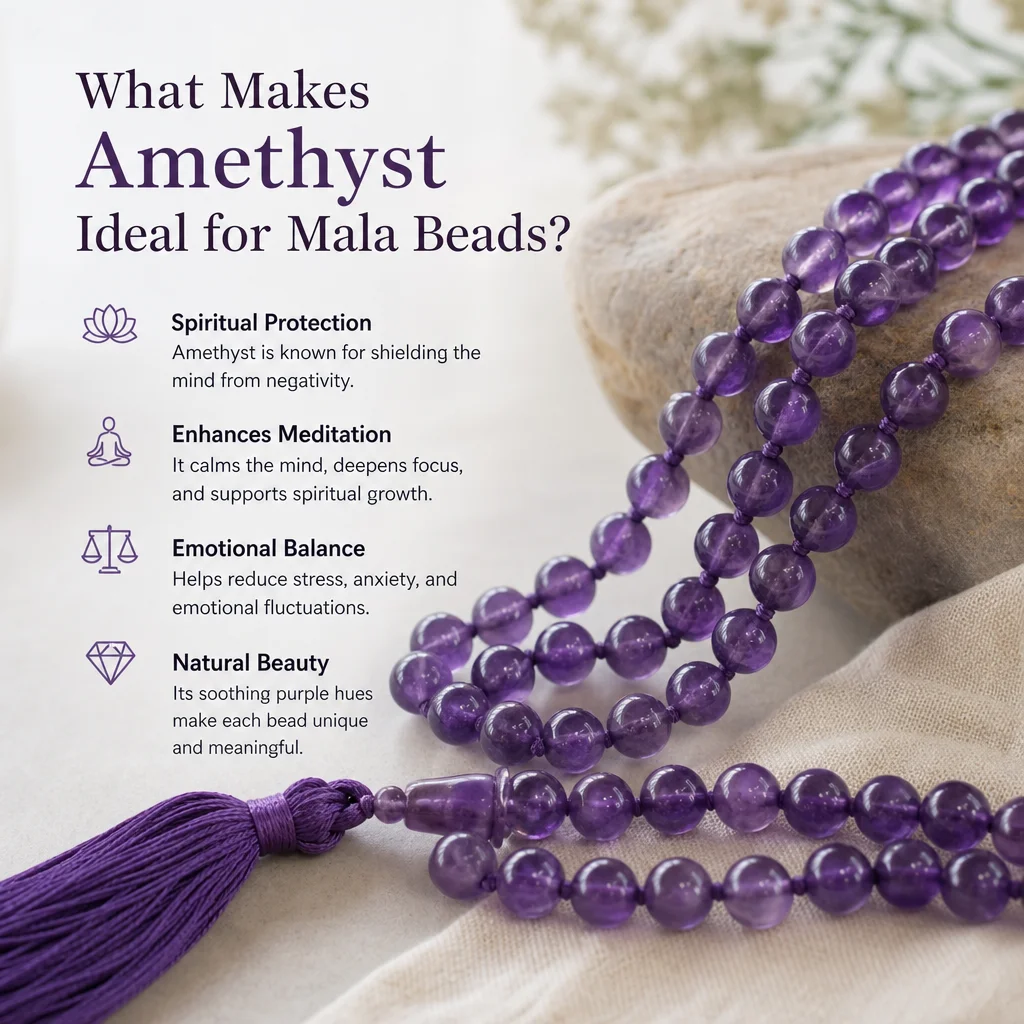
What Makes Amethyst Ideal for Mala Beads?
Amethyst has been associated with meditation and spiritual practice for thousands of years. In Buddhist tradition, amethyst is one of the stones often recommended for calming the mind during meditation. In Western crystal traditions, its purple color has been linked to the crown chakra—the concept of higher consciousness and spiritual awareness. These associations are cultural and symbolic, but they explain why amethyst is consistently the most popular gemstone choice for mala beads worldwide.
From a practical standpoint, amethyst works well for mala beads because it is hard enough (Mohs 7) to withstand daily handling, takes a beautiful polish, is widely available in consistent colors, and comes in sizes that work for both 6mm and 8mm beads. It is also affordable enough to produce a full 108-bead mala at a reasonable price point—typically $20-80 for natural amethyst, compared to $200+ for some other gemstone malas.
Understanding 108: Why This Number Matters
The number 108 has significance across multiple traditions:
- Buddhism: 108 earthly desires to overcome, 108 dharmas, 108 defilements. Reciting a mantra 108 times with a mala bead for each repetition is the standard practice.
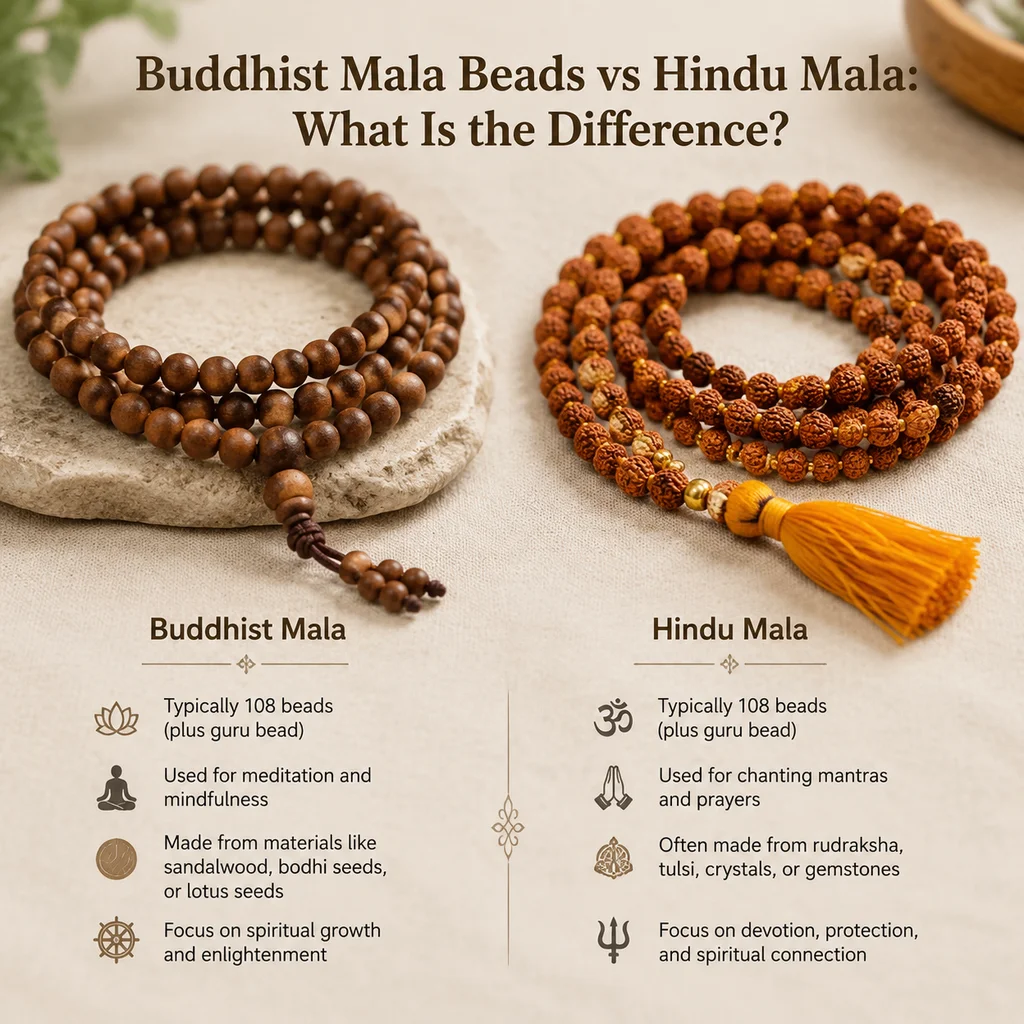
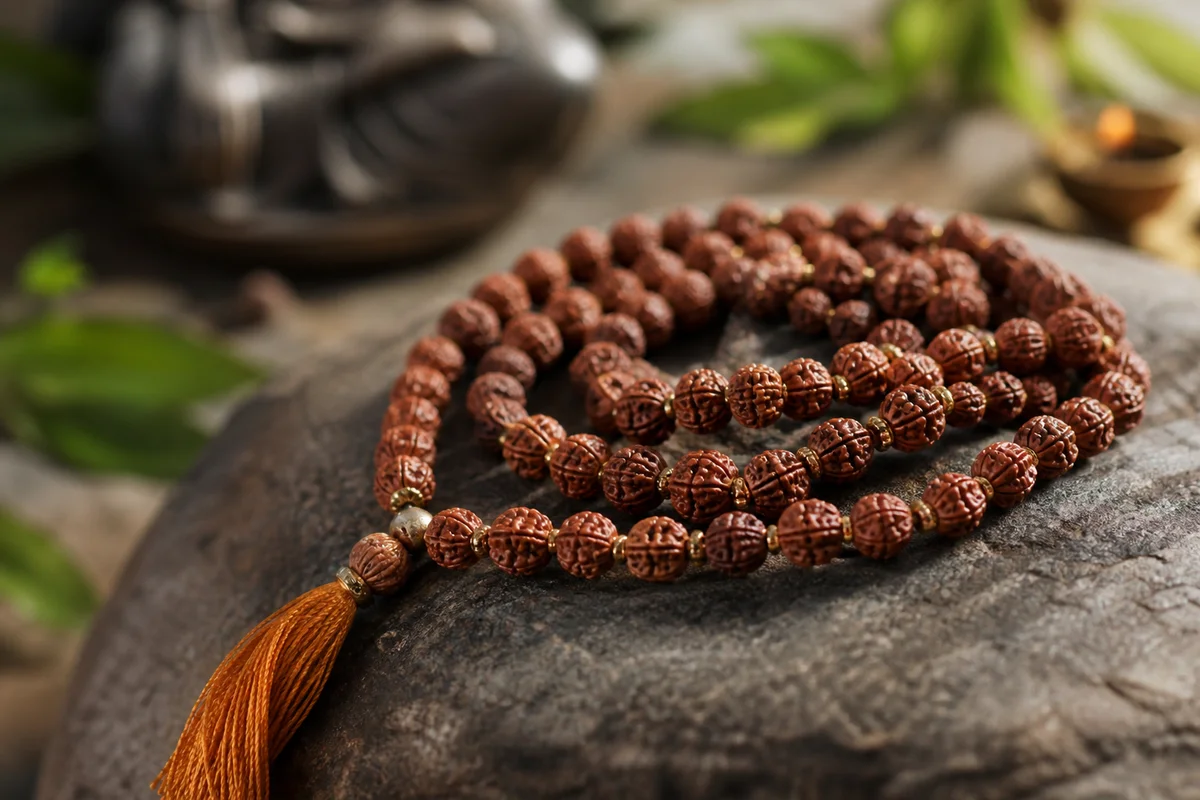
- Hinduism: 108 names for various deities, 108 Upanishads, 108 sacred sites in India. The Rudraksha and Tulsi malas used in Hindu practice also use 108 beads.
- Yoga: 108 sun salutations is a traditional practice for seasonal transitions and new beginnings.
- Mathematics: 108 is a Harshad number (divisible by the sum of its digits: 1+0+8=9, 108/9=12) and relates to the golden ratio in some geometric constructions.
A standard mala has 108 counting beads plus one larger "guru bead" or "meru bead" that marks the starting and ending point. When you reach the guru bead during counting, you do not cross over it—you reverse direction. This creates a loop of 108 repetitions per cycle.
6mm vs 8mm: Choosing the Right Bead Size
The bead size determines the length and feel of the finished mala:
- 6mm beads: A full 108-bead mala measures approximately 30-34 inches (76-86 cm) in circumference. This wraps comfortably around the wrist 4-5 times and hangs to about mid-chest when worn as a necklace. 6mm beads feel lighter and more delicate, suitable for people with smaller hands or those who prefer a less bulky piece.
- 8mm beads: A full 108-bead mala measures approximately 36-40 inches (91-102 cm) in circumference. This wraps 3-4 times around the wrist and hangs to about the navel when worn as a necklace. 8mm beads are the most popular size—they are substantial enough to feel substantial in the hand but not so large that the mala becomes unwieldy.
- 10mm beads: A full 108-bead mala in 10mm measures 44-48 inches and is quite long and heavy. These are less common for daily meditation and more often used as display pieces or for tall practitioners.
For daily meditation practice, 8mm is the most versatile choice. The larger bead size is easier to count by feel (you can sense each bead between your fingers without looking) and the weight provides a grounding tactile experience. 6mm is better if you want a mala that doubles as an everyday necklace.
Natural vs. Dyed Amethyst: How to Tell the Difference
The amethyst mala market includes both natural and artificially enhanced material. Knowing the difference helps you make informed purchasing decisions:
Natural amethyst: Color varies from bead to bead within a reasonable range—some beads may be slightly lighter, darker, or have subtle color zoning (bands of different purple intensity). This variation is normal and expected in natural stone. The color is permanent and will not fade with sunlight exposure under normal conditions.
Heat-treated amethyst: Most commercial amethyst on the market has been heated to improve color consistency. This is generally considered acceptable in the gem industry—it is a stable treatment that does not degrade over time. However, heavily heated material may have a slightly different visual quality than untreated stone.
Dyed amethyst: The lowest tier of the market. Pale or colorless quartz beads are dyed purple to imitate amethyst. Signs of dye include uniform, unnaturally consistent color across all beads; visible dye concentration in surface scratches or drill holes; and color transfer when rubbed with a white cloth dampened with alcohol.
Reconstituted amethyst: Crushed amethyst powder mixed with resin and formed into beads. These look uniform but lack the natural crystalline structure of genuine stone. They feel slightly warmer to the touch and weigh less than solid stone beads of the same size.
For a quality meditation mala, aim for natural or heat-treated amethyst. Check reviews, ask about treatment, and examine photos for color variation. A seller who shows individual bead photos (rather than just a grouped shot) is more likely to be transparent about quality.
With Sandalwood or Rosewood Spacer Beads
Many amethyst malas incorporate sandalwood or rosewood beads as markers or spacers:
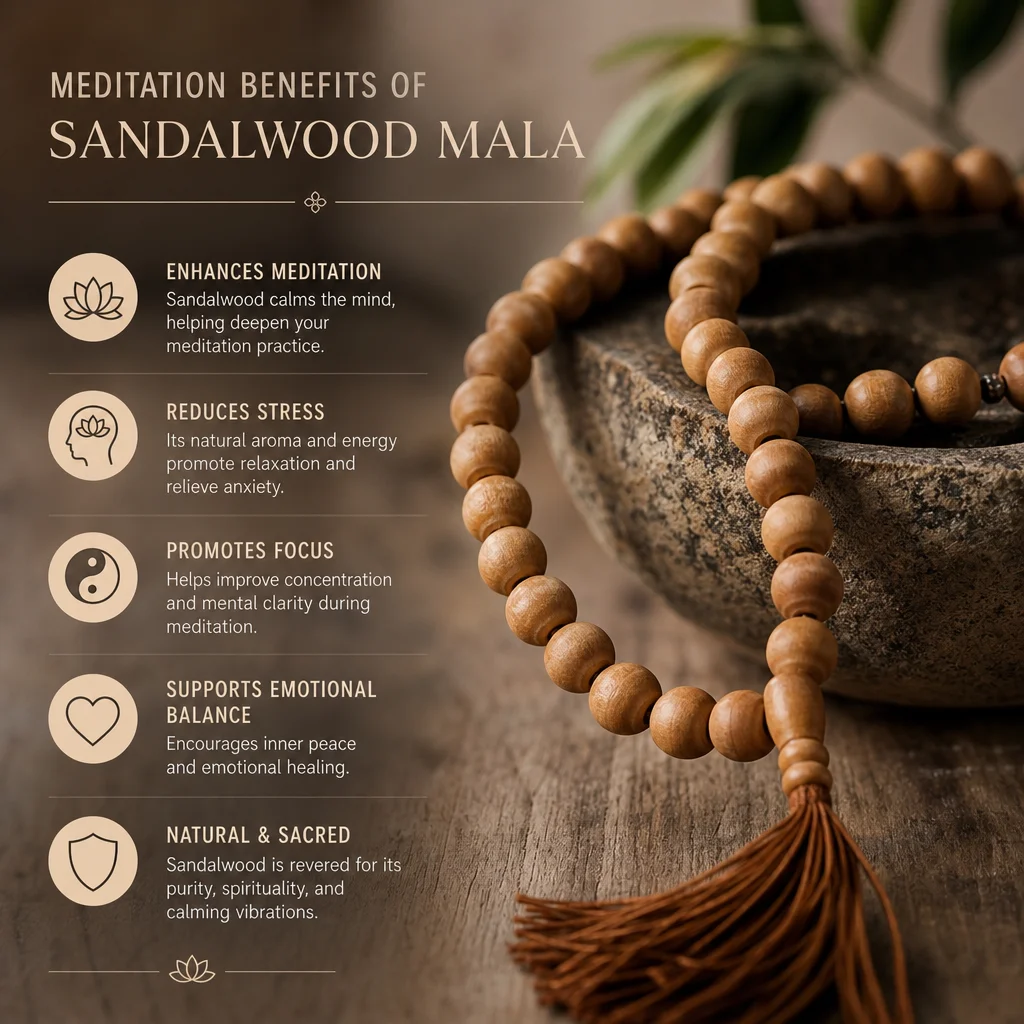
- Sandalwood markers: Small sandalwood beads placed at intervals (every 27 beads for a 4-section mala) to help with counting during longer meditation sessions. Sandalwood also adds a subtle fragrance that many practitioners find enhances the meditation experience.
- Wooden guru bead: Using a carved wooden bead instead of a stone guru bead is common in Buddhist traditions. The wood contrasts visually with the amethyst and often carries its own symbolic meaning.
- Metal spacer beads: Sterling silver or brass beads between sections add structure and prevent the amethyst beads from rubbing against each other. These also provide a textural change that can serve as counting markers.
How to Use an Amethyst Mala for Meditation
The basic technique is straightforward but benefits from understanding the details:
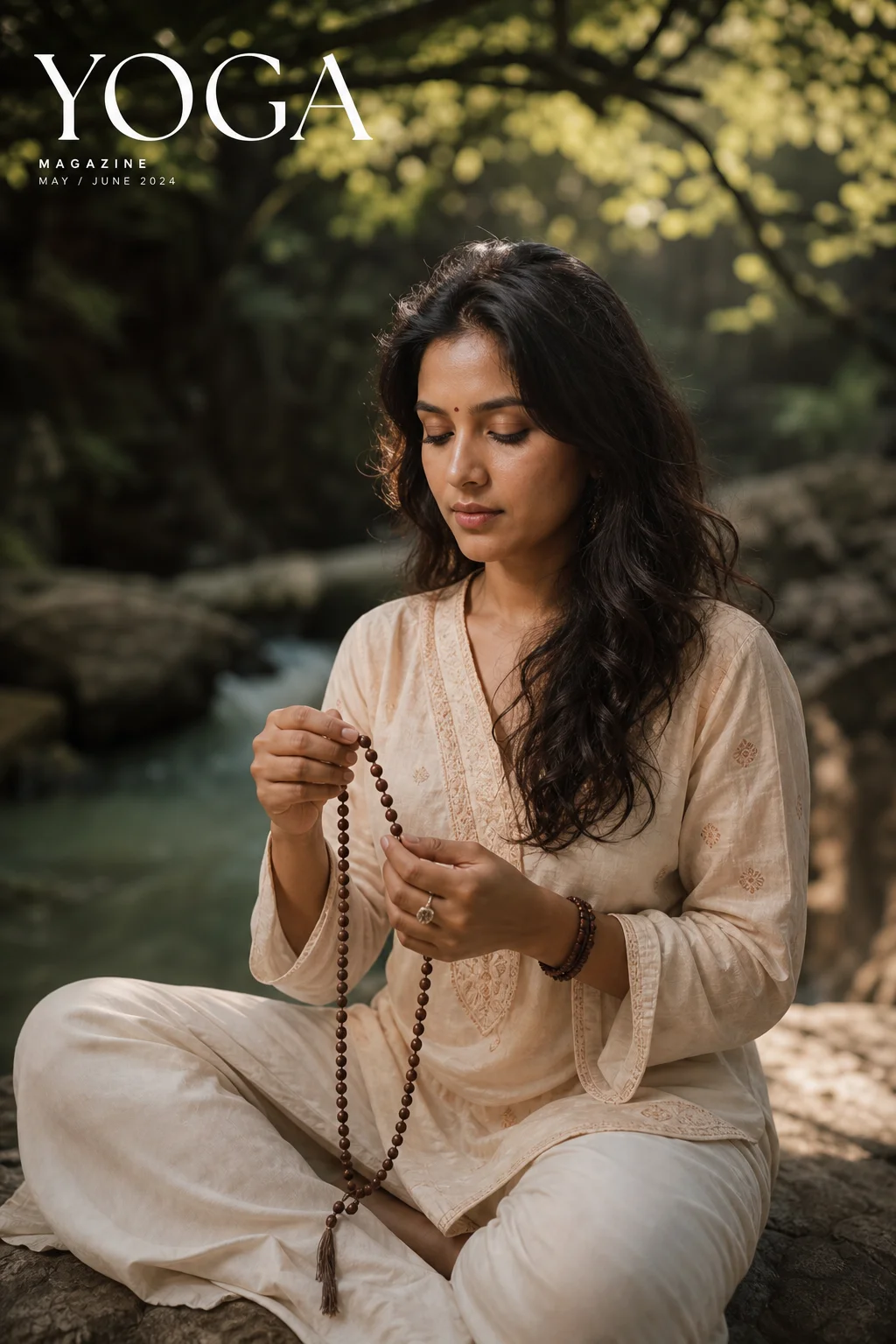
- Hold the mala in your right hand (Buddhist tradition) or left hand (some Hindu traditions). Drape it over your middle or ring finger. Your thumb moves the beads one by one.
- Start at the guru bead (the large bead or tassel). Move away from the guru bead, counting each bead as you recite your mantra or focus point.
- Move one bead per repetition. Pull each bead toward you with your thumb, then release. The tactile motion becomes automatic after a few minutes of practice.
- Stop at the guru bead. Do not cross over it. Instead, reverse direction and count back the other way if you want to continue.
The physical act of counting beads has a meditative quality independent of any spiritual framework. The repetitive motion, combined with tactile feedback and rhythmic breathing, creates a state similar to a secular mindfulness practice. This is likely why mala meditation has persisted across cultures—it works as a practical concentration tool regardless of belief system.
Daily Wear and Practical Considerations
Amethyst malas are durable enough for daily wear with reasonable care:
- Avoid wearing your mala during vigorous exercise, swimming, or bathing. The silk thread can weaken with repeated water exposure.
- Remove the mala before applying perfume, lotion, or sunscreen—chemicals can damage both the thread and the stone surface over time.
- If the string stretches (causing gaps between beads), have it restrung. Loose beads are more likely to chip against each other during wear.
- Store the mala flat when not wearing it, or draped over a stand. Coiling it tightly for long periods can stress the stringing.
- The tassel (if present) will eventually fray with wear. Trimming or replacing it is normal maintenance.
Amethyst Mala Price Ranges
- Budget range ($15-30): 6mm commercial-grade amethyst, basic nylon stringing, simple tassel. Adequate for daily practice.
- Mid-range ($30-80): 8mm natural or heat-treated amethyst with good color, silk or nylon thread, quality tassel, possible spacer beads. The sweet spot for quality-to-price ratio.
- Premium ($80-200): 8mm hand-selected deep purple amethyst, silk thread, sterling silver spacer beads, handcrafted tassel, often from small-batch artisan makers.
- Luxury ($200+): High-grade amethyst from specific mines (e.g., Veracruz or Sikhim material), gold-filled hardware, premium silk stringing, custom bead selection.
Frequently Asked Questions
Can I wear my amethyst mala as a necklace?
Yes. Many practitioners wear their mala as a necklace during the day and use it for meditation when needed. An 8mm mala hangs to about the navel, a 6mm to about the mid-chest. For a shorter necklace, consider a wrist mala (27 beads) instead.
Does amethyst fade in sunlight?
Extended direct sunlight can cause very gradual fading in some amethyst. Normal daily wear is unlikely to cause noticeable fading. Avoid leaving your mala on a sunny windowsill for weeks at a time.
How do I know if my amethyst mala is real?
Look for slight color variation between beads (natural). Check for the hardness—amethyst will scratch glass (a hidden spot). Look for tiny natural inclusions under magnification. If every bead is perfectly uniform and flawless, it may be glass or synthetic material.
What mantra works best with an amethyst mala?
Any mantra or phrase that resonates with your practice. Traditional choices include "Om Mani Padme Hum" in Buddhism, "Om Namah Shivaya" in Hindu practice, or any personal affirmation in your own language. The mala is a counting tool—the mantra is personal.
Frequently Asked Questions
How do I cleanse and charge my amethyst mala beads?
To cleanse your amethyst mala, place it on a selenite plate, use sound healing bowls, smudge with sage or palo santo, or rest it overnight under moonlight. Avoid water and salt, which can weaken the threading cord or damage wooden spacer beads like sandalwood and rosewood. To charge it, hold the beads and set a clear intention. Many practitioners cleanse their mala during the new or full moon for amplified, restorative energy.
Comments