Can Carnelian Get Wet? Safety Tips
June 3, 2026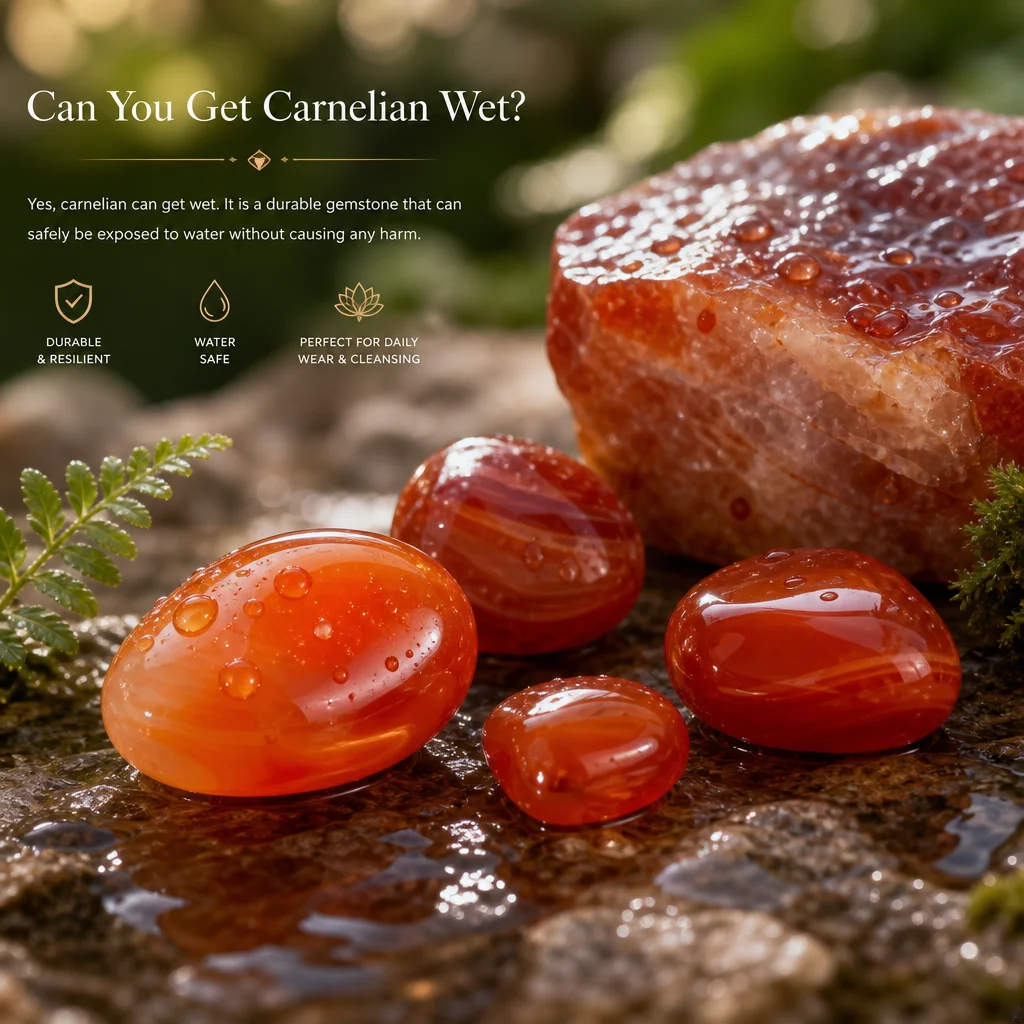
The Short Answer: Yes, With Caveats
Carnelian is a variety of chalcedony, which is itself a microcrystalline form of quartz (silicon dioxide, SiO₂). With a Mohs hardness of 6.5 to 7, carnelian sits in the middle range of gemstone durability—harder than apatite (5) and feldspar (6) but softer than beryl (7.5-8) and corundum (9). This hardness level means carnelian can safely handle brief water exposure without dissolving, crumbling, or losing its polish. So yes, you can get carnelian wet—but there are important details about temperature, duration, and water type that affect how well the stone holds up over time.
Why People Worry About Getting Carnelian Wet
The concern comes from the broader crystal community's water safety guidelines, which originated from a mix of mineralogical facts and cultural traditions. Certain stones genuinely should not get wet—selenite (gypsum, Mohs 2, water-soluble), halite (rock salt, dissolves instantly), turquoise (porous, can discolor), and malachite (contains copper, can leach in acidic water). Over time, these reasonable warnings about genuinely water-sensitive stones got generalized into blanket "don't get any crystal wet" advice, which is not accurate.
Carnelian falls firmly in the "water-safe" category for short-term exposure. Its quartz-based composition is chemically inert in neutral water at room temperature. The silicon dioxide crystal lattice does not react with H₂O under normal conditions, which is why quartz sand sits at the bottom of rivers and oceans for millennia without dissolving.
Fresh Water: How Long Is Safe
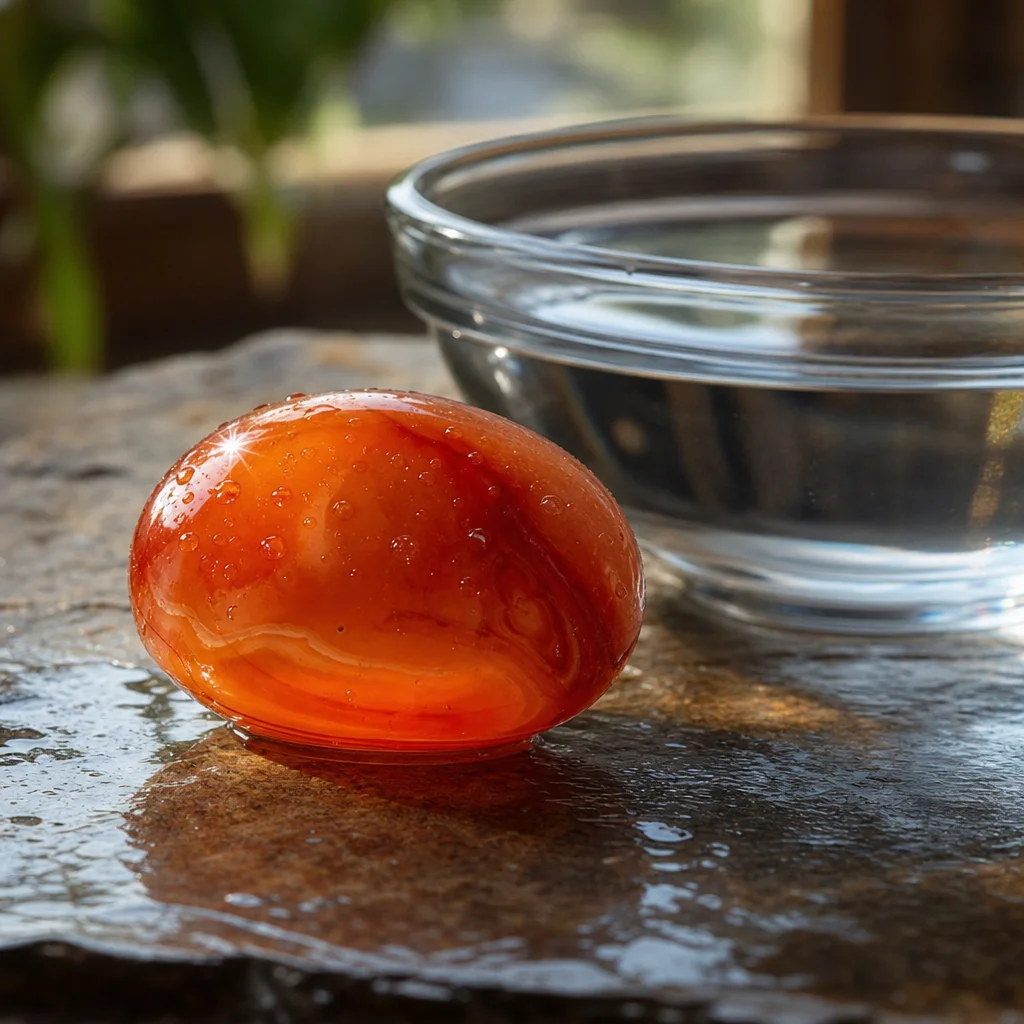
Brief rinsing under the tap for 30 seconds to a minute is completely safe for carnelian. This is actually a good practice for cleaning dust and oils from everyday wear. Use lukewarm water and a soft cloth or your fingers—no need for soap unless the stone is visibly dirty, in which case a mild dish soap works fine.
Soaking for longer periods is where nuance enters. A 10-15 minute soak in clean room-temperature water is unlikely to cause any visible damage to a solid piece of carnelian. However, extended soaking (hours or overnight) is not recommended for a few reasons. First, water can seep into any microscopic fractures or inclusions in the stone. When the water evaporates, it can leave mineral deposits behind or, in worst cases, expand slightly during temperature changes and widen existing cracks. Second, carnelian's polished surface can develop a dull film from dissolved minerals in tap water over repeated long soaks.
Salt Water: A Different Story
Some crystal practitioners recommend soaking stones in salt water for cleansing purposes. For carnelian, this is not recommended. Salt water (particularly ocean water, which contains sodium chloride plus magnesium, calcium, potassium, and trace minerals) is more chemically aggressive than fresh water. The chloride ions can interact with trace elements in the stone's surface over time, potentially dulling the polish or causing micro-etching on a microscopic level.
If your carnelian gets splashed at the beach, rinse it with fresh water as soon as possible and dry it with a soft cloth. A brief accidental exposure will not cause visible damage, but repeated or prolonged salt water contact should be avoided to preserve the stone's surface quality over the long term.
Hot Water: The Real Risk
Thermal shock is the most significant water-related risk for carnelian and most other quartz varieties. Sudden temperature changes—from cold water to hot water, or from a warm environment to ice-cold water—can cause microscopic fractures to propagate into visible cracks. This is not unique to carnelian; it is a risk for any crystalline material, including glassware and ceramic dishes.
If you want to clean carnelian in warm water, use lukewarm water (roughly body temperature, not hot) and avoid running cold water directly over a stone that has been sitting in direct sunlight. The temperature differential can be enough to cause thermal stress fractures in stones that already have internal inclusions or micro-cracks.
Boiling water is never recommended for any gemstone cleaning. The rapid temperature change and boiling agitation are unnecessarily aggressive for a stone that cleans perfectly well with lukewarm water and mild soap.
Carnelian Water Safety Compared to Other Popular Stones
Here is a quick reference table for water safety of commonly used stones alongside carnelian:
| Stone | Hardness | Water Safe? | Notes |
|---|---|---|---|
| Carnelian | 6.5-7 | Yes, briefly | Avoid salt water, hot water |
| Clear Quartz | 7 | Yes | One of the most water-safe stones |
| Amethyst | 7 | Yes | Avoid prolonged sun after water (color fade risk) |
| Rose Quartz | 7 | Yes | Same as amethyst regarding sun |
| Tiger's Eye | 6.5-7 | Yes | Same family as carnelian |
| Selenite | 2 | No | Water-soluble, will dissolve |
| Turquoise | 5-6 | Not recommended | Porous, can discolor and weaken |
| Malachite | 3.5-4 | No | Contains copper, can leach in water |
| Hematite | 5.5-6.5 | Not recommended | Iron oxide, can rust with prolonged water |
| Black Tourmaline | 7-7.5 | Yes | Very durable in water |
What About Making Carnelian Elixir Water
Crystal elixirs—or "gem waters"—involve placing stones in drinking water to create an infused beverage. For carnelian, this practice carries risks even though the stone itself is water-resistant. The concern is not that carnelian will dissolve (it will not), but that trace surface contaminants—polishing compounds, metal residues from jewelry settings, soil from mining, or treatments applied to enhance color—could leach into the water.
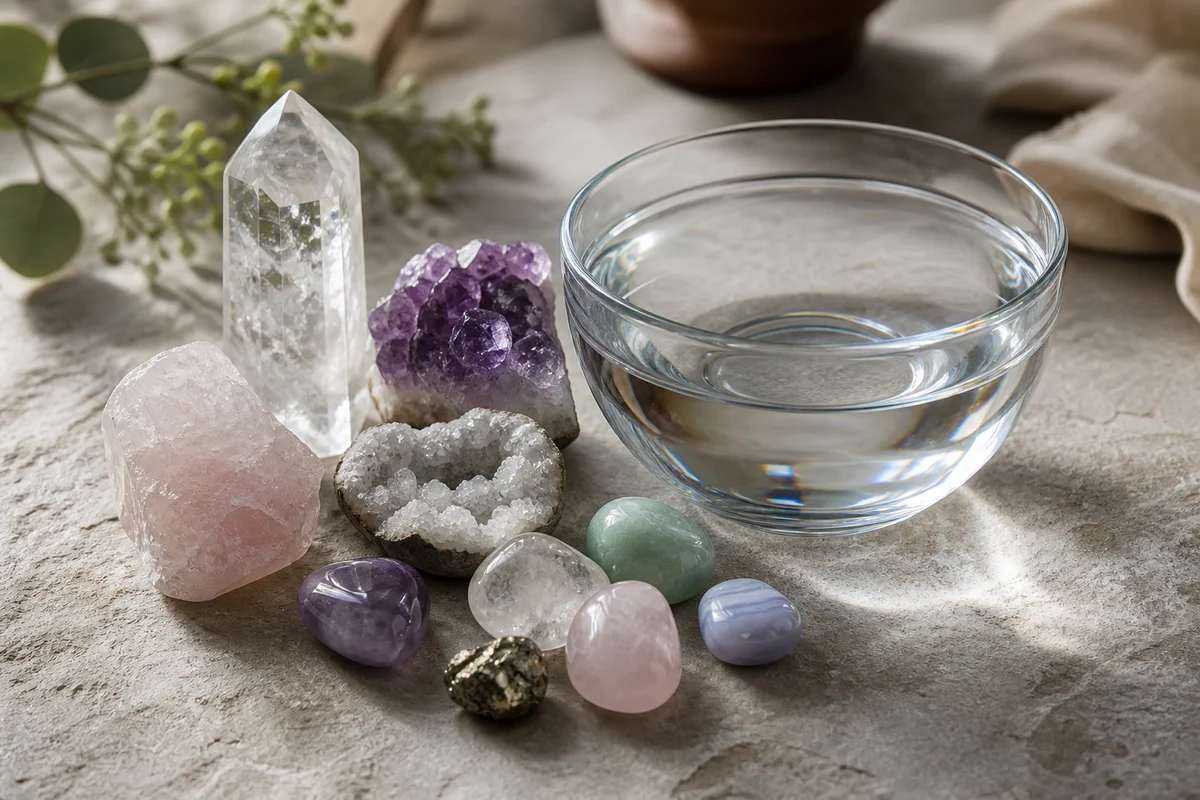
The safe approach for making crystal-infused water is the "indirect method": place the stone in a small glass container, then place that container inside a larger vessel of water. The stone never touches the drinking water directly, but you still get the aesthetic and ritual experience. This method works for any stone and eliminates the risk of contaminant leaching.
Best Practices for Carnelian Care
- Daily cleaning: Wipe with a soft, damp cloth after wearing. This removes skin oils and prevents buildup.
- Deep cleaning: Lukewarm water with mild soap and a soft toothbrush for gently scrubbing around bezel settings or stringing holes in beads.
- Drying: Pat dry with a lint-free cloth. Do not air dry, as water spots can form on polished surfaces.
- Storage: Keep in a cloth pouch or separate compartment to prevent contact with harder stones (sapphire, diamond) that could scratch it.
- Showering: Occasional shower exposure will not harm carnelian, but regular exposure to soap, shampoo, and hot water is not ideal. Remove jewelry before showering as a general best practice for all gemstones.
Frequently Asked Questions
Can carnelian go in the ocean?
Not recommended for extended periods. Brief splashes are fine—rinse with fresh water afterward. Prolonged salt water exposure can dull the polish over time and may seep into any surface-reaching fractures. The ocean also poses a physical risk: sand abrasion can scratch the polished surface, and waves can knock the stone loose from a ring or pendant setting.
What happens if carnelian accidentally stays in water overnight?
Probably nothing visible. A single overnight soak in clean, room-temperature water is unlikely to cause measurable damage to solid carnelian. However, repeated overnight soaking is not recommended as a regular practice. If this happens, remove the stone, dry it thoroughly with a soft cloth, and inspect for any changes. If the polish looks fine, no harm done.
Can I use carnelian in a fish tank or aquarium?
Technically yes, since carnelian is inert in neutral water. The concern is aesthetic rather than chemical—over time, hard water deposits can build up on the stone's surface and create a cloudy film. In a well-maintained aquarium with regular water changes, this is less of an issue. Avoid this in saltwater tanks due to the salt exposure concerns mentioned above.
Practical Tips and Expert Insights for Carnelian Care
When it comes to caring for your carnelian, there are a few practical tips and expert insights that can help you maintain its beauty and longevity. First and foremost, it's essential to understand the difference between safe and unsafe water exposure. While carnelian can indeed get wet, it's not as resilient as some other stones. Here's a breakdown of what you should know:
One of the most common concerns is the use of fresh water. While it's generally safe to rinse your carnelian with fresh water, it's important to keep it brief. Excessive exposure to water can lead to etching or discoloration, especially if the stone is not completely dry before it's stored. To prevent this, make sure to pat your carnelian dry with a soft cloth after rinsing.
When it comes to salt water, the story is a bit different. Carnelian is sensitive to salt and can be damaged by prolonged exposure. If you're near the ocean or have saltwater in your home, it's best to avoid submerging your carnelian in saltwater. If you do happen to get it wet, rinse it immediately with fresh water to dilute the salt and then dry it thoroughly.
Hot water poses a real risk to carnelian. The sudden temperature change can cause the stone to crack or break. If you need to clean your carnelian, use lukewarm water instead of hot. This will help to minimize the risk of damage. As an added precaution, always store your carnelian in a cool, dry place when not in use.
Another area of interest is the making of carnelian elixir water. While there's no harm in infusing water with your carnelian for spiritual or metaphysical purposes, it's important to understand that this process can also accelerate the stone's natural aging process. If you choose to make elixir water, do so sparingly and ensure that the stone is thoroughly dried after use.
Lastly, when it comes to best practices for carnelian care, remember to avoid harsh chemicals and abrasive cleaners. These can scratch or damage the stone's surface. Regularly polishing your carnelian with a soft cloth can help maintain its shine and luster. By following these tips and insights, you can ensure that your carnelian remains a beautiful and cherished piece for years to come.
Related Crystals/Stones and How to Use Them
Question:
Are there other stones similar to carnelian that I can explore for their properties and how to incorporate them into my life or jewelry?
Answer:
Oh, absolutely! There are several stones that share similarities with carnelian and can add depth and diversity to your crystal collection. Here's a look at a few:
-
Aventurine – Similar to carnelian in its warm hues and protective qualities, aventurine is known for bringing good luck and prosperity. It's a stone of opportunity and abundance, making it a great companion for carnelian in a variety of settings.
-
Chalcedony – A group of stones that includes agates, chalcedony, and carnelian, this group is celebrated for its soothing energy and healing properties. It's a versatile stone that can complement carnelian beautifully.
-
Fluorite – While fluorite is a more varied in color and usually a more pastel tone, it shares carnelian's clarity and can amplify its protective energies. It's known for enhancing concentration and mental clarity, making it a fantastic pairing.
-
Red Jasper – Another stone in the chalcedony family, red jasper is a bit rougher in texture but shares carnelian's protective properties. It's often used to encourage strength and courage, and it can be a powerful ally to carnelian.
Now, how do you combine these stones in daily life or jewelry making?
Incorporating these stones into your daily life can be as simple as wearing them as jewelry or keeping them nearby. Here are a few ideas:
-
Combining Stones in Jewelry: You can create a beautiful stack of bracelets using different sizes and shapes of these stones. Arrange them so that their colors complement each other, with the rich reds of carnelian and aventurine pairing nicely with the more subtle shades of fluorite or jasper.
-
Crystal Grids: If you're into crystal healing, you can create a grid by placing these stones strategically around your home or workspace. Place carnelian in the center, surrounded by aventurine and fluorite, with red jasper and chalcedony around the perimeter for protection and grounding.
-
Decorative Items: Display a small arrangement of these stones on your desk or bedside table. This not only adds a touch of beauty but also keeps their positive energies close by.
-
Carving and雕刻: For a more hands-on approach, you could carve small figures or amulets from these stones. This is a wonderful way to personalize your crystal experience and imbue the pieces with a deeper connection to their properties.
Remember, the key to using these stones is to connect with them and understand their energies. Take time to meditate with them or hold them during moments of stress to really feel their power. Whether you're crafting jewelry or simply keeping them around you, these stones are a beautiful addition to any crystal enthusiast's collection.
Can I clean my carnelian with an ultrasonic jewelry cleaner?
Ultrasonic jewelry cleaners are a popular choice for cleaning gemstones, but I wouldn't recommend using one with carnelian. This type of gemstone is sensitive to high-frequency vibrations and can crack or chip if exposed to the harsh ultrasound waves. Opt for a gentle hand清洗 method instead, like using warm water and a soft cloth or a mild soap solution specifically designed for gemstones.
Is it safe to wear carnelian in the shower?
While carnelian is a durable stone, it's generally not a good idea to wear it in the shower. The combination of moisture and the minerals found in tap water can lead to discoloration or dullness. Plus, you don't want to risk losing your carnelian during an accidental drop while shampooing your hair. It's best to keep your carnelian out of water and shower settings.
Can I use a steam cleaner on my carnelian jewelry?
Nope, steam cleaners should not be used on carnelian or any other jewelry containing gemstones. The high temperature from steam can cause the stone to expand or crack, especially if it's enclosed within a setting. Stick to safer cleaning methods like a soft cloth or a gentle jewelry cleaner designed for your specific type of carnelian piece.
How can I tell if my carnelian is real and not a fake?
Identifying real carnelian can be tricky, especially for those without expertise. Look for the following clues: real carnelian should have a reddish-brown or orange color, often with stripes or bands. It's also typically translucent to semi-transparent. If the stone is too uniform in color or texture, it might be a synthetic or treated version. Another hint is to check the luster; real carnelian often has a waxy to glassy sheen. If you're still unsure, consider consulting a professional gemologist for a definitive鉴定.



Comments