Crystals for Pregnancy: Safe Stones & What to...
June 5, 2026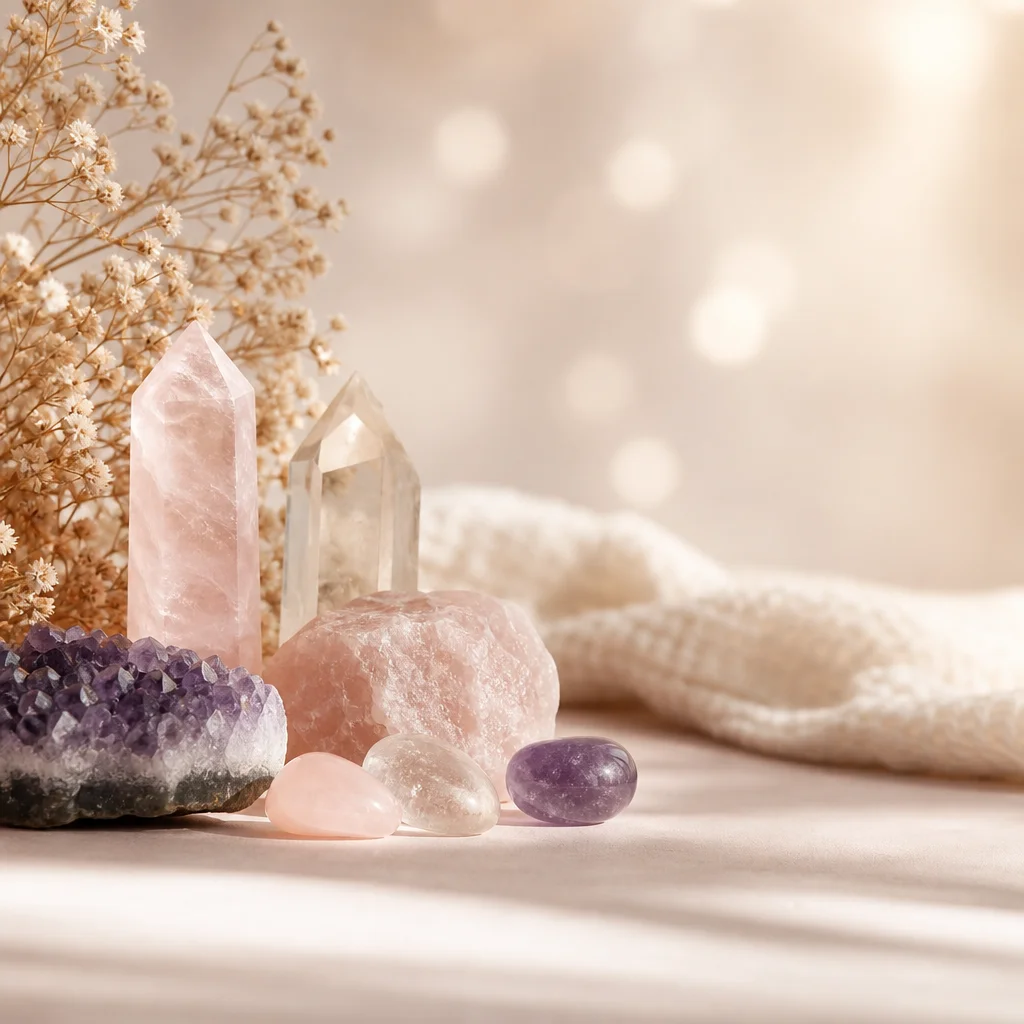
Why Crystal Safety Matters During Pregnancy
During pregnancy, your body becomes significantly more sensitive to environmental substances. What might be harmless under normal circumstances can pose risks during fetal development. This applies to crystals too — not because the stones themselves emit anything harmful, but because some minerals contain trace elements that can be absorbed through skin contact, inhaled as dust, or released through the stone's natural breakdown over time.
The key risk is heavy metal content. Certain minerals contain lead, arsenic, mercury, copper, or other toxic elements as part of their chemical composition. When these minerals are handled extensively, worn against the skin for prolonged periods, or used in ways that create dust (like placing them in bath water or crushing them for elixirs), the toxic elements can enter the body.
This article provides practical, mineralogy-based guidance. Always consult your healthcare provider as your primary medical resource during pregnancy.
Crystals Generally Considered Safe During Pregnancy
Rose Quartz — Emotional Nurturing
Rose quartz (SiO₂) is silicon dioxide — essentially the same mineral composition as glass and beach sand. It contains no toxic trace elements and is chemically inert, making it one of the safest stones for any use during pregnancy. Its association with love, compassion, and emotional healing makes it particularly relevant during a time when emotional well-being is paramount.
Rose quartz can be worn as jewelry, carried as a pocket stone, placed under a pillow, or used in meditation without any mineralogical safety concerns.
Moonstone — Intuitive Support
Moonstone is a feldspar mineral (KAlSi₃O₈–NaAlSi₃O₈) with no toxic components. Its association with the moon and feminine cycles has made it a traditional pregnancy stone in many cultures. In Mexican folk tradition, women have carried moonstone during pregnancy for generations, believing it offers protection and intuitive guidance.
Unakite — Gentle Transformation
Unakite is a combination of pink orthoclase feldspar (KAlSi₃O₈) and green epidote (Ca₂(Al,Fe)₃(SiO₄)₃(OH)). Both component minerals are safe for handling. Unakite's association with gentle transformation and growth resonates with the pregnancy journey — a gradual, powerful change happening within the body.
Green Aventurine — Calm and Optimism
Green aventurine is a variety of quartz (SiO₂) that may contain small inclusions of fuchsite (a chromium-bearing mica) that give it its green color. Chromium in trace amounts within a stable mineral matrix poses no risk through normal skin contact. Aventurine's association with optimism and calm makes it a good choice for managing the anxieties that can accompany pregnancy.
Carnelian — Vitality and Emotional Stability
Carnelian is a variety of chalcedony (cryptocrystalline SiO₂) with iron oxide (Fe₂O₃) inclusions that create its orange-to-red color. The iron in carnelian is the same element found in your blood and in iron supplements — it's biologically compatible and poses no risk through normal handling. Many practitioners recommend carnelian for first-trimester emotional stability when hormonal shifts can feel overwhelming.
Clear Quartz — Versatile and Safe
Clear quartz (SiO₂) is chemically the simplest and safest crystal available. It contains nothing but silicon and oxygen — two of the most abundant elements in the earth's crust and in the human body. It can be used in any way: worn, carried, placed in water (it won't dissolve or release anything), or used in meditation.
Amethyst — Calming Support
Amethyst (SiO₂ with trace iron) is chemically identical to clear quartz with the addition of iron impurities. These iron traces are what give amethyst its purple color. Like clear quartz, it's completely safe for all forms of use during pregnancy.
Aquamarine — Soothing Energy
Aquamarine is a beryl (Be₃Al₂Si₆O₁₈), the same mineral family as emerald and morganite. The beryllium content has raised some theoretical concerns, but in solid crystal form, the beryllium is locked within the mineral lattice and not bioavailable through skin contact. Aquamarine jewelry has been worn for centuries without documented health issues. Its calming, cooling energy is traditionally associated with easing emotional turbulence.
Jade (Nephrite or Jadeite) — Traditional Pregnancy Stone
Both types of genuine jade — nephrite (Ca₂(Mg,Fe)₅Si₈O₂₂(OH)₂) and jadeite (NaAlSi₂O₆) — have been used as pregnancy stones in Chinese and Mesoamerican cultures for thousands of years. Both are safe for handling and wearing. Nephrite is actually tougher than steel, making it an exceptionally durable pendant stone for daily wear throughout pregnancy.
Crystals to Avoid During Pregnancy
Malachite — Copper Toxicity Risk
Malachite is copper carbonate hydroxide (Cu₂CO₃(OH)₂). It contains up to 57% copper by weight. While copper is an essential trace element, excess copper during pregnancy can cause serious complications including liver damage and developmental problems. Malachite dust is the primary risk — cutting, grinding, or crushing malachite creates fine particles that can be inhaled or absorbed. Even polished malachite jewelry that chips or scratches over time can expose the internal copper-rich material.
Avoid all forms: Do not wear malachite jewelry against the skin during pregnancy. Do not use malachite in crystal elixirs (even the indirect method). Do not place malachite in bath water.
Cinnabar — Mercury Poisoning
Cinnabar is mercury sulfide (HgS) and is one of the most toxic minerals you can encounter. It contains approximately 86% mercury by weight. Mercury is a potent neurotoxin that crosses the placenta and can cause severe developmental damage to the fetus, affecting the brain, kidneys, and nervous system.
Avoid completely: Do not handle cinnabar at all during pregnancy. Even brief contact with cinnabar dust or prolonged skin contact with polished pieces is not worth the risk. This is not a stone to take chances with.
Galena — Lead Exposure
Galena is lead sulfide (PbS) and contains up to 86% lead. Lead is a well-documented developmental toxin that can cause miscarriage, premature birth, low birth weight, and long-term neurological damage. The risk comes primarily from handling galena dust, but even polished pieces can shed microscopic lead particles.
Chrysocolla — Variable Copper Content
Chrysocolla (Cu₂H₂Si₂O₅(OH)₄) contains significant copper, though typically less than malachite. Because chrysocolla often occurs as crusts or masses mixed with other minerals, the exact copper content can vary. Given the uncertainty and the availability of safer alternatives, it's prudent to avoid chrysocolla during pregnancy.
Arsenic-Bearing Minerals
Realgar (As₄S₄) and orpiment (As₂S₃) both contain arsenic. Arsenic is a potent poison and carcinogen that crosses the placenta. These minerals are relatively uncommon in the crystal market, but they do appear in collections. If you have them, store them in sealed containers away from living areas during pregnancy.
Other Stones to Use with Caution
- Fluorite — May contain trace amounts of various elements depending on the deposit. Tumbled fluorite jewelry is generally considered safe, but avoid unpolished or dusty specimens.
- Pyrite — Iron sulfide (FeS₂) can oxidize and release trace sulfur compounds. Not dangerous through skin contact, but avoid in elixirs or water.
- Labradorite — Generally safe, but some specimens from certain deposits contain trace minerals. Tumbled pieces are fine.
Safety by Trimester
First Trimester (Weeks 1–12)
Focus on emotional stability and morning sickness support. Carnelian and rose quartz are the primary recommendations. Carnelian for its warm, grounding energy that can help manage the emotional turbulence of early pregnancy. Rose quartz for self-love during a period when your body is changing rapidly.
Second Trimester (Weeks 13–27)
This is often the most comfortable trimester, when energy returns and the baby begins to move. Moonstone and aventurine are good choices for connecting with the intuitive aspects of pregnancy. Many women report that moonstone helps them feel more attuned to their changing body and the growing life inside.
Third Trimester (Weeks 28–40)
As the due date approaches, jade (both nephrite and jadeite) is traditionally recommended for its association with protection and safe passage. Moonstone continues to be relevant — in some traditions, moonstone is believed to ease labor and delivery when worn during the final weeks.
General Safety Practices
- Never make crystal elixirs during pregnancy — even with "safe" stones, the risk of accidentally including a toxic mineral is too high
- Keep all crystals out of bath water — warm water can dissolve trace minerals from stone surfaces
- Wash hands after handling raw or unpolished minerals — some may have residual dust or surface deposits
- Store potentially toxic stones in sealed containers — away from food preparation and living areas
- Choose tumbled or polished stones over rough, raw specimens — the polished surface is less likely to shed particles
- Wear jewelry on the exterior — pendants and bracelets are safer than stones kept in direct, prolonged skin contact on sensitive areas
Frequently Asked Questions
Is it safe to wear a crystal bracelet every day during pregnancy?
Yes, if the bracelet contains only safe stones (rose quartz, amethyst, aventurine, clear quartz, carnelian). Avoid bracelets containing malachite, azurite, or other copper/lead-bearing minerals. Check the stone composition if you're unsure.
Can I use crystals in a pregnancy meditation?
Absolutely. Meditation with rose quartz, moonstone, or aventurine is a safe and calming practice. The stone serves as a focus point, giving your hands something to hold and your eyes something to rest on during visualization.
What about crystals in a maternity photoshoot?
Safe stones can be included in photos — just avoid handling toxic minerals (malachite, cinnabar, galena) even briefly, as the risk from dust or residue on the stone's surface isn't worth it.
Frequently Asked Questions
Is it safe to drink crystal water or gem elixirs while pregnant?
We highly recommend avoiding direct crystal water or gem elixirs while pregnant. Even stones generally considered safe can contain trace minerals that might cause skin or dietary sensitivities during pregnancy. At SagStone, we suggest enjoying the balancing energies of our handcrafted jewelry externally by wearing your beautiful pieces or placing them near your bedside, rather than infusing them in your drinking water.
Which natural crystals are best for pregnancy morning sickness?
Many mothers seek soothing stones to ease pregnancy discomforts. Gentle, nurturing crystals like Rose Quartz and Moonstone are popular choices in our handcrafted jewelry collections for promoting emotional balance and calming energy. While our artisan pieces are designed to bring you comforting vibes and daily joy, they are not a medical cure. Always consult your physician for morning sickness relief.


Comments