Effective Crystal Charging Methods: Maximize
May 28, 2026
What "Charging" a Crystal Actually Means
Let's clear something up first: "charging" and "cleansing" aren't the same thing, even though most crystal guides use them interchangeably.
Cleansing means removing physical dirt, oils, or — in the metaphysical sense — clearing any lingering energy from previous handling. Charging means refreshing or amplifying the stone's properties, often by exposing it to a natural energy source like sunlight, moonlight, or sound.
Whether you think of this in terms of energy, intention, or simply giving your crystals a routine spa day, the practical methods are the same. What matters is doing it safely — because some popular "charging" methods can actually damage certain stones.
Across different cultures, the idea of ritually refreshing precious stones is ancient and widespread. Ancient Egyptians placed scarabs and amulets in sunlight as part of temple rituals. Hindu traditions use mantra recitation (sound charging) over gemstones before wearing them. Medieval European lapidaries recommended "renewing" stones by burying them in earth overnight. The methods below draw from these traditions while adding modern practical knowledge about what's actually safe for each mineral.
8 Methods — From Quick to Overnight
1. Running Water (1–2 Minutes)
Hold your crystal under cool running water — a tap is fine. Visualize the water carrying away any accumulated residue. Pat dry with a soft cloth.
Works for: Quartz family (clear, rose, smoky, amethyst), agate, jasper, aventurine, tiger's eye, obsidian, carnelian
Don't use on: Malachite (copper leaches), selenite (dissolves), calcite (softens), halite (literally salt — it melts), pyrite (rusts), angelite (degrades)
Time: 1–2 minutes
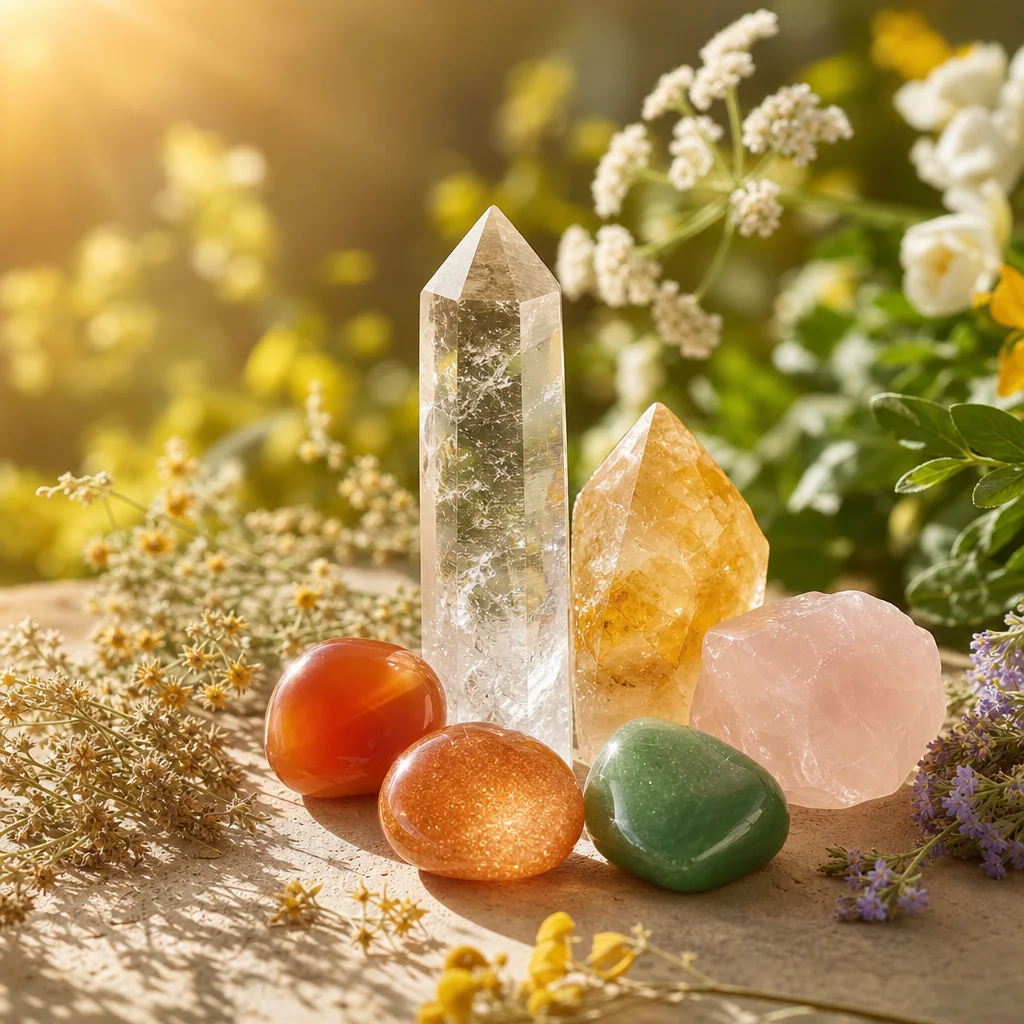
2. Sunlight (2–4 Hours)
Place your crystal in direct sunlight — a windowsill or outdoor spot works. Morning sun is gentler than afternoon sun.
Works for: Sunstone, citrine, tiger's eye, carnelian, clear quartz, amber, obsidian
Don't use on: Amethyst (fades to pale), rose quartz (fades), kunzite (fades rapidly), aquamarine (color can shift), fluorite (colors fade), celestite (turns white)
Time: 2–4 hours maximum. Don't leave stones out all day.
Watch out: Clear quartz can act like a magnifying glass and start fires if placed near flammable materials in direct sunlight. Yes, this actually happens.
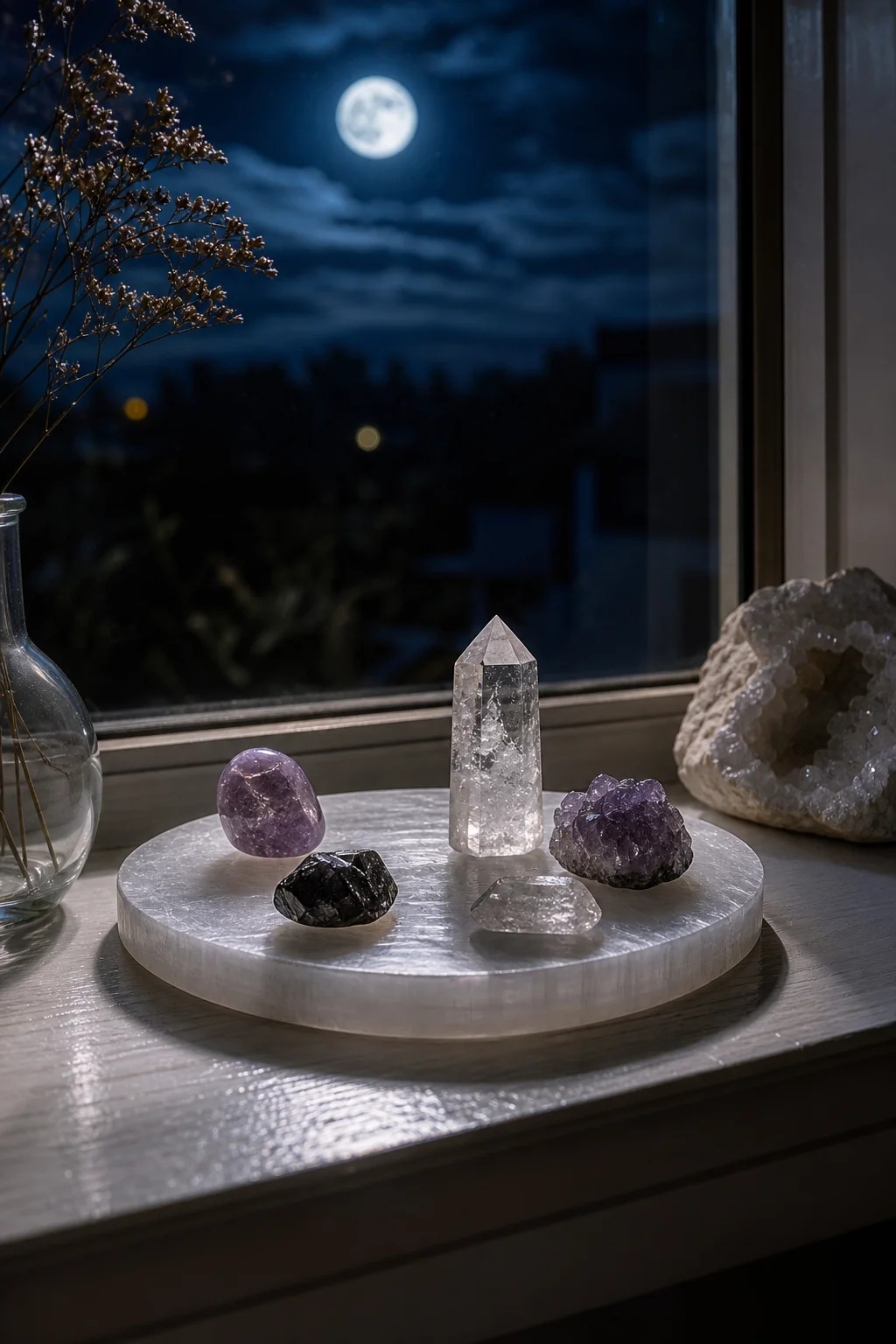
3. Moonlight (Overnight, 6–12 Hours)
The most popular crystal charging method, especially during full moons. Place your stones outside or on a windowsill where they'll receive moonlight.
Works for: Literally every stone — moonlight doesn't cause fading, heat damage, or water damage. This is the safest universal method.
Time: Overnight (place them out at dusk, bring them in at dawn)
Honestly: Moonlight charging is physically very gentle — the light intensity is minimal compared to sunlight. Its popularity is more cultural and ritualistic than practical. But it's harmless and many people find the ritual itself meaningful, so there's no reason not to do it.
4. Earth Burial (24–48 Hours)
Bury your crystal a few inches deep in soil — either in your garden or in a pot of clean earth. Brush off the dirt afterward.
Works for: Quartz, jasper, agate, obsidian, tourmaline, hematite — any hard, non-porous stone
Don't use on: Selenite, calcite, halite, or any stone rated below Mohs 4 (soil particles can scratch them)
Time: 24–48 hours
Tip: Mark the burial spot. People lose crystals this way more often than you'd think.
5. Sound Vibration (5–10 Minutes)
Use a singing bowl, tuning fork, bell, or even a recording of resonant sound. The idea is that sound waves physically vibrate through the stone. This is one of the oldest methods — Hindu traditions use it (mantra japa over malas), and Tibetan singing bowls serve a similar purpose.
Works for: All stones — sound doesn't damage minerals
Time: 5–10 minutes of sustained sound
Practical note: A singing bowl played near (not on) your crystals is sufficient. You don't need to balance the stone on the bowl.
6. Smoke / Smudging (5–15 Minutes)
Pass your crystal through the smoke of burning sage, palo santo, cedar, or incense. Make sure the smoke contacts all surfaces.
Works for: All stones — smoke is non-damaging
Time: 30–60 seconds per stone
Safety: Don't hold the stone in the flame. It's the smoke, not the fire. Also, be aware that sage smoke can bother pets and people with respiratory issues — good ventilation matters.
7. Salt or Salt Water (4–8 Hours for Dry Salt, Not Recommended for Salt Water)
Bury your crystal in a bowl of dry sea salt or Himalayan salt. The salt absorbs moisture and, in traditional practices, is believed to draw out negative energy.
Works for: Quartz, agate, jasper, obsidian, tourmaline
Don't use on: Literally anything soft, porous, or water-soluble. Salt is abrasive and salt water is corrosive to many minerals. Specifically avoid: selenite, calcite, malachite, pyrite, hematite (can rust), turquoise, amber, pearls
Time: 4–8 hours in dry salt
Salt water warning: Despite being recommended by many crystal blogs, salt water is genuinely bad for most stones. It can pit surfaces, corrode metallic inclusions, and degrade polish. Use dry salt instead, or skip salt entirely and use one of the other methods.
8. Breath and Intention (Under 1 Minute)
Hold the crystal in your hands, take a deep breath, and exhale slowly over it while setting an intention or simply focusing your attention on the stone. This is the fastest method and is used in many meditation traditions.
Works for: All stones
Time: 30–60 seconds
Best for: Quick refreshing between uses, or when you don't have access to other tools
Which Stones Need Which Method — Quick Reference
| Stone | Safe Methods | Avoid |
|---|---|---|
| Clear Quartz | All 8 methods | Prolonged direct sunlight (fire risk) |
| Amethyst | Water, moonlight, earth, sound, smoke, breath | Sunlight (fading) |
| Rose Quartz | Water, moonlight, earth, sound, smoke, breath | Sunlight (fading) |
| Selenite | Moonlight, sound, smoke, breath | Water (dissolves), salt, earth (moisture) |
| Malachite | Moonlight, sound, smoke, breath | Water, salt, sunlight |
| Citrine | All 8 methods (naturally heat-resistant) | — |
| Obsidian | All 8 methods | Sudden temperature changes (can crack) |
| Tiger's Eye | All 8 methods | — |
| Lapis Lazuli | Moonlight, sound, smoke, breath | Water (can degrade calcite veins), salt, prolonged sunlight |
| Calcite | Moonlight, sound, smoke, breath | Water (softens), salt, sunlight (some fade) |
What NOT to Do
Some common crystal care advice is genuinely harmful. Here are the top mistakes:
- Don't put water-soluble stones in water. Selenite, halite, and alabaster will literally dissolve. This isn't a metaphor — they will physically disappear.
- Don't leave colored stones in direct sunlight for days. Amethyst, rose quartz, kunzite, aquamarine, fluorite, and celestite can all fade permanently. The color loss is irreversible.
- Don't use salt water as a default. It's overrecommended online. Salt corrodes metallic inclusions, pits softer stones, and can ruin polished surfaces.
- Don't use ultrasonic cleaners on anything with internal fractures. Emeralds, quartz with inclusions, and any stone with visible cracks can shatter.
- Don't put your crystals in the freezer. Thermal shock cracks stones, especially those with natural inclusions or internal stress. This is not a "charging" method — it's a destroying method.
- Don't assume harder stones are indestructible. Diamond is the hardest mineral (Mohs 10) but can still chip along cleavage planes. Hardness ≠ toughness.
For specific stone care instructions, check our complete crystal cleaning guide and our malachite water safety guide.
FAQ
Q: How often should I charge my crystals?
A: There's no fixed schedule. Many people charge crystals when they first acquire them, after heavy use (like wearing a bracelet daily for weeks), or during full moons as a routine. Do what feels right — there's no "wrong" frequency.
Q: Can I charge multiple crystals at once?
A: Yes. Group charging is fine for any of these methods. Just make sure all the stones in the group are compatible with the chosen method (don't put selenite in a water-charging group, for example).
Q: Does charging actually do anything physically?
A: Running water physically removes dirt and oils. Sunlight can cause minor color changes (both desirable and undesirable). Moonlight and sound don't measurably alter the stone's physical properties. The ritual aspect — taking time to care for something intentionally — has documented psychological benefits regardless of whether you believe in crystal energy.
Q: What's the best method for beginners?
A: Moonlight. It's safe for every stone, requires zero equipment, and the full-moon routine gives you a natural reminder to do it regularly.
Frequently Asked Questions
How do I know if my crystal needs charging?
Crystals absorb energy, so they often need a recharge after heavy use. If your SagStone jewelry feels physically lighter, dull, or less energetically vibrant than when you first wore it, it is likely time for a charge. Regularly recharging keeps your handcrafted pieces resonating at their highest frequency.
Can I charge my crystal jewelry in direct sunlight?
While sunlight is a powerful charging method, it can be harsh on certain crystals and may fade delicate stones like amethyst or rose quartz over time. For our artisan-crafted jewelry, we recommend using moonlight or a selenite plate to safely energize your pieces without risking damage to the natural stones.
What is the difference between cleansing and charging a crystal?
Cleansing removes stagnant or negative energy that a stone has absorbed, essentially giving it a clean slate. Charging replenishes and amplifies the crystal's natural energy, much like recharging a battery. For the best results with your handcrafted gems, always cleanse your jewelry before charging it.
How often should I charge my SagStone crystal jewelry?
There is no strict schedule, but a good rule of thumb is to charge your handcrafted jewelry at least once a month. If you wear your crystal pieces daily or during highly emotional and stressful situations, you might want to cleanse and charge them weekly to maintain their optimal energetic potency.
Can I charge multiple crystal bracelets together?
Yes, you can absolutely charge multiple pieces together! Placing several crystal bracelets on a large selenite charging plate or under the light of a full moon is perfectly safe. The stones will not interfere with one another; instead, they will all absorb the natural, restorative energy together.



Comments