Can Rose Quartz Go in Water? Safety Guide Inside
May 28, 2026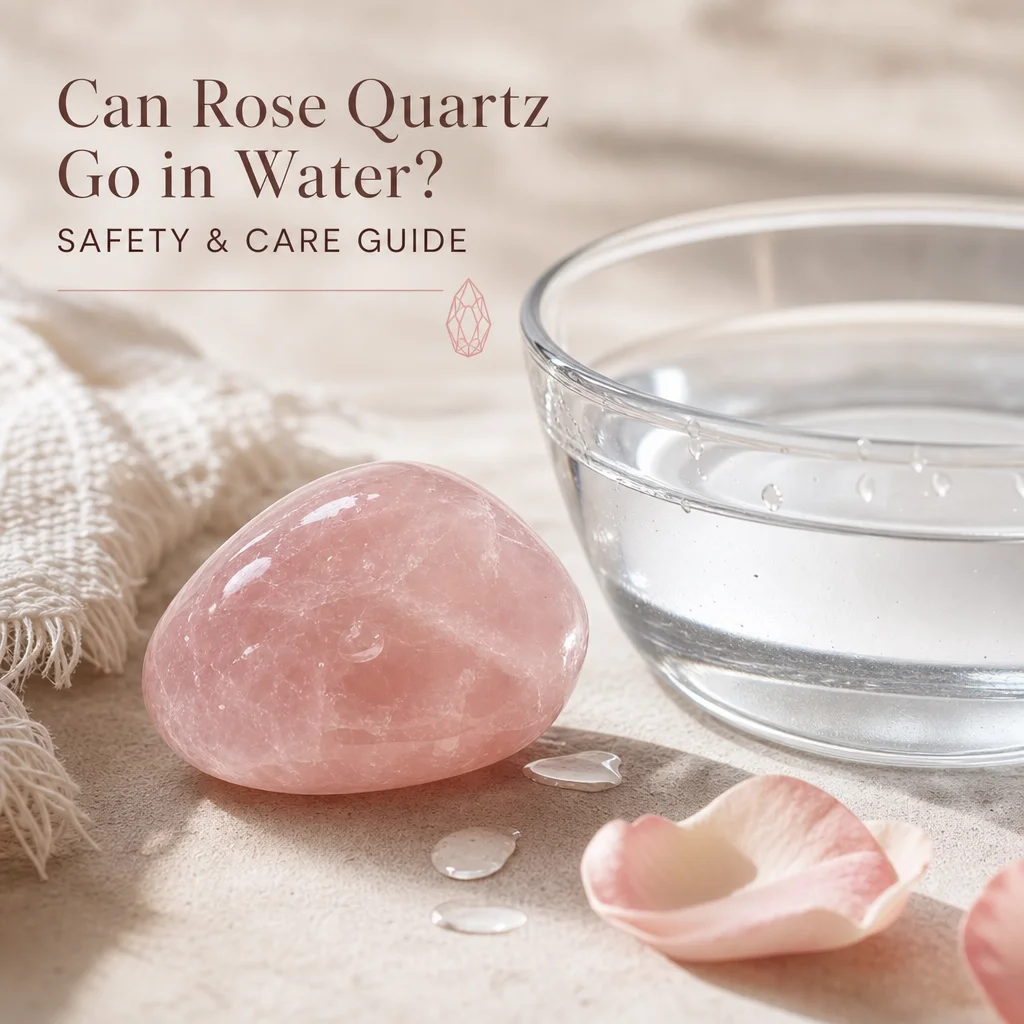
Can Rose Quartz Go in Water? Safety & Care Guide
The Short Answer: Yes, But With Caveats
Rose quartz is one of the more water-tolerant crystals in most collections. With a Mohs hardness of 7, it holds up reasonably well against brief water exposure. You can wash your hands while wearing a rose quartz bracelet without panicking, and a quick rinse under the tap won't destroy your tumble stone.
That said, "can go in water" and "should go in water" are different conversations. Prolonged soaking, hot water, salt water, and mineral-rich water all pose real risks to rose quartz — not because it will dissolve (it won't), but because the surface can become dull, micro-fractures can deepen, and that signature pink color can fade over time.
This guide breaks down exactly what happens when rose quartz meets water, which scenarios are safe, and how to clean yours without ruining it.
Understanding Rose Quartz's Relationship With Water
Rose quartz is a variety of macrocrystalline quartz (SiO₂) colored by trace amounts of titanium, iron, or manganese. Its pink color comes from these trace elements, not from any dye or treatment — which means the color is stable under normal conditions but can be affected by extreme environments.
What the Mohs Scale Actually Tells You
The Mohs hardness of 7 means rose quartz resists scratching from most common materials. It also means the crystal structure is relatively dense, with fewer microscopic channels for water to penetrate compared to softer, more porous stones like selenite or halite.
But hardness and water safety aren't the same thing. Fluorite is a 4 on Mohs and degrades in water. Halite is a 2.5 and literally dissolves. Rose quartz sits comfortably on the "safe" end of the spectrum, but it's not invincible.
The Real Risk: Not Dissolving, But Degrading
Rose quartz won't dissolve in water. The risk is surface degradation:
- Micro-fractures deepening — Natural inclusions and internal fractures (very common in rose quartz, especially star rose quartz) can trap water, which expands and contracts with temperature changes, slowly widening cracks over time.
- Surface dullness — Prolonged water exposure can strip the polished surface, leaving the stone looking cloudy instead of glassy.
- Color fading — Extended UV exposure combined with water (like leaving it in a sunny pool) can accelerate color fading in some specimens.
Water Exposure Safety Chart
Here's a practical breakdown of common water scenarios and their risk level for rose quartz:
| Scenario | Risk Level | Duration Limit | Notes |
|----------|-----------|----------------|-------|
| Quick rinse under tap | ✅ Safe | <30 seconds | Dry immediately after |
| Washing hands with bracelet on | ✅ Safe | Brief contact | Pat dry, don't rub |
| Shower | ⚠️ Low risk | <5 minutes | Soap residue can build up |
| Bath | ⚠️ Moderate | Avoid soaking | Hot water + soap = surface dullness |
| Swimming pool (chlorine) | ❌ Risky | Avoid | Chlorine attacks surface polish |
| Ocean / salt water | ❌ Avoid | None | Salt is abrasive and corrosive |
| Crystal elixir (overnight soak) | ❌ Not recommended | None | Use indirect method instead |
| Boiling water | ❌ Dangerous | None | Thermal shock can crack stone |
| Dishwasher | ❌ Destroy it | None | Heat + detergent + agitation |
The Crystal Elixir Question
This is where most people get confused. Rose quartz is frequently marketed as a "love stone" suitable for making gem water or crystal elixirs. The logic seems sound — it's quartz, quartz is hard, therefore it's safe in water.
The issue isn't the stone dissolving. The issue is what might be on or in it.
Direct Method vs. Indirect Method
Direct method means placing the stone directly in your drinking water. This is risky for any crystal because:
- Most rose quartz specimens contain microscopic inclusions that could harbor bacteria in surface cracks
- Stones from unknown sources may have been treated with dyes, oils, or polishes that aren't food-safe
- Some rose quartz contains trace minerals you don't necessarily want to ingest in concentrated form
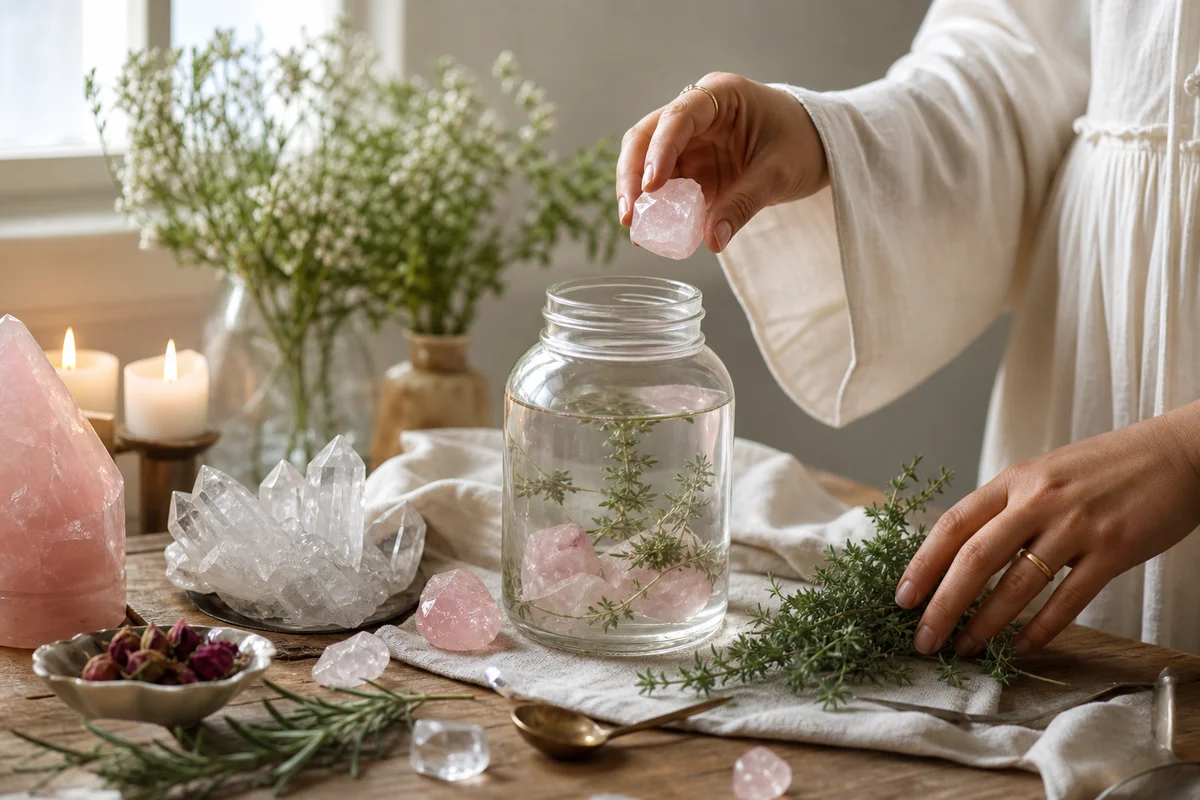
Indirect method means placing the stone in a small container, then placing that container in your water. The water never touches the stone directly. This is the safer approach and works just as well for the ritual aspect.
If you're determined to use the direct method, use only tumbled stones from verified, untreated sources, and clean them thoroughly with hot (not boiling) water first.
How to Clean Rose Quartz Properly
Cleaning rose quartz is straightforward. Here's the method that preserves both the polish and the color:
Regular Cleaning (Weekly)
- Run under lukewarm water for 10-15 seconds
- Use a soft cloth or your fingers to gently remove dust
- Pat dry with a microfiber cloth
- Let it air dry completely before storing
Deep Cleaning (Monthly or After Heavy Use)
- Fill a bowl with lukewarm water (not hot)
- Add a drop of mild, pH-neutral soap (like baby soap or castile soap)
- Submerge the stone for no more than 2-3 minutes
- Gently scrub with a soft-bristled toothbrush (focus on any crevices in jewelry settings)
- Rinse thoroughly under lukewarm water
- Pat dry and air dry
What to Avoid
- Ultrasonic cleaners — The vibrations can widen internal fractures, especially in specimens with visible inclusions
- Steam cleaners — Thermal shock risk
- Chemical cleaners — Bleach, ammonia, and jewelry cleaners can damage the polish
- Salt water — Even for "cleansing" rituals, salt is abrasive and can scratch the surface
- Boiling water — Sudden temperature changes can cause thermal cracking
Rose Quartz Jewelry: Daily Wear Considerations
If you wear rose quartz jewelry daily, water exposure is basically inevitable. Here's how to manage it:
Bracelets
Rose quartz bracelets encounter water constantly — hand washing, cooking, accidental splashes. The good news is that brief contact is fine. The bad news is that the stringing material (usually elastic) degrades much faster than the stone itself. If your bracelet is on elastic, take it off before washing dishes or showering to extend the string's life.
Rings
Rings take the most abuse. Rose quartz rings set in open-back settings allow water to pool behind the stone, which can weaken the setting adhesive over time. If your ring has a closed-back setting, moisture trapped behind the stone can cause cloudiness. Remove rose quartz rings before washing hands if possible.
Pendants
Pendants have the least water exposure risk since they're usually protected by clothing. A quick splash from washing your face won't hurt, but remove pendants before showering to avoid soap residue buildup on the stone and chain.
Comparing Rose Quartz to Other "Safe" Crystals
For context, here's how rose quartz compares to other commonly asked-about crystals and their water safety:
| Crystal | Mohs | Water Safe? | Notes |
|---------|------|------------|-------|
| Rose Quartz | 7 | ✅ Brief contact | Avoid soaking and hot water |
| Clear Quartz | 7 | ✅ Brief contact | Same precautions as rose quartz |
| Amethyst | 7 | ✅ Brief contact | Color fades faster in sun + water |
| Citrine | 7 | ✅ Brief contact | Heat-treated citrine may fade |
| Smoky Quartz | 7 | ✅ Brief contact | Relatively hardy |
| Aventurine | 6.5-7 | ✅ Brief contact | Slightly softer, same rules apply |
| Malachite | 3.5-4 | ❌ Avoid | Copper leaches into water |
| Selenite | 2 | ❌ Never | Dissolves in water |
| Halite | 2.5 | ❌ Never | Literally salt — it dissolves |
Temperature Matters More Than You Think
Rose quartz, like all quartz varieties, is sensitive to sudden temperature changes. The technical term is thermal shock, and it's the reason you should never move a cold stone directly into hot water or vice versa.
The mechanism is simple: the outer layer of the stone heats (or cools) faster than the inner layer, creating uneven expansion (or contraction) stress. With existing micro-fractures — which most rose quartz has — this stress can cause cracks to propagate.
Practical rule: If you're going to clean your rose quartz with warm water, start with room-temperature water and gradually warm it. Never drop a cold stone into hot water.
Storage Tips to Prevent Water Damage
Water damage isn't always about direct exposure. Humidity and condensation can affect rose quartz over time, especially in certain storage conditions:
- Don't store in bathrooms — The humidity fluctuation from showers creates condensation on and inside the stone
- Use a soft pouch or lined box — This prevents both scratching and dust accumulation
- Separate from harder stones — Corundum (ruby, sapphire) and topaz can scratch quartz
- Keep away from direct sunlight — Not a water issue, but prolonged UV fades pink quartz
FAQ
Q: Can I wear my rose quartz bracelet in the shower every day?
A: Technically, the stone itself will survive. But the elastic cord won't last, and soap residue will build up on the stones, making them look cloudy over time. You'll get much more life out of your bracelet by removing it before showering.
Q: Can I make rose quartz water by leaving a stone in my water bottle overnight?
A: This isn't recommended for direct contact. Use the indirect method instead — place the stone in a small glass jar, then place that jar in your water bottle. You get the ritual without the contamination risk.
Q: My rose quartz looks cloudy after I got it wet. Can I fix it?
A: Surface cloudiness from hard water or soap residue can often be polished away with a microfiber cloth. If the cloudiness is internal (you can see it deep inside the stone), it's likely natural inclusions that were always there but became more visible after water filled surface micro-fractures. This is usually permanent but doesn't affect the stone's structure.
Q: Is salt water cleansing safe for rose quartz?
A: No. Salt is abrasive and can scratch the polished surface of rose quartz. Use smoke, sound, or moonlight for ritual cleansing instead. If you must use water, plain lukewarm water is fine for a quick rinse.
Q: How can I tell if my rose quartz has been damaged by water?
A: Look for a dull or cloudy surface that doesn't polish back to its original luster, hairline cracks that weren't there before (often visible when you hold the stone up to light), and faded or washed-out pink color compared to when you first got it.
Frequently Asked Questions
How to Clean Rose Quartz Jewelry?
Use a soft cloth and warm water to gently wipe down your Rose Quartz jewelry. Avoid using harsh chemicals or abrasive materials to prevent damage.
Can I Wear Rose Quartz Everyday?
Yes, you can wear Rose Quartz everyday. It's a gentle stone that can be worn regularly for its emotional support and nurturing properties.
What Does Rose Quartz Symbolize?
Rose Quartz is known for its love and healing properties. It's often associated with promoting self-love, compassion, and emotional balance.
How Long Does Rose Quartz Last?
The longevity of Rose Quartz jewelry depends on its quality and care. With proper care, it can last for many years, maintaining its beauty and energy.
Can I Sleep with Rose Quartz Under My Pillow?
Yes, many people choose to sleep with Rose Quartz under their pillow. It's believed to enhance dreams and promote a sense of relaxation and tranquility.
How Do I Know If My Rose Quartz Is Real?
Real Rose Quartz is usually translucent to opaque with a pink to red hue. It can be tested with a magnet (it's not magnetic) or by checking for its natural inclusions. Authenticity is also ensured by purchasing from a reputable artisan handcrafted brand.
Understanding the Basics
This section covers important aspects of understanding the basics. For detailed information, please refer to the FAQ section below.
Key Factors to Consider
This section covers important aspects of key factors to consider. For detailed information, please refer to the FAQ section below.
Step-by-Step Instructions
This section covers important aspects of step-by-step instructions. For detailed information, please refer to the FAQ section below.
Common Mistakes to Avoid
This section covers important aspects of common mistakes to avoid. For detailed information, please refer to the FAQ section below.

Comments