Making Your Own Crystal Elixir at Home (Without
May 14, 2026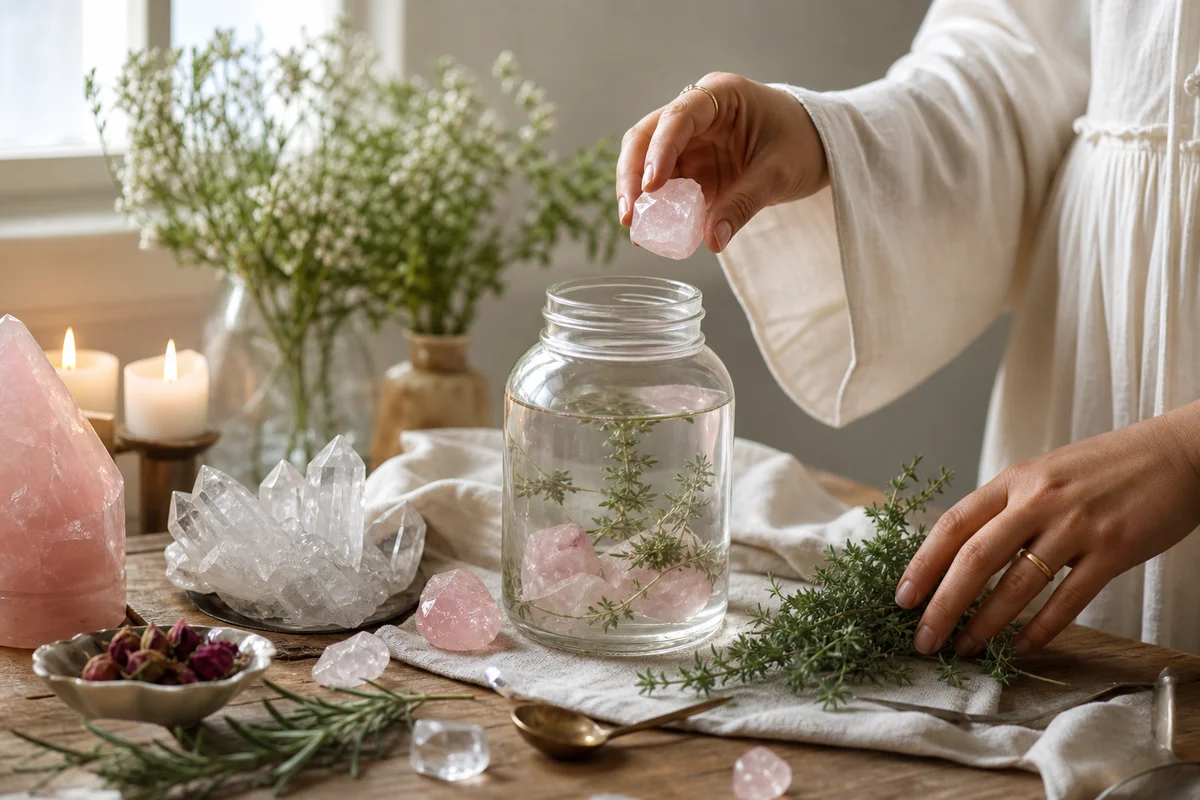
Making Your Own Crystal Elixir at Home (Without Poisoning Yourself)
Crystal elixirs sound straightforward: put a stone in water, wait, drink it. The problem is that some crystals will actually leach toxic minerals into your water. Copper, lead, aluminum, arsenic — these show up in more gemstones than you'd expect, and they have no taste or smell in low concentrations.
The good news is that making a safe crystal elixir isn't complicated once you know the rules. The bad news is that most blog posts about crystal elixirs skip the safety part entirely or bury it in fine print.
This guide covers both the traditional methods people use and the concrete safety steps that keep those methods from going wrong. I've included a list of stones that are generally considered safe for direct water contact and several that definitely aren't.
The Two Methods: Direct vs. Indirect
Direct Method
The stone goes straight into your water. This is the traditional approach and the one most people picture when they hear "crystal elixir." It's simple and requires no special equipment beyond a glass jar.
The catch: it only works with stones that are chemically stable in water. Some crystals dissolve slowly. Others release trace metals. A few look fine initially but degrade over days of soaking.
Indirect Method
The stone sits outside the water container, or inside a smaller sealed container that's placed into the water. The idea is that the stone's "energy" or vibration transfers to the water without physical contact.
Whether or not you believe in vibrational transfer, the indirect method eliminates all chemical risk. If you're unsure about a stone's safety, use indirect. It takes the same amount of time and zero additional effort.
A practical indirect setup: place your crystal next to a glass jar of water on your nightstand. Leave it for 6-12 hours. Some people use a small glass within a larger jar of water, with the crystal in the space between. Both approaches accomplish the same thing — proximity without contact.
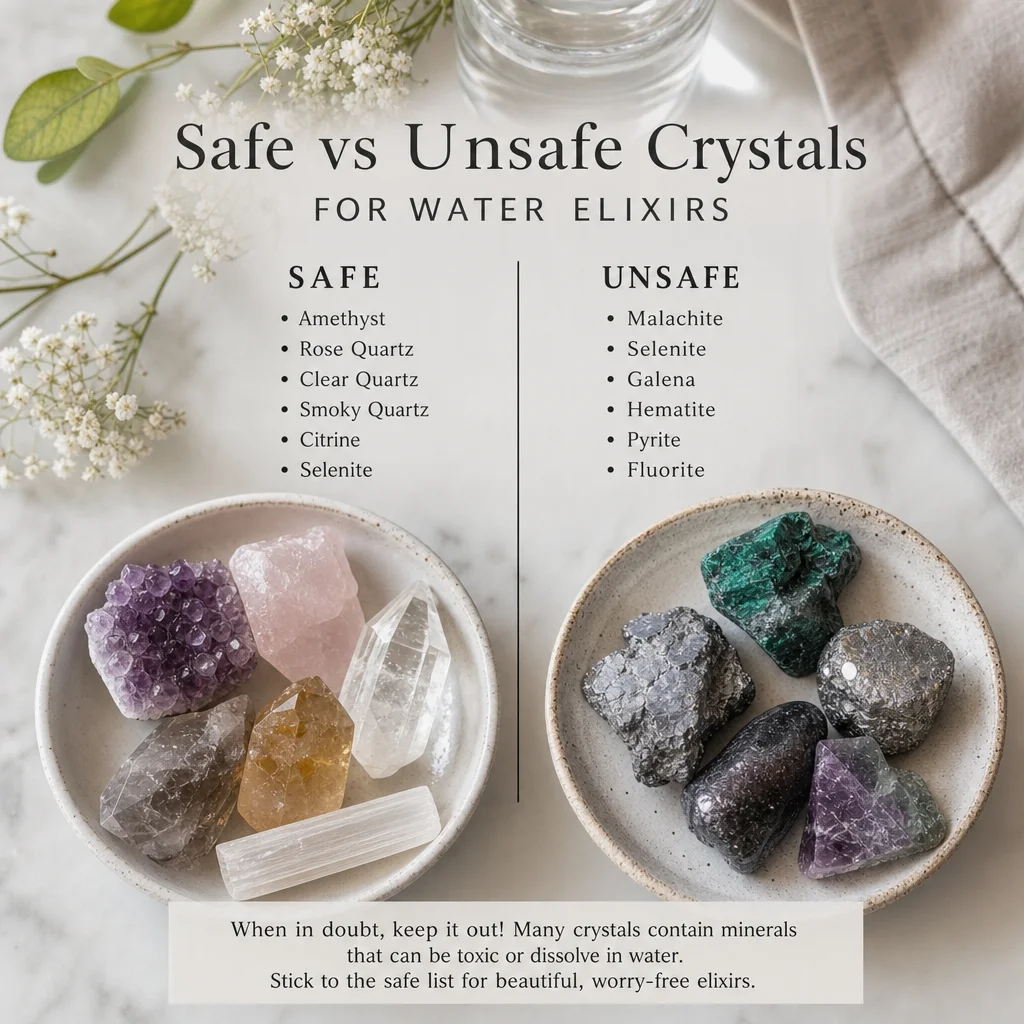
Stones Generally Considered Safe for Direct Water Contact
Even with "safe" stones, follow these basics: use clean, filtered water. Use a glass or ceramic container, not plastic. Don't leave the stone soaking for more than 24 hours. Rinse the stone first to remove dust or residue.
- Clear quartz — chemically inert (silicon dioxide), the most common choice
- Amethyst — also quartz-family, stable in water
- Rose quartz — same stability as clear quartz
- Citrine — another quartz variety, no issues
- Smoky quartz — stable, though some people prefer indirect for darker specimens
- Aventurine — generally safe, but give it a good rinse first
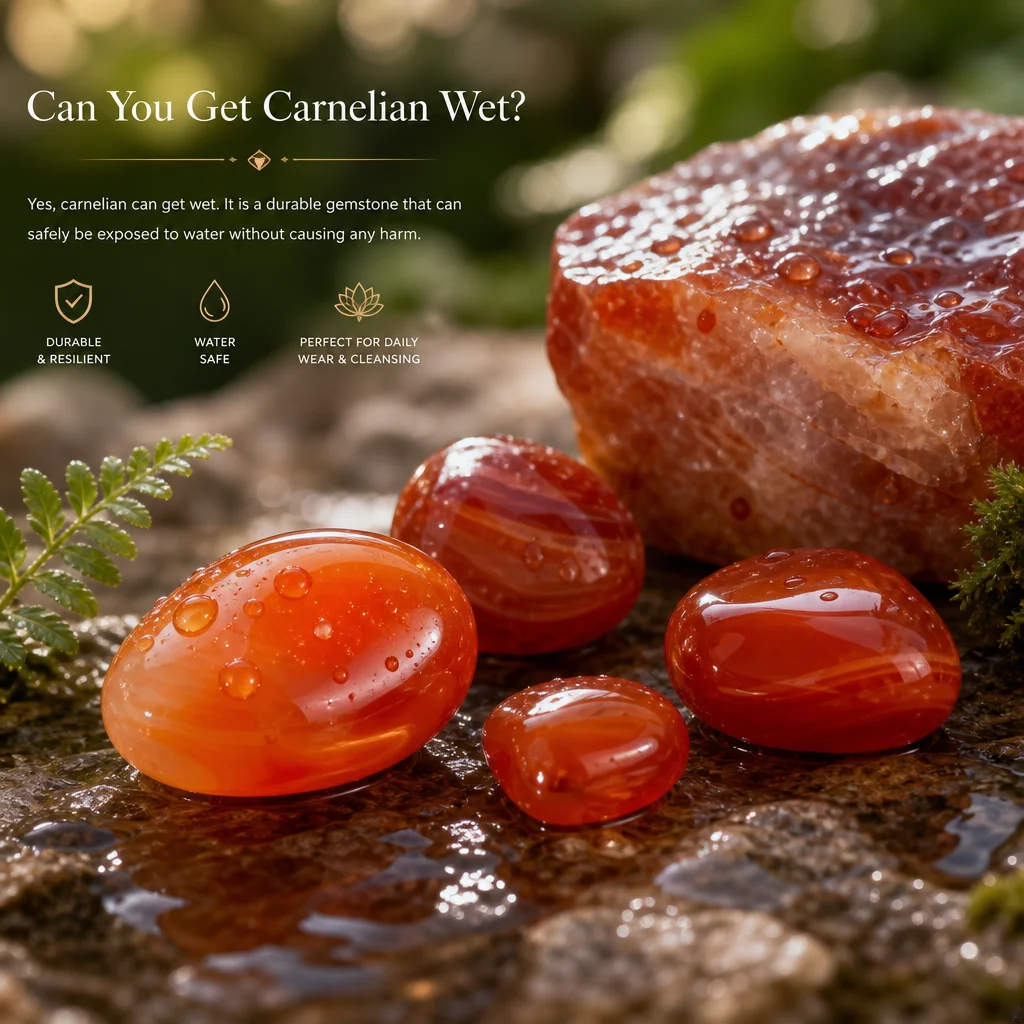
- Carnelian — stable, often used in traditional elixirs
- Moonstone (feldspar) — stable in short soaks
- Black tourmaline (schorl) — stable, though some specimens contain inclusions; inspect first
When in doubt about a specific specimen, the indirect method is always the safer bet. Natural stones can contain unexpected mineral inclusions that don't show up on the surface.
Stones to Never Put Directly in Drinking Water
This is the section that matters most. These stones contain minerals that can leach into water:
- Selenite (gypsum) — dissolves in water. Literally. It's a soft mineral that will degrade and make your water cloudy with gypsum particles.
- Malachite — contains copper. Even small amounts of copper in drinking water can cause nausea and stomach cramps.
- Azurite — another copper mineral. Same risks as malachite.
- Chrysocolla — copper silicate. Beautiful blue stone, not something you want dissolved in your water.
- Pyrite (fool's gold) — iron sulfide. Can oxidize in water and create sulfur compounds.
- Lepidolite — contains lithium. Yes, the same lithium used in psychiatric medication. Not something to self-administer through water.
- Fluorite — contains fluorine. Low risk in short exposures, but many sources recommend against prolonged water contact.
- Hematite — iron oxide. Can rust in water and leave a metallic taste.
- Cinnabar — contains mercury. Extremely toxic. Should never be used in elixirs by any method.
- Galena — lead ore. Another hard no for obvious reasons.
If you own tumbled stones and aren't certain what they are, don't use them for direct elixirs. Misidentification is more common than people think, especially with stones bought from unfamiliar sources.
Step-by-Step: Making a Basic Quartz Elixir
Using clear quartz as an example since it's widely available, inexpensive, and chemically stable:
What You Need
- One clear quartz crystal (tumbled or raw)
- A clean glass jar with a lid
- Filtered or spring water
- A sunny windowsill or a spot on your nightstand
The Process
Clean your crystal first. Rinse it under running water for 30 seconds. Pat it dry. Some people prefer to cleanse their stones with smoke, sound, or moonlight beforehand — those are personal rituals, not hygiene steps, so follow your own preference there.
Fill the jar. Pour filtered water into your glass jar. Leave about an inch of space at the top so the crystal displaces water without overflowing.
Place the crystal in the jar. Gently lower it in. If it's a raw crystal with sharp edges, consider wrapping it loosely in a piece of clean cheesecloth first so it doesn't chip the glass.
Cover and wait. Put the lid on. Place the jar in sunlight for 4-6 hours or moonlight overnight. The traditional belief is that sunlight "charges" the water more actively while moonlight creates a gentler elixir. Practically speaking, the main difference is that prolonged direct sunlight can promote bacterial growth in warm conditions, so keep your soak under 12 hours if you're using the sun method.
Remove the crystal. Take the stone out and set it aside. Your elixir is ready.
Storage
Drink the elixir within 24 hours if you used the direct method. Refrigerate it if you're not drinking it immediately. Don't store elixirs for longer than a day — they don't contain preservatives, and water that's had a mineral object soaking in it is more prone to bacterial growth than plain water.
For indirect method elixirs, the water itself hasn't been in contact with anything foreign, so standard water storage rules apply (a few days refrigerated is fine).
A Note on Intent and Ritual
Crystal elixirs have been part of various cultural traditions for centuries. In Ayurvedic practice, gem-infused water is called rmani jal. In some folk traditions, specific stones were associated with specific intentions — rose quartz for self-love, carnelian for motivation, aventurine for prosperity.
Whether the mechanism is vibrational, mineralogical, or purely psychological is something people debate at length. What's not debatable is the safety aspect. A crystal elixir made with proper precautions won't harm you. One made with the wrong stone in direct contact can.
If you enjoy the ritual aspect, treat the safety steps as part of that ritual. Knowing which stones are safe and which aren't, cleaning your crystal before use, using glass instead of plastic — these mindful actions make the process more intentional, not less. The best rituals are the ones you can repeat safely and consistently.
Quick Reference Chart
Tear this out (or screenshot it) for your next elixir session:
- Safe for direct contact: clear quartz, amethyst, rose quartz, citrine, smoky quartz, aventurine, carnelian
- Indirect only: selenite, malachite, azurite, chrysocolla, pyrite, lepidolite, fluorite, hematite
- Never use: cinnabar, galena, any stone you can't identify
- Max soak time: 12 hours (direct), 24 hours (indirect)
- Container: glass or ceramic only
- Shelf life: 24 hours refrigerated (direct), 3 days refrigerated (indirect)
Start simple. One stone, one jar, filtered water. Once you've made a few batches and the process feels natural, you can experiment with combinations, different containers, or longer soak times. But the safety rules don't change as you get more experienced. They're the foundation everything else sits on.
Choosing the Right Crystal for Your Elixir
Now that you know the methods and the safety precautions, it's time to choose the right crystal for your elixir. The crystal you select will depend on the benefits you're looking for and your personal preference. Here's a breakdown of some popular crystals and their properties:
- Clear quartz — Known as the "master healer," clear quartz amplifies energy and enhances clarity of mind. It's great for meditation and spiritual growth.
- Amethyst — Associated with calmness and peace, amethyst is often used to relieve stress and improve sleep. It's also believed to enhance creativity.
- Rose quartz — Known as the "love stone," rose quartz promotes love, self-love, and emotional healing. It's great for those going through heartache or looking to attract love.
- Citrine — Citrine is the "happy stone" and is known for its ability to attract abundance and joy. It's also believed to boost confidence and creativity.
- Smoky quartz — Smoky quartz is grounding and protective. It's often used to help with anxiety and to shield against negative energy.
- Aventurine — Aventurine is a stone of opportunity and luck. It's believed to help with prosperity and abundance, as well as to enhance personal power.
- Carnelian — Carnelian is a stone of courage and confidence. It's often used to boost self-esteem and to help with assertiveness.
How to Infuse Your Crystal Elixir with Intention
Once you've chosen your crystal and prepared your water, it's time to infuse your elixir with intention. This is a personal process, but here are some steps you can follow:
- Set your intention: Before you start, take a moment to think about what you want to achieve with your elixir. Whether it's for healing, abundance, or personal growth, be clear about your intention.
- Visualize: Imagine the energy of the crystal flowing into the water, infusing it with your intention.
- Chant or meditate: While the water is soaking, you can chant affirmations or meditate to further strengthen your intention.
- Thank the crystal: After you've finished, thank the crystal for its energy and for helping you achieve your intention.
Storing Your Crystal Elixir
After your crystal elixir has soaked for the recommended amount of time, it's ready to be consumed. But how should you store it?
- Keep it cool: Store your elixir in a cool, dark place to prevent any potential degradation of the crystal's energy.
- Use a glass container: Glass is a great material for storing your elixir as it doesn't interact with the water in the same way plastic does.
- Keep it sealed: To prevent any contamination, make sure your container is sealed tightly.
How Often Should You Drink Your Crystal Elixir?
There's no one-size-fits-all answer to this question. Some people drink their crystal elixir daily, while others prefer to take it only on certain days or during specific times of the year. The key is to listen to your body and intuition. If you feel like you need more, drink more. If you feel like you've achieved your goal, you can take a break or discontinue use.
Crystal Elixir vs. Essential Oil Diffuser
Many people use essential oil diffusers to enhance their environment with the benefits of essential oils. But what's the difference between using a crystal elixir and an essential oil diffuser?
| Crystal Elixir | Essential Oil Diffuser |
|---|---|
| Contains the physical properties of the crystal, such as color and texture. | Contains the volatile compounds of the essential oil, which are inhaled. |
| Can be consumed, although it's not a substitute for medical treatment. | Should not be ingested and is for aromatherapy purposes only. |
| Can be used for a variety of intentions, such as healing, abundance, and personal growth. | Primarily used for relaxation, stress relief, and mood enhancement. |
| Can be stored for longer periods, as long as it's kept cool and sealed. | Typically used for short periods, as the essential oils can lose their potency over time. |
FAQ
Can I use any crystal for making an elixir?
Can I use any crystal for making an elixir?
Not all crystals are safe for direct water contact. It's important to research the specific crystal you're considering and ensure it's chemically stable in water.
How long should I soak my crystal in water?
How long should I soak my crystal in water?
For the direct method, 6-12 hours is typical. For the indirect method, you can leave it as long as you like, but 6-12 hours is usually sufficient.
Can I drink crystal elixirs every day?
Can I drink crystal elixirs every day?
Yes, you can drink crystal elixirs every day if you choose to. However, it's important to listen to your body and adjust your usage as needed.
Are there any side effects of drinking crystal elixirs?
Are there any side effects of drinking crystal elixirs?
Crystal elixirs are not a substitute for medical treatment. While they are generally safe, some people may experience mild side effects, such as nausea or headaches. If you have any concerns, consult with a healthcare professional.
Can I use any type of water for making a crystal elixir?
Can I use any type of water for making a crystal elixir?
It's best to use clean, filtered water for your crystal elixir. This ensures that any impurities in the water don't interfere with the crystal's energy or your health.
Conclusion
Creating your own crystal elixir at home can be a fun and rewarding experience. By following the right steps and precautions, you can enjoy the benefits of crystals in a safe and effective way. Remember to choose the right crystal for your needs, infuse your elixir with intention, and listen to your body as you use it.
Comments