Wrist Mala: 21-Bead Daily Meditation Bracelet
June 11, 2026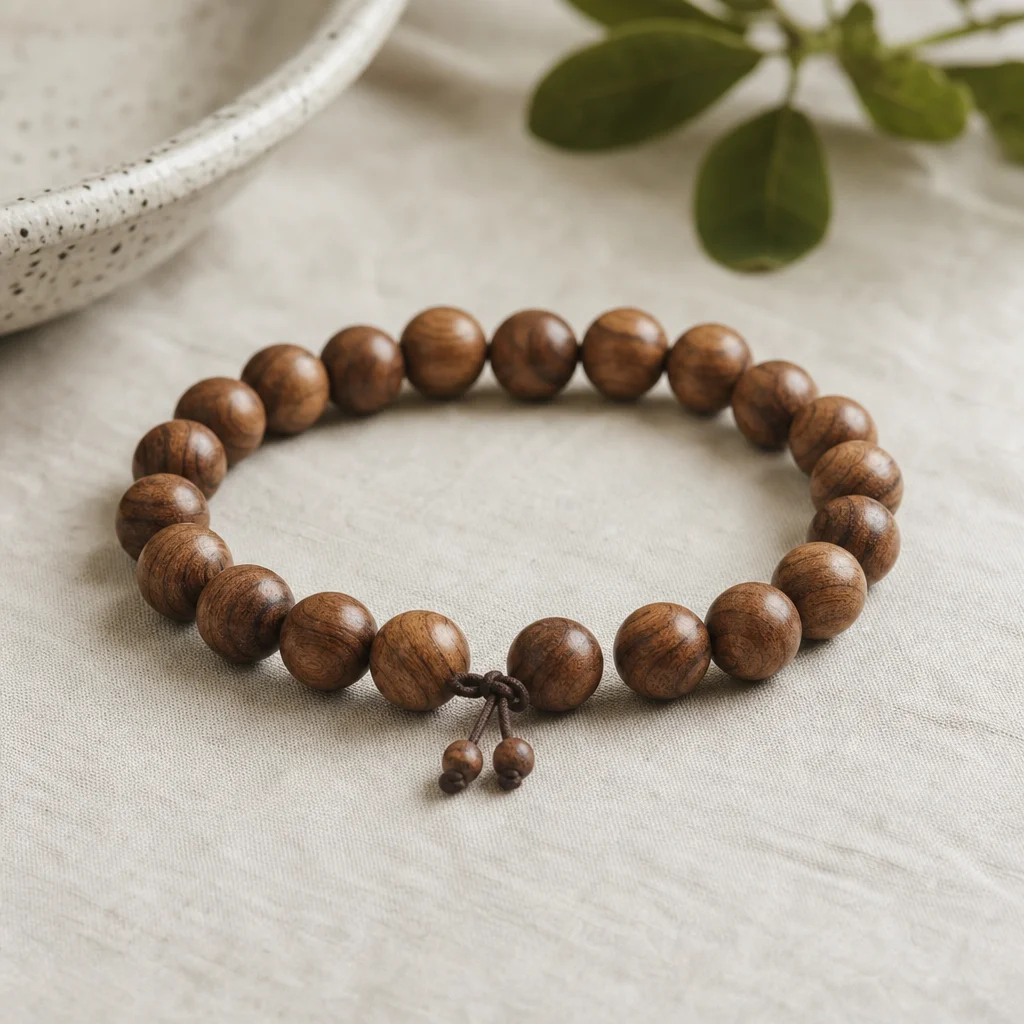
Why 21 Beads? The Number Behind Wrist Malas
The number 21 isn't random. In Buddhist and Hindu traditions, it carries spiritual weight. It's three times seven — and seven is a number associated with spiritual completeness across cultures (seven chakras, seven days, seven colors of the rainbow). In Tibetan Buddhism, 21 is linked to the 21 forms of Tara, the female bodhisattva of compassion. In some Hindu lineages, 21 represents the three aspects of time (past, present, future) multiplied by the seven chakras.
But here's the practical reason I love 21-bead wrist malas: one full pass back and forth takes about three minutes. Three minutes. That's shorter than most coffee breaks, shorter than an elevator ride in a tall building, shorter than the time it takes to microwave leftovers. If you're someone who thinks meditation requires a dedicated 30-minute session with candles and incense, a wrist mala offers a different path. It's meditation that fits into the gaps in your day.
I started using a wrist mala after years of owning a full 108 mala that mostly sat in a drawer. My full mala was beautiful but intimidating. Every time I picked it up, I felt like I was committing to a 20-minute session I wasn't sure I had time for. My wrist mala, on the other hand, lives on my nightstand. I use it first thing in the morning before checking my phone, and again at night. No pressure, no performance anxiety — just 21 beads and a quiet moment.
Wrist Mala vs Full 108 Mala: Honest Comparison
Both are valid. Both are "real" malas. The question is what fits your life right now.
| Feature | Wrist Mala (21 beads) | Full Mala (108 beads) |
|---|---|---|
| Meditation time | 3-5 minutes per round | 15-20 minutes per round |
| Wearability | Everyday bracelet | Necklace or wrapped wrist |
| Weight | 15-40g | 80-200g |
| Discretion | Very discreet in public | Noticeable as a necklace |
| Bead size | Usually 8-10mm | 6-10mm |
| Traditional use | Modern adaptation | Traditional form |
| Price range | $15-60 | $25-150+ |
| Best for | Beginners, busy people | Dedicated practice |
The full 108 mala is the traditional instrument. If you have a serious meditation practice, you'll probably want one eventually. But I've met plenty of experienced practitioners who prefer their wrist mala for daily use and save the full mala for special sessions. It's not an either/or choice.
Choosing Materials for Your Wrist Mala
Material choice matters more for wrist malas than for full malas because you'll be wearing them constantly. The material needs to be durable enough for daily wear, comfortable against your skin, and — let's be honest — good-looking as a bracelet.
Crystal Wrist Malas: Style Meets Practice
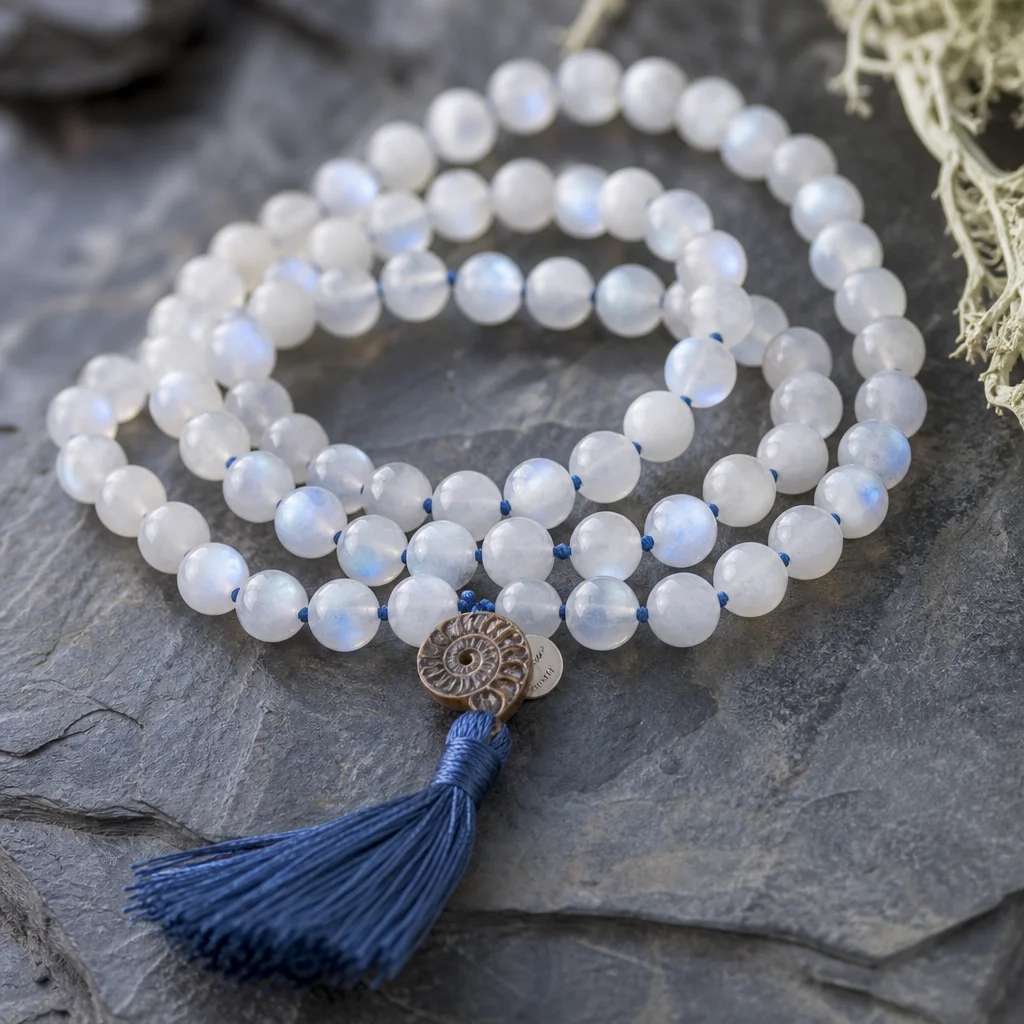
Crystal wrist malas are the most popular choice, and it's easy to see why. They look like regular beaded bracelets, so they blend seamlessly into any outfit. The most common crystal choices for wrist malas:
- Amethyst (8mm): Probably the number one choice. Deep purple, universally appealing, and affordable. 21 beads of 8mm amethyst on elastic cord costs $20-40 from most sellers.
- Rose quartz: Soft pink and translucent. Feels cool and smooth. Perfect if you want something that looks more like jewelry than a spiritual tool. Similar price range.
- Black tourmaline: Sleek and understated. Great for people who prefer dark jewelry. Also one of the more durable crystal options.
- Tiger's eye: Warm brown-gold with chatoyant shimmer. Has a more masculine or earthy feel. Very popular with men's wrist malas.
- Lapis lazuli: Deep blue with gold flecks. Stunning but more expensive ($30-60) and slightly heavier.
Wood and Seed Wrist Malas: The Subtle Choice
For a more understated look, wood and seed wrist malas are excellent. Sandalwood wrist malas are my personal favorite for daily wear — they're lightweight (barely noticeable on your wrist), release a faint scent when warm, and develop a beautiful patina over months of wear. Expect to pay $20-45 for genuine sandalwood.
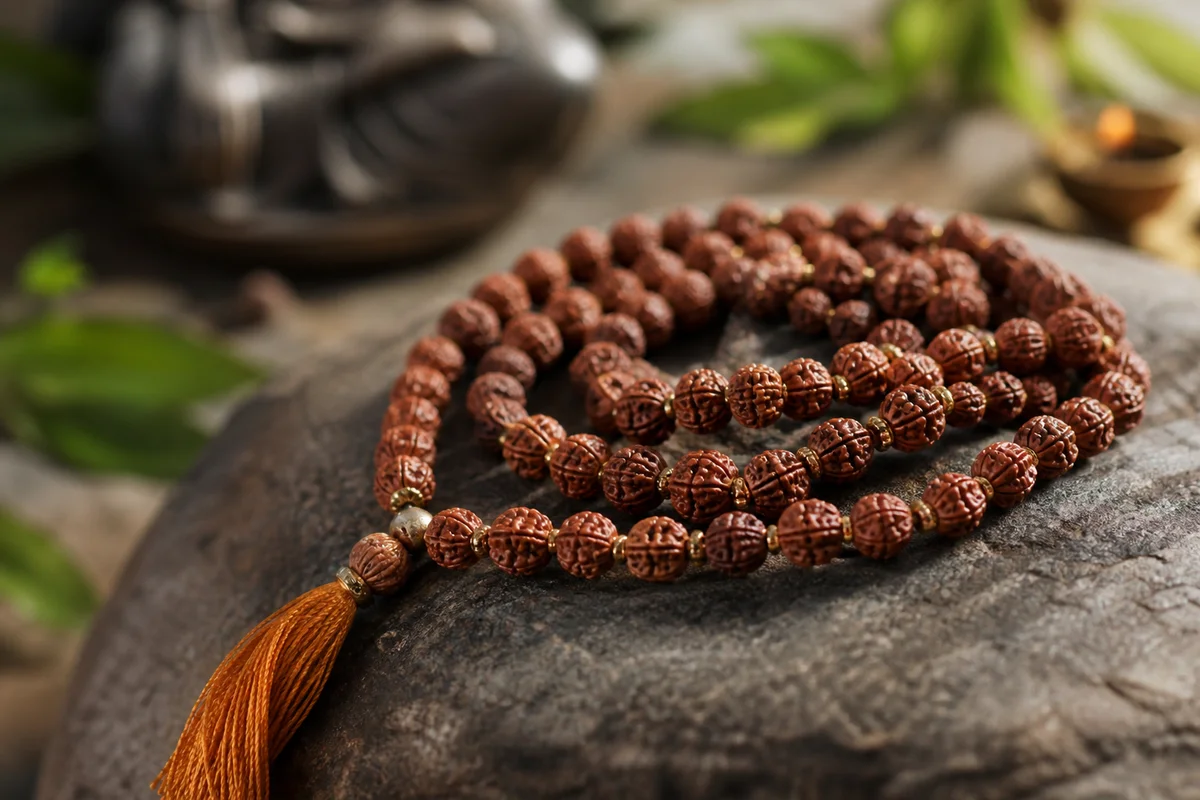
Rudraksha seeds make striking wrist malas with their natural textured surface. They have a distinctly spiritual appearance that some people love and others find too "obvious." If you want your mala to look like a regular bracelet, rudraksha might not be the choice. But for practice, the texture is wonderfully grounding.
Bodhi seed wrist malas offer a nice middle ground — organic and natural-looking but subtler than rudraksha. They're also very affordable ($15-25).
Elastic vs Adjustable vs Fixed String
This is a detail that matters more than most people realize:
- Elastic cord: The most common. Easy to slip on and off. The downside: elastic degrades over time (6-12 months with daily wear) and eventually snaps. When it breaks, beads scatter. I've lost beads down drains and across parking lots.
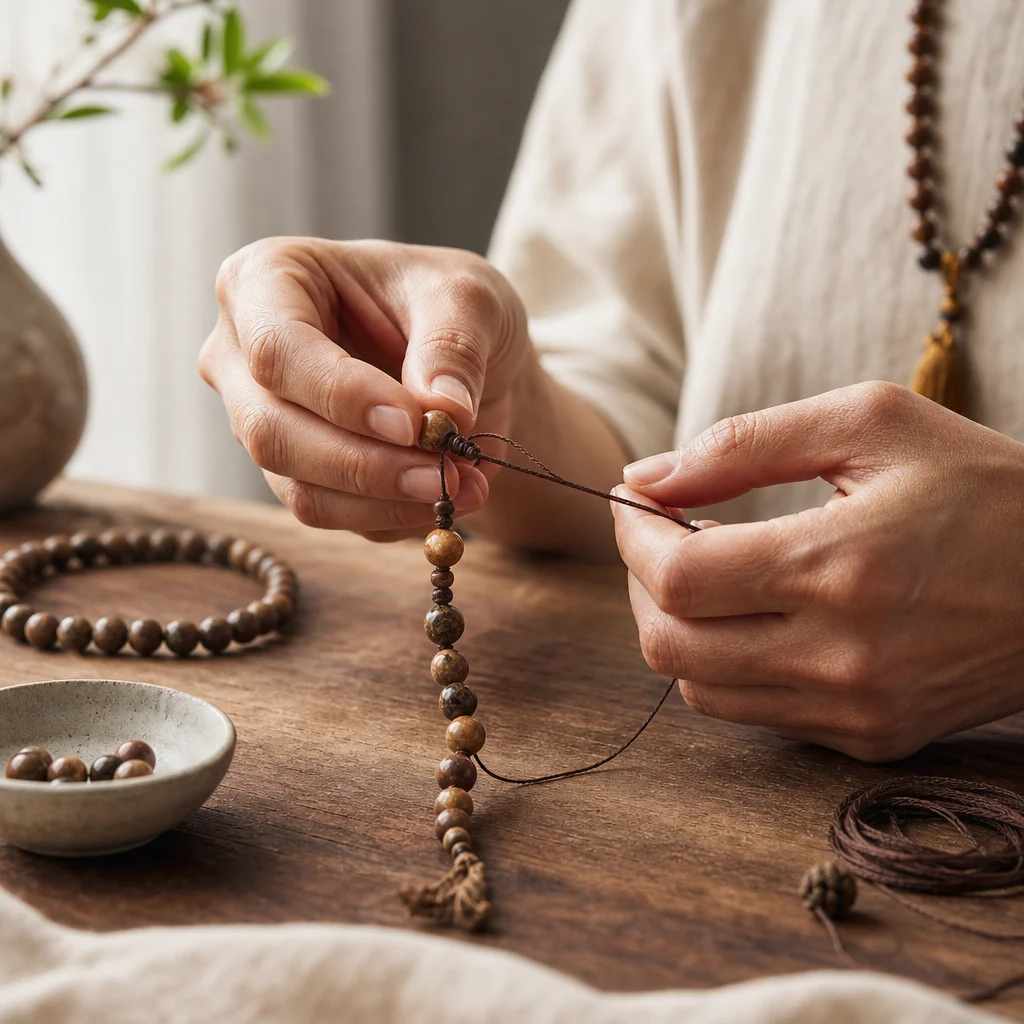
- Adjustable sliding knot: Uses a cotton or silk cord with a macrame-style closure. More durable than elastic, adjustable for different wrist sizes, and looks intentional. Takes a few extra seconds to put on and take off.
- Fixed cord with clasp: Least common for wrist malas but most durable. Uses a small lobster clasp or toggle. Best if you know your exact size and want something that won't break.
My recommendation: go with elastic for your first wrist mala (it's easiest) but be prepared to restring it within a year. For a long-term investment, choose the adjustable sliding knot.
Daily Meditation Practice with Your Wrist Mala
Here's the technique I use and teach. It takes about three minutes once you're familiar with it:
- Hold the mala in your non-dominant hand. Let it drape across your fingers with the guru bead at the bottom.
- Close your eyes and take three deep breaths. In through the nose, out through the mouth. This takes about 15 seconds.
- Set your intention. One word or short phrase. "Peace." "Focus." "Gratitude." Whatever you need right now.
- Begin counting. Use your thumb to move one bead at a time toward you. Silently repeat your intention with each bead. Don't rush — one bead roughly every two seconds is a good pace.
- At the guru bead, pause. Take a breath. Acknowledge the completion. Either reverse direction for another pass or stop.
- Open your eyes. Notice how you feel compared to three minutes ago.
The beauty of this practice is its flexibility. I use it before stressful meetings, during my commute (at red lights, not while driving), waiting for my coffee, and as a transition between work and home at the end of the day. Three minutes, multiple times a day, adds up to a meaningful practice.
Stacking: Wearing Multiple Wrist Malas
Stacking multiple beaded bracelets is a big trend right now, and wrist malas fit right into this. You might wear a crystal mala alongside a plain leather bracelet and a metal bangle. The key is proportion: if you're stacking, mix bead sizes (8mm with 6mm, for example) and materials (one crystal, one wood) for visual interest. Three bracelets is usually the sweet spot — more than five starts looking cluttered.
From a practice perspective, stacking means you always have a mala accessible without it being obvious. Your meditation tool doubles as an accessory. I've found this lowers the psychological barrier to practice — there's nothing to "set up" or "prepare," you just start counting beads.
Size and Fit: Getting It Right
A wrist mala that doesn't fit properly is annoying. Too loose and it slides around; too tight and it's uncomfortable. Here's how to get the right size:
- Measure your wrist. Use a flexible tape measure or a piece of string. Measure snugly (not tight) around the wrist bone.
- Add 0.5-1 inch for comfort. This accounts for the beads' diameter and gives you room for movement.
- Standard sizes: Small (6-6.5 inches), Medium (7-7.5 inches), Large (8-8.5 inches). Most wrist malas are sized for medium wrists.
- Bead count vs wrist size: 21 beads of 8mm creates about a 7-inch bracelet. If you have larger wrists, look for 24 or 27 bead malas. If smaller, 18 beads might fit better.
If you're between sizes or buying online without trying it on, choose the adjustable sliding knot option. It's forgiving on sizing and you can tighten or loosen it throughout the day.
Frequently Asked Questions
Is 21 beads enough for a real meditation practice?
Yes. The value of meditation isn't determined by the number of repetitions — it's determined by consistency and intention. Three focused minutes with 21 beads beats 20 distracted minutes with a full mala. Many experienced practitioners use wrist malas as their primary tool because the short duration makes daily consistency achievable. Think of it as meditation snacking vs. meditation feasting — both nourish you.
Can I wear my wrist mala on either wrist?
Traditionally, malas are worn or used on the right hand (or non-dominant hand). However, wrist malas worn as jewelry don't have strict rules. Many practitioners wear them on their left wrist as a receiving side for positive energy. For meditation practice specifically, use whichever hand feels natural — consistency matters more than tradition here.
What's the difference between a wrist mala and a stretch bracelet?
Structurally, they can look similar. The difference is intention and construction. A proper wrist mala has 21 beads (or a divisor of 108), a guru bead, and is strung with intention in a specific sequence. A stretch bracelet is decorative with no counting significance. That said, any beaded bracelet can become a meditation tool if you use it mindfully — the structure helps, but it's not the point.
How do I clean my wrist mala?
For crystal malas, wipe gently with a soft dry cloth. For wood malas, the natural oils from your skin actually help maintain the wood — avoid using any cleaning products. If your mala gets noticeably dirty, lightly dampen a cloth with water (barely damp, not wet) and wipe. Never soak your mala or use soap. For elastic cord malas, avoid excessive stretching when cleaning to prevent premature snapping.
Frequently Asked Questions
How do I use a wrist mala to count mantras?
Hold your wrist mala gently in your hand. Use your thumb to softly slide each natural crystal bead toward you as you recite a mantra or take a mindful breath. Start at the guru bead and circle through all 21 beads. Because each piece is artisan handcrafted, it serves as a beautiful tactile anchor to keep your mind fully grounded and present during your daily meditation routine.
Comments