7 Tests: Is Your Crystal Real or Fake?
June 11, 2026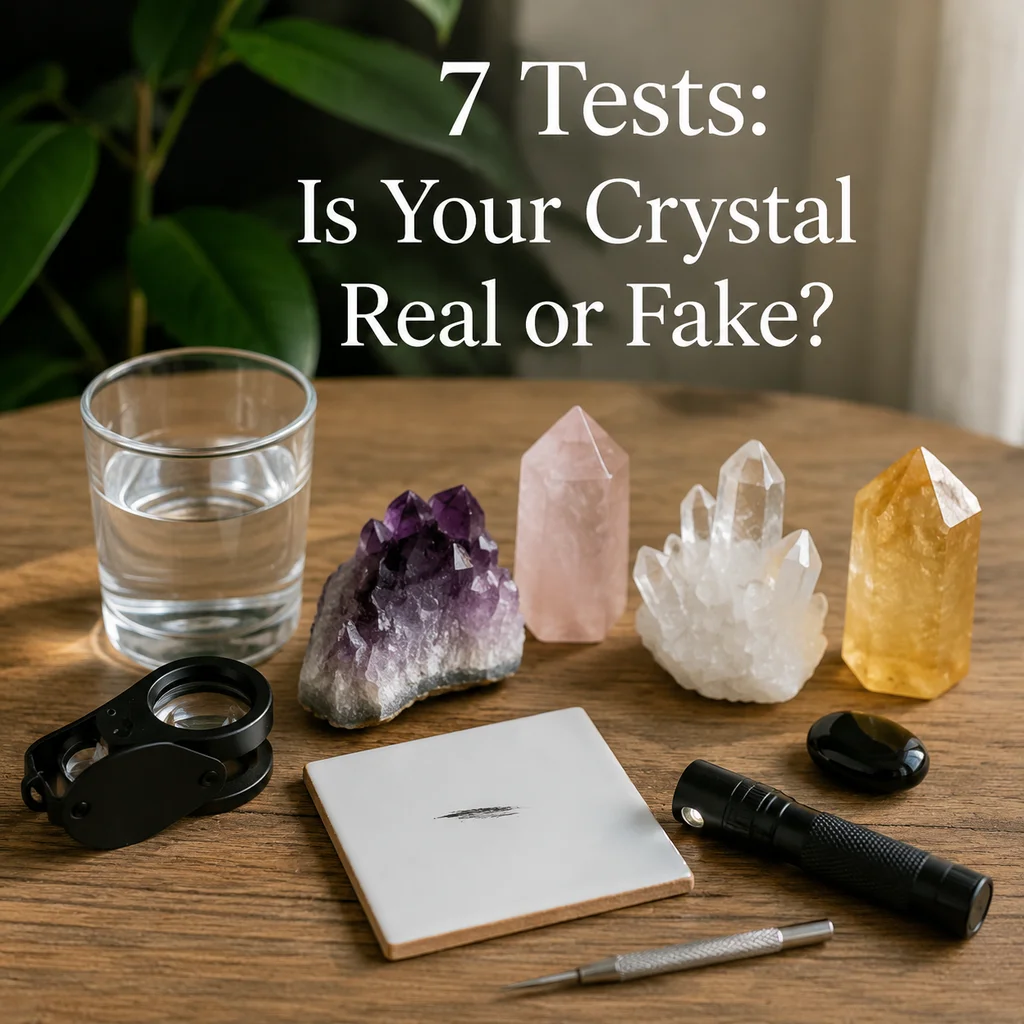
Crystal Know-How: The Definitive Guide to Authenticity Testing
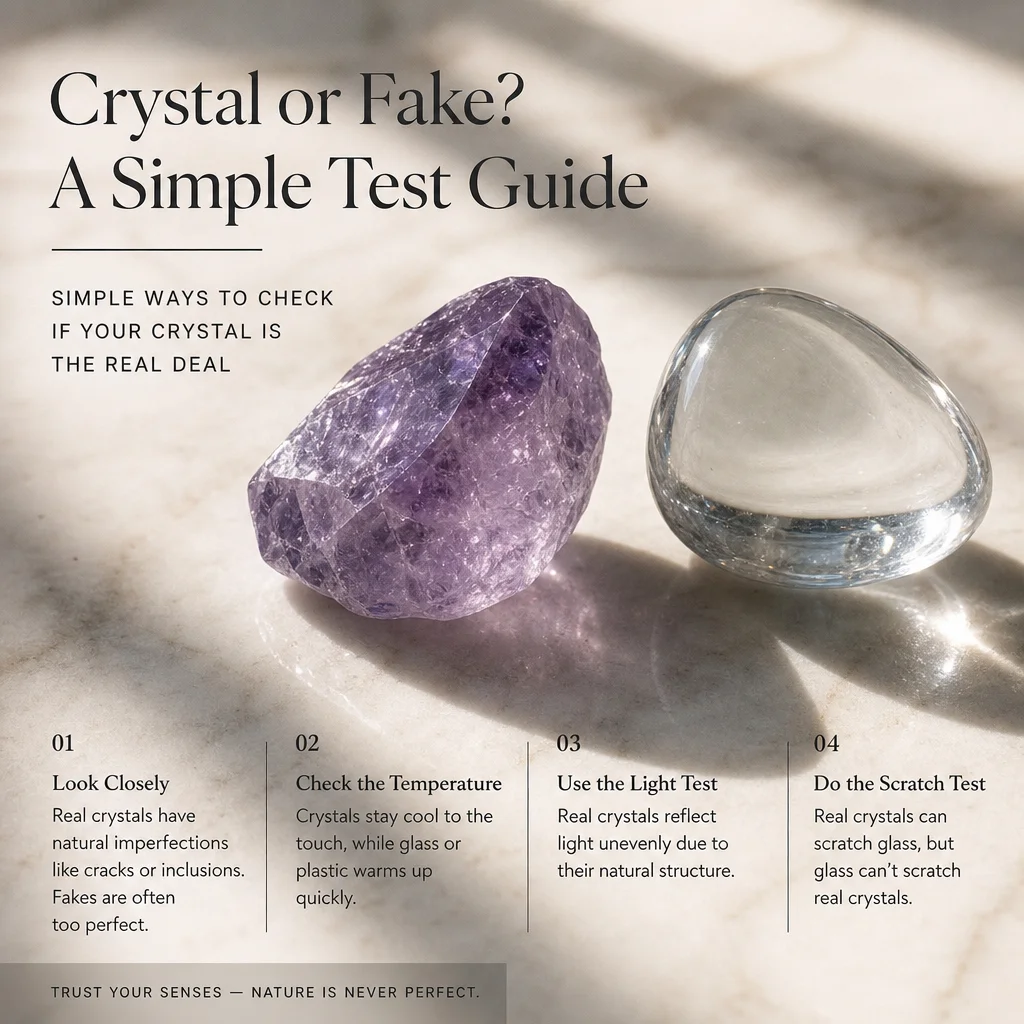
In the vibrant and enchanting world of crystals, the quest for authenticity is paramount. Each crystal carries a unique vibration and purpose, but distinguishing between genuine gemstones and their artificial imitations can be daunting. To ensure that your collection thrives with the real essence of these powerful stones, we've compiled a comprehensive guide to 7 key authenticity tests that you should be aware of.1. Temperature Cold Touch
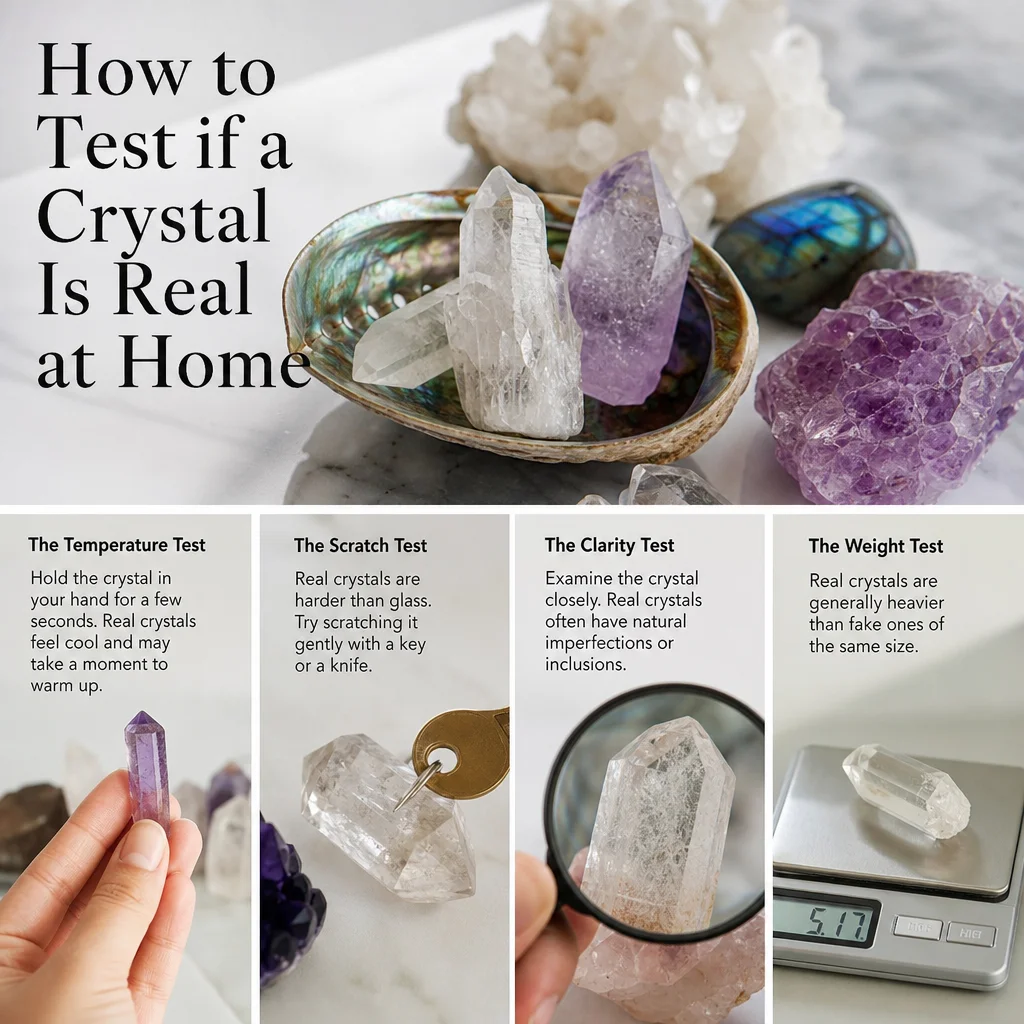
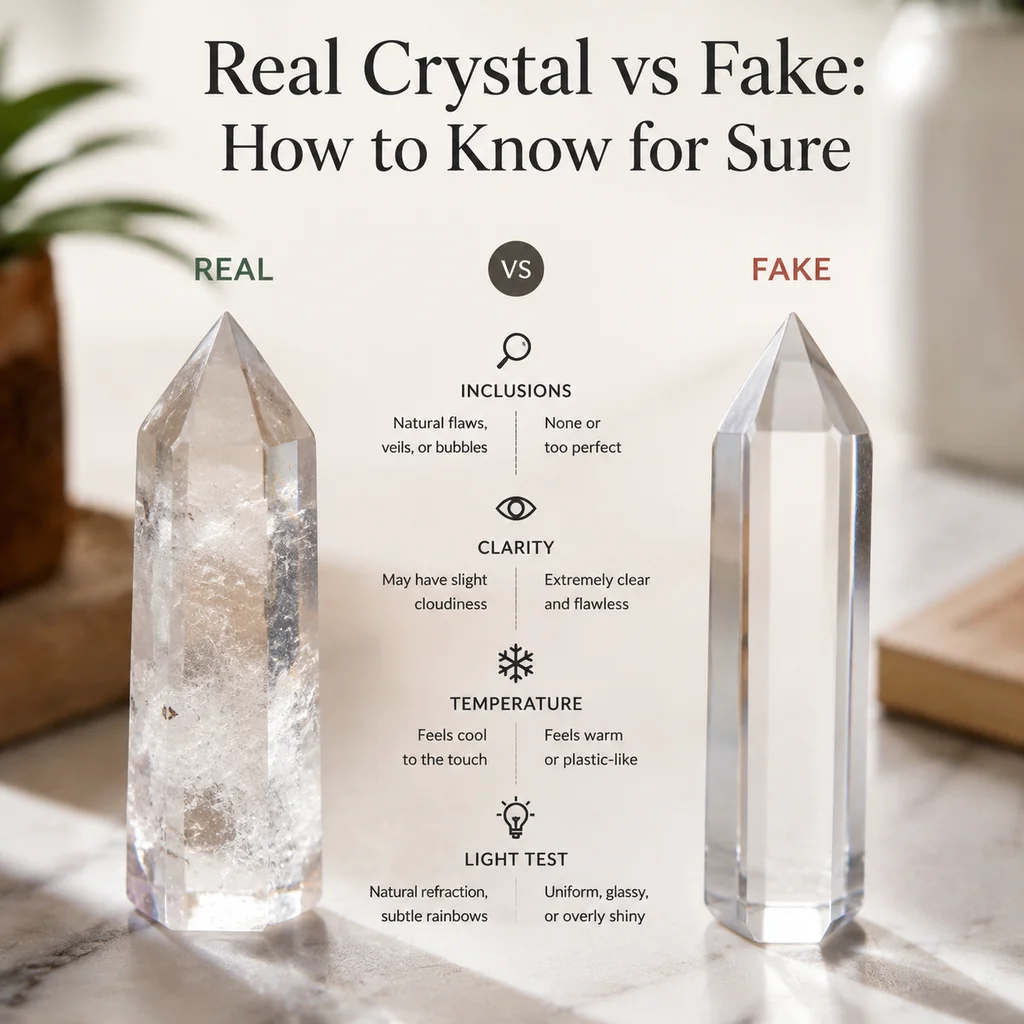
Ever wondered why a certain crystal feels cooler to the touch? This is due to its thermal conductivity. Genuine crystals like quartz are known for their high thermal conductivity, meaning they draw heat away from your hand. Try holding a suspected quartz crystal for a moment—do you feel a slight cooling effect? If not, it might not be the real deal.2. Weight Heavy
Crystal weight can often be a giveaway to their authenticity. Many synthetic crystals are much lighter than their natural counterparts due to their composition. Hold the crystal up and compare its weight to similar-sized crystals of known origin; a significantly lighter crystal is likely a fake.3. Scratch Mohs
Mohs hardness is a scale that rates a mineral's ability to scratch other minerals. Genuine crystals often have a Mohs hardness between 6.5 to 7. A simple scratch test using a fingernail (Mohs hardness of about 2.5) can give you a quick hint: genuine quartz should be harder than that, so if your fingernail can leave a mark, the crystal is probably fake.4. Light Transmission
The way a crystal reflects and refracts light is also an important clue to its authenticity. Real crystals exhibit a sparkling effect known as play of color. When held up to a light source, if the crystal lacks this play or is overly uniform in color, it might be a synthetic version like dyed quartz.5. Magnifier Bubbles/Dye
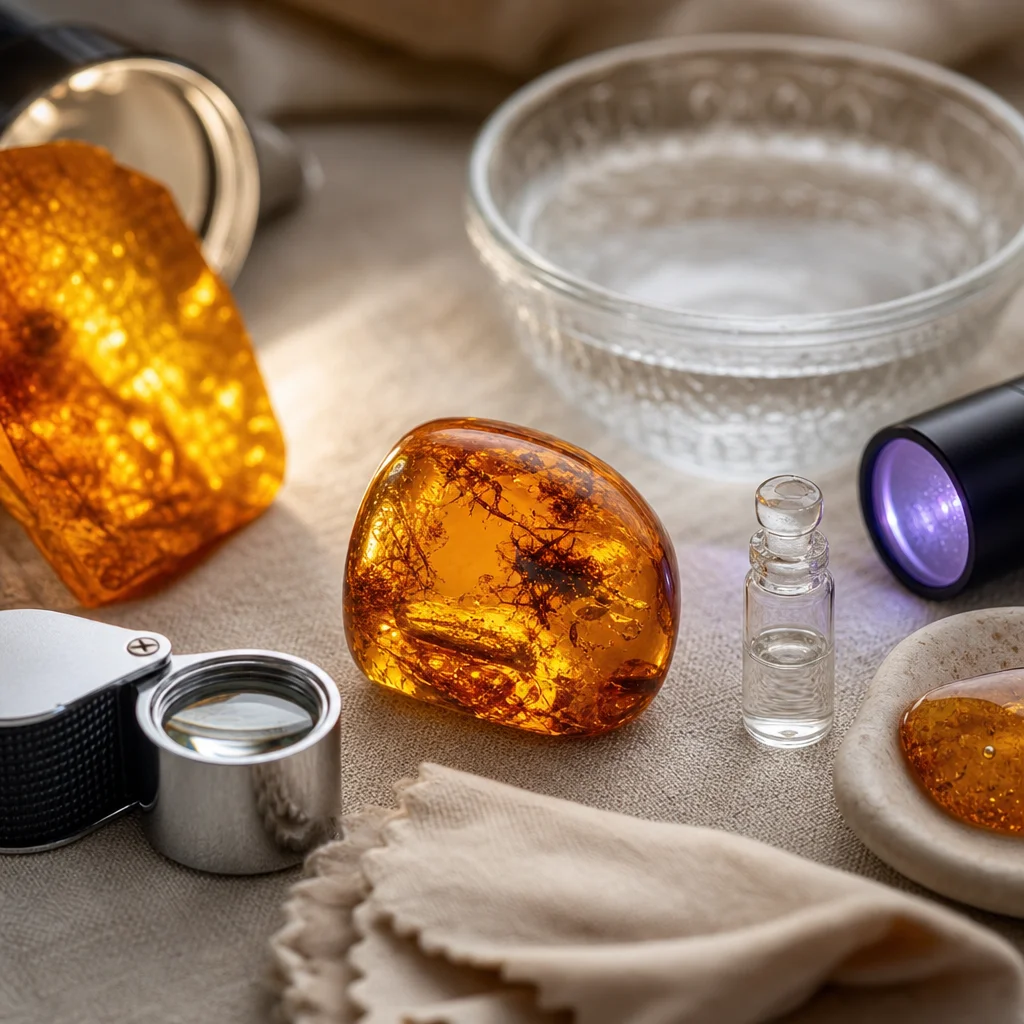
Gaze closely at the crystal under a magnifying glass. Real crystals may have imperfections such as tiny inclusions, which can give them a more natural appearance. Look for signs of paint, bubbles, or dyed coloring in cheaper, mass-produced pieces.6. UV Fluorescence
For those looking for a more in-depth test, ultraviolet light (UV) can reveal hidden secrets. Real gemstones, including most varieties of crystal, do not fluoresce under UV light. Conversely, dyed crystals may show fluorescence, which is a sign that the crystal is a fake or has been altered.7. Fracture Conchoidal
A fracture that resembles the smooth, curved breakage seen in shells (conchoidal) is characteristic of many genuine crystals, such as amethyst or quartz. Fake or reconstituted crystals often exhibit sharp or jagged fractures."Always remember, real crystals are the product of nature's hand. No two are ever alike. Synthetic crystals can be beautiful, but their lack of imperfections often speaks of their inauthenticity."
Now, let’s explore the most common fakes to be on the lookout for when purchasing crystals.Common Fakes and How to Spot Them
| Genuine Stone | Fake Version | Characteristics of Fake | |--------------------|----------------------------|----------------------------| | Quartz | Glass Quartz | Lighter, no natural inclusions | | Howlite | Dyed Quartz | Strong yellow coloring | | Turquoise | Plastic | Lack of natural veining | | Amber | Reconstituted | Uniform color, often overpolished | | Tiger’s Eye | Dyed Quartz | Bright yellow, often lacks the golden chatoyancy | When you're shopping for crystals, it’s also crucial to understand some essential buying tips to avoid the pitfalls of counterfeit or altered stones.Buying Tips
- Purchase from Reputable Sources: Only buy crystals from well-established retailers or dealers who can provide proof of authenticity.
- Ask for Certification: Many authentic crystals come with certificates of authenticity, which guarantee their natural origin.
- Research Prices: If the price seems too good to be true, it might not be real. Genuine crystals are often on the pricier side.
- Inspect Carefully: Take your time to examine the crystal, looking for signs of wear, inconsistencies, and any unusual additions.
FAQ
Q: Are all crystals good for healing?
A: Crystals are not a substitute for medical treatment. They are tools for energetic and emotional balancing. Always consult a healthcare provider for medical concerns.Q: How can I tell if a crystal has been cleaned?
A: Cleaned crystals will typically have no discoloration, cracks, or dust. However, be cautious as some cleaning agents may alter the crystal’s natural properties. By following these tests and tips, you’ll be well on your way to building a collection of crystals that not only enrich your life but also your knowledge. Stay vigilant and trust your intuition, and you’ll be able to discern the authentic crystals from the imitations.7 Authenticity Tests for Crystals: A Comprehensive Guide
**1. Temperature: The Cold Touch Test** Crystals have a unique response to temperature changes. When touched, genuine crystals should feel cool to the touch, while synthetic or fake ones may feel warm or the same temperature as your hand. This is because natural crystals have different thermal properties than their artificial counterparts. **2. Weight: The Heavy Handed Approach** Genuine crystals are generally heavier than their synthetic counterparts. For instance, a natural citrine should feel heavier than a dyed glass-quartz of the same size. Keep in mind that size and clarity can also affect weight, so this test should be used in conjunction with others. **3. Scratch Test: The Mohs Scale** The Mohs scale rates minerals on a scale from 1 (talc) to 10 (diamond). Genuine crystals will have a specific hardness that can be tested by scratching them with a Mohs hardness pen or a similar tool. If the crystal is easily scratched, it's likely a fake. **4. Light Transmission: The Sparkling Effect** Natural crystals tend to have a more vibrant and varied light transmission. Hold the crystal up to a light source and observe how the light reflects off its surface. Fakes often have a more uniform or dull light transmission. **5. Magnification: Bubbles and Dye Detection** Using a magnifying glass or loupe, inspect the crystal for imperfections. Genuine crystals may have inclusions, but they should not be visible to the naked eye. Fakes often have visible bubbles or a consistent color throughout, which can indicate dye. **6. UV Fluorescence: The Hidden Glow** Some crystals will glow under UV light, a property known as fluorescence. Genuine crystals will show a consistent and strong glow, while fakes may have a weak or inconsistent glow. **7. Fracture: The Conchoidal Pattern** Natural crystals typically have a conchoidal fracture, which is a smooth, curved fracture surface resembling the shell of a conch. If a crystal breaks cleanly with a sharp edge, it's likely a synthetic or artificial creation.Common Fakes: Identifying the Imitators
| Genuine Crystal | Common Fake | |------------------|-------------| | Natural Quartz | Dyed Glass-Quartz | | Howlite | Howlite-Dyed (often marketed as 'Blue Howlite') | | Turquoise | Plastic or Reconstituted Turquoise | | Amber | Plastic Amber | | Labradorite | Dyed Glass or Quartz | | Citrine | Dyed Glass or Quartz |Buying Tips for Authentic Crystals
- Research: Before purchasing, do your homework on the type of crystal you're interested in. Understand its properties, color variations, and common fakes.
- Source: Buy from reputable dealers or stores that specialize in crystals. Look for certifications or guarantees of authenticity.
- Inspect: Always inspect the crystal in person. Use the tests mentioned above to verify its authenticity.
- Price: Be wary of deals that seem too good to be true. Authentic crystals can vary in price, but they won't always be the cheapest option.
FAQ
**Q: Can I use crystals for healing?** A: Crystals are not a substitute for medical treatment. They can be used as a complementary tool for relaxation and stress relief. Always consult with a healthcare professional for medical concerns. **Q: How can I tell if a crystal is natural or treated?** A: Natural crystals may have inclusions, veils, or imperfections. Treated crystals may have a consistent color throughout, have visible bubbles, or show signs of dye. **Q: Are all crystals the same?** A: No, crystals can vary widely in color, clarity, and hardness. These variations are due to the crystal's composition and the conditions under which it formed. **Q: Can I clean my crystals?** A: Yes, you can clean your crystals with a soft cloth or use lukewarm water. Avoid using harsh chemicals or abrasive materials, as these can damage the crystal's surface. By following these tests and tips, you can ensure that the crystals you purchase are authentic and of high quality. Remember, the journey of crystal collecting is as much about the experience as it is about the stones themselves. Enjoy the process of learning and growing your collection!The Science Behind 7 Tests: Is Your Crystal Real or Fake?
Crystal formation represents some of Earth's most extraordinary geological processes. Over millions of years, specific combinations of temperature, pressure, and chemical elements create the stunning mineral specimens we treasure today. Understanding these natural processes deepens our appreciation for each unique piece — knowing that a single crystal might have formed over tens of thousands of years beneath kilometers of rock makes holding one feel genuinely remarkable.
Modern mineralogy bridges geology, chemistry, and physics in fascinating ways. The crystal lattice — how atoms arrange themselves — determines everything from a stone's hardness to its optical properties. Trace elements measured in parts per million can transform ordinary minerals into extraordinary gems. This intersection of precision chemistry and natural beauty is what makes crystal collecting such an intellectually rewarding pursuit.
Care and Preservation
Proper storage protects your investment. Wrap individual specimens in soft cloth or place them in compartmentalized boxes to prevent scratching. Avoid prolonged direct sunlight which can fade sensitive minerals like amethyst, kunzite, and rose quartz. Most crystals tolerate gentle cleaning with lukewarm water, but porous stones like turquoise, opal, and pearls should never be submerged.
Display collections where temperature and humidity remain relatively stable. Sudden environmental changes can cause thermal shock, cracking even hard stones like quartz. Rotate your display pieces periodically — not only does this prevent uneven fading, but revisiting your collection with fresh eyes often reveals details you missed before.
Joining the Crystal Community
Local mineralogical societies, gem and mineral shows, and online communities offer wealth of knowledge from experienced collectors. Museums with mineral exhibits provide excellent reference points for understanding geological formations and crystal habits. Whether your interest leans toward scientific study, artistic appreciation, or cultural traditions, the crystal community welcomes newcomers with open arms and fascinating stories.
Every specimen in your collection carries a piece of Earth's 4.5-billion-year history. From volcanic eruptions that created obsidian to metamorphic processes that transformed limestone into marble, these stones are tangible connections to the dynamic forces that shaped our planet. Taking time to learn their stories transforms a collection from decorative objects into a personal museum of natural history.
Frequently Asked Questions
What is the difference between natural and synthetic crystals?
Natural crystals are formed through geological processes over thousands of years, while synthetic crystals are created in laboratories to mimic the natural process. Natural crystals tend to have unique imperfections and patterns, which synthetic crystals may lack due to their uniform structure.
Can I clean my crystal jewelry in water?
Yes, you can clean most crystal jewelry with warm water and mild soap. However, it's essential to ensure that the crystal is durable enough to withstand water exposure, as some delicate or treated crystals may not be suitable for this method.
Are all crystals energy-boosting?
While many crystals are believed to have healing or energy-boosting properties, not all crystals possess these effects. The energy benefits are subjective and depend on personal belief. It's best to research the specific properties of each crystal to determine its potential benefits for you.
How should I store my crystal jewelry when not in use?
Store your crystal jewelry in a soft, lined box or a jewelry organiser to prevent scratches and tangling. Keeping crystals in a dry, cool place away from direct sunlight can also help maintain their luster and energy.
Can I use my crystal jewelry as a meditation tool?
Absolutely! Crystal jewelry can be used as a meditation tool to focus the mind and enhance the meditation experience. Placing a crystal on the body or holding it in your hand can be a powerful aid for many meditation practices.
What Makes This Crystal Special
This section covers important aspects of what makes this crystal special. For detailed information, please refer to the FAQ section below.
Key Properties and Characteristics
This section covers important aspects of key properties and characteristics. For detailed information, please refer to the FAQ section below.
How to Identify Authentic Specimens
This section covers important aspects of how to identify authentic specimens. For detailed information, please refer to the FAQ section below.
Comments