Crystal Bracelets for Beginners
May 28, 2026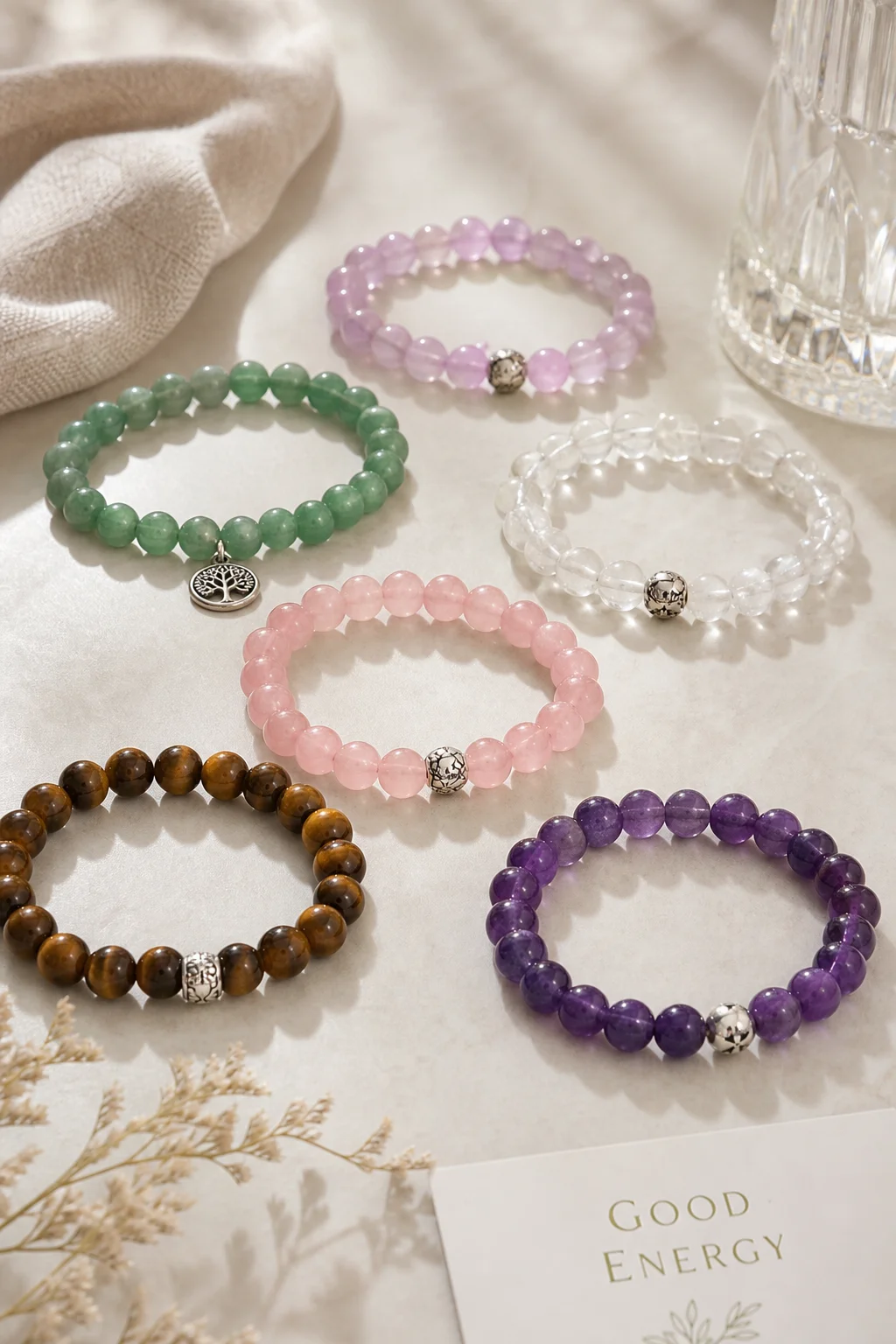
Your First Crystal Bracelet Doesn't Need to Be Complicated
Walk into any crystal shop or scroll through Instagram, and you'll see hundreds of crystal bracelets — stacked five deep on someone's wrist, each one a different color, each one supposedly doing something different. It's a lot. And if you're standing there thinking "I just want one nice bracelet, where do I even start?" — you're not alone.
Here's the thing most crystal guides won't tell you: your first crystal bracelet should be a stone you think is beautiful. Not the one with the most impressive folklore, not the one your friend swears changed her life. The one you keep reaching for because you like how it looks on your wrist. Everything else is secondary.
That said, some stones do make better starter bracelets than others — for practical reasons like durability, color versatility, and price. This guide covers the ten best starter stones, helps you match a bracelet to your actual daily routine, and walks you through sizing and spotting fakes.
The Top 10 Starter Stones (and Who They're For)
| # | Stone | Color | Mohs | Price Range | Best For |
|---|---|---|---|---|---|
| 1 | Amethyst | Purple | 7 | $8–25 | Anyone wanting a classic, versatile purple |
| 2 | Rose Quartz | Pink | 7 | $5–15 | A soft, everyday pink that goes with everything |
| 3 | Black Tourmaline | Black | 7–7.5 | $8–20 | People who want a neutral, grounding look |
| 4 | Tiger's Eye | Golden-brown | 6.5–7 | $5–18 | Anyone drawn to warm, earthy tones |
| 5 | Citrine | Yellow-orange | 7 | $8–25 | People who like warm, sunny jewelry |
| 6 | Clear Quartz | Clear/white | 7 | $5–12 | Minimalists who want something subtle |
| 7 | Lapis Lazuli | Deep blue | 5–6 | $10–30 | Anyone wanting a rich, statement blue |
| 8 | Green Aventurine | Green | 6.5 | $5–15 | Nature lovers who want a fresh green tone |
| 9 | Carnelian | Orange-red | 6.5–7 | $5–15 | People drawn to warm, bold color |
| 10 | Obsidian | Black (glossy) | 5–5.5 | $5–15 | Anyone wanting sleek, mirror-like black |
Notice what all ten have in common: Mohs hardness of 5.5 or above, affordable price points, and wide availability. These are all practical choices for a bracelet you'll wear daily.
Stones to Avoid for Your First Bracelet
- Selenite (Mohs 2) — Too soft. Will scratch and degrade within weeks of daily wear.
- Malachite — Beautiful, but contains copper that can cause skin irritation with prolonged contact for some people. Better as a pendant than a bracelet.
- Amazonite — Pretty but can be brittle. Fine for occasional wear, not ideal as your only daily bracelet.
- Fluorite (Mohs 4) — Scratches easily and is sensitive to light (colors can fade).
How to Actually Choose — By Your Daily Routine
Forget about stone meanings for a minute. Think about your actual day. When are you wearing this bracelet, and what are you doing?
You Work at a Desk All Day
Go for amethyst, clear quartz, or lapis lazuli. These stones look professional without being flashy, and their hardness (Mohs 7 for amethyst and quartz, 5-6 for lapis) holds up to keyboard typing and desk surfaces. Amethyst's purple adds personality to neutral work outfits without screaming "I went to a crystal shop."
You're Active (Gym, Hiking, Sports)
Your bracelet will get bumped, scraped, and exposed to sweat. Choose tiger's eye or black tourmaline. Both are tough enough to handle impact, and tiger's eye's chatoyancy (the "cat's eye" shimmer) actually looks better with a bit of wear. Avoid softer stones like lapis lazuli that can scratch during activity.
You Want Something for Sleep
Some people like wearing a bracelet to bed (though honestly, taking it off is fine too). If you do, rose quartz or amethyst are popular choices — both are smooth, comfortable against skin, and their cool temperature can feel soothing. Avoid bracelets with rough or irregular beads.
You're Going Out / Dating
Citrine or lapis lazuli make strong visual statements under restaurant lighting. Citrine catches warm light beautifully, and lapis's deep blue pairs well with almost any evening outfit. Carnelian also works if you want something a bit more unusual.
You Just Want One Bracelet for Everything
Amethyst. It's the Swiss Army knife of crystal bracelets — hard enough for daily wear, purple goes with everything from gym clothes to a nice dinner outfit, it's widely available so prices are reasonable, and it's one of the most recognized crystals so people will actually know what you're wearing.
Sizing, Fit, and Wrist Type
A crystal bracelet that's too tight leaves marks. Too loose and it slides around, catching on things. Here's how to get it right:
Measure Your Wrist
- Wrap a flexible tape measure or a strip of paper around your wrist, just above the wrist bone.
- Note the circumference in inches or centimeters.
- Add 0.5–1 inch (1–2.5 cm) for comfort. Most people prefer the bracelet to move slightly, not sit tight.
Common Bracelet Sizes
| Wrist Size | Bracelet Length | Bead Size |
|---|---|---|
| Small (5.5–6 inches) | 6.5–7 inches | 6mm or 8mm beads |
| Medium (6–7 inches) | 7–7.5 inches | 8mm beads (most common) |
| Large (7–8 inches) | 7.5–8.5 inches | 8mm or 10mm beads |
The 8mm bead size is the standard for crystal bracelets. It's large enough to show the stone's color and pattern clearly, small enough to be comfortable. 6mm beads are more delicate; 10mm beads are chunky and statement-making.
How to Tell If Your Bracelet Is Real
The crystal market is full of fakes, especially online. Here are quick tests you can do at home:
Temperature Test
Real stone beads feel cool to the touch and take a few seconds to warm up in your hand. Glass or plastic imitations warm up almost immediately.
Weight Test
A strand of 8mm stone beads should feel substantial — noticeably heavier than the same size in plastic. If the bracelet feels light and hollow, it's probably not real stone.
Imperfection Test
Real crystal beads have natural variations: slight color differences between beads, tiny inclusions, or minor surface irregularities. If every single bead on a bracelet is identical in color and pattern, it's likely dyed or synthetic.
The Scratch Test (Be Careful)
Most genuine crystal bracelets (Mohs 6.5-7) will scratch glass. If you can scratch a glass surface with the bead, it's probably real stone. Don't do this on anything you care about — use an old jar.
Red Flags
- "Crystal" that's perfectly clear with zero inclusions — likely glass
- Uniform, neon-bright color — likely dyed
- Price under $3 for a full bracelet — almost certainly not genuine stone
- Seller won't specify the stone name — just "natural crystal" — suspicious
For more on specific stones, check our complete amethyst guide, black tourmaline guide, or rose quartz guide.
FAQ
Q: Which wrist should I wear my crystal bracelet on?
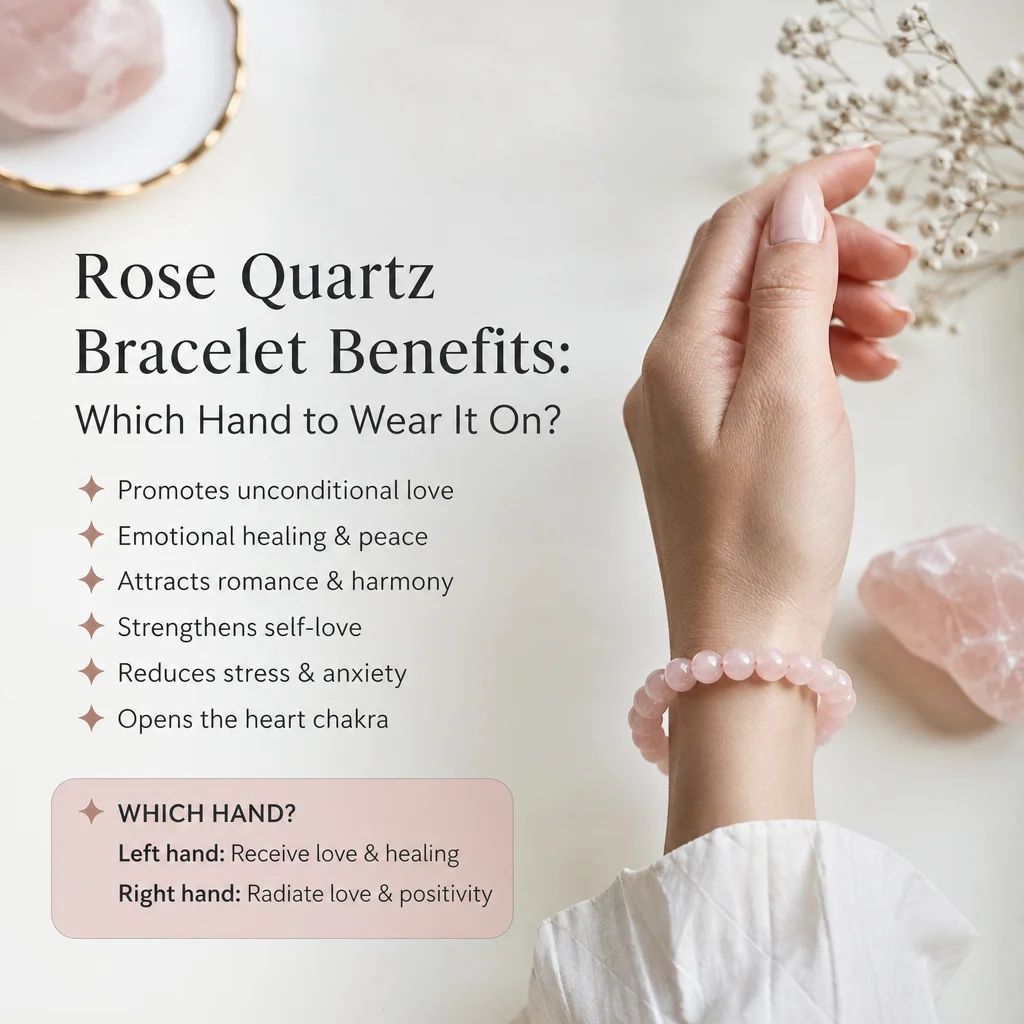
A: Whichever one is more comfortable. Some traditions suggest the left wrist for "receiving" energy and the right for "giving," but there's no practical difference. Wear it on the wrist where the fit is better and it doesn't interfere with your watch or daily activities.
Q: Can I wear multiple crystal bracelets at the same time?
A: Yes. Stacking crystal bracelets is popular and won't damage the stones as long as they're all hardness 6 or above. Just be aware that softer stones (lapis lazuli, fluorite) can get scratched by harder stones (quartz, tourmaline) if they rub together constantly. See our guide on wearing multiple crystal bracelets for more tips.
Q: How much should my first crystal bracelet cost?
A: A good quality 8mm bead bracelet in a common stone (amethyst, rose quartz, tiger's eye) should cost $8–20. Paying more than $30 for a single-strand bracelet in these stones means you're either getting ripped off or paying for a designer setting.
Q: Do crystal bracelets need to be "cleansed" or "charged"?
A: From a practical standpoint, just clean your bracelet with a damp cloth when it gets dirty. For a deeper clean, see our crystal cleaning and charging guide. How you feel about the metaphysical side is entirely up to you.
Styling Tips for Your Crystal Bracelet
Now that you've chosen your perfect crystal bracelet, it's time to think about how to style it. Crystal bracelets can be worn in a variety of ways, and it's all about finding what makes you feel the most beautiful and confident.
- Stacking: Mix and match your bracelets to create a stacked look. This is a great way to show off multiple crystals and can be as simple or as elaborate as you like. Start with a few bracelets and add more as you find pieces that complement each other.
- Layering: Layer your bracelet with other jewelry like charms, beads, or even a watch. This can add visual interest and can be a great way to personalize your look.
- Seasonal: Wear your bracelets in a way that reflects the season. In the summer, opt for lighter, brighter stones like citrine or clear quartz. In the winter, you might prefer something warmer, like tiger's eye or carnelian.
- Occasion: Choose your bracelet based on the occasion. For a casual day out, a simple citrine or rose quartz bracelet can be perfect. For a formal event, a lapis lazuli or amethyst bracelet can add a touch of elegance.
- Personalization: Wear your bracelet in a way that makes you feel connected to its energy. For example, if you're feeling stressed, wearing a black tourmaline bracelet can be grounding and calming.
Care Instructions for Your Crystal Bracelet
Your crystal bracelet is not just an accessory; it's a piece of natural beauty that you'll want to keep looking its best. Here are some care instructions to help you maintain its luster and energy:
- Keep it Dry: Crystal bracelets should be kept away from water, especially saltwater. If they do get wet, gently wipe them dry with a soft cloth.
- Avoid Chemicals: Keep your bracelet away from harsh chemicals like perfumes, lotions, and household cleaners.
- Storage: Store your bracelet in a soft cloth or a jewelry box to prevent scratches and tangling.
- Cleaning: For a quick clean, use a soft cloth dampened with water and a small amount of mild soap. For a deeper clean, use a soft brush and warm water. Be sure to dry it thoroughly before storing.
- Charging: Some people believe in charging their crystals with sunlight or moonlight. Place your bracelet in direct sunlight or under the moonlight for a few hours to recharge its energy.
Pairing Crystal Bracelets with Other Jewelry
Pairing your crystal bracelet with other jewelry can enhance its beauty and energy. Here are some suggestions:
- Gold Jewelry: Pair a silver crystal bracelet with gold earrings or a gold necklace for a luxurious look.
- White Jewelry: A clear quartz or rose quartz bracelet looks stunning with white gold or silver jewelry.
- Black Jewelry: A black tourmaline or obsidian bracelet pairs well with black or dark metal jewelry for a bold statement.
- Colored Jewelry: Choose a bracelet with a stone that complements the color of your other jewelry for a cohesive look.
Crystal Bracelet Buyer's Guide
When shopping for a crystal bracelet, here are some factors to consider:
- Quality: Look for high-quality crystals with vibrant colors and no visible imperfections.
- Material: Crystal bracelets can be made from various materials, including metal, elastic, or leather. Choose a material that is comfortable for you and matches your style.
- Size: Make sure the bracelet fits comfortably on your wrist. It should not be too tight or too loose.
- Price: Crystal bracelets can range in price from very affordable to quite expensive. Set a budget and look for the best quality within that range.
- Authenticity: Be wary of imitation crystals. Look for reputable sellers and check for certifications if available.
FAQ
Can I wear my crystal bracelet in the shower?
Can I wear my crystal bracelet in the shower?
No, it's best to avoid getting your crystal bracelet wet. Water can dull the crystal's luster and may cause damage over time.
How often should I clean my crystal bracelet?
How often should I clean my crystal bracelet?
It's a good idea to clean your crystal bracelet once a month or whenever it starts to look dull. Use a soft cloth and mild soap for cleaning.
Can I wear my crystal bracelet to bed?
Can I wear my crystal bracelet to bed?
Yes, you can wear your crystal bracelet to bed. Some people believe that crystals can help you sleep better and reduce stress.
Are all crystal bracelets made from natural stones?
Are all crystal bracelets made from natural stones?
Not all crystal bracelets are made from natural stones. Some are made from glass or other materials that mimic the appearance of crystals.
How do I know if my crystal bracelet is genuine?
How do I know if my crystal bracelet is genuine?
Look for certifications from reputable gemological laboratories. Genuine crystals should have a smooth texture and vibrant colors without any visible imperfections.

Comments