Copper Wire vs Silver Wire: Jewelry Making Guide
May 31, 2026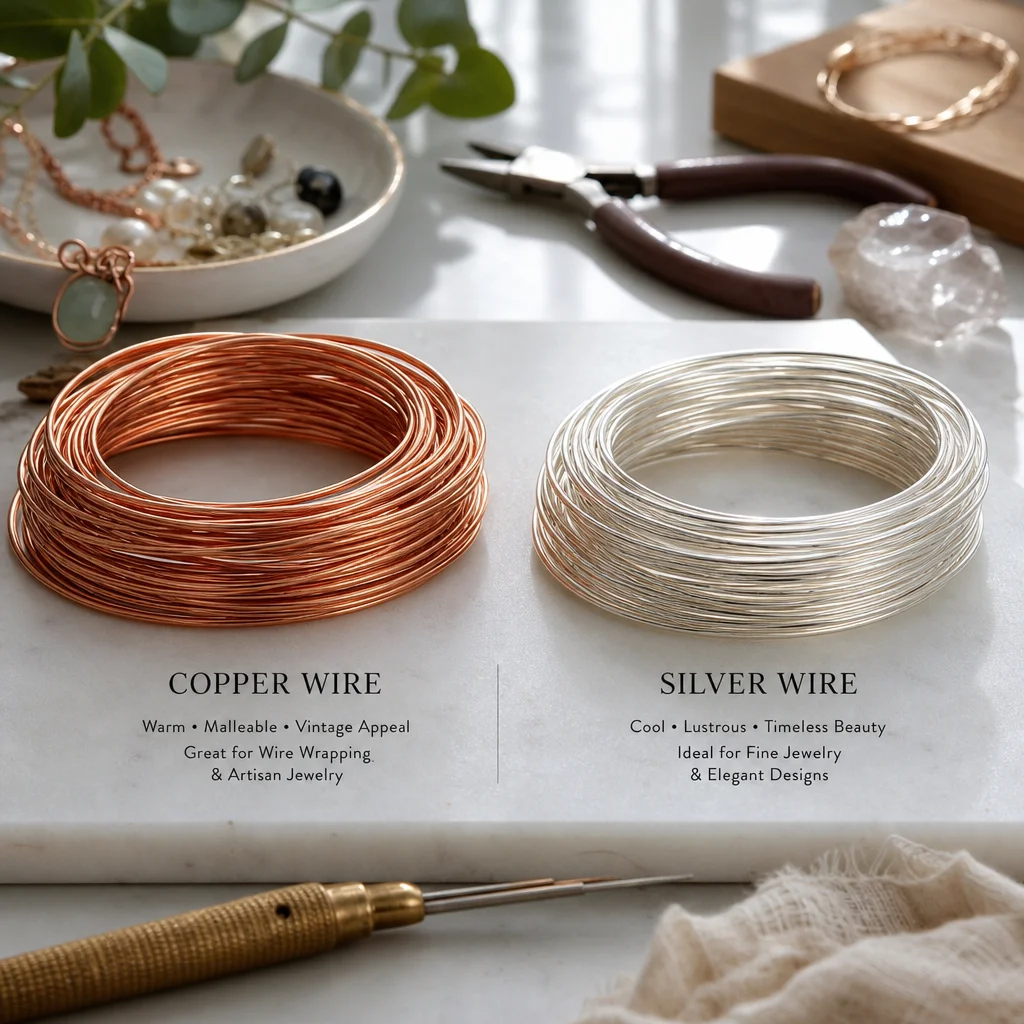
The Quick Answer for Beginners
Start with copper. It's cheaper, more forgiving, and lets you make mistakes without wincing at the cost of wasted material. Silver is beautiful and professional, but it punishes every error with a visible mark and a higher price tag. Learn the techniques on copper, then switch to silver for pieces you plan to sell or gift.
That said, the differences go deeper than just price. Each wire type behaves differently during wrapping, ages differently on the wearer, and suits different design aesthetics. Here's the full breakdown.
Cost Comparison
| Copper (bare) | Silver-plated copper | Sterling silver | |
|---|---|---|---|
| 20-gauge, per spool (30ft) | $5-$8 | $8-$12 | $25-$35 |
| 22-gauge, per spool (30ft) | $4-$6 | $7-$10 | $20-$28 |
| 26-gauge, per spool (30ft) | $3-$5 | $5-$8 | $15-$22 |
| Cost per pendant (estimate) | $0.50-$1 | $1-$1.50 | $3-$5 |
| Cost per batch of 10 | $5-$10 | $10-$15 | $30-$50 |
Over a year of regular practice, the difference adds up. If you're wrapping 5-10 pieces per week, copper costs roughly $10-20/month in materials versus $40-80/month for sterling silver. For a hobbyist or someone still learning, copper makes significantly more financial sense.
Workability: How Each Wire Feels in Your Hands
Copper: The Forgiving Student
Bare copper wire is a joy to work with, especially in dead-soft temper (the most pliable state). It bends easily, holds its shape reasonably well, and doesn't fight you when you need to make adjustments. If you bend a piece of copper too far, you can usually bend it back without visible damage. It work-hardens (gets stiffer with repeated bending) but at a manageable pace—you'll typically complete an entire pendant before it becomes noticeably stiff.
Copper responds well to finger-bending for gentle curves, and takes clean bends from pliers without springing back. The one issue: it can develop kinks if bent too sharply, which are visible as sharp V-shaped indentations. Nylon-jaw pliers smooth these out, but prevention is better—bend gradually rather than forcing sudden angles.
Sterling Silver: The Demanding Professional
Sterling silver (92.5% silver, 7.5% copper alloy) work-hardens significantly faster than copper. After just a few bends, the wire becomes noticeably stiffer. By the time you're halfway through a cabochon wrap, the frame wire may be too stiff to shape without pliers. This isn't a flaw—it's a property of the metal that also contributes to its durability—but it makes silver less forgiving of mistakes.
The work-hardening can be reversed by annealing—heating the wire with a micro-torch until it glows faintly pink, then letting it cool. Annealing softens the wire back to near its original workability. However, annealing requires additional tools (torch, fire-safe surface) and introduces fire safety considerations. For beginners, this extra step is a barrier.
Silver also springs back more than copper after bending. When you make a loop or curve and release the pliers, silver will partially unbend, requiring you to slightly over-bend to achieve your target shape. This takes practice to predict accurately.
Silver-Plated Copper: The Middle Ground
Silver-plated copper wire consists of a copper core with a thin silver outer layer. It offers the visual appeal of silver at a lower cost. However, the plating is thin—typically a few microns—and it wears through at friction points. Wire wrapping creates many points where the wire rubs against itself (wraps, bends, tucks), and the plating often flakes or wears away at these spots, exposing the copper core underneath.
This is especially visible on light-colored stones where the darkened copper shows through against the bright silver. For personal pieces or practice, it's acceptable. For jewelry you plan to sell or gift, the unpredictable wear pattern makes it risky.
Oxidation and Tarnishing
Copper: Warm Patina vs Green Verdict
Bare copper oxidizes relatively quickly, developing a warm brown-to-dark-brown patina within weeks to months depending on wear frequency and skin chemistry. Many people actually prefer this aged look—it gives pieces a warm, earthy, artisanal quality. The oxidation is uneven and organic-looking, which adds character.
The downside: prolonged contact with sweat and skin oils can cause copper to develop a green residue (copper salts) that can leave green marks on skin. This is harmless but cosmetically undesirable for some wearers. It's more common in people with acidic skin chemistry or during hot weather. A thin coat of clear nail polish or jewelry wax on the wire surfaces that contact skin can prevent this.
If you want to maintain bright copper, regular polishing with a jewelry cloth restores the original warm orange color. Alternatively, seal the finished piece with Renaissance Wax or a clear acrylic spray designed for jewelry.
Sterling Silver: Predictable Tarnish
Sterling silver tarnishes to a dark grey-black over time as the copper in the alloy reacts with sulfur compounds in the air. This tarnish is even and predictable, and most silver owners are familiar with the cleaning routine. A silver polishing cloth or silver dip solution restores the bright shine quickly.
Silver tarnish doesn't leave marks on skin or clothing, which is a significant practical advantage over copper. For pieces that will be worn against skin regularly, silver is the cleaner choice.
Silver-Plated Copper: The Worst of Both Worlds
As the plating wears through, exposed copper oxidizes while the remaining silver continues to tarnish, creating a mottled, uneven appearance that's hard to fix. You can't polish silver-plated wire the same way as solid silver because polishing removes more plating. Once the plating is compromised, the piece enters an irreversible decline in appearance.
Strength and Durability
For finished jewelry that will be worn regularly, wire strength matters. The frame wire that holds your stone needs to resist deformation from daily wear—being bumped, pressed, or caught on clothing.
Tensile Strength
Sterling silver is stronger than copper at the same gauge. A 20-gauge sterling silver frame will hold its shape better under stress than a 20-gauge copper frame. For thin weaving wire (26-28 gauge), the difference is less noticeable, but for structural elements like frame wires and bails, silver's superior strength is a real advantage.
In practice, this means you can sometimes use a thinner gauge of silver to achieve the same structural support as a thicker gauge of copper. A 22-gauge silver frame might be as strong as a 20-gauge copper frame, saving material and reducing bulk.
Fatigue Resistance
Wire that's bent repeatedly (like a bail that gets opened and closed) eventually develops fatigue cracks and breaks. Silver has better fatigue resistance than copper at the same hardness level. A silver bail will survive more opening/closing cycles before breaking.
This is particularly relevant for ear wires (the hook part of earrings), clasps, and any component that moves during wear. Copper components in these high-stress positions are more prone to failure over time.
Skin Compatibility
Both metals are generally safe for skin contact. Sterling silver is hypoallergenic for the vast majority of people (a tiny percentage react to the copper in the alloy). Bare copper is safe but can cause the green residue issue mentioned above. Silver-plated wire is also generally safe, though some people react to the nickel that's sometimes present in the plating alloy.
For customers or gift recipients with known metal sensitivities, solid sterling silver or fine silver (99.9% pure) is the safest choice.
Appearance and Design Aesthetics
The visual difference between copper and silver is significant and influences design choices:
Copper Warmth
Copper's warm orange-brown tone pairs naturally with earthy stones: turquoise, jasper, tiger's eye, unakite, moss agate, amber. It creates a bohemian, artisanal, grounded look that's particularly popular in the southwestern US craft market and among people who prefer warm metals over cool ones. Copper wire wrapping has a distinctive handmade aesthetic that silver sometimes lacks.
Copper also photographs well—the warm tones catch light differently than silver, creating warmer reflections that complement brown, green, and orange stones.
Silver Elegance
Silver's cool white tone is more versatile. It pairs with virtually any stone color, from deep blue lapis to green malachite to purple amethyst, without competing for attention. Silver wire wrapping looks cleaner and more "finished" in photographs, which matters if you're selling online. It also matches existing silver jewelry that customers may already own.
For formal occasions or minimal designs, silver is the default choice. For casual, earthy, or bohemian designs, copper often looks more intentional.
What to Use for Different Projects
Practice Pieces and Learning
Copper, always. There's no reason to burn through $5 worth of silver on a technique you haven't mastered yet. Practice on copper, get the moves right, then replicate on silver for the final piece. Most experienced wire wrappers keep copper in stock specifically for prototyping new designs.
Selling at Craft Fairs
Depends on your market. Earthy/bohemian markets favor copper. Upscale markets expect silver. If you're unsure, offer both: copper for lower-priced items ($15-30) and silver for premium pieces ($40-80+). The price differential justifies the material choice for customers.
Earrings
Silver recommended. Earrings are right next to the face where the metal color is very visible, and they need to be lightweight. Silver's higher strength-to-weight ratio helps here. Plus, many people have nickel or metal sensitivities that make copper earrings less comfortable against the ear.
Large Statement Pendants
Copper excels here. The warm tone complements large, bold stones, and the lower material cost means you can use more wire for elaborate designs without the cost becoming prohibitive. A large cabochon wrap in copper with extensive weaving might use $2 worth of wire; the same piece in silver could cost $10+ just in materials.
Rings and Bracelets
Silver for rings, copper for bracelets. Rings take a lot of abuse (bumping against surfaces, hand washing) and silver holds up better. Bracelets are more visible and decorative, where copper's warm color is an asset. Bracelets also have more surface area, so the cost of silver vs copper is more significant.
Alternative Wires Worth Knowing
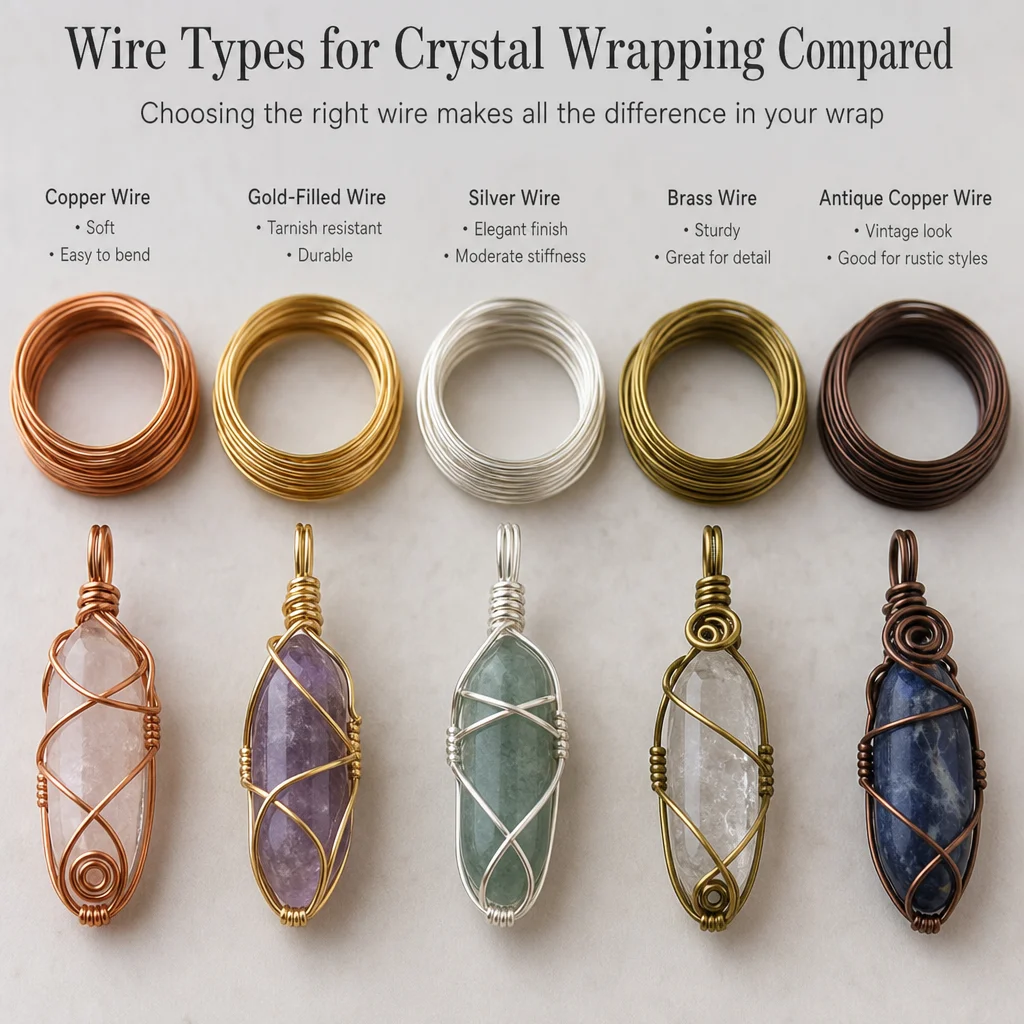
Gold-Filled Wire
Gold-filled wire has a thick gold layer (at least 5% of total weight) bonded to a brass core. Unlike gold-plated, the gold layer won't wear off with normal use. It's hypoallergenic, tarnish-resistant, and looks luxurious. Cost: $25-40 per spool for 20-gauge. Best for premium, heirloom-quality pieces where gold-tone is desired.
Brass Wire
Brass (copper-zinc alloy) is cheaper than both copper and silver, with a yellow-gold appearance. It tarnishes to a darker gold-brown. Workability is similar to copper but slightly stiffer. Cost: $4-6 per spool. Good for steampunk-inspired designs and as a budget gold-tone alternative.
Anodized Niobium or Titanium
These metals can be anodized to produce vivid colors (blue, green, purple, teal) that don't fade or tarnish. They're hypoallergenic and lightweight. Cost: $15-25 per spool. Popular for colorful, modern designs. The downside is limited availability and the colors don't match any natural metal.
Frequently Asked Questions
Can I mix copper and silver in one piece?
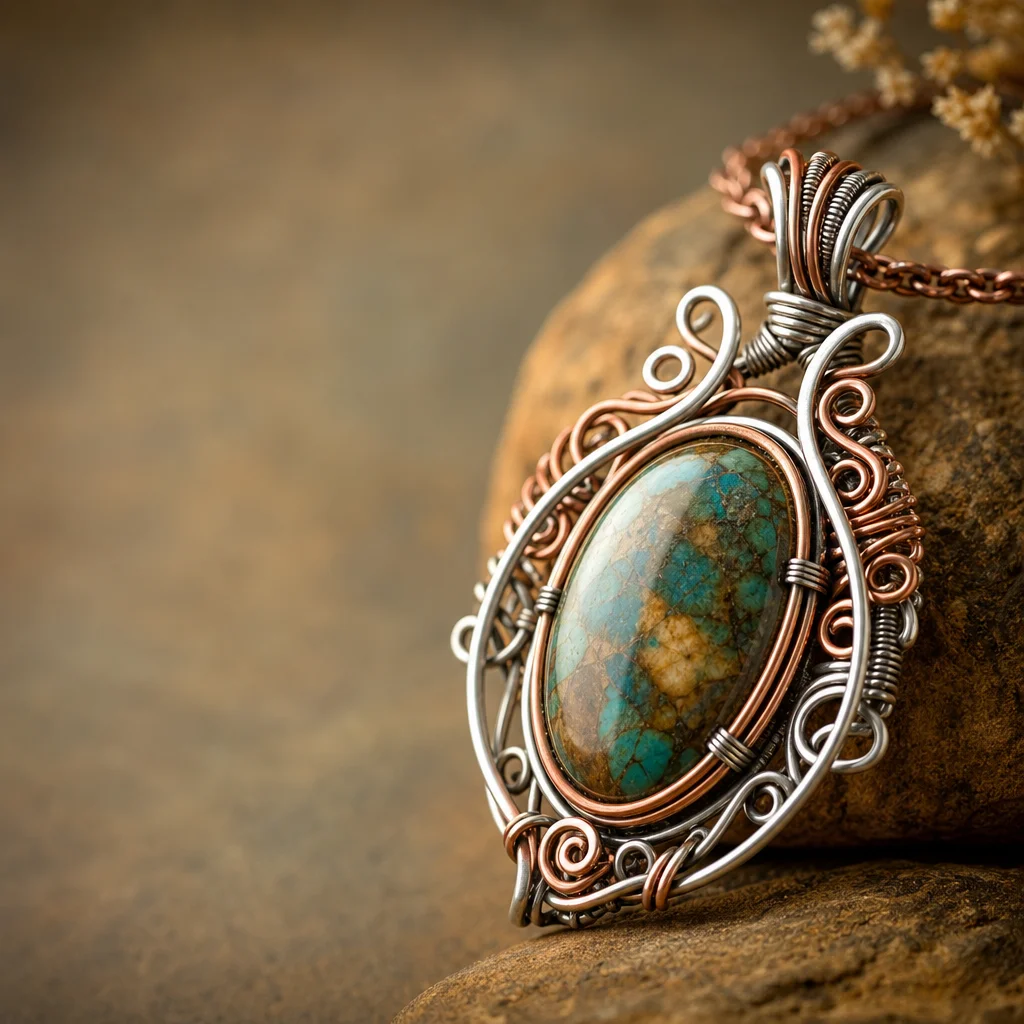
Yes, and it's a popular design choice. A silver frame with copper weaving creates a beautiful contrast. However, be aware that the two metals will oxidize differently over time—silver tarnishes dark grey while copper goes brown/green—so the contrast will shift as the piece ages. Some people love this organic evolution; others find it unpredictable.
Does copper wire turn skin green?
It can, depending on your skin chemistry, sweat level, and the weather. The green is copper carbonate/copper chloride, harmless and washable. Applying a clear coating (nail polish, Renaissance Wax, or jewelry sealant) to the wire parts that touch skin prevents this in most cases.
How do I prevent copper from oxidizing?
Store copper pieces in airtight bags with an anti-tarnish strip (available at craft stores). For finished pieces you wear regularly, a thin coat of clear sealant preserves the bright copper color. Some people embrace the patina—regularly polishing copper pieces restores the bright color if you change your mind.
Is silver wire worth the extra cost for a beginner?
Not for practice. Once you've mastered basic wraps on copper and want to create finished, sellable pieces, then silver becomes worth the investment. For the first 10-20 projects, copper gives you room to experiment without the pressure of making every piece perfect.
Frequently Asked Questions
Can I mix copper and silver wire in the same piece of jewelry?
Technically yes, but there are risks. Copper and silver in direct contact can cause galvanic corrosion over time, especially if moisture gets trapped at the junction. If you want the two-tone look, use a barrier coating or keep the metals separated by beads or other components.
How do I know which gauge wire to choose for my project?
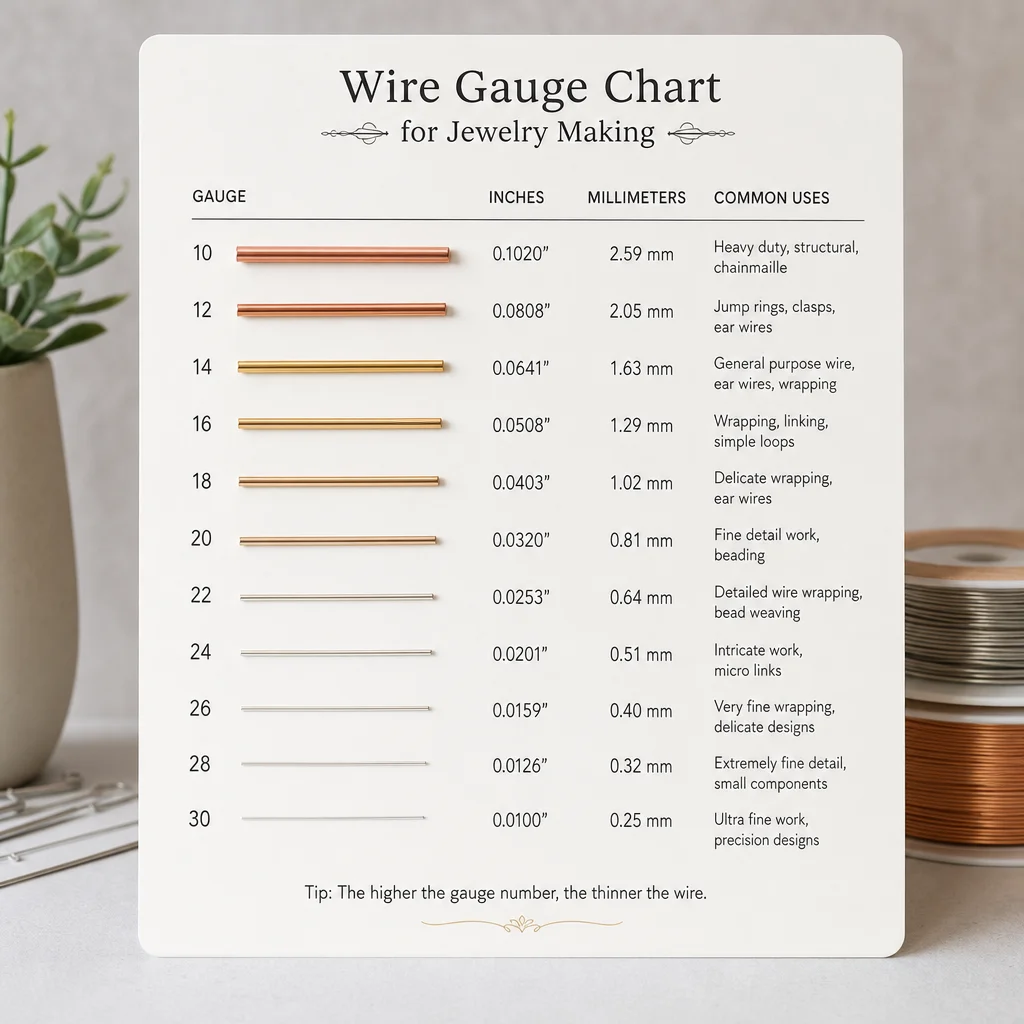
Use 20-gauge or 22-gauge for most wrapping and framing. Thinner wire (24-26 gauge) works for intricate details and weaving, while thicker wire (16-18 gauge) is best for structural elements like ear wires and bangles. Start with 20-gauge as an all-purpose choice.

Comments