Crystal Care: Cleansing, Charging, Storage
May 14, 2026
The Complete Guide to Crystal Care, Cleansing, and Maintenance
You bought a beautiful amethyst cluster. Six months later, the color is fading, there's dust in every crevice, and you've been told conflicting things about how to "cleanse" it — salt water? Moonlight? Sage? Sound baths?
Crystal care is one of the most confusion-filled areas of the hobby, largely because it mixes genuine mineralogy with spiritual practices that have no scientific basis. This guide separates what matters from what doesn't, with specific instructions for specific stones.
Why Crystal Care Matters (The Science, Not the Mysticism)
Crystals are geological materials. They interact with their physical environment in predictable ways — they can be scratched, dissolved, faded by UV light, corroded by chemicals, and damaged by temperature changes. "Caring" for a crystal means protecting it from these physical threats.
The concept of "cleansing" a crystal's energy has no measurable basis. But the word "cleansing" also gets used for physical cleaning, which is absolutely necessary. Dust attracts moisture, which can degrade certain minerals. Oils from handling can discolor porous stones. Salt residue from sweat can corrode metal-bearing minerals. Physical cleaning is maintenance, not ritual.
The Three Enemies of Every Crystal
1. Scratching
Every mineral has a hardness on the Mohs scale (1-10). If a harder stone rubs against a softer one, the softer one gets scratched. Period. This is the single most common cause of preventable crystal damage.
- Quartz (Mohs 7) will scratch calcite (Mohs 3) — keep them separated
- Topaz (Mohs 8) will scratch quartz (Mohs 7)
- Even dust contains quartz particles, which is why soft minerals get dull over time when displayed openly
2. Water
Some minerals dissolve in water. Not just "a little bit" — completely. Others degrade or release toxic substances. Our water safety guide covers this in detail, but the critical list:
- Never soak: Selenite (dissolves), halite (dissolves), pyrite (rusts), malachite (toxic copper runoff), azurite, chrysocolla, lepidolite (contains lithium)
- Quick rinse OK: Quartz varieties, garnet, topaz, tourmaline, ruby, sapphire, feldspar
- Avoid water entirely: Any stone with visible cracks or fractures — water gets in and can cause expansion damage during temperature changes
3. Light (UV Radiation)
UV light causes color fading in several popular minerals. This is photochemical degradation — the radiation breaks down the color centers in the crystal structure.
- Will fade in sunlight: Amethyst (turns pale), rose quartz (loses pink), citrine (loses yellow), kunzite (fades rapidly), aquamarine (can turn colorless), fluorite (some colors fade)
- Light-stable: Ruby, sapphire, emerald, garnet, peridot, jade
Display cases with LED lights are safe — LEDs emit negligible UV. Direct sunlight through a window is the main concern.
How to Clean Different Types of Crystals
Hard, non-porous stones (Mohs 6+): Quartz, feldspar, topaz, tourmaline, garnet
- Lukewarm water + mild dish soap
- Soft toothbrush for crevices
- Pat dry with a soft cloth
- Safe and effective — our testing confirmed this is the most effective method
Soft or porous stones (Mohs 3-5): Calcite, fluorite, malachite, turquoise
- Dry brushing with a soft makeup brush
- Compressed air for dust in crevices
- Never use water on calcite (slightly soluble) or malachite (toxic)
- If you must wipe, use a barely damp cloth and dry immediately
Very soft minerals (Mohs 1-2): Selenite, talc, halite
- Compressed air only
- Handle minimally — even fingerprints can damage the surface
- Keep away from humidity (selenite and halite are hygroscopic)
Crystal jewelry:
- Remove before washing hands, swimming, or exercising
- Store each piece separately — proper jewelry storage prevents tarnish and scratching
- Silver-set crystal jewelry needs anti-tarnish strips
Storage: The Long-Term Strategy
Most crystal damage happens in storage, not on display. Bad storage is worse than no storage.
Basic rules:
- Separate hard stones from soft stones — different compartments or individual pouches
- Use soft materials for lining: velvet, felt, or microfiber
- Include silica gel packets in enclosed storage to control humidity
- Keep away from direct sunlight and heat sources
- Don't stack heavy specimens on top of lighter ones
For valuable specimens:
- Individual specimen boxes with foam padding
- Acid-free tissue paper for wrapping
- Climate-controlled environment (stable temperature, 40-50% humidity)
- Document each piece with photos and notes on condition
Common storage mistakes include using cotton balls (fibers get caught on rough surfaces), rubber bands (degrade and leave residue), and plastic bags that trap moisture.
What "Cleansing" Methods Actually Do
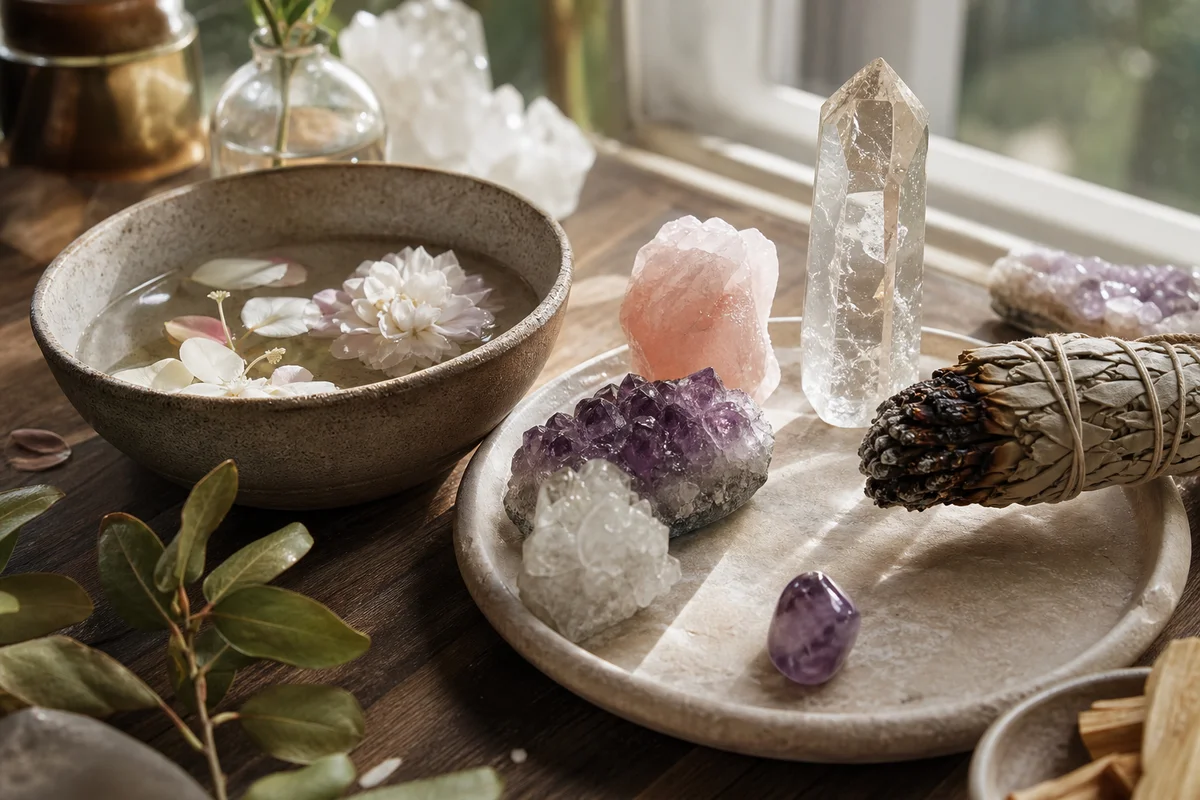
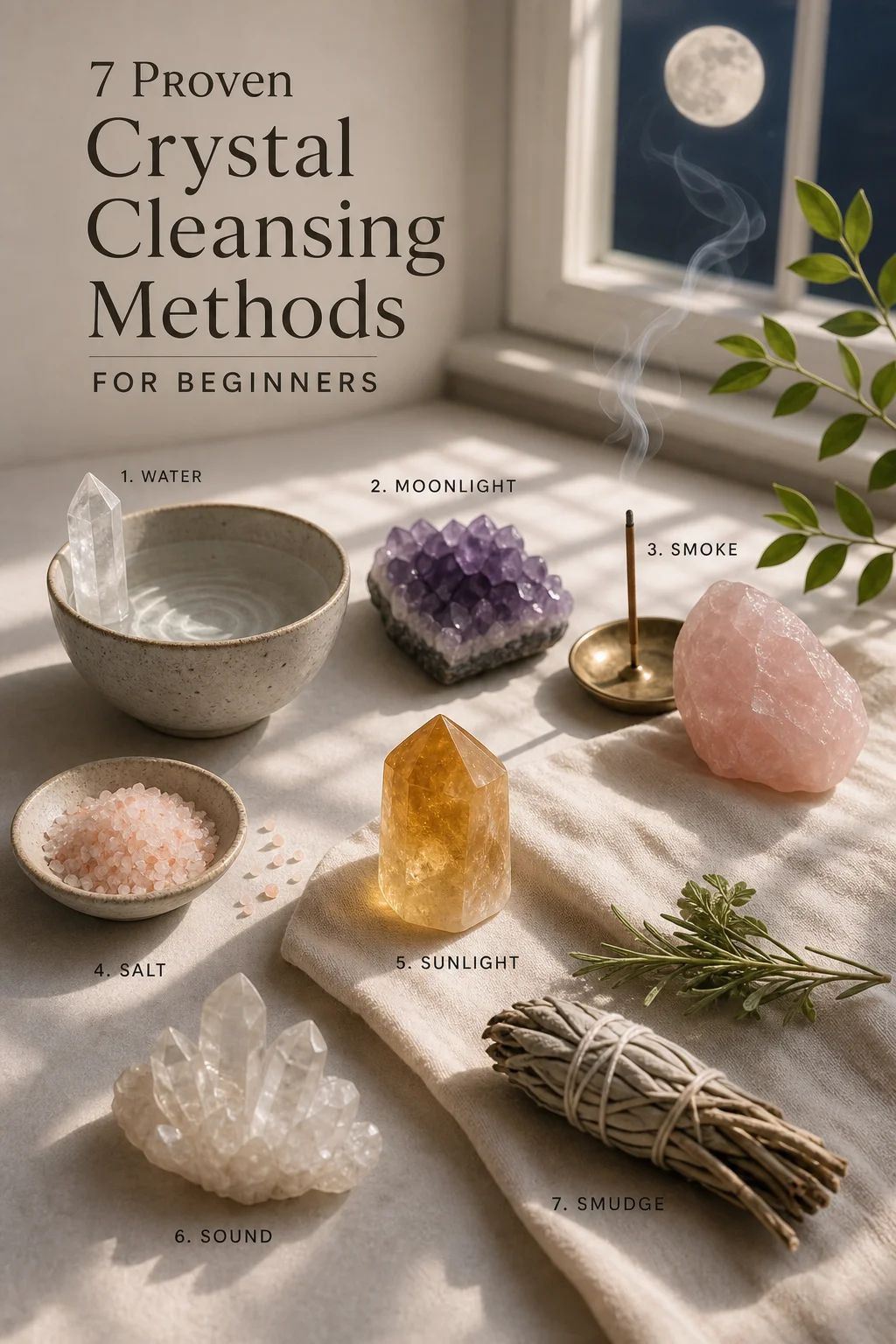
The crystal community advocates various cleansing methods. Here's what each one physically does:
Running water: Physically removes dust and debris. Effective for water-safe stones. Does nothing metaphysical.
Salt: Desiccant — absorbs moisture. Salt crystals can scratch softer minerals. Salt water is corrosive to many minerals. Most crystals should not be put in salt water.
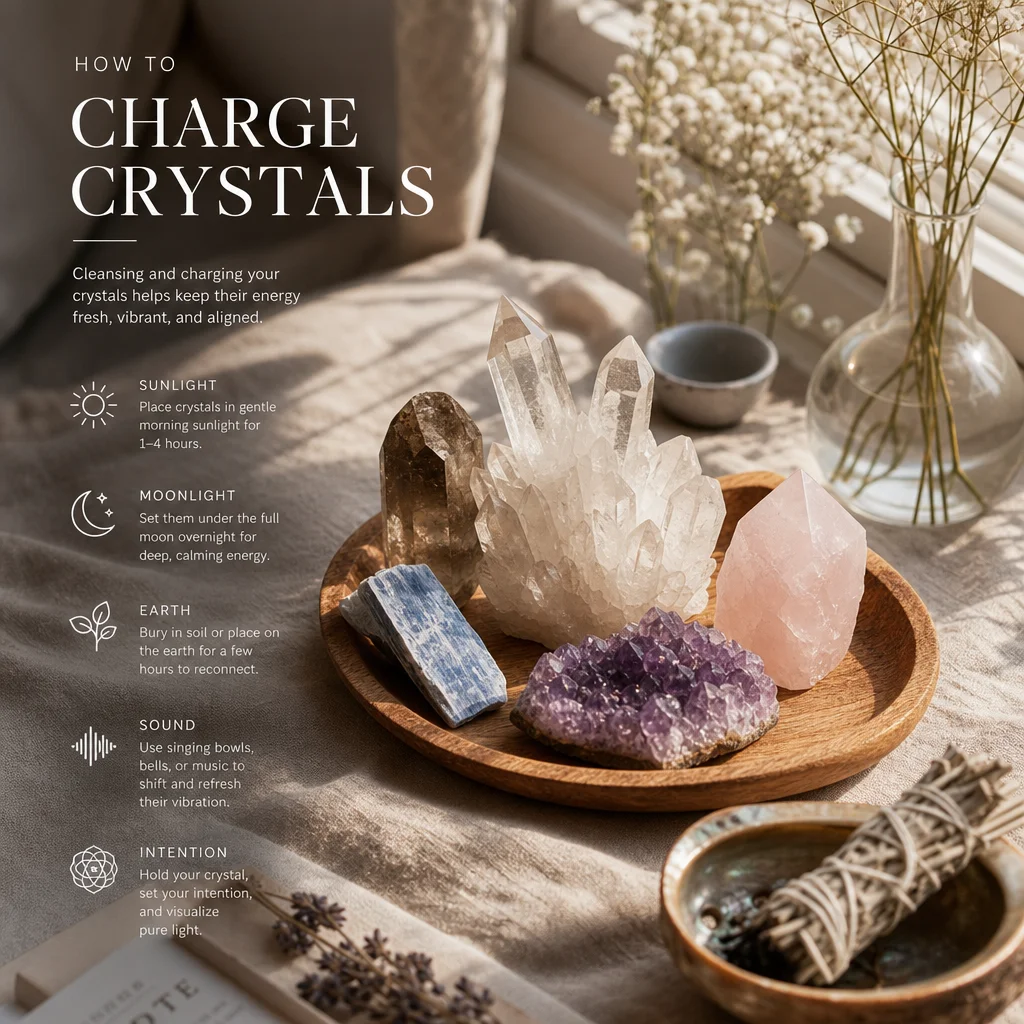
Sage smoke: Coats the crystal in a thin layer of smoke residue. This is physically the opposite of cleaning — you're adding material, not removing it. Some people find the ritual calming, which is fine, but don't confuse it with physical maintenance.
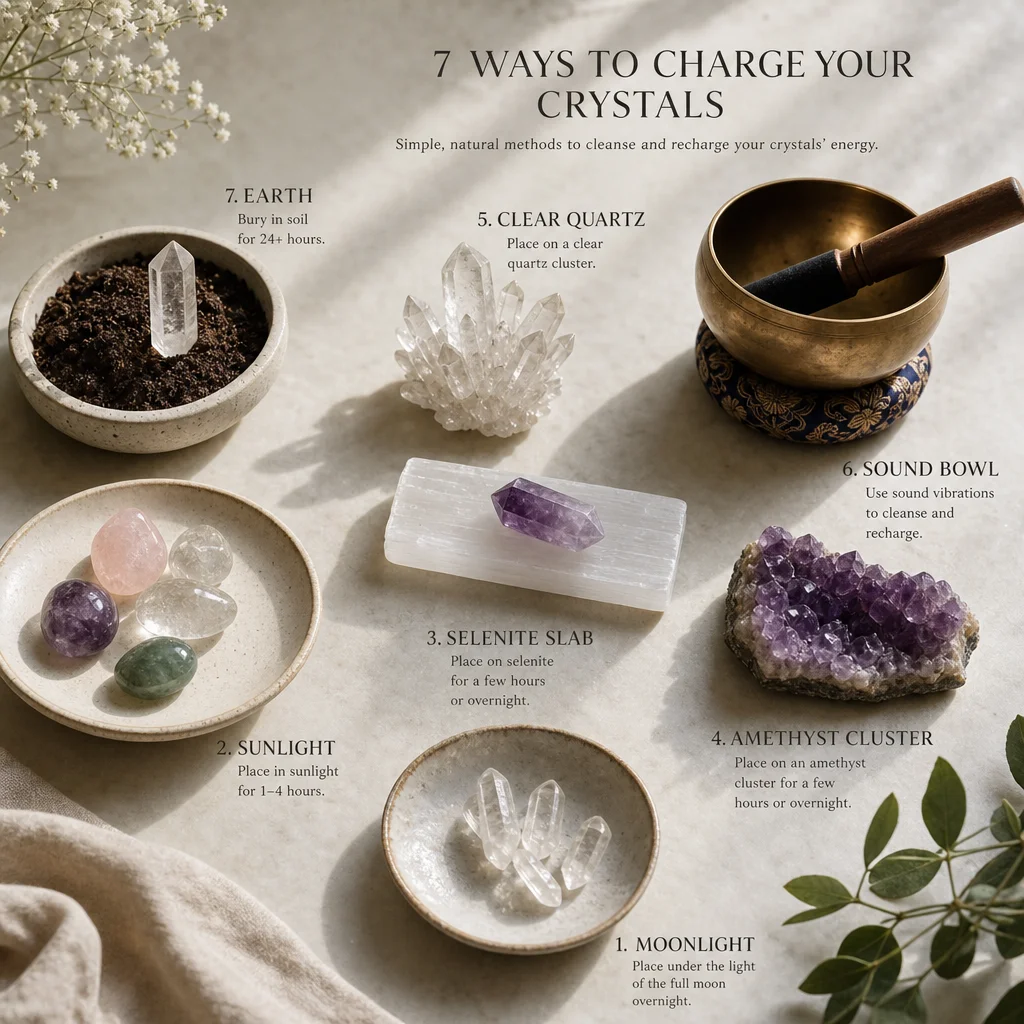
Moonlight: No physical effect. Moonlight is reflected sunlight with negligible UV intensity. Leaving crystals in moonlight is harmless but does nothing. Leaving them in sunlight (even to "charge" under the full moon) can fade UV-sensitive stones.
Sound (singing bowls): No physical effect on the crystal. The acoustic energy from a singing bowl is orders of magnitude too weak to affect mineral structure. Enjoyable experience, but not maintenance.
Burial in soil: Physically introduces moisture, organic acids, and microorganisms to the crystal surface. Can actually damage certain minerals. Not recommended for any stone you care about.
Repair and Restoration
Minor damage can sometimes be addressed:
- Scratched surfaces: Polishing compound (cerium oxide for quartz, tin oxide for softer stones) can reduce the appearance of surface scratches. Deep scratches require professional lapidary work.
- Chipped points: Cannot be truly repaired. Some people re-polish the tip, but this changes the crystal's shape and reduces its value.
- Faded color: Generally irreversible. Heat treatment can sometimes restore color in quartz varieties, but this requires controlled equipment and risks cracking the stone.
- Stabilized matrix: Specimens that were glued to matrix (common in retail specimens) may come loose. Crystal adhesive removal requires patience and the right solvents.
Seasonal Maintenance Checklist
Twice a year, go through your collection:
- Dust all displayed pieces with a soft brush or compressed air
- Check for new scratches, chips, or color changes
- Inspect storage conditions — are silica gel packets still active?
- Verify that UV-sensitive stones aren't getting too much light exposure
- Clean any pieces that have accumulated oils from handling
- Update inventory documentation with condition notes
Related Guides
- The Ultimate Crystal Guide — our comprehensive beginner's pillar page
- Which crystals are safe for water and elixirs
- Jewelry storage and tarnish prevention
- Cleansing methods comparison: what actually works
- Rock polishing without a tumbler
- Photographing your crystal collection
Caring for crystals is not complicated, but it does require knowing which rules apply to which stones. A quartz crystal and a selenite wand need completely different treatment. Learn the Mohs hardness and water sensitivity of each piece in your collection, and you'll avoid 99% of common crystal damage. The remaining 1% is just life — things break. Keep the pieces, learn from it, and maybe start a new collection.
This article covers one piece of the puzzle. For the full picture, see our The Complete Guide to Crystal and Jewelry Care, Cleaning, and Storage.
Crystal care is a daily practice, like watching what you eat — I use a calorie calculator for my diet and a cleaning schedule for my stones. Both need consistency.
Frequently Asked Questions
How often should I cleanse my crystals?
It's recommended to cleanse your crystals at least once a month to remove any negative energies they may have accumulated. However, if you've been using the crystal for emotional or spiritual healing purposes, you may want to cleanse it more frequently, such as weekly.
Can I use water to cleanse my crystals?
Yes, you can use water to cleanse your crystals. Rinse them under running water for a few minutes. However, not all crystals are water-soluble, so it's important to check your crystal's care guide first to avoid damaging it.
Is salt a good cleanser for crystals?
Yes, using salt is a popular method for cleansing crystals. Simply place your crystals in a cloth bag with sea salt and leave them overnight. This method is effective for most crystals, but ensure the salt is sea salt and not iodized to avoid any unwanted minerals.
Can I wear my crystals while taking a shower?
It's not recommended to wear crystals in the shower. The water and soap can damage the crystal's surface, and the steam can cause discoloration or damage over time. Keep your crystals away from water for best care.
How can I tell if my crystal needs to be charged?
Your crystal may need charging if it feels heavy or lacks its usual shine. To charge a crystal, place it under the moonlight or in direct sunlight for a few hours. You can also use the energy of another crystal or even a quartz cluster for charging purposes.
Understanding the Basics
This section covers important aspects of understanding the basics. For detailed information, please refer to the FAQ section below.
Key Factors to Consider
This section covers important aspects of key factors to consider. For detailed information, please refer to the FAQ section below.
Step-by-Step Instructions
This section covers important aspects of step-by-step instructions. For detailed information, please refer to the FAQ section below.
Common Mistakes to Avoid
This section covers important aspects of common mistakes to avoid. For detailed information, please refer to the FAQ section below.

Comments