UV Resin vs Epoxy for Crystal Jewelry
June 11, 2026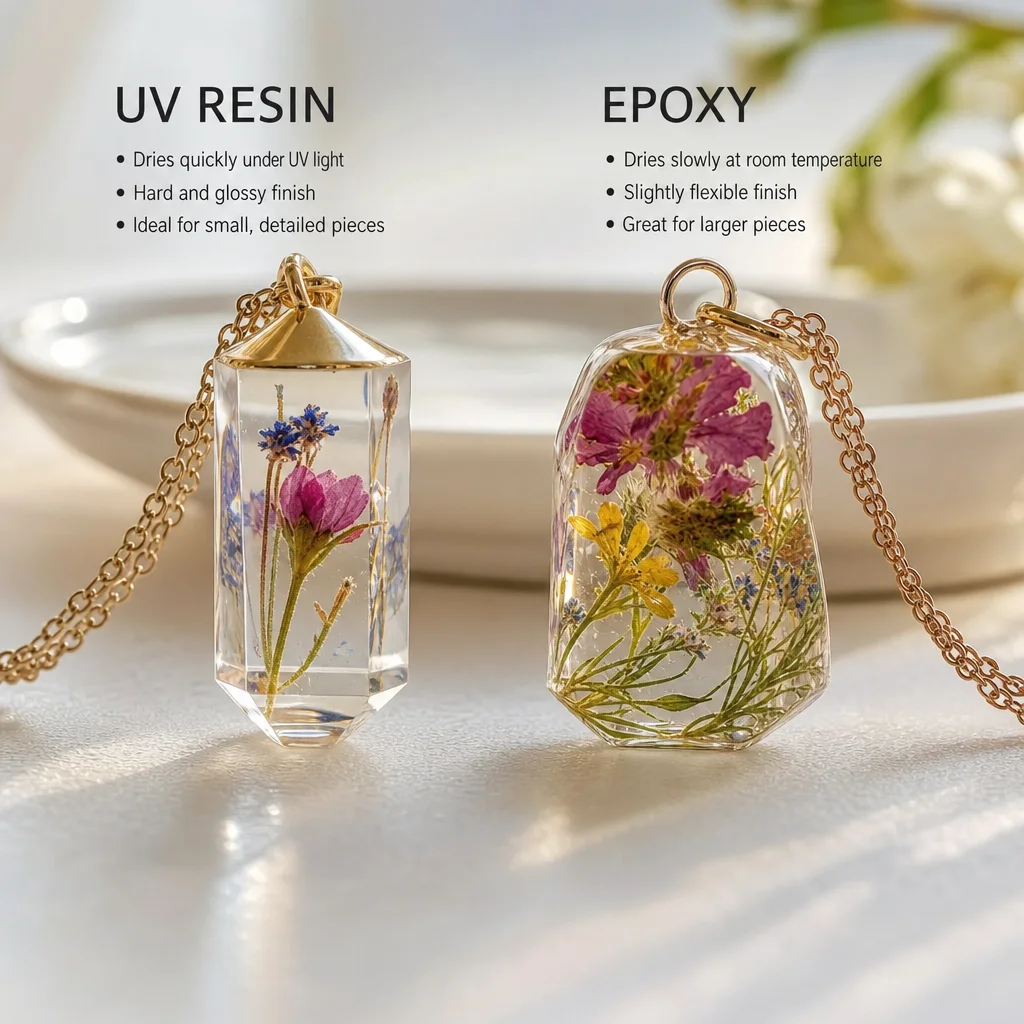
UV Resin vs Epoxy: The Central Debate in Resin Jewelry
If you've spent any time in resin jewelry forums or TikTok craft channels, you've seen this debate play out a hundred times. UV resin fans love the speed and convenience. Epoxy purists insist it's the only "real" option. Both sides have legitimate points, and the truth is that neither resin is objectively better — they're different tools for different jobs. I've used both extensively for crystal jewelry, and I reach for each one in different situations. Here's an honest comparison to help you choose the right one for your specific project.
What They Actually Are: Chemistry Basics
Understanding the chemistry helps explain why these resins behave so differently.
Epoxy Resin (Two-Part)
Epoxy resin is a two-part system: Part A is the resin (epoxy polymer), Part B is the hardener (a polyamine or similar curing agent). When mixed in the correct ratio, a chemical reaction called cross-linking occurs. The polymer chains form a three-dimensional network that hardens into a solid, clear, glass-like plastic. This reaction is exothermic — it generates heat. The more resin you mix at once, the more heat it generates. A small amount cures slowly at room temperature. A large batch can get hot enough to warp a mold or crack the resin.
Typical mix ratio: 1:1 by volume (most hobbyist brands) or 2:1 by volume (some professional grades). Working time: 30-45 minutes. Full cure: 24-72 hours. The resin starts as a liquid, gradually thickens (the "gel stage"), then hardens.
UV Resin (One-Part)
UV resin is a one-part system that contains photoinitiators — chemicals that react when exposed to ultraviolet light. When you place the resin under a UV lamp (typically 365nm wavelength), the photoinitiators trigger polymerization almost instantly. No mixing ratios to worry about, no hardener to add. The curing is controlled entirely by light exposure.
Working time: effectively unlimited (the resin stays liquid indefinitely without UV exposure). Cure time: 1-5 minutes per thin layer under a UV lamp. Cure depth: 1-2mm per exposure. For thicker pieces, you cure in multiple layers.
Side-by-Side Comparison
| Feature | UV Resin | Epoxy Resin |
|---|---|---|
| Components | 1-part (ready to use) | 2-part (mix required) |
| Curing method | UV lamp (365nm) | Chemical reaction (ambient) |
| Cure time | 1-5 min per layer | 24-72 hours |
| Max pour depth | 1-2mm per layer | 6-25mm (brand dependent) |
| Working time | Unlimited (no UV = no cure) | 30-45 min |
| Mixing required | No | Yes (precise ratio) |
| Yellowing resistance | Fair (yellows over 6-12 months) | Good to Excellent (UV-resistant brands) |
| Bubble control | Minimal (self-leveling) | Moderate (heat gun needed) |
| Cost per volume | $40-60 for 200ml | $25-35 for 32oz (946ml) |
| Best for | Thin jewelry, quick projects | Trays, bangles, deep pours |
| Shelf life | 6-12 months (unopened) | 1-2 years (unopened) |
| Heat sensitivity | Low (cures with light, not heat) | High (exothermic reaction) |
Crystal Compatibility: Which Works Better with Stones?
For crystal jewelry specifically, the interaction between resin and stone matters. Here's how each type performs:
Epoxy and Crystals
Epoxy resin is the better choice for embedding larger crystals and deep stone settings. Because you can pour deeper layers, crystals settle into the resin naturally rather than floating at the surface. The longer working time gives you more freedom to arrange crystals precisely. And the chemical bond between cured epoxy and rough stone surfaces is strong — the resin grips into the microscopic texture of crystal surfaces.
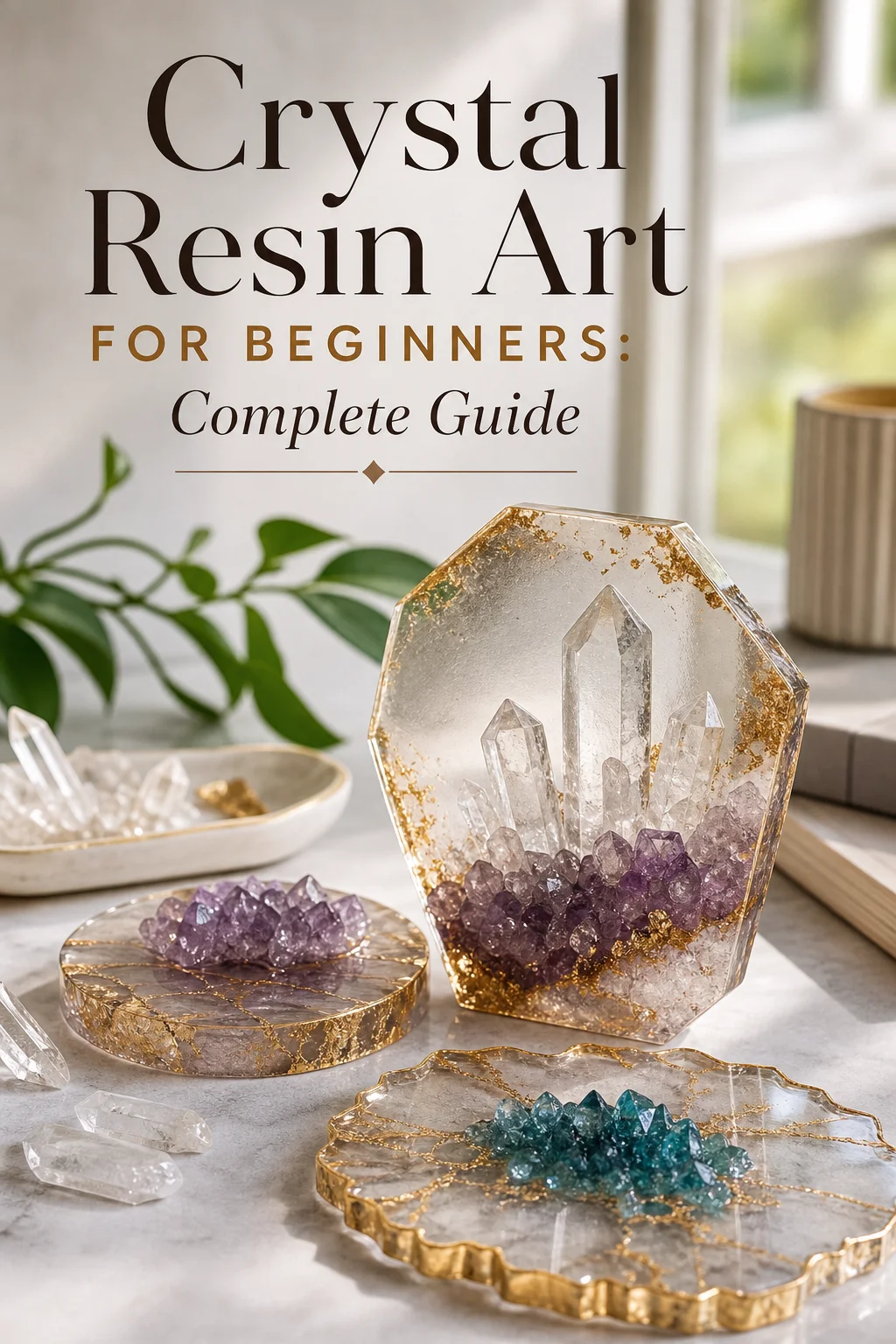
For geode-style jewelry (where a large crystal cluster is partially embedded in resin with the points exposed), epoxy is essentially the only option. UV resin simply can't create the depth needed for this style.
One caveat: some porous stones (howlite, unpolished turquoise, limestone) can absorb uncured epoxy, creating dark spots where the resin is drawn into the stone's pores. If you're working with porous stones, seal them first with a thin coat of clear nail polish or resin before the main pour.
UV Resin and Crystals
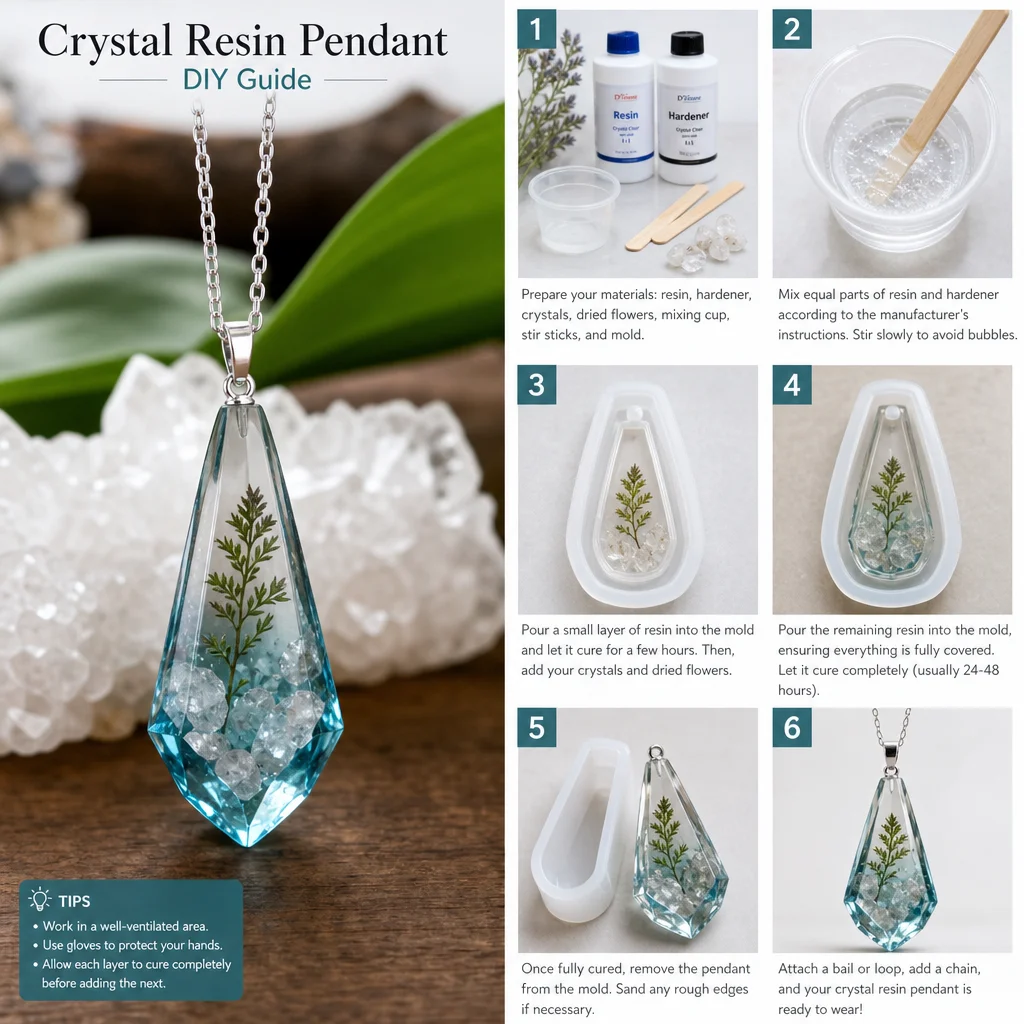
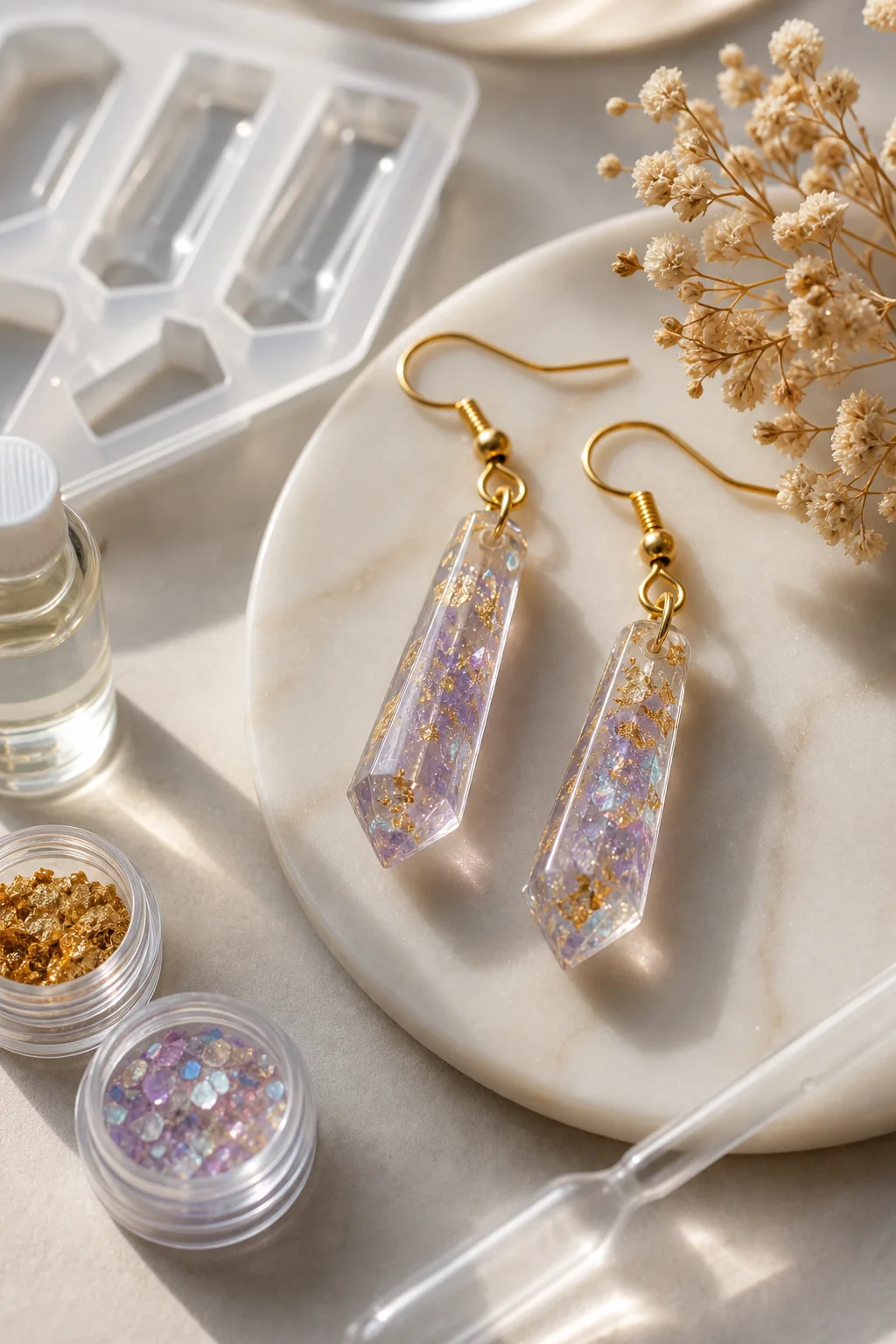
UV resin works well for thin, flat crystal jewelry — pendants, earrings, small charms where the resin layer is only 1-2mm thick. It's excellent for "crystal coating" applications: placing a flat stone or chip at the bottom of a mold and covering it with a thin layer of UV resin. The instant cure means the stone stays exactly where you placed it.
The limitation is depth. You can't suspend a large crystal in UV resin because the cure depth is limited. If you try to build up layers around a thick stone, the earlier layers may not cure fully through the stone's shadow. UV light doesn't penetrate opaque objects well, so a large crystal can create an uncured spot directly beneath it.
Best UV resin crystal projects: thin pendants (1 layer), earrings (1-2 layers), coating cabochons, filling bezel settings, sealing crystal points into wire-wrapped settings.
Safety Comparison
Both resins require safety precautions, but the risks differ:
Epoxy Safety
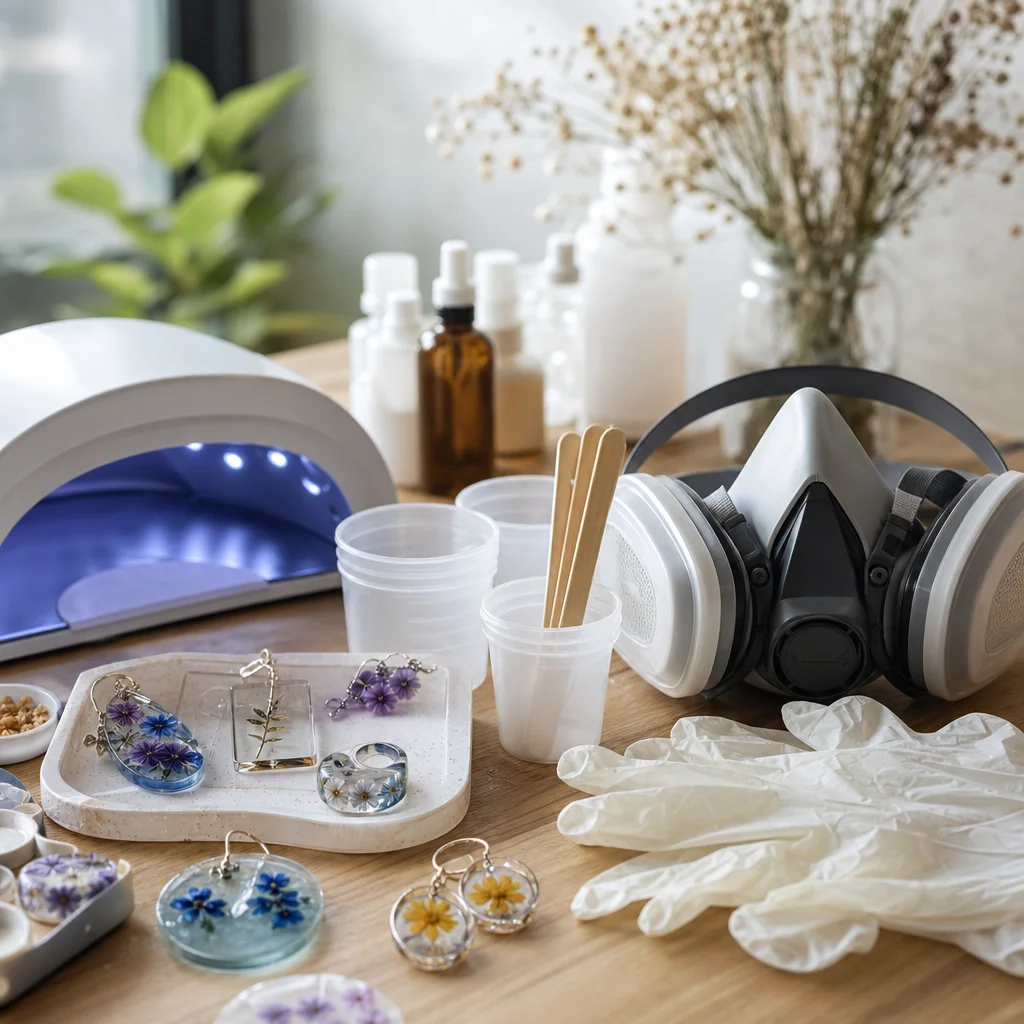
- Skin sensitization: Both resin and hardener are contact sensitizers. Repeated skin exposure can develop into allergic dermatitis. Always wear nitrile gloves (latex doesn't provide adequate protection against some epoxy chemicals).
- Inhalation: Uncured epoxy fumes can irritate eyes, nose, and throat. Work in a well-ventilated area or use a respirator mask with organic vapor cartridges for extended sessions.
- Exothermic risk: Large pours (over 1 inch deep or more than 6 ounces) can generate enough heat to melt plastic molds, crack the resin, or in extreme cases, start a fire. Never pour epoxy in containers larger than recommended by the manufacturer.
- Cleanup: Uncured epoxy wipes up with isopropyl alcohol. Cured epoxy requires scraping or sanding — it doesn't dissolve in any common solvent.
UV Resin Safety
- UV exposure: The UV lamp used to cure the resin emits UVA radiation. Don't look directly at the lamp, and limit skin exposure to the curing light. Some crafters experience mild skin darkening on their hands from repeated UV exposure.
- Skin sensitization: Lower risk than epoxy since there's no hardener, but uncured UV resin can still irritate sensitive skin. Wear gloves.
- Inhalation: Minimal fumes, but some UV resins have a noticeable odor during curing. Work in a ventilated space.
- Cleanup: Uncured UV resin cleans up with isopropyl alcohol. Once cured, it's permanent.
Cost Analysis: Which Is More Economical?
This is where the comparison gets interesting. UV resin looks more expensive per unit volume, but the math depends on your projects:
Epoxy: $25-35 for 32oz (946ml). At approximately $0.03-0.04 per ml, epoxy is clearly cheaper per volume. A 32oz kit makes about 15-20 medium pendants or 3-4 trays.
UV resin: $40-60 for 200ml. At $0.20-0.30 per ml, UV resin is 6-8 times more expensive per volume. However, UV resin cures precisely where you need it — there's no waste from mixing excess, no partial cups going to waste, and no discarded stir sticks with hardened residue. In practice, many crafters find the waste reduction brings the effective cost closer to 3-4 times epoxy.
For high-volume production of small items (earrings, pendants), UV resin's speed advantage can offset its higher cost per ml — you make more items per hour. For large or deep projects (trays, bangles), epoxy is far more economical.
Yellowing and Longevity
This is epoxy's biggest advantage over UV resin. Quality epoxy resins (ArtResin, ProMarine, etc.) are formulated with UV inhibitors that resist yellowing for years. UV resin, despite its name, actually yellows faster because it lacks these inhibitors — the photoinitiators that make UV resin cure are themselves light-sensitive and contribute to yellowing over time.
Timeline for noticeable yellowing:
- Premium epoxy (ArtResin): 3-5 years in indirect sunlight, longer if stored away from light
- Standard epoxy: 1-3 years, faster in direct sunlight
- UV resin: 6-12 months, faster with regular UV exposure (sunlight or lamps)
For crystal jewelry that will be worn daily and potentially in sunlight, this matters. A yellowed resin discolors the embedded crystals and makes the piece look aged. If longevity is a priority, epoxy wins decisively.
My Recommendation by Project Type
| Project | Recommended | Why |
|---|---|---|
| Crystal pendants (thin) | UV Resin | Speed, no mixing, precise control |
| Crystal pendants (deep/geode) | Epoxy | Depth needed, strong bond |
| Crystal earrings | UV Resin | Thin layers, instant cure |
| Crystal bangles | Epoxy | Depth, structural strength |
| Crystal tray/display | Epoxy | Large volume, even curing |
| Crystal coating/encapsulation | UV Resin | Thin coat, instant |
| Bezel setting fill | Either | Depends on depth |
| Large batch production | Epoxy | Cost per unit lower |
| Beginner practice | UV Resin | Simple, no mixing ratio errors |
| Outdoor/display pieces | Epoxy | Better UV resistance |
Frequently Asked Questions
Can I mix UV resin and epoxy in the same project?
I don't recommend it. They don't bond well to each other — cured epoxy has a different surface chemistry than cured UV resin. If you try to pour UV resin over cured epoxy (or vice versa), the layers may separate over time. Stick with one resin type per project. If you need both properties (like epoxy depth with UV speed), do all the deep epoxy work first, let it fully cure, then sand the surface for adhesion before using UV resin for thin surface details.
Why does my UV resin stay tacky?
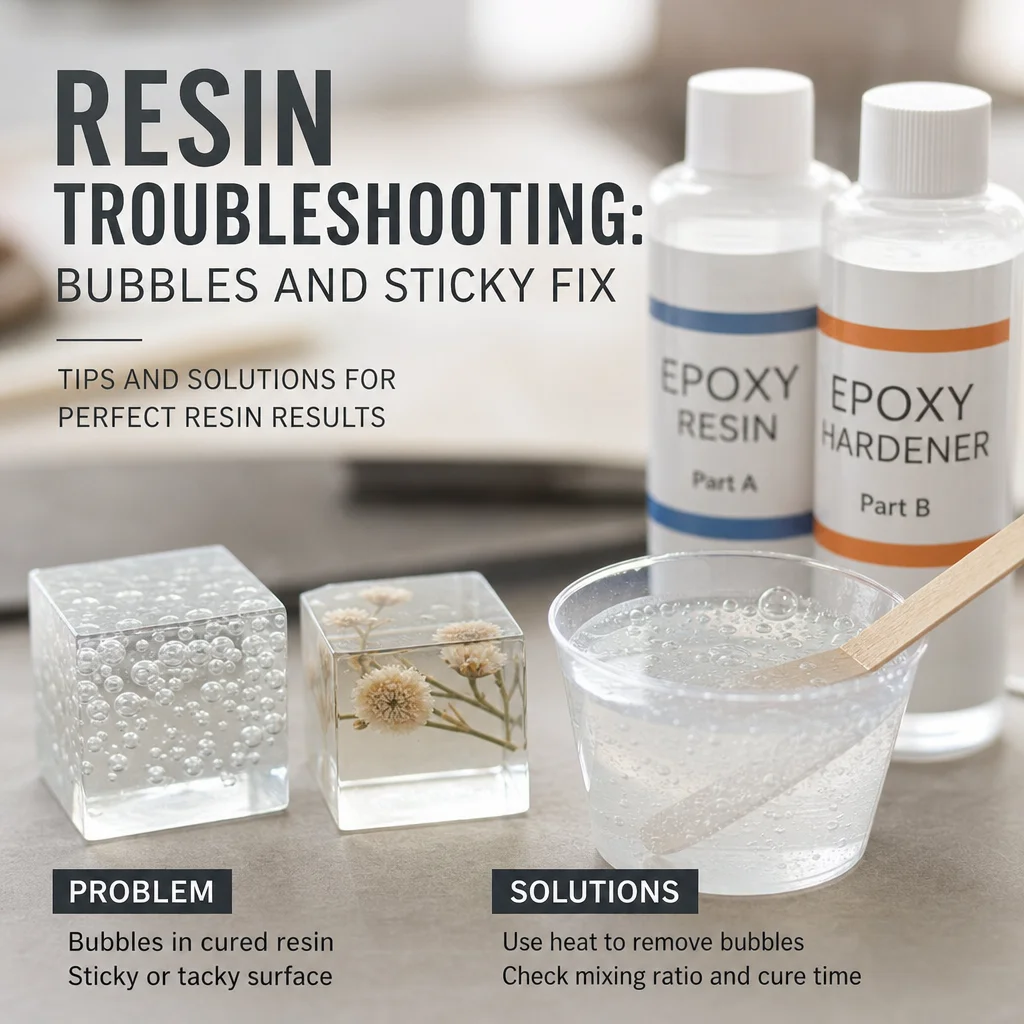
Tackiness usually means insufficient UV exposure. Make sure your UV lamp is strong enough (at least 6W, ideally 9W+) and positioned close to the resin (1-2 inches). Cure for the full recommended time plus an extra minute. If the resin is very thick (over 2mm in any spot), it won't cure through — thin the layer or cure from both sides. Some UV resin brands also have shelf life issues — if your resin is over a year old, the photoinitiators may have degraded.
Is UV resin food-safe?
No. Neither UV resin nor epoxy resin is certified food-safe once cured. Don't use resin trays for serving food directly. They're fine for holding jewelry, cosmetics, or other non-food items. Some crafters use food-safe sealants over cured resin for food-contact items, but this adds complexity and isn't guaranteed. Treat all resin pieces as decorative and non-food-contact.
Which resin is better for beginners?
UV resin is easier to start with because there's no mixing ratio to get wrong — the most common beginner mistake with epoxy is incorrect ratios, which leads to soft, sticky, or never-fully-cured results. UV resin eliminates this variable entirely. The downside: UV resin teaches bad habits (instant gratification, no patience for curing) that don't translate to epoxy work. If you plan to progress to larger projects (trays, bangles), start with epoxy and learn the mixing process from the beginning. The learning curve is steeper but the skill set is more versatile.
Frequently Asked Questions
Will resin make my crystal jewelry turn cloudy?
Properly cured resin will not make your crystals cloudy; it actually enhances their natural sparkle. Cloudiness usually occurs when moisture is trapped inside or if UV resin is applied too thickly. Epoxy is preferred for encapsulating larger natural stones because its slow curing time allows microscopic air bubbles to escape. At SagStone, our artisans meticulously prepare every gemstone to ensure a flawless, crystal-clear finish.
Comments