Third Eye Chakra Crystals: 7 Stones for
June 11, 2026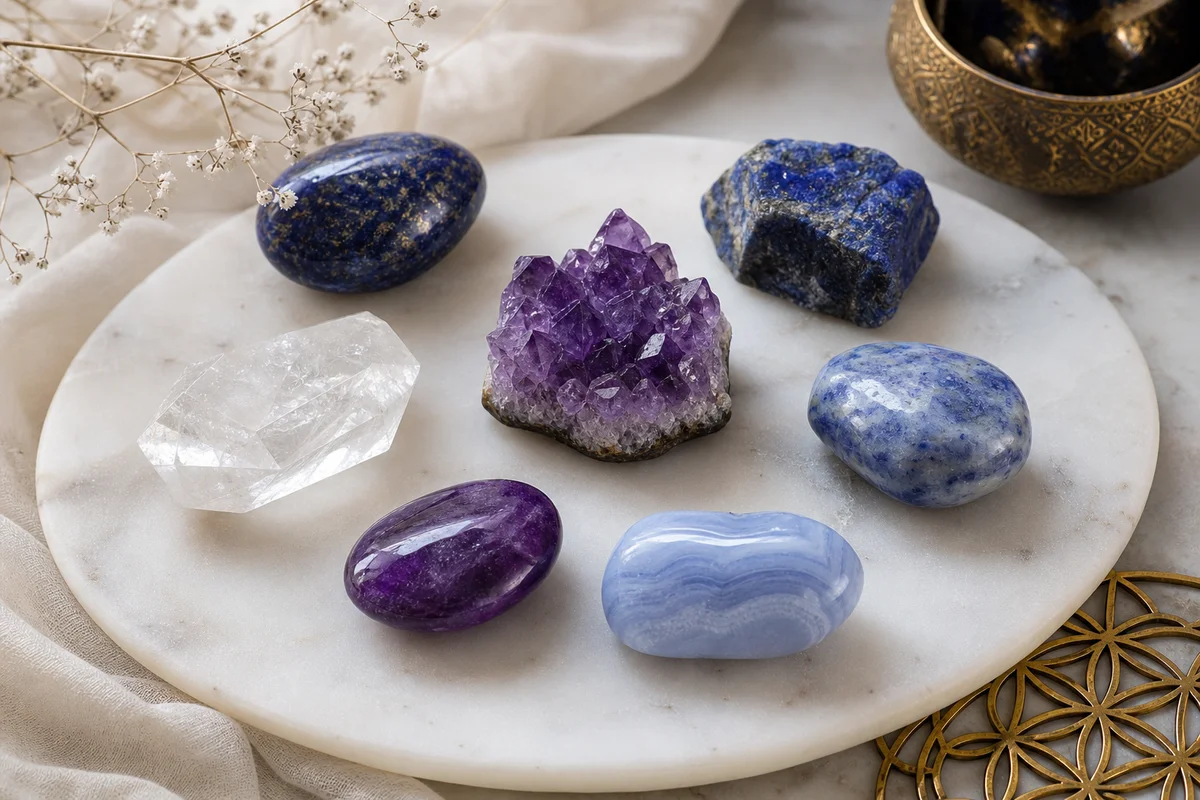
Understanding the Third Eye Chakra (Ajna)
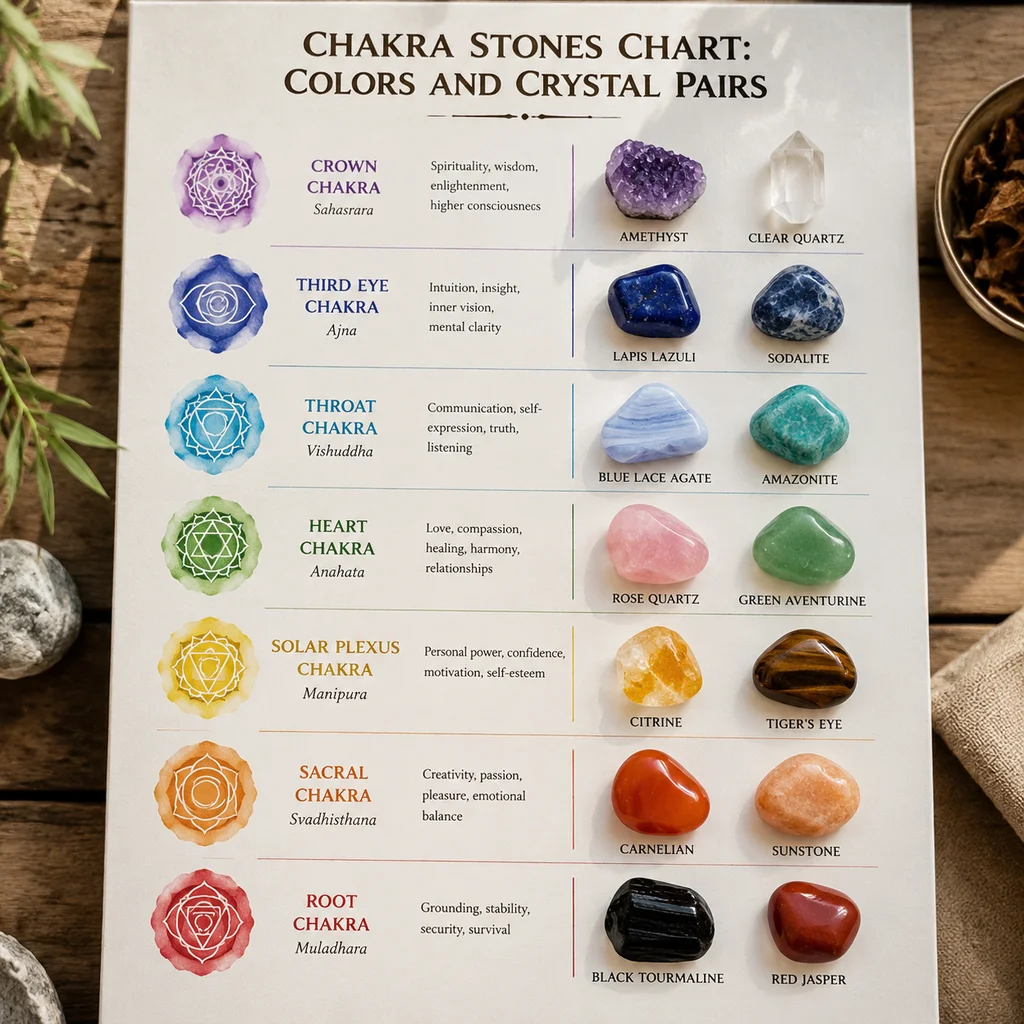
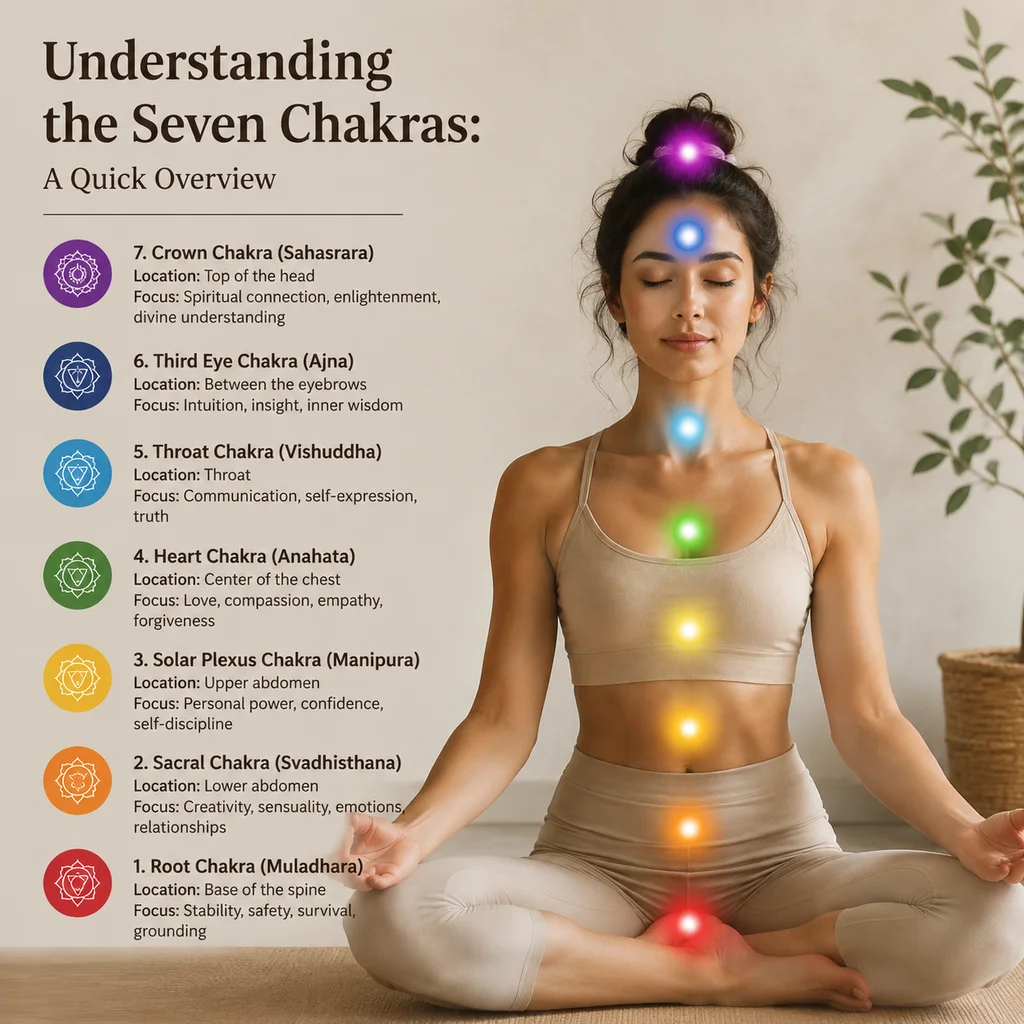
The third eye chakra, called Ajna in Sanskrit, sits in the middle of your forehead, slightly above the space between your eyebrows. It's the sixth of seven main chakras in the Hindu/Yogic energy system, and it's associated with intuition, insight, imagination, and the ability to see beyond the obvious. In Sanskrit, "Ajna" literally means "command" or "to perceive."
Before we get into the crystals, I want to be transparent: chakras are a concept from ancient Indian spiritual traditions, not a medically recognized system. Crystals are not a substitute for medical treatment. What I'm sharing here comes from cultural traditions, personal practice, and the accumulated experience of countless practitioners over thousands of years. If you're interested in exploring this from a cultural and mindfulness perspective, there's a rich tradition to draw from.
The third eye chakra is traditionally represented by the color indigo (deep blue-purple). Its element is light, and it's associated with the pineal gland — a small endocrine gland in the brain that produces melatonin and regulates sleep cycles. Whether or not you accept the energetic framework, the pineal gland connection is fascinating from a physiological standpoint.
Signs of a Balanced Third Eye
In the chakra framework, a balanced Ajna manifests as clear thinking, strong intuition, good imagination, and the ability to make decisions with confidence. People describe it as a sense of "knowing" that goes beyond logical analysis — like when you meet someone and immediately trust them (or don't), or when you have a gut feeling about a decision that turns out to be right.
Signs of an Imbalanced Third Eye
Imbalance in this chakra (according to traditional descriptions) shows up as mental fog, poor decision-making, lack of imagination, headaches, difficulty concentrating, insomnia, or feeling disconnected from your inner guidance. Some traditions also describe an "overactive" third eye as being associated with overthinking, excessive worry, or difficulty staying grounded in reality.
7 Stones for the Third Eye Chakra
The following stones have been traditionally associated with the third eye chakra across various cultures. I've included both the traditional associations and practical information about each stone.
1. Amethyst: The Classic Third Eye Stone
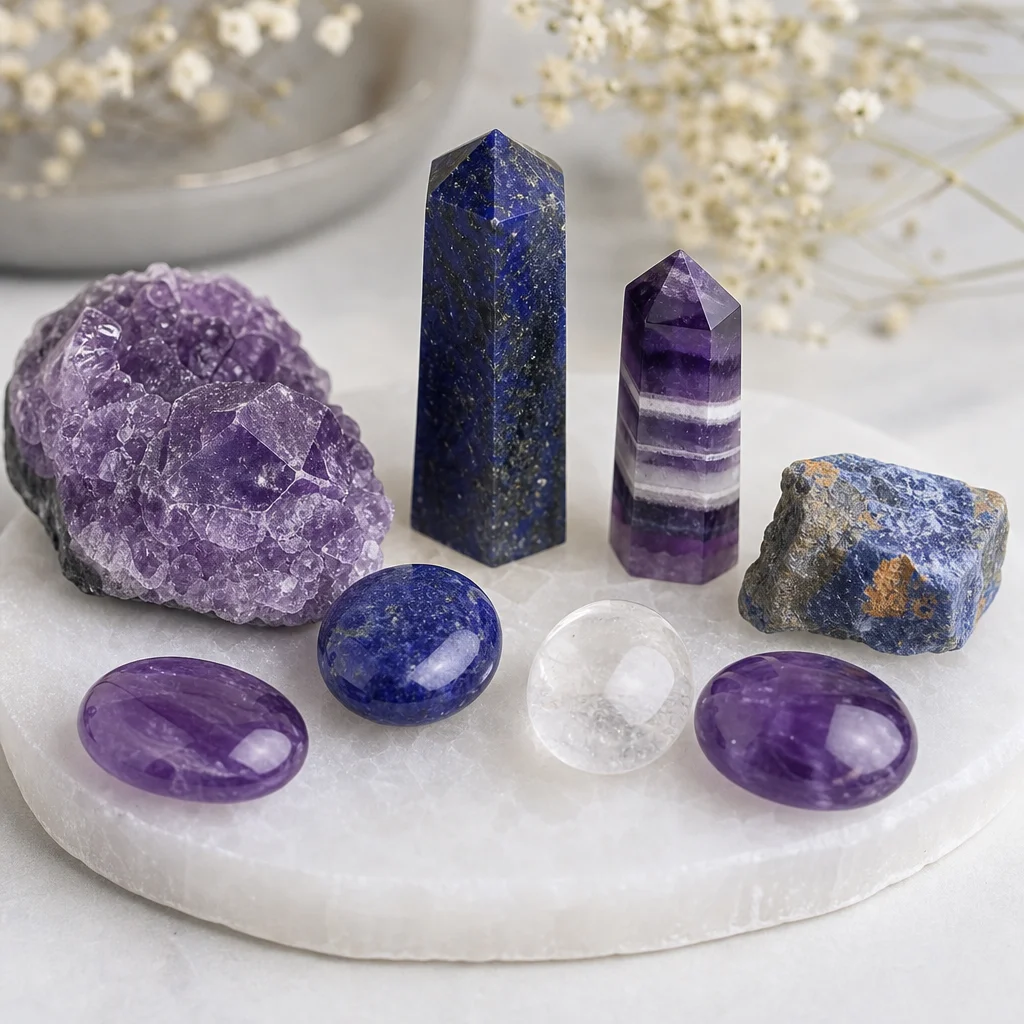
Amethyst is probably the most commonly recommended stone for the third eye, and for good reason. It's affordable ($2-5 per bead for 8mm), widely available, visually beautiful, and its deep purple color aligns perfectly with the indigo spectrum associated with Ajna.
In crystal traditions, amethyst is associated with clarity of mind, spiritual awareness, and dream recall. Many practitioners place an amethyst under their pillow or on their nightstand, believing it enhances dream vividness and recall. I've done this myself and can confirm that the psychological effect of setting an intention before sleep (even without the stone) already enhances dream recall. Whether the stone adds something beyond that is, frankly, subjective.
For third eye work specifically, a tumbled amethyst placed on the forehead during meditation is the traditional method. You can also wear amethyst as a bracelet on your left wrist or keep a small piece at your desk during focused work.
2. Lapis Lazuli: The Wisdom Stone
Lapis lazuli has been associated with wisdom and intellectual ability since ancient Egypt, where it was ground into pigment for the most valuable artworks. Cleopatra reportedly used lapis lazuli eyeshadow. Its deep blue with golden pyrite inclusions is distinctive and hard to mistake for anything else.
In the chakra tradition, lapis is linked to the throat and third eye chakras simultaneously. It's considered a stone of authentic communication combined with inner knowing — the idea being that true wisdom comes from within and is then expressed clearly. If you're working on trusting your intuition and then acting on it, lapis is the traditional recommendation.
Quality lapis costs $5-15 per 8mm bead. The best material comes from Afghanistan, where it's been mined for over 6,000 years. Beware of dyed howlite or sodalite being sold as lapis — genuine lapis always has visible pyrite (golden) flecks.
3. Clear Quartz: The Amplifier
Clear quartz is the "universal" stone in crystal work. It's associated with all chakras but is particularly useful for the third eye because of its amplifying properties — the idea being that clear quartz enhances whatever intention you set. Pair it with another third eye stone, and it theoretically amplifies that stone's properties.
What I can say objectively: clear quartz has genuine piezoelectric properties. It generates an electric charge under mechanical pressure. This is why it's used in watches, electronics, and scientific instruments. Whether this physical property translates to any energetic effect in spiritual practice is a matter of personal belief.
Clear quartz is the most affordable option ($1-3 per 8mm bead) and the most durable. A clear quartz point held to the third eye during meditation is a common practice.
4. Fluorite: The Mental Clarity Stone
Fluorite comes in a range of colors (green, purple, blue, yellow, and rainbow combinations), and the purple and blue varieties are specifically associated with the third eye. What makes fluorite interesting is its octahedral crystal structure — it naturally forms in perfect cubes and octahedrons, which is unusual and visually striking.
In crystal lore, fluorite is associated with mental clarity, concentration, and decision-making. It's sometimes called the "genius stone" for its association with enhanced mental processing. Practitioners often recommend fluorite for students or anyone doing complex intellectual work.
Fluorite is softer than quartz (4 on the Mohs scale), so it scratches easily. Keep it away from harder stones in a collection to prevent damage. Price: $3-8 per bead for purple/green fluorite.
5. Labradorite: The Vision Stone
Labradorite's iridescent flash (called labradorescence) is one of nature's most spectacular optical effects. The stone appears gray or black until light hits it at the right angle, then bursts with blue, green, gold, and sometimes purple flashes. It's like having a secret rainbow inside a stone.
In the chakra tradition, labradorite is associated with the third eye specifically for its "hidden depths" — the way its true beauty is revealed only from certain perspectives parallels the idea of insight and intuition revealing what's not immediately visible. Practitioners recommend it for developing clairvoyance and trusting one's inner vision.
Labradorite is moderately priced ($4-10 per bead) and durable enough (6-6.5 Mohs) for daily wear as jewelry.
6. Iolite: The Viking Compass
Iolite is one of the more interesting third eye stones historically. Viking navigators supposedly used thin slices of iolite as a polarizing filter — by looking through the stone at the sky, they could determine the exact position of the sun on cloudy days. This genuine navigational use gives iolite a practical association with "seeing clearly" and "finding direction."
The stone's color ranges from violet-blue to deep indigo, depending on the viewing angle (it's pleochroic, showing different colors from different directions). In crystal lore, iolite is associated with inner vision, self-discovery, and navigating life transitions.
Iolite is less commonly available than the other stones on this list. Expect to pay $5-15 per bead. It's moderately durable (7-7.5 Mohs).
7. Shungite: The Protective Shield
Shungite is the outlier on this list. It's a carbon-rich stone from the Karelia region of Russia, estimated to be about 2 billion years old. It's black, opaque, and doesn't look like a "third eye stone" in the traditional sense. But shungite has gained a strong following among practitioners who believe it protects against electromagnetic radiation and negative energy.
In third eye work specifically, shungite is sometimes recommended as a grounding counterbalance. The idea is that third eye work can make you feel "ungrounded" or overly in your head, and shungite's grounding properties bring you back to your body while maintaining the clarity of the practice.
Shungite is affordable ($3-8 per bead) but quality varies. Genuine shungite from Karelia is relatively lightweight for its size and has visible silvery inclusions. "Noble shungite" (higher carbon content) is more expensive but rarer.
How to Use Third Eye Crystals in Practice
Here are practical methods, drawn from traditional approaches, for working with these stones:
Meditation Placement
The simplest method: lie on your back, close your eyes, and place a third eye stone (amethyst or lapis are most common) on your forehead in the area between and slightly above your eyebrows. Relax for 5-15 minutes. Focus on the sensation of the stone's weight and temperature. Some practitioners visualize indigo light at the third eye point. The key is consistency — doing this daily for even 5 minutes is more valuable than occasional long sessions.
Wearable Practice
A bracelet or pendant with a third eye stone keeps the association present throughout your day. When you notice the stone during your daily activities, it can serve as a momentary mindfulness cue — a brief reminder to pause, breathe, and check in with yourself. This is particularly useful with amethyst or labradorite jewelry, which catches light and draws attention naturally.
Grid or Altar Placement
Some practitioners create a dedicated space with third eye stones arranged in a specific pattern (often a triangle or circle). This is more of an advanced practice and combines the visual focus of the arrangement with the cultural symbolism of sacred geometry. If you're just starting, don't worry about grids — simple meditation with a single stone is plenty.
Signs of a Balanced vs. Blocked Third Eye Chakra
When the Ajna chakra is open and balanced, you likely experience a strong sense of inner knowing and mental clarity. Decision-making feels natural, and you trust your intuition to guide you through life's challenges. A balanced third eye also enhances your imagination, allowing you to visualize your goals clearly and connect deeply with your inner wisdom. People with a harmonious third eye chakra often find it easy to stay present and remain objective in stressful situations.
Conversely, a blocked or underactive third eye chakra can leave you feeling disconnected, skeptical, or closed off to new perspectives. You might struggle with overthinking, lack of direction, or an inability to focus. Physically, an imbalance in this energy center is sometimes associated with tension headaches, eye strain, or sleep disturbances. If you find yourself ignoring your gut feelings or feeling trapped in a mundane routine without creative inspiration, working with third eye crystals can help clear these energetic blockages and restore your spiritual vision.
Cleansing and Charging Your Third Eye Crystals
Because the third eye chakra deals heavily with absorbing and processing subtle energies, the stones you use for it require regular cleansing. Throughout the day, healing crystals naturally pick up ambient energies from their environment, which can eventually dull their vibrations. To ensure your Ajna stones remain effective, it is essential to clear them of any stored energetic debris before using them for meditation, healing work, or daily wear.
There are several gentle and effective methods to cleanse your third eye stones. Smudging with sage, palo santo, or incense is a popular choice, as the smoke purifies the crystal's energetic field. Alternatively, you can place your crystals under the light of a full moon overnight, which is a safe and highly effective method for almost all intuition stones. Sound healing using singing bowls or tuning forks also works beautifully to reset a crystal's vibration without risking water or sun damage to delicate stones.
Once your crystals are cleansed, you must charge them to amplify their natural properties. Resting them on a Selenite charging plate or a clear quartz cluster will revitalize their energy. Setting a specific intention—such as mental clarity or spiritual awareness—while holding the newly charged stone programs it specifically for your third eye healing journey.
Frequently Asked Questions
Which third eye crystal should I start with?
Amethyst. It's affordable, widely available, traditionally the most recommended for this chakra, and its deep purple color aligns with the third eye's indigo association. Get a small tumbled piece for meditation and a bracelet or pendant for daily wear. Total investment: under $25. You can always add other stones later.
Can third eye crystals help with headaches?
There's no scientific evidence that crystals relieve headaches. If you experience chronic headaches, please consult a healthcare professional. Some practitioners find the cooling sensation of stones like amethyst or fluorite placed on the forehead during relaxation mildly soothing, but this is a comfort effect, not a treatment. Crystals are not a substitute for medical treatment.
How do I know if my third eye is "opening"?
In the chakra tradition, signs of third eye activation include increased dream vividness, stronger intuitive feelings, enhanced mental clarity, and a greater sense of inner knowing. From a practical standpoint, these are also signs of reduced stress, better sleep hygiene, and regular mindfulness practice. The experiences are real regardless of whether you attribute them to chakra opening or to the benefits of meditation itself.
Should I use only one third eye stone or combine multiple?
Start with one. Working with a single stone helps you develop a personal relationship with it and notice subtle effects (whether psychological or otherwise) more clearly. After a few months, you can experiment with combinations — amethyst + clear quartz is the most common pairing, as quartz is said to amplify amethyst's properties. But there's no requirement to combine stones. One quality stone is better than five you don't connect with.
Signs of a Balanced vs. Blocked Third Eye Chakra
When the Ajna chakra is open and balanced, you likely experience a strong sense of inner knowing and mental clarity. Decision-making feels natural, and you trust your intuition to guide you through life's challenges. A balanced third eye also enhances your imagination, allowing you to visualize your goals clearly and connect deeply with your inner wisdom. People with a harmonious third eye chakra often find it easy to stay present and remain objective in stressful situations.
Conversely, a blocked or underactive third eye chakra can leave you feeling disconnected, skeptical, or closed off to new perspectives. You might struggle with overthinking, lack of direction, or an inability to focus. Physically, an imbalance in this energy center is sometimes associated with tension headaches, eye strain, or sleep disturbances. If you find yourself ignoring your gut feelings or feeling trapped in a mundane routine without creative inspiration, working with third eye crystals can help clear these energetic blockages and restore your spiritual vision.
Cleansing and Charging Your Third Eye Crystals
Because the third eye chakra deals heavily with absorbing and processing subtle energies, the stones you use for it require regular cleansing. Throughout the day, healing crystals naturally pick up ambient energies from their environment, which can eventually dull their vibrations. To ensure your Ajna stones remain effective, it is essential to clear them of any stored energetic debris before using them for meditation, healing work, or daily wear.
There are several gentle and effective methods to cleanse your third eye stones. Smudging with sage, palo santo, or incense is a popular choice, as the smoke purifies the crystal's energetic field. Alternatively, you can place your crystals under the light of a full moon overnight, which is a safe and highly effective method for almost all intuition stones. Sound healing using singing bowls or tuning forks also works beautifully to reset a crystal's vibration without risking water or sun damage to delicate stones.
Once your crystals are cleansed, you must charge them to amplify their natural properties. Resting them on a Selenite charging plate or a clear quartz cluster will revitalize their energy. Setting a specific intention—such as mental clarity or spiritual awareness—while holding the newly charged stone programs it specifically for your third eye healing journey.
Frequently Asked Questions
Can I wear third eye chakra crystals as jewelry every day?
Yes! Wearing third eye crystals as handcrafted jewelry is an excellent way to keep their intuitive energy within your aura. At SagStone, our natural stone pendants and bracelets let you carry the focusing vibrations of stones like Amethyst daily. Wearing these artisan pieces continuously supports your mental clarity, spiritual awareness, and inner wisdom, serving as a beautiful wearable mindfulness tool.


Comments