Chakra Balancing With Crystals
May 28, 2026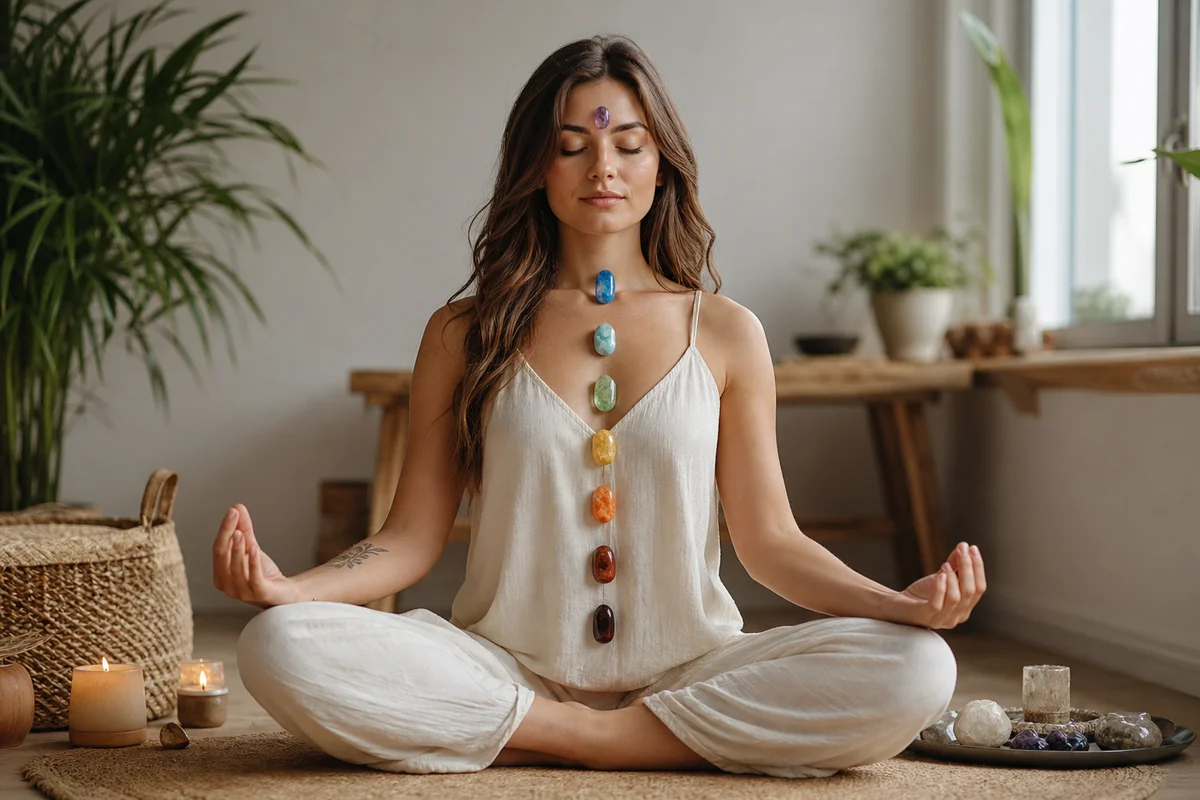
Chakra Balancing With Crystals: A Practical Seven-Point Guide
Chakra Work Is About Body Awareness, Not Mysticism
The word "chakra" comes from Sanskrit and means "wheel" or "disk." In traditional Indian systems, chakras are described as spinning energy centers arranged along the spine from the base to the crown of the head. Whether you interpret them literally as energy vortices or metaphorically as focal points for different aspects of human experience, the chakra system provides a remarkably useful framework for self-awareness.
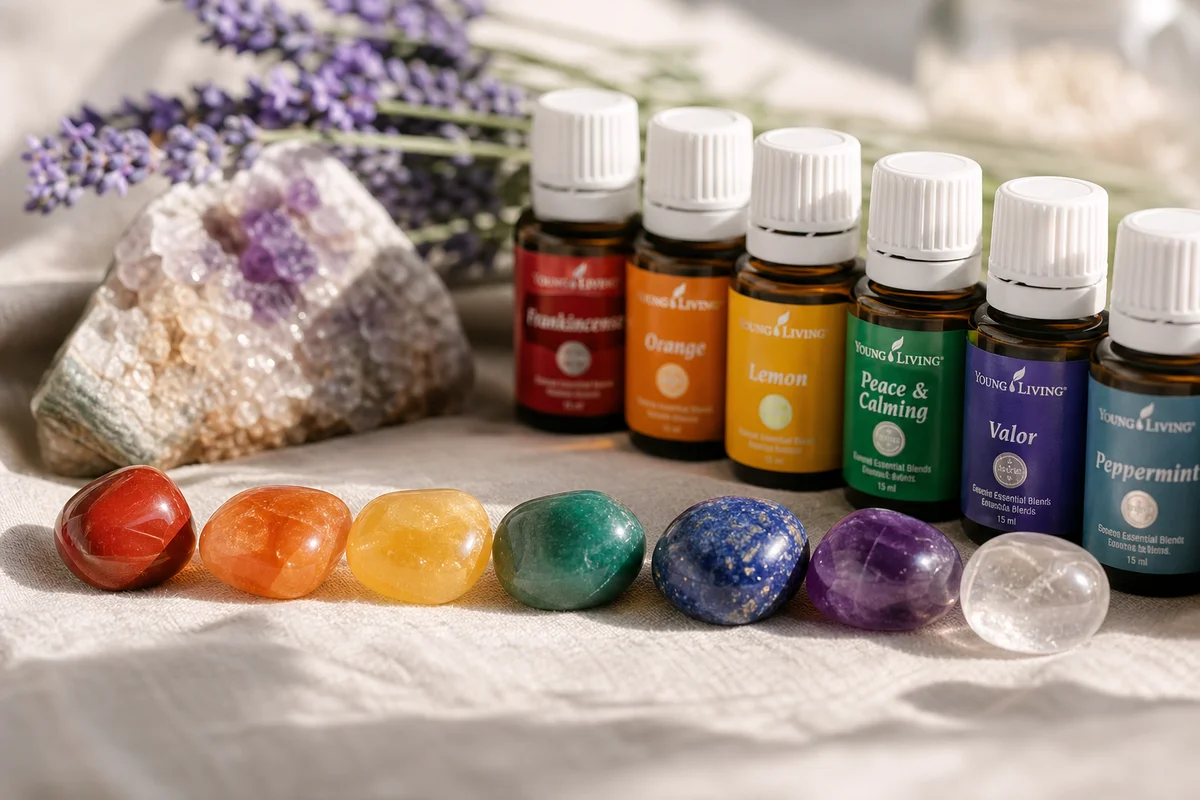
Each chakra corresponds to a region of the body, a set of emotional and psychological themes, and a color. Crystal practitioners pair stones with chakras primarily through color correspondence (red stones with the root, blue stones with the throat, etc.) and traditional association. The result is a tactile meditation practice that gives your hands something to do, your mind something to focus on, and your body a physical anchor for intentional relaxation.
This guide walks through all seven chakras, their associated crystals, and practical techniques for working with them. No prior experience required.
The Seven Chakras at a Glance
| # | Name | Location | Color | Core Theme | Key Crystals |
|---|------|----------|-------|------------|-------------|
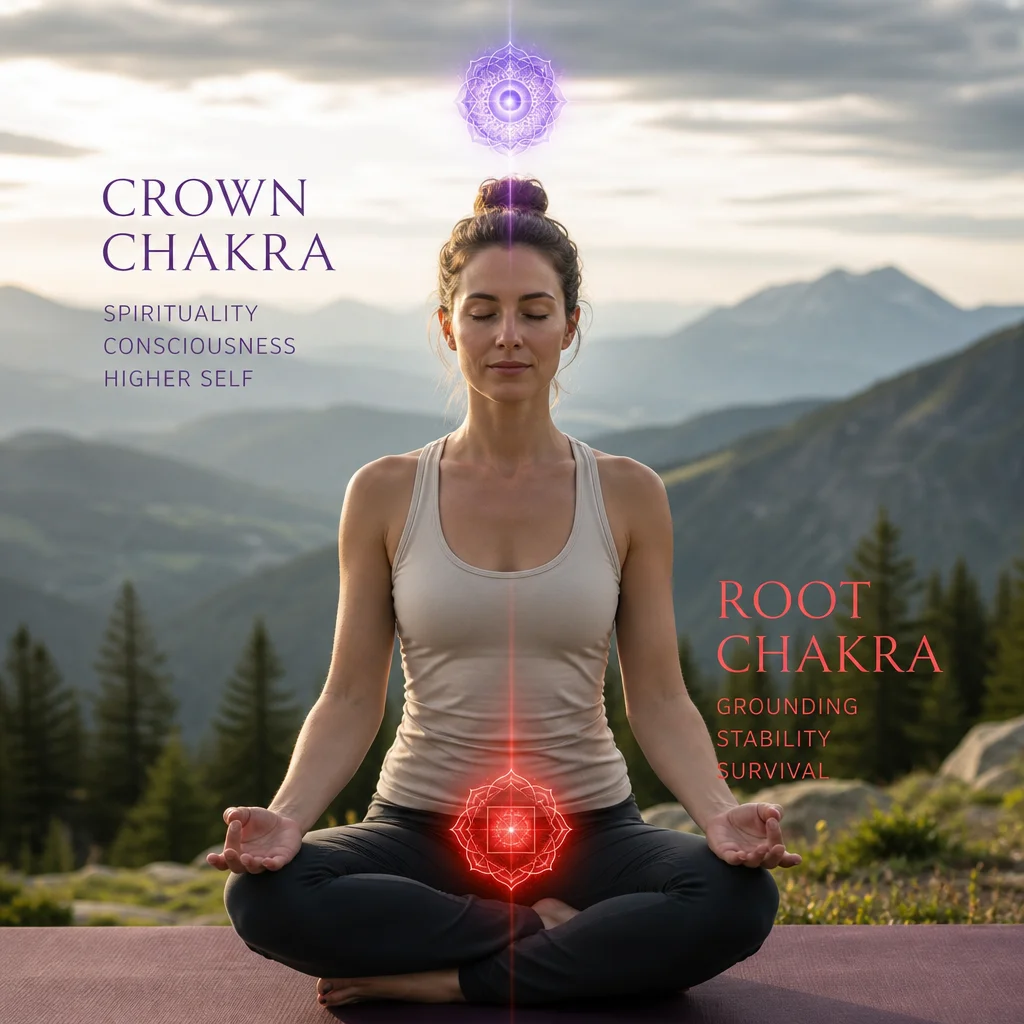
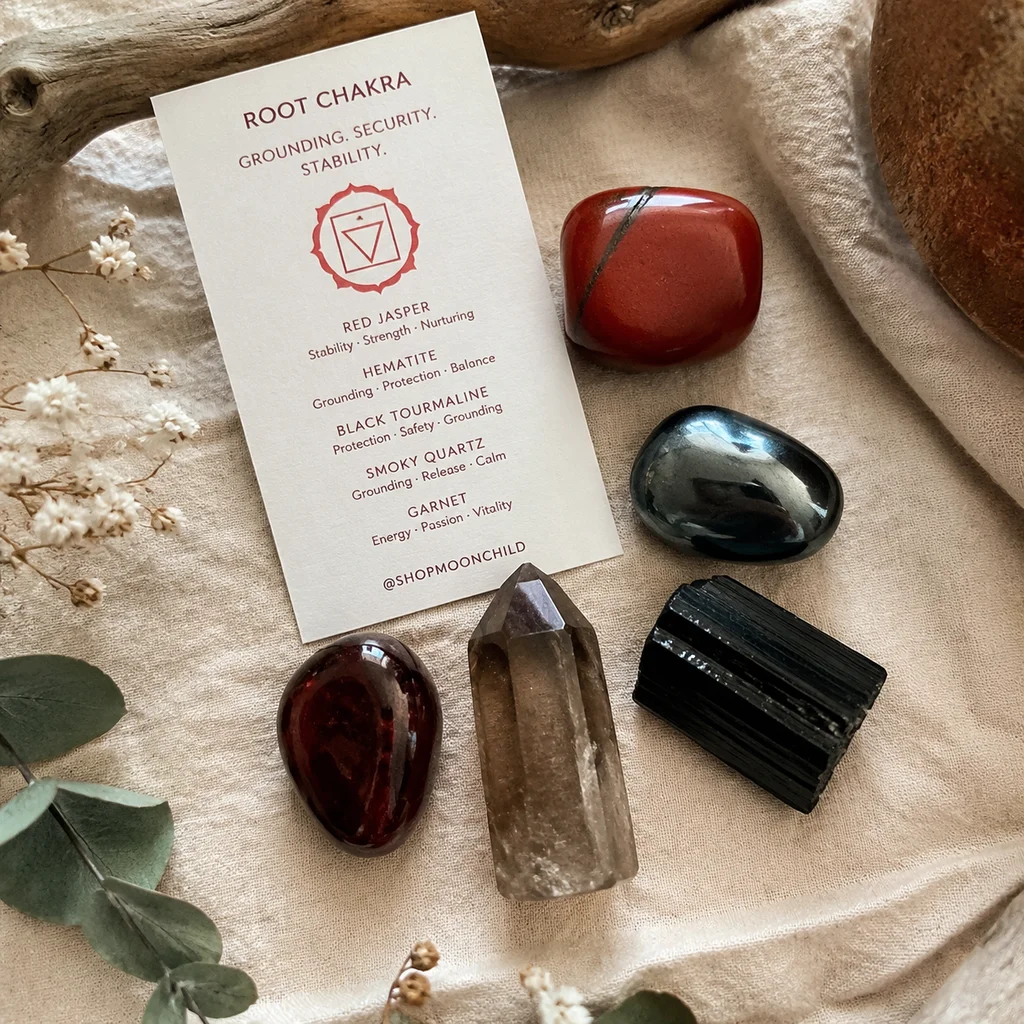
| 1 | Root (Muladhara) | Base of spine | Red | Safety, survival, grounding | Red jasper, hematite, black tourmaline, garnet |
| 2 | Sacral (Svadhisthana | Lower abdomen | Orange | Creativity, pleasure, emotion | Carnelian, orange calcite, sunstone |
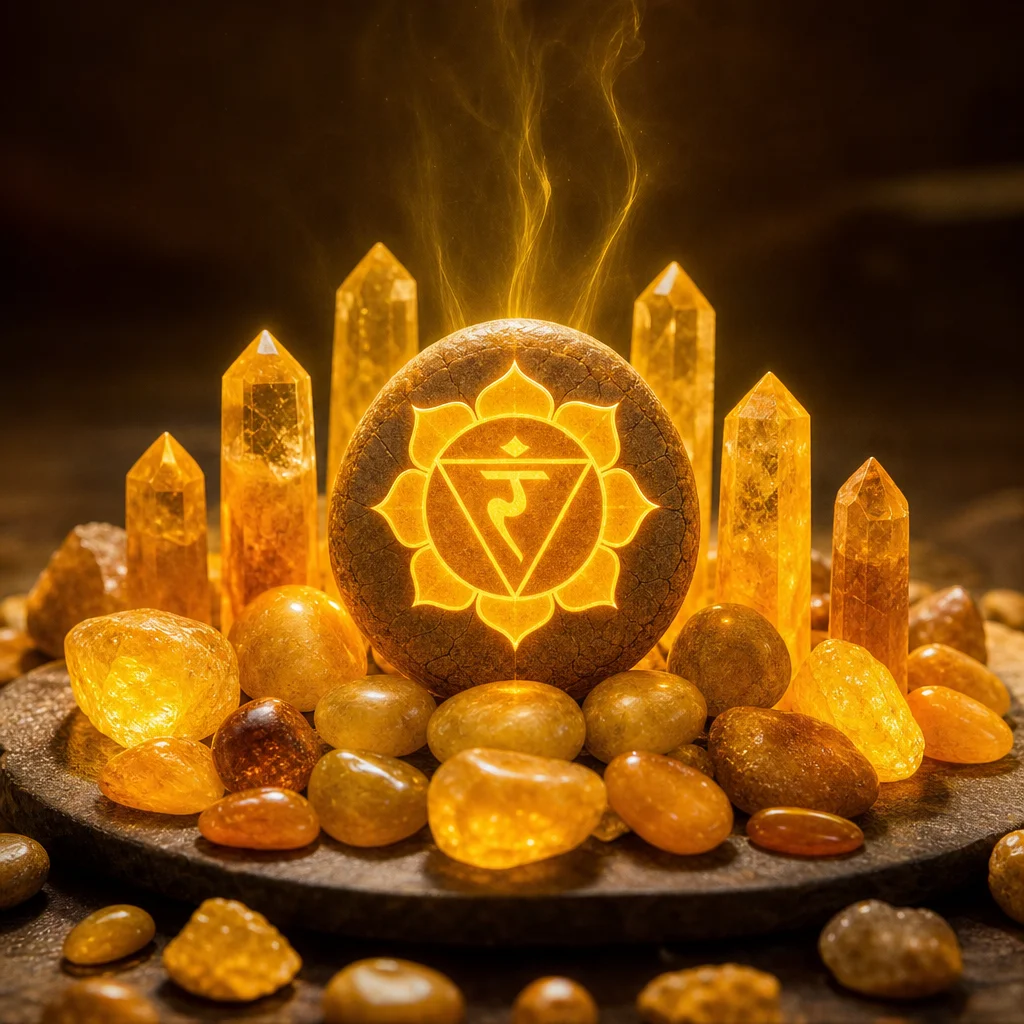
| 3 | Solar Plexus (Manipura) | Upper abdomen | Yellow | Confidence, willpower, identity | Citrine, tiger eye, yellow calcite, pyrite |
| 4 | Heart (Anahata) | Center of chest | Green/Pink | Love, compassion, connection | Rose quartz, green aventurine, jade, rhodonite |
| 5 | Throat (Vishuddha) | Throat | Blue | Communication, truth, expression | Lapis lazuli, aquamarine, blue lace agate, turquoise |
| 6 | Third Eye (Ajna) | Forehead | Indigo | Intuition, insight, imagination | Amethyst, labradorite, sodalite, fluorite |
| 7 | Crown (Sahasrara) | Top of head | Violet/White | Spiritual connection, awareness | Clear quartz, selenite, amethyst, howlite |
The Laydown Method: Full Chakra Balance in 10 Minutes
This is the most common crystal chakra technique. You'll lie on your back and place a stone on or near each chakra location.
What You Need
- 7 stones (one for each chakra, from the list above)
- A comfortable, flat surface (yoga mat, bed, or carpet)
- 10-15 minutes of uninterrupted time
Placement
- Root — Place the stone at the base of your spine or between your feet
- Sacral — Place the stone just below your navel (about two inches)
- Solar Plexus — Place the stone on your upper abdomen, between your navel and ribcage
- Heart — Place the stone in the center of your chest
- Throat — Place the stone at the base of your throat (hollow of your neck)
- Third Eye — Place the stone on your forehead, between your eyebrows
- Crown — Place the stone just above the top of your head, on the surface beneath you
The Process
- Lie down comfortably on your back
- Place each stone in position, starting from the root and working upward
- Close your eyes and take 5-10 slow, deep breaths
- Bring your attention to each chakra in sequence, starting at the root
- At each point, notice what you feel — warmth, tingling, pressure, or nothing at all
- Spend about 30 seconds to 1 minute at each chakra
- When you've reached the crown, take 3 more deep breaths
- Remove the stones from crown to root (top to bottom)
- Sit up slowly and notice how you feel
Pro tip: If a stone feels uncomfortable or "wrong" at a particular position, trust that instinct and either remove it or swap it for a different stone. This is your body and your practice.
A Crystal for Each Chakra: Practical Recommendations
Root Chakra — Red Jasper
Red jasper is the workhorse root chakra stone. It's affordable, widely available, and has a grounding, earthy quality that matches the root's themes of stability and security. It's also hard enough (6.5-7 Mohs) to carry in your pocket daily without damage.
Alternative: Hematite (heavier, more metallic feel), Black tourmaline (protective association)
Sacral Chakra — Carnelian
Carnelian's warm orange color matches the sacral's color correspondence perfectly, but more importantly, the stone has a long historical association with creativity and motivation. Ancient Roman signet rings were carved from carnelian — it's been a "doing" stone for millennia.
Alternative: Orange calcite (softer, more affordable), Sunstone (flashy, positive energy)
Solar Plexus Chakra — Citrine
Citrine's golden-yellow color aligns with the solar plexus, and its traditional association with confidence and personal power makes it the most popular choice. Natural citrine (heat-treated amethyst sold as "citrine" is common — both work for chakra practice).
Alternative: Tiger eye (chatoyant, golden-brown), Yellow calcite (soft, pale yellow, budget-friendly)
Heart Chakra — Rose Quartz
The most classic heart chakra stone. Rose quartz is soft, widely available, and its gentle pink color aligns with the heart's pink aspect. For the green aspect of the heart chakra, green aventurine is the standard pairing.
Alternative: Green aventurine (green heart association), Rhodonite (pink with black veining, emotional healing), Jade (green, cultural significance)
Throat Chakra — Blue Lace Agate
Blue lace agate is often recommended for the throat chakra because its soft blue banding is visually calming and the stone is associated with gentle, clear communication. Lapis lazuli is the more historically significant option (prized in ancient Egypt and Mesopotamia).
Alternative: Lapis lazuli (deep blue, historical significance), Aquamarine (pale blue, calming water association), Turquoise (blue-green, cultural significance)
Third Eye Chakra — Amethyst
Amethyst is the default third eye stone in most crystal traditions. Its purple color matches the indigo/violet correspondence, and it's been associated with clarity and insight since ancient Greek times (the name comes from "amethystos," meaning "not intoxicated").
Alternative: Labradorite (flashing, intuition association), Sodalite (deep blue, logic + insight), Fluorite (multi-color, mental clarity)
Crown Chakra — Clear Quartz
Clear quartz is the universal crown chakra stone. Its transparency and clarity align with the crown's themes of clarity of awareness and spiritual connection. Selenite is another popular option — its white, fibrous appearance and softness give it a distinctly ethereal quality.
Alternative: Selenite (white, luminous), Howlite (white with grey veining, calming), Amethyst (violet crown correspondence)
Building a Daily Chakra Crystal Routine
You don't need a full 10-minute laydown session every day. Here's a quick daily practice that takes about 2 minutes:
The Two-Minute Check-In
- Hold your chosen stone for the day in your dominant hand
- Close your eyes and take 3 deep breaths
- Ask yourself: "Which chakra feels like it needs attention right now?"
- Whatever answer comes up (or whichever area of your body draws your attention), that's your focus for the day
- Carry the corresponding stone in your pocket or wear it as jewelry
- When you touch or notice the stone throughout the day, take one conscious breath
The point isn't mystical transformation — it's creating small moments of awareness throughout your day. The stone is a physical trigger for a mental pause.
Crystal Combinations for Specific Goals
| Goal | Chakra Focus | Crystal Combination |
|------|-------------|-------------------|
| Public speaking confidence | Throat + Solar Plexus | Blue lace agate + citrine |
- Worn as bracelet + pendant, or carried together
| Creative block | Sacral + Third Eye | Carnelian + labradorite |
| Emotional healing after loss | Heart + Root | Rose quartz + black tourmaline |
| Exam or interview preparation | Solar Plexus + Third Eye | Tiger eye + fluorite |
| Sleep and relaxation | Crown + Heart | Selenite + rose quartz |
| Boundary setting | Root + Throat | Hematite + lapis lazuli |
Chakra Jewelry: Wearing Your Practice
Chakra jewelry typically takes two forms:
1. Seven-Stone Bracelets and Necklaces
These contain one stone for each chakra, usually arranged in rainbow order (root to crown). They're a convenient way to "wear all seven" without carrying individual stones. Look for bracelets with 8mm or 10mm beads for comfortable daily wear.
2. Single-Chakra Pieces
If you're focusing on a specific chakra, a dedicated piece (rose quartz pendant for heart work, lapis lazuli ring for throat) provides a more concentrated focal point. The advantage is that you can change your jewelry based on what you need that day.
Caring for Your Chakra Stones
Chakra stones get handled frequently, which means they accumulate oils, dust, and microscopic debris. Monthly cleaning keeps them in good condition:
- Quartz-family stones (clear quartz, amethyst, citrine, rose quartz, aventurine, tiger eye): Rinse under lukewarm water, dry with a soft cloth
- Calcite-family stones (orange calcite, yellow calcite, fluorite): Wipe with a damp cloth only — these are softer and water-sensitive
- Selenite: Dry cloth only — selenite dissolves in water
- Lapis lazuli: Damp cloth, avoid prolonged water exposure
- All stones: Avoid harsh chemicals, ultrasonic cleaners, and prolonged direct sunlight
FAQ
Q: Do I need all seven chakra stones to start?
A: No. Start with whatever stone you're drawn to or whatever chakra feels most relevant to your current situation. A single stone for a single chakra is a perfectly valid practice. Many people work with just the heart chakra (rose quartz) or root chakra (hematite) for months before expanding.
Q: How do I know which chakra needs attention?
A: Pay attention to what's happening in your life. Struggling with boundaries? Root chakra. Creative blocks? Sacral. Low confidence? Solar plexus. Relationship difficulties? Heart. Communication issues? Throat. Decision paralysis? Third eye. Feeling disconnected? Crown. Your current challenges usually point directly to the relevant chakra.
Q: Is there scientific evidence for chakras?
A: The chakra system is a traditional framework, not a medical one. There's no anatomical evidence for spinning energy wheels along the spine. However, the body regions associated with each chakra correspond to real nerve plexuses and endocrine glands, and the psychological themes (safety, creativity, confidence, love, communication, insight, connection) are universally relevant to human wellbeing. Think of chakras as a useful meditation framework, not a literal anatomical map.
Q: Can I use the same crystal for different chakras?
A: Yes. Amethyst works for both the third eye and crown chakras. Clear quartz is used for all seven. Rose quartz can work for the heart and higher heart (a secondary chakra between heart and throat). Don't overthink the strict correspondences — personal resonance matters more than rigid rules.
Q: What if a stone feels uncomfortable during a laydown session?
A: Remove it. Your comfort is the priority. If a stone feels too heavy, too cold, or just "wrong," swap it for a different stone or skip that chakra for this session. There's no wrong way to do this — it's your practice.
Frequently Asked Questions
How long does it take to feel the effects of using chakra crystals?
The duration for feeling the effects of using chakra crystals varies between individuals, typically ranging from a few days to a couple of weeks. Regular and consistent use often leads to more pronounced results.
Can I wear more than one crystal for my chakra balance at a time?
Yes, you can wear multiple crystals to target different chakras simultaneously. Choose crystals that resonate with the specific chakras you are working with and combine them as you feel intuitively guided.
Is there a certain way to charge or activate chakra crystals before use?
Charging chakra crystals is optional, but many find it beneficial. To activate crystals, place them under the light of the full moon or use sunlight, charge them with intention while holding them, or meditate with them to infuse your energy into the crystals.
How often should I clean and charge my chakra crystals?
Cleanse your chakra crystals every few weeks with sage smudging, sea salt water, or under a stream of water to remove any negative energies. Charge them with the full moon, sunlight, or meditation sessions whenever you feel their energy has waned.
Can children benefit from using chakra balancing crystals as well?
Absolutely. Children can also benefit from using chakra crystals. It’s best to choose child-safe and non-toxic stones like amethyst or citrine, and always supervise their use to ensure the stones are handled appropriately.
Understanding the Basics
This section covers important aspects of understanding the basics. For detailed information, please refer to the FAQ section below.
Key Factors to Consider
This section covers important aspects of key factors to consider. For detailed information, please refer to the FAQ section below.
Step-by-Step Instructions
This section covers important aspects of step-by-step instructions. For detailed information, please refer to the FAQ section below.
Common Mistakes to Avoid
This section covers important aspects of common mistakes to avoid. For detailed information, please refer to the FAQ section below.
Comments