Chakra Stones Chart: Colors and Crystal Pairs
June 3, 2026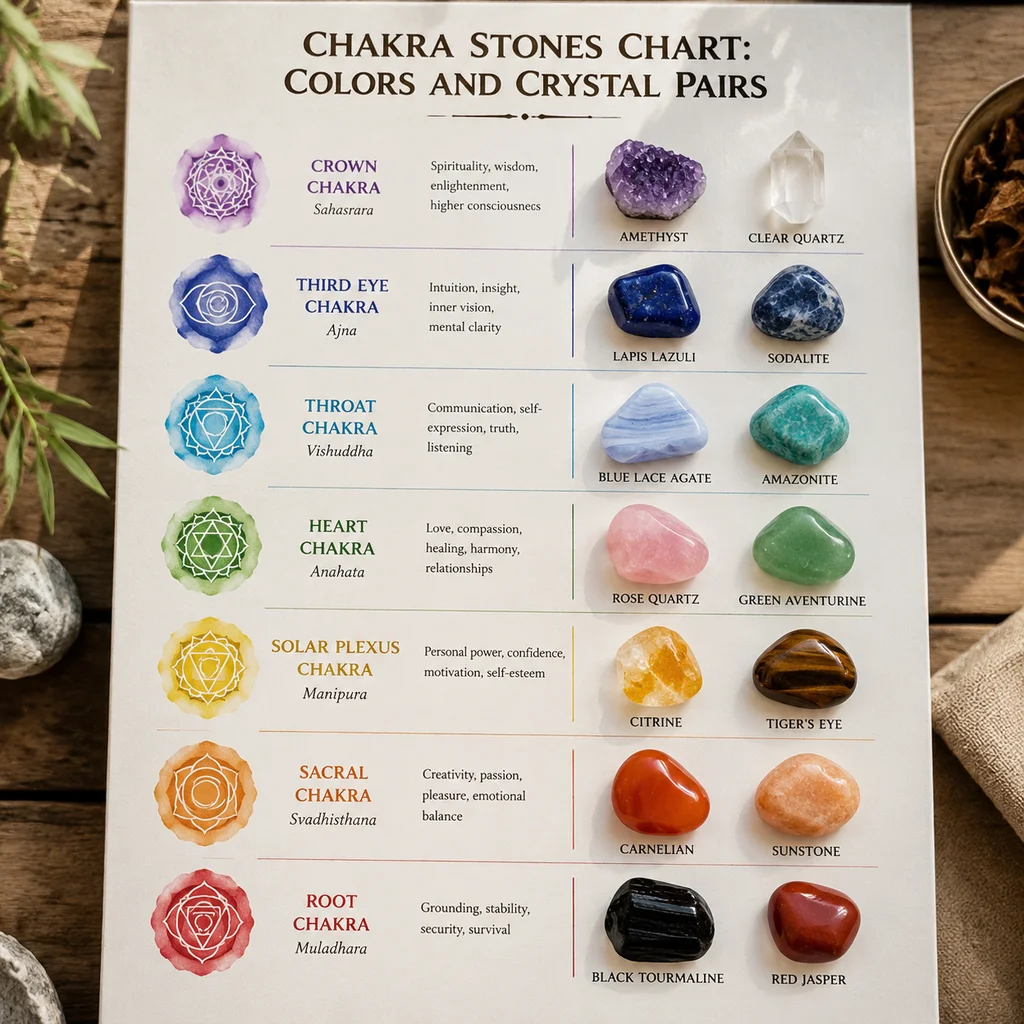
Understanding the Seven Chakras: A Quick Overview
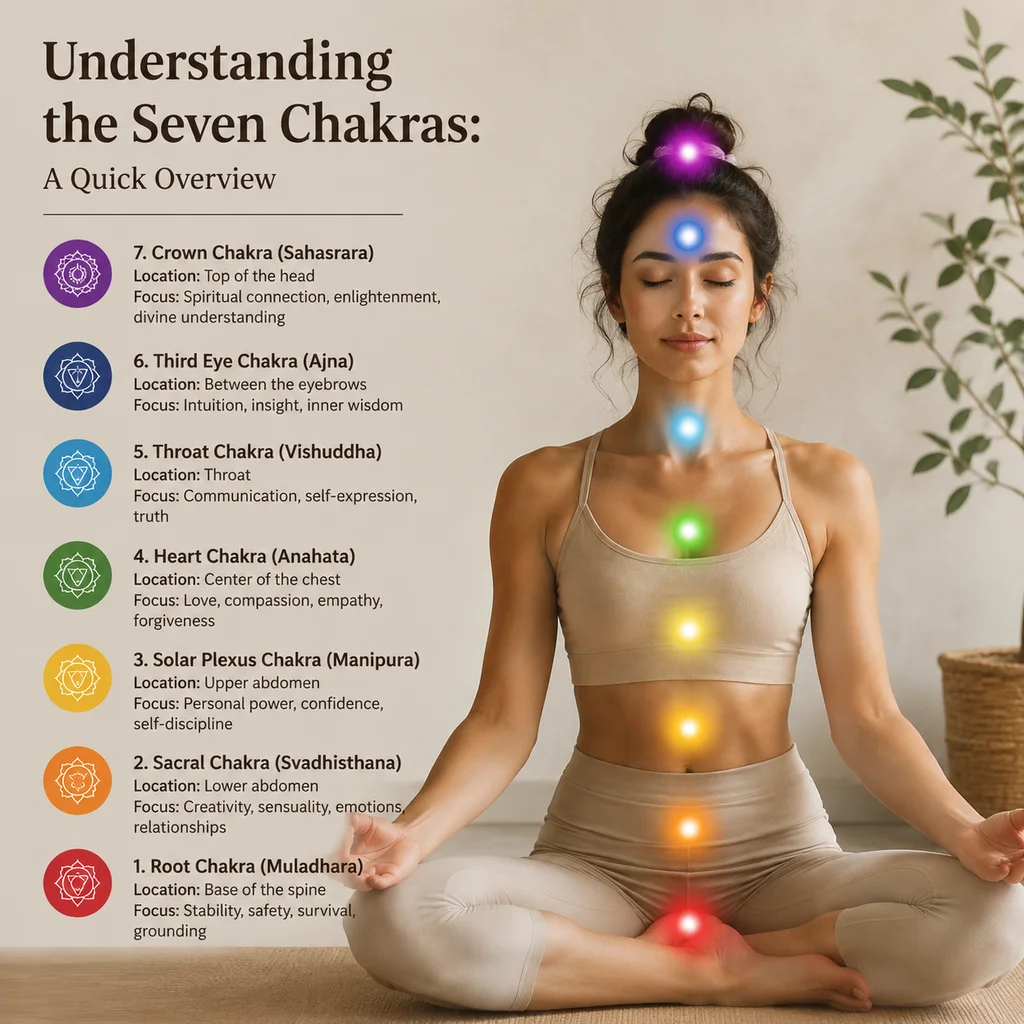
The chakra system is a framework from ancient Indian traditions that describes seven primary energy centers along the spine, from the base (root) to the top of the head (crown). Each chakra is associated with a specific color, element, set of qualities, and—relevant to our focus here—specific crystals and stones that are traditionally used to support the qualities of that energy center.
While chakra theory is not a scientifically validated system, it provides a useful organizing framework for choosing crystals based on color, intention, and personal resonance. Many people find that working with the color-coding system helps them build a more structured and intentional crystal collection. Below is a comprehensive reference chart covering all seven chakras with their associated stones, followed by guidance on how to use this information practically.
The Complete Chakra Stones Reference Chart
| Chakra | Sanskrit | Location | Color | Element | Primary Stones | Secondary Stones |
|---|---|---|---|---|---|---|
| Root | Muladhara | Base of spine | Red | Earth | Red Jasper, Hematite, Black Tourmaline | Smoky Quartz, Garnet, Obsidian, Bloodstone |
| Sacral | Svadhisthana | Lower abdomen | Orange | Water | Carnelian, Orange Calcite, Moonstone | Sunstone, Tiger's Eye, Amber |
| Solar Plexus | Manipura | Upper abdomen | Yellow | Fire | Citrine, Yellow Jasper, Tiger's Eye | Pyrite, Sunstone, Yellow Aventurine |
| Heart | Anahata | Center of chest | Green (also pink) | Air | Green Aventurine, Rose Quartz, Jade | Emerald, Malachite, Rhodonite, Peridot |
| Throat | Vishuddha | Throat | Blue (light blue) | Sound/Ether | Lapis Lazuli, Blue Lace Agate, Aquamarine | Sodalite, Turquoise, Blue Kyanite |
| Third Eye | Ajna | Forehead between eyes | Indigo (dark blue-purple) | Light | Amethyst, Lapis Lazuli, Fluorite | Labradorite, Sodalite, Clear Quartz |
| Crown | Sahasrara | Top of head | Violet/White | Consciousness | Clear Quartz, Amethyst, Selenite | Howlite, Apophyllite, Labradorite |
Detailed Breakdown: Each Chakra and Its Stones
Root Chakra (Muladhara) — Red
The root chakra is associated with survival, stability, security, and the feeling of being grounded. Stones recommended for this chakra tend to be red, black, or dark brown—colors that feel heavy and earthy. Red jasper is the most versatile root stone: durable (Mohs 6.5-7), affordable, and visually consistent with the root chakra's red association. Hematite adds a metallic grounding weight, while black tourmaline provides the darkest, heaviest energy in the root stone family.
For practical purposes, if you are choosing just one root chakra stone, red jasper is the safest bet. It is hard enough for jewelry, affordable, and visually clear in its association with the root chakra's color.
Sacral Chakra (Svadhisthana) — Orange
The sacral chakra relates to creativity, emotional expression, and pleasure. Its orange color maps directly to carnelian, which is the single most recommended sacral stone across all crystal traditions. Orange calcite adds a more vivid, saturated orange, while moonstone brings a watery, feminine quality that connects to the sacral chakra's water element association.
Carnelian is the primary recommendation here—it is affordable, durable, and its warm orange color is the strongest visual match for the sacral chakra.
Solar Plexus Chakra (Manipura) — Yellow
The solar plexus chakra is associated with personal power, confidence, and self-discipline. Its yellow color matches citrine, yellow jasper, and tiger's eye (which bridges yellow-orange between the solar plexus and sacral chakras). Citrine is the most popular choice, though buyers should be aware that most commercial citrine is heat-treated amethyst—this is fine for chakra practice but worth knowing if you are building a collection for mineralogical reasons.
Pyrite (fool's gold) is an interesting solar plexus stone because its metallic gold luster adds a different visual quality—not just color but reflective sparkle—that some practitioners prefer over the softer matte tones of jasper and aventurine.
Heart Chakra (Anahata) — Green and Pink
The heart chakra is unique among the seven in having two color associations: green (the traditional color) and pink (a newer Western addition that has become widely adopted). This means heart chakra stones include both green varieties (green aventurine, jade, emerald, peridot) and pink varieties (rose quartz, rhodonite, rhodochrosite). Green aventurine and rose quartz are the two most commonly recommended heart stones, and they are often used together—one green, one pink—to create a balanced heart chakra set.
If budget is a concern, green aventurine ($4-10 for a tumbled stone) and rose quartz ($3-8) are both very affordable, making a complete heart chakra pair accessible for under $15.
Throat Chakra (Vishuddha) — Light Blue
The throat chakra relates to communication, self-expression, and truth. Its light blue color matches lapis lazuli (deep blue with pyrite inclusions), blue lace agate (banded light blue and white), and aquamarine (pale sea-blue beryl). Lapis lazuli is the most popular throat chakra stone because of its vivid blue color and historical use in jewelry dating back thousands of years—ancient Egyptians used lapis for scarabs, amulets, and inlays.
Blue lace agate is the most affordable option ($5-12) and has a gentle, calming appearance that suits the throat chakra's communication theme. Sodalite is another mid-range option ($6-15) that offers a deeper blue with white veining.
Third Eye Chakra (Ajna) — Indigo
The third eye chakra is associated with intuition, insight, and inner vision. Its indigo color (deep blue-purple) maps most directly to amethyst, which is why amethyst is the single stone that appears on both the third eye and crown chakra lists—it bridges the two. Lapis lazuli also works for the third eye because of its deep blue color, and fluorite (which comes in purple, green, blue, and clear varieties) is popular for its cubic crystal structure that visually suggests clarity and structure.
Amethyst is the primary recommendation here and also the most practical: affordable, durable, and available in every size and form.
Crown Chakra (Sahasrara) — Violet and White
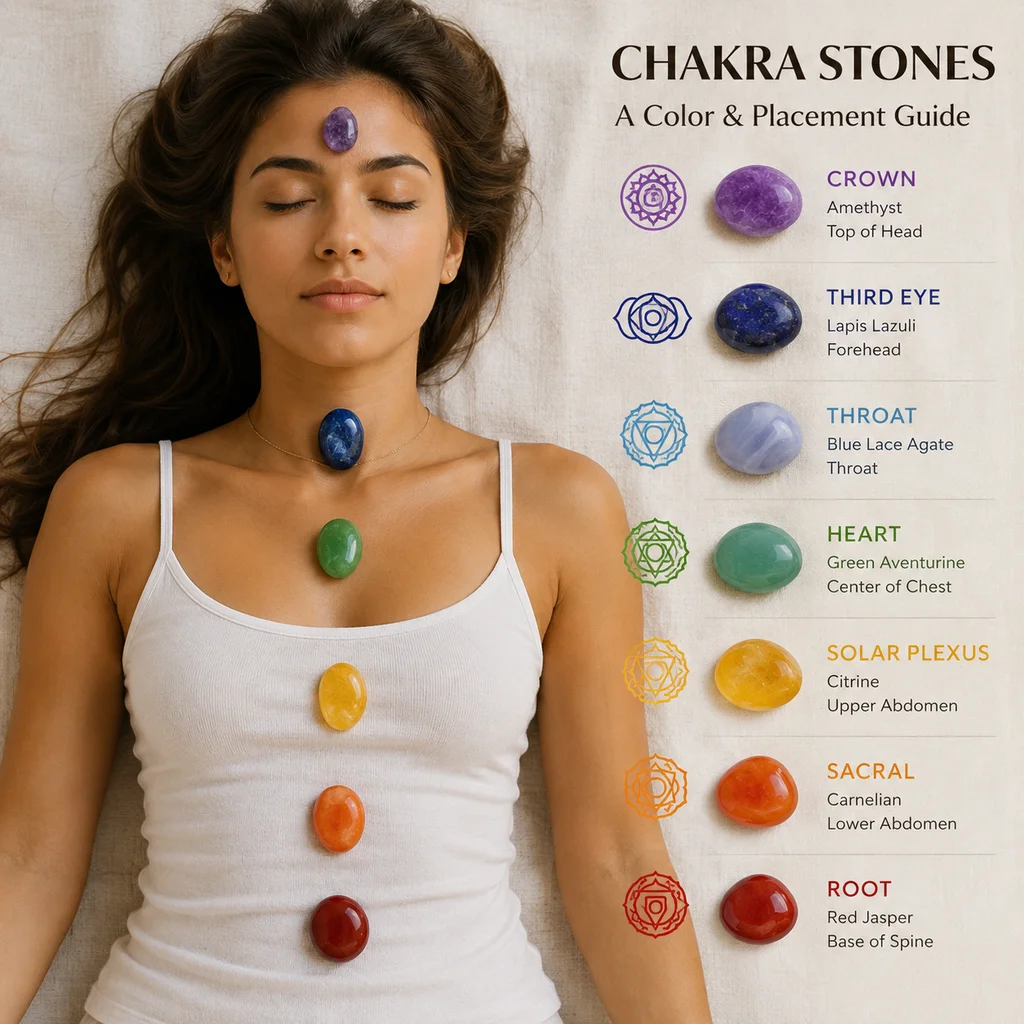
The crown chakra, located at the top of the head, is associated with spiritual connection, consciousness, and higher awareness. Its colors are violet and white, which map to amethyst (violet), clear quartz (clear/white), and selenite (white, translucent). Selenite is particularly popular for crown chakra work because of its ethereal white appearance and its traditional use as a cleansing stone—placing selenite at the crown during meditation is a common practice.
Clear quartz is the most versatile crown stone because it serves as a universal amplifier in chakra work—you can place it at any chakra to "boost" the energy of that center. For the crown specifically, a clear quartz point placed above the head during a lying-down meditation is the standard practice.
Stones That Work for Multiple Chakras
Some stones appear on multiple chakra lists because their color, composition, or traditional associations span more than one energy center. This is useful because it means you can build a smaller collection that still covers all seven chakras. Here are the most versatile stones:
- Clear Quartz: works for all seven chakras (universal amplifier). If you own only one stone, this should be it.
- Amethyst: covers third eye + crown (and some include it for heart). Two chakras with one stone.
- Tiger's Eye: bridges sacral (orange) + solar plexus (yellow). The golden-brown color spans both.
- Lapis Lazuli: covers throat + third eye. Deep blue with gold pyrite inclusions.
- Jade: covers heart (green jade) + throat (some traditions associate light jade with communication).
With just these five stones plus a rose quartz (heart/pink), you can cover all seven chakras with a remarkably compact set.
How to Choose Your Chakra Stones
The most practical approach is to start with one stone per chakra (seven stones total) and build from there. Here is a minimal starter set that covers all seven centers for under $50:
- Root: Red jasper ($5-8)
- Sacral: Carnelian ($5-8)
- Solar Plexus: Citrine ($6-10)
- Heart: Green aventurine ($5-8)
- Throat: Blue lace agate ($6-12)
- Third Eye: Amethyst ($5-8)
- Crown: Clear quartz ($4-8)
All prices are for tumbled stones from online crystal shops. Buying a pre-made 7-chakra bracelet is another affordable option ($15-30) that gives you all seven colors in one piece, though the individual beads are typically smaller and of lower grade than buying stones separately.
Using the Chart in Daily Practice
The simplest way to use this chart is as a reference when you feel drawn to work on a specific aspect of your life. Feeling scattered and unfocused? Root chakra (red jasper). Experiencing creative block? Sacral chakra (carnelian). Need more confidence for a presentation? Solar plexus (citrine). Working through a relationship issue? Heart chakra (rose quartz or green aventurine). Having trouble speaking your truth? Throat chakra (lapis lazuli). Feeling disconnected from your intuition? Third eye (amethyst). Seeking a sense of spiritual connection or peace? Crown chakra (selenite or clear quartz).
This framework does not require belief in energy healing to be useful. It is essentially a color-coded system for directing attention to different aspects of your life, with stones serving as tangible, beautiful anchors for that attention.
Frequently Asked Questions
Can one stone balance multiple chakras at once?
Yes. Clear quartz is the classic example, but amethyst (third eye + crown), tiger's eye (sacral + solar plexus), and lapis lazuli (throat + third eye) all serve double duty. A well-chosen set of 4-5 stones can effectively cover all seven chakras.
Do I need to buy all seven chakra stones at once?
No. Start with the one or two chakras that feel most relevant to your current situation, then add others as needed. Many practitioners work with just three stones for months before expanding their collection.
What if the stone color does not match the chakra exactly?
Exact color matching is less important than personal resonance. If you feel drawn to a green stone for your throat chakra despite blue being the traditional color, use the green stone. The system is a guideline, not a rigid rulebook. What matters is that the stone feels right to you for the purpose you intend.
Frequently Asked Questions
How do I cleanse and activate my chakra stones?
To keep your healing crystals vibrating at their highest frequency, cleanse them regularly using smoke from sage or palo santo, or by placing them on a selenite charging plate. To activate your handcrafted jewelry, hold the stones in your hands, take deep breaths, and set a clear intention for your spiritual healing and energy balance.
Can I wear chakra stone jewelry every day?
Yes, wearing natural crystal jewelry daily is one of the most effective ways to keep your energy centers aligned! By wearing a beautifully handcrafted chakra bracelet or necklace, the stones remain in direct contact with your skin. This constant connection allows the crystals to continuously support your emotional and physical well-being throughout your daily routine.

Comments