What Is a Singing Bowl and How It Connects to Crystal Healing
What is a singing bowl and how it connects to crystal healing
Meta description: Singing bowls produce sustained tones when rubbed with a mallet. People who practice crystal healing often use them alongside stones, believing the combination supports relaxation and meditation.
The basic mechanics of a singing bowl
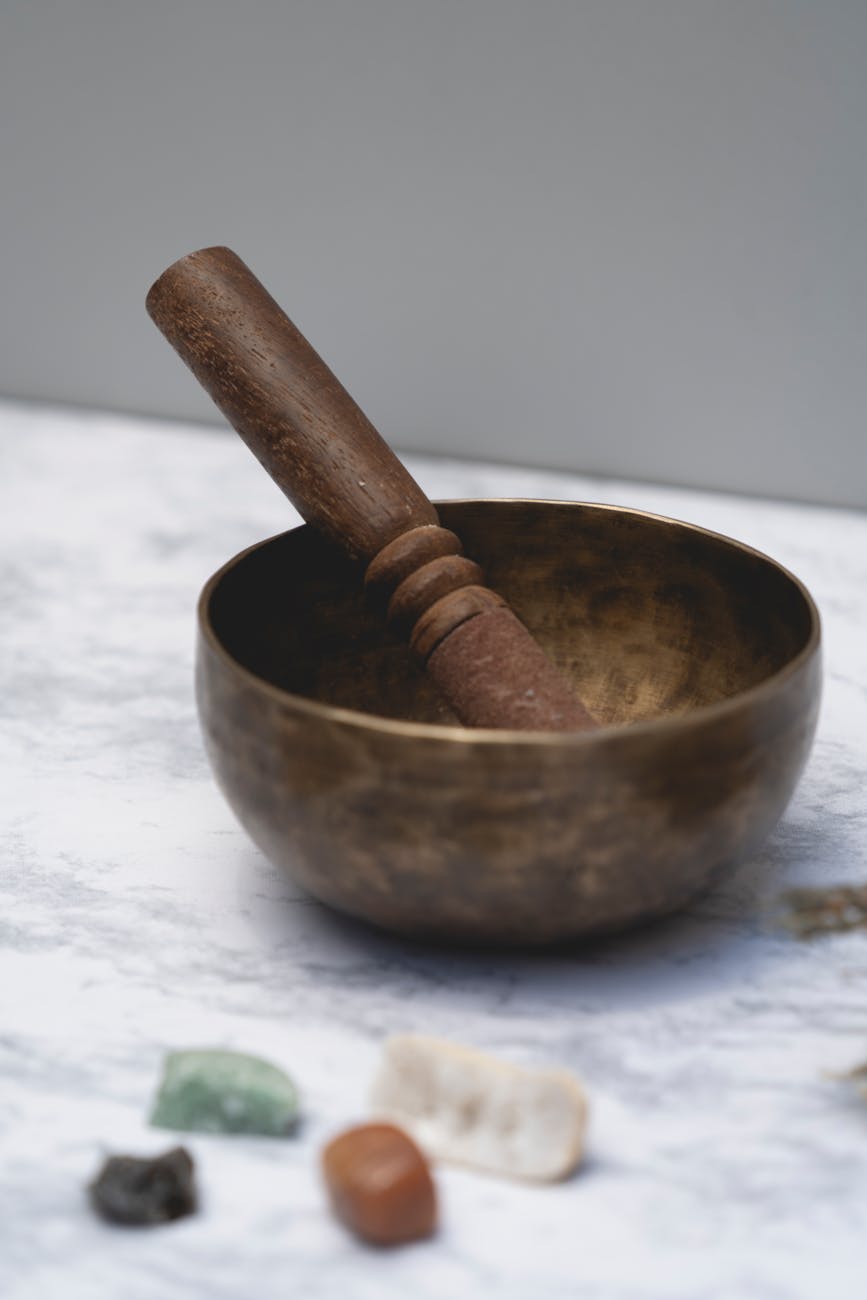
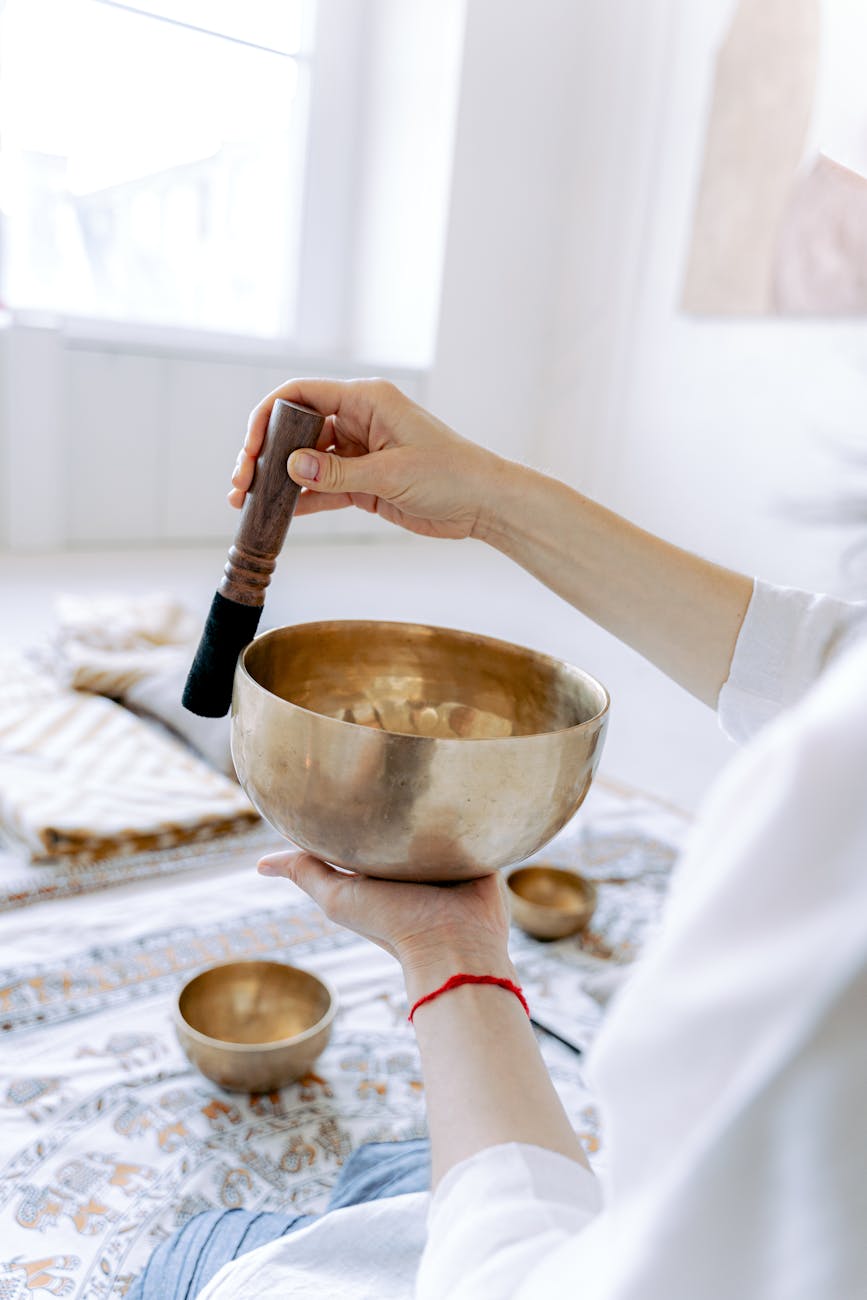
A singing bowl is a type of bell, but it sits with its open side facing up rather than hanging from a handle. You play it by either striking the rim with a padded mallet or running the mallet around the outer rim in a circular motion. The friction produces a sustained, multi-layered tone that can last several seconds after you stop playing.
The sound is not a single note. Because the bowl is a complex shape, it vibrates at multiple frequencies simultaneously. You can hear a fundamental tone along with several overtones, which gives singing bowls their characteristic rich, warbling quality. I find it hard to describe accurately in writing. The closest comparison might be the sound you get when you run a wet finger around the rim of a wine glass, but deeper and more resonant.
Most singing bowls sold today are made from a brass alloy, which is a mixture of copper, tin, and often small amounts of other metals like zinc, iron, or lead. The exact proportions vary by maker and tradition. Some sellers advertise "seven-metal" bowls containing gold, silver, mercury, copper, iron, tin, and lead, though independent metallurgical testing has not consistently confirmed these claims.
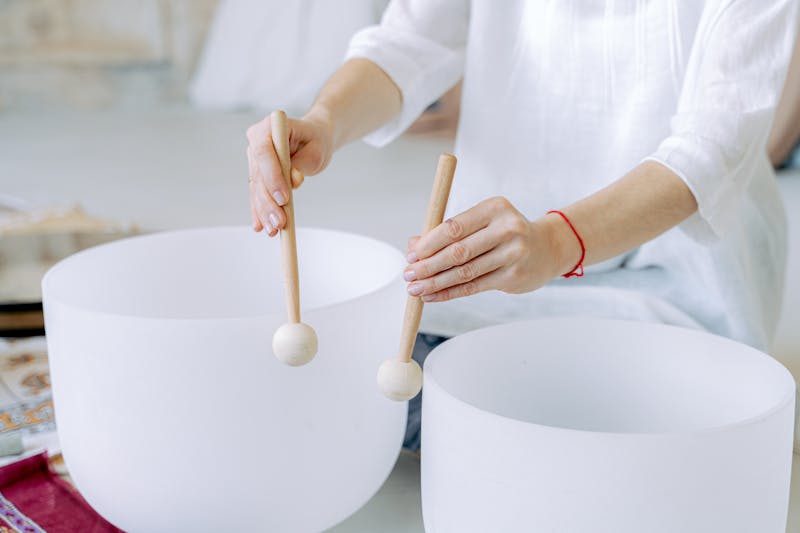
Crystal singing bowls are a different category entirely. These are made from fused quartz and are played the same way, but they produce a much purer, cleaner tone. The crystal material vibrates at a single dominant frequency rather than the complex harmonics of brass bowls. They tend to be louder and more piercing, which some people find unpleasant and others find highly effective for meditation.
Where singing bowls come from
The singing bowls most commonly associated with meditation and healing come from Tibet and Nepal. The exact origins are debated. Some sources trace them back to the 10th or 11th century, when Buddhist monks in the Himalayan region used them in meditation practices. Other historians argue that many of the bowls sold as "ancient Tibetan" are actually of more recent manufacture, and that the association with Tibetan Buddhism is partly a marketing construction.
What is clear is that metal bowls have been used in the Himalayan region for centuries, both as ritual objects and as everyday items like food containers and begging bowls. The singing quality is a natural property of the metal and shape. Whether they were originally designed specifically for sound is harder to determine.
In Nepal, the city of Patan has been a center of metalworking for generations, and many of the singing bowls available today are made there. The manufacturing process involves hammering a flat disc of brass alloy into the bowl shape, then tuning it by carefully adjusting the thickness of the walls. Machine-made bowls are also common now and tend to be cheaper, but hand-hammered bowls generally produce more complex overtones.
Japanese singing bowls, called rin, are used in Zen Buddhist ceremonies. These are smaller, simpler, and produce a cleaner, shorter tone than the larger Himalayan-style bowls. The cultural context is different too. In Zen practice, the rin is struck once to mark transitions in meditation, not played continuously the way Himalayan bowls often are.
[IMG: a Nepali metalworker hammering a brass disc into a singing bowl shape in a workshop in Patan]
Sound, vibration, and the claims around healing
The central claim of sound healing with singing bowls is that the vibrations produced by the bowls can influence the body's own frequencies and promote physical and emotional wellbeing. Practitioners talk about "frequency matching," "chakra alignment," and "vibrational medicine" in connection with singing bowl sessions.
To be direct: there is no published, peer-reviewed evidence that singing bowl vibrations treat any medical condition. A 2017 review in the American Journal of Health Promotion looked at four small studies on singing bowl meditation and found some evidence of reduced tension and anger, but the sample sizes were tiny and the methodology was weak. A 2019 study in the Journal of Evidence-Based Integrative Medicine reported reduced anxiety and fatigue after a singing bowl session, but again, with a small sample and no control group.
What singing bowls clearly do is create an environment that some people find deeply relaxing. The sustained tones, the physical sensation of vibration if the bowl is placed near the body, and the ritual of sitting quietly while someone plays can all contribute to a meditative state. That is real and valuable even if the mechanism is not as dramatic as some practitioners claim.
I think the honest framing is that singing bowls are a meditation aid and a sensory experience, not a medical treatment. People who enjoy them should feel good about that enjoyment without needing to justify it with pseudoscientific claims. A pleasant sound that helps you sit still for twenty minutes has genuine value on its own terms.
[IMG: a person lying on a yoga mat with their eyes closed while a practitioner plays a singing bowl near their head]
How people use singing bowls with crystals
The intersection of singing bowls and crystal healing is common in practice, even though the two traditions developed independently. Crystal healers often incorporate singing bowls into their sessions, using the sound to complement the placement of stones on or around the body.
One typical approach is to place crystals on or near the body in a layout that corresponds to the seven chakra points, then play a singing bowl during the session. The idea is that the sound and the stones work together to create a calm, focused state. Some practitioners claim that specific bowls tuned to certain frequencies pair better with specific stones, though there is no standardized system for this. It tends to be based on individual preference and intuition.
Another practice involves placing small crystals inside the singing bowl itself and playing it. The stones rattle and vibrate against the metal, producing a slightly different sound than an empty bowl. Some people believe this "charges" the crystals with the bowl's energy. Whether that is meaningful depends entirely on what you believe about crystal energy in the first place.
Sound baths, which are group meditation sessions centered around singing bowl music, have become increasingly popular in yoga studios and wellness centers. These sessions sometimes include crystal grids or individual stones given to participants. The format is usually simple: you lie down, close your eyes, and listen to someone play bowls for thirty to sixty minutes. I have attended a few of these, and the experience is genuinely relaxing regardless of what you think about the metaphysical claims. The sound fills the room in a way that makes it easy to stop thinking about your phone, your email, and whatever else is on your mind.
[IMG: a singing bowl with small quartz crystals arranged inside it, sitting on a silk cloth]
What to know if you want to try one
If you are thinking about buying a singing bowl, the quality range is wide and it helps to know what you are looking at. The cheapest bowls, usually under thirty dollars, are machine-made and mass-produced. They work fine for beginners but the sound is simpler and less sustained than a good hand-hammered bowl.
Hand-hammered bowls from Nepal in the fifty to two hundred dollar range tend to offer noticeably better sound quality. The overtones are richer, the sustain is longer, and each bowl has a slightly unique voice because of variations in the hand-hammering process. If you are buying in person, play a few and pick the one that sounds best to you. If you are buying online, look for shops that provide audio samples of each individual bowl.
Crystal singing bowls are a bigger investment, usually starting around a hundred dollars and going up to several hundred for larger sizes. They are more fragile than metal bowls and will shatter if dropped. The sound is very different from brass: cleaner, louder, and more focused. Some people prefer it, others find it harsh. It is worth hearing both types before committing.
A wooden mallet with a leather or suede-wrapped striking end is the standard tool. The mallet matters more than you might expect. A heavier mallet produces a deeper tone. Running the mallet firmly around the rim produces the sustained singing sound, while a light tap on the outside wall produces a bell-like strike. Both techniques are worth learning.
Store the bowl somewhere it will not get knocked around. Brass bowls dent if they fall onto hard surfaces, and a dent changes the sound. Keep the mallet dry and store it separately from the bowl to prevent any chemical interaction between the wood finish and the metal.

Comments