Mala Beads for Grounding: Best Stones and How
June 7, 2026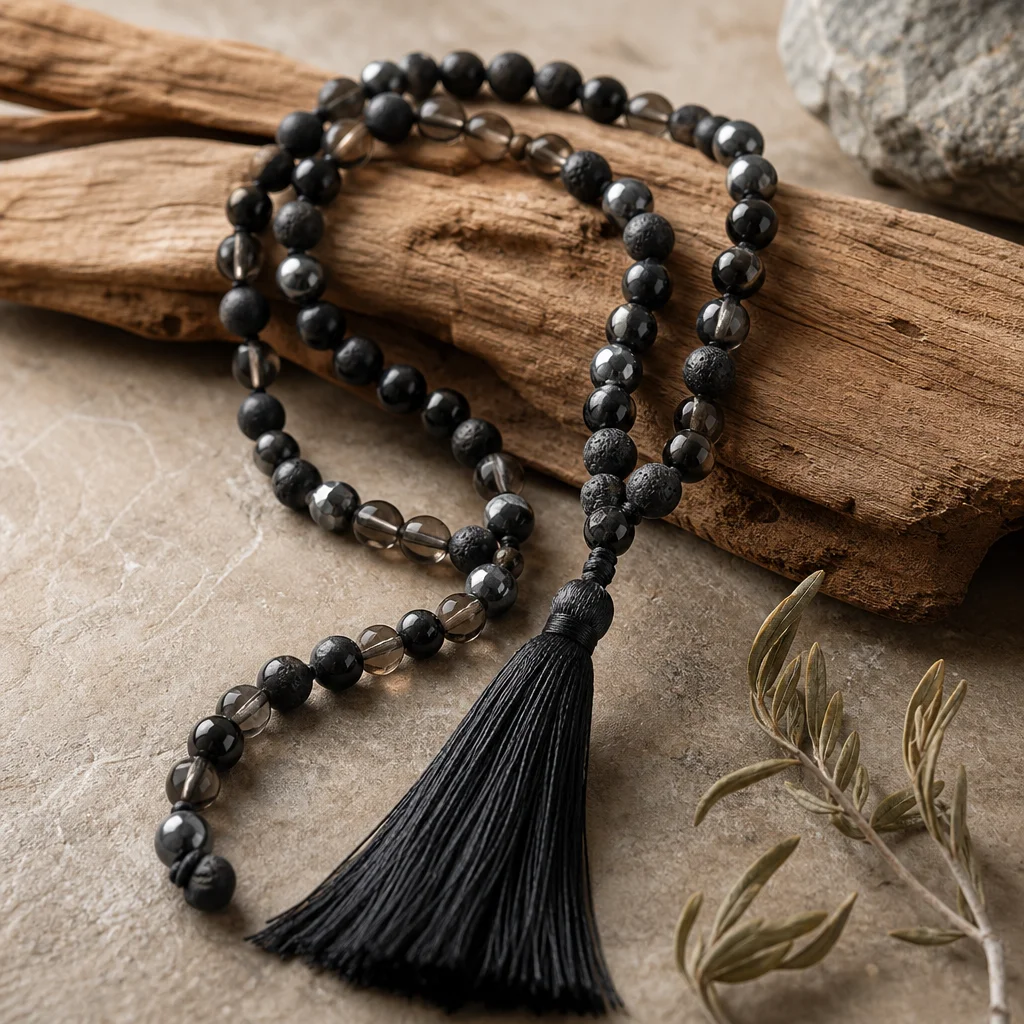
Grounding is one of those concepts that sounds abstract until you actually need it. You're sitting at your desk at 3 PM, your mind is spinning through tomorrow's meetings, last week's mistakes, and a vague anxiety you can't name. Your shoulders are tight, your breathing is shallow, and you feel like you're floating somewhere above your own body.
That's the opposite of grounded. Grounded feels like: here, present, solid, connected to the physical world beneath you. A grounding mala practice — using specific stones combined with deliberate breathing — is a practical, structured way to get back to that state.
Why Grounding Matters in Modern Life
The phrase "too much in your head" has literal neurological truth behind it. When you're stuck in rumination — cycling through worries, planning, analyzing — your brain's prefrontal cortex is in overdrive while your body's sensory awareness dims. Your heart rate may be elevated, your breathing shallow, and your muscles tensed without you consciously noticing.
Grounding practices work by redirecting attention from cognitive loops to somatic awareness — the physical sensations of your body in space. A mala practice adds a tactile, repetitive element that anchors the mind to the body through the fingertips. Each bead passing under your thumb is a micro-moment of physical presence.
The concept maps onto the root chakra (Muladhara in Sanskrit) in traditional energy systems — the energetic center associated with safety, stability, and connection to the physical world. Whether or not you use that framework, the functional outcome is the same: less mental spinning, more physical presence.
Hematite Mala: The Classic Grounding Stone
Hematite is the first stone most practitioners reach for when they need grounding. It's iron oxide (Fe₂O₃) — literally the same mineral that gives rust its color. The name comes from the Greek "haima" (blood), referring to the red streak hematite leaves when drawn across unglazed ceramic.
In a mala, hematite beads are unmistakably heavy and cool to the touch. This physical weight is part of what makes hematite grounding malas effective — the sheer density of the stone provides constant tactile feedback against your fingers and wrist. A 108-bead hematite mala weighs noticeably more than a quartz or wood mala of the same bead size, and that weight becomes an anchor during practice.
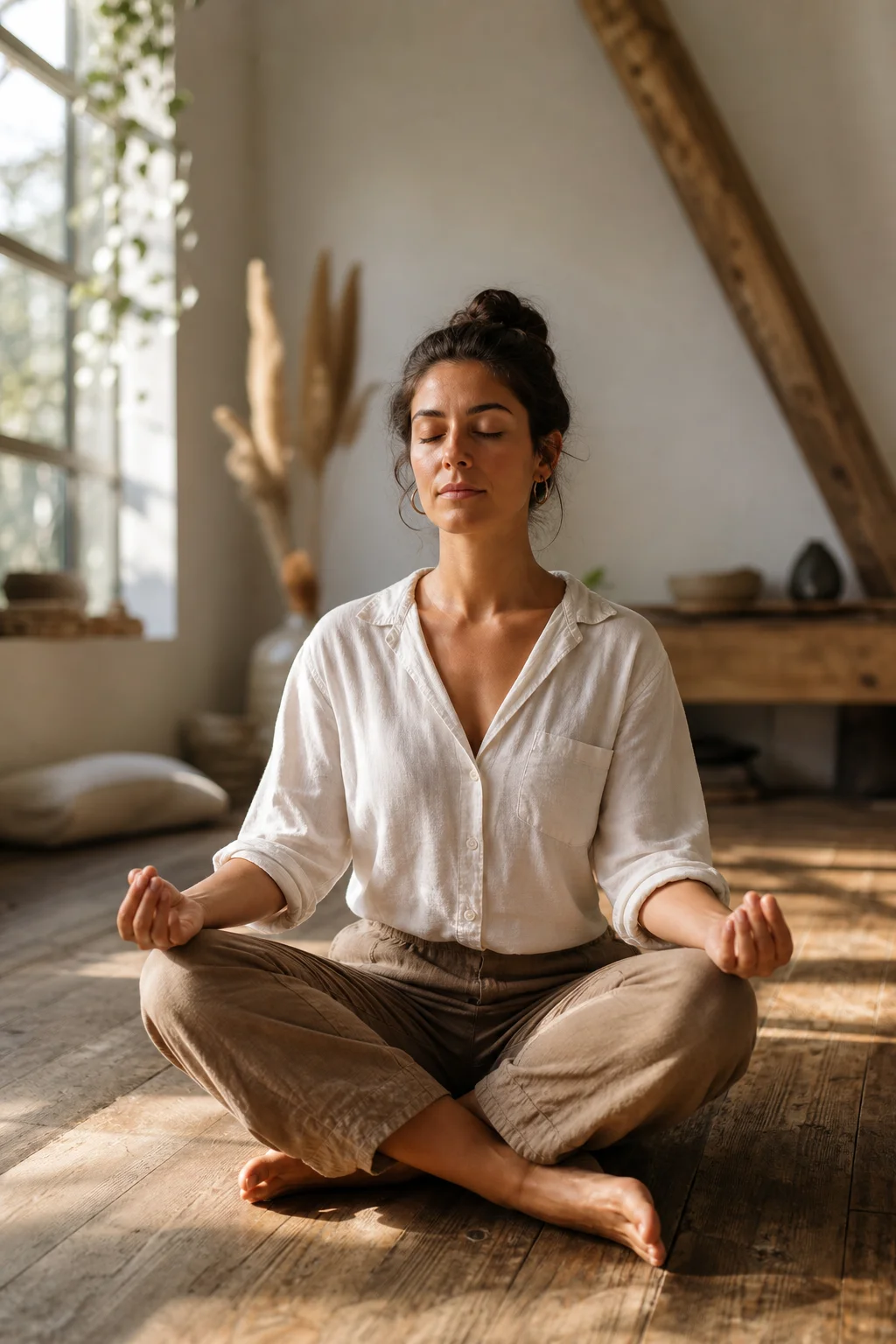
Practice approach: Sit with the mala draped over your wrist or held in both hands. The weight of hematite is grounding in itself. Begin japa with each bead, and on every tenth bead, pause and take a conscious breath that extends all the way into your belly. The combination of tactile weight and deep breathing is remarkably effective at pulling you out of mental loops.
Care note: Hematite can rust if exposed to water. Keep your hematite mala dry and store it in a cloth bag. The metallic sheen can be restored with a soft dry cloth if it appears dull.
Black Tourmaline Mala: The Protector
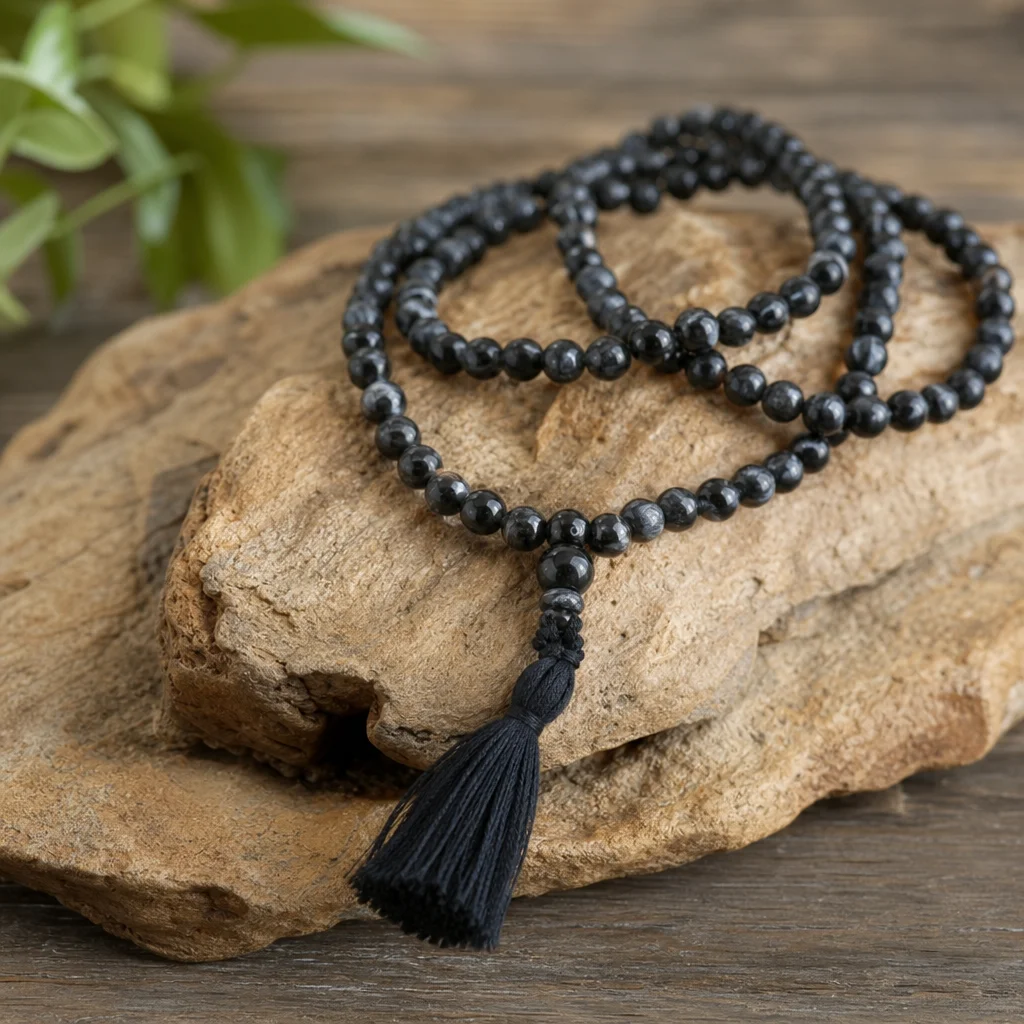
Black tourmaline (schorl) is a complex boron silicate mineral that forms in pegmatites worldwide. Its deep black color comes from iron content, and it's one of the most commonly used stones in protective and grounding practices.
In crystal tradition, black tourmaline is associated with repelling negative energy and creating an energetic shield. Scientifically, tourmaline is piezoelectric — it generates an electric charge under mechanical stress (pressure from your fingers during japa counts). Whether or not this has physiological effects, the dense, matte-black beads provide a visually and tactically grounding experience.
Practice approach: Black tourmaline malas work well for grounding after intense experiences — a difficult conversation, a stressful workday, or a period of emotional turbulence. Sit in a quiet space, hold the mala, and begin slow japa. After each complete round (108 beads), sit in silence for 3–5 minutes with your palms flat on the ground. This physical connection between your hands and the earth amplifies the grounding effect.
Smoky Quartz Mala: The Gentle Grounding Option
Not everyone responds well to the heaviness of hematite or the intensity of black tourmaline. Smoky quartz offers a gentler approach to grounding — it's the same mineral as clear quartz (SiO₂) with natural irradiation from nearby uranium deposits giving it a brown to gray-brown color.
The color range goes from very pale, almost transparent "champagne quartz" to deep, nearly opaque "morion" (sometimes incorrectly called "black quartz"). For grounding malas, medium-smoky to deep-smoky stones work best — enough color to feel visually grounding without being oppressively dark.
Practice approach: Smoky quartz is particularly good for grounding during meditation — it doesn't stimulate or energize the way clear quartz can. Use a smoky quartz mala when you want to settle into stillness rather than activate energy. The japa practice should be slow — at least 3–4 seconds per bead, with attention on the breath between beads rather than the mantra itself.
Red Jasper Mala: Root Chakra Activation
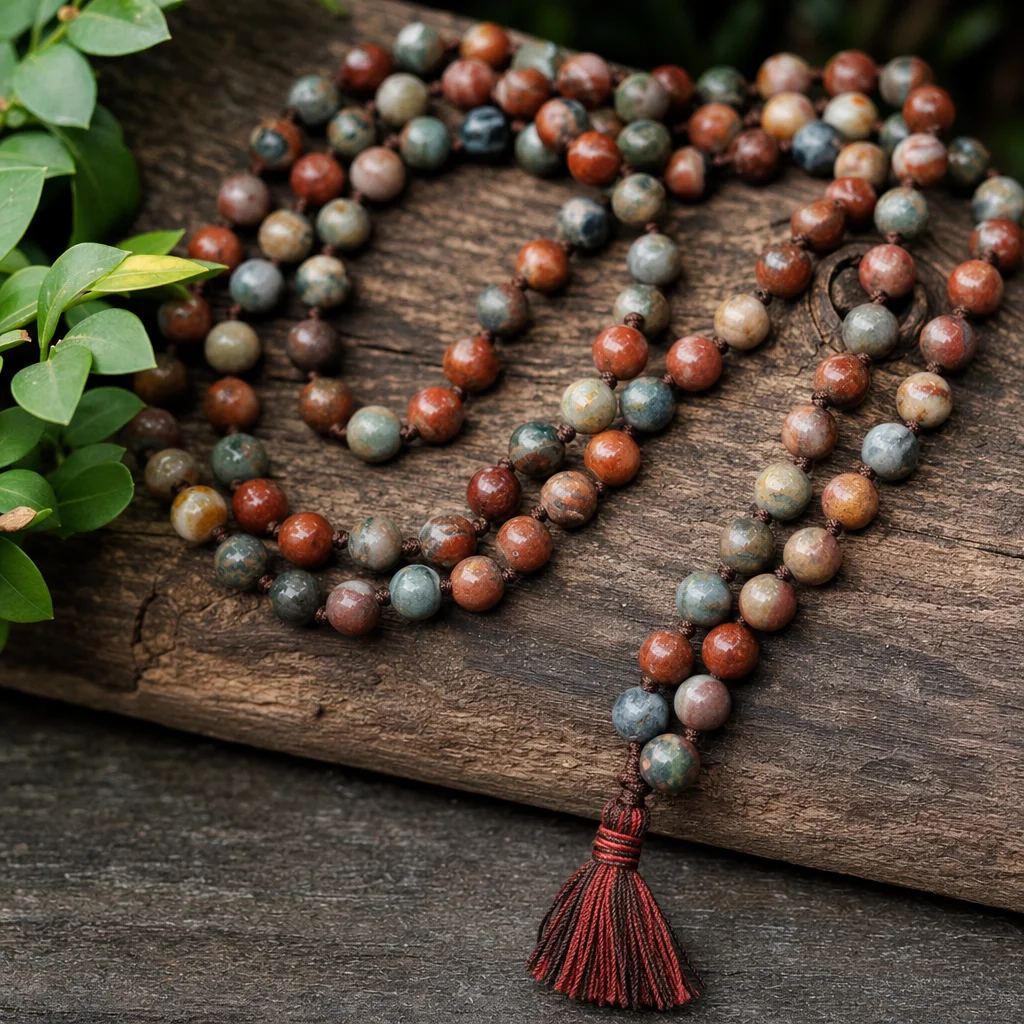
Red jasper is a microcrystalline quartz colored by iron inclusions that give it a deep brick-red to terracotta color. It's one of the oldest known gemstones — used in amulets and carvings dating back to 4,000 BCE across Egyptian, Greek, and Native American cultures.
In crystal tradition, red jasper is directly associated with the root chakra and earth element. Its connection to grounding is visceral — the deep red color echoes the color traditionally assigned to Muladhara, and the stone's opaque, earthy appearance feels fundamentally terrestrial.
Practice approach: Red jasper malas pair well with movement-based grounding practices. Try walking meditation while counting your japa — each bead marks a step. Or use the mala during yoga practice, counting a bead with each breath rather than each posture. The combination of red jasper's earthy energy with physical movement is particularly effective.
Obsidian Mala: The Mirror Stone
Obsidian is volcanic glass — formed when lava cools so rapidly that mineral crystals can't form. It's not technically a crystal at all, but a natural glass with a hardness of 5–5.5. The most common variety is black obsidian, though rainbow obsidian (with iridescent sheen) and snowflake obsidian (with white cristobalite inclusions) are also popular for malas.
Obsidian has been used for tools, weapons, and mirrors for thousands of years. The Aztecs crafted obsidian mirrors, and the stone's association with reflection — both literal and metaphorical — carries into modern grounding practice. Obsidian is traditionally associated with facing uncomfortable truths and releasing what no longer serves you.
Practice approach: Use an obsidian mala when your lack of grounding stems from avoiding something — a difficult feeling, a pending decision, an uncomfortable conversation. The japa practice with obsidian often brings suppressed content to the surface. Sit with whatever arises. The mala's cool, smooth surface provides a grounding anchor while you process what emerges.
Care note: Obsidian is relatively brittle (Mohs 5-5.5) and can chip if dropped on hard surfaces. Be gentle with an obsidian mala, and store it separately from harder stones that could scratch it.
Garnet Mala: Passionate Grounding
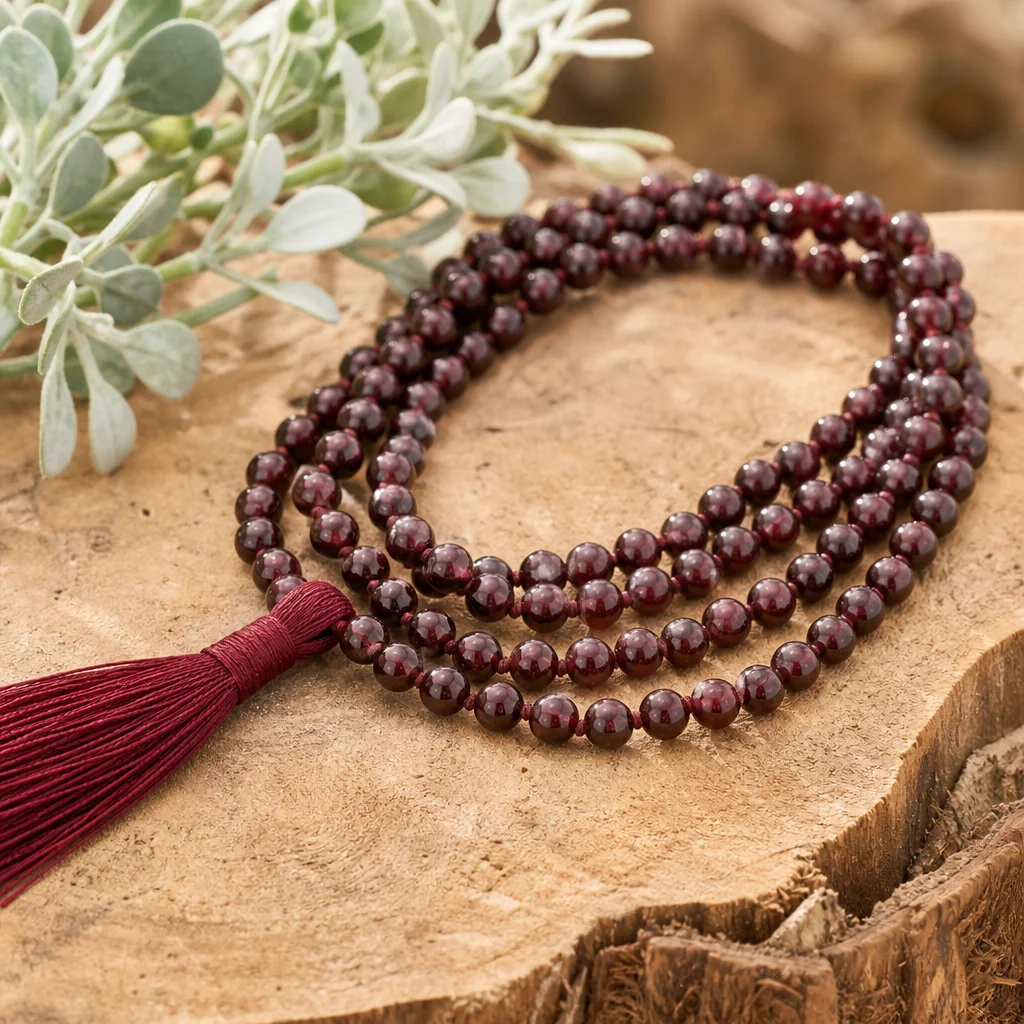
Garnet is a group of silicate minerals that includes several species, but for grounding malas, almandine (deep red) and pyrope (slightly more orange-red) are the most common choices. Garnet has been used in jewelry for over 5,000 years and appears in Egyptian, Roman, and medieval European adornment.
What makes garnet unique among grounding stones is the combination of stability and vitality. Where hematite feels heavy and protective, and smoky quartz feels calm and settling, garnet feels energized yet grounded. It's the stone for when you need to be present and powerful — active rather than passive grounding.
Practice approach: Use a garnet mala before important events — presentations, interviews, difficult conversations. A grounding japa practice with garnet before an anxiety-provoking situation helps you stay present and responsive rather than dissociating or freezing. The practice doesn't need to be long — 5–10 minutes of focused japa with garnet before walking into a challenging situation can make a real difference.
Grounding Breathing Technique for Mala Practice
Regardless of which stone you choose, this breathing pattern enhances grounding during japa:
- Inhale (4 counts): Breathe through your nose, expanding your belly first, then your chest. Feel your feet on the floor.
- Hold (2 counts): Brief pause at the top. One bead passes under your thumb.
- Exhale (6 counts): Slow release through slightly parted lips. Feel the exhale moving down through your body — chest, belly, legs, feet.
- Hold (2 counts): Empty pause at the bottom. Another bead passes.
The 4-2-6-2 pattern extends the exhale beyond the inhale, which activates the parasympathetic nervous system (rest-and-digest response). The physical counting of beads keeps your attention tethered to the body throughout. Even a single round of 108 beads with this breathing pattern takes about 12–15 minutes and can significantly shift your state.
When to Use Grounding Malas
Common situations where a grounding mala practice is particularly effective:
- After extended screen time (especially social media scrolling)
- Following emotionally intense conversations or experiences
- During periods of high work stress or deadline pressure
- After energy-intensive meditation (some people feel "spaced out" after deep meditation)
- Before sleep if racing thoughts are keeping you awake
- During travel, especially flying (the combination of altitude, recycled air, and confinement is famously ungrounding)
FAQ
Can I combine grounding stones in one mala?
Yes, and this is actually very common. A typical grounding mala might alternate between hematite and black tourmaline beads, or use one stone for the main 108 beads with a different stone for the guru bead. Multi-stone ground malas give you the combined properties of each material. The visual and tactile contrast between different stones also adds sensory richness to the practice.
How do I know if I need grounding versus energizing?
A simple self-check: do you feel scattered, anxious, and mentally overstimulated? That's a grounding need. Do you feel lethargic, unmotivated, and emotionally flat? That's an energizing need (try citrine, sunstone, or carnelian mala instead). Many people need both at different times — even within a single day. Keep more than one mala available.
Should grounding malas be worn daily or saved for practice?
Both work. Wearing a grounding mala as a wrist wrap or necklace provides passive tactile grounding throughout the day — the weight and texture of the beads serve as a constant subtle anchor. Dedicated practice sessions provide active, focused grounding. Many practitioners do both: wear the mala daily and use it for formal japa sessions. The key is consistency in whichever approach you choose.
Frequently Asked Questions
How do I cleanse and charge my grounding mala beads?
To keep your handcrafted SagStone mala vibrating at its highest frequency, cleanse it regularly using smoke from sage or palo santo. You can also place your healing crystal beads on a selenite charging plate overnight or rest them on the earth outside to clear absorbed energies and restore their natural grounding properties.
How can I use a grounding mala to help with anxiety?
To use your mala for anxiety relief, find a quiet space and hold the guru stone in your hand. Take a deep breath, gently move your fingers to the next bead, and slowly exhale. Repeat a calming mantra like 'I am safe and grounded' for all 108 beads to instantly calm your nervous system and quiet racing thoughts.
Comments