How to Choose the Right Mala Length: Wrist, Half
June 3, 2026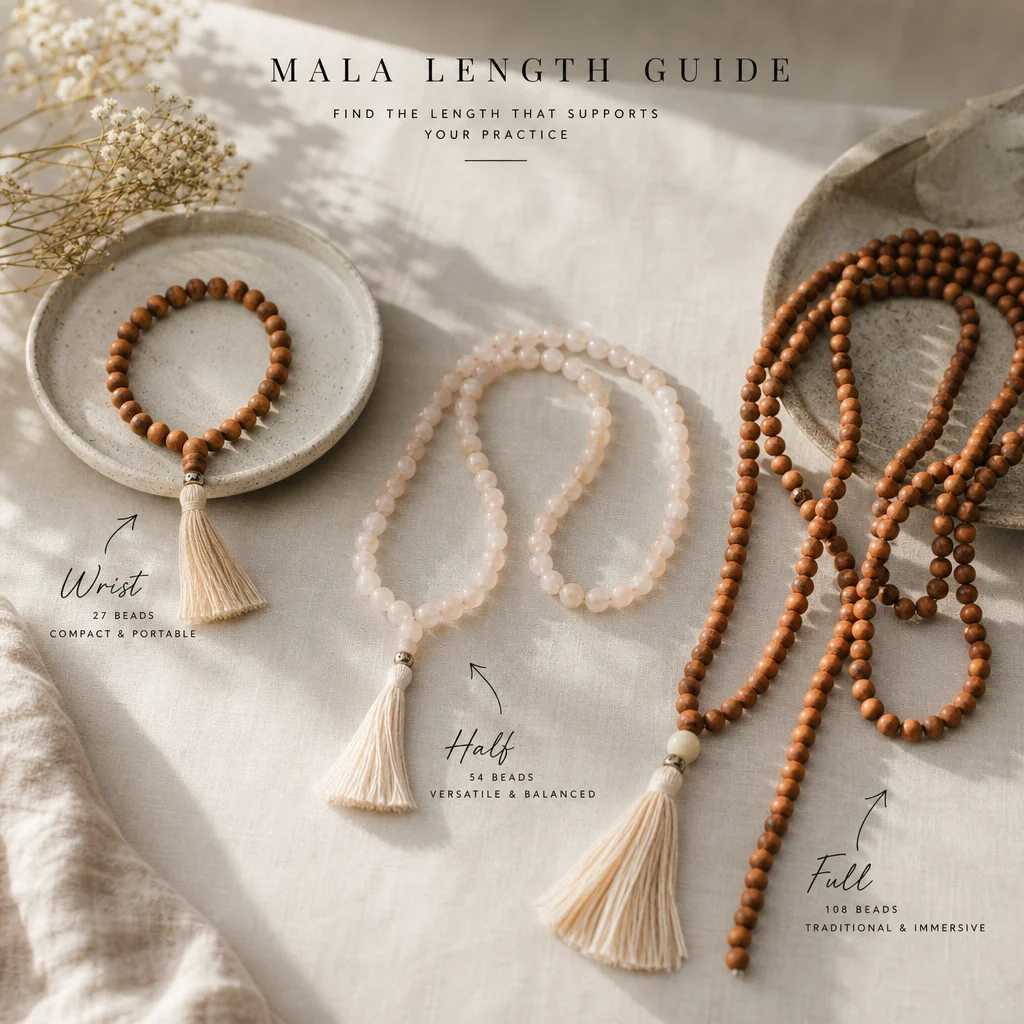
The Three Standard Mala Lengths
When someone says "mala beads," they are usually referring to a full 108-bead necklace, but malas come in three primary lengths, each suited to different practices and preferences. Understanding the differences before you buy—or before you make one—saves time, money, and the frustration of a mala that does not fit your body or your practice style.
The three standard lengths are: the full mala (108 beads), the half mala (54 beads), and the wrist mala (27-33 beads, worn as a bracelet). Each has a distinct purpose, a different physical feel, and different bead-size considerations. Let me break down exactly what you are getting with each option.
Full 108-Bead Mala: The Traditional Standard
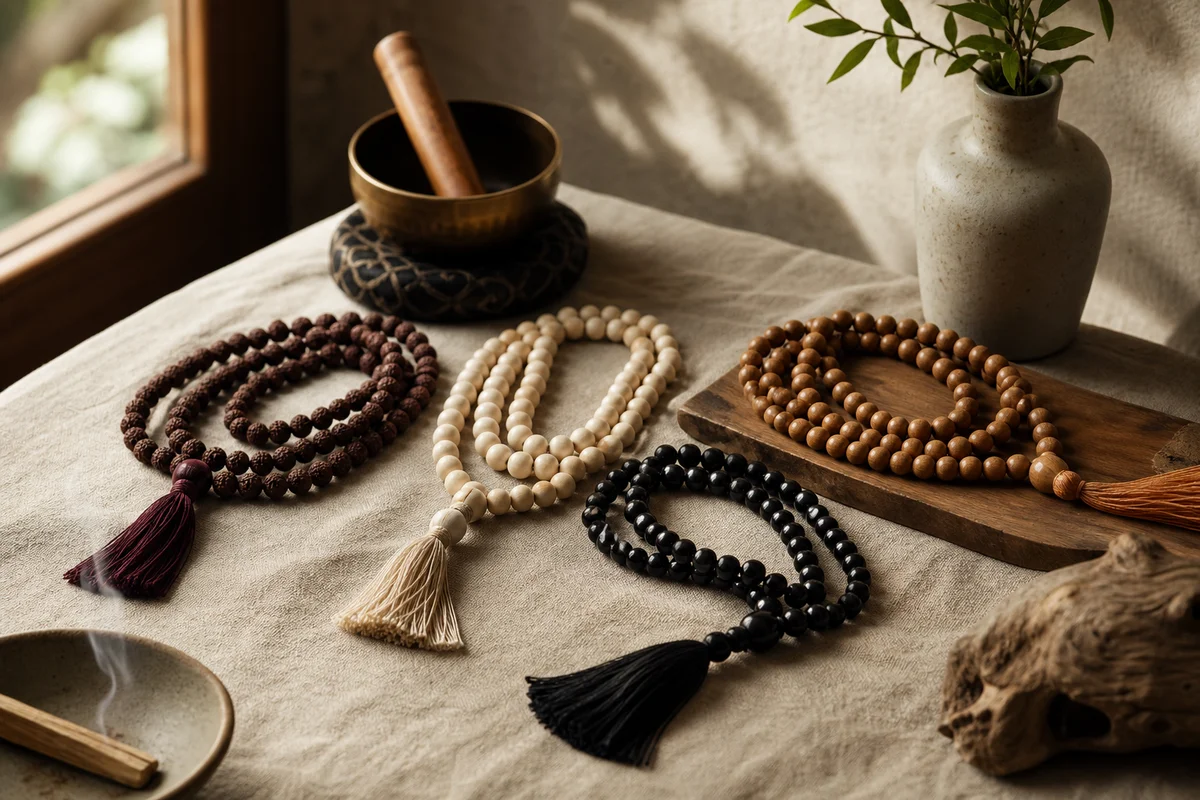
The 108-bead mala is the standard across Buddhist, Hindu, and Jain traditions, and it has been for centuries. The number 108 has significance in multiple Eastern traditions (108 Upanishads in Hindu philosophy, 108 defilements in Buddhism, 108 sacred sites in Jainism), but from a practical standpoint, 108 is simply a count that takes roughly 15-20 minutes to complete at a natural breathing pace—long enough for a meaningful meditation session but not so long that it becomes uncomfortable to hold.
Physical Dimensions
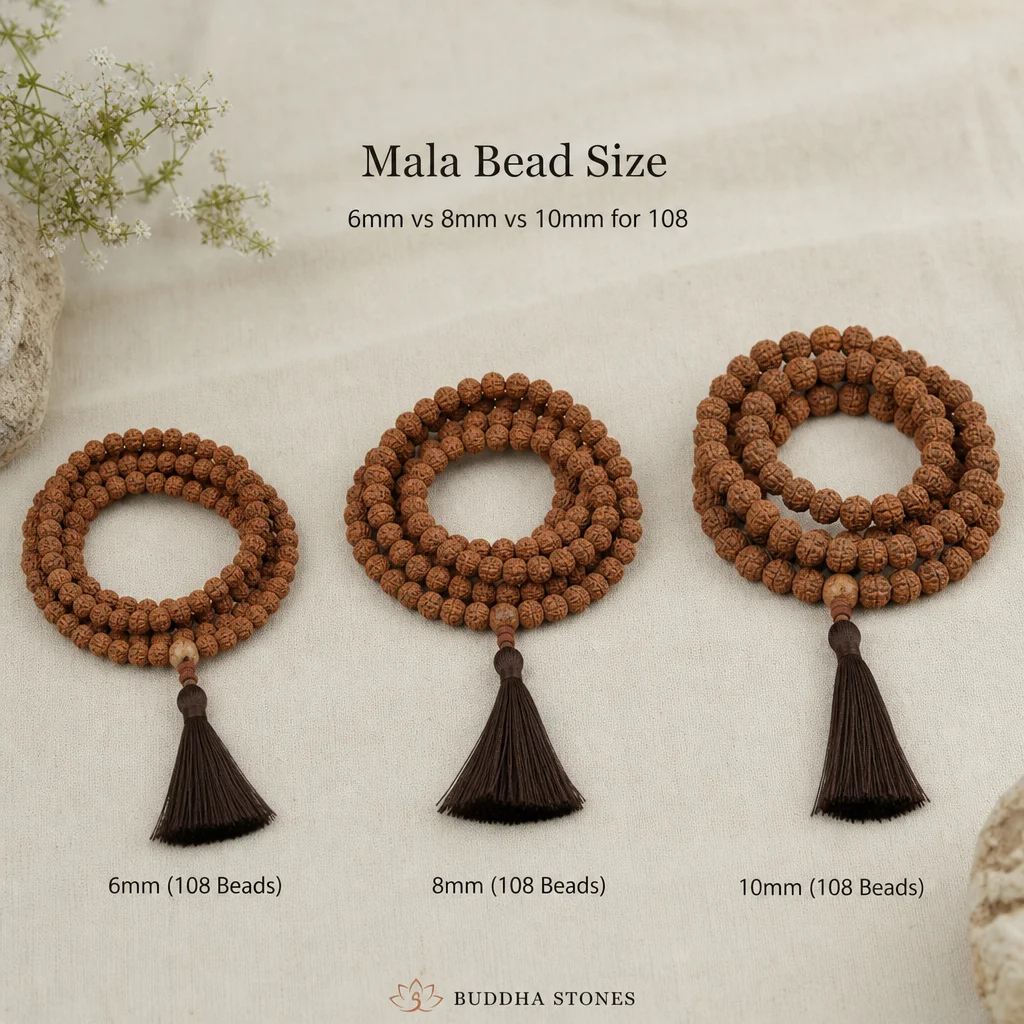
A full 108-bead mala's length depends primarily on bead size. Here is a practical reference table based on standard bead diameters:
| Bead Size | Approximate Mala Length | Wear Style |
|---|---|---|
| 6mm | 24-28 inches | Wraps 3-4 times around wrist, single loop necklace |
| 8mm | 32-36 inches | Wraps 3-4 times around wrist, long necklace |
| 10mm | 40-44 inches | Wraps 4-5 times around wrist, very long necklace |
These measurements include the guru bead and tassel (add roughly 3-5 inches). The knotting between beads (if any) adds another 1-2 inches of total length because each knot takes up a small amount of space on the thread.
Who Should Use a Full Mala
A full 108-bead mala is the right choice if: you practice seated meditation regularly and want the traditional count, you want the option of wearing the mala as a necklace, or you prefer a single mala that can also be wrapped around the wrist. The wrapping function is a major advantage—an 8mm 108-bead mala wrapped 4 times around the wrist creates a substantial, chunky bracelet that stays in place during practice.
Half Mala (54 Beads): The Compact Alternative
A half mala contains exactly 54 beads—half of 108—and is designed for people who want a shorter session or a more compact piece that hangs as a mid-length necklace rather than reaching the waist. At roughly 16-20 inches (8mm beads), a half mala sits at the collarbone level on most adults, similar to a standard pendant necklace.
The half mala is particularly useful in two contexts: shorter meditation sessions (8-10 minutes for 54 breaths or mantras), and as a layering necklace worn over clothing. Some practitioners own both a full mala (for deep practice at home) and a half mala (for travel, office, or public meditation).
Cost-wise, a half mala is roughly half the price of a full mala made from the same stone, since bead count is the primary cost driver. This makes it an accessible entry point for people who want to try mala meditation without committing to the full 108-bead investment.
Wrist Mala (27-33 Beads): The Daily Wear Option
Wrist malas contain 27 beads (one quarter of 108), 21 beads (a common Hindu japa count), or 33 beads. The most popular count is 27, which divides evenly into 108 (four passes of a 27-bead wrist mala equals one full 108 round). Wrist malas are designed to be worn like bracelets—sliding over the hand and resting on the wrist—making them the most practical option for people who want a mala that stays on the body throughout the day.
Wrist mala sizing is critical because it needs to fit comfortably without being so loose that it slides off or so tight that it restricts circulation. The standard wrist mala diameter for 8mm beads is 6-8 inches, which fits most average adult wrists. For smaller wrists (under 6 inches), 6mm beads are recommended—21-24 beads of 6mm creates a tighter fit that stays in place.
Wrist Size Reference
| Wrist Circumference | Recommended Bead Size | Approximate Bead Count | Mala Diameter |
|---|---|---|---|
| 5-5.5 inches | 6mm | 21-24 | 5.5-6 inches |
| 6-6.5 inches | 8mm | 27 | 7-7.5 inches |
| 7-7.5 inches | 8mm | 27-30 | 8-8.5 inches |
| 8+ inches | 8mm or 10mm | 30-33 | 9-10 inches |
Measure your wrist with a soft tape measure at the wrist bone (where you would wear a watch) and add 0.5-1 inch for comfort. The mala should slide over your hand (make a fist and measure that circumference—the mala must be wide enough to pass over your knuckles) but fit snugly on the wrist.
Bead Size: The Hidden Variable That Changes Everything
Bead size affects not just the appearance of the mala but its function in practice. Smaller beads (4-6mm) are lighter and more delicate, suitable for a wrapped bracelet but less satisfying to count during meditation because each bead is less distinct to the touch. Larger beads (10mm+) are substantial and easy to feel but create a very long mala (8mm is generally considered the sweet spot for balancing feel and length).
If you are buying your first mala, 8mm beads are the safest choice. They are large enough to provide clear tactile feedback during meditation, small enough that a 108-bead mala is not uncomfortably long, and available in the widest variety of stones and price points.
Knotting vs No Knotting: How It Affects Length
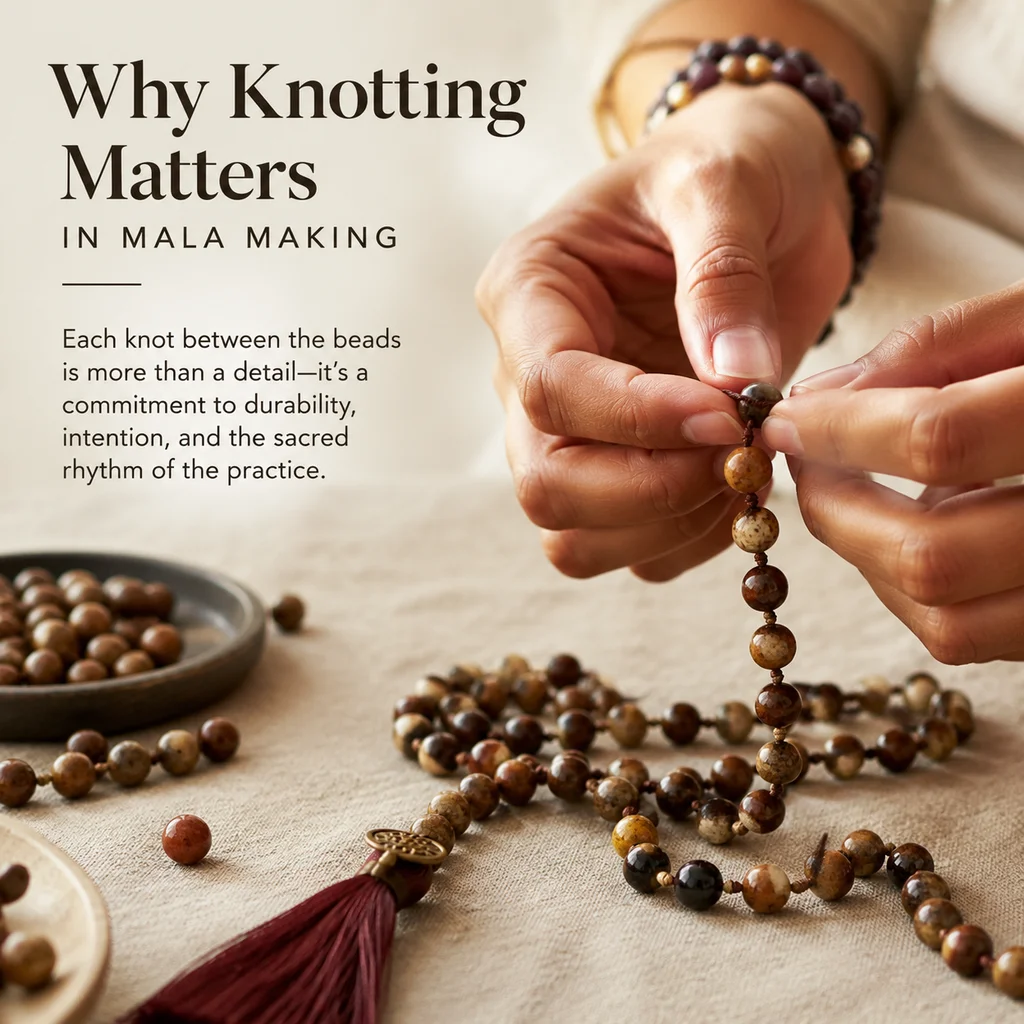
A knotted mala (with a knot between each bead) is slightly longer than an unknotted mala with the same number and size of beads—typically 1-2 inches longer for a full 108-bead mala. Knotting also changes the feel: knots prevent beads from sliding freely on the thread, which means each bead stays in its position when you manipulate the mala. This is generally preferred in meditation practice because it prevents the beads from bunching up and makes counting more precise.
Unknotted malas are simpler and cheaper to produce, but the beads can slide around on the thread, which can be distracting during practice and makes accurate counting more difficult. For a functional meditation mala, knotted is almost always the better choice.
Elastic vs Thread: A Critical Decision
Wrist malas are commonly strung on elastic cord, which allows them to stretch over the hand. This is practical for daily wear but has a significant downside: elastic degrades over time (6-18 months depending on quality and use), and when it breaks, all the beads scatter. Traditional malas use nylon, silk, or cotton thread—which is more durable but means the mala is a fixed loop that must be large enough to slide over the hand.
For wrist malas worn daily, quality elastic (0.7-1.0mm stretch cord) is a pragmatic choice—just be aware that you will need to restring it periodically. For full and half malas, always use traditional thread with knotting between beads.
Frequently Asked Questions
Can I wear a full 108 mala as a bracelet?
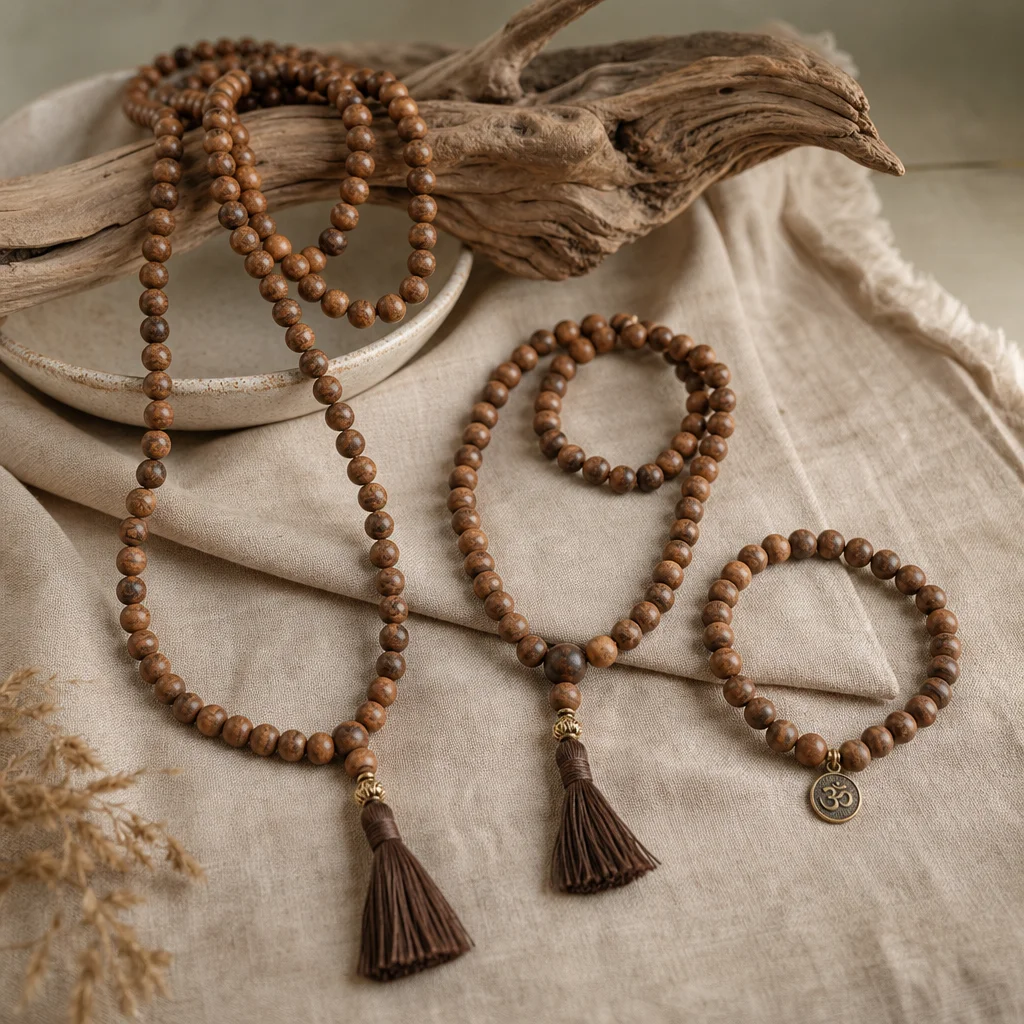
Yes, an 8mm 108-bead mala wraps around most adult wrists 3-4 times. This is actually the most popular way to wear a full mala for daily use—around the neck for meditation, wrapped around the wrist for daily wear. A 6mm mala wraps more times (4-5) for a thinner bracelet look.
Should my mala touch the ground if I am sitting on the floor?
Some practitioners prefer the mala to rest in their lap or on a cloth to prevent contact with the ground, but this is a cultural preference, not a functional requirement. If the mala drapes to the floor during seated practice, it is not "wrong"—it simply means the mala is long for your torso. A half mala or wrapped wrist mala may be more practical for your body type.
How do I know if a mala is the right length for me before buying online?
Check the bead size and count, then measure a piece of string to the listed dimensions and drape it around your neck and wrist. This gives you a physical sense of the fit before committing to a purchase. Most reputable mala sellers provide exact measurements including the guru bead and tassel.
Practical Tips and Expert Insights
Understanding the Power of Wrist Mala
When it comes to wrist malas, their compact size doesn't diminish their spiritual significance. They are the perfect companions for on-the-go practitioners. A wrist mala typically ranges from 27 to 33 beads, which is enough to provide a complete cycle of meditation. But here's the beauty of it – it's not just about meditation. Wrist malas can be worn as a daily reminder of your intentions, serving as a gentle nudge to keep your mind grounded and focused throughout your busy day. I find that wearing a wrist mala can help keep my practice consistent, especially when I'm short on time.The Role of Personal Preference
Choosing the right length of mala, particularly a wrist or half mala, is deeply personal. While a standard 27 to 33 bead length is ideal for most wrist malas, I've noticed that individuals have varying preferences. Some prefer a shorter mala for a quicker, more focused practice, while others might opt for a slightly longer one for a more extended session. As an expert, I always recommend going with what feels right for you. Your intuition will guide you better than any standard can.The Significance of the Tassel
The tassel, often overlooked, is a vital part of your wrist mala. It's not just there for decoration; it serves a practical purpose. When you touch the tassel, it helps keep your focus on your breath and intention during meditation. I love how the movement of the tassel can add a sensory element to your practice, enhancing your awareness. Plus, the length of the tassel is important too. Too short, and it might get in your way; too long, and it can become a distraction. It's all about finding the perfect balance.Maintaining Your Mala
A well-cared-for mala can last for years, even a lifetime. One of the key factors in maintaining your mala is how you store it. I always recommend keeping your mala in a clean, dry place when not in use. The material of your mala will also determine how it should be stored – for example, natural materials like sandalwood may need to be treated differently than glass or crystal beads. Additionally, it's essential to regularly cleanse and charge your mala with intention or using sacred energy sources like moonlight or sunlight. This practice not only keeps your mala's energy pure but also ensures its longevity. As someone who has had the pleasure of working with malas for many years, I've seen firsthand how the right care can make all the difference.Related Crystals/Stones for Wrist and Half-Length Malas
Amber
Amber is a beautiful, translucent fossilized tree resin that's known for its warm, golden glow. Its earthy energy brings a sense of grounding and stability. When used in a wrist or half-length mala, amber can help connect you to the present moment, offering a soothing and calming effect. It's also thought to be helpful for digestion and can be a great companion for those who are looking to balance their metabolism.
Black Obsidian
Black Obsidian is a protective stone that can help shield you from negative energy. Its dark, grounding energy makes it an excellent choice for a wrist or half-length mala. It's also known for its ability to promote emotional healing and to help you let go of past traumas. Wearing a black obsidian mala can be a powerful way to remind yourself to stay focused and grounded in your daily life.
Clear Quartz
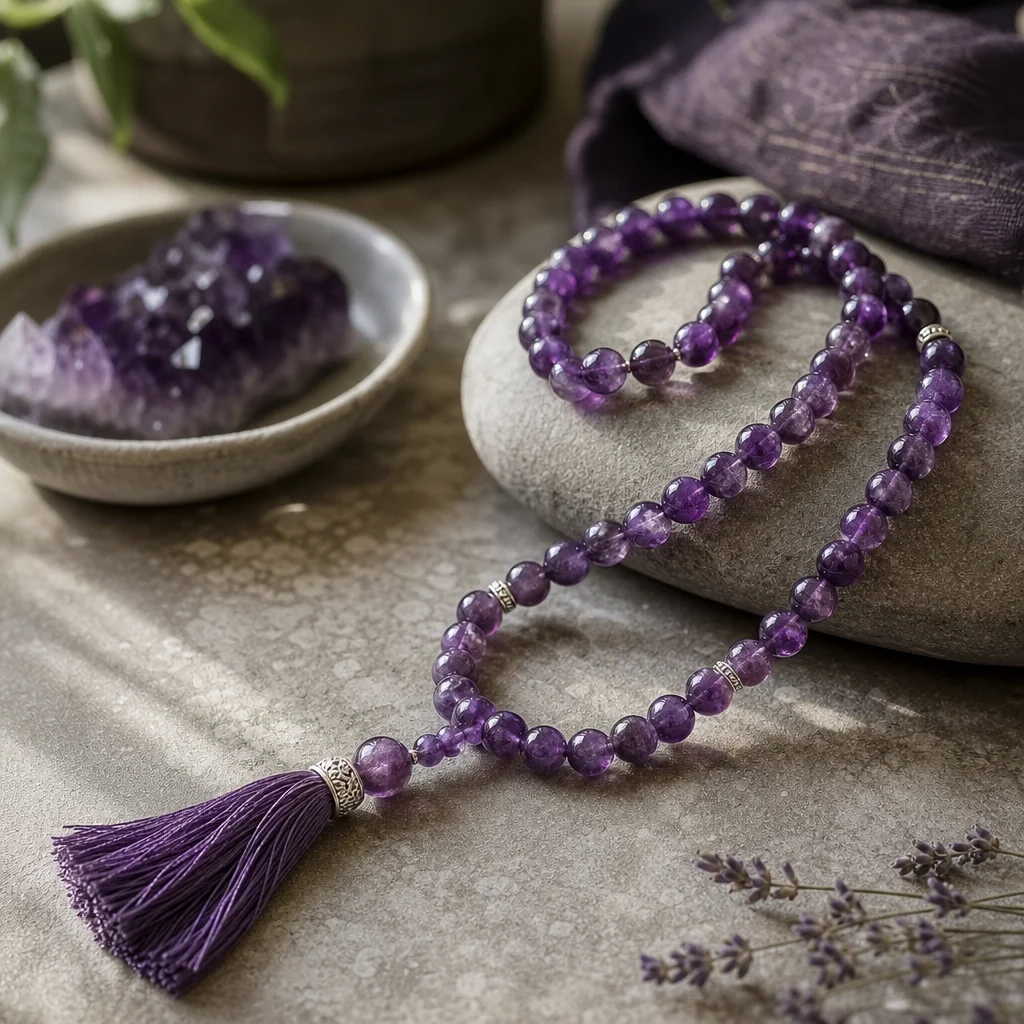
Clear Quartz is a universal stone that amplifies energy and enhances clarity of thought. It's often used in malas for its ability to bring balance and harmony to the mind, body, and spirit. A clear quartz wrist or half-length mala can be used to set intentions and to help you stay focused on your goals. It's also believed to be a great stone for amplifying the energy of other crystals.
Moonstone
Moonstone is a stone of the moon and is often associated with intuition and emotional balance. Its soft, pearly luster can lend a dreamy, ethereal quality to a wrist or half-length mala. Wearing a moonstone mala can help you connect with your innermost feelings and to foster a deeper understanding of your emotional landscape. It's also thought to be helpful for hormonal balance and can be a great ally for women's health.
Red Jasper
Red Jasper is a stone of protection and is known for its healing properties. It's a great choice for a wrist or half-length mala, as its grounding energy can help you stay centered and focused. Red Jasper is also believed to be a powerful stone for overcoming obstacles and for promoting courage and resilience. Incorporating it into your daily life can be a powerful way to remind yourself to stay strong and determined.
Ruby
Ruby is a stone of passion and determination. Its fiery energy can inspire you to pursue your dreams with enthusiasm and vigor. A ruby wrist or half-length mala can be a powerful tool for manifesting your desires and for keeping your motivation high. It's also thought to be a great stone for attracting love and prosperity.
Using and Combining These Crystals in Daily Life or Jewelry Making
Combining Crystals in Malas
When creating a wrist or half-length mala, you can combine different crystals to enhance their properties and create a synergistic blend. For example, pairing amber with black obsidian can create a grounding and protective energy. Clear quartz can be added to amplify the effects of the other stones, while moonstone can bring a sense of emotional balance and intuition.
Wearing Malas in Daily Life
Malas are not just for meditation; they can be worn throughout the day to serve as a constant reminder of your intentions and goals. Wearing a mala around your wrist or on a necklace can help you stay connected to the energy of the stones. You can also use your mala as a tool for meditation or reflection by counting the beads as you focus on your breath or a particular thought.
Jewelry Making
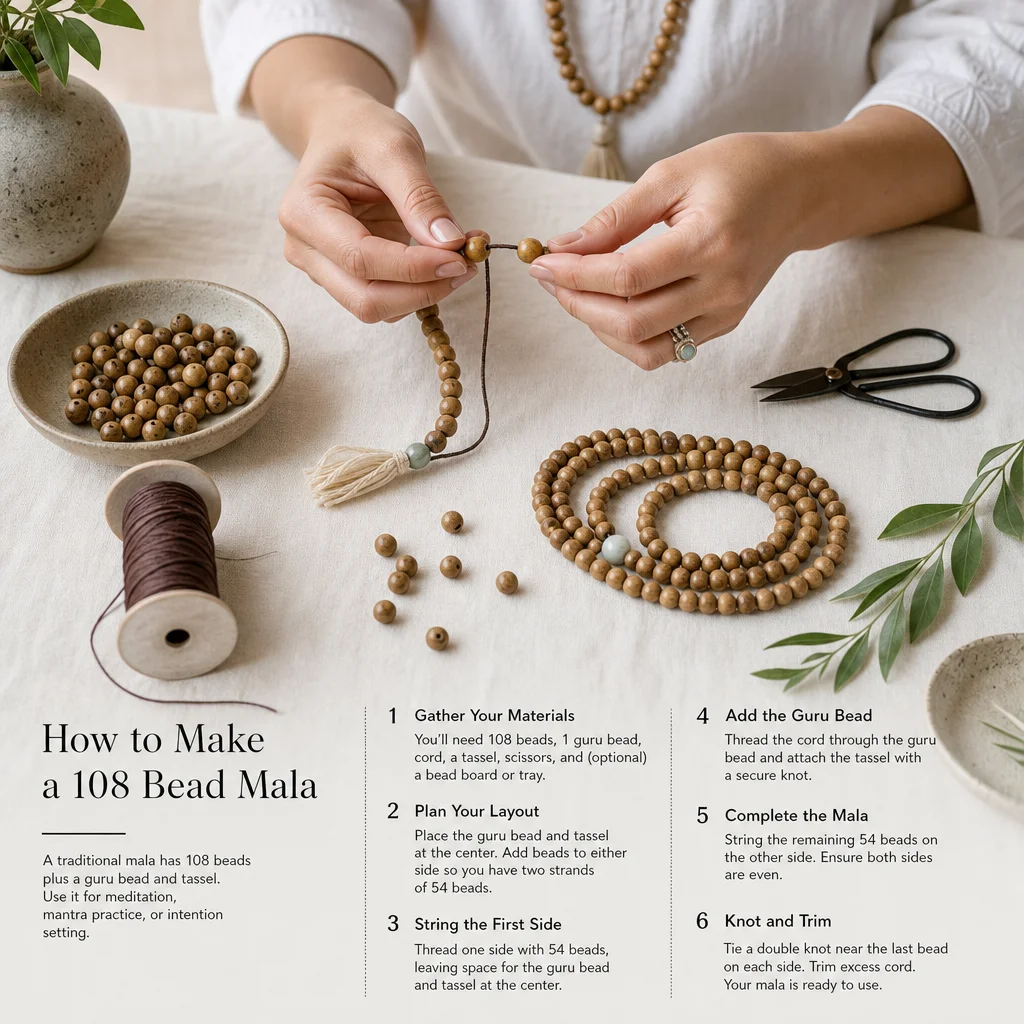
For those who enjoy crafting, malas can be a fun and rewarding project. You can create personalized malas by choosing your favorite stones and threading them onto a string or wire. This is a great way to infuse your jewelry with meaning and to create a piece that resonates with you on a personal level. You can even add additional elements like charms or beads to make your mala unique and special.
Can I wear a wrist mala every day?
Absolutely! Wrist malas are incredibly convenient for daily wear. They allow you to easily incorporate meditation or mindfulness into your everyday routine. Just remember to keep them away from water and harsh chemicals to maintain their beauty and longevity.
What's the difference between a wrist mala and a neck mala?
The primary difference lies in their size and wear. Wrist malas are designed to be worn on the wrist, often providing a subtle and unobtrusive way to practice mindfulness. Neck malas are typically longer and worn around the neck, which can be more visible and may be used for different meditation practices.
Should I choose a wooden or gemstone mala for my wrist?
The choice between wooden and gemstone malas is a personal preference. Wooden malas offer a warm, natural feel and are known for their grounding properties. Gemstone malas, on the other hand, are believed to carry the energetic properties of the stones, which can be beneficial for specific intentions or chakras.
How do I care for my wrist mala?
Care for your wrist mala by keeping it away from water and excessive sunlight. Gently wipe it with a soft cloth if it gets dirty. If you have a wooden mala, occasional oiling with a natural oil like jojoba can help maintain its luster and prevent cracking. Always handle your mala with respect and gratitude for its purpose and craftsmanship.
Frequently Asked Questions
Q1 What is the difference between wrist and half-length malas?
A1 Wrist-length malas are shorter and worn on the wrist, suitable for daily wear and meditation. Half-length malas are longer, worn over the shoulders, ideal for longer meditation sessions and more extensive prayer practices.
Q2 How do I decide which length is right for me?
A2 Consider your meditation habits and personal preference. Wrist-length is more convenient for short sessions, while half-length is better for extended practices requiring movement or more focus.
Comments