Jewelry Metal Allergies: Stop Green Skin with
May 14, 2026
Jewelry Metal Allergies: Why Your Skin Turns Green and How to Prevent It
That green mark on your finger under your ring isn't an infection — it's a chemical reaction between your skin's natural acids and the copper in your jewelry. It's common, harmless, and completely preventable once you understand what causes it.
This guide covers the three main types of jewelry skin reactions, which metals cause them, and practical solutions that don't involve throwing away your favorite pieces.
Reaction Type 1: Green Skin (Copper Oxidation)
The most common jewelry reaction. Your skin's natural oils and sweat contain salts and mild acids. When these come into contact with copper (found in most non-pure gold and silver alloys), they create copper salts — which are green. The green washes off with soap and water and is not dangerous.
Which metals cause it:
- Sterling silver (7.5% copper content)
- Gold under 18K (10K and 14K contain copper)
- Rose gold (higher copper content than yellow gold)
- Brass and bronze (mostly copper)
- Cheap "costume jewelry" base metals
Why some people get it more: Skin acidity varies. People with more acidic skin (affected by diet, stress, and hormones) react more strongly. Hot weather increases sweating, which accelerates the reaction. This is why rings that are fine in winter suddenly turn your finger green in summer.
Prevention:
- Apply a thin coat of clear nail polish to the inside of rings and bracelet clasps — creates a barrier between metal and skin. Reapply every few weeks as it wears off.
- Remove jewelry before exercising, swimming, or sleeping
- Keep skin dry under jewelry — moisture accelerates the reaction
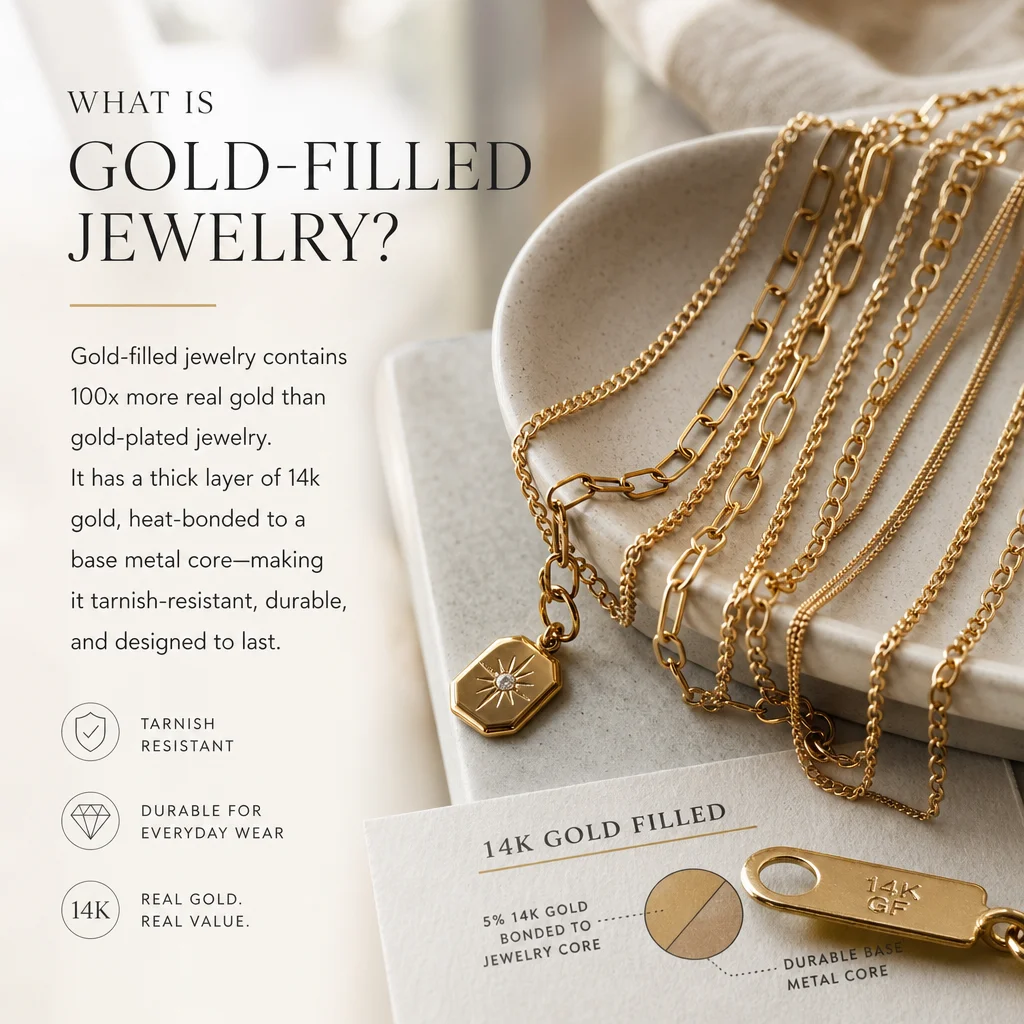
- Gold-filled pieces have a much thicker gold layer than plated ones, making them far less likely to cause green skin
Reaction Type 2: Contact Dermatitis (Nickel Allergy)
This is different from green skin — it's an actual allergic reaction. Nickel allergy affects roughly 10-20% of the population and causes red, itchy, sometimes blistering rashes wherever nickel touches the skin.
Which metals contain nickel:
- White gold (often alloyed with nickel for the white color)
- Some stainless steel (not all — surgical stainless steel is usually safe)
- Most costume jewelry
- Some silver-plated items (nickel underlayer under the silver)
The problem with nickel: Sensitivity builds over time. You might wear a nickel-containing ring for years with no reaction, then suddenly develop an allergy. Once sensitized, you'll react to nickel permanently — there's no desensitization treatment.
Nickel-free alternatives:
- Platinum — almost entirely pure, no nickel needed
- Titanium — lightweight, strong, hypoallergenic
- 18K+ yellow gold — copper and silver alloy, no nickel
- Sterling silver — typically no nickel (but check, some manufacturers add it)
- Palladium white gold — white gold alloyed with palladium instead of nickel
Reaction Type 3: Tarnish Transfer (Silver Sulfide)
Tarnished silver leaves dark marks on skin — not green, but black-gray. This is silver sulfide, formed when silver reacts with sulfur in the air or on your skin.
Prevention is straightforward:
- Keep silver jewelry clean. Regular polishing prevents tarnish buildup.
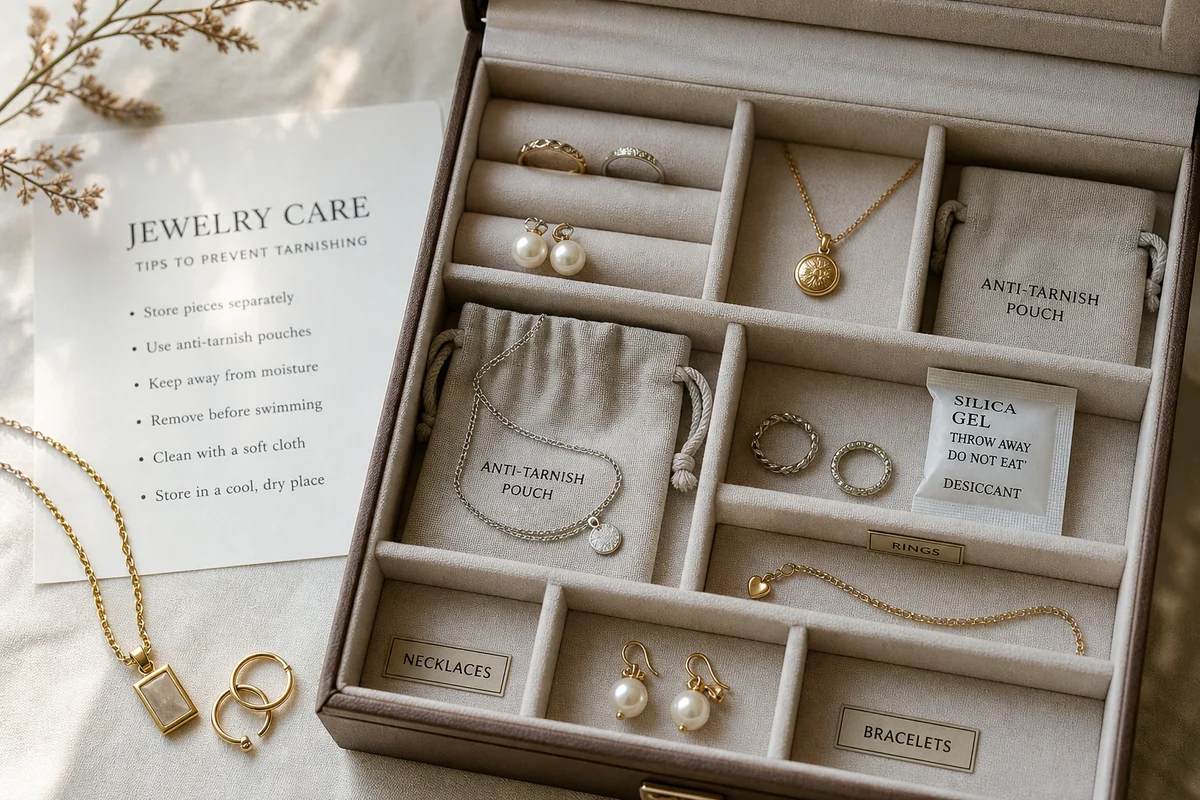
- Store in airtight bags or anti-tarnish cloth when not wearing
- Remove before applying perfume, lotion, or hairspray — these accelerate tarnishing
- Don't store silver in wooden jewelry boxes (some woods release sulfur compounds)
The Clear Nail Polish Trick: Does It Work?
Yes, temporarily. Clear nail polish creates a thin polymer barrier between the metal and your skin. It works for rings, earring posts, and bracelet clasps. Drawbacks:
- Wears off after 1-3 weeks of daily wear
- Can chip and look rough on visible surfaces
- Not suitable for pieces with fine detail or settings (can get stuck in crevices)
- Some nail polishes contain formaldehyde — check the label if you have sensitivities
For a more permanent solution on rings, ask a jeweler about rhodium plating — a thin layer of rhodium (a platinum-group metal) over the inside of the ring. Lasts 1-2 years before needing reapplication.
What About "Hypoallergenic" Labels?
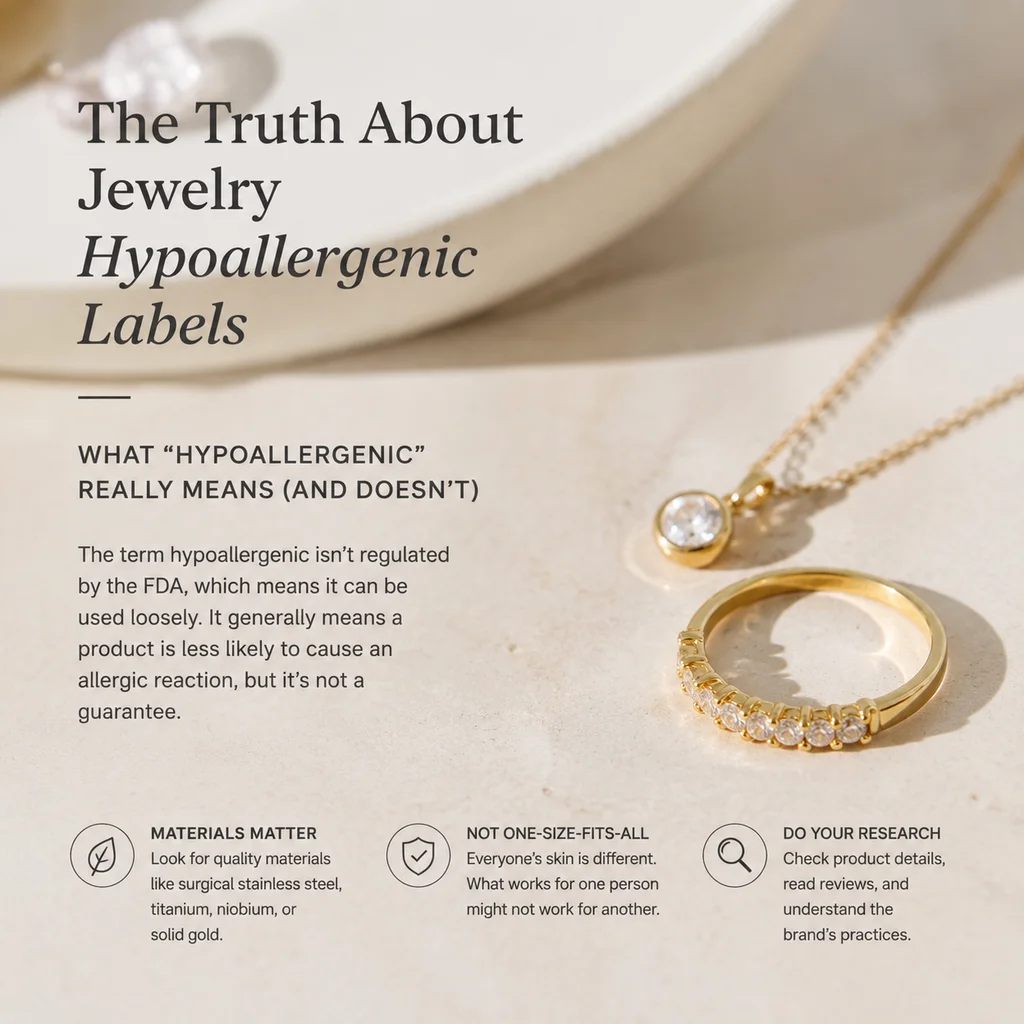
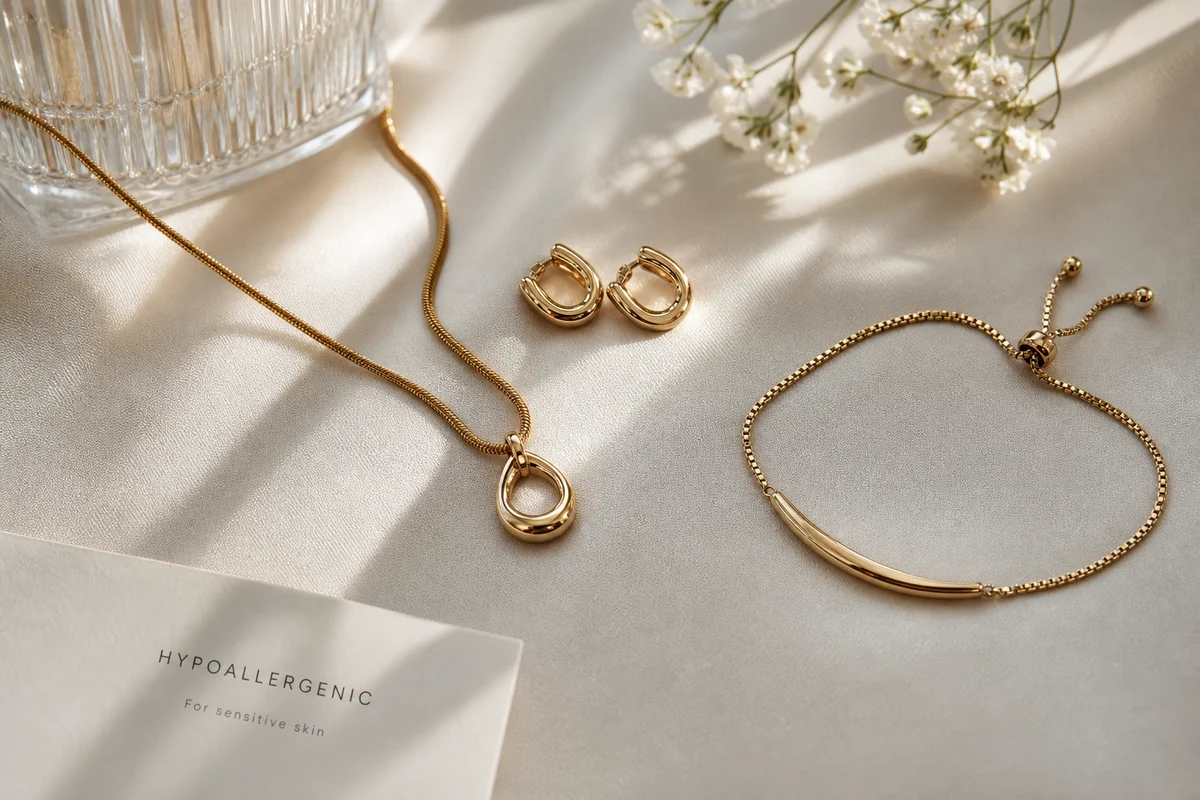
"Hypoallergenic" is a marketing term with no legal definition in the US. It usually means nickel-free, but there's no regulation requiring manufacturers to actually test this. If you have a known nickel allergy, look for specific metals (titanium, platinum, surgical-grade stainless steel) rather than trusting the "hypoallergenic" label.
Metal Comparison for Sensitive Skin
From most to least likely to cause reactions:
High risk: Brass, bronze, nickel silver (contains no actual silver), cheap plated jewelry (thin plating wears through quickly)
Medium risk: 10K gold, 14K gold (some alloys), sterling silver (fine for most people, causes green skin in some), rose gold (higher copper)
Low risk: 18K+ gold, gold-filled, surgical stainless steel, platinum, titanium, niobium
Essentially zero risk: Pure 24K gold, pure platinum, pure titanium, glass, wood, ceramic
When to See a Doctor
Most jewelry skin reactions are cosmetic and harmless. See a doctor if:
- The rash spreads beyond where the jewelry touched
- Blisters form or skin becomes raw and weeping
- The reaction doesn't improve within a few days of removing the jewelry
- You develop swelling, warmth, or red streaking (signs of infection, though rare)
A dermatologist can perform a patch test to identify exactly which metals you're allergic to. This takes two visits (one to apply test patches, one 48 hours later to read results) and gives you a definitive list of metals to avoid.
Practical Takeaways
- Green skin = copper reaction, harmless, washes off
- Itchy red rash = likely nickel allergy, stop wearing the piece
- Dark marks = tarnished silver, clean and store properly
- Clear nail polish works as a temporary barrier
- For permanent solutions, switch to nickel-free metals or get rhodium plating
Don't stop wearing jewelry because of skin reactions — just wear the right metals for your skin type. Understanding which metals work for you makes jewelry enjoyable instead of irritating.
Reaction Type 3: Allergic Contact Dermatitis (Other Metals)
While copper and nickel are the most common causes of jewelry-related skin reactions, other metals can also trigger allergic reactions. These include:
- Palladium: Often used in white gold alloys, palladium can cause allergic reactions in some individuals, similar to nickel.
- Chromium: Found in some plated jewelry, chromium can cause irritation and allergic reactions.
- Gold: While pure gold is hypoallergenic, gold alloys can contain other metals that cause reactions in sensitive individuals.
Diagnosis: If you suspect you have an allergy to a particular metal, it's important to consult a dermatologist. They can perform patch tests to determine which metals you are allergic to.
Understanding Metal Allergies
It's important to understand that metal allergies are not the same as sensitivity. Sensitivity to a metal can cause irritation or a skin reaction, but it doesn't necessarily mean you have an allergy. Allergies, on the other hand, are an immune response and can lead to more severe reactions over time.
Alternatives to Traditional Metals
For those who suffer from metal allergies, there are several alternatives to traditional metals that are hypoallergenic and less likely to cause skin reactions:
- Gold: 18K or higher gold is the most hypoallergenic, as it contains a higher percentage of gold and less of other metals.
- Platinum: Platinum is naturally hypoallergenic and is often used in high-end jewelry.
- Silver: Pure silver is hypoallergenic, but it can tarnish and discolor over time.
- Titanium: Titanium is a lightweight, durable metal that is naturally hypoallergenic and resistant to tarnishing.
Gold-Filled vs. Gold-Plated Jewelry
When shopping for hypoallergenic jewelry, you may come across terms like "gold-filled" and "gold-plated." Here's what you need to know:
| Gold-Filled | Gold-Plated |
|---|---|
| Gold-filled jewelry has a layer of gold that is 100 times thicker than gold-plated jewelry. This layer is bonded to a base metal, such as brass or copper. | Gold-plated jewelry has a very thin layer of gold applied to a base metal. This layer can wear off over time, exposing the base metal and potentially causing skin reactions. |
| Gold-filled jewelry is more durable and less likely to cause skin reactions than gold-plated jewelry. | Gold-plated jewelry is less expensive than gold-filled jewelry but may not be suitable for those with metal allergies. |
How to Choose Hypoallergenic Jewelry
When shopping for hypoallergenic jewelry, here are some tips to keep in mind:
- Check the metal content: Look for jewelry that is made of pure gold, platinum, silver, or titanium.
- Look for hypoallergenic labels: Some jewelry brands label their products as hypoallergenic or nickel-free.
- Read reviews: Check customer reviews for any mention of skin reactions or allergies.
- Ask for help: If you're unsure about a piece of jewelry, ask a sales associate for advice.
FAQ
Can I develop a metal allergy later in life?
Can I develop a metal allergy later in life?
Yes, it's possible to develop a metal allergy at any age. Sensitivity to a metal can build up over time, and you may not experience symptoms until years after exposure.
Is it possible to have a metal allergy to gold?
Is it possible to have a metal allergy to gold?
While pure gold is hypoallergenic, gold alloys can contain other metals that cause allergic reactions. If you have a known allergy to gold, it's best to avoid jewelry made with gold alloys.
Can I wear jewelry while swimming?
Can I wear jewelry while swimming?
It's best to remove jewelry while swimming, as chlorine and saltwater can accelerate the reaction between metal and skin.
How can I tell if I have a nickel allergy?
How can I tell if I have a nickel allergy?
The most accurate way to determine if you have a nickel allergy is to undergo a patch test performed by a dermatologist.
Are there any natural remedies for treating jewelry-related skin reactions?
Are there any natural remedies for treating jewelry-related skin reactions?
While there are no natural remedies that can cure a metal allergy, keeping the affected area clean and dry can help alleviate symptoms. Applying a hypoallergenic cream or ointment can also provide relief.

Comments