Iolite: The Viking's Compass Stone Complete Guid
June 3, 2026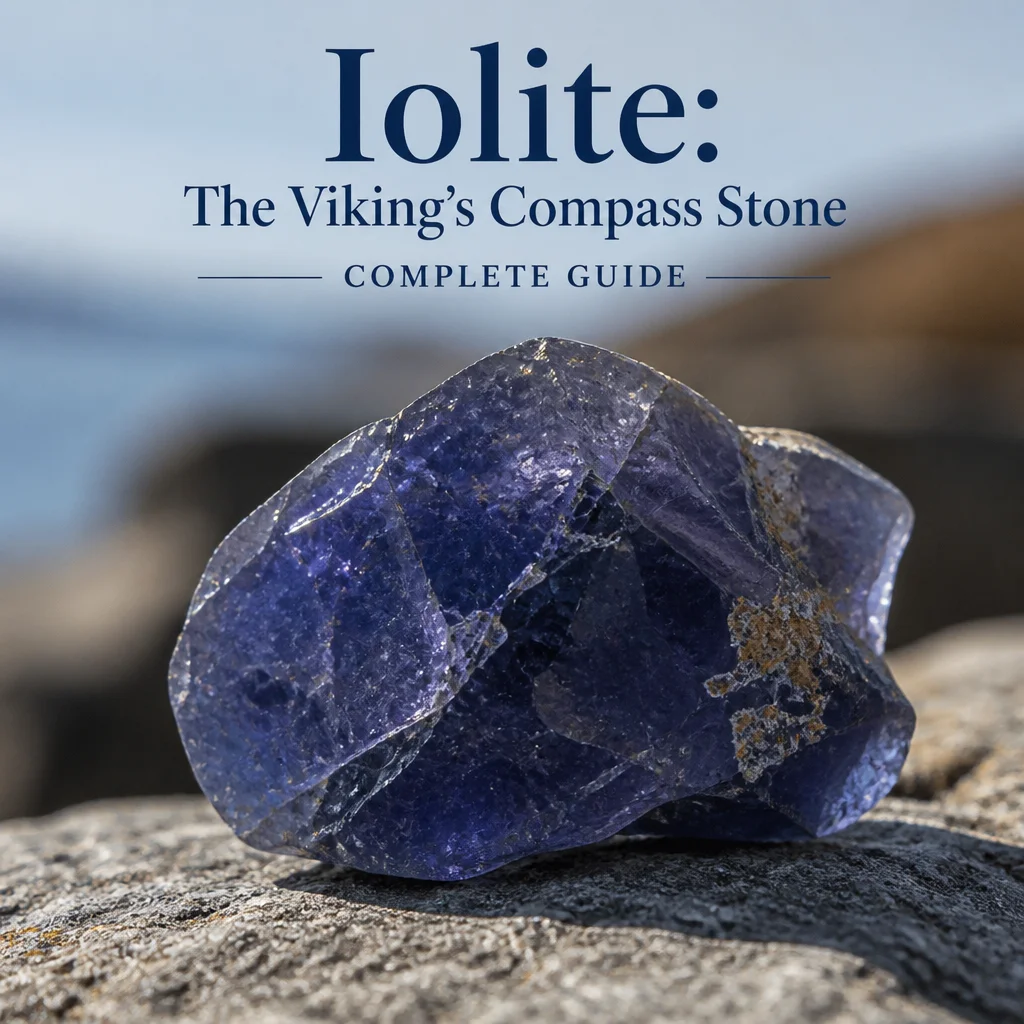
What Is Iolite?
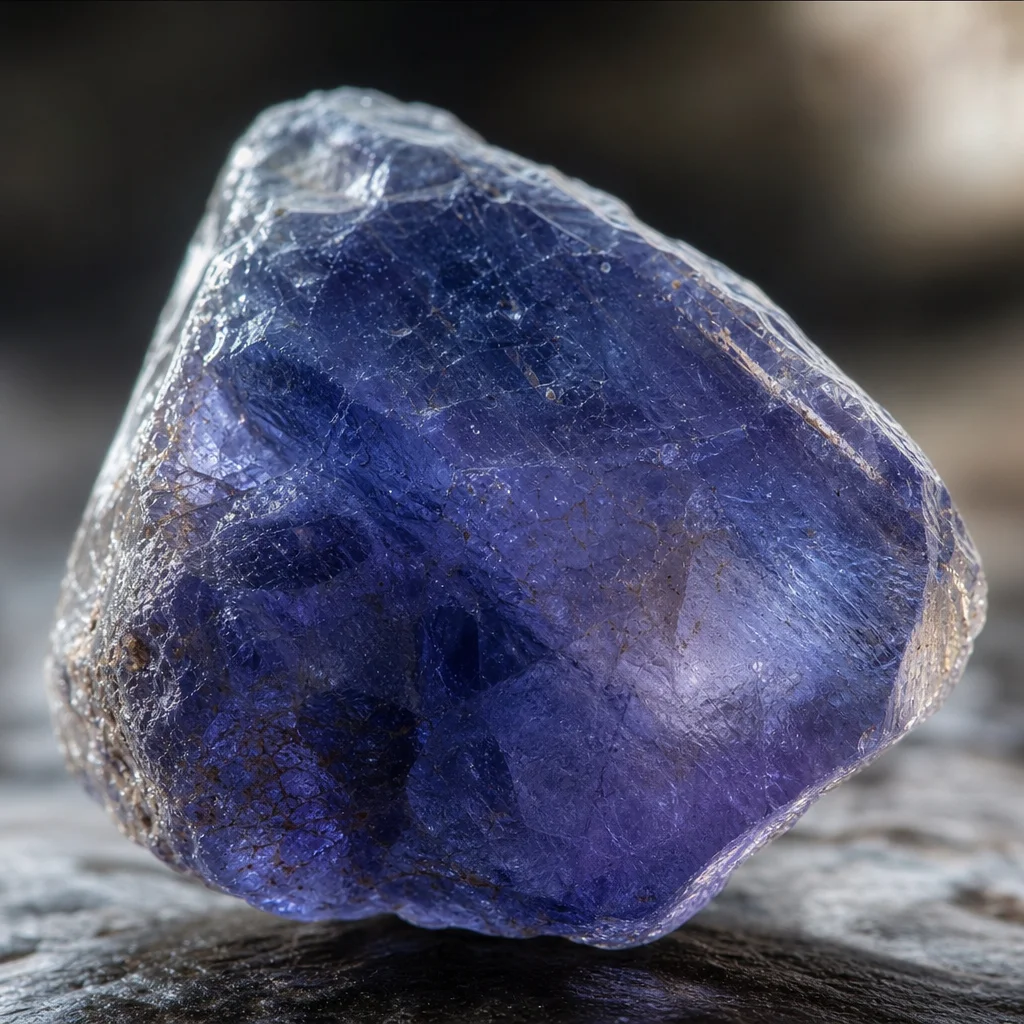
Iolite is the gem-quality variety of the mineral cordierite, a cyclosilicate with the chemical formula Mg₂Al₄Si₅O₁₈. The name comes from the Greek ios, meaning "violet," which perfectly describes the stone's signature blue-purple color. Iolite is also known by the historical trade name "water sapphire," though it has no chemical relationship to sapphire at all.
Cordierite was first scientifically described by the French geologist Pierre Louis Antoine Cordier in 1813. The gem variety has been used for millennia—much longer than its formal scientific identification—because of a unique optical property that made it invaluable to ancient navigators.
The Viking's Compass: Iolite's Pleochroism
Iolite's most famous property is its strong pleochroism—the ability to display different colors when viewed from different angles. This is not subtle color shifting like you might see in some gems. Iolite genuinely looks like three different stones depending on which direction you turn it:
- From one axis: Deep violet-blue (sapphire-like)
- From the second axis: Pale blue to colorless (water-like)
- From the third axis: Honey-yellow to light brown
This dramatic trichroic (three-color) property is what gave iolite its legendary role in Viking navigation. According to historical theory, Viking navigators used thin slices of iolite as a polarizing filter. By holding the stone up to the sky and rotating it, they could locate the position of the sun even on cloudy days or near the horizon. The sun's position, even when obscured, would cause a color shift in the iolite that indicated direction.
Modern historians debate the exact extent of this practice, but the physics is sound: iolite's pleochroic behavior genuinely responds to polarized light in ways that could indicate solar direction. Whether or not every Viking ship carried an iolite compass, the mineral's optical properties are scientifically established and impressive.
Physical Properties of Iolite
- Hardness: 7-7.5 on the Mohs scale, making it suitable for all types of jewelry including rings worn daily.
- Refractive index: 1.542-1.578, giving it moderate brilliance.
- Density: 2.55-2.75 g/cm³, lighter than sapphire (3.95-4.05) but similar in feel to tanzanite.
- Cleavage: Good in one direction, which means iolite can be split along a specific plane if struck. This affects how cutters orient the rough material.
- Toughness: Fair. Not as chip-resistant as sapphire but adequate for most jewelry with protective settings.
The combination of good hardness, attractive color, and reasonable toughness makes iolite an excellent choice for rings, earrings, pendants, and bracelets. It is more durable than tanzanite and significantly less expensive than blue sapphire.
Iolite Colors and Grading
The quality of iolite is judged primarily by color intensity and orientation:
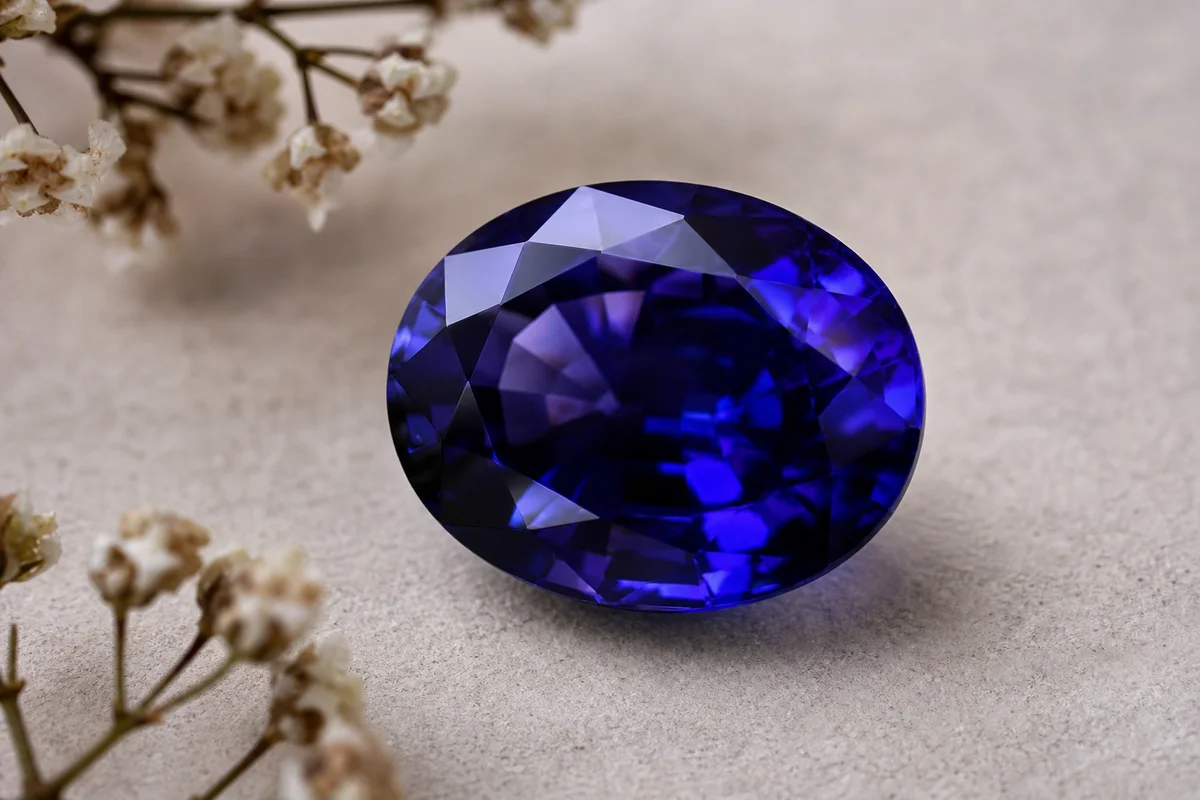
- Best color: Rich, saturated violet-blue to deep blue, comparable to medium-grade sapphire. Stones with a strong blue component and minimal brown tones command the highest prices.
- Medium grade: Blue-violet with visible color shift when tilted. These are common and affordable.
- Lower grade: Pale or washed-out with dominant yellow or brown undertones. Still attractive but less valuable.
The biggest challenge in cutting iolite is orientation. Because of the strong pleochroism, the cutter must carefully align the table facet to capture the most desirable color direction. A poorly oriented stone might show its brownish or colorless axis face-up, looking dull despite having beautiful blue from other angles. This is why two iolites of the same rough can look dramatically different after cutting.
A skilled cutter can produce an iolite that looks like a vivid blue sapphire from the face-up position. An unskilled cut might produce a stone that looks grayish or brownish. Always view iolite from multiple angles before purchasing to ensure the face-up color is what you want.
Iolite vs. Tanzanite vs. Sapphire
These three blue-to-violet gemstones are frequently compared, and understanding the differences helps you make informed choices:
- Sapphire (Al₂O₃): Hardness 9. Much harder and more durable. Comes in every color except red (red corundum is ruby). Blue sapphire is significantly more expensive—expect to pay 10-100 times more per carat than comparable iolite.
- Tanzanite (blue zoisite, Ca₂Al₃(SiO₄)₃(OH): Hardness 6-6.5. Much softer than both iolite and sapphire. More strongly trichroic than iolite but shows blue, purple, and red-brown (rather than iolite's blue, colorless, and yellow). Almost exclusively sourced from one location in Tanzania.
- Iolite (cordierite): Hardness 7-7.5. The middle ground in both hardness and price. Shows the most dramatic pleochroism of the three. Widely available from multiple sources worldwide.
For practical jewelry purposes, iolite offers the best balance of beauty, durability, and affordability among the three. It is hard enough for daily wear, colorful enough to attract attention, and affordable enough to build a meaningful collection without a luxury budget.
Where Iolite Is Mined
Iolite deposits exist on every inhabited continent, though the quality and quantity vary:
- India (Orissa and Andhra Pradesh): Major producer of commercial-grade iolite. Material ranges from medium to good quality with the characteristic blue-violet color. India is currently the largest source of gem-quality iolite.
- Sri Lanka: Produces fine-quality material, often alongside sapphire and other gems. Sri Lankan iolite tends to have excellent clarity and desirable blue tones.
- Madagascar: Increasingly important source, especially for larger stones. Material can be very saturated in color.
- Norway (Hartz Mountain region): Historically significant source. Some of the first scientifically studied iolite came from Norwegian deposits.
- United States (Wyoming, Connecticut): Small deposits produce specimen-grade material. Gem-quality American iolite is rare.
- Brazil, Tanzania, Kenya: Minor sources producing material that supplements the market.
Iolite in Jewelry: What to Know Before Buying
When shopping for iolite jewelry, keep these factors in mind:
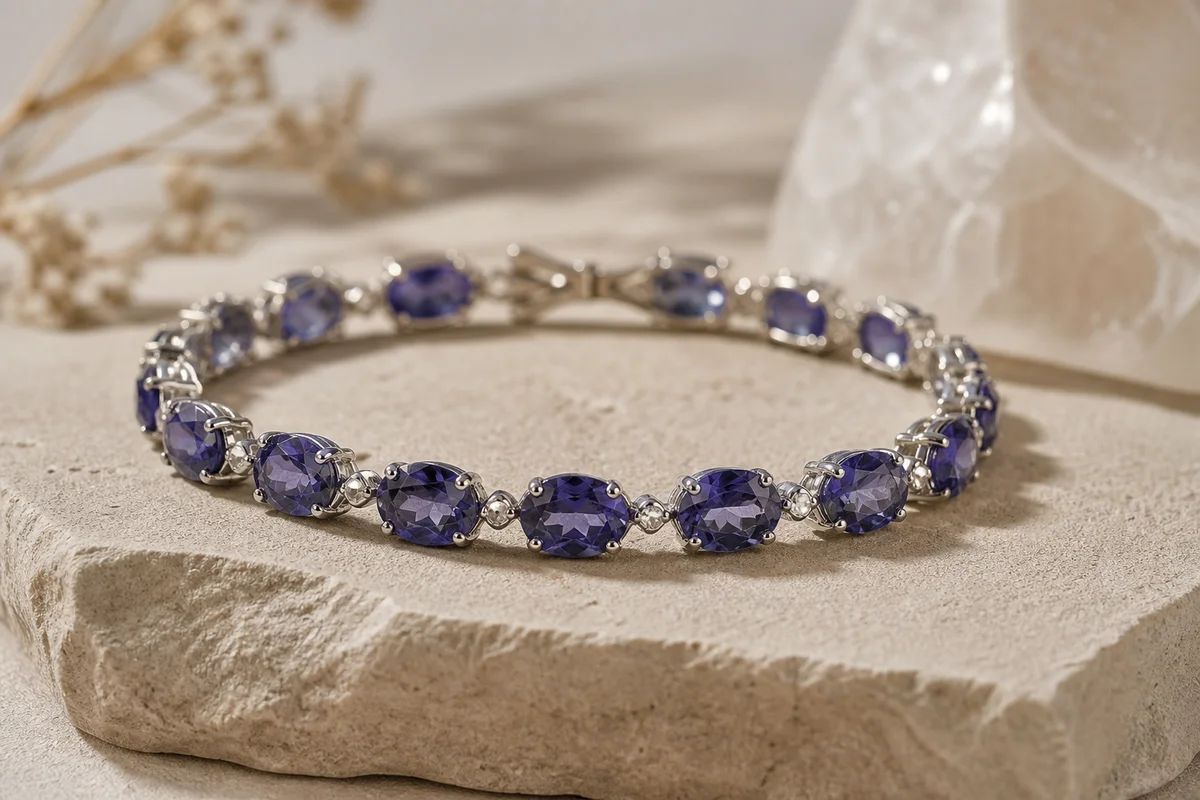
- Cut quality matters enormously: A well-cut iolite shows its best blue face-up. A poorly cut stone can look grayish or brownish. Always check that the color pleases you from the viewing angle you will see most often (typically face-up for rings, slightly angled for pendants).
- Size availability: Iolite is available in sizes up to 10+ carats in faceted stones. Unlike some colored gems, iolite does not darken excessively at larger sizes, so big stones can look excellent.
- Treatment: Most iolite is untreated—no heat treatment is commonly applied. This is a point in iolite's favor compared to sapphire (almost always heated) and tanzanite (routinely heated). If an iolite is treated, the seller should disclose it.
- Price range: Good commercial quality: $5-15 per carat. Fine quality (rich blue, excellent cut): $20-50 per carat. Exceptional stones over 5 carats with top color: $50-100+ per carat.
Iolite is an outstanding value in colored gemstones. A 3-carat fine-quality iolite might cost $60-100, while a comparable blue sapphire could cost $1,000-3,000 and tanzanite $300-600. The visual impact of a well-cut iolite can be remarkably similar to the more expensive alternatives.
Caring for Iolite
Iolite requires standard gemstone care:
- Clean with warm soapy water and a soft brush. Avoid harsh chemicals and ultrasonic cleaners (good cleavage means vibrations could cause issues along the cleavage plane).
- Store separately from harder gems (diamonds, sapphires) that could scratch it, and from softer gems it could scratch (tanzanite, opal).
- Avoid sudden temperature changes, which could cause thermal shock along the cleavage plane.
- Remove iolite jewelry before heavy physical activity or household cleaning.
Frequently Asked Questions
Is iolite the same as sapphire?
No. Iolite is cordierite (a magnesium aluminum silicate), while sapphire is corundum (aluminum oxide). They look similar in certain orientations but have different chemistry, structure, and hardness. Iolite is softer and more affordable than sapphire.
Can iolite really work as a compass?
Iolite's pleochroism allows it to act as a crude polarizing filter, which can help locate the sun's direction on cloudy days. Whether Vikings actually used it this way is debated among historians, but the physics is real.
Does iolite come in other colors?
Facetable iolite is almost always blue to violet. Cordierite as a mineral species can be gray, brown, green, or yellow, but these colors rarely produce gem-quality material.
Is iolite a good engagement ring stone?
It can work, but with caveats. Its hardness (7-7.5) is adequate for daily wear, but the good cleavage means a strong knock could chip the stone. If you choose iolite for an engagement ring, select a protective setting (bezel or halo) and be prepared for more maintenance than a sapphire or diamond.
Frequently Asked Questions
Can I wear my iolite jewelry every day?
Iolite ranks between 7 and 7.5 on the Mohs hardness scale, making it fairly durable for daily wear. However, like all natural crystals, it is sensitive to hard knocks and extreme temperature changes. At SagStone, we recommend treating your handcrafted iolite jewelry with care—removing it before heavy physical activity or cleaning—to ensure your beautiful artisan piece lasts for generations.
Comments