Iolite: The Complete Guide to the Viking Compass Stone
Iolite: The Complete Guide to the Viking's Compass Stone
Discover the mesmerizing gemstone that guided Norse sailors across uncharted seas — and learn why iolite deserves a place in your crystal collection today.
What Is Iolite?
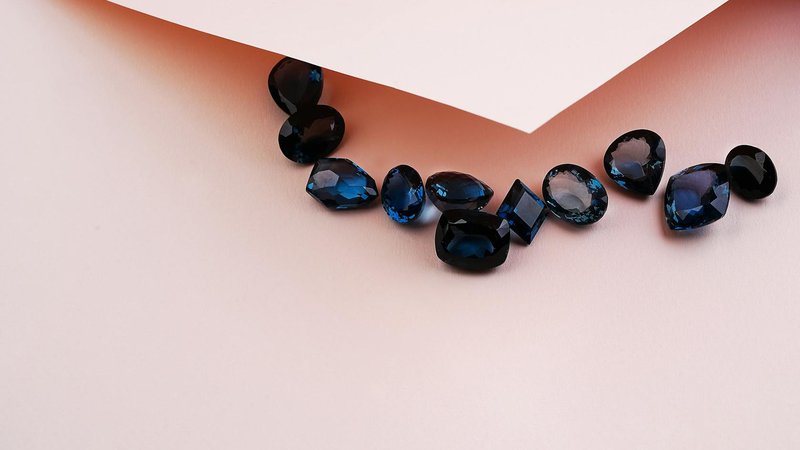
Iolite is a striking violet-blue gemstone whose name comes from the Greek word "ios," meaning violet. Scientifically known as cordierite, this mineral has captivated humans for centuries with its unique optical properties and rich color palette ranging from deep sapphire blue to soft lavender and golden yellow — all within the same stone.
Unlike many gemstones that display a single consistent color, iolite is famous for its remarkable pleochroism, an optical phenomenon where the stone appears to change color depending on the angle from which you view it. Turn an iolite in your hand, and you might see it shift from steely blue to violet to pale yellow-brown. This extraordinary characteristic is what earned iolite its legendary nickname: the Viking's Compass.
If you're drawn to blue crystals and their calming energy, iolite is a gemstone that offers both visual beauty and deep metaphysical significance. Let's explore everything this fascinating stone has to offer.
The Legend of the Viking's Compass
Perhaps no gemstone has a more romantic origin story than iolite. According to Norse legend, Viking explorers used thin slices of iolite as a navigational tool during their ocean voyages across the North Atlantic — long before the magnetic compass reached Europe.
Here's how it worked: iolite's pleochroic properties are so pronounced that when held up to the sky, the stone acts as a polarizing filter. By rotating the iolite and observing the color change, Viking sailors could locate the exact position of the sun — even on cloudy or overcast days when the sun was hidden from view. When the stone showed its deepest blue-violet color, it was oriented toward the sun's direction.
Leif Erikson and other Norse explorers are said to have relied on this technique — called sólarsteinn (sunstone) in Old Norse — to navigate between Scandinavia, Iceland, Greenland, and eventually North America around the year 1000 CE. While historians still debate the exact identity of the Viking sunstone (some researchers suggest calcite or tourmaline may have also been used), iolite remains the most widely accepted candidate due to its strong pleochroism.
This connection to exploration and navigation gives iolite a special symbolic meaning: it's a stone of finding your way, both literally and metaphorically.
Physical Properties of Iolite
Understanding iolite's physical characteristics helps you appreciate why it's such a versatile and practical gemstone — especially for everyday jewelry.
Color and Pleochroism
Iolite typically displays colors in the blue-violet spectrum, but its most defining feature is its trichroic nature. When viewed from three different crystallographic directions, a single iolite can show:
- Violet-blue to sapphire blue — the most prized and recognizable face
- Pale blue to colorless — seen from a different angle
- Light yellow-brown to honey — the third directional view
This dramatic color shift is stronger in iolite than in almost any other gemstone. Labradorite is famous for its play of color, but iolite's pleochroism is a fundamentally different and arguably more interactive optical effect — it changes as you move the stone.
Hardness and Durability
Iolite ranks 7 to 7.5 on the Mohs hardness scale, making it a durable choice for all types of jewelry, including rings that are worn daily. For context, this is comparable to quartz (7) and approaches the hardness of tanzanite (6-7) and beryl (7.5-8). It can withstand everyday wear remarkably well, though it's still wise to remove iolite jewelry before heavy manual work.
Chemical Composition
Iolite is a magnesium iron aluminum cyclosilicate with the formula Mg2Al4Si5O18. It forms in metamorphic rocks and granite pegmatites under high-temperature conditions. The iron content is what gives iolite its distinctive blue-violet coloration — stones with less iron tend to be paler.
Clarity and Cut
Most gem-quality iolite is transparent to translucent, with few inclusions in better specimens. Because of its strong pleochroism, proper orientation during cutting is critical — a skilled lapidary must align the table facet to show the most attractive blue-violet face while minimizing the less desirable yellow-brown tones.
Metaphysical Properties and Healing Benefits
In the world of crystal healing, iolite is celebrated as a stone of inner vision, intuition, and self-discovery. Its metaphysical properties align beautifully with its history as a navigational aid — just as it helped Vikings find their way across oceans, it's said to help you find your way through life's challenges.
Third Eye Chakra Activation
Iolite is primarily associated with the Third Eye Chakra (Ajna), the energy center linked to intuition, insight, and spiritual awareness. Meditating with iolite is believed to open and activate this chakra, helping you access deeper levels of consciousness and trust your inner knowing. Many crystal practitioners consider iolite one of the most effective stones for developing and sharpening intuitive abilities.
Enhancing Vision and Clarity
The name "Viking's Compass" carries spiritual weight beyond navigation. Iolite is thought to help you see clearly — both literally (it was historically believed to strengthen eyesight) and figuratively. It's said to cut through mental fog, confusion, and self-deception, helping you perceive situations and relationships with greater honesty and objectivity.
Self-Discovery and Personal Growth
Iolite encourages deep self-reflection. It's often recommended for people going through periods of transition or questioning — career changes, relationship shifts, spiritual awakenings. The stone is said to help you understand your true desires and motivations, freeing you from external expectations and societal pressures.
Emotional Healing
On an emotional level, iolite is valued for its calming and stabilizing energy. It's believed to help relieve stress, reduce anxiety, and ease feelings of disorientation or overwhelm. The stone's association with the element of water connects it to emotional flow and balance.
How to Use Iolite in Your Daily Life
Jewelry — Especially Rings
Thanks to its hardness of 7-7.5, iolite is an excellent choice for everyday jewelry, including rings. Unlike softer stones that scratch easily, iolite can handle the bumps and scrapes of daily wear. Its rich blue-violet color makes it a beautiful alternative to sapphire at a fraction of the cost.
Popular iolite jewelry options include:
- Rings — ideal due to hardness; great as a sapphire substitute
- Pendants and necklaces — keeps the stone near the Third Eye chakra
- Earrings — elegant and eye-catching; the movement shows off pleochroism
- Bracelets — beautiful in beaded or cabochon form
Meditation
For meditation, hold an iolite in your receiving hand (typically the left) or place it directly on your forehead, over the Third Eye. Close your eyes, breathe deeply, and visualize the stone's indigo-violet light penetrating your awareness. Many practitioners report heightened clarity and a stronger sense of inner guidance after iolite meditation sessions.
Home and Workplace Placement
Place iolite in areas where you need focus and clarity:
- Desk or workspace — enhances concentration and decision-making
- Meditation altar — supports spiritual practice and intuitive work
- Bedside table — promotes restful sleep and insightful dreams
- Living space — creates a calm, centered atmosphere
How to Cleanse and Care for Iolite
Iolite is a relatively low-maintenance gemstone, but proper care ensures it stays beautiful for years or even generations.
Cleaning
Clean iolite with warm soapy water and a soft brush or cloth. Avoid ultrasonic cleaners and steam cleaning, as sudden temperature changes can cause thermal shock and internal fracturing. This is the single most important care rule for iolite — despite its respectable hardness, it's sensitive to rapid temperature shifts.
Storage
Store iolite separately from harder gemstones like sapphire or diamond to prevent scratching. A soft pouch or lined jewelry box works well. Keep it away from prolonged direct sunlight, which can gradually fade the color over extended periods.
Energetic Cleansing
To refresh your iolite's metaphysical energy:
- Smudge with sage or palo santo smoke
- Place it on a selenite charging plate overnight
- Briefly bathe it in moonlight (especially during a full moon)
- Use sound cleansing with singing bowls or tuning forks
Avoid salt water cleansing — while iolite isn't water-soluble, prolonged salt exposure can damage its surface over time.
Iolite vs. Similar Blue Gemstones
With so many beautiful blue gemstones available, how does iolite compare? Here's a clear breakdown:
Iolite vs. Tanzanite
Tanzanite is perhaps iolite's closest lookalike, and it's easy to see why — both display rich blue-violet colors. However, key differences exist:
- Price: Tanzanite is significantly more expensive, especially in larger sizes
- Hardness: Tanzanite (6-7) is softer and less suitable for rings
- Rarity: Tanzanite comes from only one location (Tanzania); iolite is found worldwide
- Pleochroism: Both are strongly pleochroic, but iolite's yellow-brown third color is distinctive
- Source: Tanzanite is a single-source gemstone, making iolite the more accessible choice
Iolite vs. Sapphire
Sapphire is the classic blue gemstone, but iolite holds its own:
- Price: Sapphire costs far more, especially vivid blue stones
- Hardness: Sapphire (9) is much harder, ideal for daily-wear rings
- Color: Sapphire has more saturated blue; iolite leans more violet-blue
- Pleochroism: Iolite's color-changing property is absent in most sapphires
- Value: Iolite offers a beautiful blue-violet gem at an accessible price point
Iolite vs. Blue Topaz
- Color: Blue topaz is typically lighter and more uniformly blue; iolite has more depth and violet undertones
- Hardness: Blue topaz (8) is harder, but more brittle due to perfect cleavage
- Treatment: Most blue topaz on the market is irradiated and heat-treated; iolite is typically untreated
- Character: Iolite's pleochroism gives it more visual interest and uniqueness
Where Is Iolite Found?
Iolite deposits are found on every inhabited continent, with several sources producing gem-quality material:
- India — One of the most important commercial sources, producing rich blue-violet stones from Odisha and Karnataka
- Sri Lanka — Known for high-quality iolite with excellent clarity and strong pleochroism
- Brazil — Significant deposits, particularly in Minas Gerais, producing large gem-grade crystals
- Madagascar — Increasingly important source of fine-quality iolite with vivid color
- Namibia — Produces distinctive material with strong color zoning
- United States — Wyoming and Connecticut have notable deposits, though gem-quality material is rarer
- Finland — Fittingly, the homeland of the Vikings produces iolite, including material from the famous Iivaara deposit
The wide geographic distribution of iolite makes it one of the more accessible colored gemstones on the market, with prices that remain very reasonable compared to tanzanite or sapphire.
Conclusion: Why Iolite Deserves Your Attention
Iolite is a gemstone that truly has it all — a fascinating Viking history, unique optical properties, practical durability for everyday wear, deep metaphysical meaning, and an accessible price point. Whether you're a crystal collector, a jewelry lover, or someone on a journey of self-discovery, iolite offers something meaningful.
Its pleochroic nature serves as a beautiful metaphor: the same stone shows different faces from different angles, reminding us that truth and beauty often depend on perspective. Like the Viking sailors who trusted this stone to guide them home, let iolite help you navigate your own path — with clarity, intuition, and confidence.
Ready to explore more blue and violet gemstones? Check out our guides on tanzanite, sapphire, and our comprehensive overview of blue crystals and their healing properties.

Comments