Fuchsite: The Green Mica Crystal of Joy & Heal..
June 2, 2026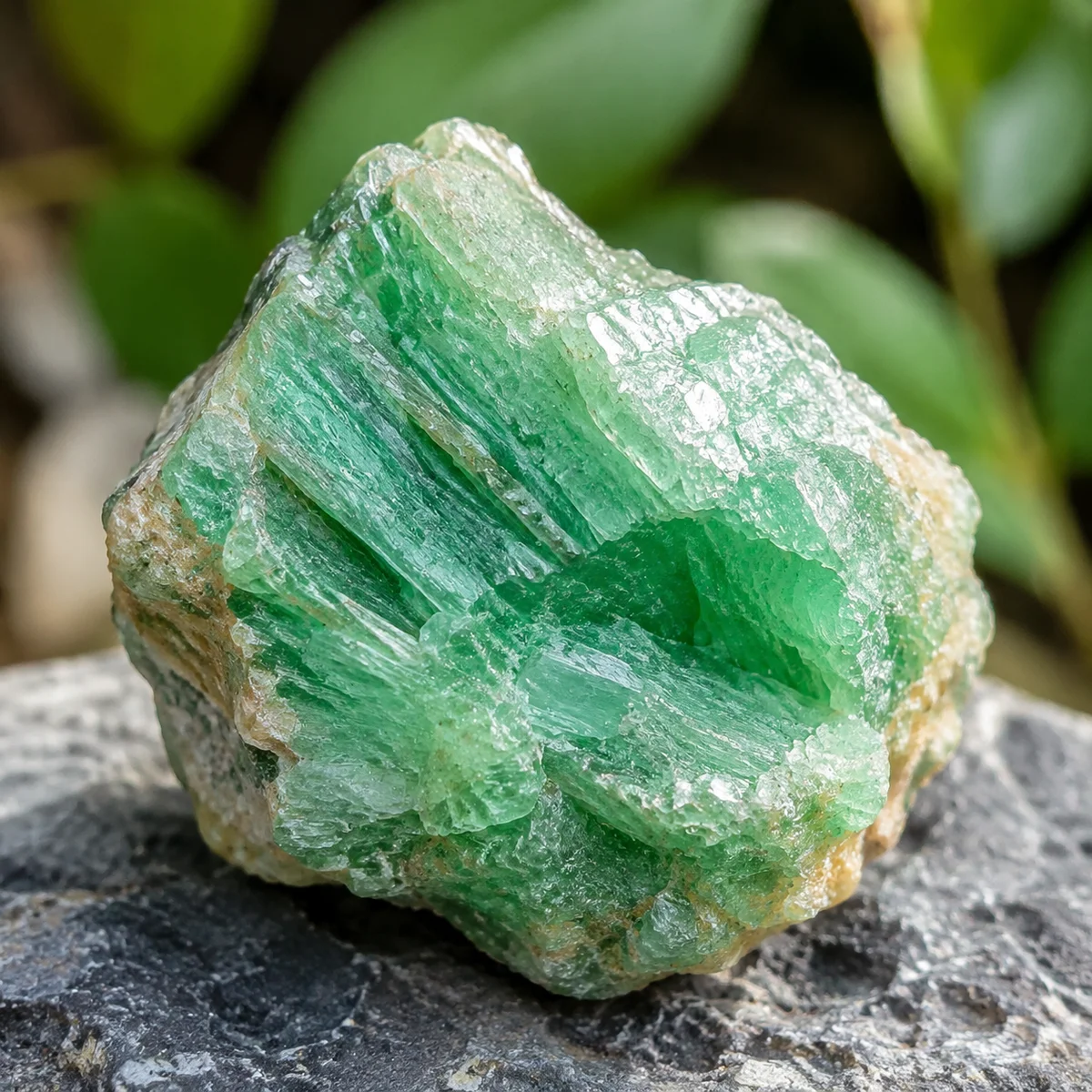
What Is Fuchsite?
Fuchsite belongs to the mica mineral family — the same group that gives us muscovite, biotite, and lepidolite. What sets fuchsite apart is its distinctive chrome-green color, which comes from trace amounts of chromium replacing aluminum in its crystal structure. The more chromium present, the deeper and more vivid the green becomes.
The mineral gets its name from Johann Nepomuk von Fuchs, an 19th-century German chemist and mineralogist. Fuchsite forms in metamorphic rocks, particularly in mica schists and gneisses, where heat and pressure transform existing minerals over geological time. You'll find it in Brazil, India, Russia, South Africa, and parts of the United States.
On the Mohs hardness scale, fuchsite sits between 2 and 3. That's quite soft — you can scratch it with your fingernail. This means fuchsite works well as a collector's specimen or display piece, but it's not suitable for everyday jewelry that takes knocks and bumps. If you do want to wear it, a pendant protected in a bezel setting is your safest bet.
Fuchsite vs. Aventurine: Spotting the Difference
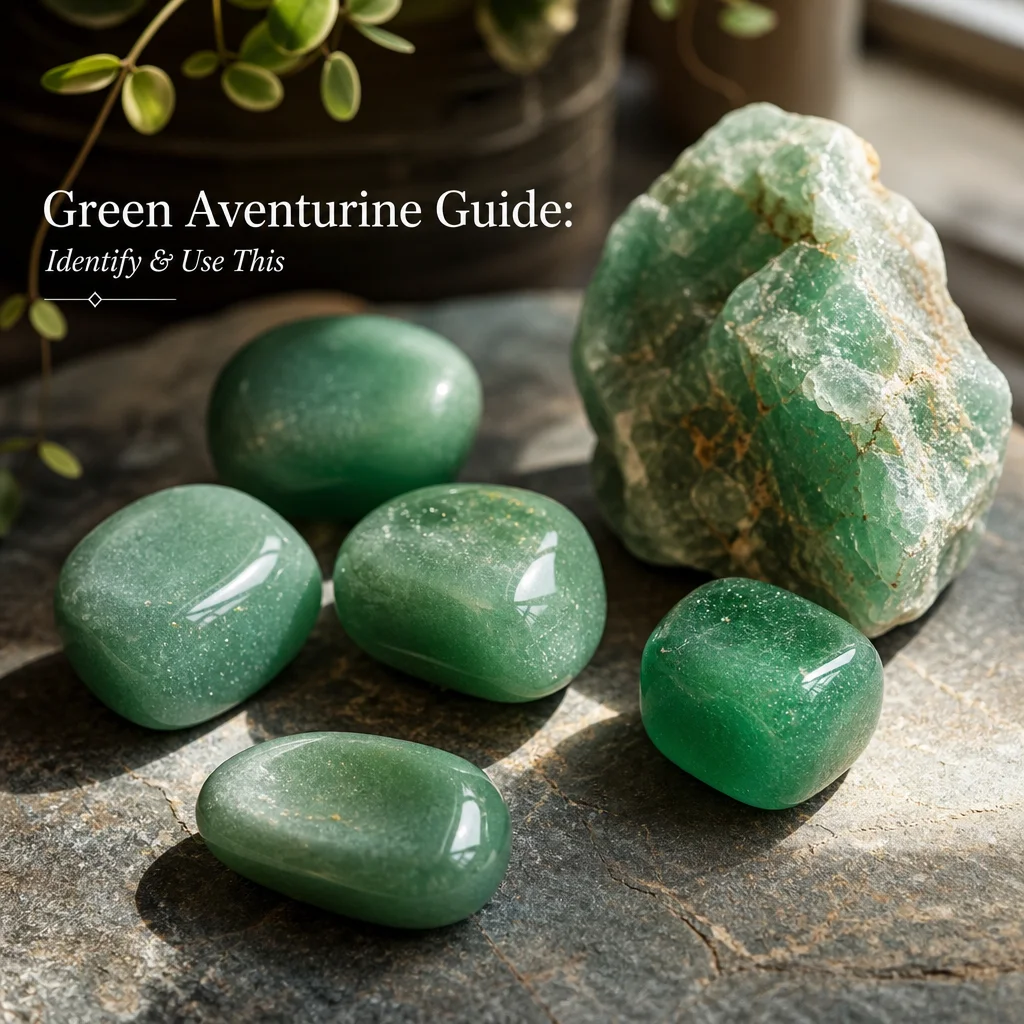
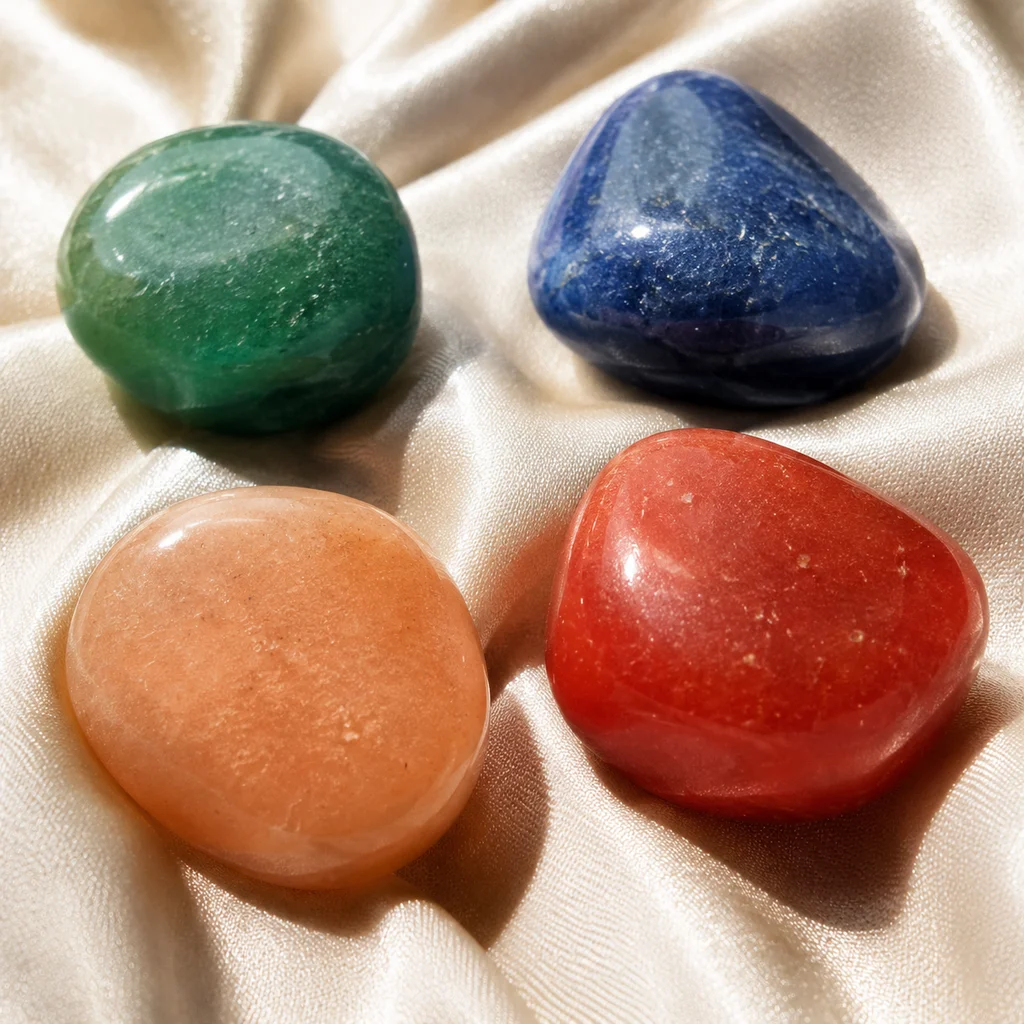
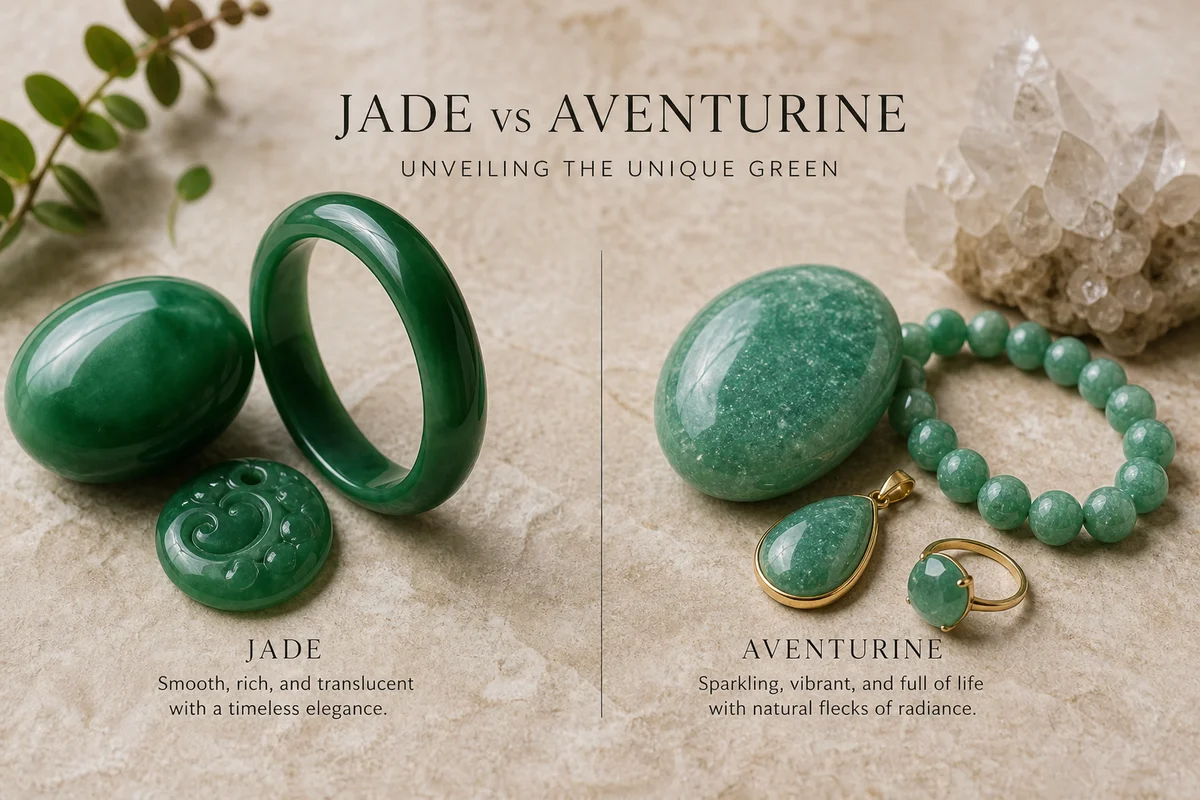
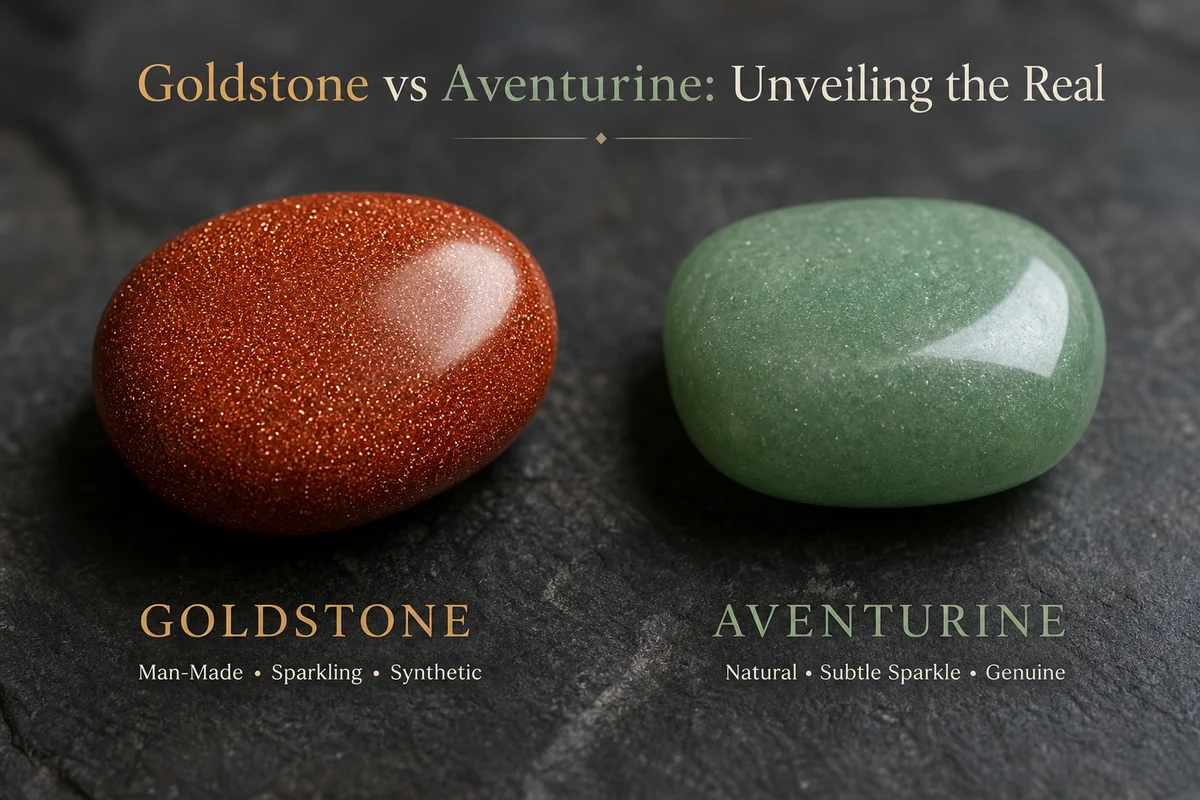
People confuse fuchsite with green aventurine all the time, and it's easy to see why — both are green, both contain chromium, and both show a sparkly, shimmering quality. But they're completely different minerals once you look closer.
Crystal structure: Fuchsite is a sheet silicate (phyllosilicate) with perfect basal cleavage, meaning it splits into thin, flexible sheets. Grab a piece and you can literally peel layers off with your thumb. Aventurine is a type of quartz — it's massive and granular, with no cleavage at all.
The sparkle: In aventurine, the shimmer (called aventurescence) comes from tiny platelets of fuchsite or mica suspended within the quartz matrix. In fuchsite itself, the sparkly effect comes directly from the mineral's layered crystal structure reflecting light. So in a way, fuchsite is the thing that makes aventurine sparkle.
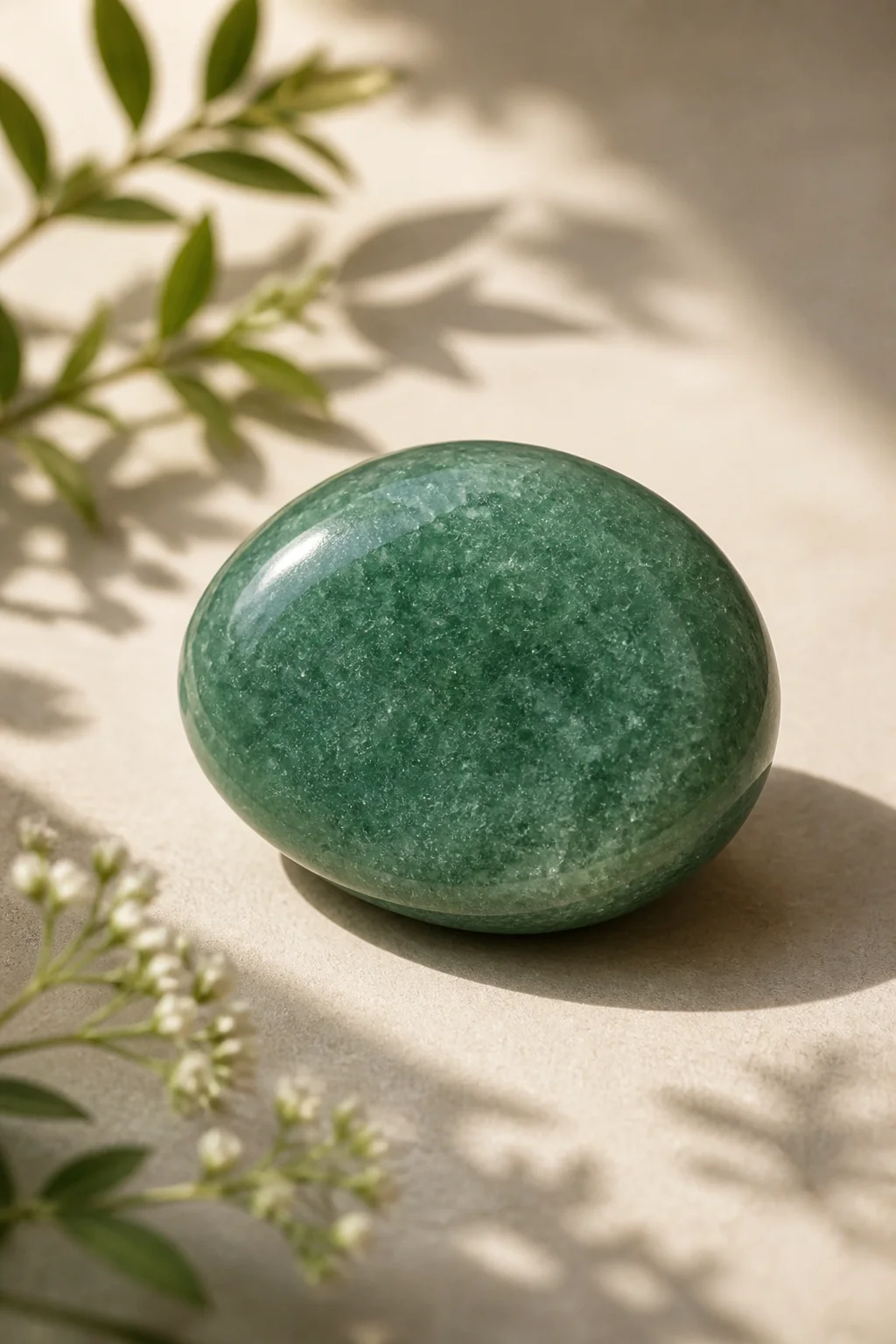
Texture: Fuchsite feels almost soapy or greasy when you rub it between your fingers, typical of mica minerals. Aventurine has the waxy, smooth feel characteristic of quartz.
Weight: Fuchsite is lighter for its size (specific gravity around 2.8) compared to aventurine (about 2.65 — close, but aventurine's quartz matrix makes it feel more dense and solid).
If you're buying specimens online and can't touch them, look at the photos carefully. Fuchsite specimens usually show obvious flaky, layered surfaces. Aventurine looks like a solid, semi-translucent stone with internal sparkles.
Ruby Fuchsite: When Two Minerals Meet
One of the most visually striking mineral combinations in the crystal world is ruby fuchsite. This occurs when ruby (red corundum) forms within or alongside fuchsite, creating a dramatic contrast of vivid red corundum crystals embedded in bright green mica.
This combination is especially common in material from India and South Africa. The geological process that creates it is fascinating: both minerals form in metamorphic environments where aluminum-rich rocks undergo intense heat and pressure. Chromium produces the green color in fuchsite and the red color in ruby — the same element creating completely different hues depending on which mineral host it enters.
Ruby fuchsite specimens are popular with collectors because they're genuinely beautiful and photograph well. The contrast between the metallic-green mica matrix and the translucent-to-opaque red ruby crystals creates pieces that look almost painted. Prices vary widely — small tumbled stones might cost a few dollars, while high-quality natural specimens with well-formed ruby crystals can reach hundreds.
Be aware that some material sold as "ruby fuchsite" is actually dyed or artificially colored. Natural ruby fuchsite has a specific look — the ruby inclusions are embedded within the mica matrix, often showing hexagonal crystal faces if well-formed. Dyed material tends to have uniform, unnaturally bright coloring that bleeds at edges.
Physical Properties and Identification
Here's a quick reference for fuchsite's physical properties:
- Chemical formula: K(Al,Cr)3Si3O10(OH)2
- Crystal system: Monoclinic
- Hardness: 2–3 on the Mohs scale
- Specific gravity: 2.8–2.88
- Luster: Vitreous to pearly
- Color: Pale green to deep emerald green (depending on chromium content)
- Streak: White to pale green
- Cleavage: Perfect on {001} — basal cleavage in one direction
The perfect one-directional cleavage is the single most useful identification feature. If you find a green, flaky mineral that splits into thin transparent sheets, it's almost certainly a mica — and if those sheets are distinctly green (not colorless like muscovite or dark like biotite), you're likely looking at fuchsite.
One thing to watch for: some dealers sell "fuchsite" that's actually green muscovite with iron staining. True fuchsite gets its color from chromium, which produces a more vivid, cooler green than the yellowy-green of iron-stained mica. Chromium fuchsite also maintains its color when viewed in thin sheets against light — iron-stained muscovite often appears much paler.
How Fuchsite Forms in Nature
Fuchsite typically forms during regional metamorphism of clay-rich or aluminum-rich sedimentary rocks. When these rocks are buried deep and subjected to temperatures of 300–500°C under high pressure over millions of years, the original clay minerals recrystallize into sheet silicates.
The chromium that colors fuchsite usually comes from the breakdown of chromium-bearing minerals in the parent rock. Ultramafic rocks (rocks rich in magnesium and iron, like peridotite) are common chromium sources. When these rocks interact with aluminum-rich fluids during metamorphism, chromium gets incorporated into the growing mica crystals.
The best fuchsite specimens often come from areas with complex geological histories involving multiple stages of metamorphism. Brazil's Minas Gerais state produces particularly fine material, as does the Zavalievsky deposit in Ukraine and various locations in Karnataka, India.
Displaying and Caring for Fuchsite
Because fuchsite is soft and has perfect cleavage, it requires some thought in display and care:
Display: Keep fuchsite specimens out of direct sunlight. While the chromium that gives it color is relatively stable, prolonged UV exposure can cause some mica minerals to fade over years. A glass display case or shelf away from windows works well. Specimens look best displayed at an angle where light catches the surface at a low angle, showing off the natural shimmer.
Handling: Minimize handling. The oils and acids from your skin won't damage the mineral itself, but they can dull the surface luster over time. If you do handle specimens, wash your hands first and avoid touching the faces you want to keep shiny.
Cleaning: Use a soft, dry brush (a makeup brush works great) to remove dust. Never soak fuchsite or use chemical cleaners — water can seep between the mica layers and weaken the structure. For stubborn dust, slightly dampen the brush, not the specimen.
Storage: Wrap individually in soft tissue or cotton, and keep separate from harder minerals. Quartz, feldspar, or calcite specimens stored touching fuchsite will scratch its surfaces during any movement.
Travel: If you want to bring a piece somewhere, wrap it generously in bubble wrap. Fuchsite is fragile in transit — the thin sheets can delaminate from vibration and impact.
Fuchsite in Metaphysical Practice
In crystal traditions, fuchsite is associated with the heart chakra and is often described as a stone of joy, emotional resilience, and renewal. Practitioners value it for what they consider its gentle, uplifting energy — a contrast to more intense heart-chakra stones like malachite or rhodonite.
Some people place fuchsite on their heart area during meditation, carry it as a pocket stone for emotional support, or keep it in workspaces they want to feel more positive and creative. Ruby fuchsite is sometimes used when someone wants to combine what they see as heart-opening energy (fuchsite) with vitality and passion (ruby).
These associations come from the mineral's cheerful green color and its connection to the heart chakra in color-based crystal traditions. There's no scientific evidence that minerals affect emotional states through energy fields, but many people find the practice of choosing and handling beautiful natural specimens meaningful regardless.
Buying Fuchsite: What to Look For
If you're shopping for fuchsite, whether as a specimen or for craft use, here's what matters:
Color intensity: The most sought-after pieces have rich, even green coloration. Very pale material is common and inexpensive. Deep emerald-green specimens command higher prices and tend to come from Brazil or India.
Sheet quality: Collectors prefer specimens with well-defined, large sheet surfaces that show the mineral's characteristic pearly luster. Ragged, crumbled material is less attractive but perfectly fine for craft projects.
Ruby inclusions: For ruby fuchsite, look for natural, well-formed ruby crystals visible in the matrix. Avoid material where the red spots look painted, smeared, or unnaturally uniform. Genuine ruby in fuchsite shows crystal faces, irregular shapes, and natural variation in red intensity.
Size: Larger intact sheets (several centimeters across) are rare and valuable. Most commercial material comes in smaller pieces or is tumbled.
Price range: Small tumbled stones run $2–5 each. Medium raw specimens (3–5 cm) cost $8–20. High-quality display pieces with ruby inclusions can reach $50–200 depending on size and aesthetic appeal.
Frequently Asked Questions
Can fuchsite go in water?
It's not recommended for extended periods. Water can seep between the mica layers and potentially weaken the structure. Brief contact is fine, but don't soak it or leave it in a bowl of water overnight.
Is fuchsite the same as verdite?
They're related but different. Verdite is a type of fuchsite-rich rock — essentially a mica schist where fuchsite is the dominant mineral. It's harder than pure fuchsite (Mohs 3–4) because of the interlocking mineral matrix, which makes it more suitable for carving. South African verdite is often carved into figurines and decorative objects.
Why is my fuchsite losing its shimmer?
Dust accumulation on the surface is the most common cause. A gentle dry brushing usually restores the luster. If the shimmer seems permanently diminished, the specimen may have been exposed to conditions that damaged the surface — abrasion from being stored against harder minerals, or chemical exposure.
Can I use fuchsite in resin jewelry?
Absolutely — this is one of the best uses for fuchsite flakes and small pieces. The thin, shimmering sheets look stunning suspended in clear resin for pendants and earrings. Just make sure the pieces are dry and dust-free before embedding them.
How do I tell real fuchsite from fake?
Real fuchsite has a specific flaky, layered texture and splits into thin sheets. If the material is solid (can't peel layers), it's probably aventurine or a dyed stone. Also check the price — genuine fuchsite is relatively affordable, so suspiciously cheap "high-quality" material may be dyed quartz or synthetic.

Comments