Aventurine Color Varieties and Meaning
What Is Aventurine
Aventurine is a form of translucent quartz distinguished by the presence of platy mineral inclusions that create a sparkling or glistening effect known as aventurescence. The word "aventurine" itself derives from the Italian "a ventura," meaning "by chance" — a reference to the accidental discovery in the 18th century that adding copper flakes to glass produced a similar sparkling material (now called goldstone). The natural stone, however, gets its shimmer from inclusions of mica, hematite, fuchsite, or other platy minerals that reflect light in a distinctive, glittering pattern as the stone is moved.
Chemically, aventurine is still essentially silicon dioxide (SiO₂) — the same mineral as clear quartz, amethyst, and citrine. What differentiates it is the presence of these inclusions and its typically granular, rather than crystalline, texture. Most aventurine is classified as macrocrystalline quartz rather than chalcedony, though some specimens occupy a transitional zone between the two. The stone forms through hydrothermal processes in igneous and metamorphic rock environments, where silica-rich fluids deposit quartz with entrained mineral particles over geological time scales.
On the Mohs hardness scale, aventurine ranks between 6 and 6.5, which is slightly softer than many other quartz varieties. This is because the mineral inclusions that create aventurescence can interrupt the crystal lattice, slightly reducing overall hardness. Despite this, aventurine is durable enough for most jewelry applications and takes a good polish when properly worked. The stone has a specific gravity of approximately 2.64 to 2.69 and a vitreous to waxy luster depending on the density and type of inclusions.
Green Aventurine
Green is by far the most common and commercially important aventurine color. The green coloration comes from inclusions of fuchsite — a chromium-rich variety of muscovite mica — which produces hues ranging from pale celery green to deep forest green. The density of fuchsite inclusions determines both the color intensity and the strength of the aventurescence: more inclusions create deeper green color and more pronounced sparkle, while fewer inclusions yield lighter, more subtle specimens.
The primary sources of green aventurine have shifted over time. Historically, the finest green aventurine came from the Ural Mountains of Russia, where large deposits were discovered in the 18th century and exploited for both ornamental stone and jewelry. Indian green aventurine, particularly from the Tamil Nadu region, has been the dominant source since the mid-20th century and currently supplies the majority of the world market. Indian aventurine tends to have a slightly more uniform green color compared to the more variably hued Russian material. Other significant sources include Brazil, Chile, and Tanzania.
In China, green aventurine has been worked for centuries under the name "Yushan jade" or "Indian jade." While not a true jade (jadeite or nephrite), green aventurine's translucent, green appearance made it a popular and affordable substitute in Chinese decorative arts. During the Qing Dynasty, aventurine was carved into snuff bottles, figurines, scholar's desk objects, and architectural decorative elements. The stone was valued for its pleasant green color, which evoked jade at a fraction of the cost, making jade-like aesthetics accessible to a broader market. Chinese artisans developed specific carving techniques for aventurine that took advantage of its granular texture — working with the grain of the stone rather than against it to produce smooth, flowing forms.
Blue Aventurine
Blue aventurine is considerably rarer than green and gets its color from inclusions of dumortierite, a blue aluminum borosilicate mineral, or in some cases from very fine-grained rutile or crocidolite fibers. The blue color ranges from pale, grayish-blue to deeper denim or navy tones. Because the inclusions that create the blue color are different from those in green aventurine, the aventurescence in blue specimens is often more subdued — a gentle, silky shimmer rather than the more overt sparkle of green aventurine.
The primary sources of blue aventurine include India, Brazil, and Russia, though fine specimens are uncommon in any location. The stone has gained popularity in recent decades as jewelry designers and collectors have sought alternatives to more common blue gemstones like lapis lazuli, sodalite, and blue chalcedony. Blue aventurine's unique combination of color, translucency, and aventurescence sets it apart from these alternatives — it has a softer, more organic quality than lapis, and its aventurescent shimmer adds visual interest that plain blue chalcedony lacks.
In contemporary lapidary work, blue aventurine is most often cut into cabochons for pendants, earrings, and rings. The stone's moderate hardness and occasional internal inclusions make it better suited to protective settings than to exposed designs like rings that might receive frequent impacts. Larger specimens are sometimes cut into decorative spheres, bookends, or display pieces that showcase the interplay of blue color and aventurescent sparkle across a broad surface.
Red and Peach Aventurine
Red aventurine derives its color from inclusions of hematite or goethite — iron oxide minerals that produce warm red, orange-red, and russet tones. The aventurescence in red aventurine is typically strong and visible, as the platy hematite inclusions are highly reflective. The color ranges from pale salmon to deep brick red, with the intensity depending on the concentration and particle size of the iron oxide inclusions.
Peach aventurine represents a transitional color between red and orange, often with a softer, more pastel quality. Some peach aventurine is naturally occurring, while other specimens are produced by mild heat treatment of yellowish or pale green aventurine, which causes trace iron content to oxidize and shift the color toward warm orange-peach tones. This treatment is subtle and produces colors within the natural range of aventurine, making it difficult to distinguish treated from untreated material without sophisticated laboratory analysis.
Red and peach aventurine have found particular popularity in bohemian and earth-toned jewelry styles. Their warm colors pair well with gold, bronze, copper, and natural materials like leather and wood. In beaded jewelry, red aventurine beads create rich, warm strands that complement both casual and dressy outfits. The stone is also used in carved decorative objects — particularly in Chinese lapidary traditions, where red aventurine has been carved into auspicious symbols, animals, and floral motifs.
White and Yellow Aventurine
White aventurine is relatively uncommon and displays a creamy to white color with subtle aventurescence from mica inclusions. It is the least commercially significant color variety but is sometimes sought by collectors who appreciate its understated, elegant appearance. White aventurine forms when the inclusion content is very low, producing only minimal coloration but still enough platy mineral content to generate aventurescence.
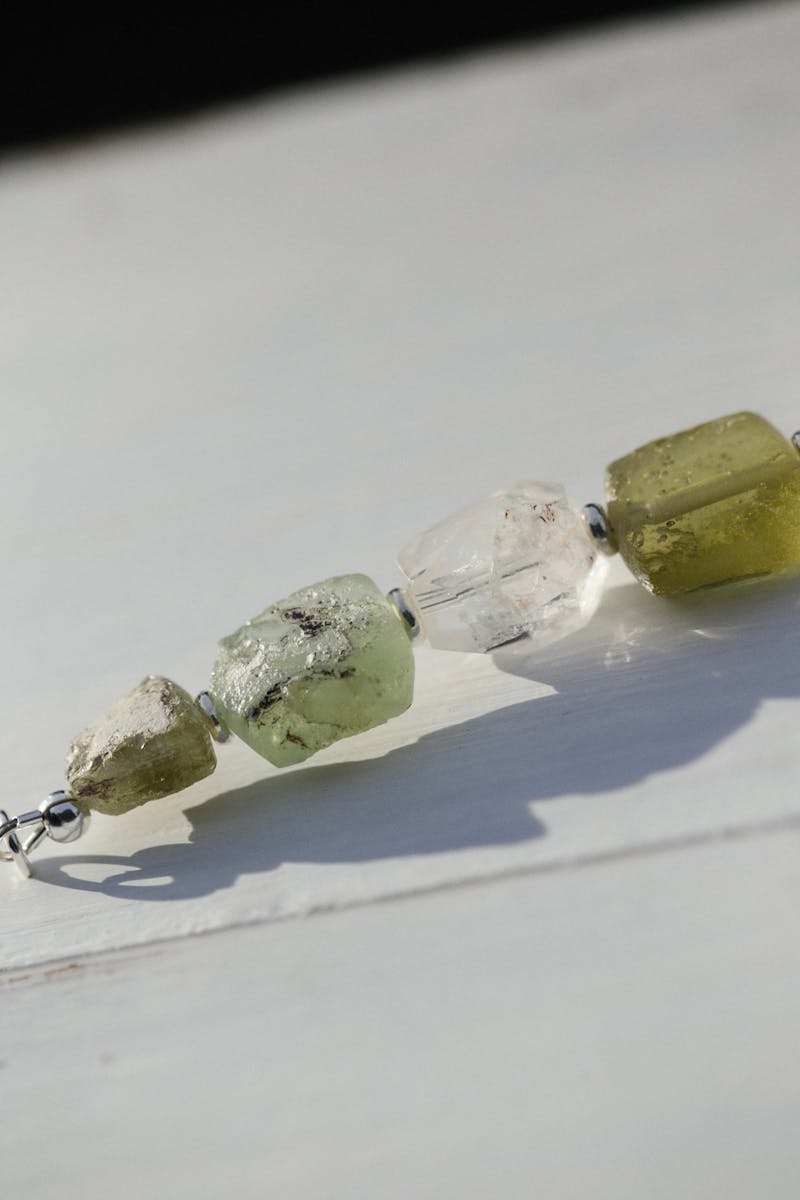
Yellow aventurine ranges from pale straw yellow to deeper gold and amber tones. The yellow color can come from several inclusion types — mica with iron content, goethite, or in some cases, tiny inclusions of pyrite that create a metallic sparkle in addition to the usual aventurescence. Indian deposits produce most of the yellow aventurine on the market, and the material is popular for its warm, sunny color that brightens jewelry designs. Yellow aventurine beads are commonly used in combination with other warm-toned stones — citrine, amber, carnelian, and tiger eye — in multi-stone necklaces and bracelets.
Aventurine in Jewelry and Crafts
Aventurine's combination of color, translucency, and aventurescence makes it a versatile material for both jewelry and decorative arts. In jewelry, the stone is used in beads, cabochons, carved pendants, and occasionally faceted stones (though faceting is challenging due to the stone's granular texture and inclusions). Beaded aventurine necklaces are among the most common jewelry forms, with green aventurine beads being particularly widespread in the fashion jewelry market.
Carving is another significant use for aventurine, especially in Chinese and Indian lapidary traditions. Aventurine is carved into figurines, ornamental vessels, snuff bottles, and decorative panels. The stone's translucency allows carvers to create depth effects by varying the thickness of the material — thinner sections appear lighter and more translucent, while thicker areas show deeper color. This property is exploited in Chinese carved aventurine pieces, where skilled artisans create landscapes, floral motifs, and mythological scenes that appear to glow from within when backlit.
In architectural and interior design, aventurine has been used as a decorative stone for centuries. The Russians, in particular, developed a tradition of aventurine paneling and inlay work during the 18th and 19th centuries. Large slabs of green aventurine were used for tabletops, fireplace surrounds, and wall panels in imperial palaces and aristocratic estates. While such large-scale use is rare today due to the increasing cost of high-quality material, aventurine tiles and small decorative panels are still produced for luxury interiors.
Care and Identification
Caring for aventurine is straightforward. The stone can be cleaned with warm soapy water and a soft cloth. Avoid ultrasonic cleaners and steam, as these can potentially damage the stone or loosen inclusions near the surface. Prolonged exposure to direct sunlight may cause some color varieties — particularly lighter greens and yellows — to fade over extended periods, so display specimens are best kept in moderate lighting conditions. Store aventurine separately from harder stones (above Mohs 7) to prevent scratching.
Identifying genuine aventurine involves checking for aventurescence, which should be visible as small, glittering reflections that move as the stone is turned. Imitations — usually glass with metallic flakes or dyed quartz — can be distinguished by several features: natural aventurine has a granular texture visible under magnification, while glass imitations show conchoidal fractures, gas bubbles, or molded seams. The aventurescence in natural aventurine tends to be more irregular and distributed throughout the stone, while imitations often show more uniform, artificially distributed sparkles. Weight can also be a clue — natural aventurine is denser than most glass substitutes.
When purchasing aventurine, color consistency and aventurescence strength are the primary quality factors. In green aventurine, look for even, pleasing green color with visible but not overwhelming sparkle. Avoid stones with large, dark inclusion patches that detract from the overall appearance. For rarer colors like blue or red, specimen quality is especially important — these varieties command higher prices and should be evaluated for color intensity, clarity, and aventurescence. As with all gemstones, buying from reputable dealers who can verify the stone's natural origin provides the best assurance of quality and authenticity.
Comments