Emerald Care Guide: How to Clean & Protect Th...
June 5, 2026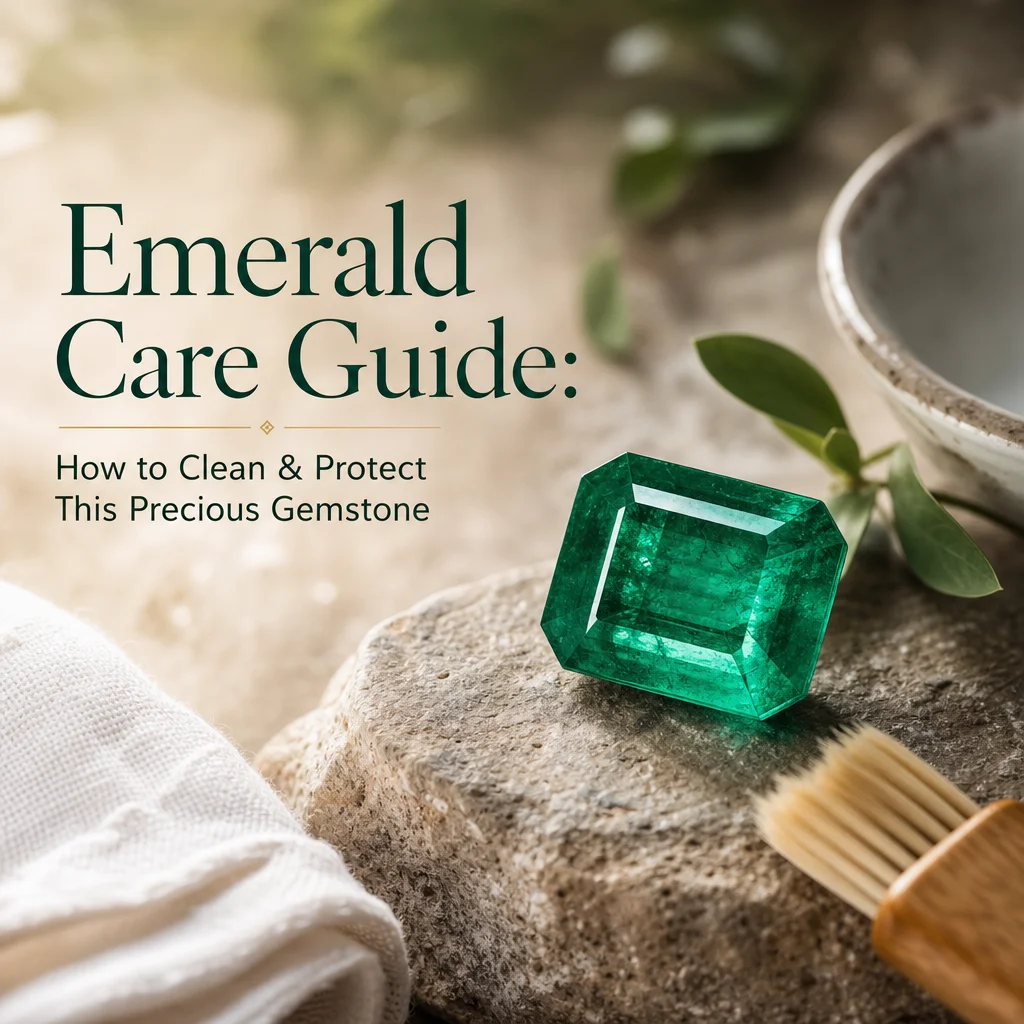
Why Emeralds Are Considered "Delicate" Despite Their Hardness
On paper, emeralds look tough. They score 7.5 to 8 on the Mohs hardness scale — harder than steel, harder than most gemstones you encounter in daily life. But hardness measures only resistance to scratching, not to breaking. The real story of emerald durability is more nuanced and explains why emerald care differs so dramatically from caring for sapphires, rubies, or even aquamarine (which is in the same mineral family).
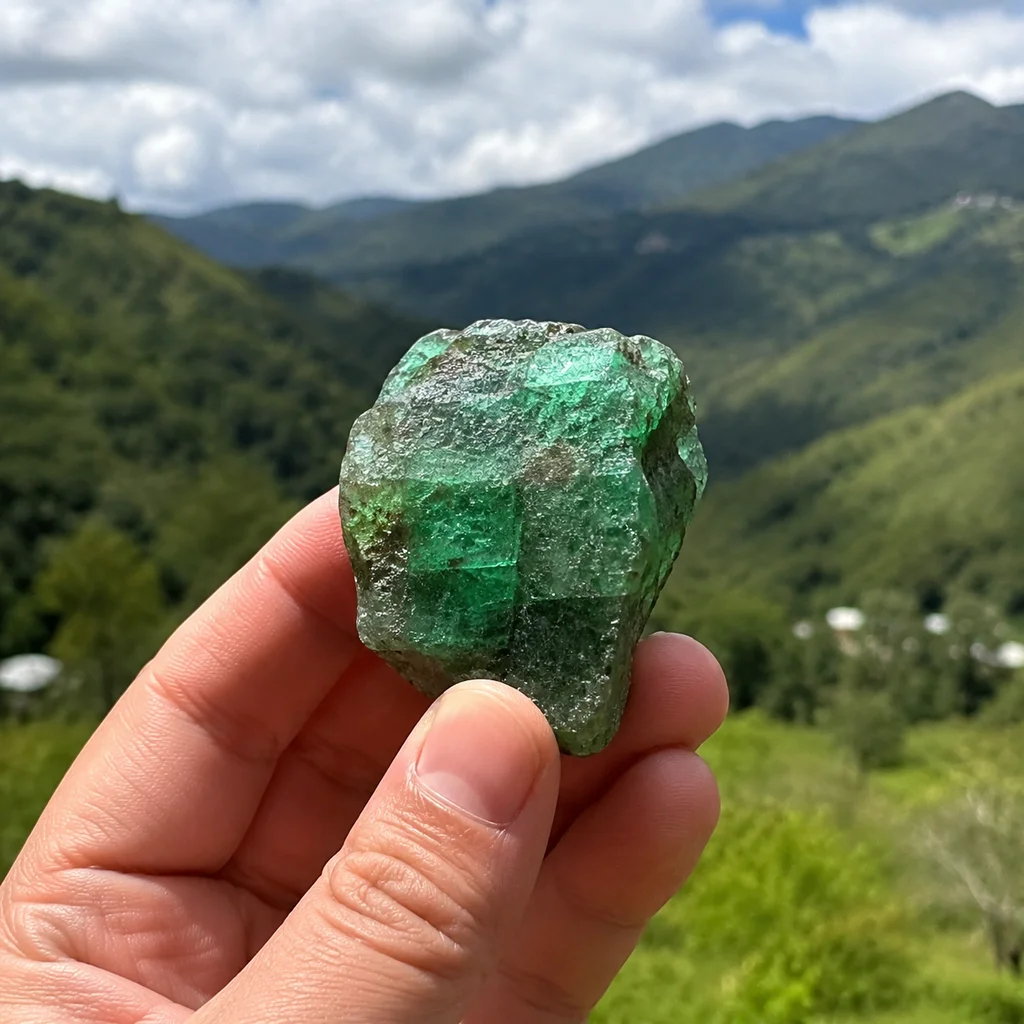
Emeralds are a variety of the mineral beryl, colored green by trace amounts of chromium and sometimes vanadium. During their formation deep underground, the crystallization process was frequently disrupted by geological activity — earthquakes, magma intrusions, tectonic shifts. These disruptions left the growing crystal with a network of internal fractures and inclusions that gemologists call "jardin" (French for garden), because under magnification they resemble a tiny overgrown garden of mossy threads and crystal fragments.
Almost every natural emerald on the market contains these inclusions. They are so characteristic that their presence is actually used to help verify that an emerald is genuine — a perfectly clean, inclusion-free green beryl is more likely to be a synthetic than a natural stone. But those same inclusions create internal weak points. A sharp impact, sudden temperature change, or even ultrasonic vibrations can propagate along these fracture lines, causing the stone to chip or crack. Understanding this internal fragility is the foundation of all emerald care.
The Right Way to Clean an Emerald
Emerald cleaning follows a simple but strict protocol: lukewarm water, mild soap, and a soft brush. That is it. Fill a bowl with water that is warm to the touch but not hot — around body temperature is ideal. Add a few drops of a mild, unscented dish soap (avoid anything with degreasers, bleach, or citrus additives). Dip a soft-bristled brush — a clean makeup brush or a very soft toothbrush — into the soapy water and gently scrub the emerald, paying attention to the setting where dirt accumulates in crevices.
Rinse thoroughly under running lukewarm water to remove all soap residue, then pat dry with a soft, lint-free cloth. Do not rub vigorously — gentle patting is sufficient. Allow the piece to air dry completely before storing. This simple routine, performed every couple of weeks for frequently worn pieces, is all most emeralds ever need.
If your emerald has been treated with oil or resin (as most commercial emeralds are), warm soapy water is still safe. The oil treatment penetrates into the surface-reaching fractures, while the soap only contacts the exterior surface. Avoid using any cleaning solutions that contain ammonia, vinegar, or alcohol — these solvents can strip the treatment from the fractures, leaving them visible as whitish lines and potentially weakening the stone's appearance.
What Will Destroy an Emerald: The Danger List
Knowing what to avoid is arguably more important than knowing the correct cleaning method, because some common jewelry care practices are specifically harmful to emeralds:
- Ultrasonic cleaners are the single biggest threat. The high-frequency vibrations generate pressure waves that propagate through the stone, and when those waves hit an internal fracture, they can cause it to extend. An emerald with a hidden internal flaw — and almost all of them have some — can crack or even shatter in an ultrasonic cleaner. Jewelers who should know better sometimes make this mistake, resulting in destroyed stones.
- Steam cleaning is equally dangerous. The combination of heat and pressurized water forces moisture into any surface-reaching fractures. When the stone cools, that trapped water expands or creates pressure differentials that stress the fracture network.
- Hot water causes thermal shock. Rapid temperature changes — dropping a cool emerald into hot water, or wearing an emerald ring while washing hands in hot water — create uneven expansion across the stone. The areas around inclusions expand at different rates than the clear beryl matrix, generating stress at every internal boundary.
- Chemical solvents strip treatments. Acetone, rubbing alcohol, turpentine, and even some commercial jewelry cleaners can dissolve or weaken the oils and resins used to fill surface-reaching fractures. When the filler is stripped, those fractures become visible as cloudy white lines, and the emerald loses much of its apparent clarity.
- Sudden impacts chip or fracture emeralds. Banging your hand against a door frame, dropping a ring onto a hard surface, or even sustained pressure from a tight ring being forced onto a finger can cause damage along internal fracture planes.
Understanding Oil and Resin Treatments
The vast majority of emeralds sold today have been treated with a filler — traditionally natural oils like cedarwood oil, and increasingly with synthetic resins like Opticon or Permasafe. These fillers are not meant to deceive; they are a standard and accepted practice in the emerald trade, acknowledged by major gemological laboratories including GIA. The purpose is simple: the fillers penetrate surface-reaching fractures and make them less visible, improving the stone's apparent clarity and color saturation.
Oil treatments are the traditional approach. Cedarwood oil has a refractive index close to that of emerald, so it renders fractures nearly invisible. However, oil is not permanent — it can dry out over months or years, it can be removed by heat or chemicals, and it can leak out if the stone is subjected to strong detergents or ultrasonic cleaning. When an emerald that was once clear and vibrant starts looking "cloudy" or develops visible whitish lines, it usually means the oil treatment has degraded and the stone needs re-oiling.
Resin fillers (like the trade-named Opticon) are more stable than oils. They are harder, more resistant to heat and chemicals, and last longer before needing replenishment. However, they also alter the stone more permanently — a resin-treated emerald cannot be re-treated with oil without first removing the resin, which requires specialized equipment. Re-oiling is a straightforward process any competent jeweler can perform: the emerald is heated gently, cleaned, and new cedarwood oil is worked into the fractures. Some emerald owners have their stones re-oiled every 1-3 years as preventive maintenance.
Choosing the Right Setting for Emerald Protection
The setting style of an emerald ring or pendant directly affects how well the stone is protected during daily wear. This is one area where design choices have practical consequences for durability.
Bezel settings offer the best protection for emeralds. A bezel is a thin strip of metal that wraps around the perimeter of the stone, creating a continuous rim that shields the girdle (the widest edge) from direct impacts. This style distributes force from bumps and knocks across the metal frame rather than concentrating it on the stone. Emeralds set in bezels can last decades of daily wear with minimal issues.
Prong settings are more common and show more of the stone, but they expose the vulnerable girdle and corners to direct contact. If you choose a prong-set emerald — and many beautiful pieces use this style — look for designs with at least four sturdy prongs (six is better) and protective metal "bumps" or a halo of small diamonds around the emerald. These features absorb the brunt of accidental contact.
For rings specifically, consider a lower-profile setting where the emerald sits close to the finger rather than elevated high above the band. A high-set emerald catches on doorframes, keyboard edges, and clothing far more often than a flush or semi-flush design. Pendant settings are generally safer than rings because the emerald hangs freely and is less likely to receive direct impacts during daily activity.
Daily Wear Habits That Protect Your Emerald
Beyond cleaning and storage, a few daily habits make a real difference in emerald longevity:
- Put your emerald jewelry on last and take it off first. This single habit prevents most chemical exposure from perfume, hairspray, lotions, and cosmetics — all of which can degrade oil treatments over time.
- Remove emerald rings before household chores. The combination of cleaning chemicals, hard surfaces, and incidental bumps makes household cleaning particularly hazardous for emeralds.
- Do not wear emeralds to the gym. The sustained pressure from gripping weights, the risk of impact, and perspiration all contribute to accelerated wear.
- Store emeralds separately from harder stones. Diamonds, rubies, and sapphires are harder than emeralds and will scratch them if they come into contact in a jewelry box. Use individual soft pouches or a divided jewelry case.
- Have settings checked annually. Loose prongs or a worn bezel allow the stone to shift, increasing the chance of chipping at a vulnerable edge. A quick check by a jeweler catches problems before they become expensive repairs.
How Emeralds Compare to Rubies and Sapphires in Durability
It is helpful to understand where emeralds sit relative to the other major colored gemstones, because many people assume all "precious" gemstones are equally tough. The three corundum varieties — ruby and blue, yellow, pink, and other sapphires — score 9 on the Mohs scale and have excellent toughness (resistance to breaking). They can be worn in active settings, cleaned ultrasonically, and subjected to conditions that would destroy an emerald.
Emeralds, at 7.5-8, are not dramatically softer on paper — you would still have difficulty scratching an emerald with anything except corundum or diamond. But their toughness rating is far lower because of the pervasive internal fractures. An emerald ring that looks identical in design to a sapphire ring will not survive the same level of daily abuse. This is not a defect — it is simply the nature of a mineral that formed under turbulent geological conditions.
For practical purposes, treat your emerald jewelry with roughly the same level of care as you would give a pearl or an opal: gentle cleaning, protective storage, avoidance of chemicals and impacts, and periodic professional inspection. The trade-off for that extra care is owning one of the most visually striking gemstones in existence — there is nothing else in nature quite like the deep, saturated green of a fine emerald.
Emerald Care Summary
- Clean only with lukewarm soapy water and a soft brush
- Never use ultrasonic or steam cleaners
- Avoid hot water, chemicals, solvents, and sudden temperature changes
- Store separately from harder gemstones in soft pouches
- Bezel settings offer better protection than prong settings
- Have oil-treated emeralds re-oiled every 1-3 years
- Inspect settings annually for looseness
- Put on after cosmetics, take off before physical activity
Emeralds have been treasured for over 4,000 years — Cleopatra famously claimed Egypt's emerald mines as her personal property. With appropriate care, your emerald can be just as enduring a treasure. The key is consistency: gentle cleaning, protective storage, and mindful daily habits will preserve both the beauty and structural integrity of this extraordinary gemstone for a lifetime.
Frequently Asked Questions
What causes an emerald to fade over time?
Exposure to direct sunlight, chemicals, and harsh cleaning solutions can cause emeralds to fade. Proper care and cleaning techniques are crucial in preserving their vibrant green color.
How can I identify if my emerald has been oiled or treated?
Look for signs of surface wear or oil spots, which may indicate an emerald has been oiled or treated. You can also take it to a professional gemologist for an official assessment.
Are emeralds more prone to cracking than other gemstones?
Yes, emeralds are more fragile due to their inclusions, making them more prone to cracking. This requires careful handling and protective measures when wearing.
Can I clean an emerald in an ultrasonic cleaner?
No, ultrasonic cleaners are not recommended for emeralds. The vibrations can dislodge inclusions or damage the stone's oil or resin treatment, so a soft brush and warm, soapy water should be used instead.
Is there a specific temperature at which emeralds should not be exposed?
Emeralds should avoid extreme temperatures. They are sensitive to rapid changes in heat, which can cause fracturing. Store your emerald jewelry away from direct sunlight or sources of intense heat.




Comments