Green Tourmaline: Verdelite Meaning, Properti...
June 5, 2026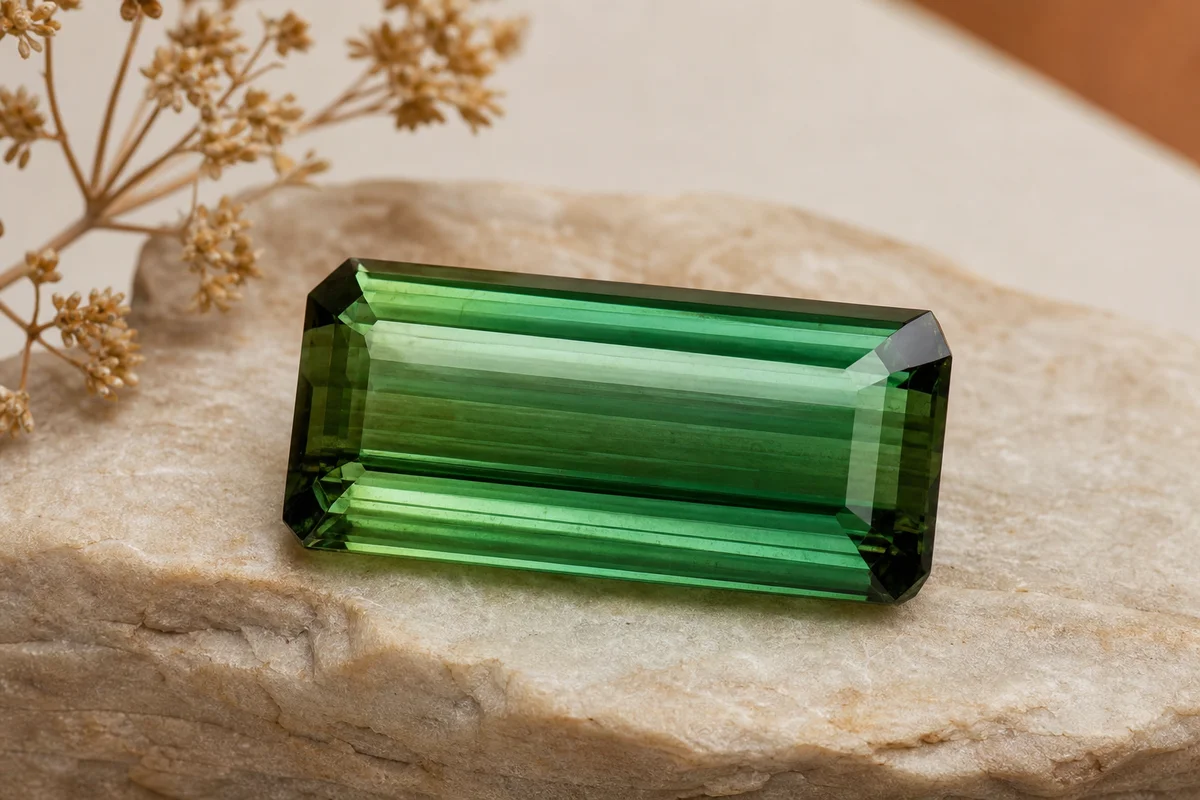
Understanding Green Tourmaline (Verdelite)
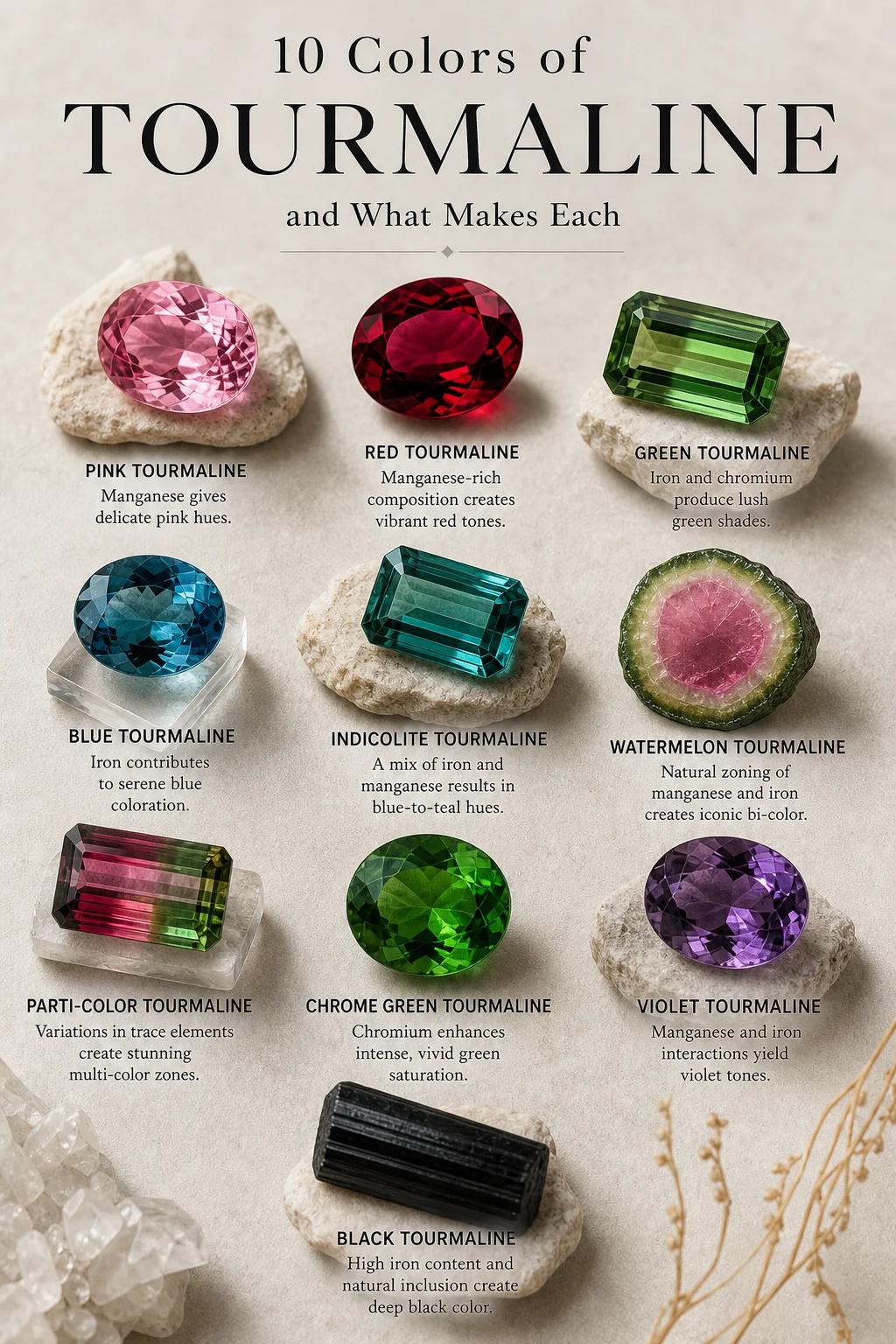
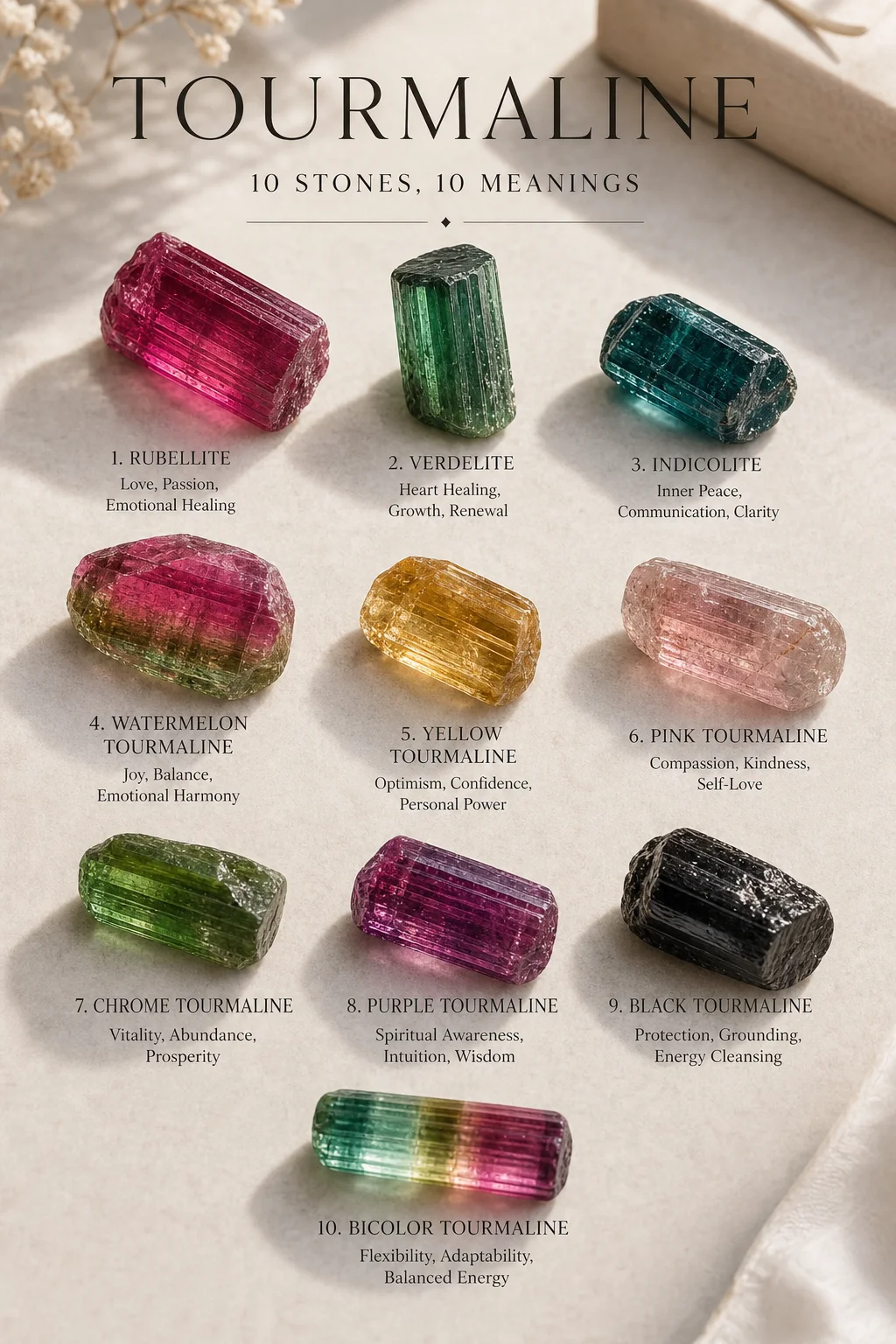
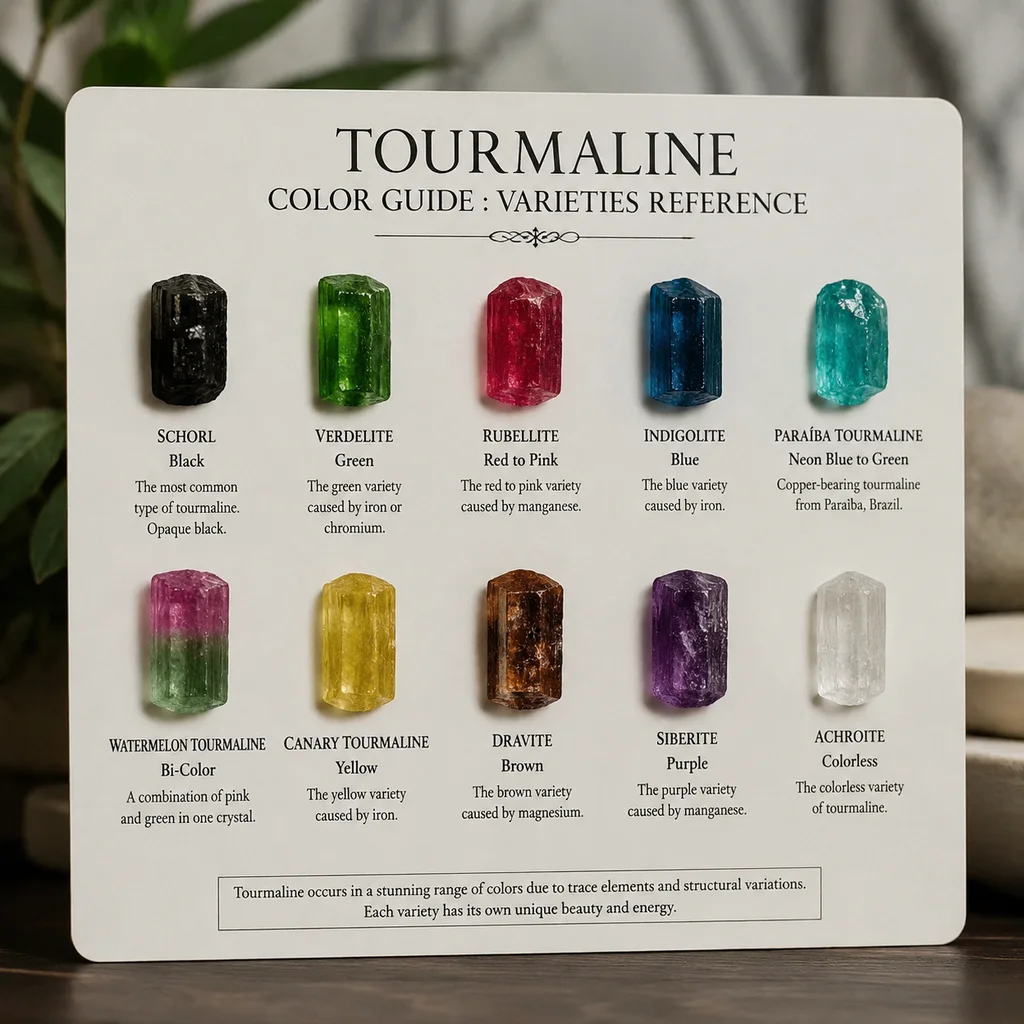
Green tourmaline, known in gemological circles as verdelite, is the most common color variety of the tourmaline mineral group. The name comes from the Latin "viridis" meaning green, and it was coined in the 19th century to distinguish the green specimens from tourmaline's many other color forms. Tourmaline as a whole is one of the most color-diverse gemstone families on Earth, with verdelite representing the green end of an extraordinary spectrum that includes pink (rubellite), blue (indicolite), watermelon, and bi-color varieties.
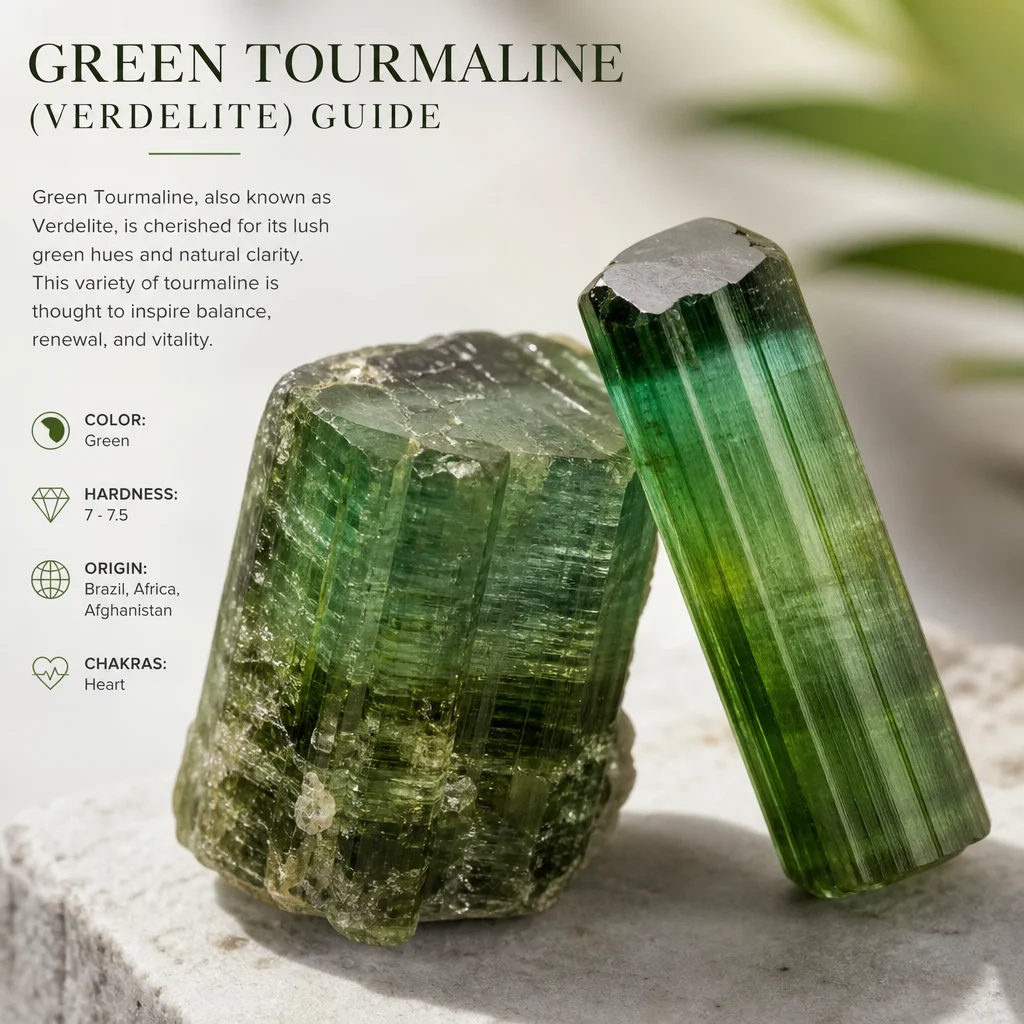
Verdelite ranges from pale, almost minty green to deep, saturated forest green, and everything in between. The finest specimens rival emerald in their intensity of color while exceeding it in durability. Unlike emerald, which is notoriously prone to chipping and cracking due to its many inclusions, green tourmaline rates 7 to 7.5 on the Mohs hardness scale, making it one of the toughest green gemstones available for daily-wear jewelry.
The color of green tourmaline comes from trace amounts of iron, copper, vanadium, or chromium within its crystal structure. Different elements produce different green shades: iron-rich verdelite tends toward olive, forest, and yellowish greens, while copper-bearing specimens can produce the coveted neon blue-green of Paraíba-type tourmaline. Vanadium creates vivid mint and emerald-like greens, and chromium produces deep, rich tones that can be virtually indistinguishable from fine emerald to the naked eye.
How Green Tourmaline Gets Its Color
The chemistry behind verdelite's green color is fascinating because multiple transition metals can create it, and the resulting shades vary dramatically. Iron (Fe²⁺ or Fe³⁺) is the most common chromophore, producing olive green to brownish green tones in most specimens. These are the most abundant and affordable green tourmalines on the market.
Copper creates the spectacular blue-green colors found in Paraíba and Mozambique copper-bearing tourmalines. While these specimens blur the line between blue and green, many copper-bearing stones are classified as green tourmaline when their primary hue shifts toward the green spectrum. These are among the most valuable tourmalines in existence, with prices reaching tens of thousands of dollars per carat for top-quality stones.
Vanadium and chromium produce the most emerald-like greens. Chromium-tinted verdelite is sometimes called "chrome tourmaline," and its color can be so close to emerald that only gemological testing (refractive index, specific gravity, and spectroscopic analysis) can distinguish the two. Chrome tourmaline is rare and commands significant premiums, though it remains more affordable than comparable-quality emerald in most cases.
Verdelite's Pleochroism and Color Behavior
One of green tourmaline's most distinctive gemological properties is its strong pleochroism. Tourmaline is a doubly refractive mineral with uniaxial negative optical character, and verdelite displays visible pleochroism — its color shifts depending on the viewing angle. Look at a green tourmaline from the top of the crystal, and you might see a deep, saturated green. Tilt it 90 degrees and view from the side, and the color may appear noticeably lighter, yellowish, or brownish.
This property is critical during the cutting process. An experienced cutter examines the rough crystal's pleochroic behavior under strong light before orienting it for cutting. The goal is to position the stone so that the most attractive color faces the viewer when the gem is set in jewelry. A poorly oriented cut can result in a green tourmaline that looks washed out or brownish in its final setting, even though the rough material was actually quite beautiful.
For jewelry buyers, understanding pleochroism helps explain why two green tourmalines of similar size and clarity can look quite different. The color you see in a well-cut stone has been optimized by the cutter, but the natural color variation within the crystal means some specimens simply have more range than others.
Major Mining Locations
Green tourmaline is mined on virtually every continent, with each locality producing characteristic color ranges and specimen types.
Brazil: The most prolific source of tourmaline in general, Brazil's Minas Gerais state produces enormous quantities of green tourmaline. Brazilian verdelite tends toward medium to dark green, often with yellowish or brownish undertones from iron content. The famous Cruzeiro and Corrego Frio mines have produced both commercial-grade material and exceptional collector specimens.
Namibia: Namibian green tourmaline from the Karibib district is known for its clean, bright green color with excellent clarity. Much of the material from this region contains chromium, producing the coveted "chrome tourmaline" with vivid emerald-like hues. Namibian stones are consistently high quality and command premium prices.
Afghanistan: The Nuristan region of Afghanistan produces some of the world's finest green tourmaline, particularly in the Laghman and Kunar provinces. Afghan verdelite often displays a distinctive blue-green to pure green color with outstanding clarity. Unfortunately, political instability has made mining sporadic, and stones from this origin carry both scarcity premiums and ethical sourcing concerns.
Mozambique: Mozambique has emerged as a major tourmaline producer in the 21st century, particularly for copper-bearing specimens that rival Brazilian Paraíba material. While most famous for its blue Paraíba-type tourmalines, Mozambique also produces significant quantities of fine green tourmaline with excellent saturation and clarity.
United States: California and Maine have historic tourmaline mines. Maine's Mt. Mica produced the first tourmaline discovered in North America (1820), including green specimens. California's deposits in San Diego County yielded notable material in the early 20th century. American green tourmaline is now primarily of collector interest rather than commercial production.
Green Tourmaline vs. Emerald
The comparison between green tourmaline and emerald comes up constantly because both are beautiful green gems, and verdelite is often positioned as an emerald alternative. Here's an honest comparison:
Color: At their finest, both stones can produce vivid, saturated green that's breathtaking. Emerald's green tends to be slightly more blue-green (from chromium and vanadium), while verdelite spans a wider range from yellow-green to blue-green to pure green. Chrome tourmaline comes closest to matching emerald's color profile.
Durability: This is verdelite's biggest advantage. Emerald rates 7.5-8 on the Mohs scale but is notoriously brittle due to ubiquitous inclusions and internal stress. Almost all emeralds on the market have been fracture-filled with oils or resins to improve apparent clarity. Green tourmaline at 7-7.5 is slightly softer but far tougher — it rarely has the structural weakness that plagues emerald, and it never needs clarity enhancement treatments.
Price: Fine emerald is one of the most expensive gemstones in the world, routinely exceeding $10,000 per carat for stones over 2 carats with good color and moderate clarity. Fine green tourmaline, even chrome tourmaline, typically costs a fraction of comparable emerald — often $500-2,000 per carat for excellent stones. This makes verdelite an exceptional value for green gemstone lovers.
Value Perception: Emerald has the name recognition and cultural prestige. When people think of a green gemstone, emerald is what most imagine. Green tourmaline is less known to the general public, which means it lacks emerald's social cachet but also avoids the markups that come with that prestige. For someone who values beauty and durability over brand recognition, verdelite is arguably the smarter choice.
Verdelite in Crystal Healing and Metaphysics
In crystal healing traditions, green tourmaline is associated with vitality, prosperity, and physical regeneration. Unlike rose quartz's soft, emotional energy or amethyst's spiritual focus, verdelite is described as having an earthy, life-force quality — like the energy of a healthy forest or a vigorously growing vine.
The prosperity association is one of the most popular reasons people seek out green tourmaline. In feng shui and crystal manifestation practices, green stones in general connect to abundance, and verdelite's deep, rich green is considered particularly powerful for attracting wealth and opportunity. Practitioners place green tourmaline in the southeast corner of their home or workspace (the wealth position in feng shui's bagua map) or carry it in their wallet or purse.
For physical healing, verdelite is associated with the heart chakra and the physical heart. It's recommended for people recovering from illness or surgery, with the belief that its vital energy supports the body's regenerative processes. Some practitioners use green tourmaline in crystal layouts on the chest area during meditation, combining it with rose quartz for emotional healing or aventurine for general well-being.
Jewelry Applications
Green tourmaline's excellent durability (7-7.5 Mohs) makes it suitable for virtually all jewelry applications. It performs well in rings (with protective settings for larger stones), pendants, earrings, bracelets, and brooches. The wide color range means it pairs naturally with both yellow and white metal settings.
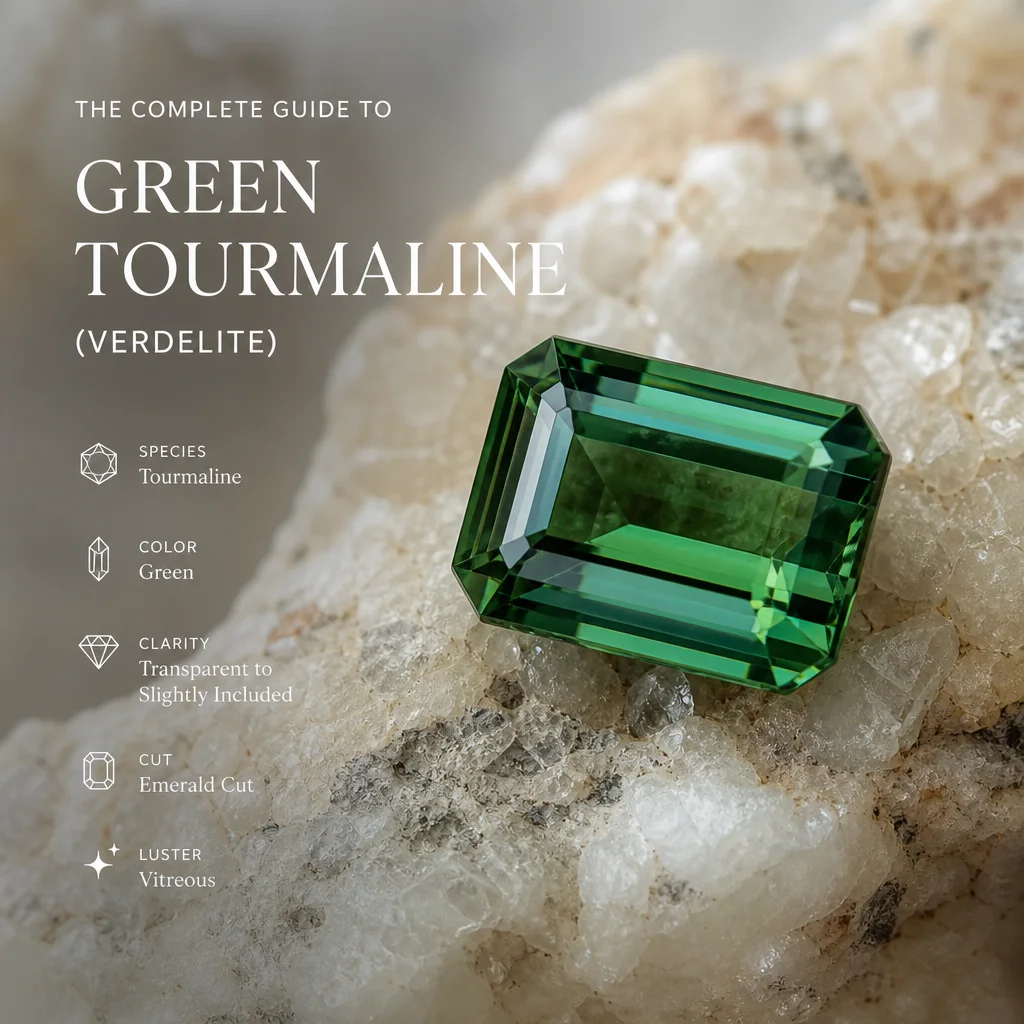
Smaller stones (under 2 carats) are often faceted in standard round or oval cuts and set in cluster or halo designs. Larger, cleaner specimens with vivid color are sometimes cut in fancy shapes — cushion, emerald-cut, or even carved cabochons for designers who want to showcase the stone's natural beauty. Watermelon tourmaline slices, which show both pink and green in the same stone, make particularly striking pendant and ring centerpieces.
For everyday wear, green tourmaline in a bezel setting offers maximum protection while looking clean and modern. Prong-set stones work well but should have adequate coverage to protect the girdle. Green tourmaline rings should ideally be set in platinum, 14k or 18k gold, or high-quality sterling silver — soft metals like 10k gold or low-grade silver don't provide adequate security for this valuable stone.
Caring for Green Tourmaline
Green tourmaline is a remarkably easy gemstone to maintain. Warm soapy water and a soft brush handle routine cleaning perfectly. Ultrasonic cleaners are generally safe for tourmaline with no fractures, but steam cleaning should be avoided as sudden temperature changes can stress the stone. Remove green tourmaline jewelry before exposure to harsh chemicals, including household cleaners, chlorine, and perfume.
Store green tourmaline separately from harder stones like sapphire or diamond to prevent scratching, and separately from softer stones to avoid scratching them. A fabric-lined jewelry box or individual soft pouches provide ideal storage. The stone is chemically stable and won't be affected by normal temperature variations, but like all gemstones, it appreciates being treated with basic care and respect.
Frequently Asked Questions
Is green tourmaline rare?
Green tourmaline itself is quite common — it's the most abundant color of tourmaline. However, fine-quality specimens with vivid, saturated color and excellent clarity are much rarer and more valuable. Chrome tourmaline and copper-bearing green tourmaline are genuinely rare and command significant prices.
Can green tourmaline be worn every day?
Yes, green tourmaline is excellent for everyday wear. Its hardness of 7-7.5 and good toughness make it suitable for rings, bracelets, and necklaces worn daily. Just use common-sense care: remove before heavy manual work, avoid chemical exposure, and clean regularly.
How can I tell if my green tourmaline is real?
The most reliable way is professional gemological testing. However, green tourmaline has strong pleochroism that you can observe by rotating the stone under a strong light — the color should visibly shift between different faces. It's also heavier than glass (specific gravity around 3.06-3.26) and doubly refractive, meaning back facet edges appear doubled when viewed through the table with a loupe.
Frequently Asked Questions
What chakra is green tourmaline associated with?
Green tourmaline, or verdelite, is deeply connected to the heart chakra. Wearing this vibrant crystal in a handcrafted SagStone pendant or ring helps to unblock and activate this energy center. It promotes compassion, emotional healing, and the courage to follow your heart's true desires.
How should I clean my green tourmaline jewelry?
To keep your artisan green tourmaline pieces looking their best, gently wipe them with a soft, damp cloth and mild soap. Avoid harsh chemicals and ultrasonic cleaners, as natural crystals can be sensitive. Store your handcrafted SagStone jewelry in a soft pouch to prevent scratches.

Comments