How to Tell if an Emerald Is Real: 8 Tests Yo...
June 5, 2026
Why Identifying Real Emeralds Matters
Emeralds are among the most counterfeited gemstones in the world. The market is flooded with glass imitations, dyed quartz, synthetic beryl grown in labs, and composite stones made from fragments glued together under high pressure. At $2,000–$10,000+ per carat for fine natural stones, the financial incentive for fakes is enormous.
You don't need a gemology lab to spot most fakes. The following eight tests can be done at home with basic tools — a magnifying glass, a light source, and in one case, an inexpensive Chelsea filter. Together, they give you a solid assessment of whether an emerald is likely genuine.
Test 1: The Jardin Inclusion Check
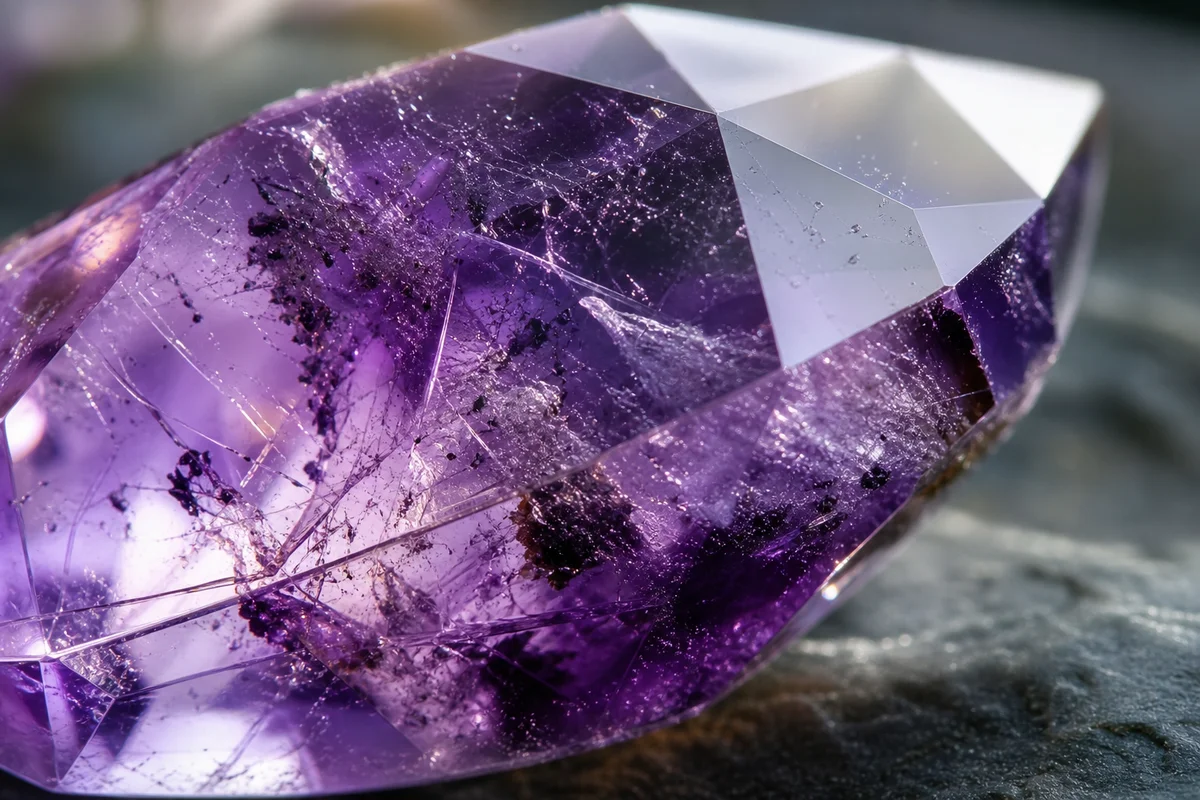
This is the single most revealing test and should always be your first step. Natural emeralds almost always contain visible inclusions — tiny crystals, liquid-filled cavities (called two-phase inclusions), growth tubes, and fractures. These internal features are so characteristic of natural emeralds that French gemologists named them jardin, meaning "garden," because they resemble a miniature garden of plants and pathways.
Hold the stone under a strong light and examine it with a 10x jeweler's loupe or magnifying glass. Look for:
- Fibrous or needle-like inclusions — often tremolite or actinolite crystals trapped during growth
- Three-phase inclusions — tiny cavities containing a liquid, a gas bubble, and a solid crystal, which are diagnostic of Colombian emeralds
- Healed fractures — zigzag or angular lines where the crystal cracked and then continued growing, sealing the break with new material
- Growth zoning — subtle color bands showing the stone's formation history
If the stone is completely clean and flawless under 10x magnification, it's almost certainly synthetic or glass. Genuine mined emeralds with no visible inclusions at 10x are extraordinarily rare and would command prices far beyond what most consumers encounter.
Test 2: The Chelsea Filter Reaction
A Chelsea filter is a small, inexpensive optical filter (around $15–$25 online) that transmits deep red light while blocking green. When you view an emerald through it, genuine Colombian emeralds typically flash red or pinkish-red because they contain trace amounts of chromium, which fluoresces in red wavelengths. This reaction is caused by the chromium ions in the beryl crystal lattice.
However, this test has important limitations:
- Not all natural emeralds turn red — stones from Zambia, Russia, and Madagascar often contain vanadium instead of chromium, and they may appear green or only faintly pinkish through the filter
- Some synthetics also turn red — lab-grown emeralds with chromium content will pass this test just like natural stones
- Green glass does not turn red — it stays dark or green, which makes the filter useful for eliminating the most common fake
Think of the Chelsea filter as a screening tool, not a definitive test. A red flash supports (but doesn't prove) authenticity. No red flash doesn't disprove it — the stone might simply be vanadium-dominant.
Test 3: Refractive Index Testing
Emerald has a very specific refractive index (RI) of 1.577–1.583, which is a measurable property of how light bends as it passes through the stone. A digital refractometer (available for $50–$100) can give you this reading.
Place the stone flat on the refractometer's contact surface with a small drop of contact fluid. The device will display the RI value. Genuine emerald should read between 1.577 and 1.583. Glass imitations typically read 1.48–1.52, and synthetic spinel reads around 1.72 — both well outside the emerald range.
If you don't have a refractometer, you can observe a related phenomenon: hold the stone close to printed text and look through it. Real emeralds have relatively low dispersion, so text viewed through a well-cut stone appears reasonably sharp (though with some blur). High-dispersion fakes like synthetic corundum will split the text into rainbow colors.
Test 2: Hardness Testing
Emerald ranks 7.5–8 on the Mohs scale. It can scratch glass (which is about 5.5) and can be scratched by a sapphire file (9) or corundum. This gives you a useful bracket.
Practical approach: Try to scratch a piece of unglazed ceramic (like the back of a tile) or glass with the stone. If it scratches easily, the stone is harder than glass, which is consistent with emerald. If it doesn't scratch at all, you might be looking at plastic or a very soft imitation.
Be careful with this test — it can damage both the test surface and the stone if done aggressively. Use light, controlled pressure on an inconspicuous area of the stone or on the girdle edge (the thin border between the crown and pavilion facets).
Test 5: Color and Fire Observation
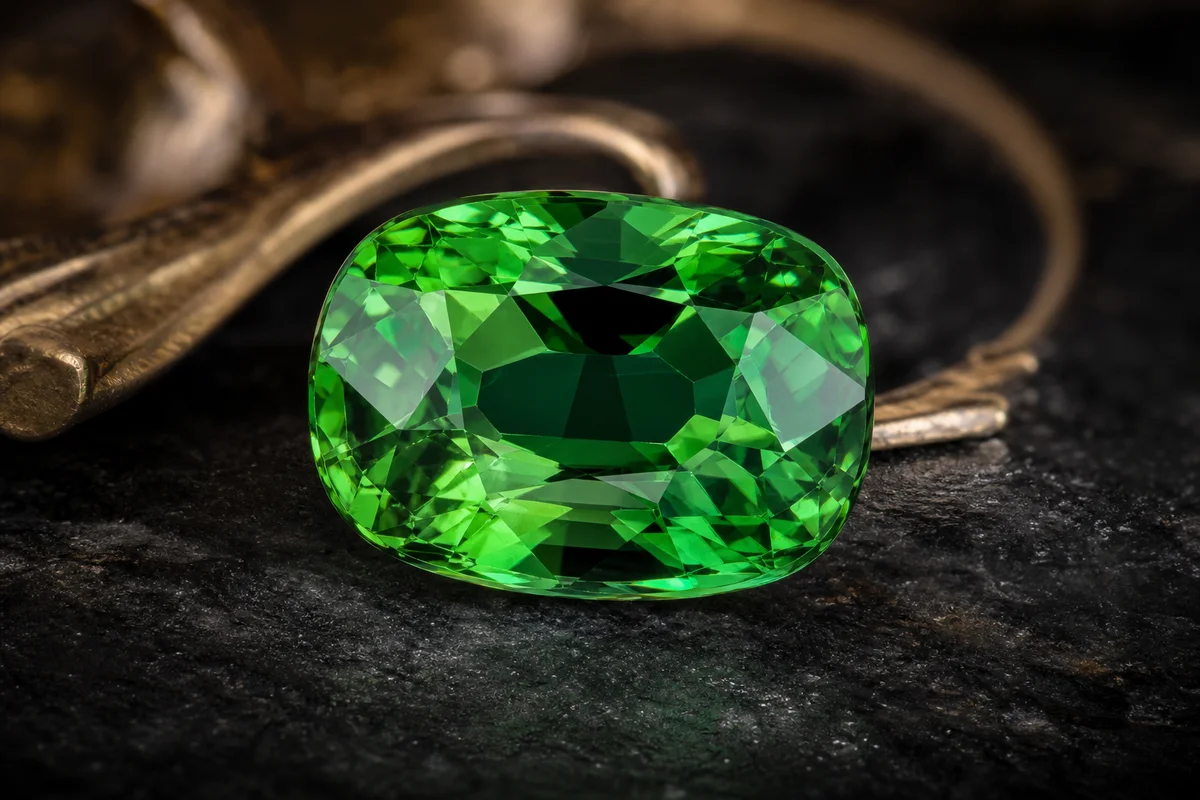
Natural emeralds have a distinctive color profile — deep, saturated green that often includes secondary blue or yellow undertones. The most prized color is a vivid bluish-green, which Colombian stones are famous for. Natural emeralds generally have low fire (dispersion), meaning they don't display rainbow flashes of color when tilted in light.
Common fakes that give themselves away through color behavior include:
- Glass fakes — often show orange or red "fire" that real emeralds lack, and the color tends to be unnaturally uniform throughout
- Dyed quartz — color concentrates in fractures and surface scratches, visible as concentrated green lines under magnification
- Synthetic emerald — color can be too perfect, too evenly distributed, and often slightly different in tone from any natural source
Compare the suspect stone side by side with a known genuine emerald if possible. The eye is surprisingly good at detecting subtle differences in green tones that are hard to describe in words.
Test 6: Specific Gravity (Density) Test
Emerald has a specific gravity of 2.67–2.78. You can estimate this at home using a simple water displacement method if you have a kitchen scale and a graduated container.
Weigh the stone in air, then weigh it while suspended in water. Divide the air weight by the difference between air and water weights. Genuine emerald will give a result between 2.67 and 2.78. Glass (around 2.4–2.5) and plastic (1.0–1.5) will read significantly lower. Synthetic spinel (3.6) will read higher.
This test works best for loose stones. Mounted jewelry makes accurate water weighing difficult because you're measuring the setting too.
Test 7: UV Fluorescence Check
Most natural emeralds show little to no fluorescence under ultraviolet light. When they do fluoresce, it's typically a weak red due to chromium content. This is actually a useful negative test:
- Strong fluorescence — especially bright green or blue — suggests a non-emerald mineral. Green glass often fluoresces green under shortwave UV
- No fluorescence — consistent with natural emerald, but also consistent with many synthetics
- Weak red fluorescence — supportive of chromium-bearing natural emerald
A cheap UV flashlight ($5–$10) works for this test. View the stone in a dark room under both longwave (365nm) and shortwave (254nm) UV.
Test 8: Oil Treatment Detection
This test isn't about authenticating the stone itself, but about assessing its treatment status. Roughly 95% of commercial emeralds have been treated with cedar oil or synthetic resin to fill surface-reaching fractures and improve apparent clarity. This treatment is industry-standard and widely accepted, but it should be disclosed.
To detect oil treatment, gently heat the stone with a hairdryer on low for 10–15 seconds, then examine the surface under magnification. Oil may seep slightly from fractures, visible as a slight sheen or wetness along crack lines. A hot needle tip (carefully!) touched near a surface fracture may produce a faint wisp of smoke if oil is present.
Red Flags Summary
- Perfectly clean under 10x magnification — likely synthetic or glass
- Too cheap for the claimed quality — natural emeralds above 1 carat with good color are rarely under $500
- Strong green fluorescence under UV — not typical of natural emerald
- Color concentrated in scratches and fractures — likely dyed material
- Refuses to scratch glass — too soft to be emerald
- Every surface-facing fracture visible at once — may be a composite (fragments glued together)
For high-value purchases, always insist on certification from a recognized gemological laboratory like GIA, AGL, or Gübelin. Home tests are excellent for screening, but only a lab can provide definitive identification.
Frequently Asked Questions
Can a real emerald have no inclusions at all?
Extremely rare, but not impossible. Stones from certain deposits (like the Sandawana mine in Zimbabwe) can be remarkably clean. However, if a supposedly natural emerald over 1 carat shows zero inclusions at 10x magnification and costs under $1,000, it should be treated with significant suspicion.
Do synthetic emeralds pass the Chelsea filter test?
Many do. Synthetic emeralds grown by the flux or hydrothermal method often contain the same chromium that causes the red flash. The Chelsea filter cannot distinguish between natural and synthetic emerald.
Is oil-treated emerald still "real"?
Yes. Oil treatment is a standard, accepted practice in the emerald trade. The stone is still natural emerald — the treatment just fills tiny fractures to improve appearance. The key is disclosure: you should know whether the stone is untreated, oil-treated, or filled with more permanent resin.
Frequently Asked Questions
How can I test an emerald at home without tools?
While professional gemologists use advanced tools, you can do a few simple tests at home. Examine the stone for natural inclusions under a bright light—real emeralds have a mossy look called "jardin." You can also check its hardness by safely seeing if it scratches glass. However, for absolute certainty, always rely on a certified appraisal from a trusted artisan jeweler.
Will a real emerald scratch easily?
No, genuine emeralds are quite durable, ranking 7.5 to 8 on the Mohs scale of hardness. However, because they naturally form with microscopic inclusions, they can be slightly brittle if struck hard. If your stone scratches incredibly easily, it is likely glass. At SagStone, we carefully set our authentic emeralds in our handcrafted settings to protect their natural beauty.
Comments