How to Choose an Engagement Ring Stone Beyond the Diamond
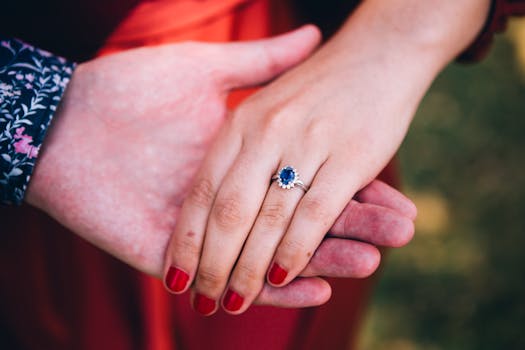
The diamond default is starting to crack
Diamonds have dominated engagement rings for less than a century. De Beers' "A Diamond is Forever" campaign launched in 1947 and was so effective that it fundamentally rewired cultural expectations around engagement jewelry. Before that, engagement rings used all sorts of stones — rubies, sapphires, emeralds, opals. Princess Diana's sapphire engagement ring in 1981 was considered unusual at the time. Now, colored stones make up an estimated 15-20% of engagement ring sales in the US, and that number is climbing every year.
There are good reasons to look beyond diamonds. Price is an obvious one — a 1-carat diamond with decent clarity and color starts around $5,000-$8,000, and prices escalate steeply from there. But cost isn't the only factor. Some people simply prefer color. Others have ethical concerns about diamond mining. Some want a stone with more visual character — inclusions that look like galaxies, color shifts under different lighting, or a history that a laboratory-grown diamond can't replicate.
Let's walk through the most compelling alternatives, what makes each one unique, and where each one falls short.
Sapphire: the most practical colored stone
If there's one colored stone that can match diamond's everyday durability, it's sapphire. Corundum (the mineral family that includes both sapphire and ruby) scores 9 on the Mohs hardness scale — second only to diamond at 10. Sapphire rings don't scratch easily, don't chip under normal wear, and can be cleaned with the same methods as diamond jewelry.
Sapphires come in every color except red (which is ruby). Blue is the most traditional choice, but padparadscha (pink-orange), yellow, and even color-change sapphires have their fans. A high-quality blue sapphire with strong saturation and good clarity can look absolutely striking in a ring setting.
Price-wise, sapphires vary wildly. A commercial-quality blue sapphire might cost $200-$500 per carat. A fine-quality, well-cut stone from a reputable source like Sri Lanka or Madagascar can run $1,000-$5,000 per carat. The range is enormous, which means you can find something beautiful at almost any budget — but you need to know what you're looking at.
The main downside is that most sapphires are heated to improve their color. Unheated sapphires with natural, vivid color are rare and expensive. Heat treatment is stable and widely accepted in the industry, but it's worth knowing about. Some buyers specifically want unheated stones for the rarity factor.
Ruby: intense color, steep prices
Ruby is the same mineral as sapphire (corundum), just with chromium impurities that produce red. The best rubies have a color called "pigeon's blood" — a vivid, slightly purplish red that's almost glowing. Burma (Myanmar) has historically produced the finest rubies, though Mozambique has become a major source of quality material in recent years.
Durability is identical to sapphire: 9 on Mohs, excellent for daily wear. A ruby engagement ring will hold up as well as a sapphire or diamond under normal conditions.
Price is the problem. Fine-quality rubies over 1 carat are genuinely rare, and prices reflect that. A top-grade 2-carat Burmese ruby can cost more per carat than a comparable diamond. Even commercial-quality rubies tend to be more expensive than equivalent sapphires because the color sweet spot is narrower — most rubies on the market are either too dark (almost black) or too pale (pinkish rather than truly red).
If you love red and have the budget, a ruby engagement ring is unforgettable. If you're watching costs, look for Mozambique stones with good (not exceptional) color — you can find attractive 1-carat rubies in the $1,500-$3,000 range.
Emerald: beautiful but fragile
I'm going to be honest here: emeralds are risky choices for daily-wear engagement rings, and anyone who tells you otherwise isn't giving you the full picture.
Emeralds score 7.5-8 on the Mohs scale, which sounds close to sapphire's 9 but isn't. The real issue is brittleness. Most emeralds contain inclusions (the French term "jardin," meaning garden, is used poetically to describe them) that create internal stress points. These make emeralds vulnerable to chipping and cracking from impact. Knock an emerald ring against a door frame and you might lose a chunk of the stone.
Virtually all emeralds are treated with oil or resin to fill surface-reaching fractures. This is standard industry practice, not a defect. But the fillings can degrade over time, especially with exposure to heat, chemicals, or ultrasonic cleaners. An emerald ring requires more careful handling than most people expect from an engagement ring.
That said, the color is extraordinary. Fine emerald green is unlike any other gemstone. If you're set on an emerald, get a protective setting (a bezel or halo with a slightly raised edge), remove the ring during heavy manual work, and budget for periodic re-oiling. Consider Colombian emeralds for the best color, Zambian stones for better value and slightly better durability.
Morganite: the millennial favorite that may not last
Morganite had a massive popularity surge around 2015-2020, partly driven by its pink-peach color and much lower price point compared to diamond. It's a beryl mineral (same family as emerald and aquamarine), typically found in Brazil, Madagascar, and the US.
Here's the issue: morganite scores 7.5-8 on Mohs and, like emerald, it's not particularly tough. More critically, morganite's color is often unstable. Many morganites on the market have been heated to produce their pink hue, and the color can fade with prolonged UV exposure. A morganite ring worn daily in sunlight can shift from pink to almost colorless over years. Some people don't mind this. Others are disappointed when their ring looks different a decade later.
Price is the main attraction — attractive morganites can be found for $100-$400 per carat, making them one of the most affordable colored stone options. For a budget-conscious buyer who loves the pink look and is willing to accept the durability limitations, morganite works. For someone who wants a ring to last 30+ years without special care, it's not ideal.
Moissanite: the diamond alternative that's not trying to be one anymore
Moissanite was originally marketed as a diamond simulant — "looks just like a diamond but costs less!" That positioning always bothered me because moissanite isn't diamond. It's silicon carbide, originally discovered in a meteorite crater by Henri Moissan in 1893. Today's moissanite is lab-grown, and it has properties that are genuinely interesting on their own merits.
Moissanite scores 9.25 on Mohs — harder than sapphire, nearly as hard as diamond. It's extremely durable for daily wear. It has more fire (the rainbow light dispersion) than diamond, which some people love and others find "too sparkly." The refractive index of moissanite is 2.65-2.69 compared to diamond's 2.42, which is why it throws more colored flashes.
Old moissanite had a greenish or grayish tint in certain lighting. Modern "Forever One" moissanite (Charles & Colvard's current generation) is much closer to colorless, though side-by-side with a diamond, most people can still tell the difference. Whether that matters is personal.
Price is dramatically lower than diamond. A 1-carat equivalent moissanite runs $200-$600 depending on the brand and quality grade. A comparable diamond costs 10-20 times more. If you want the sparkle, durability, and white-stone aesthetic without the diamond price tag, moissanite delivers. Just don't pretend it's something it's not.
Alexandrite: the unicorn stone
Alexandrite changes color depending on the light source — green in daylight, red under incandescent light. This is genuinely rare in nature and makes alexandrite one of the most expensive colored stones per carat, especially in larger sizes. Fine Russian alexandrite over 2 carats can sell for $70,000-$100,000+ per carat at auction.
Lab-grown alexandrite exists and is far more affordable ($200-$1,000 per carat), but the color change in lab stones is typically less dramatic than in natural stones. Some people love lab alexandrite for the color-change effect at a reasonable price. Others want the natural rarity.
Alexandrite scores 8.5 on Mohs — good durability for daily wear. If you can find one within your budget and you love the concept, it's a genuinely unique choice that almost no one else will have on their finger. Just be aware that natural stones with strong color change are genuinely scarce.
What actually matters in your decision
Durability matters more than most people admit when choosing an engagement ring stone. This is a piece you'll wear (in many cases) every day for decades. It'll encounter door frames, grocery carts, gym equipment, and keyboard edges. Stones below 8 on Mohs — opal, pearl, turquoise, moonstone — are beautiful but impractical for this role. I don't recommend them for engagement rings unless the wearer is willing to be very careful and remove the ring during any rough activity.
Color is subjective. Some people genuinely don't care about color and prefer the neutrality of a white stone. Others find diamonds boring and want something with personality. Neither preference is wrong. If you're unsure, look at colored stones in person — photos don't capture how they look under different lighting conditions.
Origin and ethics matter to a growing number of buyers. Lab-grown diamonds, lab-grown moissanite, and traceable colored stones all offer alternatives to the traditional mining supply chain. Do your research, ask sellers about sourcing, and decide what matters to you.
Budget is real. The best engagement ring stone is one you can afford without stress. A beautiful sapphire that fits comfortably in your budget is a better choice than a stretched-for diamond that causes financial anxiety. Your partner will wear the ring, not the price tag.
And here's my genuinely held opinion: the "right" engagement ring stone is the one that makes the person wearing it happy when they look down at their hand. That sounds obvious, but a lot of engagement ring decisions are driven by what other people will think, what tradition dictates, or what social media suggests is trending. None of those people are wearing the ring. Pick what you (or your partner) actually love, and don't apologize for it.
Comments