Crystals for Travel Protection: 9 Stones for ...
June 5, 2026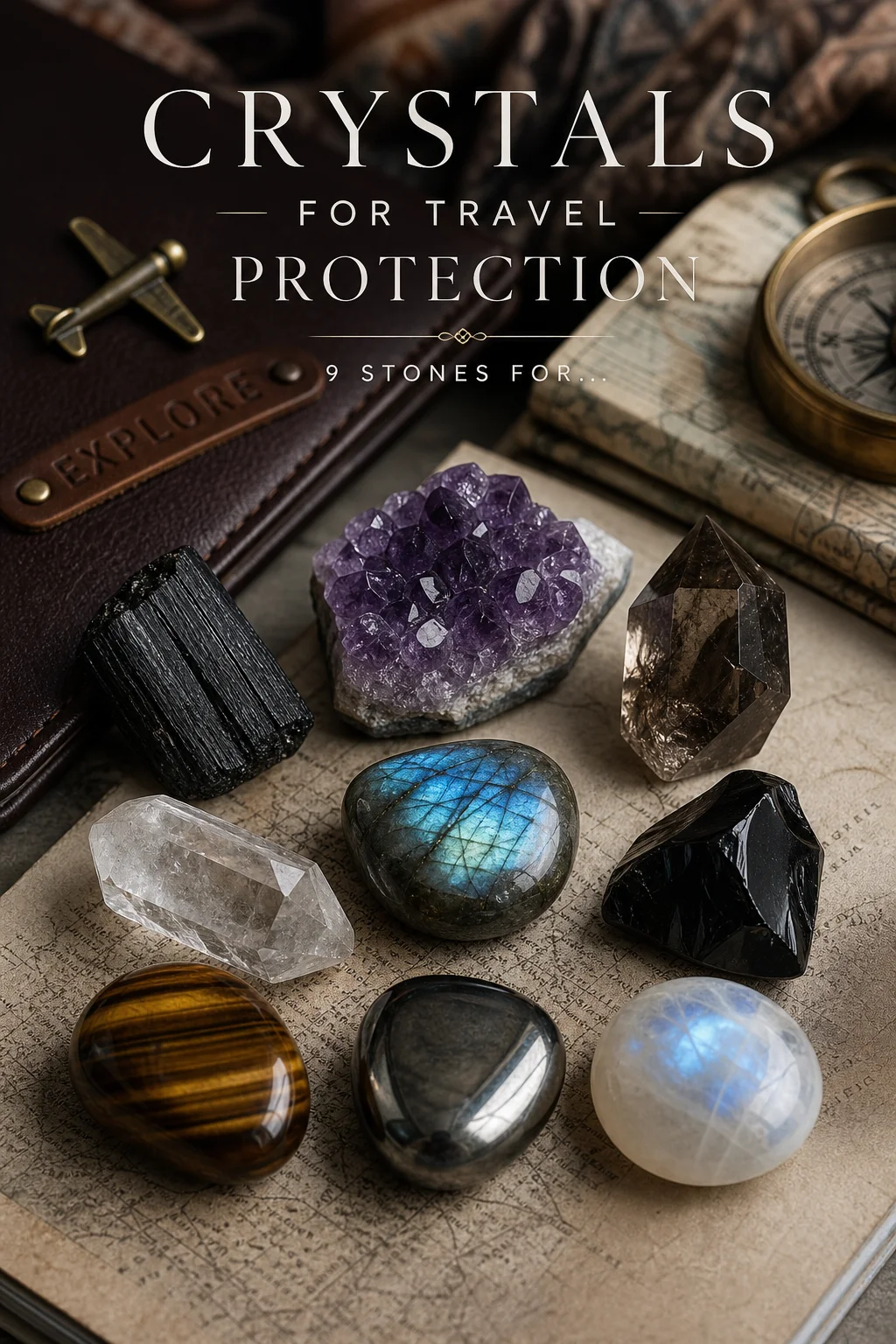
The Human Need for Travel Protection
People have carried protective talismans on journeys for as long as they've been traveling. Ancient Roman travelers buried jet (a fossilized wood) at crossroads before departing, believing it would guard them on the road. Medieval sailors carried aquamarine for safe passage across seas. Tibetan pilgrims strung turquoise and coral into protective necklaces for treks across the Himalayas.
The modern tradition of carrying crystals for travel protection draws from these cultural practices while adding contemporary concerns — airport security procedures, electromagnetic fields during long flights, and the stress of navigating unfamiliar environments. Whether you view these stones through a spiritual lens or simply as grounding focal points during transit, the practice of choosing and carrying a travel stone can create a meaningful ritual before any journey.
9 Stones for Travel Protection
1. Black Tourmaline — The All-Purpose Shield
Black tourmaline is the most versatile travel protection stone and the one most commonly recommended. Its deep, opaque black appearance has made it a protective symbol across cultures for centuries, and its mineralogical properties support practical travel use.
Black tourmaline is piezoelectric and pyroelectric, meaning it generates an electric charge under pressure or heat. Whether or not you believe in its EMF-shielding properties, there's something grounding about holding a dense, heavy, perfectly black stone during a turbulent flight or a confusing arrival in a new city. It serves as a tactile anchor when your environment feels uncertain.
Travel tip: Carry a tumbled piece in your pocket or wear it as a bracelet. The bracelet option keeps it accessible during security checks — you can slip it off and place it in the bin without fumbling in pockets.
2. Aquamarine — Water and Sea Travel
Aquamarine's name literally translates to "water of the sea," and its association with safe maritime travel dates back to antiquity. Roman sailors believed aquamarine had been washed ashore from the treasure chests of mermaids. More practically, the stone's cool blue-green color evokes calm ocean water, and its historical connection to courage made it a natural talisman for facing the uncertainties of sea travel.
Today, aquamarine is equally relevant for air travel (essentially "flying through the sea" of the atmosphere) and any journey involving water — cruises, ferry crossings, beach vacations, or river trips.
Travel tip: Wear aquamarine as a pendant on a short chain that stays close to the heart center. The pendant format also works well for layering under travel clothing.
3. Jet — The Ancient Traveler's Stone
Jet is not a mineral in the traditional sense — it's a form of fossilized wood (specifically, lignite, a precursor to coal) that has been compressed over millions of years. The Romans took jet so seriously as a travel protectant that they carved it into amulets specifically for travelers. Pliny the Elder wrote about jet's protective properties in his Natural History (AD 77), noting that Roman travelers wore jet to ward off danger on the road.
Jet is exceptionally lightweight, which makes it ideal for travel — you get a substantial-feeling stone without the weight. Its deep black color serves the same visual protection symbolism as black tourmaline. The Whitby area of Yorkshire, England, remains the most famous source of quality jet, and Victorian-era jet jewelry from this region is still collected and worn today.
Travel tip: Jet beads are lighter than any other stone listed here, making them the best choice for a travel bracelet if weight is a concern. Jet is relatively soft (Mohs 2.5–4), so avoid rough handling.
4. Moonstone — Intuitive Navigation
Moonstone's association with lunar cycles and intuition makes it the stone for travelers who need to trust their instincts. This applies particularly to solo travelers, backpackers, and anyone navigating unfamiliar cities, cultures, or languages. The stone's adularescent glow — that floating, billowy light effect — is said to illuminate the path ahead, both literally and metaphorically.
In practical terms, moonstone can serve as a mindfulness tool during travel. When you feel overwhelmed by a busy airport, an unfamiliar subway system, or a language barrier, holding a cool, smooth moonstone and taking a few breaths can create a moment of calm that helps you make better decisions.
5. Malachite — With Important Safety Caveat
Malachite has a long history as a protective travel stone — Russian czars lined their palace walls with malachite slabs for protection, and European travelers carried malachite amulets. Its vivid green banded patterns are visually striking and have made it a popular ornamental stone for centuries.
Critical warning: Malachite contains copper carbonate (Cu₂CO₃(OH)₂) and releases copper dust when scratched, cut, or broken. It should not be worn in direct skin contact for prolonged periods, especially during travel when sweating and physical activity increase copper absorption risk. If you want to use malachite for travel protection, carry a polished, sealed piece in a pouch or pocket — not against bare skin.
Consider green aventurine as a safer visual alternative that provides a similar green aesthetic without the copper content.
6. Tiger's Eye — Confidence and Alertness
Tiger's eye's chatoyant "eye" effect — that shifting, golden light that follows you as you tilt the stone — has an almost literal protective symbolism: an ever-watchful eye guarding your journey. In crystal traditions, tiger's eye is associated with courage, alertness, and clear thinking under pressure.
For travel, tiger's eye is particularly useful during situations that require quick decisions: navigating a complex transit system, haggling in a market, or assessing whether a situation feels safe. The stone's golden-brown tones are also versatile — it works equally well with casual travel wear and slightly dressier outfits.
7. Obsidian — Protective Scrying
Obsidian's volcanic origins give it a primal, protective character. The Aztecs used obsidian for mirrors and ritual objects, and many cultures have associated volcanic glass with transformation and protection. The stone's sharp, conchoidal fracture creates naturally pointed edges that have been used for blades throughout human history — an association with cutting through danger.
For travel, snowflake obsidian (black with white cristobalite inclusions) is a good choice because the white patterns add visual interest and the stone feels less ominous than solid black obsidian. Its Mohs hardness of 5–5.5 means it's not ideal for rough daily wear — keep it in a pouch or set in a pendant rather than on a ring.
8. Citrine — Positive Energy for the Journey
Not all travel protection is about shielding from harm — it's also about maintaining a positive, open mindset that attracts good experiences. Citrine's warm golden-yellow color and association with abundance, joy, and optimism make it the stone for travelers who want to attract positive encounters, lucky breaks, and serendipitous discoveries.
Citrine is also durable (Mohs 7) and affordable, making it a practical choice. Carry a tumbled piece in your day bag alongside your more protective stones.
9. Turquoise — Cross-Cultural Protection
Turquoise has been a protective stone across more cultures than almost any other mineral. Native American tribes of the Southwest wore turquoise for protection in battle and on hunts. Persian (Iranian) culture associated turquoise with the "eye of heaven" and used it to ward off the evil eye. Tibetan Buddhists have incorporated turquoise into protective amulets for centuries.
This cross-cultural consensus makes turquoise a powerful symbolic choice for international travel. The stone serves as a visual reminder that humans everywhere, throughout history, have sought protection on their journeys — and that you're connected to that universal human experience.
Travel tip: Stabilized turquoise (treated with resin to prevent cracking) is the best choice for travel jewelry, as natural turquoise is relatively porous and can absorb lotions, sweat, and pool chemicals.
Practical Carrying Strategies
Wrist Mala or Bracelet
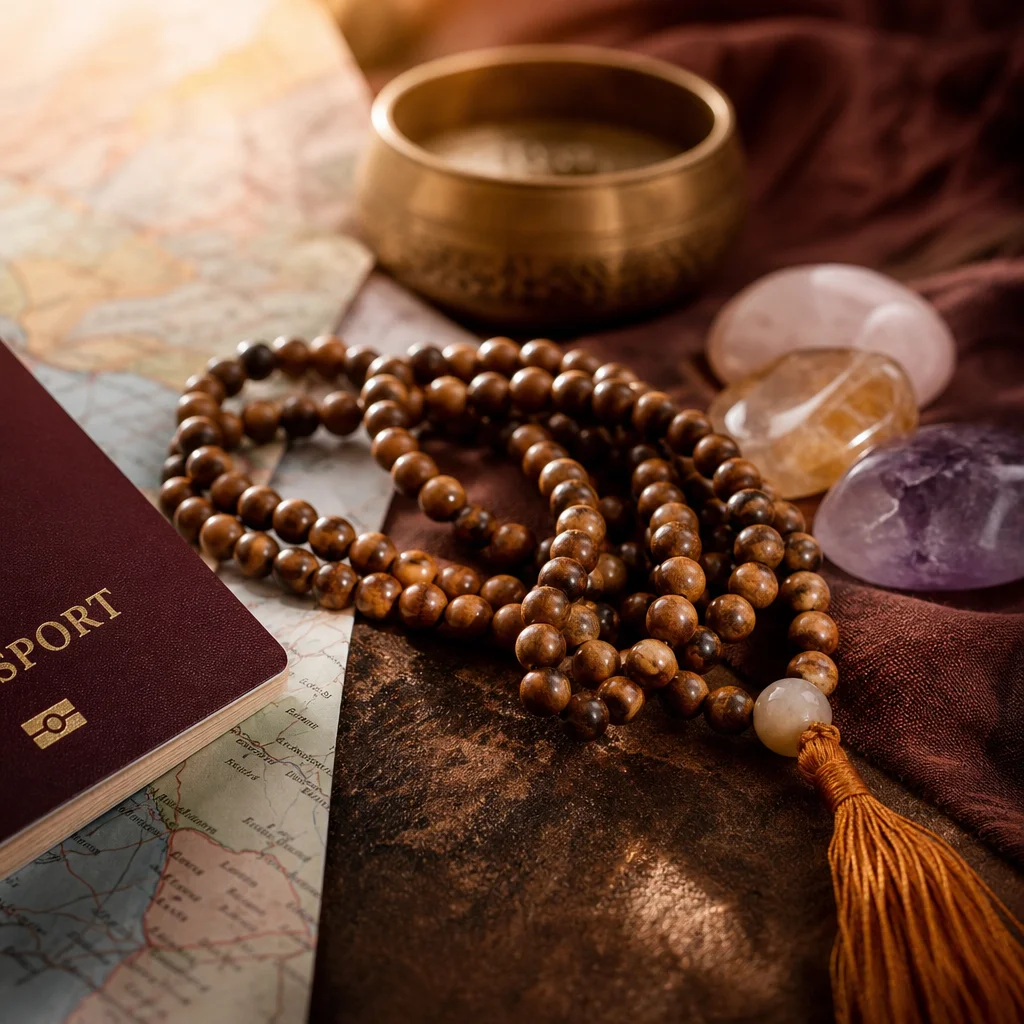
A beaded bracelet with 2–3 of these stones is the most convenient carry method for travel. You get continuous contact without needing to dig through bags. Choose 8mm beads for a subtle look or 10mm for bolder visibility. A wrist mala (16–21 beads) provides the added benefit of a short meditation practice during downtime — waiting at a gate, sitting on a train, or relaxing in a hotel room.
Pocket Stone
A tumbled stone in your pocket or bag is the simplest approach. Tumble-polished stones have rounded edges that won't damage clothing or scratch other items. Black tourmaline, tiger's eye, and citrine are the best pocket-stone choices due to their hardness and durability.
Pendant
A pendant on a chain keeps the stone close to your body and visible to you throughout the day. This works well with aquamarine, moonstone, and obsidian pendants. Choose a chain length that keeps the stone visible — 18–20 inches is standard.
Airport Security Considerations
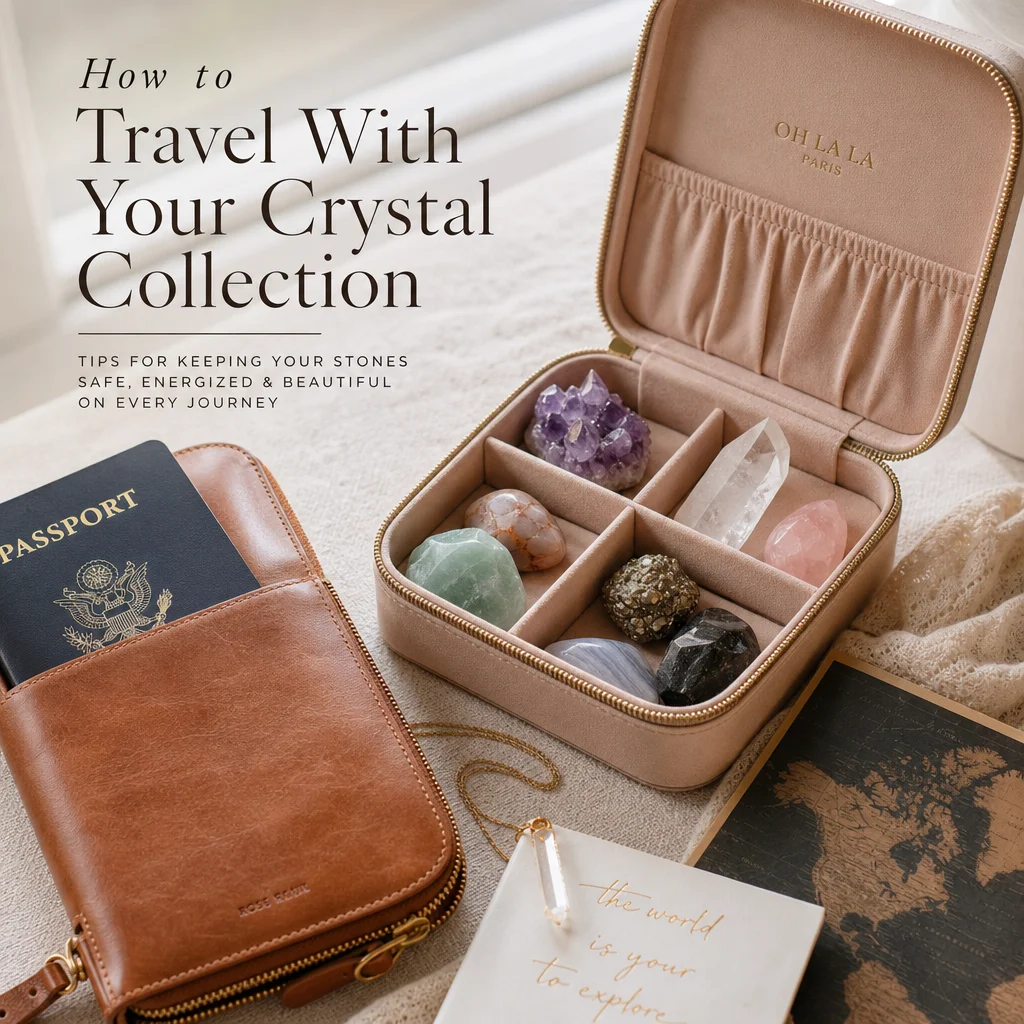
Crystal jewelry passes through airport security without issues. Be prepared to remove bracelets and necklaces for the X-ray scanner, same as any metal jewelry. Large, dense crystal clusters might trigger additional screening simply because they create an opaque image on the scanner, but this is rare for tumbled stones and jewelry pieces.
If you're carrying raw or rough specimens in your carry-on, place them in a clear plastic bag so security agents can easily see what they are. This prevents unnecessary delays from agents inspecting opaque pouches.
Cleansing and Recharging Your Travel Crystals
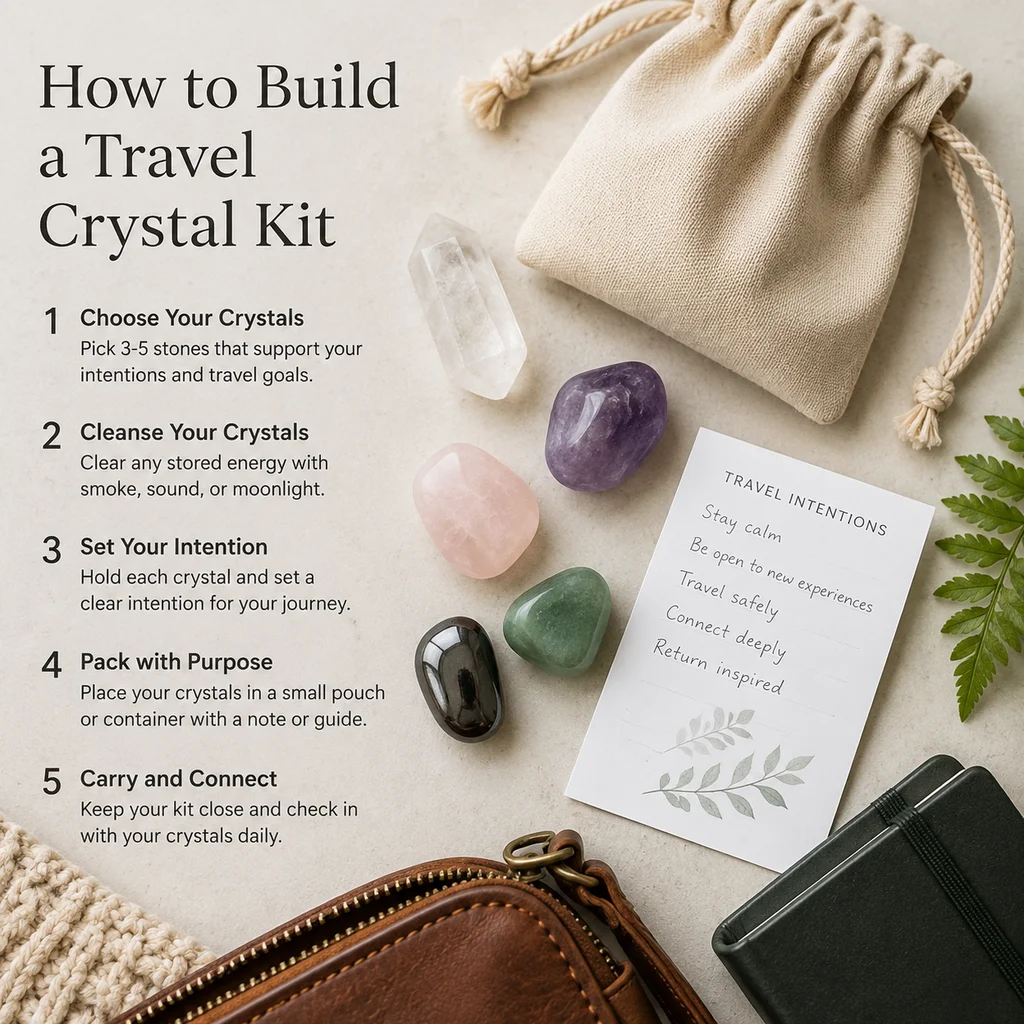
Traveling exposes you to constantly shifting environments, crowded transit hubs, and unpredictable energies. Just as crystals absorb and deflect negative vibrations, they can become energetically depleted or overloaded during a long journey. To ensure your travel protection stones remain effective, it is essential to cleanse and recharge them regularly while you are on the road. A stone that has absorbed a heavy load of chaotic energy from a delayed flight or a tense negotiation may lose its grounding effect.
You do not need elaborate rituals to cleanse your stones away from home. One of the easiest travel-friendly methods is using sound. You can play a singing bowl, a tuning fork, or a cleansing frequency from your phone near your crystals to break up stagnant energy. Alternatively, you can use smoke from sage, palo santo, or incense, passing the stones through the smoke for a few seconds. If you prefer a smoke-free and sound-free method—ideal for shared hotel rooms—simply place your crystals on a sunny or moonlit windowsill for a few hours to naturally recharge.
Setting a clear intention is the final step in maintaining your stones. Hold the cleansed crystal in your hands, take a deep breath, and mentally reaffirm its purpose as your travel guardian for the remainder of the trip.
Combining Crystals with Practical Travel Safety
While crystals serve as powerful energetic anchors, they function best as part of a comprehensive approach to travel safety. It is important to remember that a stone cannot replace situational awareness, good judgment, or standard security measures. Instead, think of your travel crystals as psychological tools that help keep you grounded, calm, and focused in unfamiliar environments. When you are relaxed and centered, you naturally make better decisions and project confident body language, which is a proven deterrent against pickpockets and tourist scams.
Using crystals to enhance situational awareness is a highly effective strategy. For instance, keeping a piece of black tourmaline or hematite in your pocket provides a physical object to touch when you feel overwhelmed in a crowded market or navigating a confusing subway system. The simple tactile sensation of rubbing the stone can pull you out of an anxious spiral and bring your attention back to your immediate surroundings. This mindfulness practice allows you to quickly assess exits, keep an eye on your luggage, and identify potential hazards.
Ultimately, the most effective travel protection strategy combines the mindful focus inspired by your crystals with smart habits. Always secure your valuables, remain aware of local customs, and trust your intuition. Your crystals are there to support your inner resilience, while your actions keep you physically secure.
Frequently Asked Questions
Can I use multiple protection stones at the same time?
Absolutely. Many travelers carry 2–3 complementary stones: black tourmaline for general protection, moonstone for intuition, and citrine for positive energy. Wearing a bracelet with multiple stones or carrying a small pouch with several pieces is common practice.
Does it matter which pocket I carry travel crystals in?
Some traditions suggest carrying protective stones in your left pocket (the "receiving" side in many practices) and stones for projecting energy (like citrine) in your right pocket. In practice, choose whichever pocket is most comfortable and accessible.
Can I use travel crystals on my pet?
If you're traveling with a pet, be very cautious. Animals may chew on or ingest stones, which is dangerous — many crystals are toxic if swallowed, and even safe stones can cause intestinal blockage. Keep all crystals out of your pet's reach during travel.
Frequently Asked Questions
What is the best crystal for flying or air travel?
Black Tourmaline and Amethyst are excellent choices for flying. Black Tourmaline grounds your energy and shields you from the electromagnetic frequencies of the airplane, while Amethyst promotes a calm, anxiety-free flight. Wearing these stones as a handcrafted jewelry piece keeps them securely on your body, ensuring you stay balanced and protected from takeoff to landing.
Is it better to wear crystal jewelry or carry loose stones while traveling?
Wearing handcrafted crystal jewelry is often the most convenient and effective way to travel with your stones. Jewelry prevents loss and keeps the protective energy directly within your aura at all times. It also allows you to breeze through airport security effortlessly without worrying about loose stones being confiscated or misplaced during busy sightseeing trips.

Comments