Crystals for Focus and Study: 8 Stones to Hel...
May 29, 2026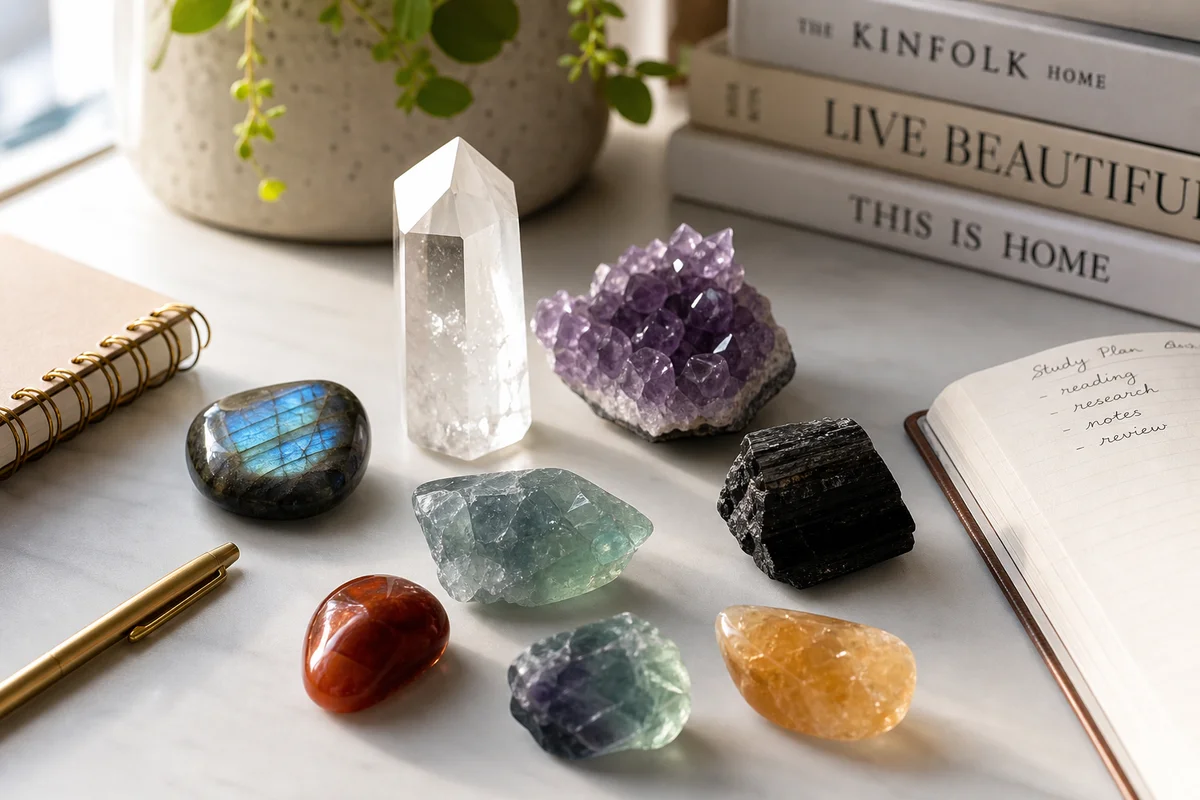
Staying focused is hard. Notifications buzz, tabs multiply, and before you know it you have spent forty minutes reading about something completely unrelated to what you sat down to do. People have been looking for concentration aids for millennia, and crystals have been part of that toolkit across multiple cultures.
This is not about magic. It is about creating a physical environment that supports your intentions. A stone on your desk is a visual anchor — a tangible reminder of what you sat down to accomplish. Some of these stones also happen to have interesting mineralogical properties that connect to the traditions around them. Here are eight that people have relied on for focus, along with what science actually says about each one.
1. Fluorite — The Classic "Study Stone"
Fluorite (CaF₂) is probably the stone most commonly recommended for studying, and there are a few reasons why.
Mineralogy: Fluorite crystallizes in the isometric system, forming perfect cubes and octahedrons. Its name comes from the Latin "fluere" (to flow) because it was used as a flux in metalworking. The word "fluorescence" was named after fluorite because many specimens glow blue under UV light.
The traditional connection to focus comes from fluorite's orderly crystal structure. In crystal culture, the geometric perfection of fluorite cubes is seen as a metaphor for organized thinking. Whether or not you find that metaphor meaningful, the historical association is well-established — fluorite has been called the "genius stone" in various traditions.
Practical use: Keep a fluorite point or tower on your desk while studying. The hardness (4 on Mohs) means it is better as a display piece than something you handle constantly.
Price: $5-15 for a small tower. One of the most affordable options on this list.
2. Clear Quartz — The Blank Slate
Clear quartz (SiO₂) is pure silicon dioxide, the most abundant mineral in the Earth's crust. Hardness 7.
The tradition around clear quartz and mental clarity is one of the oldest in crystal use. Ancient Roman naturalist Pliny the Elder believed quartz was permanently frozen ice. Greek mathematicians used quartz lenses. The word "crystal" comes from the Greek "krystallos" (ice).
Clear quartz is the most neutral stone on this list — it does not carry the specific associations of fluorite (structure) or citrine (energy). Instead, it functions as an all-purpose "clear your mind" stone. Some people find that having a clear, transparent object on their desk helps them feel less mentally cluttered.
Practical use: A small clear quartz point near your computer monitor. Or hold a tumbled stone during phone calls when you need to stay sharp.
Price: $3-8 tumbled, $5-15 for a point.
3. Sodalite — Logical Thinking
Sodalite is a sodium aluminum silicate chloride (Na₈(Al₆Si₆O₂₄)Cl₂) that typically occurs in rich blue with white veining. Hardness 5.5-6.
Sodalite is often recommended for analytical thinking and problem-solving. The tradition connects the stone's deep blue color with the throat and third-eye chakras — areas associated with communication and intuition in energy work traditions. Beyond the metaphysical framing, sodalite's visual appearance (deep blue with contrasting white calcite veins) is distinctive and easy to recognize, which made it a popular talisman stone in ancient trade networks.
Practical use: Place a sodalite palm stone on your desk when doing analytical work — math, coding, editing, or any task that requires step-by-step logic.
Price: $4-10 tumbled. Widely available and inexpensive.
4. Citrine — Positive Energy and Motivation
Citrine is yellow-to-orange quartz (SiO₂), colored by iron. Hardness 7.
When you are deep in a study session or a grueling project, the enemy is not just distraction — it is motivation drain. Citrine's warm golden color has been associated with vitality and positivity across multiple cultures. In Chinese feng shui tradition, citrine is placed in the wealth corner of a room. In Western crystal tradition, it is linked to the solar plexus and personal willpower.
The mineralogy is worth noting: most commercial citrine is heat-treated amethyst. The color change from purple to gold does not affect the quartz's physical properties, and the stone functions the same way regardless of whether the color is natural or enhanced.
Practical use: Wear a citrine bracelet or keep a tumbled stone in your pocket. The idea is to have it physically present during tasks that require sustained motivation, not just brief bursts of effort.
Price: $4-10 tumbled, $8-20 for a bracelet.
5. Amethyst — Calm the Mental Noise
Amethyst is purple quartz (SiO₂), colored by iron and natural radiation. Hardness 7.
If citrine addresses motivation, amethyst addresses its opposite — the anxiety and mental chatter that prevent you from settling into deep focus. Amethyst has been associated with calm and clear-headedness since ancient Greece (the word "amethystos" means "not intoxicated").
For studying, the practical application is straightforward: if you are the type who gets anxious before exams or feels overwhelmed by a large project, having amethyst nearby provides a physical grounding point. The cool purple tones are visually calming in a way that a warm orange citrine is not.
Practical use: Place an amethyst cluster near your study area or hold a tumbled stone during study breaks when you feel tension building.
Price: $4-12 tumbled, $8-25 for a small cluster.
6. Tiger Eye — Steadfast Determination
Tiger eye is a chatoyant quartz variety (SiO₂ with crocidolite asbestos inclusions) that shows a silky golden-brown luster that moves as the stone is rotated. Hardness 7.
Tiger eye is associated with courage and determination in multiple traditions. Roman soldiers carried tiger eye into battle. In crystal culture, it is linked to the solar plexus chakra and personal power.
The chatoyancy (cat's eye effect) is caused by parallel fibers of crocidolite asbestos that have been replaced by silica through a process called pseudomorphism. The fibers reflect light in a narrow band that moves across the surface — a visual effect that is genuinely mesmerizing and holds attention well.
Practical use: Keep a tiger eye palm stone on your desk. The tactile surface (smooth but with visible fibrous structure) gives your hands something to do during phone calls or video meetings without being distracting.
Price: $3-8 tumbled, $5-12 for a palm stone.
7. Hematite — Grounding and Stability
Hematite (Fe₂O₃) is iron oxide, the mineral that gives rust its color. In crystalline form, it is metallic gray-black with a distinctive red streak. Hardness 5.5-6.5.
Hematite is the heaviest common mineral used in crystal practice — it is noticeably dense for its size. This physical weight is part of why it has been associated with grounding and stability. When you hold a hematite stone, you feel it. It has a gravitas that lighter stones do not.
For focus, hematite is recommended when the problem is not lack of motivation but lack of groundedness — when your mind is racing in ten directions and you cannot settle on one task. The weight and cool metallic surface provide a strong sensory anchor.
Practical use: Hold hematite during moments when you feel scattered. Or place a hematite sphere on your desk as a visual and tactile reminder to stay present.
Price: $2-5 tumbled, $5-12 for a sphere. Very affordable.
Important note: Test your hematite with a magnet. If it sticks, you have "magnetic hematite" (hematine), which is a manufactured ceramic, not natural hematite.
8. Carnelian — Action and Drive
Carnelian is a translucent orange chalcedony (SiO₂), a microcrystalline variety of quartz. Hardness 6.5-7.
Carnelian has been used as a talisman for courage and action since ancient Egypt. The Romans used it for signet rings. The Prophet Muhammad was said to wear a carnelian ring. In crystal tradition, carnelian is associated with the sacral chakra and creative energy.
For focus, carnelian is the stone to reach for when the problem is not distraction but procrastination. You know what you need to do, you just cannot seem to start. The warm orange color is energizing rather than calming, and the stone's historical association with action and courage makes it a natural choice for overcoming inertia.
Practical use: Wear a carnelian bracelet or keep a carnelian in your pocket on days when you need a push to get started.
Price: $3-8 tumbled, $5-15 for a bracelet.
How to Use These Stones Practically
You do not need to buy all eight. Pick two or three that resonate with the type of focus challenge you face most:
- Anxious about work? Amethyst + hematite
- Can not get started? Carnelian + citrine
- Scattered and disorganized? Fluorite + sodalite
- General support? Clear quartz + tiger eye
Desk Setup Suggestions
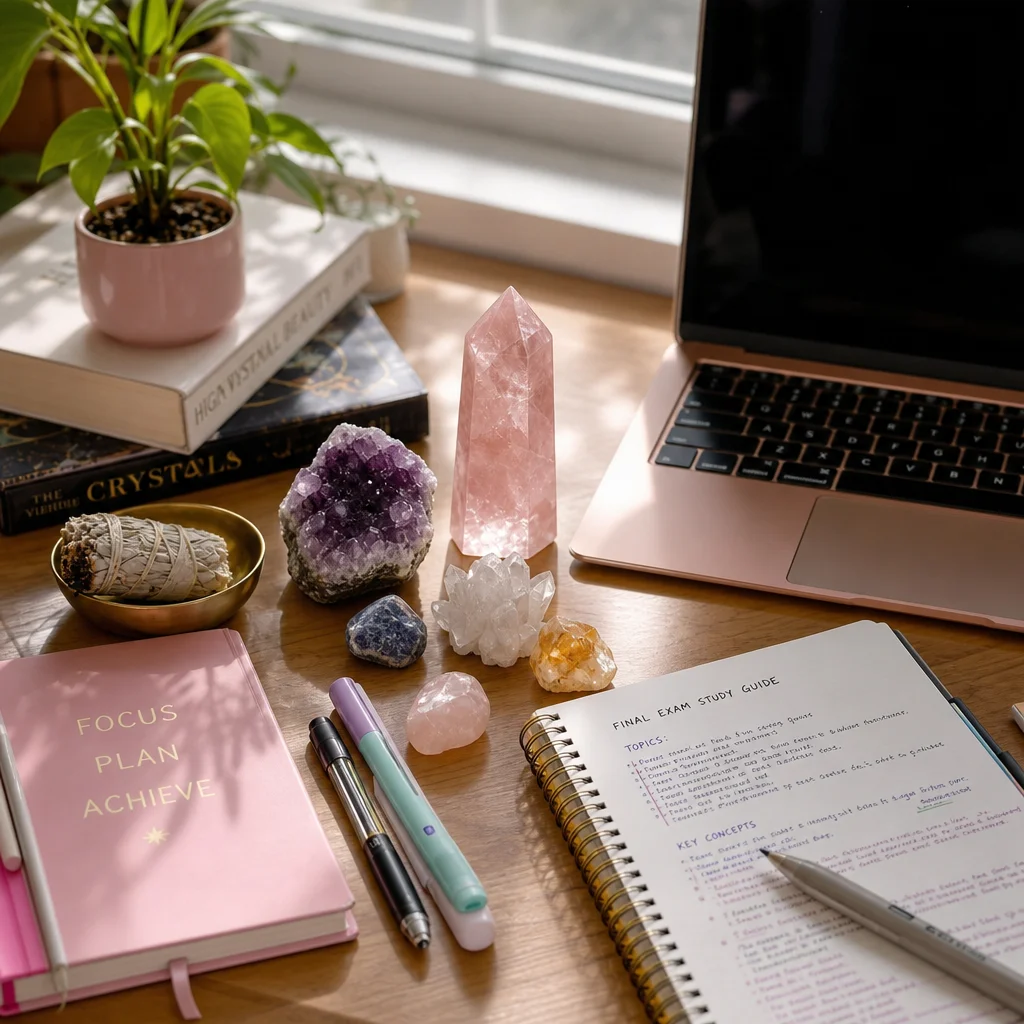
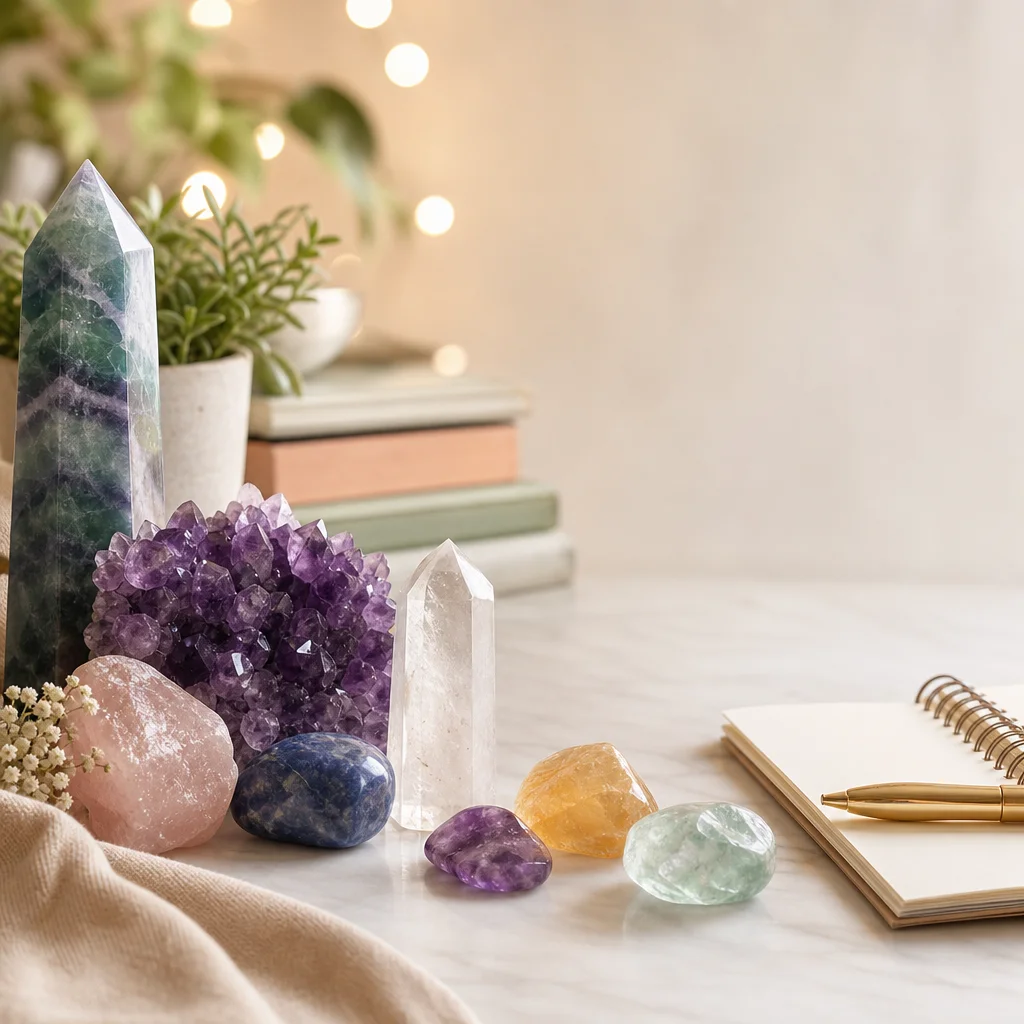
For a minimal study crystal setup:
Total cost: approximately $20-35 for all three. It looks professional, the stones serve as conversation pieces, and the visual arrangement creates a defined workspace that your brain starts to associate with focused work.
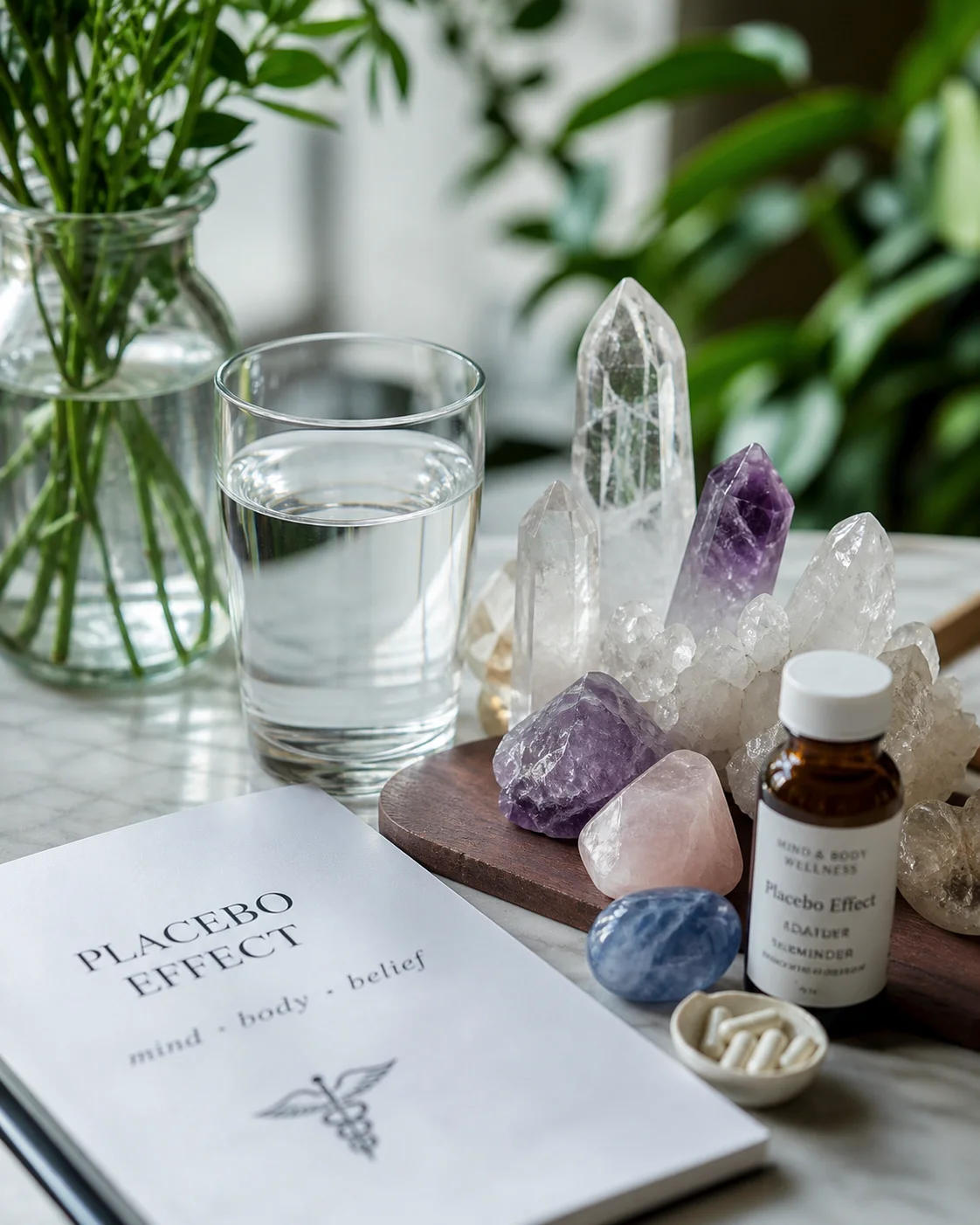
Crystals are not a substitute for medical treatment. The information in this article about traditional uses and cultural associations is provided for educational purposes.
Frequently Asked Questions
What is the best crystal for improving concentration during study sessions?
Fluorite is highly recommended for improving concentration. Its structured energy helps to clear the mind and enhance focus, making it a popular choice for students and professionals.
Can I wear multiple crystals at once for a more profound effect?
Yes, you can wear multiple crystals simultaneously. Combining stones like Fluorite and Clear Quartz can amplify their effects. Just ensure they resonate with your intention and energy.
How often should I cleanse my crystals to maintain their effectiveness?
It's best to cleanse your crystals regularly, about once a month, or whenever you sense a decrease in their energy. Methods include using salt water, sage smoke, or simply placing them under moonlight.
Are there any risks associated with wearing crystals for focus and study?
There are no inherent risks in wearing crystals for focus and study. However, it's important to choose high-quality, genuine stones from a reputable source to ensure they are safe and effective.
Can these crystals help with maintaining a positive mindset while studying?
Absolutely. Crystals like Citrine and Amethyst can help uplift your mood and maintain a positive mindset. Citrine brings joy and optimism, while Amethyst promotes calmness and a sense of peace, both beneficial for long study sessions.



Comments