Crystal Engagement Ring: How to Choose
May 16, 2026
I Chose a Crystal Engagement Ring Instead of a Diamond — Here's How I Decided (and What I Learned)
My girlfriend and I had been talking about marriage for maybe six months before I actually started ring shopping. I'd like to say I went in with a clear plan, but honestly I walked into the first jewelry store knowing absolutely nothing beyond "diamonds are expensive" and "I probably can't afford a big one." That ignorance cost me time, but it also led me down a path I'm genuinely glad I took.
Here's the short version: I bought a moissanite engagement ring. It cost me roughly $820 for a 1.2-carat equivalent in a platinum setting. The comparable diamond — same cut, same carat weight, similar clarity — was quoted at $5,400. That gap isn't a small tweak in my budget. That's the difference between stressing over rent for a year and being fine.
But price wasn't the only reason. Not even close. Let me walk through how I actually made this decision, what I got wrong along the way, and what I'd tell anyone else standing where I stood.
The Diamond Problem I Didn't Want to Think About
Everyone knows diamonds are expensive. Fewer people want to talk about why they're expensive, because the answer is uncomfortable. The diamond industry — and I'm talking specifically about the De Beers cartel and its descendants — manufactured demand through one of the most successful advertising campaigns in history. "A Diamond Is Forever" wasn't a cultural truth. It was a 1947 slogan written by a copywriter at N.W. Ayer. Before that campaign, engagement rings weren't even standard practice in America.
I'm not here to tell you diamonds are evil. That's reductive. But I do think the pricing is indefensible. A 1-carat diamond with decent specs (G color, VS1 clarity) retails for about $4,000 to $6,000 depending on where you buy it. The actual cost to mine that stone? A fraction. The markup from mine to finger is somewhere between 200% and 400%, and a lot of that margin exists because the supply has been deliberately restricted for over a century.
Then there's the ethical layer. Even with the Kimberley Process certification — which was supposed to eliminate conflict diamonds — loopholes remain. Stones can be smuggled across borders and certified in a different country. Some "conflict-free" diamonds are anything but. Lab-grown diamonds solve the ethical issue, but they've held onto premium pricing for reasons I don't fully understand. If it cost $300 to grow a diamond in a lab, why am I paying $2,000 for it?
I realized I was about to spend thousands of dollars on a product whose value was mostly narrative, not material. That didn't sit right with me. Your mileage may vary, and I respect anyone who chooses differently. But for me, it felt like paying for a story someone else wrote.
Finding the Alternatives
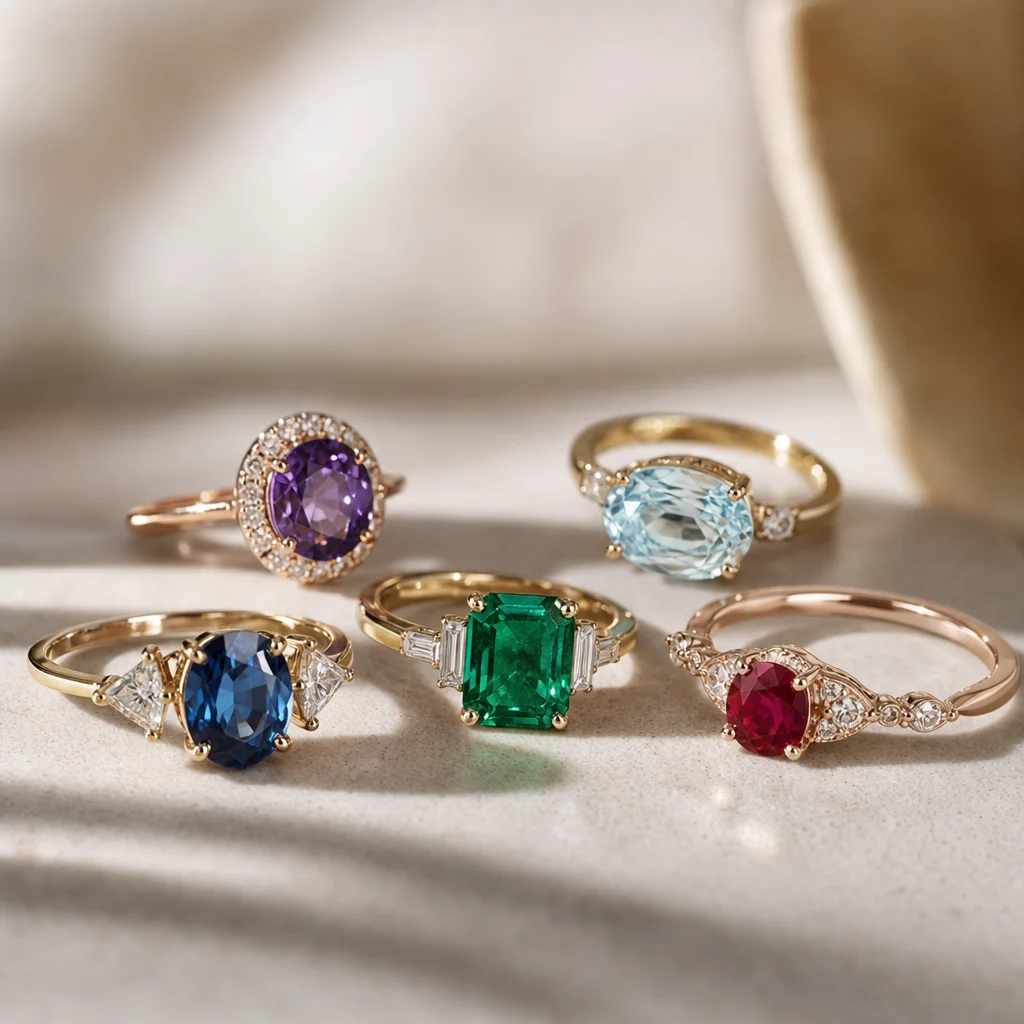
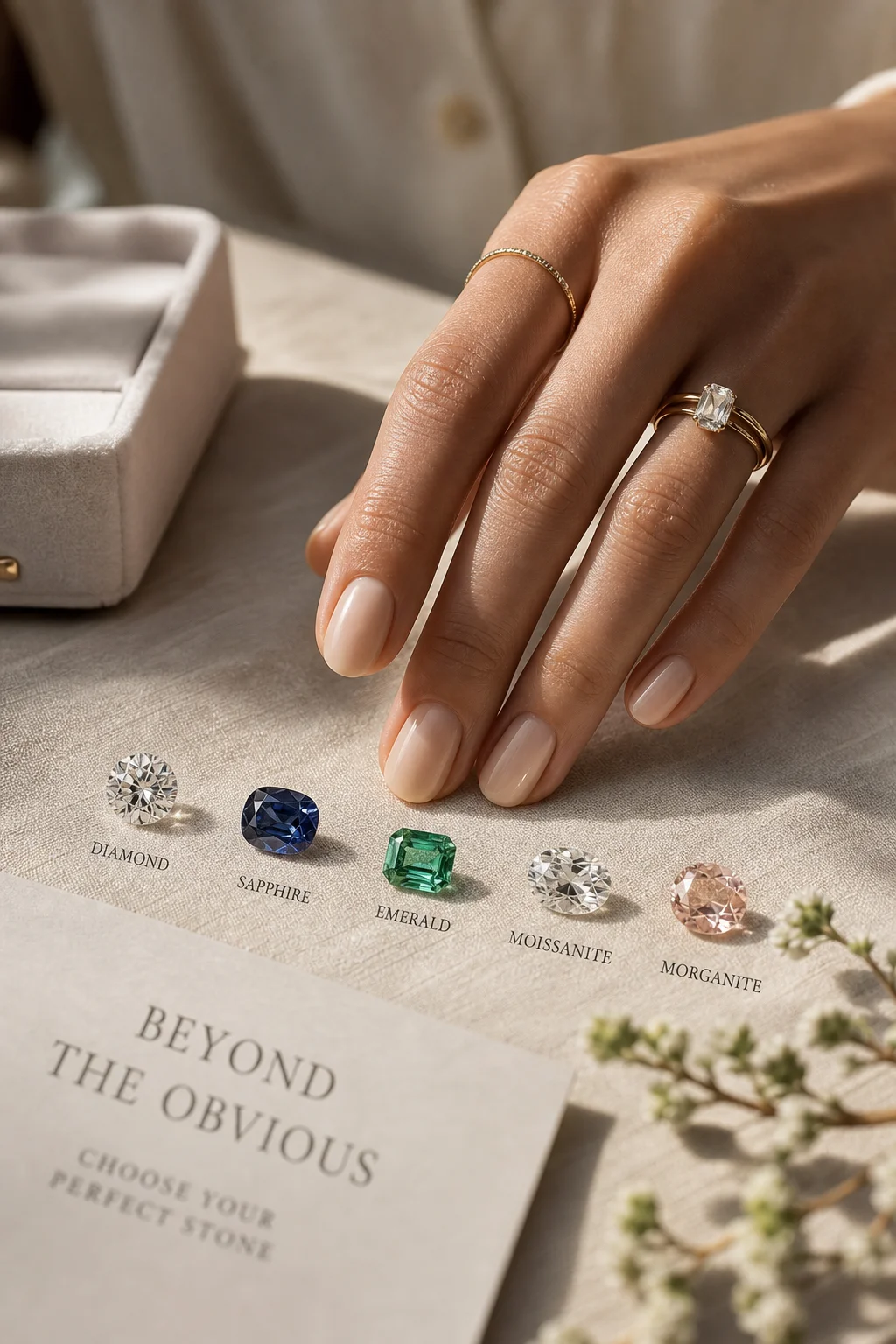
Once I started looking beyond diamonds, I found more options than I expected. The main contenders were moissanite, white sapphire, and cubic zirconia. There are others — like lab-grown diamonds, which I mentioned, and some more exotic options like white topaz or even synthetic spinel — but those three kept coming up in my research.
Cubic zirconia was out almost immediately. It's cheap, sure — you can get a 2-carat CZ for under $20 — but it scratches easily and clouds within a year or two of daily wear. An engagement ring should last. CZ doesn't. I crossed it off the list without much debate.
White sapphire was more interesting. On the Mohs hardness scale, sapphire sits at a 9, which is excellent. Diamond is 10, but the scale isn't linear — diamond is actually about four times harder than sapphire in absolute terms. Still, 9 is more than hard enough for daily wear. The problem with white sapphire is brilliance. Its refractive index is around 1.77, compared to diamond's 2.42. In plain terms: white sapphire looks a bit glassy under indoor lighting. It doesn't have that sparkle people expect from an engagement ring. Some people prefer that subtler look, and I get it. But I wanted something with more fire.
Moissanite caught my attention because of its refractive index: 2.65 to 2.69. That's actually higher than diamond. It sparkles more. Some people think it sparkles too much — there's a "disco ball" criticism that comes up in forums. I looked at a few in person and didn't find it over the top, but I can see how some might. More on that later.
Moissanite's hardness is 9.25 on the Mohs scale. Not quite diamond, but well above anything you'd encounter in daily life. Unless your partner is a gemologist or a mineralogist, the practical difference between 9.25 and 10 is basically zero. For a deeper dive on durability across gemstones, this comprehensive jewelry guide breaks it down stone by stone.
What I Actually Bought
After about three weeks of research and visiting four different jewelers, I went with a 1.2-carat equivalent round brilliant moissanite in a six-prong platinum solitaire setting. Here's what I paid:
- Moissanite stone (Charles & Colvard Forever One, excellent cut): $420
- Platinum setting (custom six-prong, 2mm band): $340
- Sizing and engraving: $60
- Total: $820
A diamond of the same specs — 1.2 carat, G color, VS1 clarity, excellent cut — was quoted at $5,400 at the same jeweler. That's not a theoretical number I pulled from a website. That's the actual quote I received in the store.
The ring looks gorgeous. Under natural light, the moissanite has a warmer sparkle than diamond — slightly more colorful dispersion. Under LED or fluorescent lighting, it's extremely bright. My now-fiancée gets compliments on it constantly, and nobody has ever asked "is that a real diamond?" which, honestly, wouldn't matter to either of us anyway.
Mistakes I Made
I didn't get everything right. Here are the things I'd do differently.
I didn't check insurance early enough. I assumed my renter's insurance would cover the ring. It doesn't — or rather, it does, but only up to a very low limit for jewelry (mine was $1,500 total for all jewelry combined). I ended up buying a separate jewelry insurance policy through Jewelers Mutual for about $120 per year. If I'd done this before purchasing, I could have bundled it with the jeweler's own policy option and saved a bit. Also worth noting: some insurers treat moissanite differently than diamond. Make sure you get a stated value policy, not an actual cash value policy, because the replacement cost of a moissanite ring is lower than what you might insure it for if you're comparing against diamond prices.
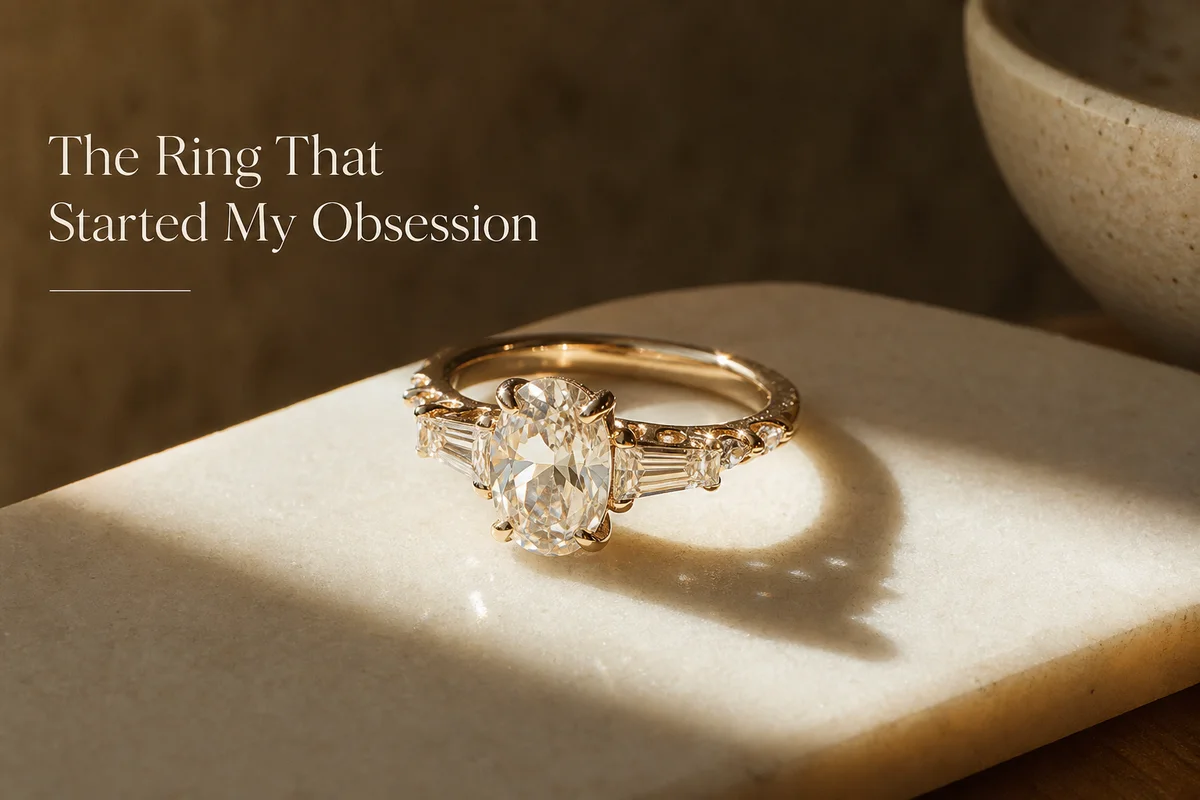
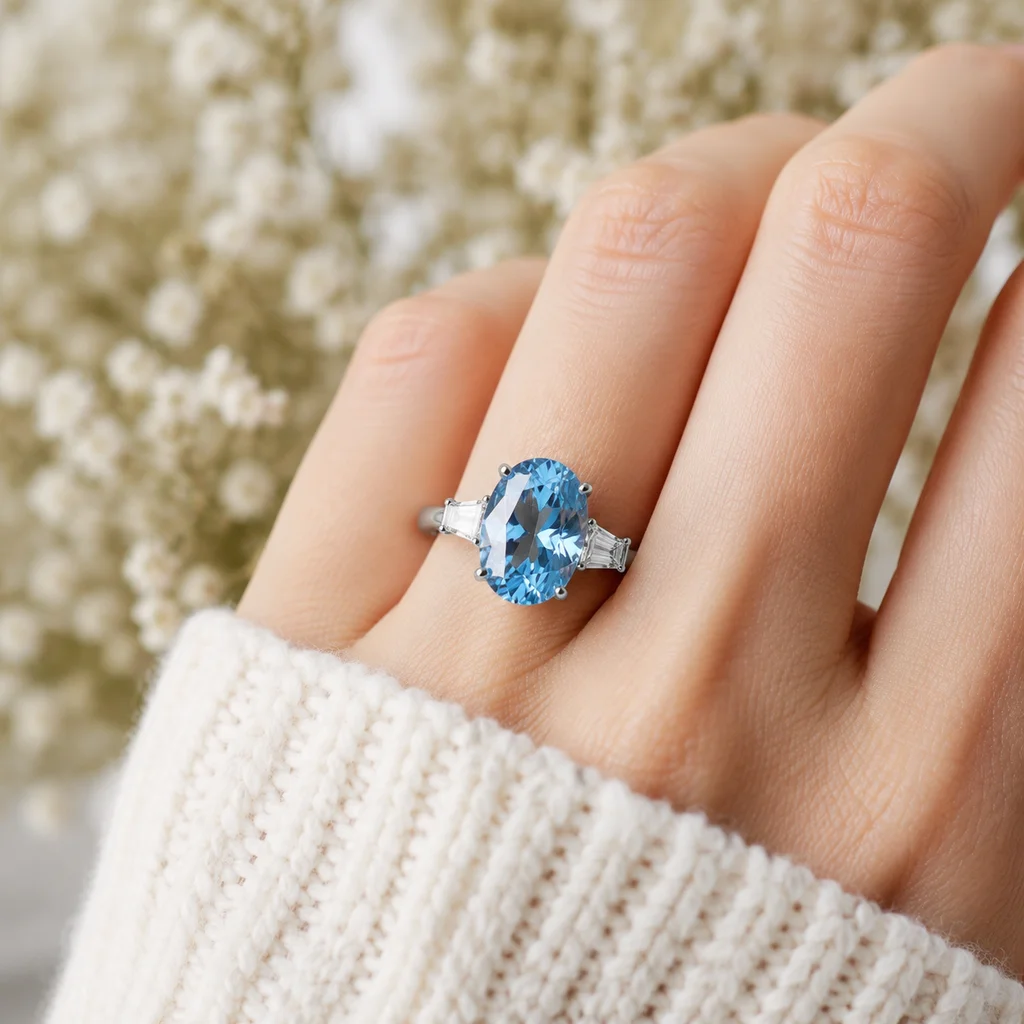
I almost bought the wrong cut. Initially I was drawn to an oval moissanite because ovals look bigger for the carat weight. But the bowtie effect — that dark band across the middle of some oval and marquise cuts — is more pronounced in moissanite than diamond because of the higher refractive index. I didn't notice it in online photos, but in person it was obvious and honestly kind of annoying. I switched to round brilliant and have zero regrets. If you're going with a non-round shape, see it in person first.
I wasted a week worrying about "will people judge us." This was dumb. Nobody cares. Seriously. If anyone has an opinion about your engagement ring choice, that's their problem, not yours. The only person whose opinion matters is the one wearing it.
What to Ask Your Jeweler
If you're going the crystal or alternative gemstone route, here are the questions I found most useful — and a few I wish I'd asked sooner:
- "What's the refractive index of this stone?" — This tells you how sparkly it'll be. Diamond is 2.42, moissanite is 2.65-2.69, white sapphire is 1.77, CZ is 2.15-2.18. If the jeweler can't answer this, that's a red flag.
- "Is this moissanite Charles & Colvard or another brand?" — Not all moissanite is equal. C&C's Forever One line is near-colorless (graded D-E-F equivalent). Cheaper moissanite can have a yellowish or greenish tint under certain lighting.
- "What setting metals do you recommend for daily wear?" — Platinum is the most durable but heaviest and most expensive. 14k white gold is a solid middle ground. Silver is too soft for an engagement ring that's worn daily. (If you're curious about metal care, this silver tarnish prevention guide covers the basics.)
- "Can I see this stone under three different light sources?" — Any good jeweler will have natural-spectrum, LED, and fluorescent lighting. Moissanite looks different under each. You should see all three before committing.
- "What's your return or exchange policy on the stone?" — This matters more than you'd think. If your partner doesn't love it, you want options.
The Setting Matters More Than You Think
I spent so much time obsessing over the stone that I almost treated the setting as an afterthought. Bad move. The setting does three critical things: it protects the stone, it influences how the stone looks, and it determines how the ring feels on a finger day after day.
For crystal engagement rings specifically, I'd recommend a bezel or halo setting if durability is a concern. Prong settings let more light into the stone (which is great for moissanite's fire), but they leave the girdle — the thin edge around the widest part of the stone — exposed. A hard knock at the wrong angle can chip a moissanite or sapphire. Diamond is more chip-resistant, though not immune. If you want to understand what happens when stones take damage and how to deal with it, this guide on repairing chipped and broken crystal is worth reading.
I went with a six-prong solitaire specifically because it holds the stone more securely than four prongs. The trade-off is that the prongs are more visible and slightly block the stone from some angles. For me, the security was worth it. My fiancée works with her hands a lot, and the ring has already survived a few bumps that made me wince.
One more thing on settings: if you're choosing moissanite, consider going with a slightly smaller stone (0.9 to 1.1 carat equivalent) in a nicer setting rather than a larger stone in a cheap one. The setting is the foundation. Skimping there to afford a bigger stone is a trade-off most people regret.
Caring for a Crystal Engagement Ring
Daily-wear rings accumulate grime faster than you'd expect. Soap residue, lotion, cooking oils — they all create a film that dulls the stone's brilliance over time. Moissanite is slightly more prone to showing this film than diamond because of its higher refractive index; the sparkle is so strong that any reduction in light transmission becomes noticeable faster.
The fix is simple: warm water, a drop of mild dish soap, and a soft toothbrush. Clean it once every two to three weeks. That's it. No special solutions needed. Ultrasonic cleaners are fine for moissanite but can be risky for included stones or pieces with delicate settings. When in doubt, hand-clean.
For the full breakdown on keeping crystal jewelry in good shape — storage tips, what chemicals to avoid, how to handle different stone types — this crystal jewelry care and cleaning guide covers everything in detail.
The Money Question, Answered Honestly
Let's talk numbers, because nobody does this enough.
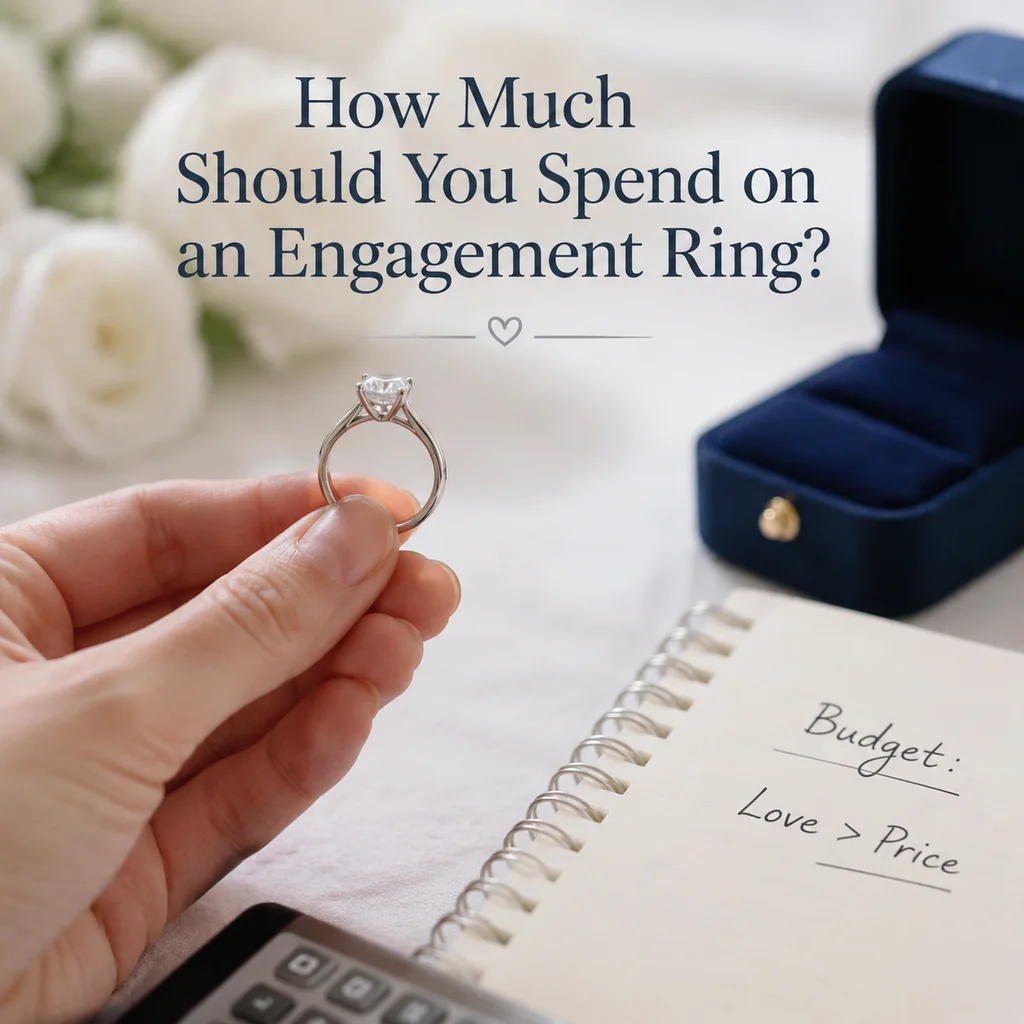
My ring: $820 total. The diamond equivalent: $5,400. The difference: $4,580.
Here's what we did with that money instead. We put $2,000 toward the wedding venue deposit, $1,500 into a joint savings account, and kept the remaining $1,080 as a buffer for unexpected expenses. We're not wealthy people. That $4,580 is meaningful. It's the difference between starting our marriage with a financial cushion versus starting it with a pretty ring and tighter margins.
I know people who've spent $10,000, $15,000, even $25,000 on engagement rings. I'm not going to judge anyone's financial decisions — if you have that kind of money and the ring is important to you, go for it. But I want to be honest about what I think is happening in a lot of those cases: people are spending beyond their comfort zone because they feel social pressure, not because the purchase genuinely aligns with their values.
The "two months' salary" rule? Also invented by De Beers. In the 1980s, the ad campaign suggested one month's salary. By the late '80s, they pushed it to two. Some marketing now implies three. It's a marketing escalator, not a financial principle.
What About the Wedding Band?
Since we're already off the diamond path for the engagement ring, we decided to keep going. My fiancée's wedding band is a simple brushed platinum band with three small moissanite accents. Total cost: $280. We looked at crystal options for the wedding too, and if you're planning a crystal-themed wedding or just want alternatives for the whole bridal party, this wedding crystals guide has a lot of practical ideas.
My band is plain platinum. No stone. I work with my hands and didn't want to worry about it.
Final Thoughts
Looking back, the hardest part of this process wasn't choosing the stone. It was getting past the mental weight of "diamonds are what you're supposed to buy." Once I let go of that — and it took me a solid week of back-and-forth — the actual decision was pretty straightforward. Moissanite gave me the look I wanted at a price that made sense, with durability that holds up to daily life, and without the ethical baggage that bugged me.
Your calculus might be different. Maybe you care about resale value (diamonds hold value better, though both lose a lot on resale). Maybe your partner specifically wants a diamond and that's that. Maybe you love the tradition of it. All valid. I'm not here to tell you what to do.
But if you're on the fence, if you're looking at diamond prices and feeling a knot in your stomach, if you're wondering whether there's another way — there is. It's not a compromise. It's a choice. And for me, it was the right one.
The ring is on her finger right now. She loves it. I love that she loves it. And I didn't have to go into debt to make it happen. That's the whole point, isn't it?
Related Guides
- Colored Gemstones Buying Guide for Beginners
- 15 Creative Ways to Display and Store Your Crystal Collection
- How to Tell if a Crystal Bracelet Is Real or Fake
- Essential Jewelry Storage Tips
- Crystal Care 101: How to Clean, Store, and Protect Your Jewelry
- How to Clean Crystal Jewelry: A Complete Care Guide
- 7 Crystal Cleaning Mistakes That Cost Me Hundreds of Dollars
Frequently Asked Questions
How should I care for my crystal engagement ring?
Keep your crystal engagement ring clean by regularly wiping it with a soft cloth. Avoid contact with chemicals, water, and extreme temperatures. Store it in a protective case to prevent scratches and damage.
Can crystal engagement rings be resized?
Most crystal engagement rings can be resized, but it's essential to consult with the jeweler who crafted your ring. Certain crystals or ring styles may not be compatible with resizing due to their delicate nature.
Are crystal engagement rings as durable as diamonds?
Crystal engagement rings are generally more fragile than diamond rings. While they can be durable, they can chip or crack under certain conditions. Proper care and handling will enhance their longevity.
Can I have my crystal engagement ring engraved?
Yes, you can have your crystal engagement ring engraved, but it's important to consider the size of the crystal. Engraving might not be feasible for all crystal engagement rings due to the limited space, but it can add a personal touch.
Design and Aesthetics
This section covers important aspects of design and aesthetics. For detailed information, please refer to the FAQ section below.
Materials and Craftsmanship
This section covers important aspects of materials and craftsmanship. For detailed information, please refer to the FAQ section below.
How to Choose the Right Piece
This section covers important aspects of how to choose the right piece. For detailed information, please refer to the FAQ section below.
Styling and Wearing Tips
This section covers important aspects of styling and wearing tips. For detailed information, please refer to the FAQ section below.
Comments