Chakra Meditation for Beginners: A Step-by-Ste..
June 2, 2026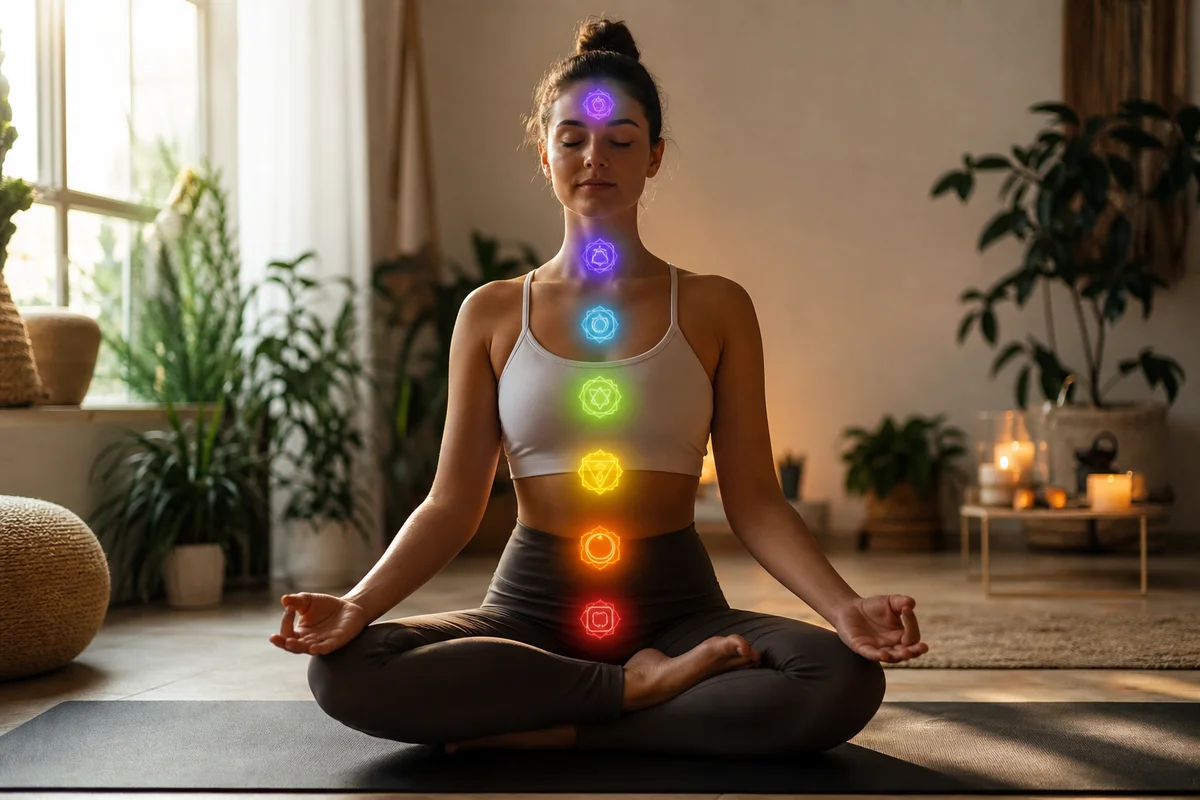
What Is Chakra Meditation?
Chakra meditation is a focused meditation practice that works with the seven chakras — energy centers in the body described in Hindu and Buddhist traditions, each associated with specific physical, emotional, and spiritual functions. The practice involves directing your attention to each chakra in sequence, visualizing its associated color, and using breath and intention to activate or balance that energy center.
The word "chakra" comes from Sanskrit and means "wheel" or "disk." The seven main chakras are conceptualized as spinning wheels of energy aligned along the spine, from the base (root chakra) to the top of the head (crown chakra). Each chakra is associated with a specific color, element, body location, set of emotional themes, and set of corresponding crystals.
You don't need to believe in energy systems to benefit from chakra meditation. The practice of sequentially focusing attention on different parts of your body, using visualization and controlled breathing, is a well-established relaxation and mindfulness technique regardless of the conceptual framework you use to understand it.
The Seven Chakras at a Glance
1. Root Chakra (Muladhara)
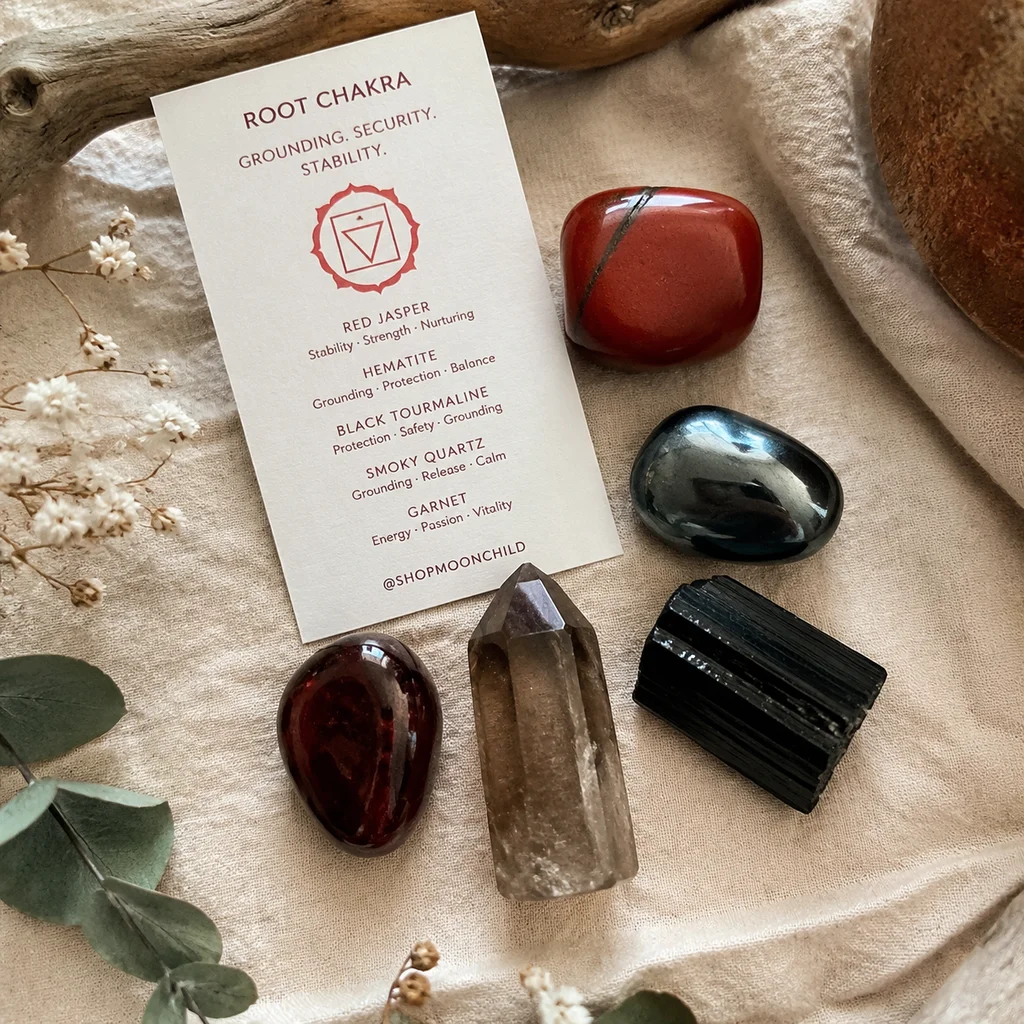
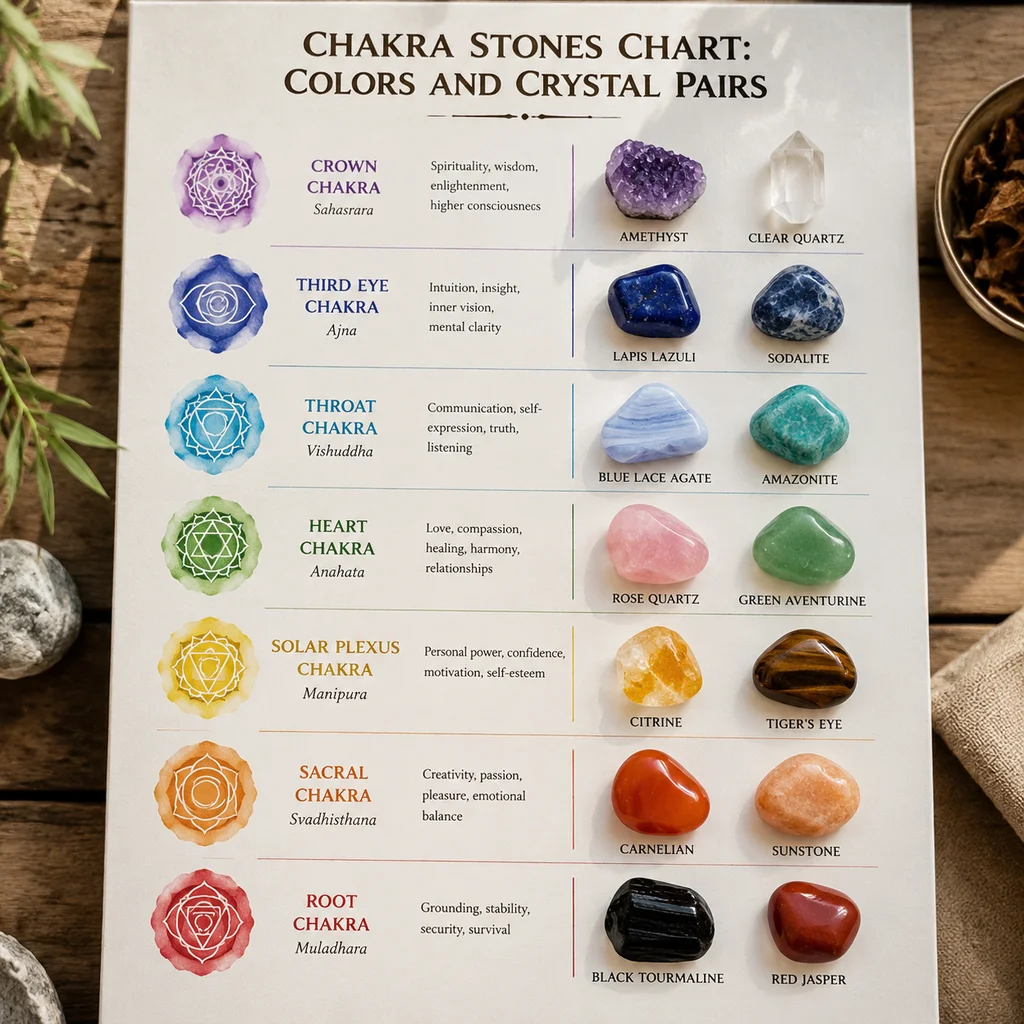
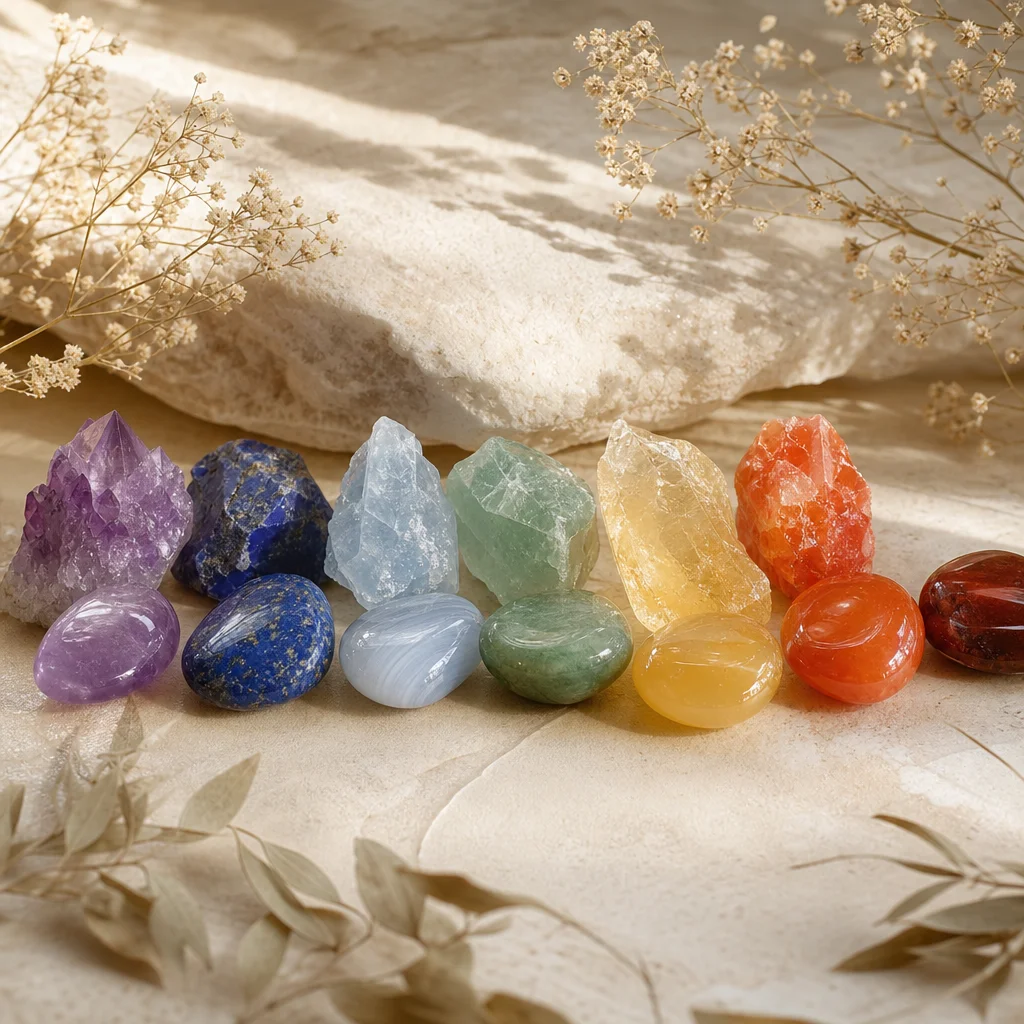
Location: Base of the spine / tailbone area. Color: Red. Associated with: survival, safety, grounding, physical needs, connection to the earth. Signs of imbalance: anxiety, restlessness, feeling ungrounded, fearfulness. Corresponding crystals: red jasper, black tourmaline, smoky quartz, hematite.
2. Sacral Chakra (Svadhisthana)
Location: Lower abdomen, about two inches below the navel. Color: Orange. Associated with: creativity, pleasure, emotions, sexuality, relationships. Signs of imbalance: emotional numbness, creative blocks, guilt, intimacy issues. Corresponding crystals: carnelian, orange calcite, moonstone, tiger's eye.
3. Solar Plexus Chakra (Manipura)
Location: Upper abdomen, stomach area. Color: Yellow. Associated with: personal power, confidence, self-esteem, willpower, digestion. Signs of imbalance: low self-confidence, difficulty making decisions, digestive issues, feeling powerless. Corresponding crystals: citrine, yellow jasper, sunstone, pyrite.
4. Heart Chakra (Anahata)
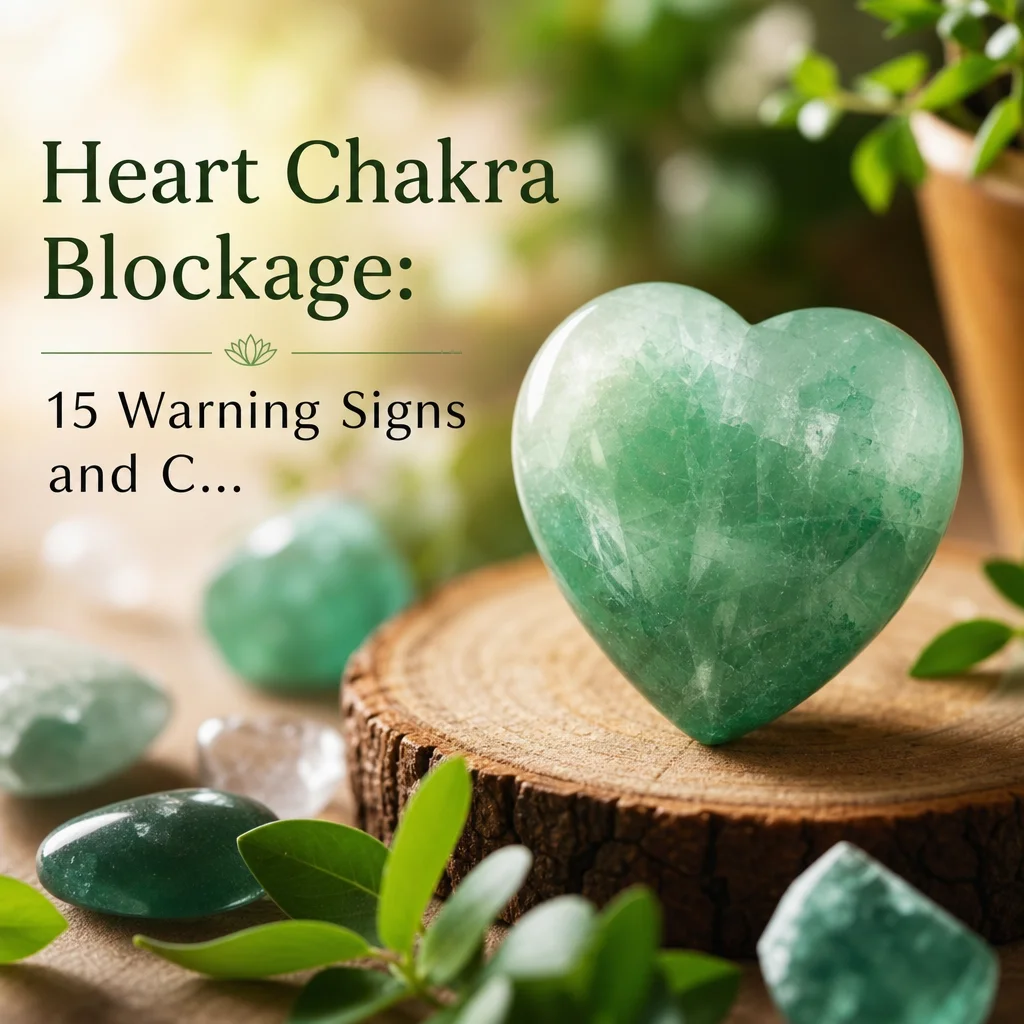
Location: Center of the chest. Color: Green (sometimes pink). Associated with: love, compassion, forgiveness, connection, emotional balance. Signs of imbalance: difficulty giving or receiving love, resentment, loneliness, heart-chest tightness. Corresponding crystals: rose quartz, green aventurine, jade, malachite.
5. Throat Chakra (Vishuddha)
Location: Throat. Color: Blue. Associated with: communication, truth, self-expression, speaking authentically. Signs of imbalance: difficulty speaking up, fear of judgment, throat tightness, communication misunderstandings. Corresponding crystals: lapis lazuli, blue lace agate, aquamarine, sodalite.
6. Third Eye Chakra (Ajna)
Location: Between the eyebrows, slightly above. Color: Indigo. Associated with: intuition, insight, imagination, wisdom, inner vision. Signs of imbalance: lack of clarity, poor intuition, difficulty making decisions, headaches. Corresponding crystals: amethyst, labradorite, fluorite, clear quartz.
7. Crown Chakra (Sahasrara)
Location: Top of the head. Color: Violet or white. Associated with: spiritual connection, consciousness, awareness, universal unity. Signs of imbalance: spiritual disconnection, isolation, close-mindedness, meaninglessness. Corresponding crystals: clear quartz, amethyst, selenite, lepidolite.
Preparing for Your First Chakra Meditation
Choose Your Space
Find a quiet place where you won't be interrupted for at least 20 minutes. Early morning and evening tend to be easiest times. You can sit on a cushion on the floor, in a chair with your feet flat on the ground, or even lie down (though lying down increases the chance of falling asleep). The key is a position you can hold comfortably without significant physical discomfort distracting you.
Dim the lights or use candlelight. Some practitioners like to play soft ambient music or nature sounds, but silence is fine too if that works better for you. The goal is an environment that supports inward focus.
Gather Your Crystals (Optional)
If you want to work with crystals during your meditation, choose one for each chakra or a single crystal associated with the chakra you want to focus on most. Place the crystals in a line from your tailbone to above your head, each roughly corresponding to the body location of its associated chakra. Alternatively, simply hold one crystal in your hand during the practice.
The crystals aren't necessary for the practice — chakra meditation works with visualization and breath alone. But if you enjoy having physical objects to focus on, they can serve as tangible anchors for each chakra's energy.
Set Your Timer
Set a gentle timer for 15 minutes. A timer frees you from the mental task of tracking time, which is one of the most common meditation distractions. Use a timer with a soft bell or chime rather than a harsh alarm — the transition from meditation back to normal awareness should be gradual, not jarring.
The Complete 15-Minute Chakra Meditation
Minute 0-2: Centering and Breath
Close your eyes. Take three deep breaths — inhale through the nose for a count of four, hold for a count of two, exhale through the mouth for a count of six. With each exhale, release tension from your body. Shoulders drop. Jaw unclenches. Hands soften.
After these three centering breaths, let your breathing settle into its natural rhythm. Don't try to control it — just observe the rise and fall of your chest and belly. Imagine yourself as a tree with deep roots extending down through the floor into the earth. Feel the stability and groundedness of those roots.
Minute 2-4: Root Chakra (Red)
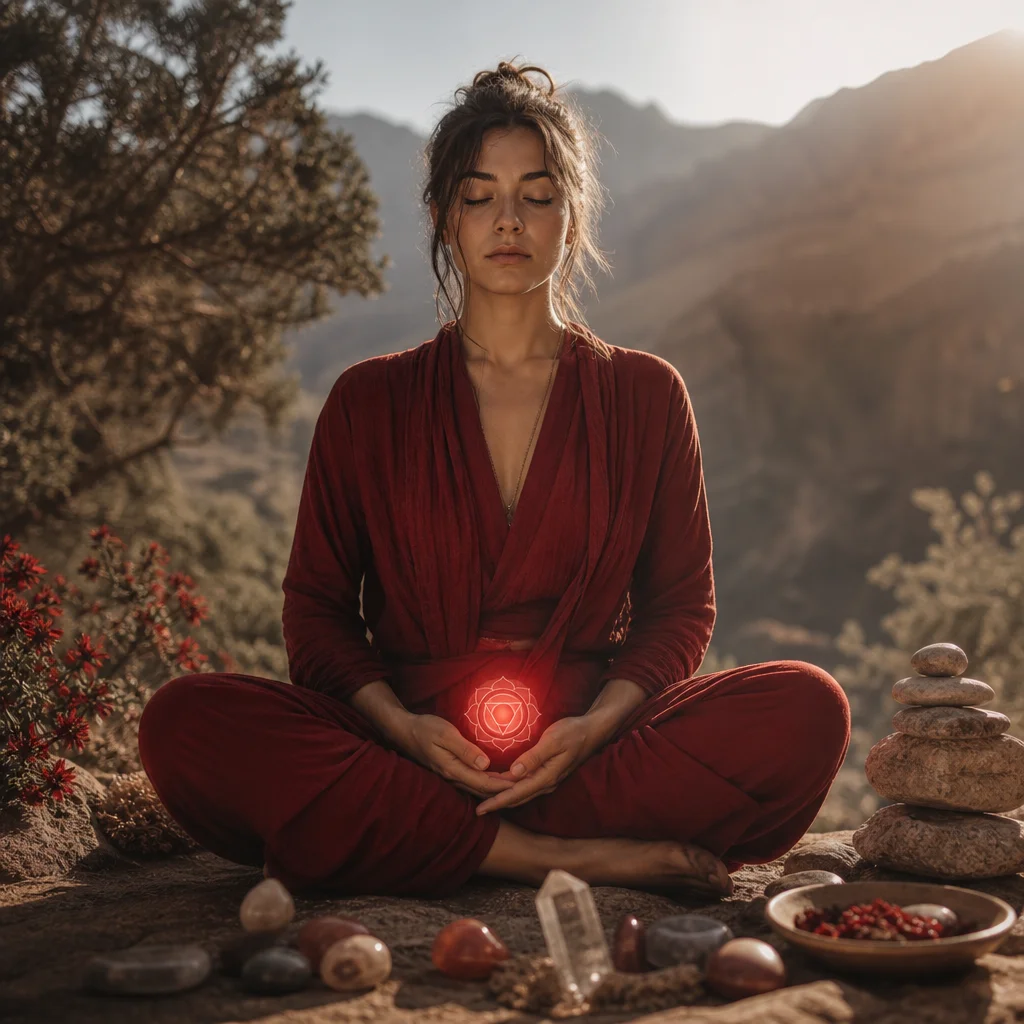
Bring your attention to the base of your spine — the very bottom of your torso, where your body meets the surface you're sitting on. Visualize a warm, deep red light glowing in this area. See it as a spinning disc of red energy, slowly rotating. As you breathe in, imagine the red light growing brighter. As you breathe out, imagine it expanding and stabilizing.
Silently repeat: "I am safe. I am grounded. I am here." Feel the physical sensation of sitting — the weight of your body, the contact with the floor or chair. This is your connection to the physical world.
Minute 4-6: Sacral Chakra (Orange)
Move your attention up from the root to your lower abdomen, about two inches below your navel. Visualize a warm orange light here — the color of a sunset or a flickering flame. See the orange disc of energy spinning gently. This area is associated with creativity and emotion — notice any feelings or sensations present without judging them.
Silently repeat: "I am creative. I feel deeply. I allow pleasure." Let your belly soften and expand with each breath. There's no need to hold anything tight here.
Minute 6-8: Solar Plexus Chakra (Yellow)
Move your attention to your upper abdomen, the area around your stomach and solar plexus. Visualize a bright, warm yellow light — like sunlight concentrated in your core. See the yellow disc spinning with confidence and energy. This is your center of personal power and self-assurance.
Silently repeat: "I am confident. I have the power to choose. I trust myself." Sit up slightly straighter as you focus here. Feel the strength in your spine and the warmth in your core.
Minute 8-10: Heart Chakra (Green)
Move your attention to the center of your chest. Visualize a soft green light — the color of new leaves or a calm forest canopy. This is your heart center, the bridge between your lower physical chakras and your upper spiritual ones. The green disc here spins gently, radiating warmth in all directions.
Silently repeat: "I am loved. I am compassionate. I forgive." Place your hand over your heart for a moment if it feels natural. Feel the gentle, steady rhythm of your heartbeat beneath your palm.
Minute 10-11: Throat Chakra (Blue)
Move your attention to your throat. Visualize a cool blue light — the color of a clear sky or calm water. This is your center of communication and authentic expression. The blue disc spins in your throat area, clearing and opening.
Silently repeat: "I speak my truth. I listen with openness. I express myself clearly." Notice any tension in your throat or jaw. Let it release as you breathe.
Minute 11-12: Third Eye Chakra (Indigo)
Move your attention to the space between your eyebrows, slightly above. Visualize a deep indigo light — darker than blue, with a touch of purple. This is your center of intuition and inner knowing. The indigo disc spins here, activating insight and clarity.
Silently repeat: "I see clearly. I trust my intuition. I am aware." Focus your inner gaze here, behind your closed eyes. There's nothing to see — just a sense of depth and spaciousness.
Minute 12-14: Crown Chakra (Violet/White)
Move your attention to the very top of your head. Visualize a violet or white light here — the lightest, most expansive color in the spectrum. This is your connection to something larger than yourself. The violet disc at your crown opens upward like a flower or a funnel.
Silently repeat: "I am connected. I am awareness itself. I am whole." Let the violet light expand upward and outward, beyond your body, beyond the room, into open space. Rest in this expansive awareness for a few breaths.
Minute 14-15: Integration and Close
Take a slow, deep breath and bring your awareness back to your whole body. Feel yourself sitting — your weight, your breath, the room around you. Visualize all seven chakra colors glowing along your spine in sequence: red, orange, yellow, green, blue, indigo, violet. See them as one continuous column of light.
Take three more deep breaths. When your timer sounds, open your eyes slowly. Sit for a moment before moving. Notice how you feel — calmer, more centered, more aware of your body. This is the afterglow of the practice.
Breathing Technique: Ujjayi Breath
Many practitioners use ujjayi breath during chakra meditation. This is the "ocean breath" — a gentle constriction of the back of the throat that creates a soft, audible breath sound (like distant ocean waves or wind through trees). To practice: breathe in through the nose while slightly constricting the throat, then exhale through the nose with the same constriction. The sound should be audible to you but not loud.
Ujjayi breath serves several functions: it gives your mind something to focus on (the sound), it regulates your breathing rate naturally, and it creates a gentle vibration in the throat that many practitioners find calming. You don't have to use it — normal breathing is fine — but it's worth trying if you find your mind wandering frequently during meditation.
Common Beginner Challenges
"I Can't See the Colors"
This is the most common concern. Some people visualize colors vividly; others see nothing at all. Both are completely normal. Think of the visualization as a suggestion rather than a requirement. If you can't see red at the root chakra, simply think "red" or imagine the concept of red. The benefit comes from the focused attention, not the vividness of the mental image.
"My Mind Wanders Constantly"
Everyone's mind wanders during meditation. The practice isn't about eliminating thoughts — it's about noticing when your mind has wandered and gently returning your attention to the chakra you're working on. Each time you catch yourself wandering and redirect focus, you're actually strengthening your meditation practice.
"I Feel Distracted by Physical Sensations"
Slight itching, tingling, or warmth in the areas you're focusing on is common and normal. Don't try to analyze these sensations — simply notice them and return to the visualization. If physical discomfort is significant, adjust your position and start again.
Building a Consistent Practice
The benefits of chakra meditation compound over time with consistent practice. Aim for at least three sessions per week to start, gradually increasing to daily practice if possible. Even five minutes of focused chakra meditation is valuable — don't skip your practice because you don't have a full 15 minutes available.
Track your experiences in a journal. Note which chakras feel easy to focus on and which ones resist your attention. These patterns can provide insight into areas of your life that may need attention. Over weeks and months of practice, you may notice shifts in how each chakra feels during meditation — this is the experience of "balancing" that practitioners describe.
Frequently Asked Questions
Can I do chakra meditation lying down?
Yes, though sitting is generally recommended for beginners because it's easier to maintain alertness. If you lie down and fall asleep, that's fine — you needed rest. But if you want to practice meditation specifically (not sleep), sitting with your spine relatively straight works better.
Do I need to go in order from root to crown?
The root-to-crown sequence is traditional and recommended for beginners because it follows the natural flow of energy through the body. Once you're experienced, you can work with individual chakras in any order or focus on a single chakra for an entire session.
How often should I practice chakra meditation?
Daily is ideal, but three times per week is a good starting point. The more consistently you practice, the more you'll feel the benefits. Even a short 5-minute session is better than skipping your practice entirely on busy days.
Can I practice chakra meditation with my children?
Absolutely. Children can benefit from the body awareness and breathing aspects of the practice. Simplify the visualization to match their age — use colors and simple affirmations. Many children enjoy the crystal aspect and like placing colored stones on their body during the practice.
Frequently Asked Questions
How do crystals help with chakra meditation?
Crystals act as natural focal points to anchor your mind. Each stone carries unique energies that align with specific chakras. For instance, wearing a clear quartz pendant enhances your crown chakra connection. Incorporating artisan crystal jewelry into your routine helps ground your intentions, making it easier to clear energetic blockages and achieve a much deeper state of mindful, spiritual balance.

Comments