Apophyllite: The Crystal of Inner Truth & Light
June 5, 2026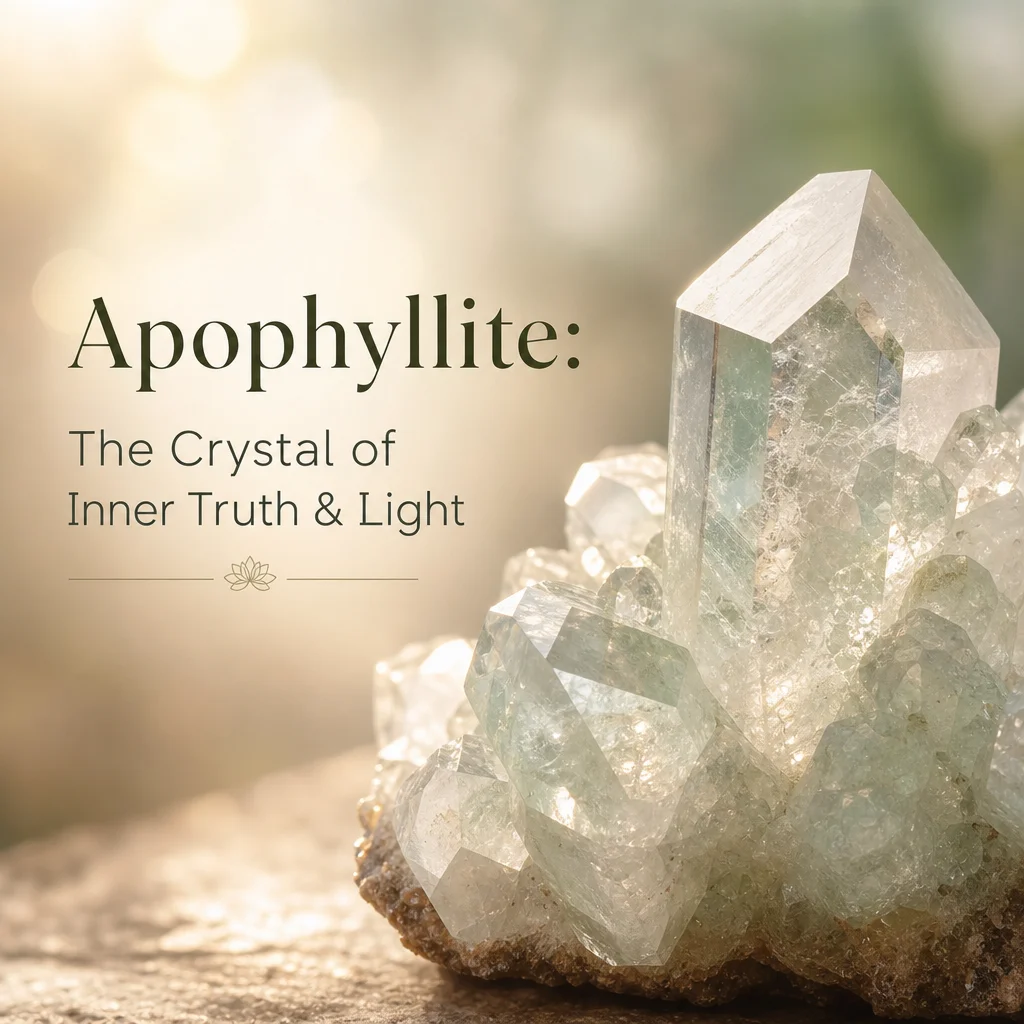
What Makes Apophyllite Unique
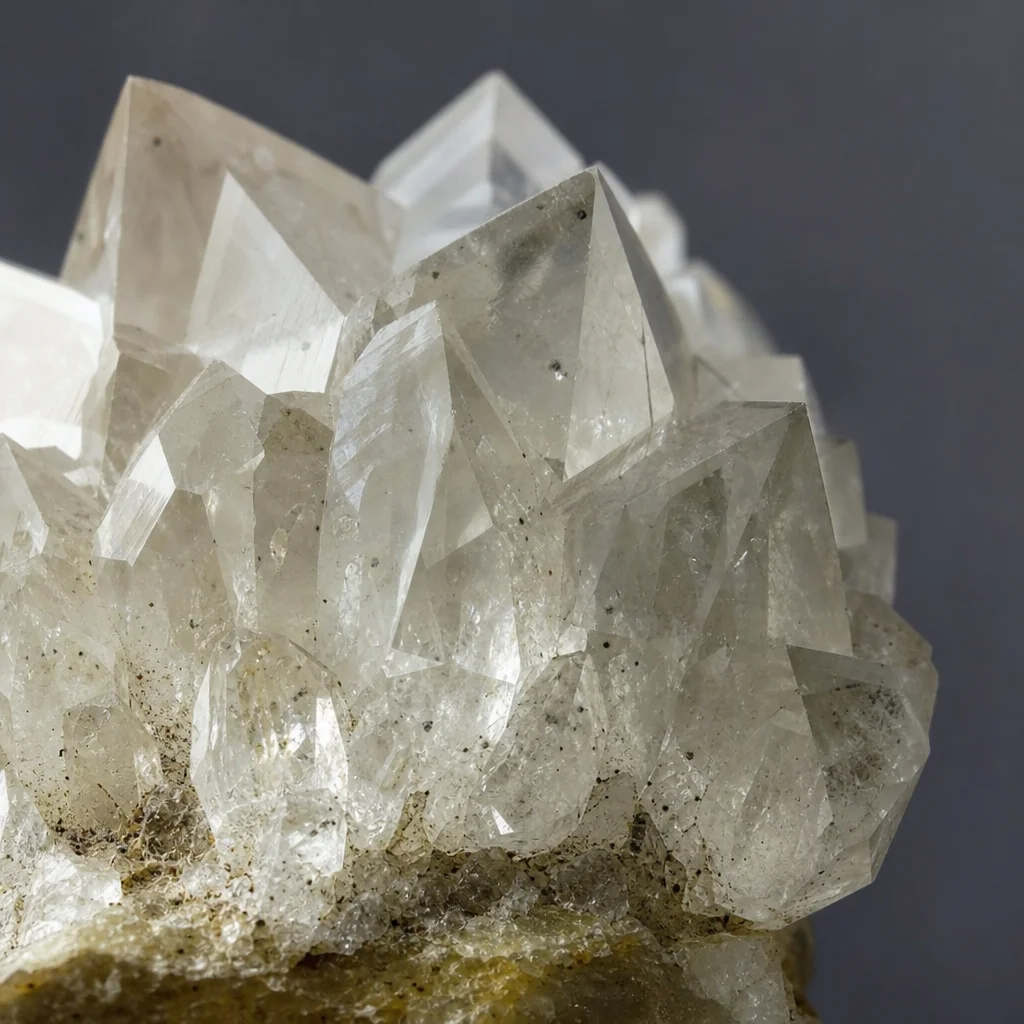
Apophyllite stands out in any crystal collection because of its distinctive crystal habit: square-based pyramid terminations that form perfect, geometric peaks atop prismatic or tabular crystals. These pyramidal tips are so well-defined they look almost artificially cut, yet they form entirely in nature. The effect is striking — a cluster of apophyllite with dozens of glittering pyramid points creates a miniature crystal city that catches light from every direction.
Chemically, apophyllite is a hydrated potassium calcium fluorosilicate — specifically K(Ca,Na)₄Si₈O₂₀(F,OH)·8H₂O. That "8H₂O" is critical: apophyllite contains water molecules as part of its crystal structure, not as surface moisture. This makes it a hydrous mineral with properties and behaviors that differ significantly from anhydrous crystals like quartz or feldspar.
The Zeolite Connection
Apophyllite is frequently discussed alongside zeolite minerals, and the two groups are almost always found together in nature. Strictly speaking, apophyllite isn't a zeolite — zeolites have a framework silicate structure with open channels, while apophyllite has a layered sheet structure. However, apophyllite and zeolites share the same geological environments: cavities in volcanic basalt flows where hot, mineral-rich water deposited crystals over millions of years.
The most famous apophyllite-producing region is the Deccan Traps in Maharashtra, India — a vast volcanic formation covering roughly 500,000 square kilometers. These ancient basalt flows contain thousands of amygdules (gas bubbles that filled with minerals as the lava cooled) where apophyllite, stilbite, heulandite, scolecite, and other zeolite-group minerals crystallized in stunning associations.
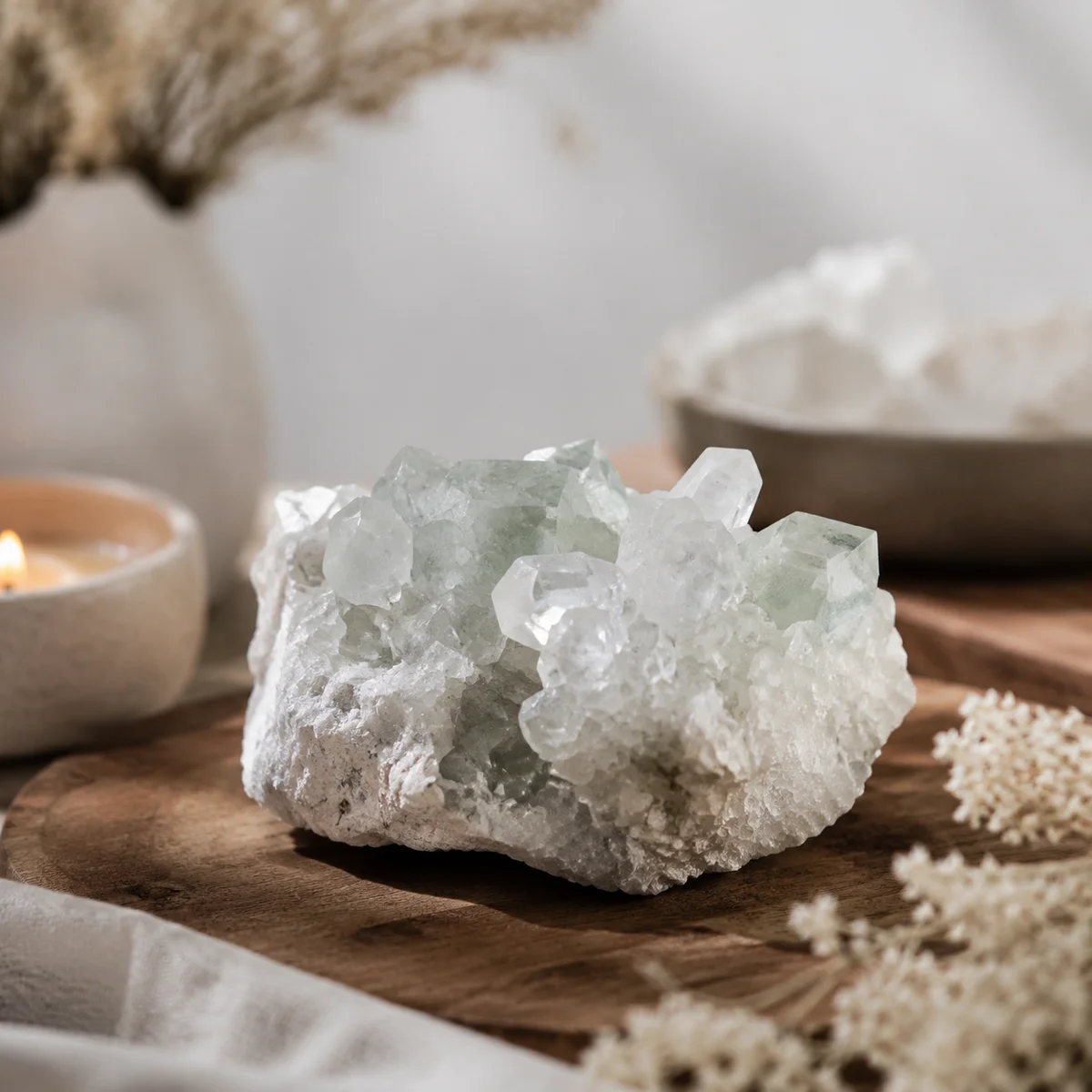
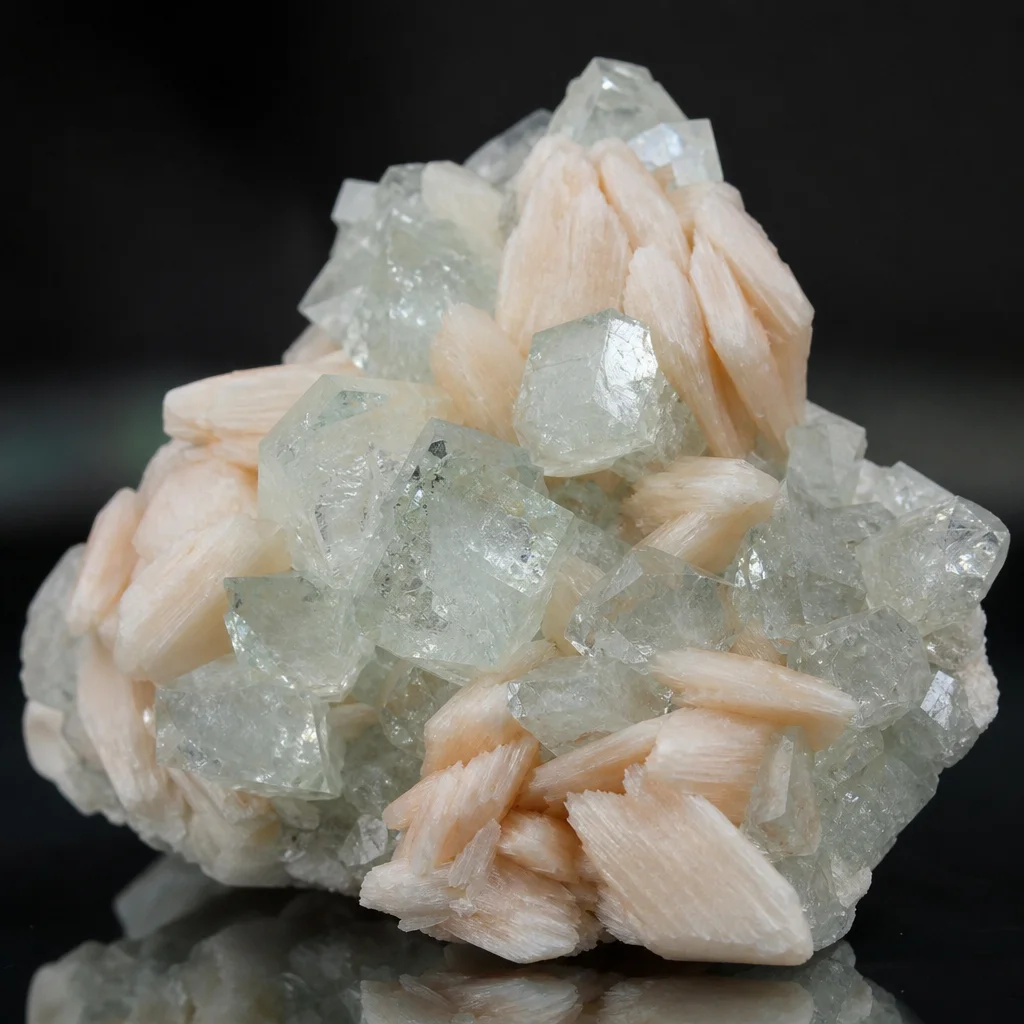
An apophyllite-stilbite combination specimen — green stilbite bowties nestled among clear apophyllite pyramids on a bed of peach-colored heulandite — is one of the most aesthetically appealing mineral assemblages in existence. These Indian specimens dominate the world market and are relatively affordable given their visual impact.
Color Varieties and Clarity
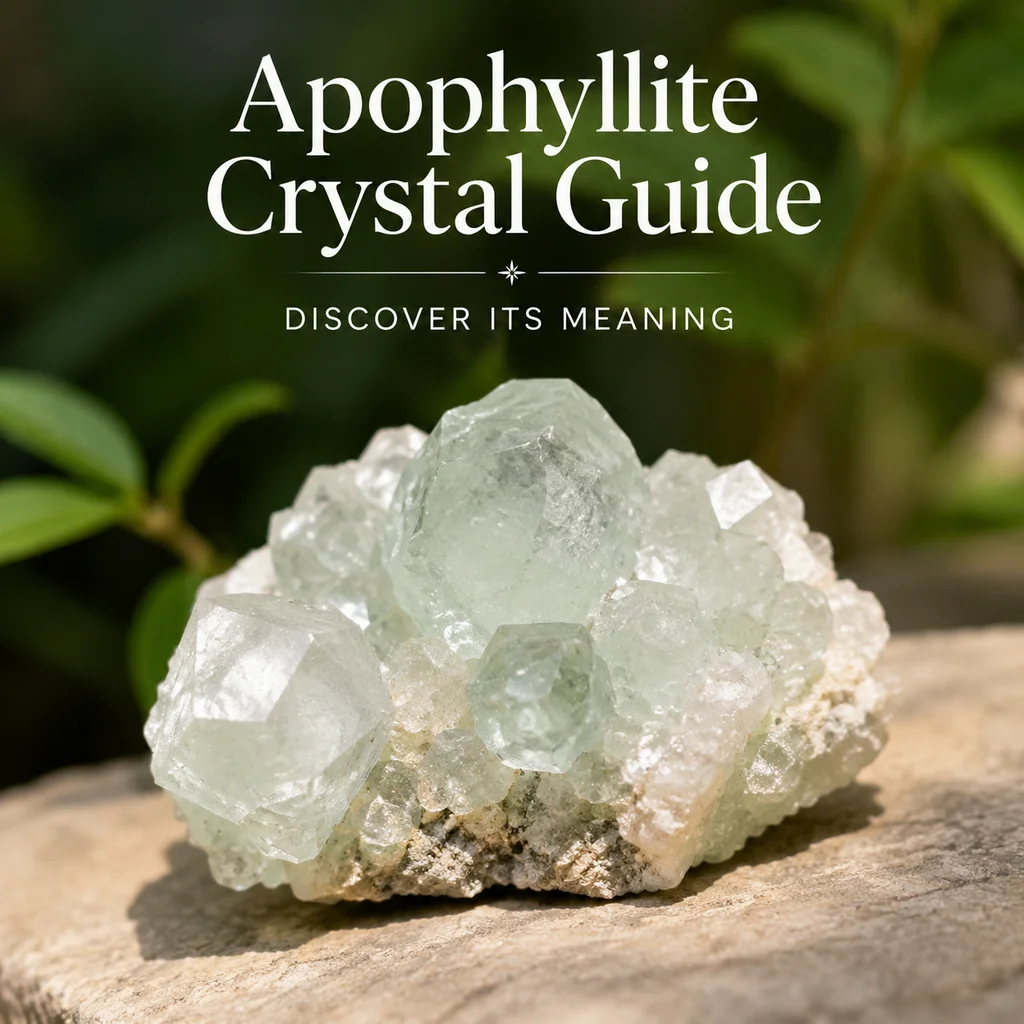
Clear to white apophyllite is the most common variety. The transparency ranges from water-clear to milky-white, with many specimens showing internal veils and phantom-like growth zones that add depth and interest. Green apophyllite, colored by trace amounts of vanadium or chromium, is less common and commands higher prices. The green ranges from pale mint to a distinctive celery green.
Colorless apophyllite has a vitreous (glassy) to pearly luster on crystal faces, and the pyramid terminations often display a subtle iridescence when viewed at certain angles. The combination of clarity, geometric precision, and luster gives good apophyllite specimens a gem-like quality that's unusual among mineral specimens at comparable prices.
The Hydration Sensitivity
Because water is structurally integral to apophyllite, heat affects it differently than anhydrous minerals. Heating apophyllite above about 200-300°C causes it to lose its structural water, which alters the crystal structure and can produce a pitted, frosted appearance. The mineral can partially dehydrate even at lower temperatures over extended periods.
This is why apophyllite should never be exposed to high heat — no hot water cleaning, no steam cleaning, no direct sun exposure in hot climates. Store it at normal room temperature away from direct heat sources. The water loss is irreversible: once the crystal structure loses its water molecules, it doesn't reabsorb them under normal conditions.
Normal handling at room temperature doesn't affect apophyllite. The hydration concern only becomes relevant under elevated temperatures. You can hold apophyllite, display it, and clean it with cool water without concern.
Apophyllite in Crystal Healing Practice
In crystal healing, apophyllite is associated with inner truth, clarity, and connection to higher consciousness. The stone's transparency and pyramidal form contribute to these associations — the pyramid shape is symbolically linked to focused energy and spiritual awareness in many traditions.
Apophyllite is commonly used for third eye and crown chakra work. Practitioners place apophyllite points on the forehead during meditation, with the pyramid termination oriented upward, symbolizing a connection between the individual and what's described as higher awareness. Whether or not this has any objective effect, the physical sensation of a smooth, cool crystal point on the forehead creates a genuine sensory focus point that can aid concentration during meditation.
Some crystal practitioners use apophyllite as a "scrying" stone — gazing into the transparent crystal faces while in a relaxed state to facilitate visualizations or intuitive insights. The internal clarity of good specimens makes this plausible as a visual meditation aid, similar to using a crystal ball but with a more natural, less theatrical feeling.
Comparing Apophyllite to Clear Quartz
Both are clear, both form pointed crystals, and both are used in meditation practice. The differences matter:
Crystal structure: Quartz forms hexagonal prisms with six-sided terminations. Apophyllite forms square-based pyramids. Visually distinct once you know what to look for.
Hardness: Quartz is 7 on Mohs; apophyllite is 4.5-5. Apophyllite is significantly softer and can be scratched by a knife blade or coin.
Water content: Quartz is anhydrous silicon dioxide. Apophyllite contains structural water. This affects thermal behavior and long-term stability in hot environments.
Cleavage: Quartz has no cleavage (it fractures conchoidally). Apophyllite has perfect basal cleavage in one direction, meaning it can split cleanly along flat planes if struck. This makes apophyllite more fragile than quartz for handling purposes.
Crystal associations: Quartz typically forms alone or with other pegmatite minerals. Apophyllite is almost always found with stilbite, heulandite, and other zeolite minerals, creating multi-mineral specimens that are visually more complex.
Building a Crystal Grid with Apophyllite
Apophyllite works well as the focal point of a crystal grid designed for clarity or meditation. Place a single large apophyllite point at the center, oriented upward. Surround it with four clear quartz points directed inward, and add supporting stones at the cardinal positions based on your intention — rose quartz for self-love, amethyst for calm, or black tourmaline for grounding.
The pyramidal shape of apophyllite creates a natural focal point that draws the eye and mind toward it, which is exactly what you want in a grid centerpiece. The stone's internal clarity gives it a light, airy quality that balances heavier, more opaque stones in the arrangement.
Care and Maintenance
Clean apophyllite with cool water and a soft brush. No soap, no chemicals, no ultrasonic cleaner. The softness of the stone means even gentle brushing should be done cautiously — stiff brushes can scratch the crystal faces. A soft paintbrush or makeup brush is ideal for dusting specimens.
Display apophyllite out of direct sunlight. While moderate ambient light won't harm it, prolonged direct sun exposure — especially through glass, which concentrates heat — can eventually cause water loss and a dulling of the surface. A shaded display area or room with indirect lighting is ideal.
Handle specimens by the matrix (the host rock they're attached to) rather than individual crystal tips. Apophyllite's perfect cleavage means individual crystals can separate from the matrix with surprisingly little force. Grabbing a crystal point and pulling can detach it from the specimen entirely.
Frequently Asked Questions
Is apophyllite expensive?
Not generally. Small apophyllite clusters from India are quite affordable, often $10-30 for a nice display specimen. Large museum-quality pieces with well-formed pyramid points and associated stilbite can run into the hundreds, but good-looking pieces for personal collection are widely available at accessible prices.
Can apophyllite go in water?
Brief contact with cool water is fine for cleaning. Don't soak apophyllite for extended periods, and never use warm or hot water. The structural water in the mineral isn't affected by brief cool-water rinsing, but prolonged immersion can potentially weaken the crystal structure over time.
Why does apophyllite sometimes look cloudy inside?
Internal cloudiness is caused by microscopic fluid inclusions and growth zones that formed during crystallization. These are natural features, not flaws. Some collectors prefer the water-clear specimens, while others appreciate the depth and character that internal veils add to the piece.
How to Choose
Selecting the right apophyllite can be a delightful experience if you know what to look for. Here are some tips to guide you in your selection:
- Clarity: Opt for specimens with clear, sparkling crystals. Avoid crystals with a cloudy or milky appearance.
- Size and Shape: While size is subjective, a well-formed, symmetrical pyramid can add to the visual appeal. The termination should be sharp and well-defined.
- Color: If color is a factor, look for a rich, consistent hue. Green apophyllite is especially prized, but clarity and quality are still key.
- Matrix: Some collectors prefer individual crystals, while others appreciate the natural matrix. Decide what you prefer and look for specimens that meet your criteria.
Remember, apophyllite is a natural stone, and no two specimens are exactly alike. Embrace the unique character of each piece.
Care and Maintenance
Proper care and maintenance ensure your apophyllite remains beautiful and functional for years to come. Here are some tips to keep your stone in top condition:
- Cleaning: Use only cool water and a soft brush. Avoid harsh chemicals and ultrasonic cleaners.
- Display: Keep your apophyllite away from direct sunlight and heat sources.
- Handling: Always handle by the matrix or a secure point to prevent breakage.
- Storage: Store in a cool, dry place. A velvet-lined box or a soft cloth can prevent scratches and dust buildup.
Regular care not only preserves the beauty of your apophyllite but also helps maintain its energy and properties.
Related Stones
Apophyllite is part of a larger family of minerals with similar properties. Here's a brief comparison with some related stones:
- Stilbite: Similar in appearance to apophyllite, stilbite has a softer, more pastel color palette and is also associated with clarity and spiritual growth.
- Heulandite: With a peach or peach-pink hue, heulandite is another zeolite that complements apophyllite well in both beauty and energy.
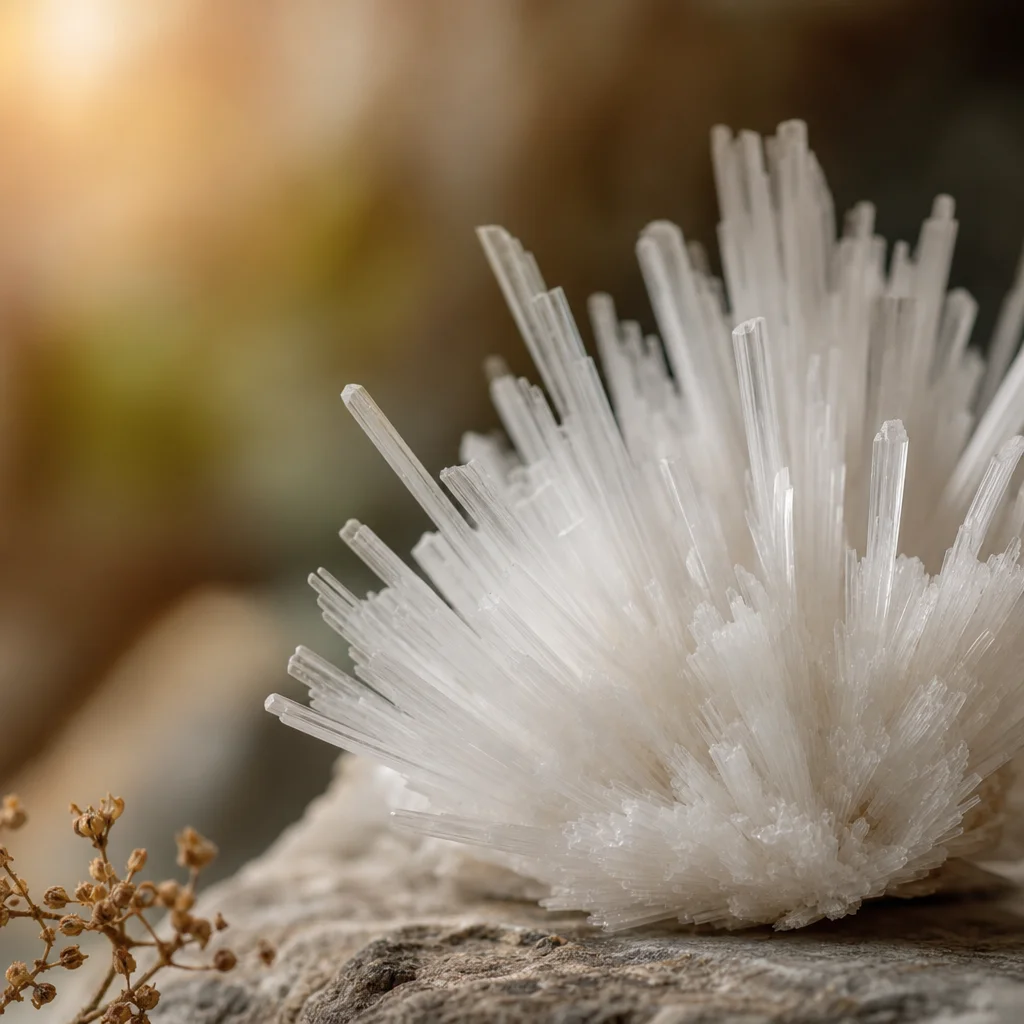
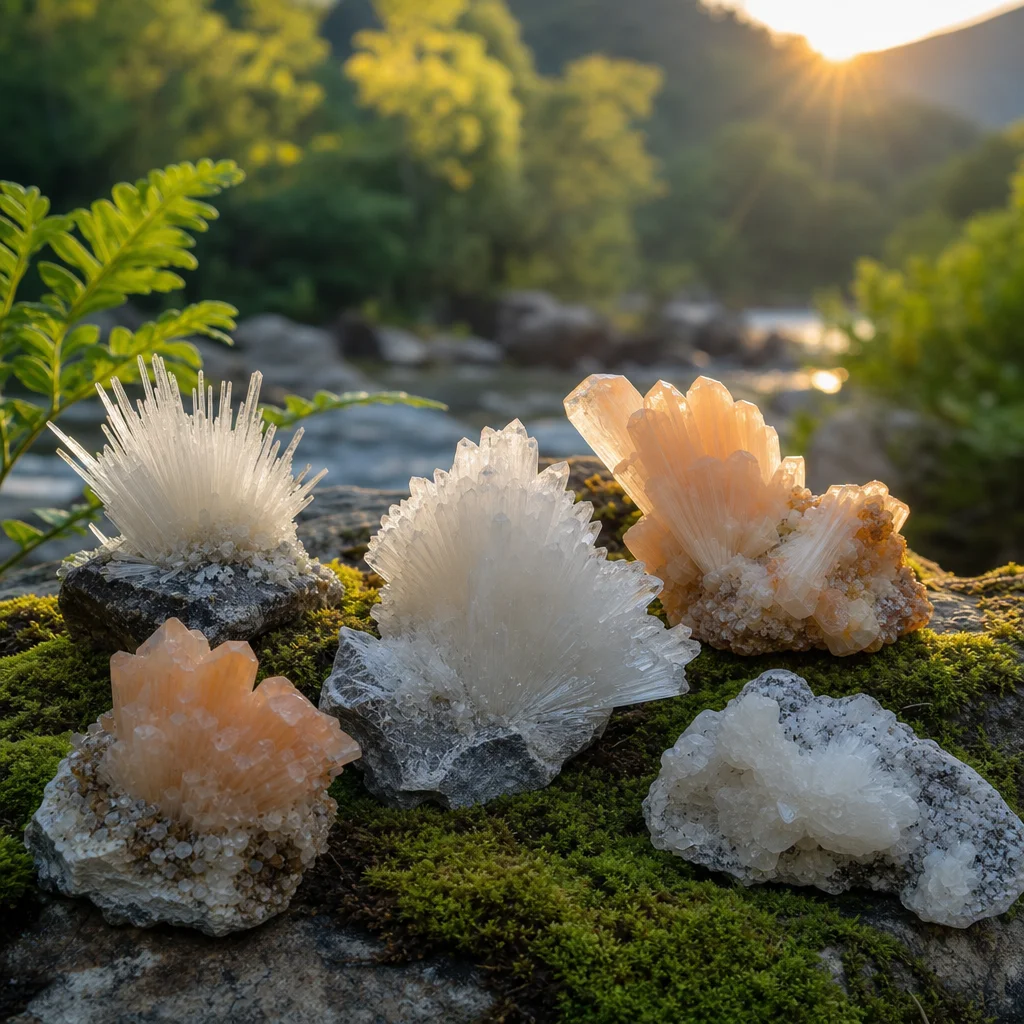
- Scolecite: Scolecite is a transparent to white zeolite with a soft, fibrous appearance, making it a visually striking addition to apophyllite collections.
- Smithsonite: Known for its vibrant orange color, smithsonite is a carbonate mineral that shares some energy properties with apophyllite but is more sensitive to heat.
While these stones share some similarities, each brings its own unique characteristics and energies to the table, adding depth and variety to a crystal collection.
Practical Usage Tips or Historical Anecdotes
Apophyllite's use in crystal healing is just one of many ways this mineral has been valued throughout history. Here are some practical tips and historical anecdotes:
- Use as a Meditation Aid: The pyramid shape and clarity of apophyllite make it an excellent tool for meditation. Hold the crystal during meditation to focus on your breath and inner truth.
- Environmental Sensitivity: In the Victorian era, apophyllite was believed to have the power to purify the air and was often used in homes and gardens to improve the environment.
- Historical Significance: In ancient Egypt, apophyllite was thought to have protective properties and was used in amulets and rituals. It was also believed to be a symbol of the divine.
- Celestial Connection: In some cultures, apophyllite was associated with the moon and was used in divination and dreamwork practices.
These stories and uses reflect the enduring fascination with apophyllite and its many potential applications.
Frequently Asked Questions
How does apophyllite compare to other hydrous minerals?
Compared to other hydrous minerals, apophyllite is relatively soft and can be more susceptible to heat and chemicals. Minerals like opal or chrysocolla also contain water, but their structures and behaviors differ significantly from apophyllite's layered sheet structure.
Is there a specific energy that apophyllite is known for?
Apophyllite is known for its ability to enhance clarity, truth, and connection to higher consciousness. It's often used for third eye and crown chakra work, and it's considered helpful for those seeking personal growth and spiritual insights.
Can apophyllite be used for physical healing?
While apophyllite is primarily used in crystal healing for its metaphysical properties, some practitioners believe it can help with issues related to the throat and neck due to its association with communication and clarity.
Are there any cultural uses for apophyllite that are different from crystal healing?
Yes, apophyllite has been used in various cultural contexts beyond crystal healing. It was used in ancient rituals and amulets, and it has also been associated with magical properties in some traditions.
How should I care for my apophyllite collection?
Care for your apophyllite collection by storing them away from direct sunlight, heat, and chemicals. Clean them gently with cool water and a soft brush. Handle with care to avoid breakage.
How to Choose
Selecting the right apophyllite can be a delightful experience if you know what to look for. Here are some tips to guide you in your selection:
- Clarity: Opt for specimens with clear, sparkling crystals. Avoid crystals with a cloudy or milky appearance.
- Size and Shape: While size is subjective, a well-formed, symmetrical pyramid can add to the visual appeal. The termination should be sharp and well-defined.
- Color: If color is a factor, look for a rich, consistent hue. Green apophyllite is especially prized, but clarity and quality are still key.
- Matrix: Some collectors prefer individual crystals, while others appreciate the natural matrix. Decide what you prefer and look for specimens that meet your criteria.
Remember, apophyllite is a natural stone, and no two specimens are exactly alike. Embrace the unique character of each piece.
Care and Maintenance
Proper care and maintenance ensure your apophyllite remains beautiful and functional for years to come. Here are some tips to keep your stone in top condition:
- Cleaning: Use only cool water and a soft brush. Avoid harsh chemicals and ultrasonic cleaners.
- Display: Keep your apophyllite away from direct sunlight and heat sources.
- Handling: Always handle by the matrix or a secure point to prevent breakage.
- Storage: Store in a cool, dry place. A velvet-lined box or a soft cloth can prevent scratches and dust buildup.
Regular care not only preserves the beauty of your apophyllite but also helps maintain its energy and properties.
Related Stones
Apophyllite is part of a larger family of minerals with similar properties. Here's a brief comparison with some related stones:
- Stilbite: Similar in appearance to apophyllite, stilbite has a softer, more pastel color palette and is also associated with clarity and spiritual growth.
- Heulandite: With a peach or peach-pink hue, heulandite is another zeolite that complements apophyllite well in both beauty and energy.
- Scolecite: Scolecite is a transparent to white zeolite with a soft, fibrous appearance, making it a visually striking addition to apophyllite collections.
- Smithsonite: Known for its vibrant orange color, smithsonite is a carbonate mineral that shares some energy properties with apophyllite but is more sensitive to heat.
While these stones share some similarities, each brings its own unique characteristics and energies to the table, adding depth and variety to a crystal collection.
Practical Usage Tips or Historical Anecdotes
Apophyllite's use in crystal healing is just one of many ways this mineral has been valued throughout history. Here are some practical tips and historical anecdotes:
- Use as a Meditation Aid: The pyramid shape and clarity of apophyllite make it an excellent tool for meditation. Hold the crystal during meditation to focus on your breath and inner truth.
- Environmental Sensitivity
Frequently Asked Questions
Q: What is the significance of Apophyllite in metaphysical practices?
Apophyllite is often associated with truth and clarity. It's believed to help you see the truth in a situation and communicate it effectively. Many people use it to enhance their intuition and spiritual growth.
Q: Can Apophyllite be used to treat physical ailments?
While Apophyllite is thought to have metaphysical properties, it is not a substitute for medical treatment. It's important to consult with healthcare professionals for any physical health concerns.
Q: How can I tell if my Apophyllite is genuine?
Real Apophyllite often has a white, fibrous, or crystalline appearance. It can be translucent to transparent and usually has a vitreous luster. If it's too clear or too dark, it might not be genuine. Always buy from reputable sources.
Q: Can Apophyllite be used in meditation?
Absolutely! Many people use Apophyllite during meditation to enhance their focus and to help them connect with their inner truth. Its clarity and energy can be very grounding and supportive during meditative practices.
How to Choose Quality Apophyllite
When shopping for Apophyllite, there are a few key factors to consider to ensure you're getting a quality piece:
- Clarity: Look for Apophyllite with clear, transparent, or translucent qualities. The clearer the stone, the higher the quality.
- Color: While the color can vary, a light, pastel shade is often preferred. Avoid stones that are too dark or have an unnatural coloration.
- Shape: A well-formed, natural shape is preferable over cut or polished stones. This indicates a higher quality and natural formation.
- Weight: Heavier stones can sometimes indicate a higher quality, as they have a denser mineral composition.
Remember to buy from a reputable dealer who can provide a certificate of authenticity if needed.
Care and Maintenance
Apophyllite is a relatively soft crystal, with a hardness of 3.5 to 4 on the Mohs scale. Here are some tips for caring for your Apophyllite:
- Keep it dry: Avoid exposing your Apophyllite to water, as it can be easily damaged. If it does get wet, gently wipe it dry with a soft cloth.
- Store properly: Store your Apophyllite in a cool, dry place away from direct sunlight. A crystal cabinet or a soft cloth-lined box can help protect it from dust and damage.
- Regular cleaning: Gently clean your Apophyllite with a soft cloth and a mild, non-abrasive cleaner. Avoid using harsh chemicals or abrasive materials.
- Charging: To maintain its energy, you can charge your Apophyllite under moonlight or by placing it on a quartz cluster. Just be sure to follow the same precautions with charging as you would with cleaning.
By taking care of your Apophyllite, you can ensure it remains a beautiful and effective tool for your spiritual practices.
Similar Stones You Might Like
Apophyllite shares some properties with other crystals, and you might find these stones to be of interest as well:
- Clear Quartz: Known for its clarity and amplifying properties, Clear Quartz is a great companion to Apophyllite.
- Selenite: With its soft, pearly luster, Selenite is another stone that promotes clarity and can be used in meditation.
- Moonstone: Known for its luminous glow, Moonstone can help with emotional balance and intuition, similar to Apophyllite.
- Fluorite: Fluorite is known for its wide range of colors and its ability to enhance mental clarity and focus.
Each of these stones has its own unique properties and can be used to support various aspects of your spiritual journey.
Comments