Scolecite: The Needle Crystal of Inner Peace ...
June 5, 2026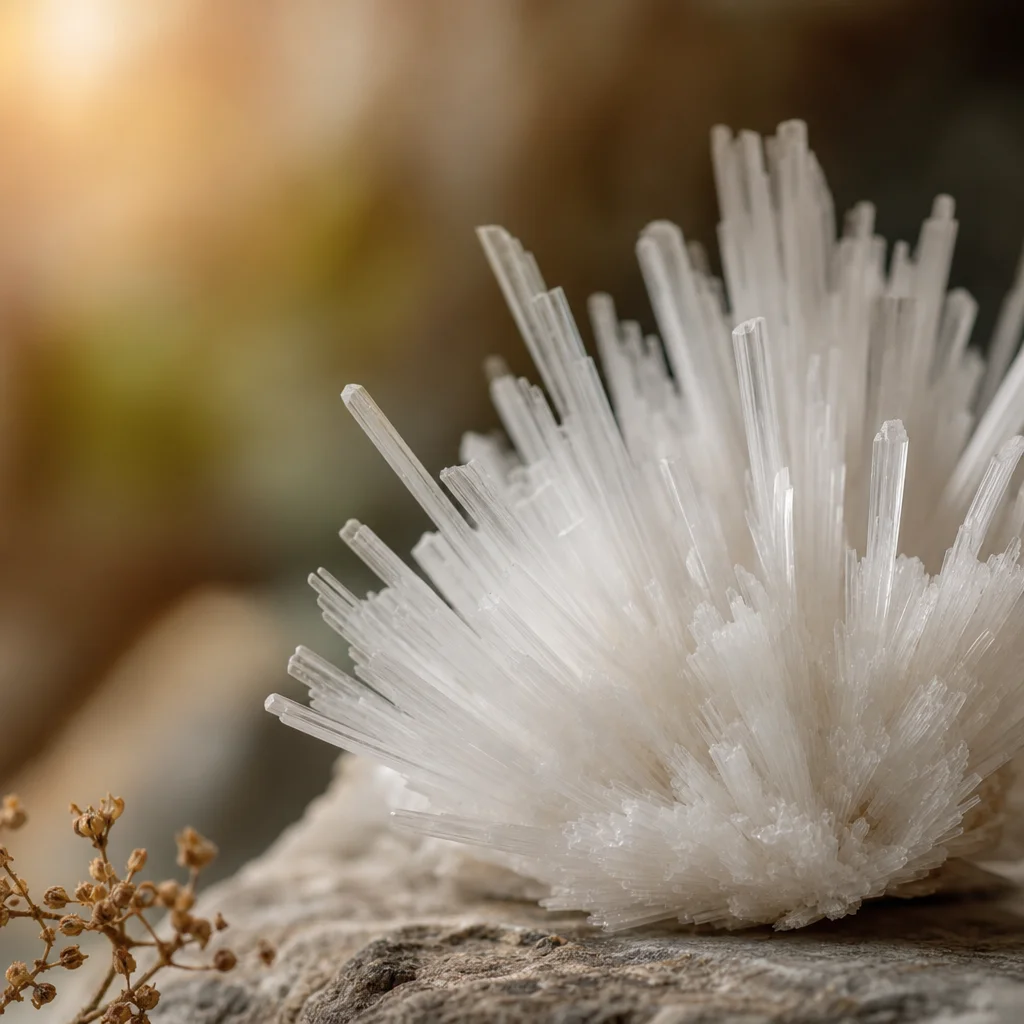
Introducing Scolecite
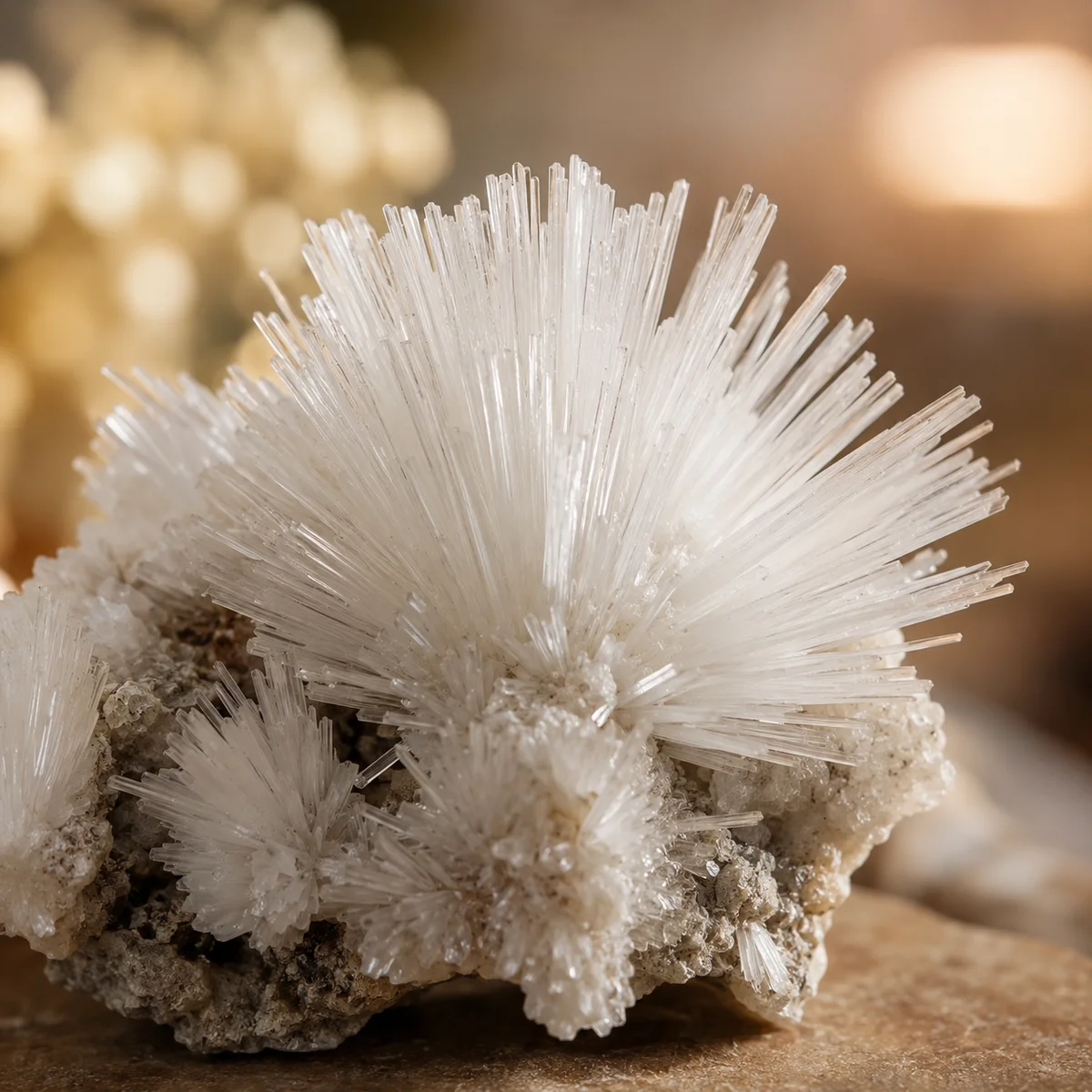
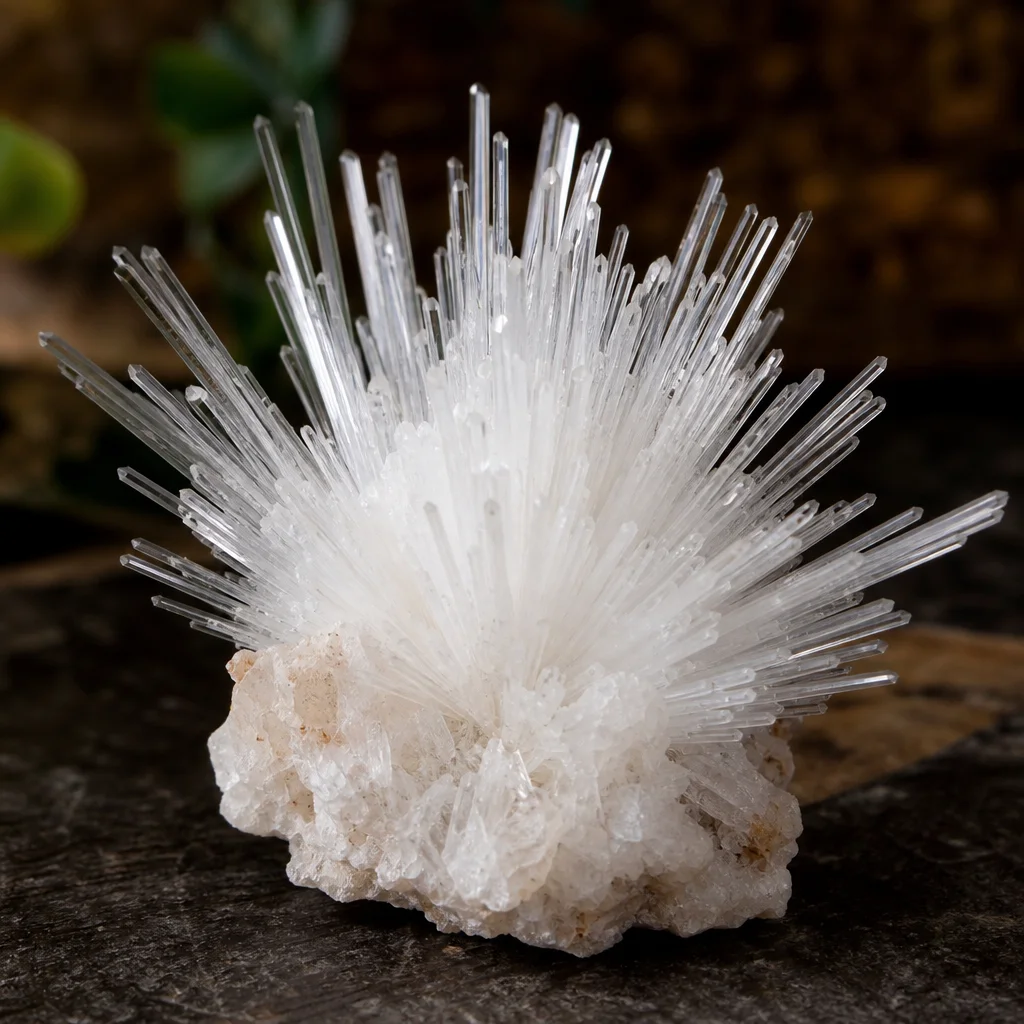
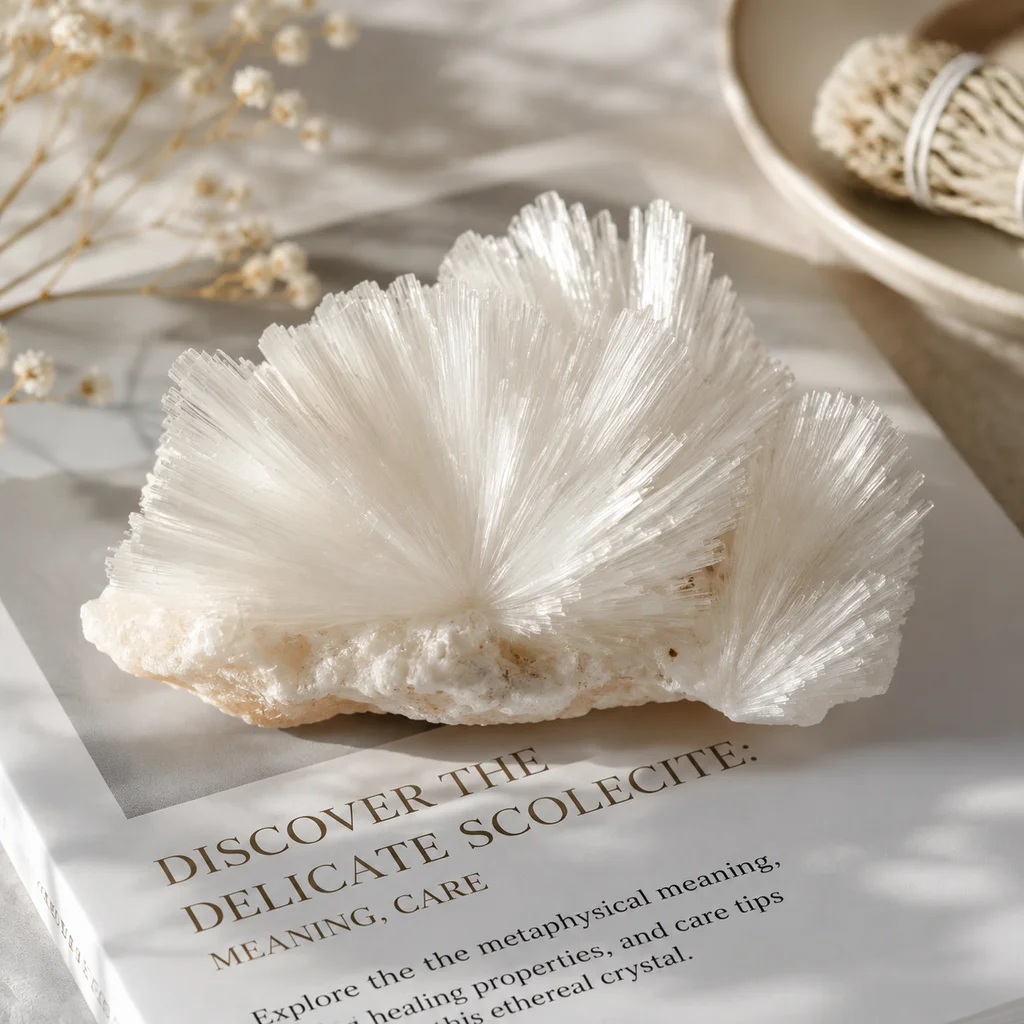
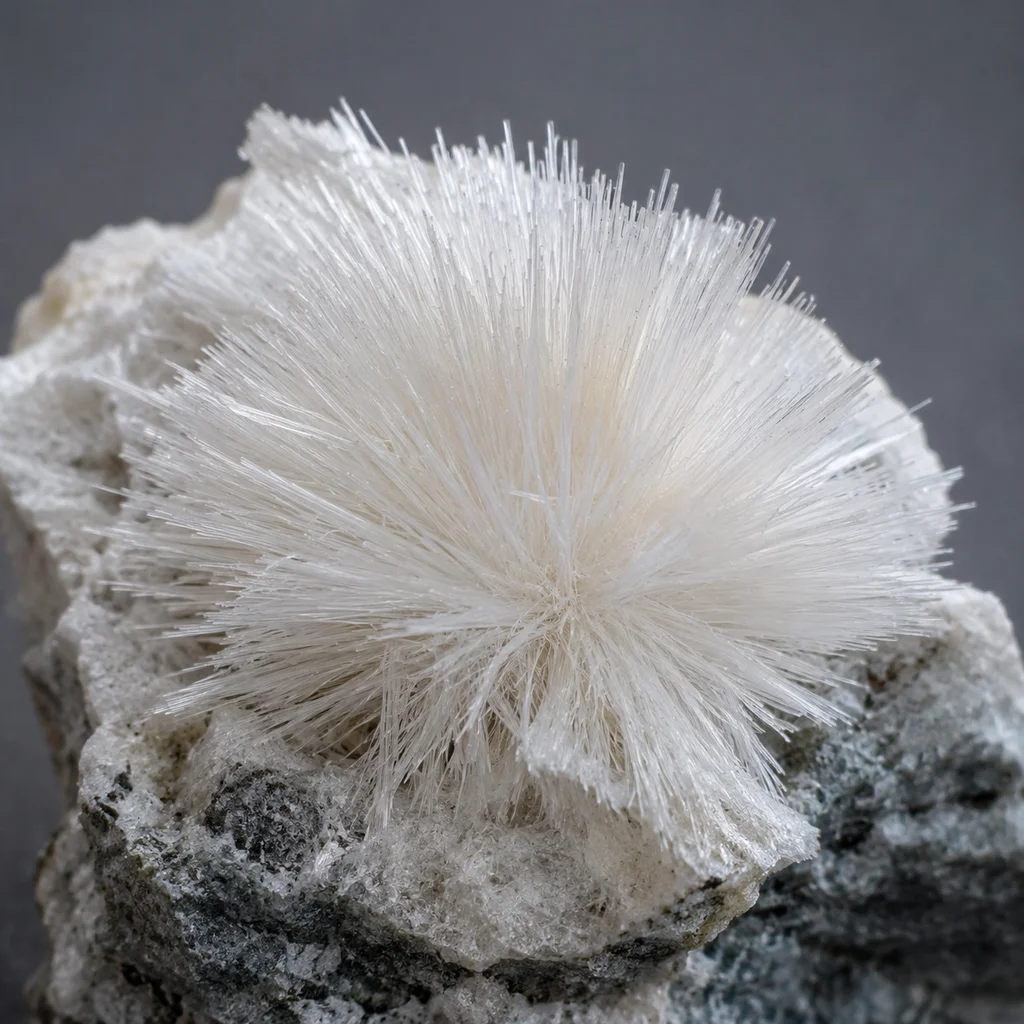
Scolecite is a calcium zeolite mineral with the chemical formula CaAl₂Si₃O₁₀·3H₂O. Its name comes from the Greek word "skolec" (worm), referring to its characteristic needle-like or fibrous crystal habit. When you see a scolecite specimen, the first thing that strikes you is usually the appearance — slender, acicular (needle-shaped) crystals radiating outward from a central point, forming spherical or hemispherical clusters that look like frozen explosions of white silk.
These radiating aggregates are scolecite's most recognizable form. Individual crystals are hair-thin — typically 0.1-1mm in diameter but can extend several centimeters in length. When thousands of these needles grow together from a common base, they create formations described as "sprays," "bursts," or "wheels" that are among the most distinctive mineral specimens in any collection.
Physical Properties
Scolecite has a Mohs hardness of 5 to 5.5, placing it in the same range as apatite and slightly softer than feldspar. This moderate hardness means scolecite can be scratched by a knife blade or harder minerals, and it's susceptible to damage from rough handling. The delicate needle crystals are particularly fragile — they bend and break easily under even gentle pressure.
The specific gravity is 2.16-2.22, which is quite light, reflecting the mineral's hydrated nature. The structural water (3H₂O per formula unit) makes up roughly 16% of the mineral's weight. Like apophyllite, this means heat affects scolecite — prolonged exposure to temperatures above 200°C causes dehydration and structural degradation.
Cleavage is perfect in one direction (along the crystal length), which is why individual scolecite needles split easily along their axis. The fracture surface on broken needles has a silky luster that matches the fibrous crystal structure. Twinned crystals are common and can create V-shaped or cross-shaped crystal pairs that are popular with collectors.
The Indian Zeolite Connection
Scolecite's primary commercial source is the Deccan Traps volcanic region in Maharashtra, India — the same geological formation that produces the world's finest apophyllite and stilbite specimens. These three minerals are almost always found together, and the associations between them create some of the most visually spectacular mineral specimens in the commercial market.
The typical Indian zeolite association features peach-colored stilbite bowties, colorless apophyllite pyramids, and white scolecite sprays all growing from the same basalt cavity. The visual contrast between the three minerals — warm peach, clear geometric pyramids, and silky white radiating needles — creates specimens that look like miniature landscapes or abstract sculptures.
The geological explanation is straightforward: as volcanic basalt flows cooled and solidified, gas bubbles (amygdules) created cavity spaces. Over millions of years, mineral-rich hydrothermal solutions percolated through these cavities, depositing first stilbite, then apophyllite, then scolecite (the exact sequence varies). The slow, steady supply of mineral-bearing water allowed crystals to grow to impressive sizes — scolecite sprays from the best Indian deposits can reach 10-15cm across.
Additional scolecite sources include Iceland (the type locality), Brazil, South Africa, and the United States (New Jersey and Oregon have produced scolecite-bearing zeolite assemblages), but Indian material dominates the collector market due to its abundance and superior crystal form.
Color and Transparency
Scolecite is typically colorless to white, with a vitreous to silky luster. The colorless specimens can be remarkably transparent — individual thin needles are nearly invisible against a dark background except for their edge reflections. White scolecite is more common and forms the distinctive radial sprays that most collectors recognize.
Pink, salmon, and peach-tinted scolecite exists but is uncommon. The color in these specimens comes from trace manganese or iron in the crystal structure. Green scolecite, colored by chromium or copper impurities, is very rare and commands high prices among collectors.
The Dehydration Behavior
Like all zeolites and related hydrous minerals, scolecite contains water as an integral part of its structure. When heated, it loses this water in stages. At moderate temperatures (100-200°C), the mineral begins to lose some structural water, which can cause a slight color shift toward opaque white and increased brittleness. At higher temperatures (300°C+), complete dehydration destroys the crystal structure, converting scolecite to a metastable anhydrous phase.
This is why scolecite should never be cleaned with warm or hot water, exposed to direct heat, or placed in sunny windows where magnified-through-glass heat builds up. Cool or room-temperature water for brief cleaning is fine, but extended immersion isn't recommended because the water can gradually leach structural ions even at normal temperatures.
Interestingly, some zeolites (including scolecite's close relatives) can partially reabsorb water after dehydration under humid conditions. However, the original crystal structure is never fully restored — the rehydrated mineral has different physical properties than the original. Prevention is far better than cure.
Scolecite in Crystal Healing Practice
In crystal healing traditions, scolecite is associated with inner peace, angelic connection, and heart-to-higher-chakra energy flow. These associations derive from several symbolic and aesthetic qualities of the stone.
The radiating needle formation is interpreted as energy emanating outward from a central source — practitioners see this as representing peaceful, calm energy spreading through the body and environment. The delicate, fibrous quality of the crystals is associated with gentleness and subtlety, in contrast to the bold, solid energy associated with dense minerals like hematite or obsidian.
Scolecite is commonly placed on the heart chakra or third eye during meditation. The traditional use involves lying down with a scolecite cluster on the chest, focusing on the sensation of the mineral's weight and texture, and using the gentle stimulation as a focus point for calming meditation. The stone's light weight makes this comfortable even for extended sessions.
Some practitioners use scolecite in combination with stilbite and apophyllite — the three minerals that naturally occur together — as a "zeolite trio" for what's described as comprehensive energy clearing and spiritual connection work.
Using Scolecite in Crystal Grids
Scolecite's radiating form makes it a natural choice for the center or outer ring of a crystal grid. When placed at the center, the radiating needles visually and symbolically project energy outward to the surrounding stones. When placed at the perimeter, the sprays direct energy inward toward the grid's focal point.
For a peace-focused grid, combine scolecite with angelite (another "angelic connection" stone in crystal tradition), blue lace agate (calming), and selenite (clarity). For a heart-centered arrangement, pair scolecite with rose quartz, green aventurine, and kunzite. The visual harmony of these combinations — white, pink, and green — creates aesthetically pleasing grids that serve as meditative focal points regardless of any energetic beliefs.
Display and Collection Tips
Scolecite specimens are best displayed in a fixed location where they won't need to be moved frequently. The delicate crystal sprays break easily, and once broken, the radiating pattern is permanently altered. A dedicated display shelf or glass cabinet is ideal.
Use a soft brush (makeup brush or paintbrush) for dusting. Never wipe scolecite with a cloth — the fibers can snag and break individual needles. For specimens with dust deep in the crystal spray, compressed air (from a distance, low pressure) can dislodge particles without mechanical contact.
Keep specimens away from areas of high foot traffic, open windows (wind-blown debris), and curious pets. Cats, in particular, are attracted to the tactile quality of fibrous mineral sprays and can destroy a fine scolecite specimen in seconds.
How to Identify Genuine Scolecite
The combination of needle-like crystal habit, perfect cleavage, low specific gravity, and association with apophyllite and stilbite is diagnostic for scolecite in Indian specimens. If it's white, radiating, fibrous, and growing on basalt with apophyllite and stilbite, it's almost certainly scolecite.
Scolecite can be confused with natrolite (another zeolite with needle-like crystals) and mesolite (a rarer zeolite). Natrolite crystals are typically straighter and less radiating than scolecite's curved sprays. Mesolite is similar to scolecite but has slightly different optical properties. For collectors, the visual differences are subtle, and exact identification may require professional testing.
Frequently Asked Questions
Is scolecite expensive?
No. Common Indian scolecite specimens are quite affordable, typically $15-50 for a nice display cluster. Exceptional specimens with large, well-formed sprays or unusual color (pink or green) can cost more, but scolecite is generally one of the most accessible zeolite minerals for beginning collectors.
Can I wear scolecite as jewelry?
It's not recommended for everyday wear. Scolecite's low hardness (5-5.5) and delicate fibrous structure make it unsuitable for rings, bracelets, or any jewelry subject to impact. Occasionally, high-quality individual scolecite crystals are set in protective pendants, but these are collector pieces meant for occasional wear rather than daily use. Consider using a more durable stone with similar associations (like clear quartz or moonstone) for daily jewelry.
Does scolecite need to be cleansed?
In crystal practice, scolecite is considered self-cleansing like selenite — it doesn't absorb or retain negative energy according to practitioners. Whether or not you agree with this, physical cleaning should be done gently with cool water and a soft brush. Moonlight and sound cleansing are safe alternatives if you prefer not to use water.
Frequently Asked Questions
What is scolecite good for?
Scolecite is highly prized in crystal healing for its profound calming properties. Often called the needle crystal of inner peace, it is wonderful for deep relaxation, meditation, and promoting restful sleep. Many of our SagStone customers use it to quiet a busy mind, ease anxiety, and foster a tranquil environment, making it an essential stone for spiritual growth.
How can you tell if scolecite is real?
Genuine scolecite typically forms in delicate, needle-like, radiating clusters and has a Mohs hardness of about 5 to 5.5. It usually appears white, clear, or slightly pink. Because it is a fragile zeolite mineral, authentic stones will easily scratch and are rarely perfectly smooth. If a piece looks heavily polished or feels unusually heavy, it may not be genuine.

Comments