Zeolite Crystal Family Guide: Stilbite, Scolec..
June 2, 2026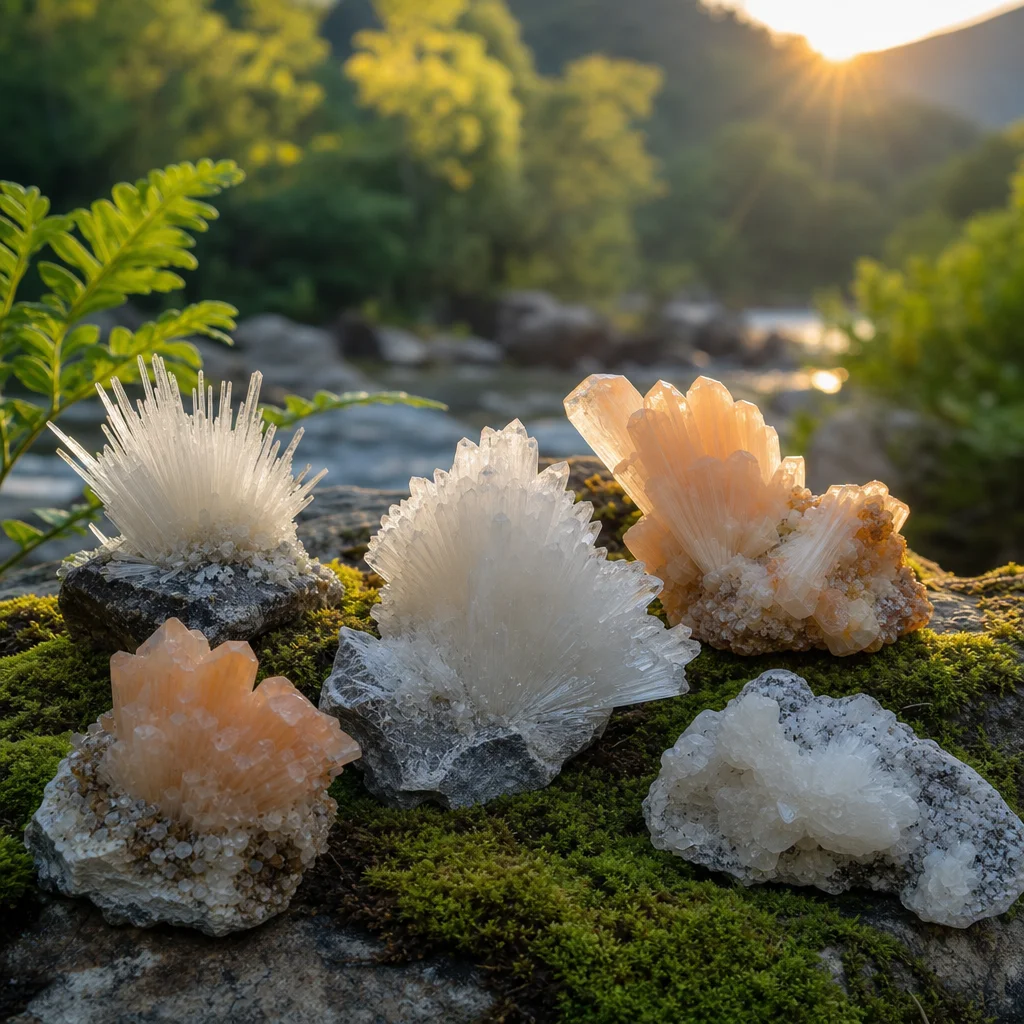
What Are Zeolites?
The word "zeolite" comes from Greek — "zeo" meaning "to boil" and "lithos" meaning "stone." Swedish mineralogist Axel Cronstedt coined the term in 1756 when he noticed that stilbite (a zeolite mineral) appeared to release steam when heated, as if the stone itself were boiling. He didn't know it at the time, but he was watching water molecules trapped inside the mineral's cage-like crystal structure escape as the mineral heated up.
That cage-like structure is the defining feature of all zeolites. They're hydrated aluminosilicates — minerals made of aluminum, silicon, oxygen, and water arranged in a framework of interconnected tetrahedra. This framework creates channels and cavities that can trap and release water molecules, gas ions, and even small organic compounds. It's the same principle that makes zeolites useful in water softeners, cat litter, industrial catalysts, and even medical applications.
But beyond their industrial uses, zeolites produce some of the most visually striking mineral specimens in the crystal world. Many form perfect, glassy crystals in delicate pastel colors — pink, white, green, blue — often growing together in stunning associations on a single piece of volcanic rock.
Where Do Zeolites Form?
Most of the collectible zeolite specimens you'll find in crystal shops come from one remarkable geological setting: the Deccan Traps of western India. The Deccan Traps are one of the largest volcanic features on Earth — a vast flood basalt province covering roughly 500,000 square kilometers, formed about 66 million years ago when massive volcanic eruptions poured layer after layer of basalt lava across the landscape.
Here's the part that matters for crystal formation: as these lava flows cooled, they created gas bubbles (vesicles) within the basalt. Over millions of years, mineral-rich hydrothermal fluids circulated through cracks and vesicles in the cooling basalt, depositing zeolite and associated minerals in these cavities. When miners later open these vesicles, they find crystal-lined pockets — called "geodes" or "amygdules" — containing beautiful zeolite specimens.
India's Deccan Traps, particularly the Maharashtra state region around Pune and Nasik, produce the world's finest zeolite specimens. The specific mineral species found varies by location — some quarries are known for pink stilbite, others for needle-like scolecite, still others for green apophyllite. Mining is typically done by hand in small quarry operations, which makes each specimen unique.
Other notable zeolite localities include Iceland (where the original stilbite was described), Nova Scotia (Canada), Patagonia (Argentina), and the Pacific Northwest (USA). But for collector quality, India remains unmatched.
Key Zeolite Minerals You Should Know
Stilbite: The Pink Bowtie Crystal
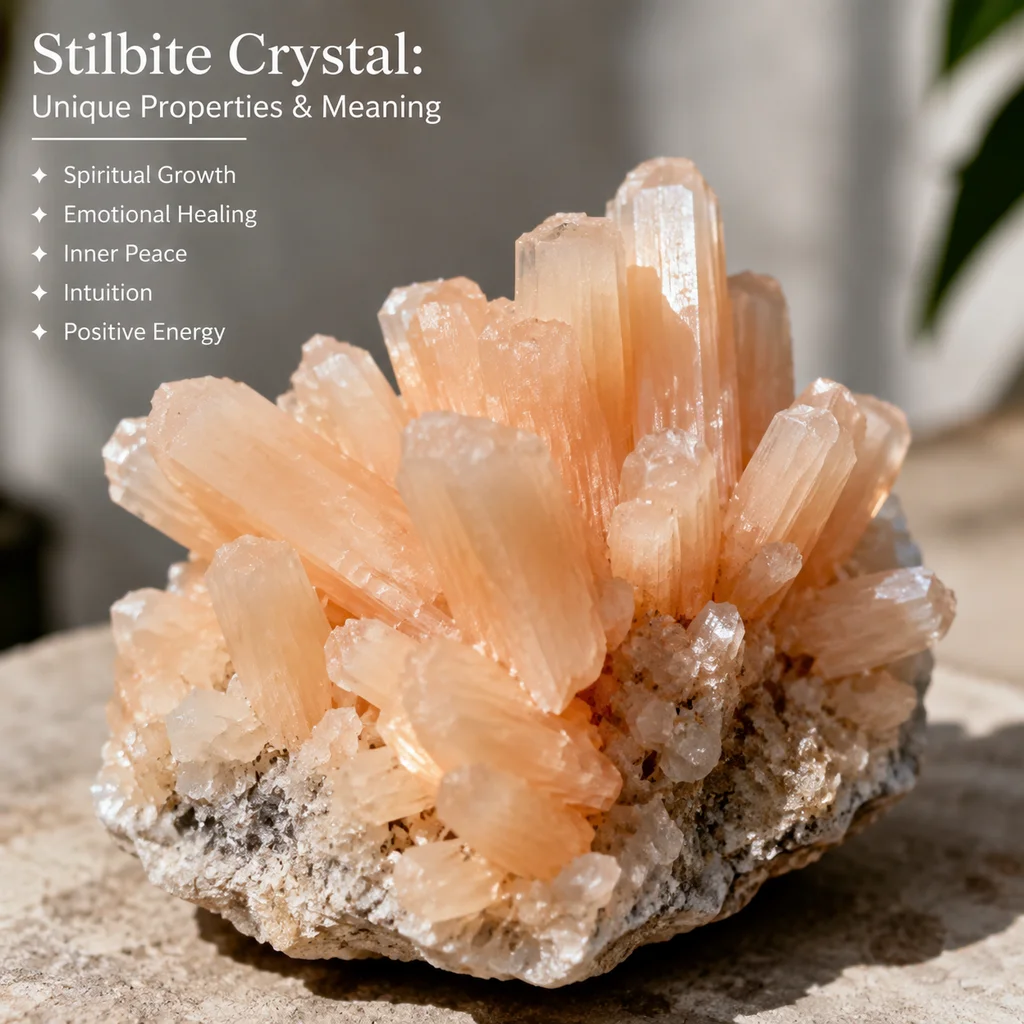
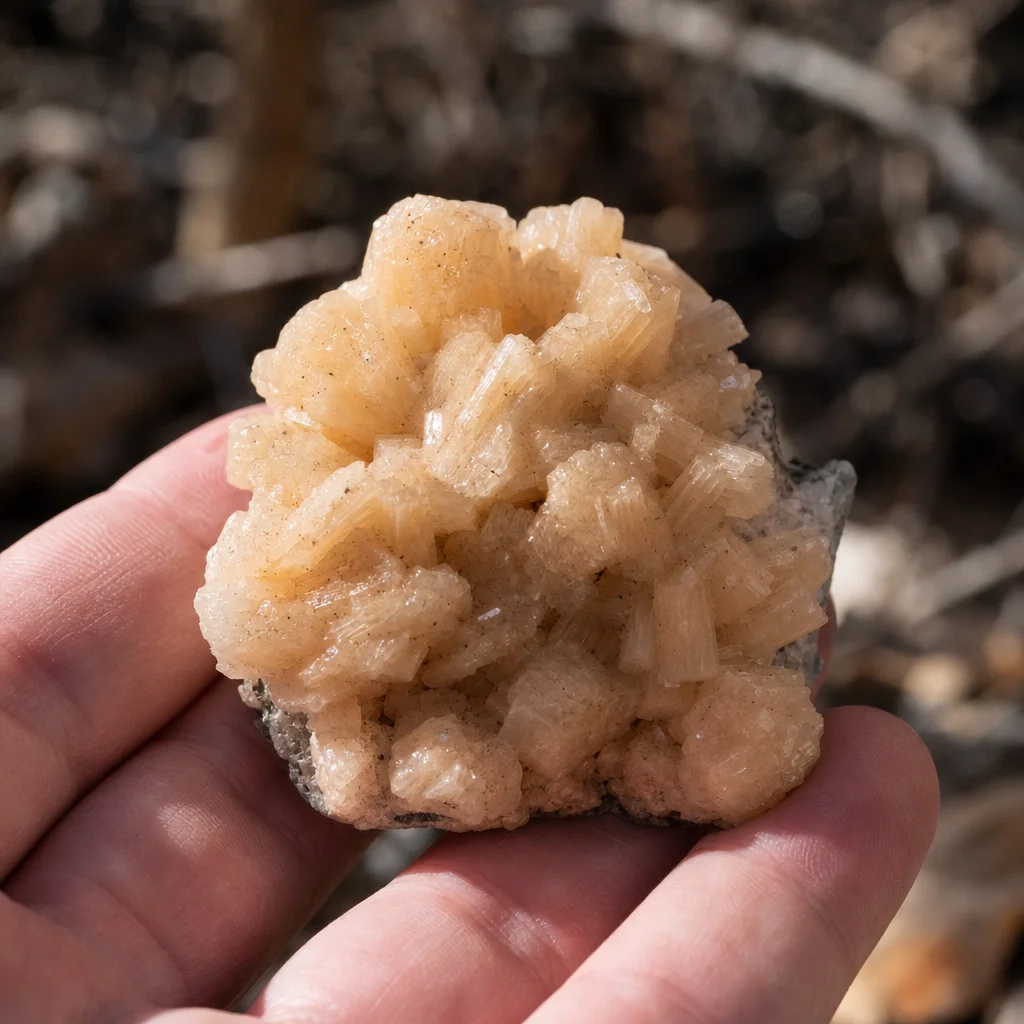
Stilbite (specifically stilbite-Ca) is probably the most recognizable zeolite in the crystal world. Its crystals form in distinctive fan-shaped or bowtie-shaped aggregates — thin, bladed crystals radiating outward from a central point in curved clusters that look like butterfly wings or bowties.
The color range of stilbite is one of its attractions. Indian stilbite most commonly appears in warm peach, salmon, and soft pink tones, though white, colorless, and even orange-brown varieties exist. The color comes from trace amounts of iron and manganese, and the finest peachy-pink specimens from Maharashtra are considered among the most beautiful minerals in the world.
Stilbite has a pearly to silky luster on its crystal faces, and thin cleavage flakes are flexible — you can actually bend them slightly without breaking them. This flexibility is unusual for a mineral and is one of stilbite's identifying characteristics. It scores about 3.5 to 4 on the Mohs scale, so it's quite soft and needs careful handling.
In crystal healing, stilbite is associated with the Heart Chakra and is described as a gentle, nurturing stone. Its soft pink color and flowing crystal shape contribute to its reputation as a stone of creativity, intuition, and emotional warmth. Many people keep stilbite specimens on their nightstand or meditation space for its calming presence.
Scolecite: The White Needle Crystal
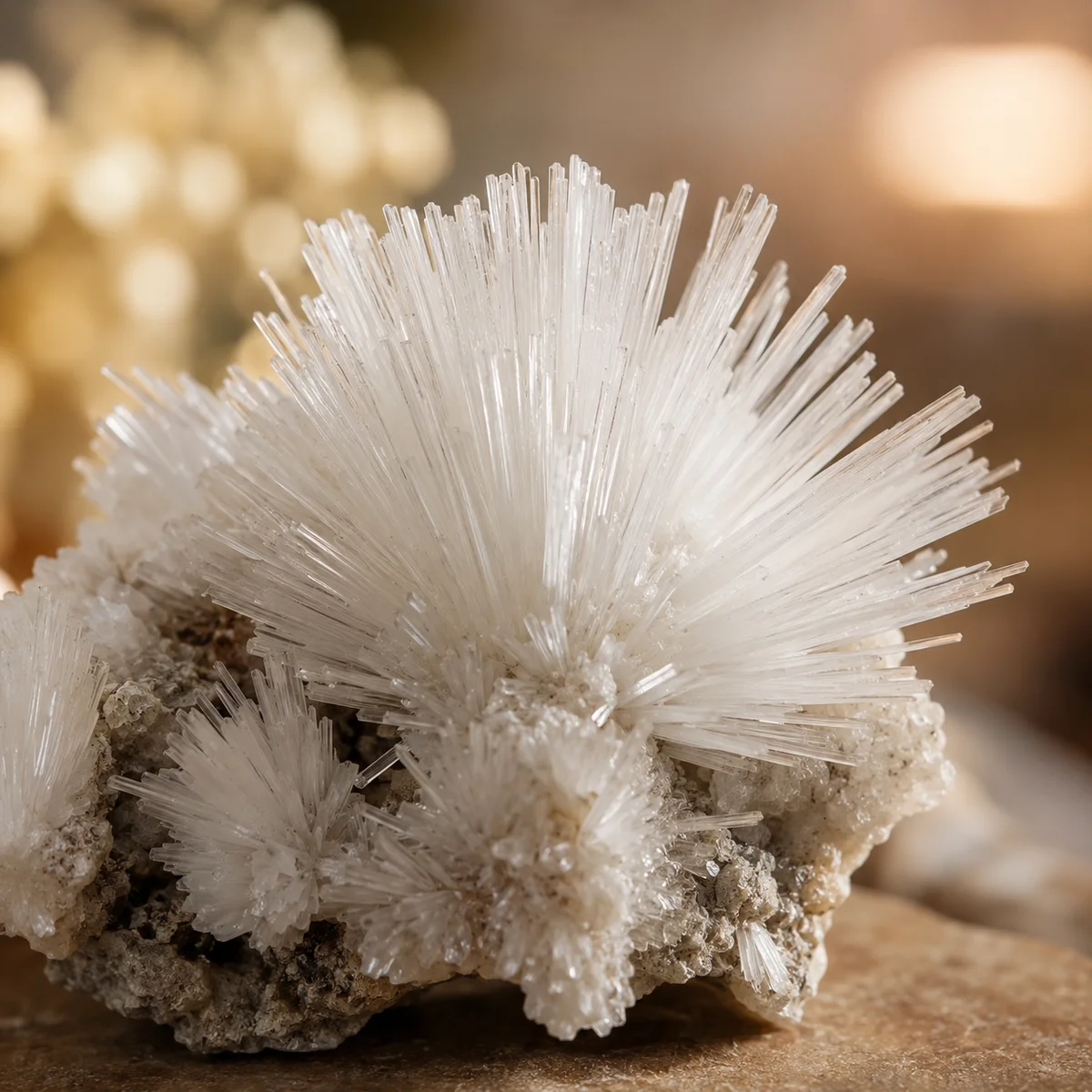
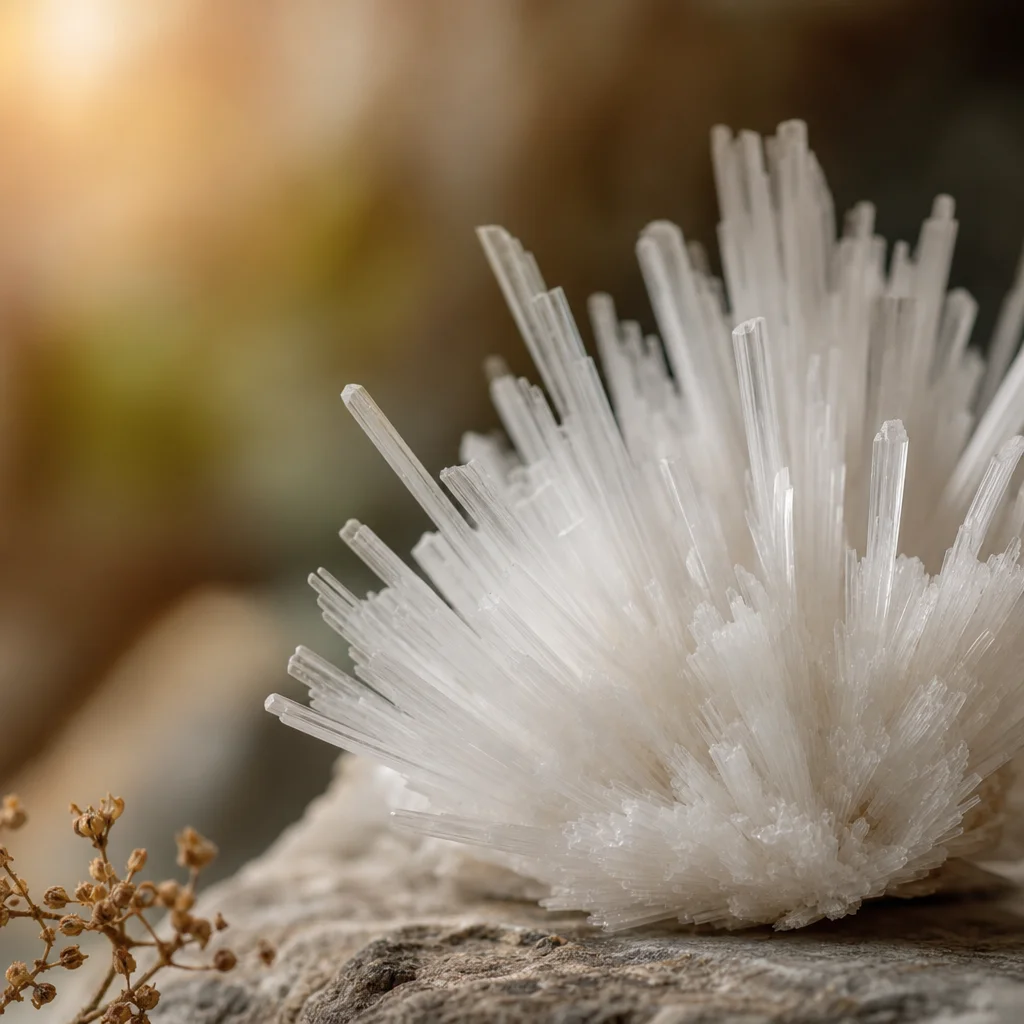
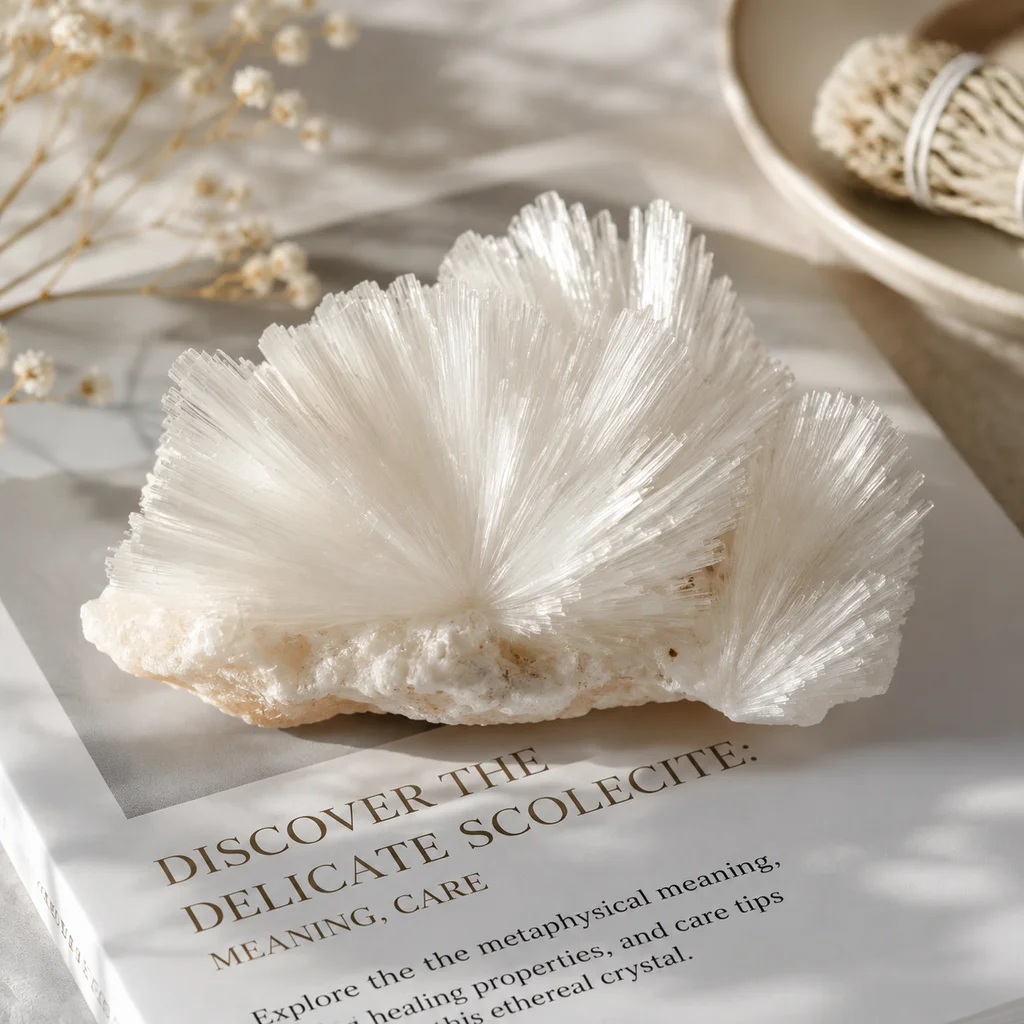
If stilbite is the pink bowtie, scolecite is the white spray of needles. Scolecite forms in radiating clusters of acicular (needle-like) crystals, typically white to colorless, that fan outward from a central attachment point. The crystals are thin, elongated, and extremely fragile — a specimen that looks perfect under display can shed tiny crystal needles at the slightest vibration.
The name "scolecite" comes from the Greek word "skōlex," meaning worm, referring to the curved, worm-like appearance of some crystal aggregates. Most scolecite from India forms in relatively straight, radiating sprays, but some specimens from other localities show more twisted or curved growth habits.
Scolecite scores 5 to 5.5 on the Mohs scale — harder than stilbite but still quite fragile due to its acicular crystal form. The needle-like crystals are prone to breaking and should never be handled roughly. Display specimens should be kept in a stable location where they won't be bumped or vibrated.
In crystal healing, scolecite is strongly associated with the Third Eye and Crown chakras. It's sometimes called the "inner peace stone" and is used for meditation, lucid dreaming, and accessing higher states of consciousness. The connection to the Third Eye is partly visual — the radiating needle clusters are said to represent energy spreading outward from a central point of awareness.
Apophyllite: The Green Pyramid Crystal
Strictly speaking, apophyllite is not a zeolite — it's a phyllosilicate (sheet silicate) rather than a framework silicate. But apophyllite is so commonly found growing alongside zeolites in the same basalt cavities that it's always included in the zeolite family discussion. Many "zeolite specimens" you see for sale are actually apophyllite with stilbite or scolecite growing on the same piece of matrix rock.
Apophyllite forms tabular, pyramid-shaped crystals that are unmistakable once you've seen them. The crystals are typically square or rectangular in cross-section, with a distinctive pyramid termination on top. The most prized Indian apophyllite displays a gorgeous pale to vivid green color caused by trace amounts of vanadium or chromium. White, colorless, and occasionally peach varieties also occur.
One of apophyllite's most distinctive properties is its perfect basal cleavage — the crystals can be split perfectly flat along one direction, like mica sheets. It also has a pearly luster on cleavage faces. Apophyllite scores 4.5 to 5 on the Mohs scale and is somewhat more durable than stilbite due to its blockier crystal habit, though the cleavage means it can still split if struck at the wrong angle.
In crystal healing, green apophyllite is associated with the Heart Chakra and is considered a stone of joy, nature connection, and emotional healing. White and clear apophyllite connects more with the Crown Chakra. The pyramid shape of the crystals is symbolically linked to directing energy upward, which is why apophyllite is popular for crystal grids and altars.
Other Notable Zeolite Family Members
Heulandite
Heulandite forms thin, platy crystals that often stack in fan-shaped clusters somewhat similar to stilbite but with a different crystal symmetry. Colors range from white and colorless to salmon, orange, and brick red. Indian heulandite often appears alongside stilbite in the same cavities. It scores 3.5 to 4 on Mohs.
Cavansite
While not technically a zeolite (it's a cyclosilicate), cavansite is found in the same Indian basalt deposits and is one of the most sought-after associated minerals. Its deep sky-blue color is extraordinary — an intense, vivid blue that almost doesn't look natural. Cavansite forms in tiny spherical aggregates and radiating sprays, typically on a bed of stilbite or other zeolite minerals. Fine Indian cavansite specimens are collector treasures and command high prices.
Stellerite
Stellerite is a calcium zeolite that's nearly identical to stilbite in appearance and physical properties. The two can only be reliably distinguished by X-ray diffraction analysis. Both form the same pink, bowtie-shaped crystals. For practical purposes in the crystal and jewelry world, they're treated as the same material.
Chabazite
Chabazite forms distinctive rhombohedral (diamond-shaped) crystals that can be quite well-formed and attractive. It comes in white, pink, orange, and yellow varieties and is found in many zeolite localities worldwide. The pseudo-cubic shape of its crystals makes chabazite easy to identify among other zeolites.
Why Zeolite Specimens Are Special
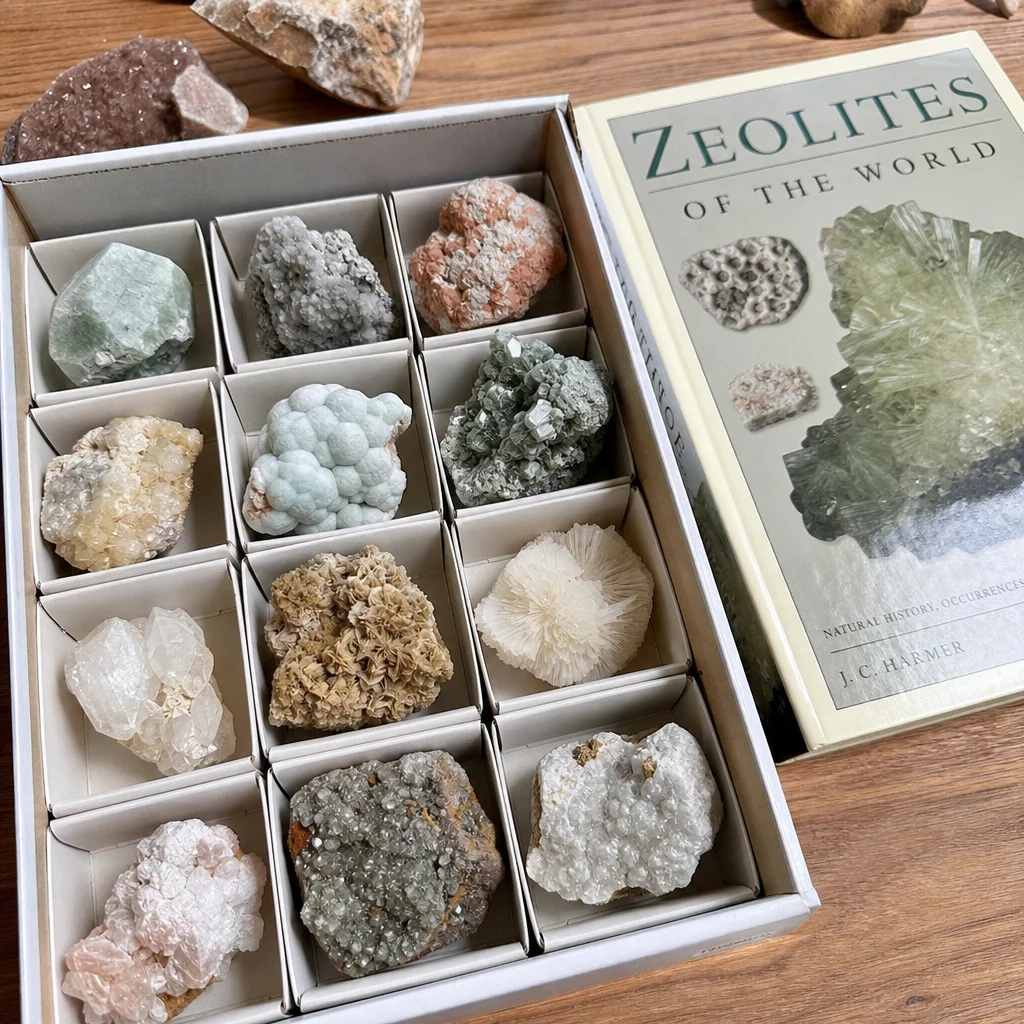
Part of the appeal of zeolite specimens lies in the associations. A single piece of basalt matrix might carry stilbite bowties, scolecite needles, apophyllite pyramids, and even a spray of blue cavansite — all growing together in a single crystal-lined pocket. These multi-mineral associations create specimens that are essentially miniature natural artworks, with each mineral contributing its own color, shape, and texture to the overall composition.
Indian miners call these pocket specimens "museum pieces" when they're of exceptional quality, and the best ones truly deserve the description. A well-preserved specimen with pink stilbite fans, white scolecite sprays, and green apophyllite pyramids all growing from a dark basalt matrix is one of the most visually stunning things you can put on a shelf.
The geological story adds another layer of appreciation. Each specimen represents a specific moment in time — a hydrothermal event that occurred millions of years ago inside a gas bubble in a lava flow. The crystals grew undisturbed for who knows how long before the rock was eventually exposed, broken open, and the specimen revealed. In a very real sense, each zeolite specimen is a time capsule.
Displaying and Caring for Zeolite Specimens
Display is relatively straightforward but requires attention to the fragility of these minerals. Place specimens where they won't be bumped or vibrated — a dedicated display shelf or glass case is ideal. Avoid displaying them near air vents, doors that slam, or high-traffic areas.
Keep specimens out of direct sunlight. Prolonged UV exposure can fade some zeolite colors, particularly the pink of stilbite and the green of apophyllite. Some specimens also contain trace minerals that are photosensitive. A cool, dry, shaded spot is best.
Cleaning should be minimal and gentle. A soft brush (a makeup brush or soft paintbrush) can remove dust. Avoid water if possible — some zeolite minerals can lose their luster or develop a cloudy appearance after prolonged wetting. Never use ultrasonic cleaners, steam, or chemical cleaners. If a specimen is very dusty, a brief, gentle blast of compressed air (at low pressure) can work, but even this can dislodge fragile crystal tips.
Storage should be in individual containers with soft padding. Don't stack zeolite specimens on top of each other — the weight and contact will damage delicate crystals. Acid-free tissue paper or bubble wrap provides good protection. Label each specimen with its mineral identification and locality if known.
Frequently Asked Questions
Can zeolite crystals be used in jewelry?
Most zeolite minerals are too soft and fragile for practical jewelry use. However, some lapidaries do set high-quality stilbite or apophyllite cabochons in protective bezel settings for pendants. These should be treated as special-occasion jewelry, not everyday wear. The vast majority of zeolite specimens are collected and displayed as mineral specimens rather than cut for jewelry.
Why is Indian zeolite considered better than zeolite from other countries?
Indian specimens from the Deccan Traps consistently produce larger, better-formed crystals in more vivid colors than zeolites from other localities. The specific chemistry of the Deccan basalts and the hydrothermal fluids that circulated through them created ideal conditions for zeolite crystallization. The mineral associations (multiple species growing together) are also more complex and visually interesting than what's typically found in other regions.
Is apophyllite a zeolite?
Technically no — apophyllite is a phyllosilicate mineral, not a tectosilicate (framework silicate) like true zeolites. However, it's always found in the same geological settings and is universally grouped with zeolites in the mineral collecting and crystal healing communities. The distinction matters to mineralogists but is rarely relevant to crystal enthusiasts.
How can I tell stilbite from heulandite?
They look nearly identical in hand specimen form. Stilbite typically has more pronounced bowtie-shaped crystal clusters and a warmer pink color, while heulandite tends to form more platy, stacked crystals. But even experienced mineralogists sometimes can't reliably distinguish them visually. X-ray diffraction is the only definitive test. For practical purposes, if a dealer calls your pink specimen "stilbite," that's the accepted identification.
Frequently Asked Questions
Can zeolite crystals go in water?
Zeolites should not be submerged in water for extended periods. These minerals are porous and relatively soft, rating about 3.5 to 5 on the Mohs hardness scale. Prolonged water exposure can cause structural weakening, surface dulling, or even partial dissolution of delicate crystal formations. For cleaning your zeolite specimens, use a soft dry brush or a brief, gentle rinse, then pat dry immediately. Never use harsh chemicals or ultrasonic cleaners on these fragile beauties.
Comments