Apophyllite Bracelet: The Pyramid-Shaped Crystal That Grows in Indian Basalt
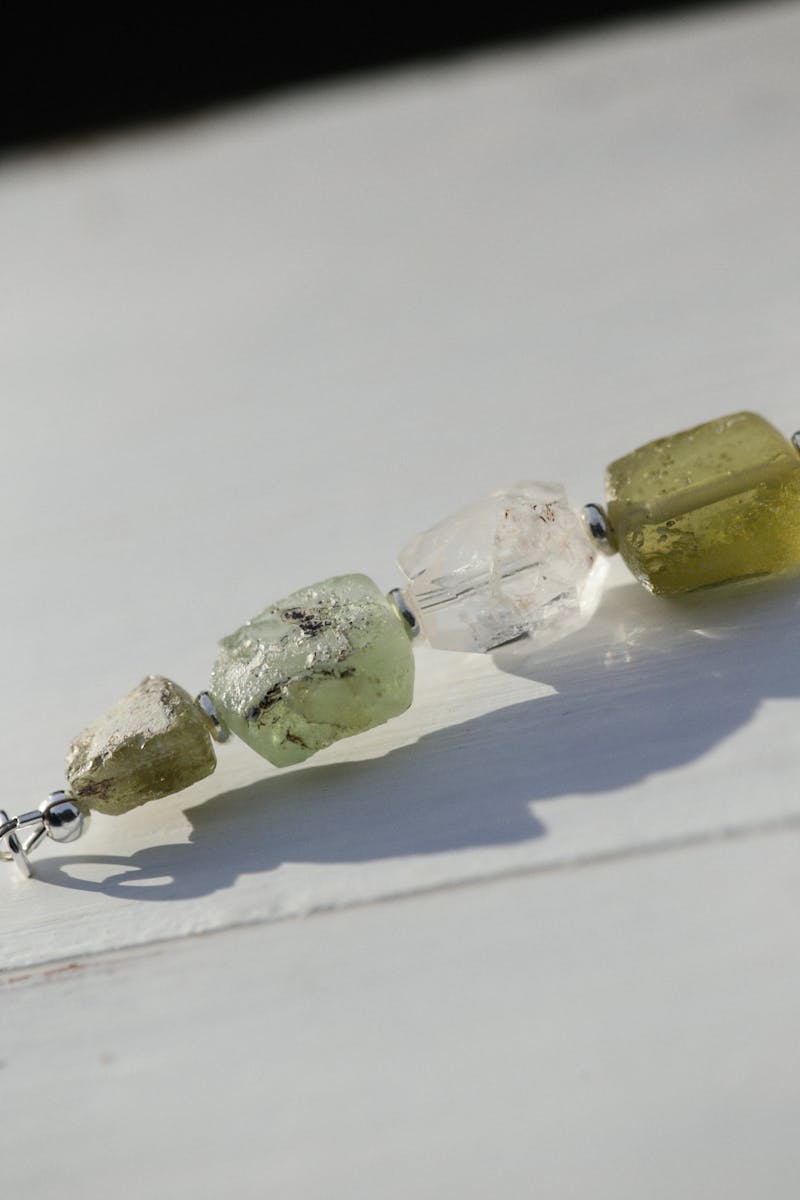
Apophyllite bracelet: the pyramid-shaped crystal that grows in Indian basalt
Meta description: Apophyllite forms those glassy pyramid crystals you see in mineral shops. Most of it comes from the Deccan Traps in India, where it grows inside ancient volcanic rock.
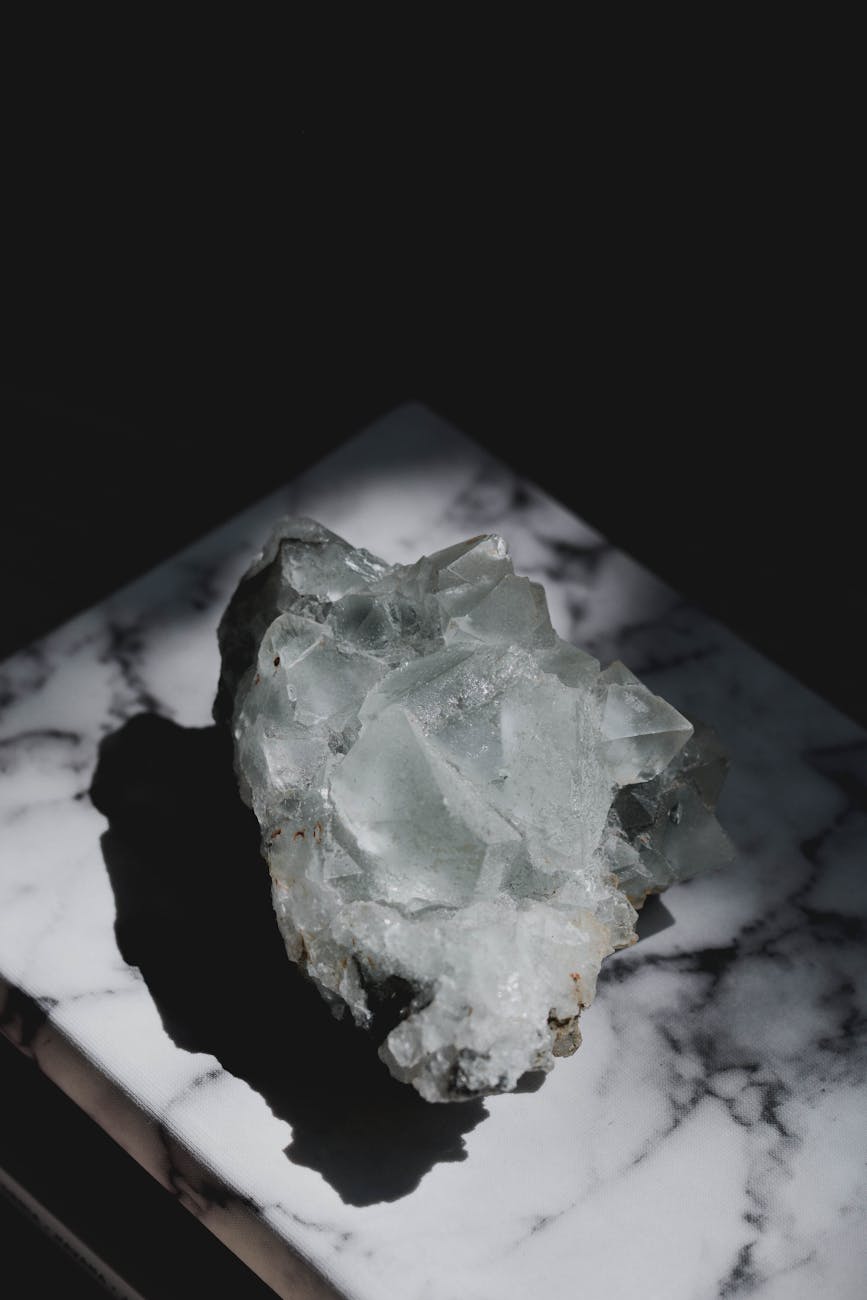
What apophyllite actually looks like
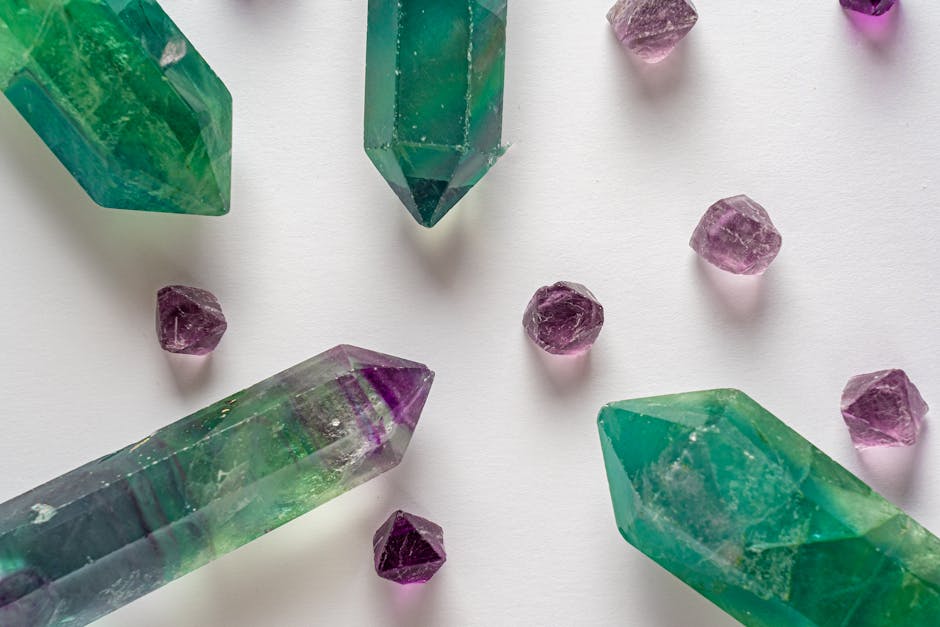
If you have browsed any mineral shop or crystal fair, you have probably seen apophyllite without realizing what it was called. The crystals are unmistakable once you know them: small, square-based pyramids with a glassy, almost wet-looking surface. They range from completely clear to a pale celery green, and occasionally a soft peach color.
The name comes from the Greek words "apo" (off) and "phyllon" (leaf), which refers to how the mineral flakes apart when heated. A geologist named Rene Just Hauy came up with that name in 1806, and it stuck. Not the most exciting origin story, but mineralogists tend to be practical people.
Most apophyllite crystals you encounter are between half an inch and two inches tall. They grow in clusters, sometimes covering an entire face of basalt with dozens or hundreds of tiny pyramids. The larger single crystals, the ones that look like little glass monuments, are rarer and command higher prices. I think the clusters are more interesting visually, though. Something about all those identical shapes packed together has a quiet, geometric appeal.
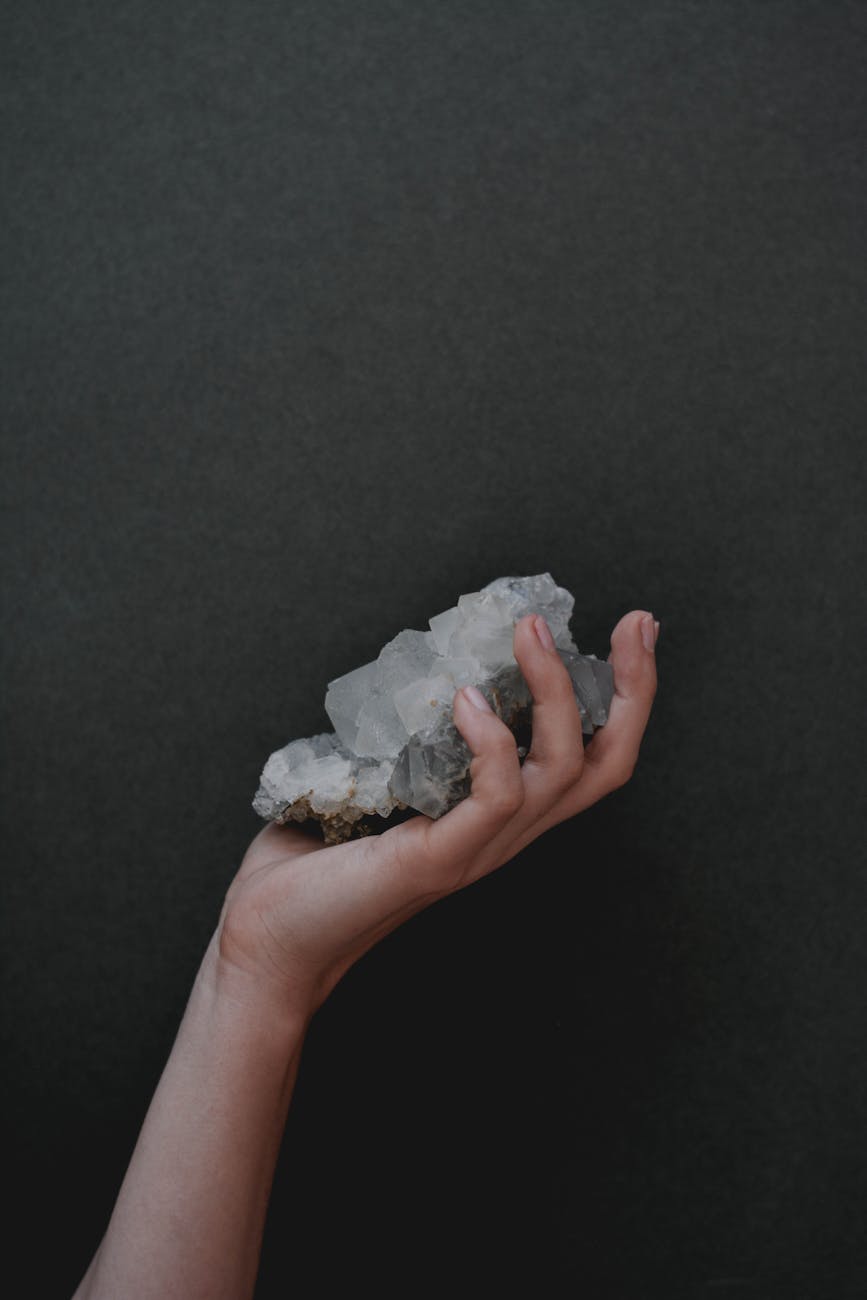
Where it comes from: the Deccan Traps
The vast majority of apophyllite on the market comes from a specific geological formation in western and central India called the Deccan Traps. This is one of the largest volcanic features on Earth, covering roughly 200,000 square miles across Maharashtra, Gujarat, Madhya Pradesh, and parts of Karnataka.
The Deccan Traps formed about 66 million years ago during a series of massive volcanic eruptions. Lava flowed across the landscape for hundreds of thousands of years, building up layers of basalt that in some places are over 6,500 feet thick. The same eruptions that created this formation have been linked (though the connection is debated) to the extinction event that killed off the non-avian dinosaurs.
Apophyllite grows in the cavities within that basalt. When lava cools, gas bubbles get trapped inside the rock, creating hollow spaces called vesicles or amygdules. Over millions of years, mineral-rich groundwater seeps into these cavities and deposits crystals. Zeolites are the most common minerals found this way, and apophyllite is usually found alongside them.
India is by far the dominant source, but apophyllite also occurs in Iceland, Brazil, Canada, and a few locations in the United States. The Indian specimens tend to have the best-developed crystal faces and the most vivid green coloration, which is why collectors and crystal shops favor them.
[IMG: a quarry wall in Maharashtra showing layered basalt with visible mineral-filled cavities]
The pyramid shape is not random
The square-based pyramidal shape of apophyllite crystals is a direct result of its crystal structure. Apophyllite belongs to the phyllosilicate group, and its internal atomic arrangement forces it to grow along specific planes. The result is a tetragonal crystal system that naturally forms four-sided pyramids.
The clarity varies a lot. Some apophyllite is almost as transparent as quartz. Other specimens are cloudy or included with tiny mineral particles that give them a milky appearance. The green color comes from trace amounts of copper or iron substituting into the crystal lattice. Clear specimens are sometimes called "ice apophyllite" in the trade, though that is not an official mineralogical term.
One thing I find interesting is how fragile these crystals are despite their sharp, defined geometry. Apophyllite ranks only 4.5 to 5 on the Mohs scale, which puts it somewhere between fluorite and apatite. That is soft enough that a bracelet made from apophyllite beads will show wear over time if worn daily. It is more of a piece to save for quieter occasions.
[IMG: individual apophyllite crystals separated from their matrix, arranged by size and color on a neutral background]
What people believe apophyllite does
In crystal healing communities, apophyllite is primarily associated with intuition, spiritual connection, and emotional calm. People who work with it say that holding a piece or placing it on the body during meditation creates a sense of mental clarity and helps them access what they describe as inner guidance.
The pyramid shape plays into this. Because pyramids have been symbols of spiritual power across multiple cultures for thousands of years, people tend to associate pyramid-shaped crystals with focused energy. There is no scientific basis for this, but the symbolic connection is consistent. I have spoken with several crystal collectors who specifically seek out apophyllite for this reason, and they generally describe the experience in terms of feeling more centered rather than any dramatic effect.
Apophyllite is also sometimes grouped with what people call "high vibration" crystals, alongside stones like moldavite, danburite, and herkimer diamond. The idea is that certain minerals have a frequency that supports spiritual awareness. Again, none of this has been measured or verified in any formal way. It falls firmly into personal experience and belief.
Some practitioners recommend placing apophyllite near other crystals to "charge" them, or using it during energy healing sessions alongside stones like clear quartz and selenite. These are common practices in crystal work, and people who do them regularly tend to have strong subjective opinions about which combinations work best for them.
[IMG: apophyllite crystals arranged on a meditation altar with a candle and a small sage bundle]
Wearing apophyllite as a bracelet
Apophyllite beads do exist and they can be strung into bracelets, but there are a few practical considerations. The softness of the mineral means that beads will develop scratches and dull spots with regular wear. If you want an apophyllite bracelet to last, it helps to keep it for meditation, rest days, or occasions when you are not doing much manual work.
The beads are usually tumbled rather than faceted because the material is too soft to hold a clean facet. Tumbled apophyllite beads have a smooth, rounded surface that shows off the color nicely but does not have the sharp sparkle of harder gemstones. Green apophyllite beads tend to look the best in bracelets because the color shows well in rounded form. Clear beads can look a bit plain unless the light catches them right.
If you are considering an apophyllite bracelet, check that the beads are reasonably uniform in size and that the stringing is secure. Because apophyllite is relatively soft, the drill holes in the beads can wear wider over time, which makes the bracelet more likely to break at the stringing. Stretch cord is probably the most practical option since you can check it periodically and restring when needed.
Store it separately from harder stones. Quartz, topaz, and sapphire will scratch apophyllite easily if they knock against it in a jewelry box. A soft pouch or a dedicated compartment works well.
[IMG: a finished apophyllite bead bracelet on a white background, showing the natural green and clear color variation]

Comments