Ametrine: The Rare Two-Tone Quartz From a Sin...
May 29, 2026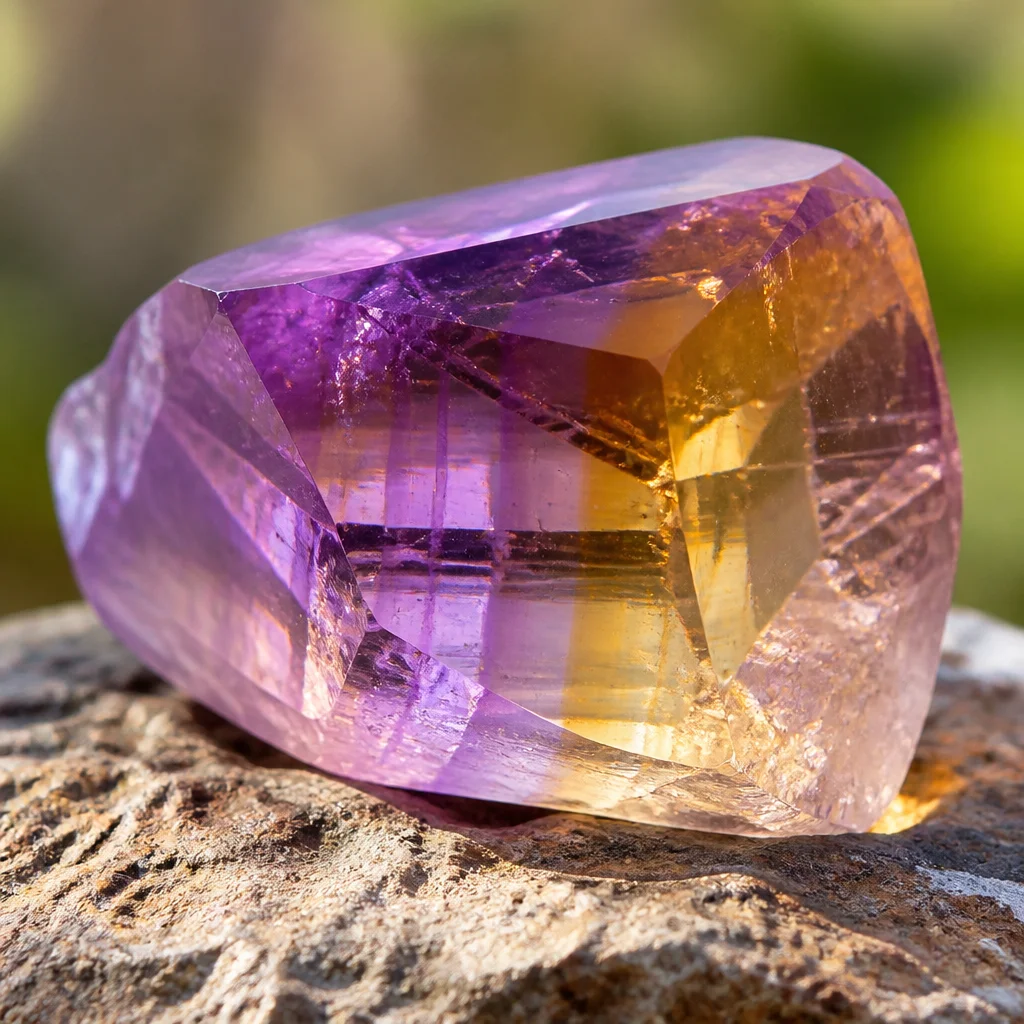
Most crystals come in one color. A few come in two. Almost none come in two colors that look like they were painted on by hand, with a razor-sharp line dividing purple from gold. Ametrine does exactly that, and it is one of the most visually distinctive quartz varieties you will ever encounter.
The catch? Real ametrine comes from essentially one place on Earth. Understanding why — and how to avoid the imitations — is the key to buying this stone well.
What Ametrine Is, Mineralogically
Ametrine is bicolor quartz: part amethyst (purple) and part citrine (yellow-to-orange) in the same crystal. Both colors are caused by iron — the same trace element, Fe — but in different oxidation states and structural configurations within the crystal lattice.
Purple (amethyst) zones contain Fe³⁺ ions that have been irradiated, creating color centers that absorb light in the green-yellow range and transmit purple. Yellow (citrine) zones contain Fe²⁺ or colloidal iron particles in a configuration that absorbs blue-violet light and transmits yellow-gold.
The two zones can coexist in a single crystal when the temperature and chemical conditions during growth changed partway through crystallization. The crystal grew under amethyst-forming conditions, then something shifted — temperature, pressure, fluid chemistry — and the remaining growth produced citrine-colored quartz.
The Anahí Mine: One Source, One Story
Practically all natural ametrine on the commercial market comes from the Anahí Mine in the Santa Cruz department of eastern Bolivia, near the Brazilian border. The mine has been worked for centuries — Spanish explorers documented amethyst mining in the area in the 1600s — but the bicolor material was not widely known outside South America until the late 20th century.
The geological setting is unusual. The mine sits in a pegmatite vein system where hydrothermal fluids deposited quartz over an extended period. During that time, the temperature gradient across the growing crystals varied enough to produce both amethyst and citrine zones in the same specimen. The exact conditions — iron concentration, radiation exposure, and the specific temperature range — were a Goldilocks coincidence that has not been replicated at any other commercially significant deposit.
Small amounts of ametrine-quality bicolor quartz have been reported from Brazil and India, but these are typically pale, poorly zoned, and not commercially significant. If you are buying ametrine, you are almost certainly buying Bolivian material — or you should be.
How Genuine Ametrine Forms
The formation mechanism is a delicate balance:
At Anahí, the geological evidence suggests the temperature gradient was relatively steep and localized. Crystals growing in one part of a vein might be entirely amethyst, while crystals a few centimeters away could be ametrine with a sharp color boundary. This variability is part of what makes mining ametrine unpredictable and the stone relatively rare.
Identifying Real vs Treated Ametrine
Because natural ametrine is scarce and desirable, there is a significant market for treated imitations. Here is how they are made and how to spot them:
Heat-treated ametrine: Amethyst is carefully heated so that only part of the crystal converts to yellow citrine. The heat can be applied selectively — one end of the crystal is heated while the other stays cool. This produces a bicolor stone that looks superficially similar to natural ametrine.
How to tell the difference:
- Color boundary: Natural ametrine often has a sharp but slightly irregular boundary between purple and yellow zones, following the crystal's growth structure. Heat-treated ametrine tends to have a more diffuse or perfectly straight boundary.
- Color tone: Natural citrine zones are usually a pale honey-yellow. Heated ametrine often shows the characteristic reddish-orange of heat-treated citrine.
- Zoning pattern: Natural ametrine zoning follows crystallographic directions (parallel to prism faces). Heated zoning may not respect crystal growth patterns.
Dyed or assembled stones: Less common but possible. A doublet or triplet (amethyst crown glued to citrine base) can look like ametrine from the top. Examine the stone from the side — a glued seam or a sharp change in inclusions between the two halves is a giveaway.
Value Factors
Ametrine is valued based on four factors:
Price ranges:
- Small commercial ametrine (1-3 carats, moderate color contrast, possibly heated): $5-20 per carat
- Fine natural ametrine (3-10 carats, strong contrast, eye-clean, verified Bolivian origin): $20-80 per carat
- Collector specimens (large, dramatic zoning, confirmed natural): $50-200+ per carat
Using Ametrine in Jewelry
With a hardness of 7 (same as all quartz varieties), ametrine is durable enough for any type of jewelry. The color combination makes it particularly versatile:
- Step-cut pendants that show the purple-to-gold transition are striking and unusual — most people have never seen a naturally bicolor stone.
- Bead bracelets made from ametrine rondelles show the color range nicely and are an affordable way to wear the stone ($20-40 for a strand).
- Rings work well in protective settings (bezel or halo) since the hardness is adequate for daily wear.
Care and Maintenance
Treat ametrine the same as any quartz:
- Warm soapy water and a soft brush for cleaning
- Ultrasonic cleaners are generally safe
- Avoid prolonged direct sunlight (the amethyst portion can fade)
- Store separately from harder stones
- Avoid sudden temperature changes
Is Ametrine Worth Seeking Out?
If you enjoy collecting minerals with a story, ametrine delivers. It is one of the few gemstones that is essentially a single-source material. The Anahí Mine will not produce forever, and as supply tightens, genuine natural ametrine should appreciate in value. Even if you never think about resale value, you own a piece of geological coincidence that the planet managed to produce in exactly one small corner of Bolivia.
Buy from dealers who specify Bolivian origin and are transparent about treatment. Ask questions. A reputable seller will welcome them. A seller who is vague about origin or gets defensive about treatment disclosure is someone to walk away from.
Crystals are not a substitute for medical treatment. The cultural and traditional associations described in this article are for informational purposes.
Understanding the Value of Ametrine
When you're looking at a piece of ametrine, it's not just the visual appeal that commands attention. The value of ametrine is multifaceted, encompassing its rarity, the craftsmanship involved in cutting and polishing it, and its cultural significance. Let's dig into into what makes this stone so precious.
Firstly, the rarity of ametrine is a significant factor in its value. With the vast majority of ametrine coming from the Anahí Mine, the supply is inherently limited. This scarcity makes ametrine a gemstone collectors and investors seek out. Secondly, the unique color zoning requires skilled gem cutters to work with the stone. The goal is to maximize the display of both colors without losing too much of the stone's weight, which is a delicate balance to achieve.
Historically, ametrine has been prized for its ability to bring harmony and balance to the wearer. It's said to enhance creativity and promote emotional balance. This cultural significance adds an extra layer of value to the stone, making it not just a piece of jewelry but a piece of art with a story.
Comparing Ametrine to Other Bicolor Quartz Varieties
While ametrine is a unique gemstone, it's not the only bicolor quartz variety. Here's a quick comparison table to highlight its distinct qualities:
| Crystal | Color Combination | Origin | Formation Process |
|---|---|---|---|
| Ametrine | Amethyst and Citrine | Bolivia | Temperature and chemical changes during crystallization |
| Ametrine Imitation | Artificially dyed quartz | Varied | Artificial coloring process |
| Bi-color Ametrine | Amethyst and Rose Quartz | Various locations | Natural zoning, sometimes enhanced by irradiation |
How to Identify Genuine Ametrine
With the popularity of ametrine, there are many imitations on the market. Here are some tips to help you identify genuine ametrine:
- Origin: Ensure that the stone is from the Anahí Mine in Bolivia. Stones from other locations may be dyed or treated to mimic ametrine.
- Color Zoning: Genuine ametrine has a distinct, natural line where the amethyst and citrine meet. This line should be clear and sharp.
- Transparency: Ametrine should be transparent or translucent. Opaque stones may be imitations.
- Weight: Genuine ametrine is often heavier than it appears, due to the density of the quartz.
- Certification: Look for a certificate of authenticity from a reputable gemological laboratory.
How to Care for Your Ametrine Jewelry
Since ametrine is a quartz variety, it is relatively durable and can withstand everyday wear. However, there are still some care tips to keep in mind:
- Avoid Heat: Quartz can expand and contract with temperature changes, so avoid exposing your ametrine jewelry to extreme heat.
- Use Gentle Cleaners: Use a soft cloth and mild soap and water to clean your ametrine jewelry. Avoid harsh chemicals and jewelry cleaners that contain abrasives.
- Store Properly: Store your ametrine jewelry in a fabric-lined box or soft cloth to prevent scratches and damage.
Personal Reflections on Owning Ametrine
As someone who has owned a piece of ametrine for several years, I can attest to its beauty and the energy it brings. Each time I look at my ametrine ring, I'm reminded of the journey it has taken to reach me. From the Anahí Mine to my finger, it's a connection to the natural world and the rich history of gemstone trade.
The stone has a presence that's both calming and invigorating. It's not just a piece of jewelry; it's a piece of the Earth's history, and it feels like a part of me. If you're considering adding ametrine to your collection, I would highly recommend it. It's a unique and beautiful experience to wear a stone with such a rich background and such a striking appearance.
Is ametrine a good investment for collectors?
Is ametrine a good investment for collectors?
Ametrine is a popular gemstone among collectors due to its rarity and unique beauty. It can be a good investment, especially for those who are passionate about collecting gemstones and are willing to wait for the value to appreciate over time.
Can ametrine be worn daily?
Can ametrine be worn daily?
Ametrine is a durable quartz variety and can be worn daily. However, it's always a good idea to take it off when doing activities that could lead to it being scratched or damaged.
How does ametrine compare in value to other quartz varieties?
How does ametrine compare in value to other quartz varieties?
Ametrine is generally more valuable than other quartz varieties due to its rarity and unique color zoning. However, the value can vary depending on the quality of the stone, including its color, clarity, and size.
Are there any cultural rituals associated with ametrine?
Are there any cultural rituals associated with ametrine?
Ametrine is often associated with balance and harmony. In some cultures, it is believed to bring prosperity and happiness. It's not uncommon for people to wear ametrine jewelry for its supposed protective and metaphysical properties.
Can ametrine be used in crystal healing practices?
Can ametrine be used in crystal healing practices?
Ametrine is sometimes used in crystal healing practices due to its association with balance and harmony. It's believed to help with emotional healing and creativity. However, it's important to approach crystal healing with an open mind and not rely solely on crystals for healing.
Comments