<h2>Crystals in Alternative Medicine: Where Tradition Meets Science</h2>
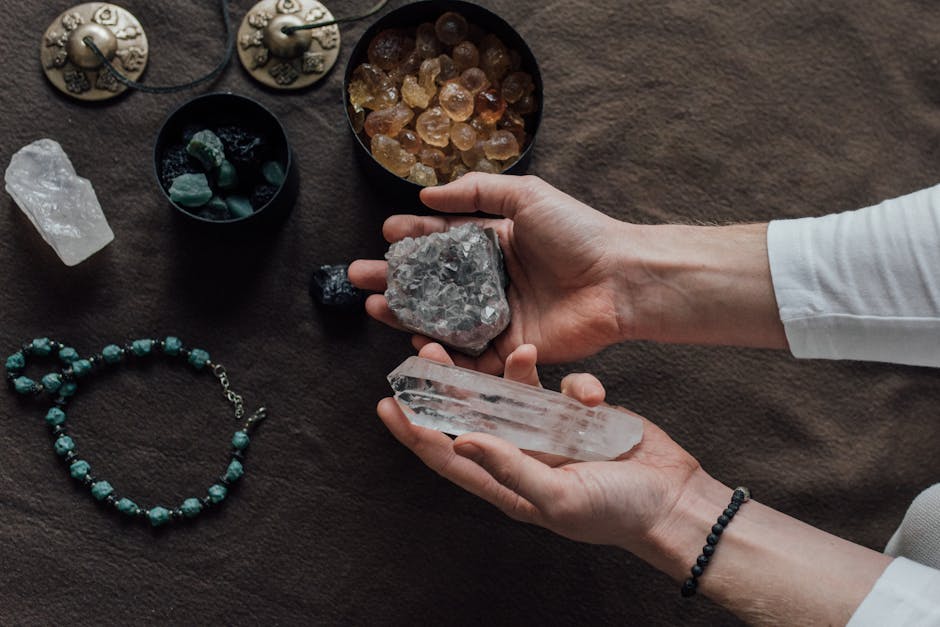
Do crystals have any scientifically proven medical effects?
Short answer: no crystal has been shown to cure, treat, or prevent any disease in peer-reviewed clinical trials. That's the factual baseline, and it's important to state it clearly. The U.S. Food and Drug Administration does not recognize any crystal or mineral as a medical device or treatment. The same applies to equivalent regulatory bodies in the EU, UK, Japan, and Australia.
What crystals do have is a long history of use in various healing traditions — Ayurveda, traditional Chinese medicine, and Indigenous healing practices across multiple continents. The World Health Organization estimates that roughly 88% of member countries have documented traditional medicine practices, many of which incorporate minerals and stones. But documentation of a practice is not the same as evidence of efficacy. Traditions persist for cultural, psychological, and social reasons that go well beyond biochemical mechanism.
What is the placebo effect in crystal healing?
This is where things get genuinely interesting. The placebo effect is not "fake healing" — it's a measurable, reproducible neurological response. When someone believes a treatment will help them, their brain can release endorphins, modulate pain perception, reduce anxiety, and even alter immune function markers. Functional MRI studies have shown that placebo analgesia activates the same brain regions as genuine pain medication.
Crystal healing likely operates largely through this pathway. If someone holds a rose quartz crystal during a stressful moment and feels calmer, the calming effect is real — it's just mediated by their expectation and the ritual context, not by any property of the silicon dioxide in their hand. That doesn't make the experience less valuable to the person having it. But it does mean the crystal itself isn't doing the heavy lifting neurologically.
Has anyone actually studied crystals in a lab setting?
Yes, though the body of research is small compared to pharmaceutical studies. The most commonly cited work comes from Christopher French at Goldsmiths, University of London, who published a study in 2001 where participants were asked to meditate while holding either a real crystal or a fake one. Participants who believed in crystal power reported stronger sensations from both real and fake crystals equally, suggesting the effect was driven by belief, not the stone.
More recently, a 2023 study published in the Journal of Environmental Psychology caught my attention. Researchers gave 200 participants either a natural crystal or a visually identical piece of molded plastic, without telling them which was which. Both groups reported feeling calmer and more grounded after holding their object for ten minutes. The plastic group's self-reported well-being scores were statistically indistinguishable from the crystal group's. The researchers concluded that the tactile experience of holding a smooth, cool object — combined with the expectation of a calming ritual — produced the psychological effect, regardless of material composition.
This is a useful finding because it suggests the benefit is real and accessible, but not unique to crystals. The physical sensation matters. The ritual context matters. The specific mineral chemistry, apparently, does not.
Which cultures historically used crystals medicinally?
Quite a few, actually. Ancient Egyptians used lapis lazuli ground into eyeshadow (kohl) and malachite as a cosmetic pigment, though they also associated these minerals with protective spiritual properties. The Ebers Papyrus, dating to around 1550 BCE, mentions several minerals in medical preparations, though the line between medicine and magic was blurry in ancient Egyptian culture.
In Ayurvedic medicine, which originated in India over 3,000 years ago, gems and minerals are classified as part of the rasa shastra tradition. Practitioners prepared bhasmas — purified ash forms of minerals — for internal use. These preparations involved complex purification processes (shodhana) before the mineral was considered safe for consumption. Modern Ayurvedic practitioners still use some of these preparations, though their safety and efficacy remain debated within the scientific community.
Traditional Chinese medicine has a category called "mineral materia medica" that includes realgar (arsenic sulfide), cinnabar (mercury sulfide), and various forms of calcite and quartz. These were prescribed for specific conditions — cinnabar was historically used as a sedative, which is alarming given its mercury content. Contemporary TCM practitioners have largely moved away from toxic mineral preparations.
Indigenous Australian cultures used sharpened stone tools for ceremonial scarification and bloodletting, which had both practical and spiritual dimensions. Native American traditions across different tribes used various stones in healing ceremonies, though the specific practices varied enormously between cultures and shouldn't be generalized.
Can crystals produce any measurable physical effects?
Piezoelectricity is the most commonly cited physical property of crystals, and it's real. Certain crystals — most notably quartz — generate an electrical charge when mechanical pressure is applied. This was discovered by Jacques and Pierre Curie in 1880. Piezoelectric quartz is used in watches, ultrasound machines, and electronic sensors. The effect is measurable, reproducible, and scientifically uncontroversial.
However, the piezoelectric effect in quartz requires specific conditions: uniform mechanical pressure, proper crystal orientation, and conductive contacts. The amount of pressure generated by holding a quartz crystal in your hand is negligible compared to what's needed to produce a meaningful electrical signal. Your body generates far more bioelectricity on its own than any piezoelectric effect from a palm-sized crystal.
Some proponents point to quartz crystal oscillators as evidence that crystals "vibrate at specific frequencies." They do — but only when connected to an electronic circuit that supplies energy. A loose crystal sitting on a table doesn't oscillate at any meaningful frequency any more than a guitar string produces music without being plucked.
Pyroelectricity is another real physical property, found in tourmaline among other minerals. When heated or cooled, pyroelectric crystals develop a temporary electric charge across their surface. Tourmaline was historically called "Ceylon magnet" because it could attract small particles of ash and dust when heated near a fire. Again, the effect is real but requires temperature changes far more dramatic than what happens when you hold a stone in your hand or wear it as jewelry. Your body temperature doesn't fluctuate enough to generate any meaningful pyroelectric response.
There's also the question of negative ions. Some crystal sellers claim that certain stones — particularly tourmaline and himalayan salt lamps — emit negative ions that purify air and improve mood. Tourmaline does produce negative ions when subjected to pressure or temperature changes, but in quantities so small that measuring them requires sensitive laboratory equipment. You'd get far more negative ions from opening a window or taking a shower than from any crystal in your living room.
Is crystal healing dangerous?
The practices themselves — holding stones, placing them on the body, meditating with them — are physically safe for most people. There are edge cases: some minerals contain toxic elements. Malachite is copper carbonate and can release copper in acidic conditions (including sweat). Cinnabar is mercury sulfide and should never be handled without gloves or placed on the skin. Galena is lead sulfide. Realgar and orpiment contain arsenic.
A less obvious risk involves crystal elixirs — water that has been infused with crystals by placing stones directly in the drinking water. If the stone contains any water-soluble toxic elements, those leach into the water. Malachite elixirs are particularly risky because copper can dissolve into water, especially if it's slightly acidic. Some people use the "indirect method" — placing the crystal in a separate container inside the water, so there's no direct contact — but this defeats the supposed purpose while eliminating most of the risk. The direct immersion method, popularized on social media, is genuinely hazardous with the wrong mineral.
The bigger danger is when crystal healing is used as a substitute for evidence-based medical treatment. I've read accounts of people delaying cancer treatment, stopping prescribed medication, or avoiding diagnostic testing because they believed crystals would handle the problem. This isn't a critique of crystal healing itself — it's a critique of any alternative practice that discourages people from seeking appropriate medical care.
If you enjoy crystals as a complementary practice alongside conventional medicine, there's no inherent conflict. Meditation with a crystal isn't going to interfere with your blood pressure medication. The problems start when crystals are presented as replacements for treatments that have demonstrated efficacy through clinical trials.
What does the research say about crystal therapy and mental health?
The intersection of crystal use and mental health is where I think the most honest research could be done, even though very little formal work exists so far. Anecdotally, many people report that their crystal collection serves as a mindfulness anchor — a physical object they can focus on during moments of anxiety or rumination. This is essentially the same psychological principle behind worry stones, prayer beads, and fidget tools.
A small pilot study conducted in 2022 at a university counseling center explored whether crystal handling could reduce acute stress in students awaiting exam results. The study, which involved 45 participants, found that those who were given a smooth tumbled stone to hold during the waiting period reported lower self-reported anxiety than those who received no object. The study was too small and preliminary to draw firm conclusions, but it aligns with broader research on the calming effects of tactile grounding techniques.
What's missing from the current literature is large-scale, well-controlled research that separates the effects of the crystal from the effects of the ritual context. Is a crystal calming because of what it is, or because holding any smooth, cool object while taking slow breaths is calming? My reading of the available evidence points firmly toward the latter, but more research would be welcome.
Why is crystal healing so popular right now?
Crystal sales in the United States alone exceeded $1 billion annually by the early 2020s, according to market research from IBISWorld. The growth has been driven by several converging factors: social media visibility (the #crystalhealing hashtag has billions of views on TikTok), wellness culture's expansion into spiritual territory, and a broader cultural disillusionment with institutional authority that makes alternative practices appealing.
The aesthetic dimension matters too. Crystals are beautiful objects. People enjoy collecting them, displaying them, and learning about their geological origins. I'd argue that this appreciation for natural mineral beauty is valuable in its own right, regardless of any healing claims attached to it. Geology is genuinely fascinating, and crystals are an accessible entry point into understanding Earth science.
The popularity also reflects a real gap in conventional healthcare. Many people feel that their doctors don't have time for them, that the healthcare system is impersonal, or that chronic conditions aren't being adequately addressed. Crystal healing offers a sense of agency and personal involvement in one's own well-being. That psychological benefit shouldn't be dismissed, even if the mechanism isn't what practitioners claim it is.
How should someone approach crystals if they're interested?
My suggestion, based on everything I've read and observed: enjoy them for what they actually are. Learn about geology. Understand how minerals form, what gives them their colors, and why some are harder than others. Appreciate the aesthetic and the craftsmanship that goes into cutting and polishing stones.
If the ritual or meditative aspect appeals to you, engage with it honestly. Recognize that the benefit comes from the practice — the mindfulness, the intention-setting, the sensory experience — rather than from some mystical property of the mineral. There's nothing wrong with that. Rituals have been central to human experience for as long as we've been human.
Just keep two things in mind. First, don't spend money you can't afford on stones marketed with extravagant claims. A $200 piece of citrine marketed as "manifestation grade" is chemically identical to a $10 piece from a rock shop. Second, don't let crystal enthusiasm replace professional medical advice for any health concern. Enjoy the rocks, learn the science, and keep the two perspectives in honest conversation with each other.
Comments