What Self Love Actually Means in Crystal Prac...
June 4, 2026
What Self Love Actually Means in Crystal Practice
The concept of using crystals for self love has become one of the most popular search terms in the crystal community, and the stones associated with it are almost exclusively pink or green varieties. But before diving into specific stones, it is worth clarifying what the practice actually involves—because it is less mystical and more practical than many descriptions suggest.
Working with a "self love crystal" typically means: choosing a stone that you find visually appealing or that has personal significance, carrying it or placing it in a space where you spend time (nightstand, desk, meditation area), and using it as a physical anchor for a self-care routine. The stone itself does not generate compassion—you do. But having a tangible, beautiful object that you have specifically associated with the intention of being kinder to yourself creates a reliable trigger for that mindset. It is similar to how a specific song, scent, or photograph can shift your mood—the crystal is the object, the intention and practice are what matter.
With that framing, here are the five stones most commonly and effectively used for self love, along with specific guidance on how each one differs from the others.
Rose Quartz: The Universal Self Love Stone
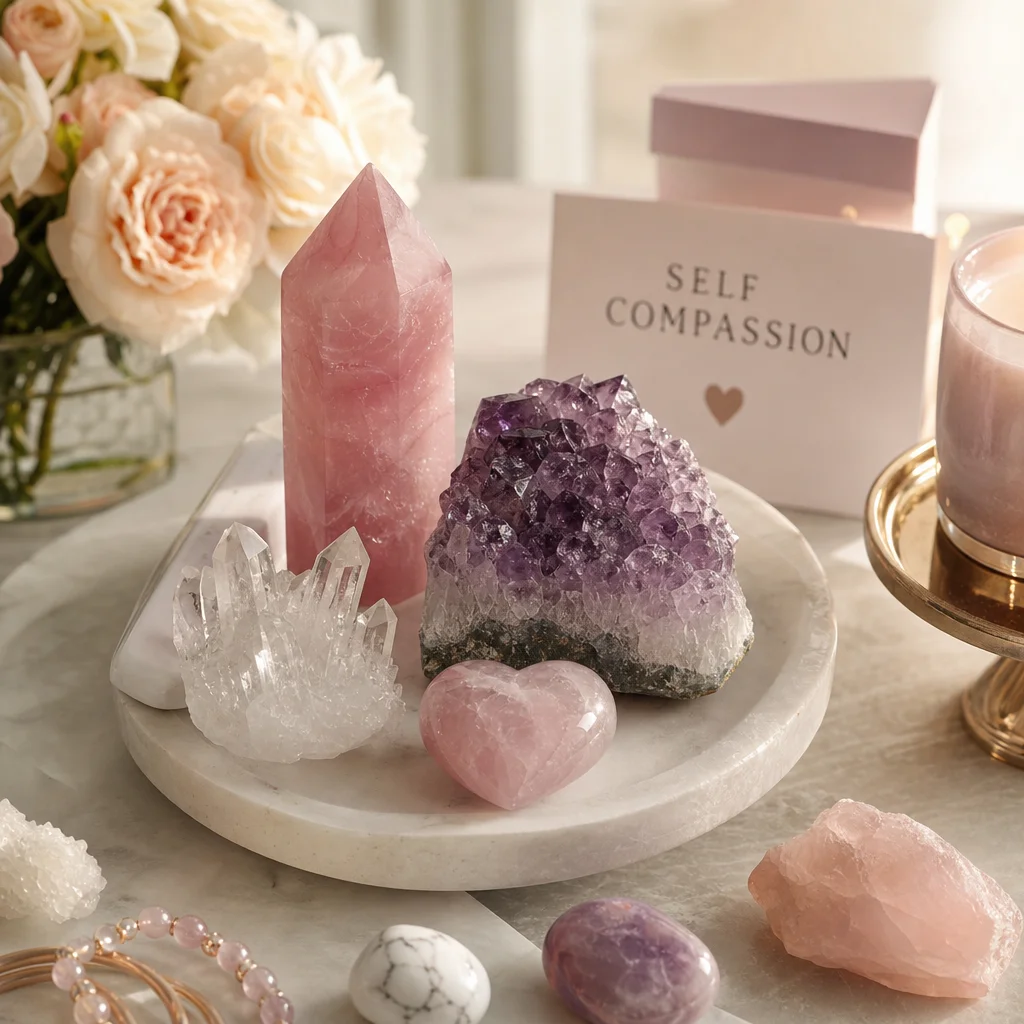
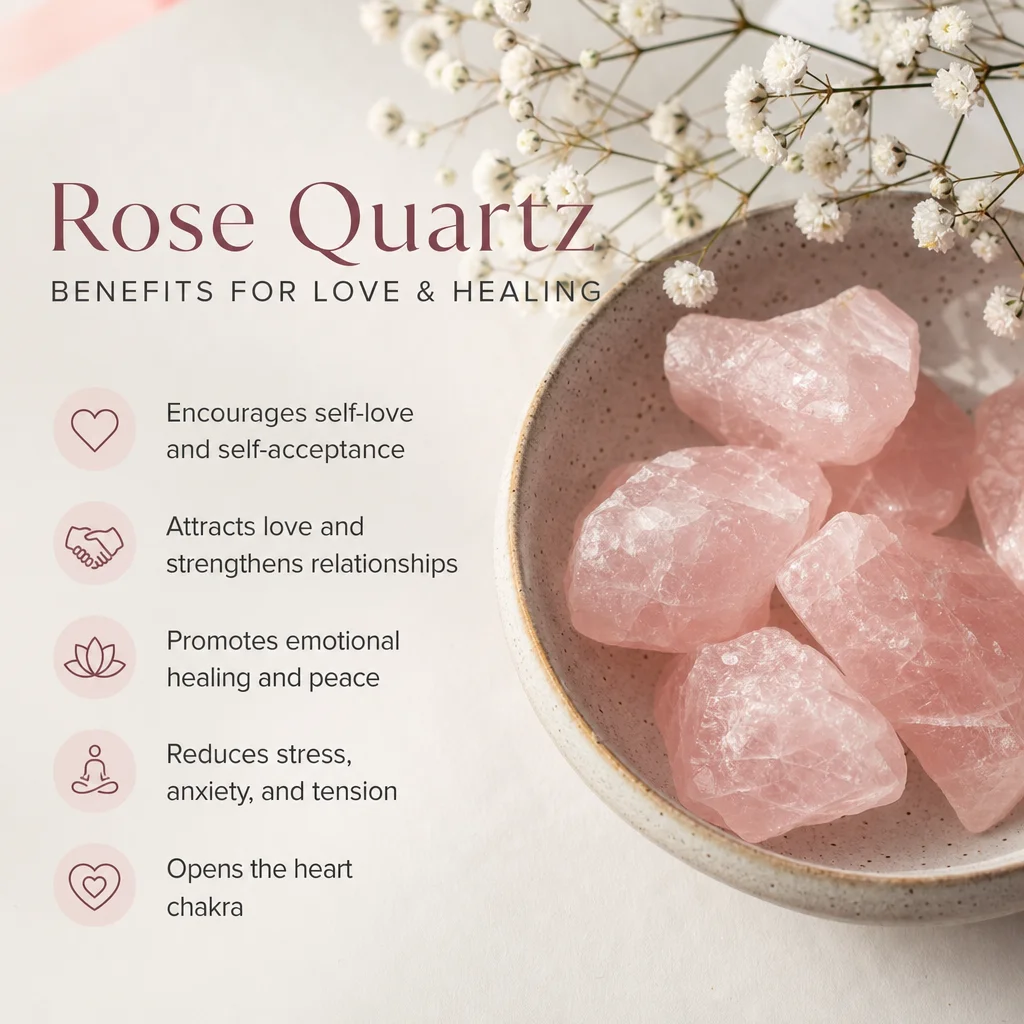
Rose quartz is the most accessible and widely used stone for self love, and there are practical reasons for its popularity beyond tradition. First, it is affordable—a palm-sized tumbled stone costs $3-8, and you can buy multiple pieces to place in different locations (bedside, desk, pocket, bathroom counter) without significant expense. Second, its soft pink color is universally associated with gentleness and warmth, which makes it an intuitive visual cue for self-compassion. Third, it is durable (Mohs 7), so it can be worn daily in jewelry without worry.
Rose quartz gets its pink color from microscopic inclusions of dumortierite, a blue mineral that creates a fibrous structure within the quartz. This is why rose quartz is usually translucent rather than transparent—those microscopic fibers scatter light. Higher-quality specimens show a deeper, more saturated pink, while lower-grade material appears milky or pale.
How to use it: Hold a tumbled rose quartz in your non-dominant hand during 5-10 minutes of quiet breathing each morning. The physical sensation of the smooth, warm stone in your hand becomes associated with the practice of checking in with yourself. Over time, simply picking up the stone can trigger a calmer, more self-compassionate mental state. Place a piece under your pillow or on your nightstand as a visual reminder before sleep—the last image you see should ideally be something that makes you feel positively about yourself.
Rhodonite: The Emotional Rescue Stone
Rhodonite is a manganese silicate (MnSiO₃) that is typically black with pink to red patches or veins. This contrasting color pattern—dark ground with bright pink veins—is its most distinctive feature and is the source of its association with emotional healing. The symbolism is intentional: the dark represents old wounds, difficult emotions, and trauma, while the pink represents the healing and compassion that cuts through them.
What makes rhodonite different from rose quartz is its specific association with processing and releasing old emotional pain. Rose quartz is more about gentle, ongoing self-care, while rhodonite is often turned to during periods of active emotional work—grief processing, relationship endings, career setbacks, or any situation where you are working through something specific rather than maintaining general self-compassion.
Rhodonite rates 5.5-6.5 on the Mohs scale, making it less suitable for daily-wear rings (which take the most abuse) but fine for pendants, earrings, or bracelets that do not get knocked around. Tumbled stones cost $5-12.
How to use it: During journaling sessions focused on emotional processing, keep a rhodonite stone nearby. The black-and-pink pattern serves as a visual metaphor for the work you are doing: acknowledging the dark while cultivating the light. Some people find it useful to hold rhodonite during the most difficult parts of emotional journaling, using it as a grounding object when emotions become intense.
Rhodochrosite: The Inner Child Stone
Rhodochrosite (MnCO₃, manganese carbonate) is known for its distinctive banded pattern of pink, white, and sometimes red layers. It is the national stone of Argentina, where the finest specimens come from (the Capillitas mine in Catamarca). Unlike rose quartz, which is silicon dioxide, rhodochrosite is a completely different mineral with a completely different structure. It rates 3.5-4 on the Mohs scale, which means it is relatively soft and needs gentle handling—definitely not for rough daily wear in rings.
Rhodochrosite's particular niche in self love practice is its association with inner child work and nurturing self-worth that was damaged in childhood. Whether or not you subscribe to this framing, the stone's use in therapeutic contexts is well-established. Its banded layers visually represent growth over time—new layers forming over old ones, suggesting that healing happens incrementally, in layers, rather than all at once.
How to use it: Place a rhodochrosite specimen (tumbled or raw slab) in a space where you do reflective or creative work. The visual layers serve as a reminder that personal growth is not linear—you build new patterns over time, and each layer counts. Because of its lower hardness, it is best used as a display or meditation stone rather than pocket-carry material.
Pink Tourmaline: The Deep Heart Stone
Pink tourmaline (elbaite, colored by manganese) offers something the previous stones do not: it combines the pink color association with genuine gemstone status and significant hardness (Mohs 7-7.5). Pink tourmaline is a "real" gemstone in the traditional sense—used in fine jewelry, valued by collectors, and available in a range of qualities from commercial grade to investment-grade gemstones.
In terms of self love practice, pink tourmaline is often described as the "deeper" or more intense version of rose quartz. Where rose quartz is gentle and accessible, pink tourmaline is richer, more saturated in color, and carries more visual weight. This translates to a slightly different energetic feel in practice—people who find rose quartz too subtle often connect more strongly with pink tourmaline.
Pink tourmaline is more expensive than rose quartz ($10-40 for a good tumbled stone, significantly more for gem-quality pieces), but the durability and beauty make it worth considering if you want a self love stone that doubles as a fine jewelry piece. A pink tourmaline pendant worn daily against the chest is one of the most common and effective ways to integrate this stone into self care practice.
Kunzite: The Peaceful Heart Stone
Kunzite is the pink to lilac variety of spodumene (LiAlSi₂O₆), a lithium aluminum silicate. Its color comes from manganese, and it can range from pale pink to vivid violet-pink. Kunzite has two distinctive properties that set it apart: strong pleochroism (it shows different colors from different angles—typically deeper pink from one direction and paler from another) and a tendency to fade with prolonged exposure to direct sunlight.
The sun-fading issue is a genuine practical concern. Kunzite should be stored away from windows and bright light, and should not be worn as a ring that sits in direct sun for hours. This fragility gives kunzite a certain preciousness—it feels like a stone that needs conscious care, which can be a meaningful metaphor for the kind of attention self love requires.
Kunzite rates 6.5-7 on the Mohs scale and is generally suitable for pendants and earrings. It is moderately expensive ($15-50 for a tumbled or small faceted piece), making it a mid-range investment compared to rose quartz and pink tourmaline.
How to use it: Kunzite is best used as a dedicated meditation or evening reflection stone, kept in a shaded space (not on a windowsill). Its delicate color and light- sensitivity make it a good choice for a nighttime self care ritual—a few minutes of journaling or breathing with kunzite in hand before bed.
Combining Stones for Self Love Practice
You do not need to choose just one stone. A practical approach is to use rose quartz for daily general self-care (morning breathing, carrying in your pocket), rhodonite for active emotional processing sessions (journaling, therapy reflection), and pink tourmaline or kunzite for deeper meditation work. This layered approach means each stone is used for its particular strengths rather than trying to make one stone do everything.
A simple self love crystal setup might look like: rose quartz under your pillow, rhodonite on your journal, and pink tourmaline as a pendant you wear during the day. Three stones, three specific contexts, one consistent intention.
Choosing the Right Stone for You
The honest answer to "which self love crystal should I get" is: start with whichever one you are most drawn to visually. Rose quartz is the safest starting point due to its low cost and versatility, but if you find yourself consistently attracted to rhodonite's black-and-pink pattern, rhodochrosite's layers, or kunzite's soft lilac, trust that instinct. The most effective self love crystal is the one you will actually pick up and use, not the one that is theoretically "best."
Consider your budget, your lifestyle (do you need a pocket stone or a display piece?), and the specific aspect of self love you want to focus on (general compassion, emotional processing, inner child work, or deep meditation). Each stone on this list has a genuine area of strength that the others do not fully replicate.
Frequently Asked Questions
Can I use multiple self love crystals at the same time?
Absolutely. Many practitioners use a combination of stones for different aspects of self love practice. Rose quartz for daily maintenance, rhodonite for processing specific emotions, and a higher-value stone like pink tourmaline for meditation is a common and effective approach.
Does the quality of the crystal matter for self love practice?
Not in the way you might think. A $3 tumbled rose quartz works just as well for daily practice as a $200 museum specimen. What matters is your consistency with the practice itself. That said, a higher-quality stone you find genuinely beautiful may motivate you to use it more often, which indirectly improves results.
How long does it take to feel a difference when working with self love crystals?
This varies significantly between individuals. Some people report a noticeable shift in their self-talk patterns within a week of consistent daily practice. For others, it takes several weeks to develop the association between the stone and the intentional mindset. The stone is a tool—a very literal one—and like any tool, its effectiveness depends on how regularly and intentionally you use it.
Frequently Asked Questions
What hand should I wear my self love crystal jewelry on?
In crystal practices, the left side of your body is considered the receiving side. To get the most out of your handcrafted self love crystal jewelry, we recommend wearing it on your left wrist or hand. This allows the gentle, nurturing vibrations of stones like Rose Quartz or Pink Tourmaline to easily flow into your personal energy field, directly supporting your emotional healing.
How do I cleanse and charge my self love crystals?
To keep your natural crystal jewelry vibrating at its highest frequency, cleanse it regularly to clear absorbed energies. You can gently place your pieces under moonlight overnight or use sound vibrations from a singing bowl. Avoid harsh water or salt with softer stones like Rhodochrosite or Kunzite. Once cleansed, hold your jewelry and set a specific intention for self compassion to charge it.
Comments