Crystals for Self Love: Best Stones to Open Your
June 3, 2026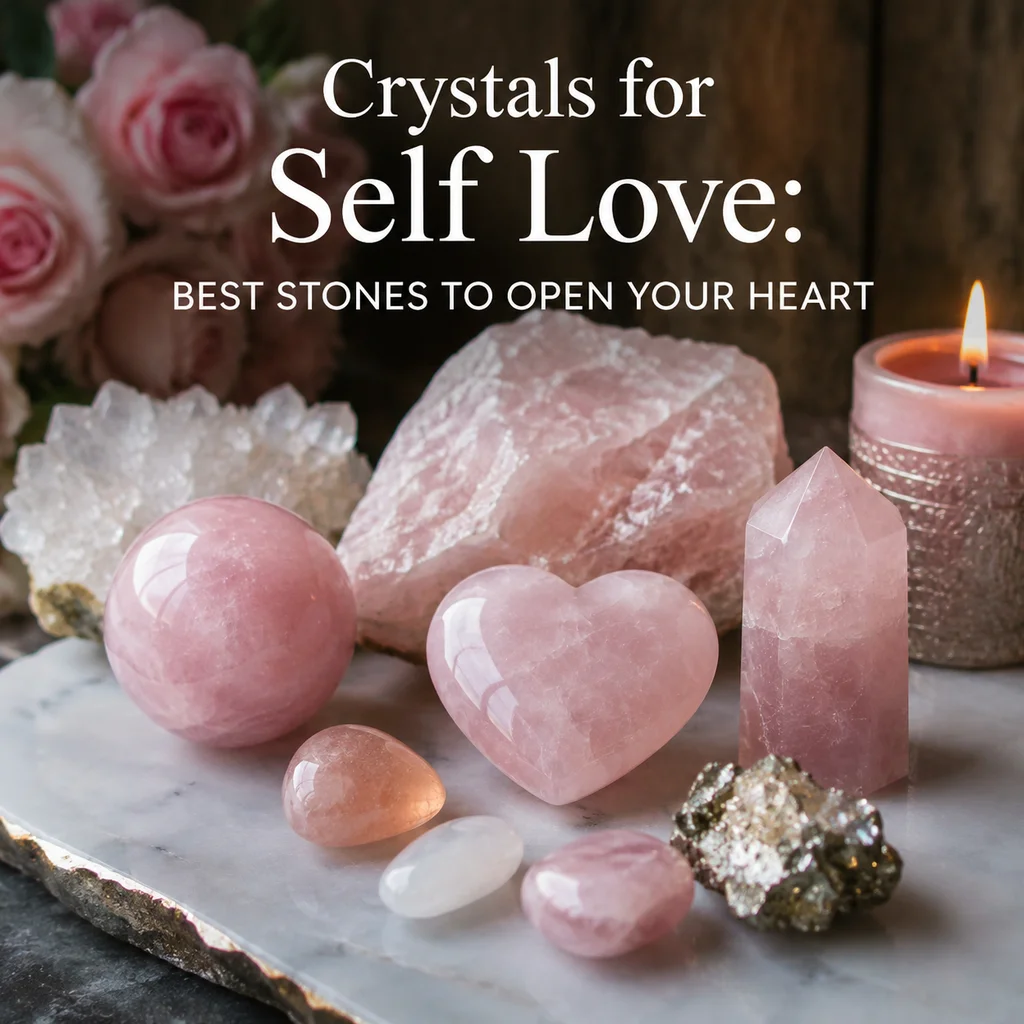
What Does "Self Love" Mean in Crystal Practice?
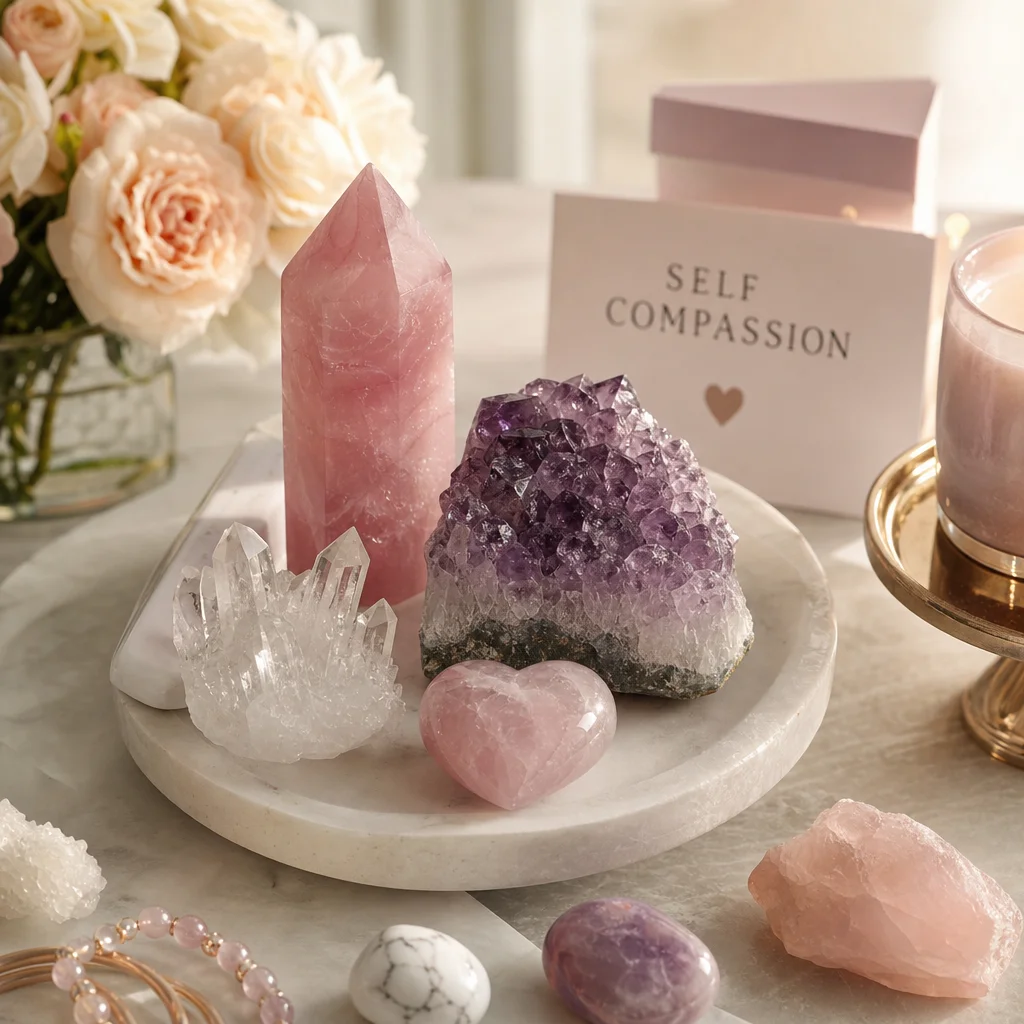
Self love in crystal work refers to the practice of using stones as tactile anchors for cultivating self-compassion, emotional healing, and personal acceptance. The concept draws from various cultural traditions where pink and green stones have been associated with the heart and emotional well-being for thousands of years.
Before diving into specific crystals, note that that no stone can replace professional mental health care. Crystals serve as meditation aids, visual reminders, and personal rituals—not as substitutes for therapy, counseling, or medical treatment. If you are dealing with deep emotional challenges, a qualified professional should be your first resource.
The Core Stone: Rose Quartz
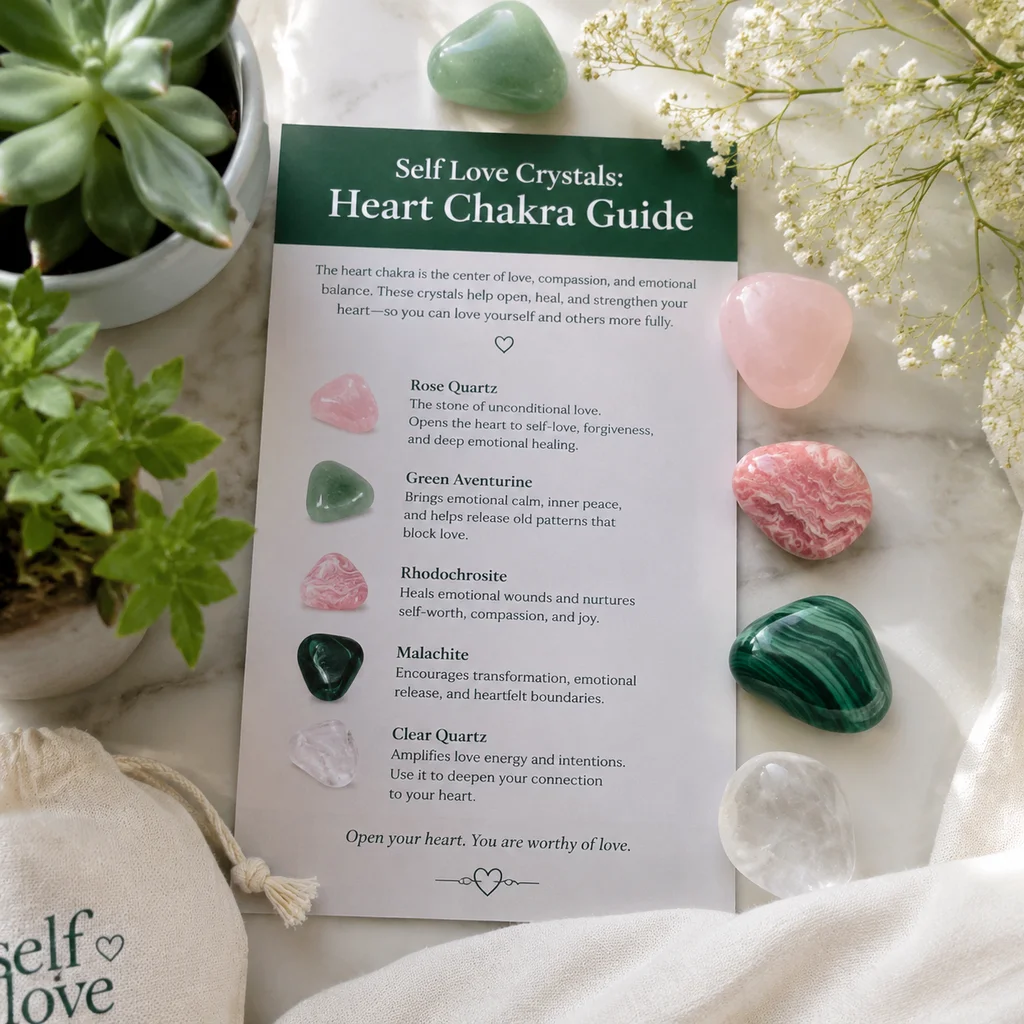
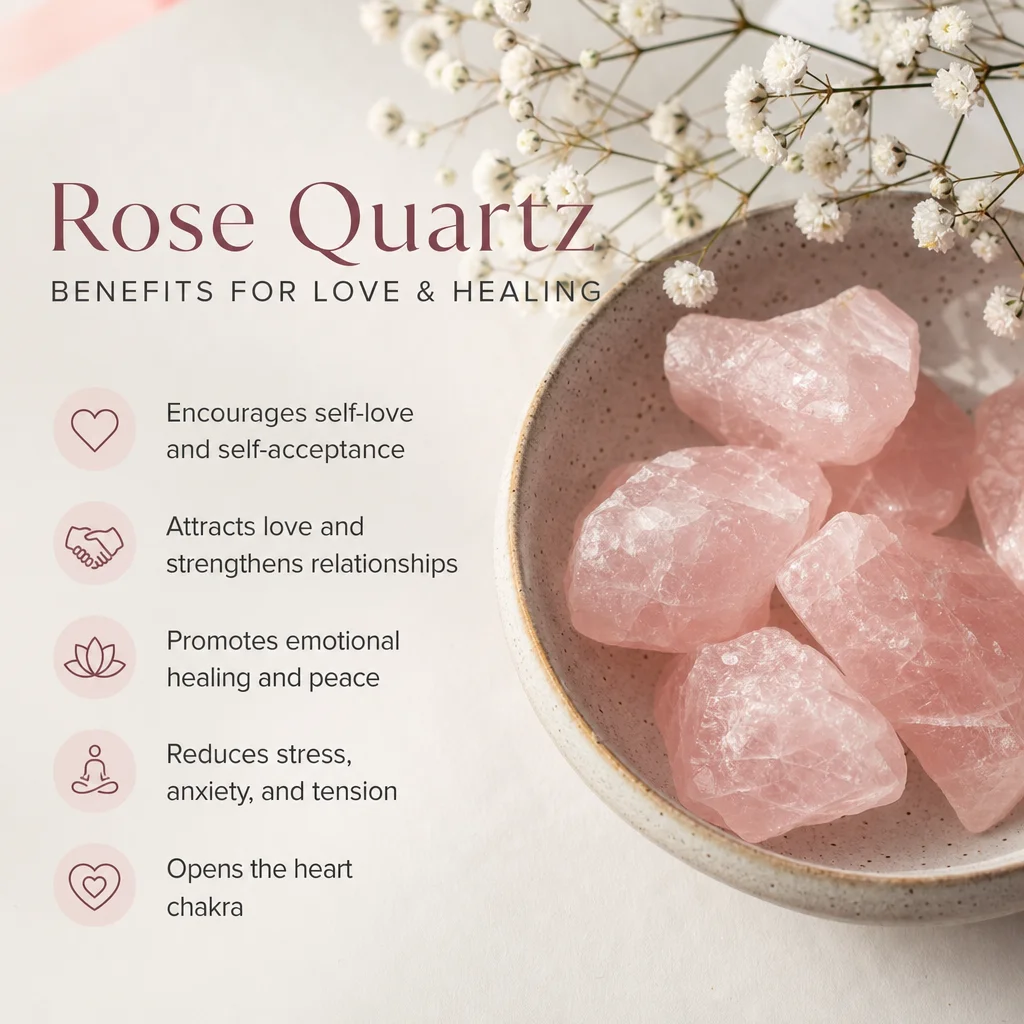
Rose quartz is the stone most consistently associated with love and emotional healing across cultures. Its soft pink color comes from trace amounts of titanium, manganese, or iron within the silicon dioxide structure. It is one of the most abundant and affordable heart-centered stones, making it accessible for daily practice.
Historically, rose quartz was used in Roman and Greek rituals associated with Aphrodite and Venus. In ancient Egypt, it was believed to prevent aging. Tibetan and Chinese traditions have used rose quartz in facial massage tools (gua sha and rollers) for centuries, which is where many modern practitioners first encounter it.
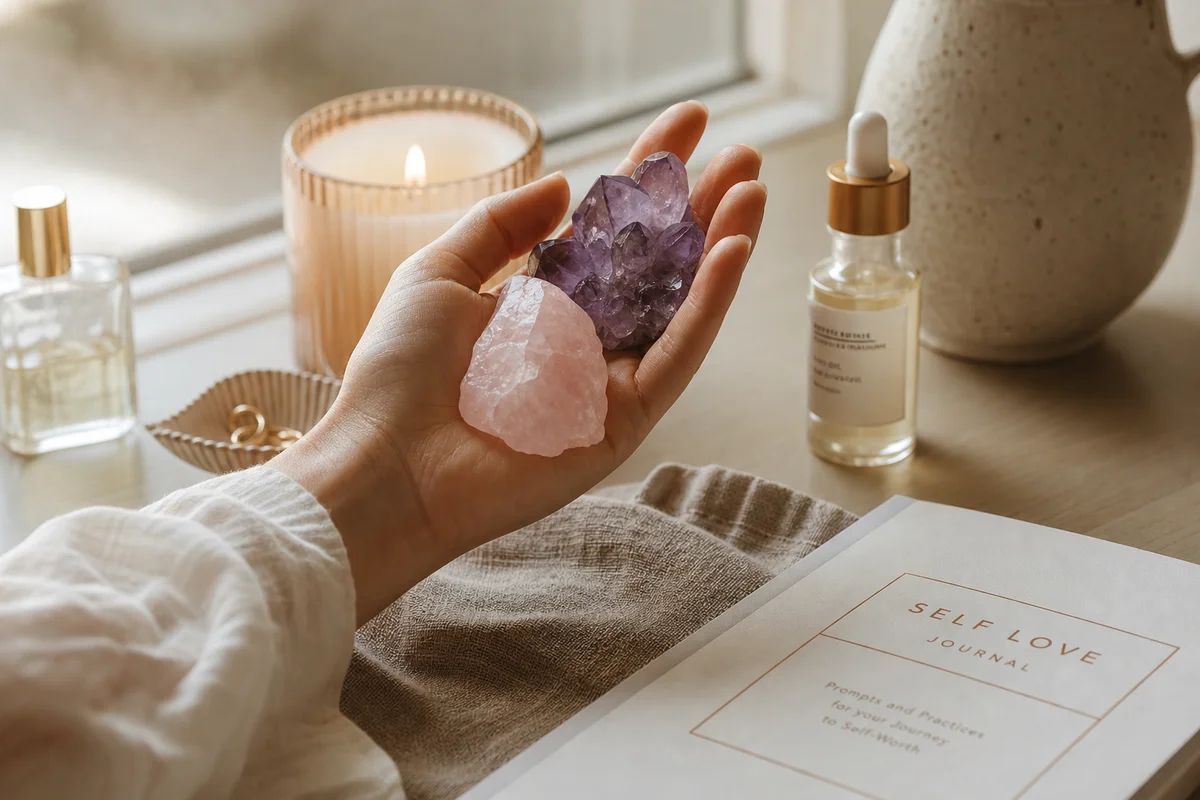
How to use it: Hold a tumbled rose quartz in your palm during meditation. Place a larger piece on your chest while lying down. Keep a small stone in your pocket as a physical reminder throughout the day. The weight and smooth texture provide sensory grounding that can interrupt negative thought loops.
For daily practice, try a simple morning ritual: hold rose quartz in both hands, close your eyes, and take ten slow breaths while silently repeating a self-affirming statement. The stone does not need to do anything metaphysical—the act of pausing, breathing, and focusing on self-kindness is where the practice's value lies.
Rhodonite: The Emotional Rescue Stone
Rhodonite is a manganese silicate mineral (MnSiO₃) recognizable by its distinctive pink color with black manganese oxide veining. The name comes from the Greek rhodos, meaning "rose," and it has been used as an ornamental stone since the 18th century.
Where rose quartz represents gentle, universal love, rhodonite is often described in crystal literature as specifically supportive for emotional recovery. The black veining is sometimes interpreted metaphorically as the integration of painful experiences with healing—an interesting visual metaphor that resonates with many practitioners.
How to use it: Rhodonite works well as a worry stone. The black veining provides a tactile texture that is satisfying to rub with your thumb. Keep a palm stone on your desk or nightstand. During moments of self-doubt, hold the stone and take five deep breaths before responding to the triggering thought.
Rhodonite is relatively hard (5.5-6.5 on the Mohs scale) and takes a good polish, making it ideal for jewelry that you can wear daily. A rhodonite pendant resting near your sternum serves as a constant, subtle reminder of emotional self-awareness.
Rhodochrosite: The Stone of Inner Child Healing
Rhodochrosite is a manganese carbonate (MnCO₃) that displays distinctive banded patterns in shades of pink, salmon, and white. The name comes from the Greek for "rose-colored." Argentina's Capillitas mine produces some of the world's finest specimens, and rhodochrosite is actually the national stone of Argentina.
In crystal traditions, rhodochrosite is associated with the concept of "inner child" work—the practice of addressing and healing emotional patterns formed during childhood. Whether or not you subscribe to this specific framework, rhodochrosite's warm, approachable color and distinctive banding make it an engaging stone for contemplative practice.
How to use it: The banded patterns in rhodochrosite make it one of the most visually engaging stones for focused meditation. Trace the layers with your finger while allowing thoughts to surface. Rhodochrosite's relatively low hardness (3.5-4) means it should be handled carefully—avoid wearing it in rings or bracelets where it will contact hard surfaces.
Pink Tourmaline: The Deep Emotional Stone
Pink tourmaline (also called rubellite when the color is intense enough) is a boron silicate mineral with a complex chemistry that produces a remarkable range of colors. Pink tourmaline gets its color from manganese and can range from pale blush to deep rose-red.
Tourmaline is one of the harder stones used in emotional crystal work (7-7.5 on the Mohs scale), making it practical for daily-wear jewelry. Pink tourmaline rings and pendants can survive years of regular use without significant wear.
How to use it: Pink tourmaline is well-suited for jewelry-based practice because of its durability. A pendant worn daily becomes part of your routine and personal identity, serving as a persistent reminder of self-care intentions. During meditation, hold the stone against your chest and focus on the sensation of its weight and temperature against your skin.
Compared to rose quartz's gentle pink, pink tourmaline often has more depth and saturation. Some practitioners describe it as having a more "focused" or "intense" quality, though these are subjective impressions rather than measurable properties.
Kunzite: The Gentle Pink Spodumene
Kunzite is the pink to lilac variety of spodumene, a lithium aluminum silicate. It was first identified in 1902 and named after gemologist George Frederick Kunz. The pink color comes from trace manganese, and kunzite is notable for its strong pleochroism—you can see different intensities of pink depending on the angle you view the stone from.
Kunzite has a distinctive quality: it can fade with prolonged exposure to direct sunlight. This is called "pleochroic fading" and is a genuine concern for collectors. The practical implication is that kunzite jewelry should be stored away from light when not being worn.
How to use it: Kunzite's moderate hardness (6.5-7) makes it suitable for pendants and earrings. Its delicate pink-to-lilac color appeals to people who find rose quartz too opaque or pink tourmaline too intense. Use kunzite in evening meditation sessions (avoiding sunlight concerns) or keep it in a light-proof pouch and bring it out for dedicated practice time.
Green Stones for Self Love: Jade and Green Aventurine
Not all heart-centered stones are pink. Green stones have their own long traditions in emotional healing practices:
Nephrite jade has been associated with emotional balance in Chinese culture for over 5,000 years. The slow-growing nature of jade—formed under high pressure over millions of years—lends itself to metaphors of patient self-development. Jade bangles are traditionally worn on the left wrist (closer to the heart) in Chinese practice.
Green aventurine is a form of quartz with fuchsite inclusions that create its characteristic sparkly green appearance. It is one of the most affordable green stones and takes a beautiful polish. Green aventurine is hard enough (6.5-7) for daily jewelry wear and is widely available in tumbled stones, beads, and cabochons.
Both stones provide an alternative for people who feel drawn to the concept of self-love work but do not connect with pink stones personally.
Building a Daily Self Love Crystal Practice
A sustainable practice matters more than an elaborate one. Here is a simple framework:
Morning (2 minutes)
Choose one stone—rose quartz is the easiest starting point. Hold it in both hands while breathing deeply for ten breaths. Set one specific intention for self-kindness that day. For example: "Today I will speak to myself the way I would speak to a good friend."
Midday Check-In (30 seconds)
Touch the stone in your pocket or notice the pendant on your chest. Take three breaths. No elaborate ritual needed—just a brief pause to reconnect with your morning intention.
Evening Reflection (5 minutes)
Hold the stone while reflecting: what was one moment today when you treated yourself well? What was one moment when you could have been kinder? No judgment—just observation. The stone provides a physical anchor that helps the reflection feel more concrete.
Combining Stones for Self Love
You do not need to limit yourself to one stone. Many practitioners build small collections that address different aspects of self-care:
- Rose quartz + black tourmaline: Combining emotional openness with boundary-setting and protection.
- Rhodonite + clear quartz: Emotional recovery with mental clarity.
- Pink tourmaline + amethyst: Emotional depth with calm focus.
- Kunzite + green aventurine: Heart-centered practice with growth and optimism.
The idea behind combining stones is to address multiple dimensions of your well-being simultaneously. The combinations above reflect traditional crystal associations rather than scientifically demonstrated effects. Choose combinations that feel meaningful to you personally.
Choosing the Right Stone for You
The best crystal for self love is the one you actually use consistently. Consider:
- Visual appeal: Which stone's color and pattern genuinely attract you? You will reach for it more often if you find it beautiful.
- Tactile feel: Some people prefer the cool smoothness of polished rose quartz. Others like the textured veining of rhodonite. Hold different stones and notice which one feels right in your hand.
- Practicality: If you want daily-wear jewelry, choose a harder stone (tourmaline, aventurine, jade) over a fragile one (rhodochrosite, kunzite for rings).
- Budget: Rose quartz and aventurine are extremely affordable ($2-5 for a good tumbled stone). Pink tourmaline and kunzite are significantly more expensive.
Frequently Asked Questions
Do I need to cleanse my self love crystals?
Cleansing is a personal preference rooted in cultural tradition. If it enhances your practice, methods include running the stone under cool water (check hardness first), placing it in moonlight, or setting it on a selenite plate. These are symbolic rituals that add meaning to your practice—they do not change the mineral's physical properties.
Can I wear multiple self love crystals together?
Absolutely. Many jewelry pieces combine rose quartz with other pink or green stones. The only practical concern is hardness matching—pair a hard stone (tourmaline) with a soft one (rhodochrosite) and the softer stone may get scratched.
Is rose quartz the best self love crystal?
It is the most popular and accessible, which makes it the best starting point. But "best" depends on what resonates with you personally. Someone might connect more with rhodonite's textured appearance or pink tourmaline's depth of color.
Frequently Asked Questions
Can I sleep with self love crystals under my pillow?
Yes, sleeping with self-love crystals like Rose Quartz or Kunzite under your pillow is a wonderful way to absorb their gentle energy overnight. This practice promotes peaceful dreams and helps soothe subconscious emotional wounds. Alternatively, wearing a handcrafted crystal pendant to bed keeps these comforting vibrations close to your heart while you rest.
Which crystal is best for healing self-worth and confidence?
While Rose Quartz is famous for love, Rhodonite and Pink Tourmaline are exceptional for building self-worth and confidence. Rhodonite helps rescue your self-esteem by balancing emotional scars, while Pink Tourmaline encourages deep emotional healing. Choosing a beautifully crafted piece featuring these stones serves as a daily reminder of your inherent value and strength.
Comments