Fulgurite: The Unique Glass Formed by Lightning
June 4, 2026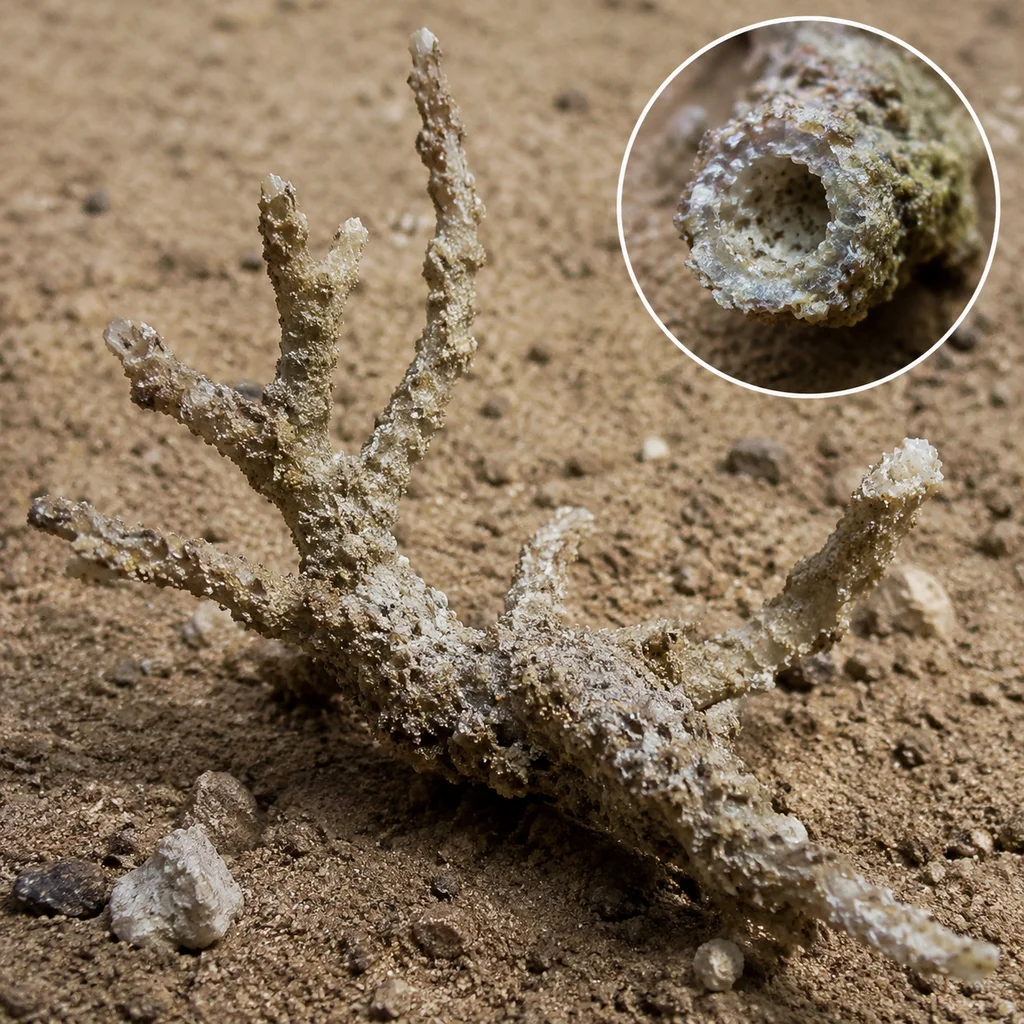
What Is Fulgurite?
Fulgurite is a rare natural glass that forms when lightning strikes sand, soil, or rock. The word comes from the Latin fulgur, meaning lightning, and these specimens are often called "petrified lightning." When a bolt of lightning—carrying temperatures between 1,800°C and 3,000°C—hits the ground, it instantly melts silica-rich material and fuses it into glassy, branching tubes.
Unlike most minerals that grow slowly over thousands of years, fulgurites are created in a fraction of a second. This violent origin gives them an irregular, hollow structure that looks nothing like a typical crystal or gemstone. Most fulgurites are fragile, porous, and lightweight, making them more of a geological curiosity than a jewelry material.
How Fulgurite Forms: The Science Behind Lightning Glass
When lightning discharges into the ground, the electrical energy converts into extreme heat along the lightning's path. This heat is concentrated in a narrow channel—sometimes only a few millimeters wide—that can extend several meters below the surface. The surrounding silica (SiO₂) melts almost instantly, then cools and solidifies in the shape of the original channel.
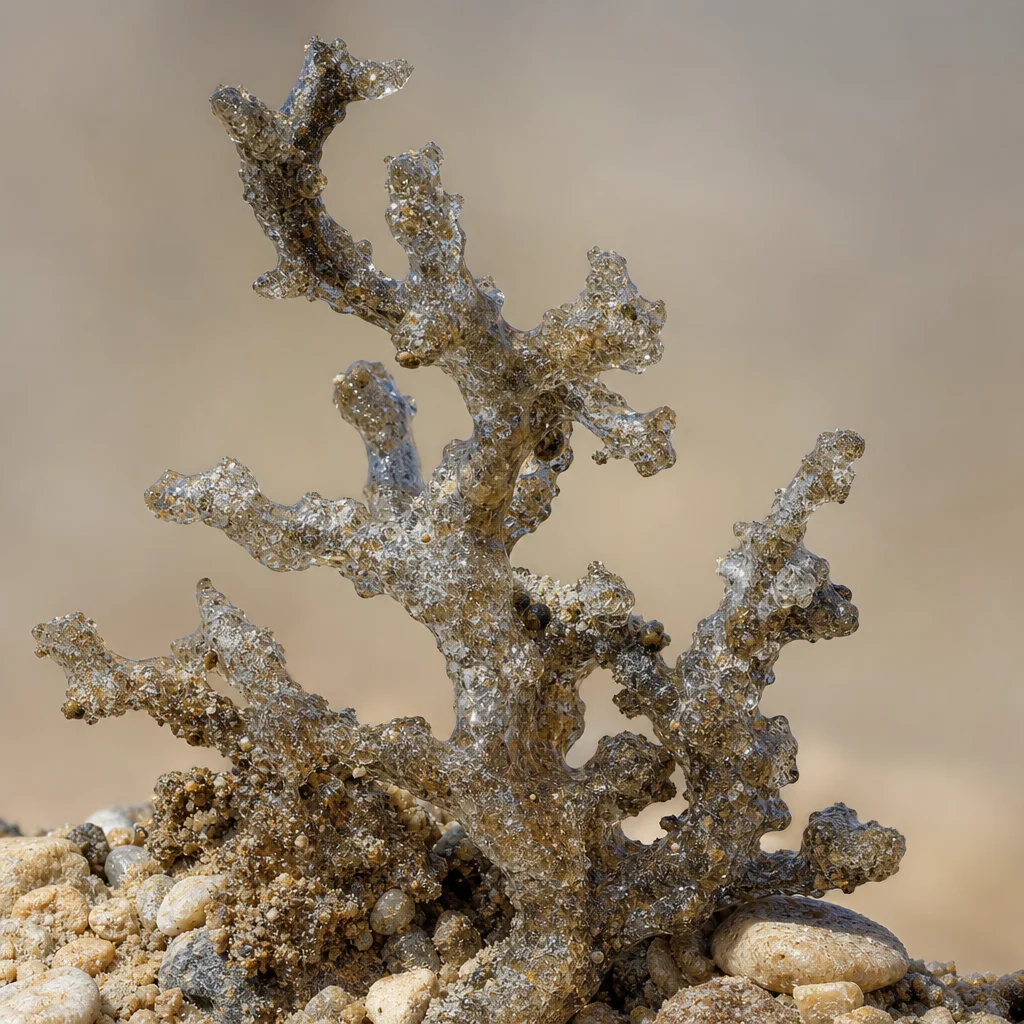
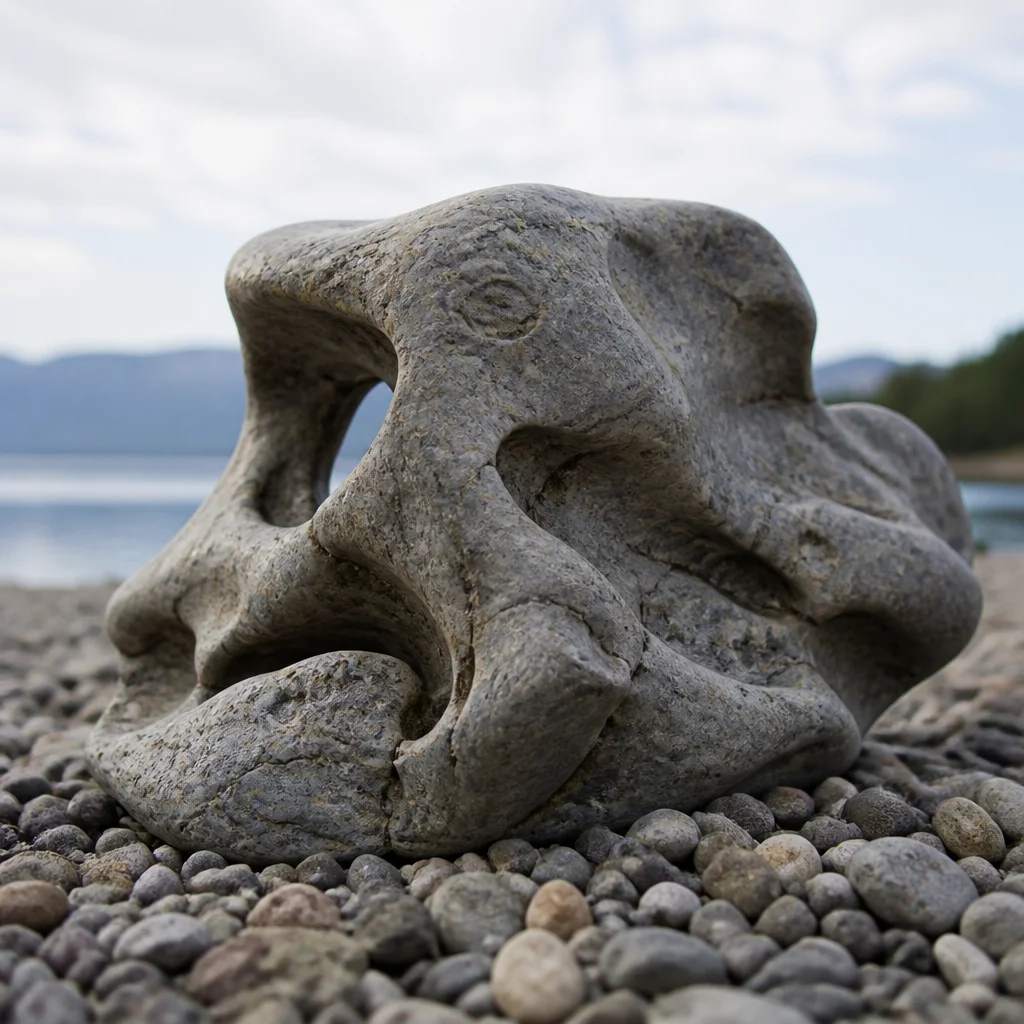
The result is a hollow or partially hollow tube with rough, glassy walls. The outside often retains the texture and color of the parent material, while the inside is smooth and vitreous. The branching pattern mirrors the way lightning forks through the ground, creating complex root-like structures underground.
Several factors influence the final appearance:
- Parent material: Pure quartz sand produces nearly transparent or white fulgurites. Sand with iron content yields brown, red, or black specimens. Clay-rich soil produces darker, more opaque results.
- Melt temperature: Higher temperatures produce more complete vitrification (glass formation), while lower heat leaves partially fused, crumbly specimens.
- Cooling speed: Rapid cooling creates more glassy surfaces; slower cooling can produce small crystal inclusions (like lechatelierite, a pure silica glass) within the fulgurite.
- Depth: Surface fulgurites tend to be shorter and more exposed to weathering. Subsurface specimens can be longer and better preserved but harder to find.
Natural vs. Artificial Fulgurite: How to Tell the Difference
Genuine fulgurites are created only by natural lightning strikes, but artificial versions exist. Scientists and hobbyists sometimes use high-voltage equipment or electric arc furnaces to create "man-made lightning glass." These lab-grown specimens lack the chaotic, organic structure of natural fulgurites.
Here is how to distinguish them:
- Structure: Natural fulgurites have irregular, branching tubes with varying wall thickness. Artificial specimens tend to be smoother, more uniform, and lack the characteristic root-like forking pattern.
- Interior texture: Natural fulgurite interiors often show flow lines, gas bubbles, and partially melted sand grains. Artificial versions usually have more homogeneous interiors.
- Color consistency: Natural specimens vary in color along their length because the parent material changes. Artificial fulgurites are often more consistent in color.
- Weight: Natural fulgurites are typically very lightweight (2-4 grams per linear inch) because of their hollow structure and porous walls. Heavy specimens are suspicious.
If you are buying fulgurite from a dealer, ask about the provenance. Fulgurites from known lightning-prone regions (central Florida, the Sahara, the Australian outback) are more likely to be authentic than specimens with vague origins.
Where to Find Fulgurite
Fulgurites are found worldwide, but they are most common in areas with frequent lightning activity and silica-rich surface material:
- Florida, USA: The "lightning capital" of North America produces abundant fulgurites, especially in the sandy central regions.
- Sahara Desert: Sand dunes with frequent dry-season thunderstorms yield large, well-preserved specimens.
- Australian Outback: Vast sandy plains with intense electrical storms produce significant quantities.
- Mountain peaks: High-elevation areas attract lightning strikes, producing fulgurites in rocky terrain rather than sand.
- Beaches: Sandy shorelines occasionally yield surface fulgurites after storms.
Finding fulgurite in the field requires patience and a sharp eye. Look for irregular glassy protrusions on the sand surface after thunderstorms, or dig carefully in areas where lightning strikes are known to have occurred. The specimens are fragile and break easily, so extraction requires gentle handling.
Colors and Varieties of Fulgurite
Fulgurite color depends entirely on the composition of the struck material:
- White or translucent: From pure quartz sand (SiO₂). These are the most prized by collectors.
- Gray to black: From sand with high iron or organic content.
- Brown or reddish: From iron oxide-rich soil or sandstone.
- Greenish: Rare, from mineral-rich parent material with copper or other trace elements.
- Tan or pale yellow: Common in desert environments with mixed mineral sand.
The most sought-after specimens are those with translucent sections where you can see light passing through the glassy walls. These are typically from very pure quartz sand environments.
Physical Properties and Hardness
Fulgurite is technically a natural glass, not a crystalline mineral, so it does not have a true crystal structure. Its physical properties include:
- Hardness: Approximately 5.5 on the Mohs scale, similar to glass. It can be scratched by a steel knife but not by a copper coin.
- Density: Very low, typically 1.5-2.5 g/cm³, because of the hollow tube structure and porous walls.
- Composition: Primarily lechatelierite (nearly pure SiO₂ glass), with inclusions of unmelted quartz grains, iron oxides, and other minerals from the parent material.
- Fracture: Conchoidal (like glass), but the porous structure makes it brittle and prone to crumbling rather than clean breaks.
Can You Make Jewelry from Fulgurite?
In theory, yes—but in practice, it is extremely difficult. The combination of low hardness, extreme fragility, and hollow structure makes fulgurite poorly suited for most jewelry applications. Even the toughest specimens crumble under the stress of drilling or setting.
A few determined artisans have managed to set small, solid sections of fulgurite in resin pendants or wire-wrapped configurations, but these pieces remain delicate. Wearing a fulgurite pendant daily would almost certainly result in damage within weeks.
If you want the look of lightning glass in wearable form, consider man-made glass alternatives that mimic the appearance while being far more durable. Natural fulgurite is best appreciated as a display specimen or collector's piece.
What Does Fulgurite Symbolize?
In crystal and mineral collecting communities, fulgurite carries symbolism tied to its dramatic origin:
- Transformation: Born from destruction (lightning) and creation (glass formation) simultaneously.
- Raw energy: A physical record of one of nature's most powerful forces.
- Rarity: Each specimen is unique and non-reproducible in its natural form.
- Connection: Linking the atmosphere (lightning) with the earth (sand/soil).
Some collectors place fulgurite on their altars or desks as a conversation piece. Others incorporate it into meditation practices, using the idea of sudden transformation as a focal point. These are personal and cultural interpretations, not scientifically verified properties.
How to Care for Fulgurite
Because of its fragility, fulgurite requires careful handling:
- Store in a padded container or display case. Do not stack heavy objects on top of it.
- Keep away from moisture and humidity changes, which can weaken the already fragile structure over time.
- Avoid direct sunlight for prolonged periods (though unlike some colored minerals, fulgurite does not fade).
- Handle with cotton gloves—the oils from your fingers can degrade the glassy surface over years.
- Do not attempt to clean with water or chemicals. A soft, dry brush is sufficient to remove loose sand or dust.
Display your fulgurite on a stable, cushioned surface where it will not be knocked over. The value of a fulgurite lies in its uniqueness as a geological specimen, not in any commercial jewelry application.
Fulgurite vs. Obsidian: What Is the Difference?
Both fulgurite and obsidian are natural glasses, but they form through completely different processes:
- Fulgurite: Formed by lightning striking the ground (atmospheric → terrestrial). Typically hollow tubes with irregular shapes.
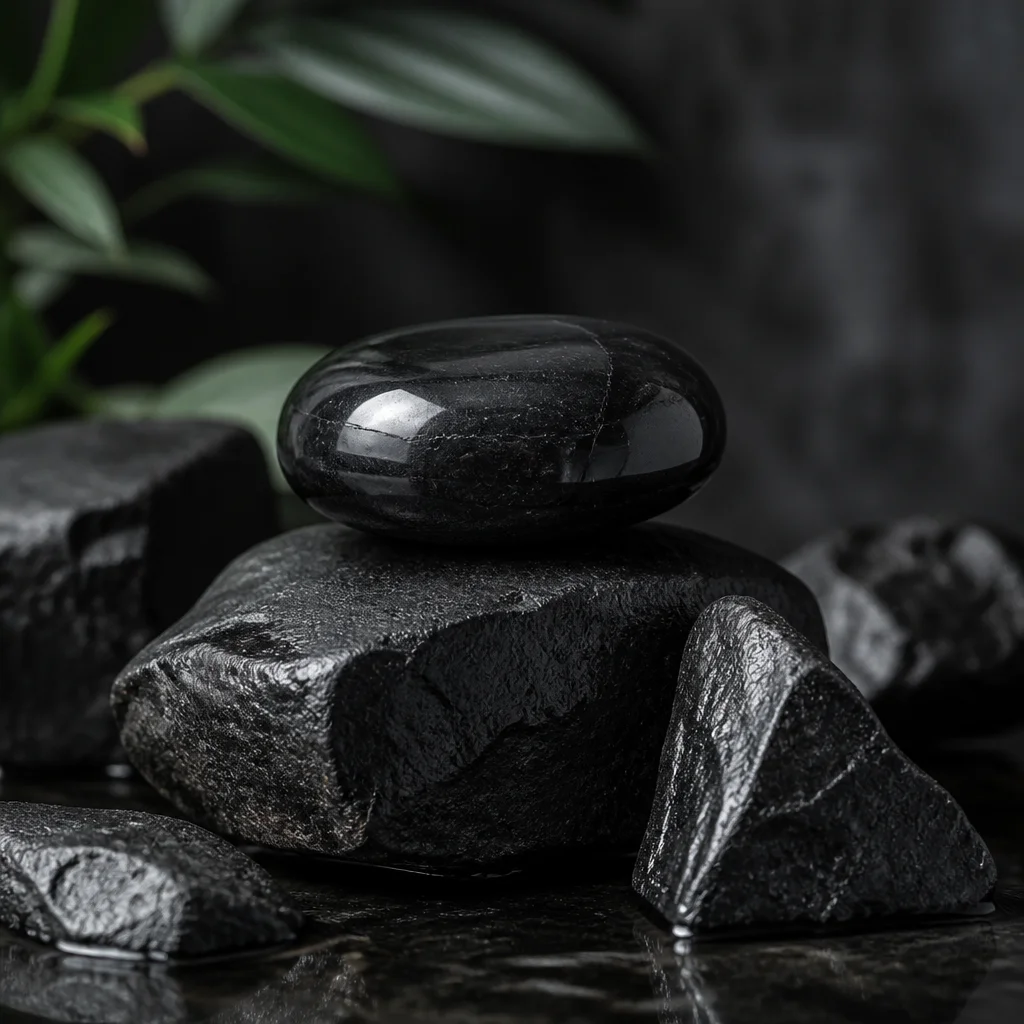
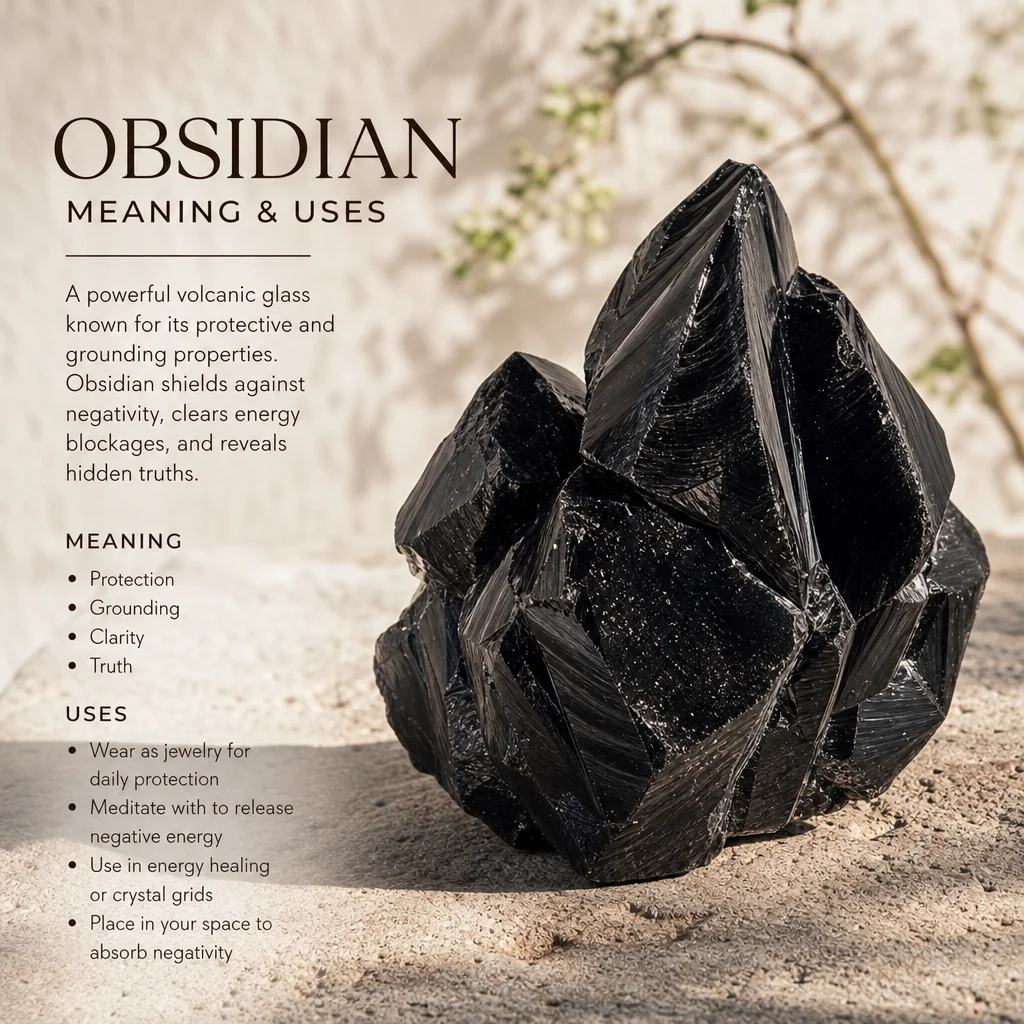
- Obsidian: Formed by volcanic lava cooling rapidly (terrestrial). Solid, dense masses with conchoidal fracture and smooth surfaces.
Obsidian is far more common, more durable (Mohs 5-6 but solid), and widely used in jewelry and tool-making throughout human history. Fulgurite is rarer, more fragile, and primarily a collector's specimen.
Frequently Asked Questions
Is fulgurite expensive?
Small fragments sell for $10-30, while large, well-preserved branching specimens with translucent sections can fetch $100-500 or more from specialist dealers. Museum-quality pieces with provenance have sold for thousands.
Can I find fulgurite in my backyard?
Only if your area has experienced recent lightning strikes and the ground is silica-rich. Sandy regions in lightning-prone areas have the best odds. A metal detector will not help—fulgurite contains no significant metal.
How old can fulgurite be?
Most specimens found on the surface are recent (months to years old), as weathering quickly destroys the fragile glass. Buried specimens in arid environments could theoretically be thousands of years old.
Does fulgurite have any scientific value?
Yes. Geologists study fulgurites to understand the thermal effects of lightning on soil and rock, which has applications in lightning protection research and planetary science (fulgurite-like structures have been proposed on Mars and Venus).
Can fulgurite be faked?
Yes, and artificial fulgurites are relatively easy to produce with high-voltage equipment. Look for irregular branching, partial melting of included grains, and varying wall thickness as signs of authenticity.
Comments