Shungite for EMF Protection: Ancient Power
May 31, 2026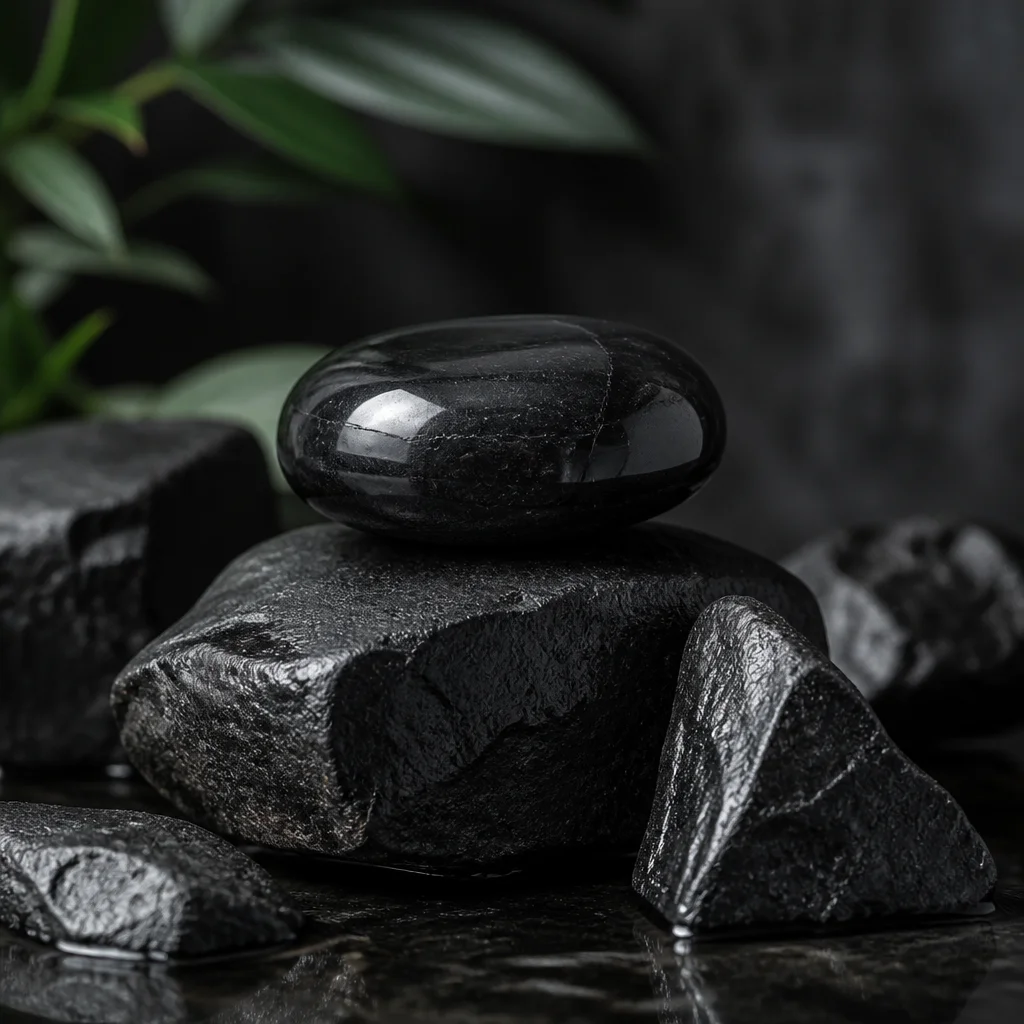
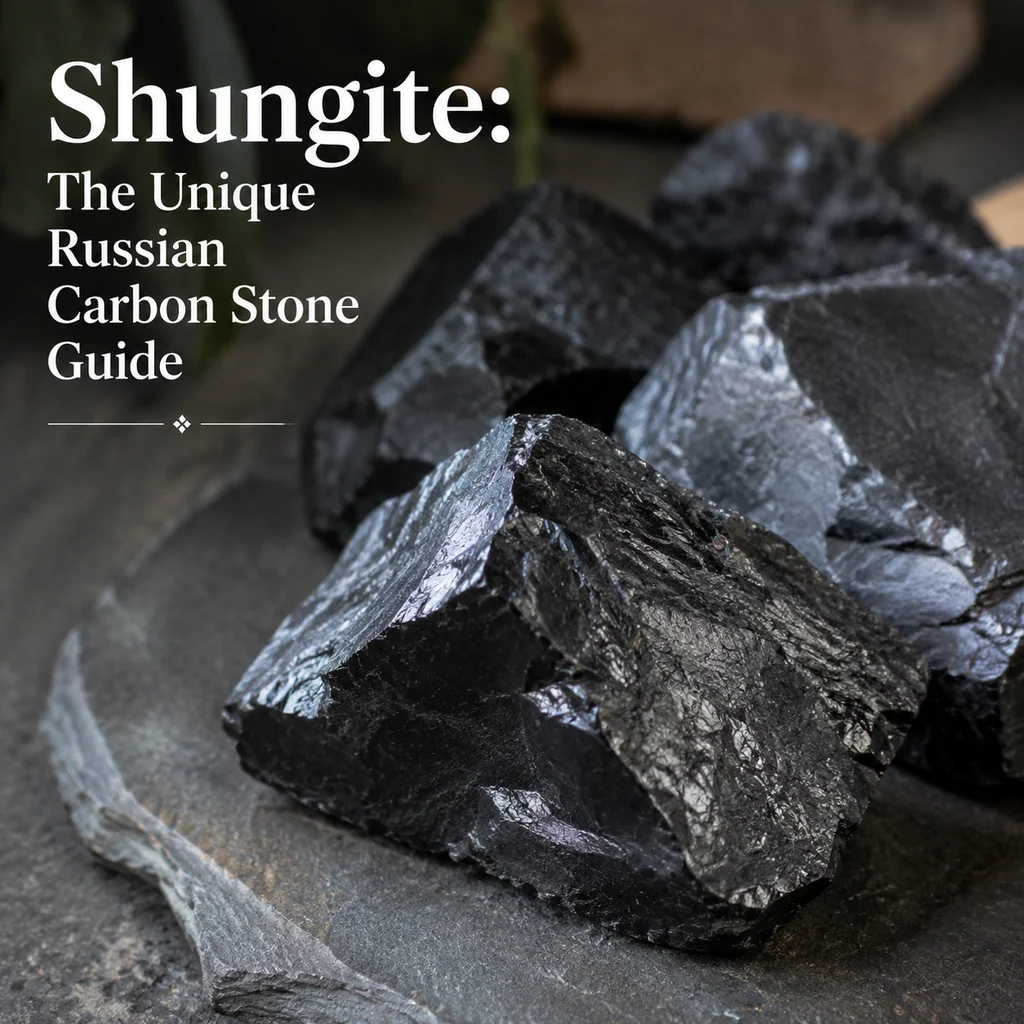
Among all the stones in the crystal world, shungite has perhaps the most dramatic origin story. Formed roughly 2 billion years ago from the remains of ancient microscopic organisms in what was then a shallow sea, this lustrous black carbon mineral exists in commercial quantities in only one place on Earth: the Karelia region of northwestern Russia. Its unique composition — including hollow carbon molecules called fullerenes that weren't even discovered by modern science until 1985 — has turned shungite into one of the most talked-about stones in both the crystal community and the scientific world.
What Exactly Is Shungite?
Shungite is a carbon-rich, non-crystalline mineraloid (it lacks a regular crystal structure, which technically makes it a mineraloid rather than a true mineral). Its carbon content ranges from about 30% in lower grades to over 98% in the highest-grade material. The rest is primarily silica (silicon dioxide), along with trace amounts of various metals and minerals.
The formation of shungite remains a subject of scientific debate. The leading theories involve ancient marine microorganisms that accumulated in a Precambrian sea and were subsequently transformed by geological heat and pressure over billions of years. The carbon in shungite is similar to the carbon found in some meteorites, which has led some researchers to propose an extraterrestrial contribution, but the biological origin theory is more widely accepted.
What makes shungite genuinely unusual in the mineral world is the presence of fullerenes — cage-like carbon molecules arranged in hollow spheres. The most common fullerene in shungite is C₆₀ (buckminsterfullerene, or "buckyballs"), though C₇₀ and other variants also occur. Fullerenes were first synthesized in the laboratory in 1985 (earning the discoverers a Nobel Prize in 1996) and were later found to occur naturally in shungite, in soot, and in interstellar space. The biological and chemical properties of fullerenes continue to be an active area of research.
Types of Shungite: Not All Shungite Is Equal
The shungite market uses a grading system based on carbon content, and understanding the grades is essential because the properties and prices differ enormously.
Elite Shungite (Type I, 90-98% carbon)
This is the rarest and most expensive grade. Elite shungite has a distinctive silvery, almost metallic luster and is soft enough to leave a black mark on paper (like a natural pencil). It's found primarily as small nodules rather than large masses, and it contains the highest concentration of fullerenes. Elite shungite from the Zazhoginskoye deposit in Karelia is considered the finest quality available.
Because of its softness and rarity, elite shungite is typically sold as small pieces for water purification or as polished pendants. Prices range from $20-60 per small piece (10-30 grams).
Black Shungite (Type II, 50-80% carbon)
This is the most common commercial grade. Black shungite is harder than elite, can be shaped into pyramids, spheres, and phone stickers, and is the material used in most shungite consumer products — phone plates, pyramid-shaped "EMF shields," bracelets, and water filtration cubes. It's distinctly black with a matte to slightly glossy surface.
Black shungite is what you'll encounter in most crystal shops and online listings. Prices are moderate — a small pyramid might cost $10-25, phone stickers $5-15.
Gray Shungite (Type III, 30-50% carbon)
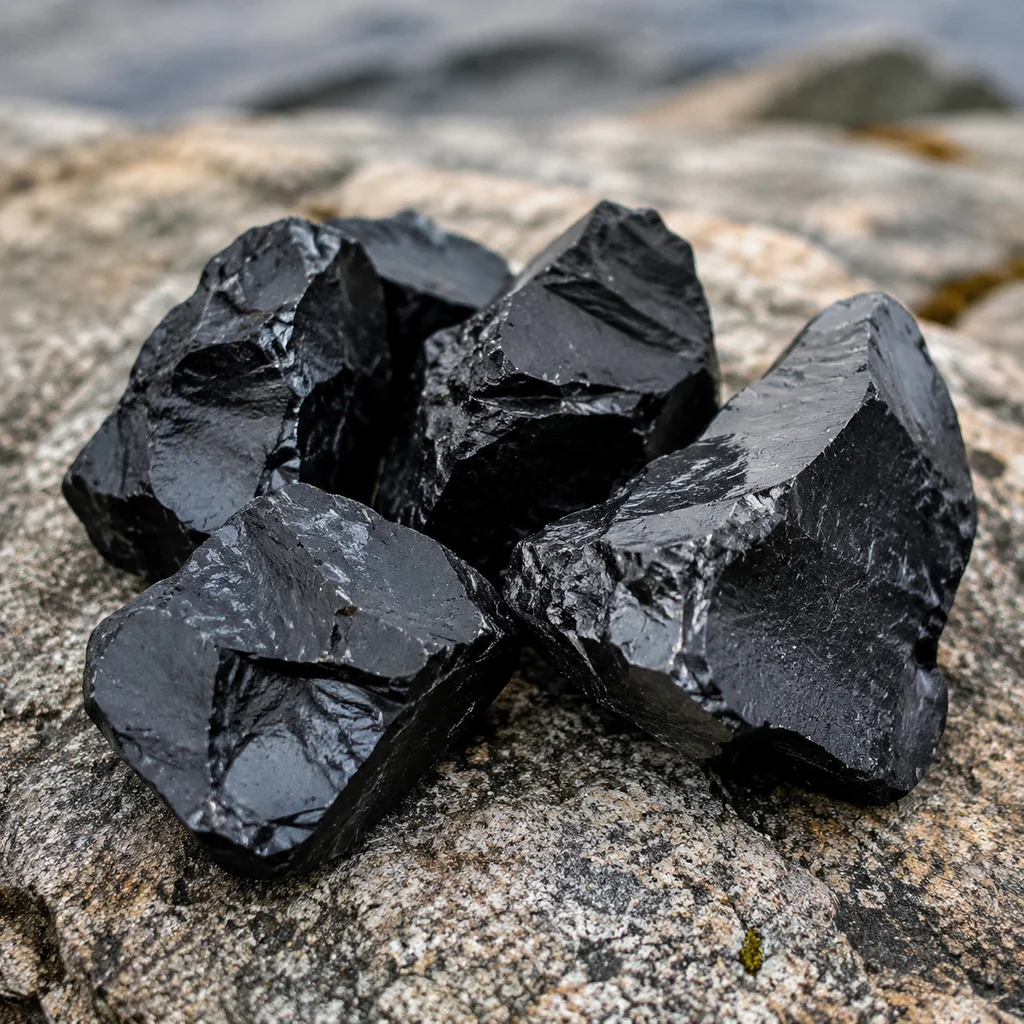
Gray shungite is the lowest commercial grade, containing significant amounts of mineral impurities. It looks more like a dark gray rock than the jet-black of higher grades. This grade is primarily used in industrial water filtration systems and construction materials in Russia, and it's less commonly sold as a crystal for personal use.
The EMF Protection Claim: What Does the Science Say?
This is the question most people have about shungite, and it deserves an honest, nuanced answer.
The marketing claim: Shungite products (pyramids, phone stickers, plates, spheres) shield you from electromagnetic field (EMF) radiation emitted by phones, WiFi routers, computers, and other electronic devices.
The scientific reality: Carbon is an electrical conductor, and some studies have investigated the ability of carbon-based materials to attenuate electromagnetic radiation. Shungite, being carbon-rich, does have measurable electrical conductivity. Laboratory studies have shown that shungite can absorb certain frequencies of electromagnetic radiation to some degree.
However — and this is a critical however — the practical effectiveness of a small shungite pyramid or phone sticker in a real-world environment is far less clear-cut than the marketing suggests. The attenuation (reduction in radiation strength) provided by a consumer-level shungite product is small relative to the total EMF exposure you receive from a phone held directly against your head or a WiFi router across the room.
Some honest caveats:
Research into shungite's electromagnetic properties has been conducted primarily by Russian scientists at institutions in Karelia and St. Petersburg. Some of this research is published in Russian-language journals and may not have been subject to the same peer-review rigor as Western publications. A few studies in English-language journals have reported measurable effects, but the sample sizes are typically small and the clinical significance (does the measured reduction actually matter for health outcomes?) remains unestablished.
If EMF protection is your primary interest in shungite, the most honest framing is this: shungite's conductive properties may provide some degree of EMF attenuation, but relying on a small pyramid on your desk or a sticker on your phone as your sole protective measure is not supported by robust scientific evidence. If EMF exposure is a genuine concern for you, distance (keeping devices away from your body), airplane mode, and wired connections are far more effective strategies.
Shungite Water: The Traditional Use
Long before anyone was talking about EMF, shungite had a reputation in Russia for water purification. Historical records suggest that people in the Karelia region have used shungite to purify drinking water for centuries.
Modern research has given some scientific basis to this tradition. Studies have found that shungite can reduce certain contaminants in water, including some organic compounds and bacteria. The mechanism isn't fully understood but is thought to involve adsorption onto the carbon surface and the antibacterial properties of fullerenes.
The traditional method involves placing elite shungite stones in a container of water and letting them sit for 6-24 hours before drinking. The water takes on a slight mineral taste but remains clear. Russian shungite water purification systems are commercially available and used in some hospitals and spas in the Karelia region.
Safety note: Only elite (Type I) shungite should be used for water purification. Lower grades contain mineral impurities that may leach into the water. Always clean new shungite thoroughly before first use (boil for 10 minutes, rinse, and dry). And no stone-based water purification method should replace proper filtration for water that isn't from a known safe source.
How to Spot Fake Shungite
The rising popularity of shungite has predictably led to fakes entering the market. Here's how to identify them.
The conductivity test: Real shungite conducts electricity. You can test this with a simple multimeter — touch one probe to each side of the stone, and genuine shungite should show some conductivity. Black plastic, painted rock, or dyed stone won't. This is the most reliable field test.
The streak test: Rub shungite against an unglazed ceramic tile (the back of a coffee mug works). Real shungite leaves a black or dark gray streak. Materials that leave a lighter streak or no streak at all are likely fake.
The feel: Shungite has a distinctive weight — heavier than it looks, similar to coal but denser. Very lightweight pieces are suspicious. Elite shungite is notably soft; if your finger can easily scratch a deep groove into the surface, that's actually a good sign for elite grade.
The luster: Genuine shungite ranges from matte black (lower grades) to silvery-shiny (elite). A plastic-looking glossy finish with no depth or variation suggests a coating rather than natural material.
Shungite Products: What's Worth Buying
Among the many shungite products available, a few have more practical basis than others.
Water purification stones (elite grade): This is the most evidence-backed use. A handful of elite shungite stones in a water pitcher is a reasonable, low-tech water treatment with some scientific support. $20-40 for a set of enough stones to treat a standard pitcher.
Pyramids and spheres: Visually striking display pieces that serve as conversation starters. Whether they provide meaningful EMF protection is debatable, but they look good on a desk and are reasonably priced at $15-40.
Phone stickers: The least supported use case. A 1-inch circle of shungite on the back of your phone has minimal contact area and negligible shielding effect relative to the total EMF output. Save your money or buy for aesthetic reasons only.
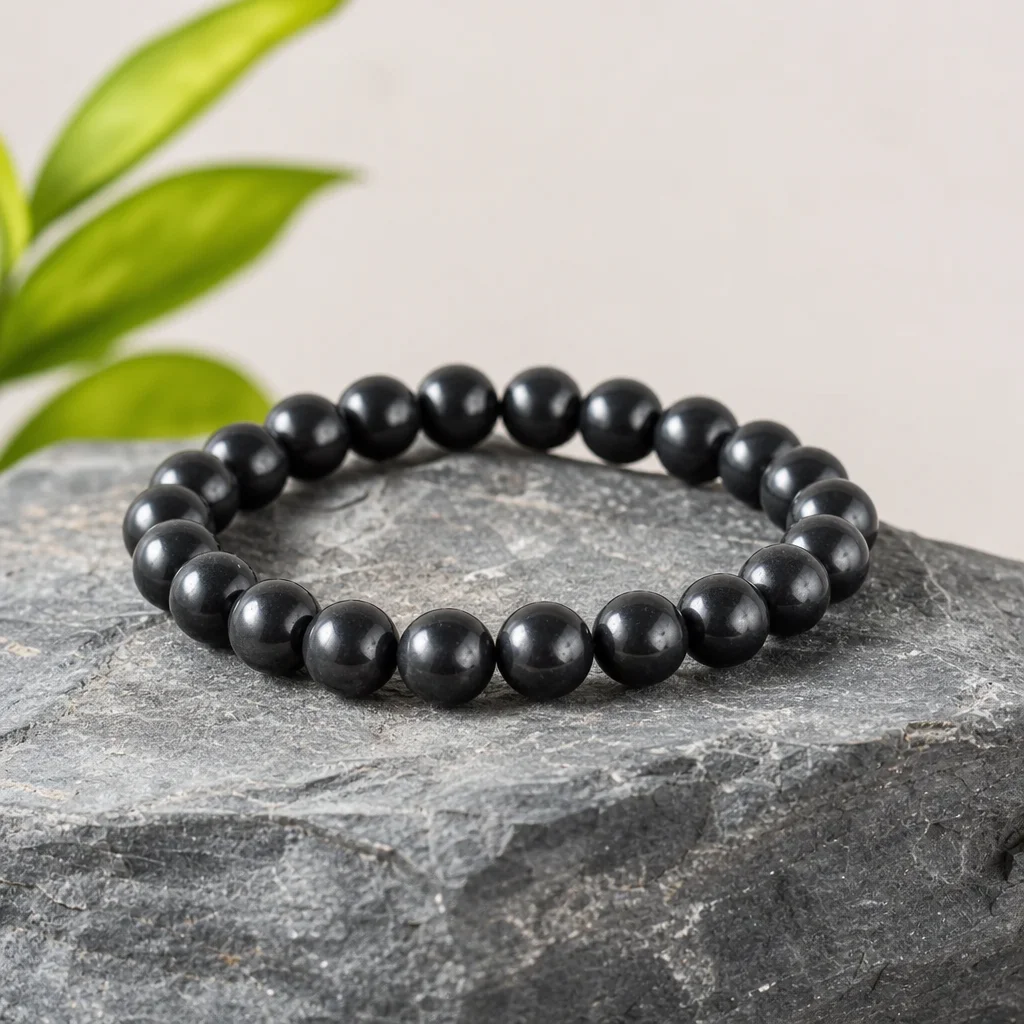
Bracelets: Shungite is often strung into beaded bracelets alongside other stones. As wearable jewelry, they're perfectly fine — the concern is only if you're buying them expecting significant EMF shielding from a bracelet on one wrist.
Frequently Asked Questions
Is shungite the only mineral that contains fullerenes?
No. Fullerenes have been found in soot, in geological deposits associated with lightning strikes (fulgurites), in some meteorites, and even detected in interstellar dust clouds. Shungite is notable for having relatively high concentrations of fullerenes in a naturally occurring, accessible form, but it's not unique in containing them.
Can shungite replace a proper EMF shielding solution?
No. For serious EMF reduction, established methods — maintaining distance from sources, using airplane mode, wired connections instead of WiFi, and dedicated EMF shielding products tested by accredited labs — are far more effective than shungite. Shungite may offer minor attenuation, but it should not be relied upon as a primary protective measure.
How can I tell the quality grade of shungite I'm buying?
The simplest indicator is appearance and feel. Elite shungite (90-98% carbon) is silvery, soft enough to mark paper, and relatively lightweight for its size. Black shungite (50-80%) is matte black, harder, and heavier. Gray shungite (30-50%) looks like dark gray rock with visible mineral inclusions. Reputable dealers will specify the carbon percentage or grade type.
Does shungite need to be cleansed like other crystals?
From a practical standpoint, shungite can be rinsed in water and dried with a cloth. From a traditional crystal care perspective, some people cleanse it with sage, palo santo, or sound. Since shungite is itself used to cleanse water and supposedly absorb negative energy, the irony of needing to cleanse your cleanser isn't lost on the skeptical. Handle it however feels right to you.
Frequently Asked Questions
How does wearing shungite jewelry help with EMF protection?
Handcrafted shungite jewelry lets you carry this ancient, carbon-rich stone directly against your skin. Many people wear our artisan shungite pendants and bracelets to help ground their energy and act as a personal shield against everyday electromagnetic frequencies from cell phones and laptops. It is a beautiful, practical way to keep this protective powerhouse close to you all day.

Comments