Shungite: The Russian Carbon Stone With Unusual Properties
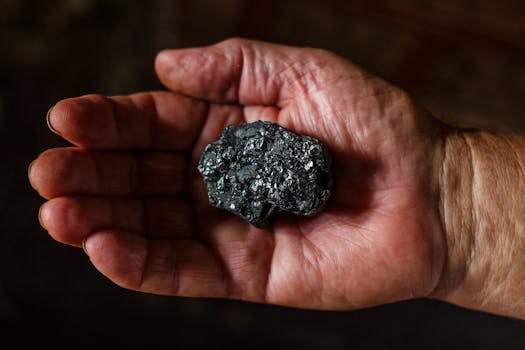
About two billion years ago, in what is now the Republic of Karelia in northwestern Russia, something happened that we still do not fully understand. A massive deposit of nearly pure carbon formed — not as coal, not as graphite, not as diamond, but as something in between. The local people called it shungite, and for centuries it was just a useful rock. You could build with it, filter water through it, and that was about it. Then, in 1992, scientists discovered something inside it that changed everything: natural fullerenes, a form of carbon that was not even known to exist in nature until someone looked at shungite under an electron microscope.
What shungite actually is (and what it is not)
Let me clear something up right away, because there is a lot of confusion out there: shungite is not a crystal. It is not a mineral in the strict sense either. It is a carbon-rich rock, composed primarily of non-crystalline (amorphous) carbon with varying amounts of mineral impurities. The carbon content ranges from about 60% in low-grade material to over 98% in the rarest specimens. Think of it as a natural carbon composite rather than a defined mineral species.
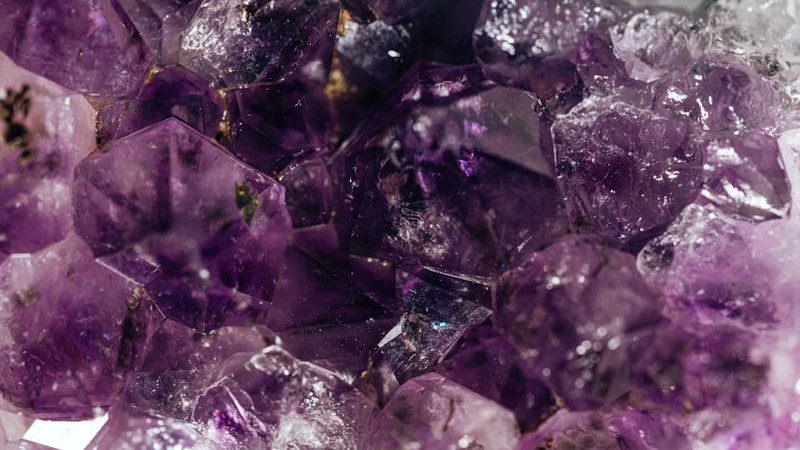
This matters because a lot of the marketing around shungite treats it as a crystal with specific metaphysical properties, and that framing is not accurate from a geological perspective. Shungite is a rock. A very unusual rock, with some genuinely interesting properties, but a rock nonetheless. If you are buying it expecting the same kind of crystalline structure you see in quartz or amethyst, you are going to be disappointed.
The amorphous structure is actually what makes shungite scientifically interesting. Crystalline carbon — diamond, graphite — has well-understood properties. Amorphous carbon with embedded fullerenes is a much less studied material, and shungite is one of the few natural sources of it that exists in minable quantities.
The fullerene discovery
In 1985, a team of chemists at Rice University synthesized a new form of carbon in the laboratory — a hollow, cage-like molecule made of 60 carbon atoms arranged in a pattern resembling a soccer ball. They named it buckminsterfullerene (C60), after architect Buckminster Fuller, whose geodesic domes the molecule resembles. This discovery earned Harold Kroto, Robert Curl, and Richard Smalley the 1996 Nobel Prize in Chemistry. Everyone assumed fullerenes were a laboratory curiosity, something that could only be created under controlled conditions.
Then, in 1992, researchers analyzing shungite samples from Karelia found C60 and C70 fullerenes occurring naturally within the rock. This was a significant finding — it proved that geological processes could produce these complex carbon structures without any help from chemists. The fullerenes in shungite are present in small quantities, and their concentration varies between deposits and even within a single piece of rock, but they are genuinely there.
The scientific interest in shungite fullerenes has produced a body of research, mostly from Russian institutions, exploring their chemical and physical behavior. Some of this research is solid. Some of it is preliminary. And some of the claims that have filtered into the consumer market are, to put it diplomatically, not well-supported by the available evidence.
Two types of shungite (and why it matters)
Shungite comes in two broad categories, and the distinction is important for anyone thinking about buying it.
Elite or noble shungite
This is the high-grade material with carbon content of 98% or higher. It has a distinctive silvery-black appearance with a slight metallic sheen, and it is surprisingly light for its size. Elite shungite is brittle and crumbles easily — you can break pieces off with your fingers. It is also the type most associated with fullerene content, though the actual concentration varies.
Elite shungite is expensive relative to regular shungite, though "expensive" is relative here. A small piece might cost $10 to $30. A larger specimen could run $50 to $100. It is mined in smaller quantities and is less commonly available than the regular black variety.
Regular black shungite
This is the stuff you see everywhere — pyramids, spheres, phone stickers, tiles, and raw chunks. It contains 60% to 80% carbon, with the rest being various mineral impurities including quartz, mica, and pyrite. It is harder and more durable than elite shungite, takes a polish well, and is inexpensive. A small polished pyramid might cost $5 to $15. A phone sticker costs about $2.
Regular shungite is what most people are buying when they purchase shungite products, and it is perfectly fine for most purposes. The fullerene content is lower than in elite shungite, and the higher mineral impurity content means it does not have the same silvery appearance. But for water filtration, display, or general interest, regular shungite does the job.
Water filtration: the use that actually has evidence
Of all the things shungite is promoted for, water filtration has the most actual evidence behind it. Russian studies, some dating back to the Soviet era, have investigated shungite's ability to adsorb contaminants from water, and the results are generally positive, though not miraculous.
Shungite's porous carbon structure gives it genuine adsorptive properties — similar in principle to activated carbon, which is widely used in water filtration worldwide. Shungite has been shown to reduce levels of certain organic compounds, heavy metals, and bacteria in water. The mechanisms are well-understood: the carbon surface binds to contaminants through physical adsorption and some chemical interactions.
However — and this is important — shungite water filtration is not a substitute for proper water treatment. The studies I have seen show meaningful reduction in specific contaminants under controlled conditions, but the results vary depending on water quality, contact time, the grade of shungite used, and how the shungite is prepared. You cannot just drop a chunk of shungite in a glass of tap water and assume everything harmful has been removed. If you are interested in shungite water filtration, treat it as a supplementary measure, not a primary one, and do your own research on what it can and cannot do for your specific water source.
EMF protection: the controversial claim
This is the claim that generates the most heat (pun intended) and the least consensus. Shungite is widely marketed as an EMF (electromagnetic field) protection stone — you can buy shungite phone stickers, shungite pyramid "shields" for your desk, and shungite pendants advertised as blocking harmful radiation from electronic devices.
The proposed mechanism usually involves the fullerene content: fullerenes are conductive, and some theories suggest they could absorb or redirect electromagnetic radiation. It is not a physically impossible idea in principle — conductive materials do interact with electromagnetic fields. The problem is that the evidence does not support the specific claims being made.
I have looked for peer-reviewed studies demonstrating that shungite meaningfully reduces EMF exposure from everyday devices like phones and wifi routers. I have not found any that meet basic standards of rigor. There are laboratory studies showing shungite can absorb certain frequencies of electromagnetic radiation under very specific conditions, but the jump from "absorbs some radiation in a lab setup" to "stick this on your phone and be protected" is enormous, and no study I have seen justifies that jump.
Shungite sellers often cite Russian research to support EMF claims. Some of this research exists and some of it is preliminary or published in journals that are not widely recognized in the international scientific community. I am not saying the research is fraudulent — some of it may be legitimate early-stage investigation. I am saying that the consumer marketing has gotten far ahead of the science, and buying shungite primarily for EMF protection is, based on the currently available evidence, not a well-founded decision.
If you like shungite and want to keep a piece on your desk, do it because you find the stone interesting and aesthetically pleasing. Do not do it because you think it is shielding you from electromagnetic radiation.
Fakes: not really a problem
Here is some good news: fake shungite is essentially non-existent, because there is no financial incentive to fake it. Regular black shungite is cheap — a few dollars for a small piece. The material is abundant in Karelia, and the mining and distribution infrastructure has been in place for decades. There is no profit margin in manufacturing a counterfeit when the real thing costs almost nothing.
I have occasionally seen regular black stone or dyed material being sold as "elite" shungite at inflated prices. The test is simple: elite shungite is silvery, very light, and crumbles easily. If a piece is hard, heavy, and uniformly black without any metallic sheen, it is regular shungite, not elite. That does not mean it is fake — it just means it is the lower-grade material being misrepresented as the higher-grade stuff. This is a labeling problem, not a counterfeiting problem.
The Karelia connection
All genuine shungite comes from the Republic of Karelia, a region in northwestern Russia that borders Finland. The main shungite deposits are concentrated around the village of Shunga, on the shores of Lake Onega — one of the largest freshwater lakes in Europe. The region has been mining shungite for centuries, long before anyone knew what fullerenes were.
The age of the deposit is extraordinary. At roughly two billion years old, the shungite formation predates complex life on Earth by over a billion years. The origin of the deposit is still debated. Some geologists believe it formed from ancient marine sediments rich in organic matter. Others propose that it may be related to a massive meteorite impact. A more speculative theory suggests it could be remnants of an ancient microbial ecosystem. The truth is probably mundane — sedimentary carbon deposits that were subsequently metamorphosed — but the uncertainty adds to the stone's mystique.
What shungite is actually good for
Shungite is a genuinely interesting geological material that has been oversold and underexplained in equal measure. It has real adsorptive properties that make it useful for water treatment. It contains natural fullerenes, which is scientifically notable. It has a striking appearance, especially in its elite form, and makes for an unusual addition to any mineral collection.
What it is not is a miracle cure, an EMF shield, or a metaphysical panacea. The gap between what shungite actually does and what shungite marketing claims it does is wide, and navigating that gap requires some critical thinking and a willingness to look past the hype.
My honest recommendation: buy a piece of shungite because the geology is interesting, because fullerenes are cool, and because a two-billion-year-old carbon rock from Karelia is a conversation starter. Try the water filtration if you are curious — the worst that happens is you have a decorative rock in your water pitcher. Skip the EMF protection claims until the science catches up with the marketing. And enjoy the stone for what it is, not what someone on the internet told you it could be.
Comments