Obsidian Crystal Meaning and Uses: The Ultimate Protection Stone Guide
What Exactly Is Obsidian?
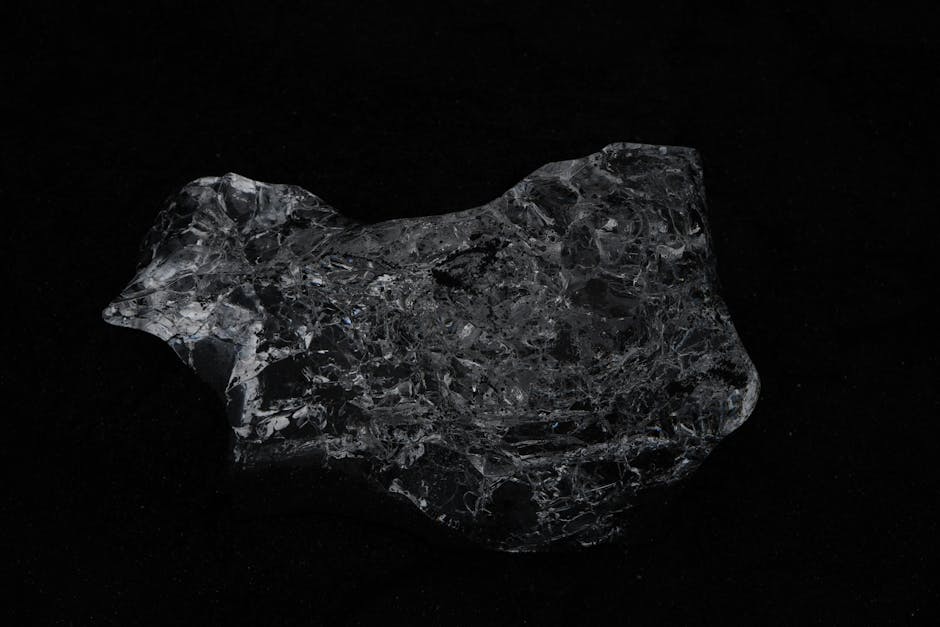
If you've ever picked up a piece of black glass that felt heavier than it looked and had an edge sharp enough to split a hair, you were probably holding obsidian. Unlike the crystals that fill most mineral collections, obsidian isn't a crystal at all. It's volcanic glass — formed when molten lava cools so fast that mineral crystals don't have time to form.
This rapid cooling is the whole story behind obsidian. When a volcano erupts, the silica-rich magma hits water or cool air and solidifies almost instantly. The result is an amorphous solid — no repeating crystal lattice, no orderly atomic structure. Just chaotic, frozen liquid rock. That's why obsidian fractures with those characteristic conchoidal curves, producing edges thinner than surgical steel. In fact, some of the sharpest objects ever created by humans were obsidian blades, and modern surgeons have experimented with obsidian scalpels because their edge can be just a few nanometers thick.
On the Mohs hardness scale, obsidian sits between 5 and 5.5. That's harder than a steel knife but softer than window glass. It's strong enough to hold an incredible edge, yet soft enough to scratch if you toss it in a pocket with your keys. This hardness range matters a lot if you're thinking about wearing obsidian as jewelry — more on that later.
Chemically, obsidian is roughly 70-75% silicon dioxide, similar to granite. But while granite cools slowly underground and forms visible crystals, obsidian never gets that chance. The speed of its formation locks everything into place before any order can develop. It's like the difference between slowly freezing ice cream into a smooth block versus flash-freezing it into a brittle shell.
The Major Types of Obsidian
Not all obsidian looks the same. Depending on the minerals present when the lava cooled, and the speed of that cooling, obsidian can take on a surprising range of appearances. Here are the six types you'll encounter most often.
Black Obsidian
The classic. Pure black, glassy, and mirror-smooth when polished. Black obsidian forms when the lava cools with minimal mineral inclusions — it's essentially as close to pure volcanic glass as nature gets. A polished piece of black obsidian can reflect light like a dark mirror, which is exactly why ancient cultures used it for scrying and divination. If someone just says "obsidian" without specifying a type, they almost certainly mean this one.
Snowflake Obsidian
Snowflake obsidian is hard to miss. Those distinctive white or gray patches that look like tiny snowflakes scattered across a black background aren't paint or surface decoration — they're cristobalite, a high-temperature form of silica that crystallized within the volcanic glass as it cooled. Think of it like chocolate chip cookies: the dough sets first, then the chips form within it. In this case, the "dough" is the glassy obsidian matrix and the "chips" are cristobalite crystals. Snowflake obsidian is popular in jewelry and meditation practices because those patterns give each piece a unique, almost artistic quality.
Rainbow Obsidian
Hold a piece of rainbow obsidian under direct light and you'll see bands of purple, green, gold, and blue shimmer across its surface. This iridescence comes from nanoscale inclusions of magnetite or other iron-rich minerals layered within the glass. The colors aren't pigments — they're structural, caused by light interference between these microscopic layers, similar to how soap bubbles or oil slicks produce color. Rainbow obsidian is one of the more sought-after varieties, especially for cabochons and larger display pieces where the color play is most visible.
Mahogany Obsidian
Mahogany obsidian gets its deep reddish-brown color from iron oxide inclusions — essentially the same stuff that gives rust its color. The contrast between the dark base and the warm brownish-red streaks makes this one of the more visually distinctive types. It's less common than black obsidian but widely available in jewelry and decorative pieces. The iron content also makes it slightly heavier than pure black obsidian, which is a subtle but noticeable difference when you handle both side by side.
Golden Sheen Obsidian
When gas bubbles get trapped in cooling lava and later filled with minerals like pyrite or hematite, the result is golden sheen obsidian. Move the stone under a light source and a warm, metallic golden flash appears — sometimes across the entire surface, sometimes in concentrated patches. The effect is similar to the schiller in sunstone or labradorite, but against obsidian's black background it looks almost otherworldly. Golden sheen obsidian is less common in retail settings and tends to command higher prices, especially in well-polished cabochons.
Apache Tears
Apache tears are a specific form of obsidian — small, rounded nodules of black volcanic glass, usually about the size of a marble or smaller. They form when lava is ejected into the air and cools rapidly into these teardrop shapes. The name comes from a Apache legend: during a battle with the U.S. cavalry, a group of Apache warriors rode their horses off a cliff rather than surrender. The tears of their families supposedly turned into these dark, glassy stones. Geologically, they're identical to other black obsidian, but their rounded natural shape and the cultural story behind them make them distinct in the crystal community.
Why Obsidian Is Called the "Shield Stone"
Across cultures and centuries, obsidian has been associated with protection. Mesoamerican warriors carved obsidian into clubs and spear points. Roman soldiers carried obsidian amulets. In Chinese feng shui tradition, black stones are placed near entrances to block negative energy. But what is it about obsidian specifically that earned it this reputation?
The answer is partly practical and partly symbolic. Practically, obsidian's sharpness made it an obvious choice for weapons and tools — if a stone can cut, it can also defend. Symbolically, its mirror-like surface became associated with reflecting harm back to its source. In many traditions, black stones are considered absorptive — they draw in negativity and trap it. Obsidian combines both ideas: its darkness absorbs, while its reflective surface bounces things back.
There's also something primal about holding a piece of volcanic glass. It was born in fire, cooled in an instant, and has sat in the earth for thousands or even millions of years. That sense of ancient, geological permanence translates emotionally into a feeling of stability and defense. People who work with crystals often describe placing obsidian near their front door or under their pillow specifically for this protective quality.
Absorbing vs Reflecting Negative Energy
Most black stones associated with protection work through absorption — they're described as sponges that soak up negative energy over time. Obsidian is a bit different. Because of its naturally reflective surface, many crystal practitioners describe obsidian as both absorbing and reflecting. The idea is that it doesn't just passively take in negativity but actively sends it back.
Whether or not you find this framework useful, there's a practical implication that even skeptics tend to agree with: obsidian needs regular cleaning. If you're using it as an "energy sponge," the thinking goes, it eventually fills up. Most crystal enthusiasts recommend cleaning obsidian more frequently than harder, denser stones — some suggest after every intensive use, others weekly. We'll cover specific cleaning methods later in this guide.
The reflection concept also shows up in how people use obsidian. Some place a polished obsidian mirror facing outward near a window or doorway, the idea being that any incoming negativity hits the reflective surface and bounces back. Others carry a small obsidian point in their pocket with the tip facing away from their body, described as directing energy outward.
Grounding and the Root Chakra Connection
In crystal healing systems, obsidian is most commonly associated with the root chakra — the energy center at the base of the spine that's linked to feelings of safety, stability, and connection to the physical world. This association makes intuitive sense: obsidian comes directly from the earth's core (volcanic magma), it's one of the densest and heaviest stones you can hold for its size, and its black color is traditionally tied to the root chakra in color-based healing systems.
People who work with root chakra practices often use obsidian during grounding exercises — placing a piece at the base of their spine during meditation, holding it in their non-dominant hand while walking barefoot, or setting it on the floor beneath their feet while sitting. The weight and coolness of the stone are described as anchoring, helping the person feel physically present and connected to their immediate environment.
This grounding quality is one of the reasons obsidian is frequently recommended for people who describe feeling scattered, anxious, or disconnected. Whether you attribute the effect to the stone's properties or to the simple act of sitting still and focusing on a physical object, the outcome tends to be the same: a shift toward calm, present-moment awareness.
Using Obsidian in Meditation
Obsidian has a long history as a meditation tool, and several specific practices have developed around it.
Scrying
Scrying is the practice of gazing into a reflective surface to access deeper states of awareness. Polished black obsidian mirrors have been used for this purpose for thousands of years — the Mesoamerican god Tezcatlipoca is famously depicted with an obsidian mirror. The technique is straightforward: you dim the lights, place a polished obsidian piece in front of you, and let your gaze soften while looking at its surface. The idea isn't to see literal images but to allow your mind to quiet down enough that patterns, thoughts, or insights can surface naturally.
Shadow Work
Shadow work, a concept developed by psychologist Carl Jung, involves exploring the parts of yourself that you typically avoid or suppress. Obsidian's association with darkness and reflection makes it a natural companion for this practice. Some people hold a piece of obsidian during journaling sessions about difficult emotions, or place it on their desk as a visual reminder to stay honest with themselves. The metaphor is simple but effective: just as obsidian's dark surface can reflect light, your own "dark" qualities can reveal important truths when examined honestly.
Past Life Regression
In certain spiritual traditions, obsidian is used during guided meditations focused on accessing memories from past lives. The reasoning is that obsidian, being an ancient stone formed through intense geological processes, carries a kind of temporal weight that supposedly makes it easier to access deep states of consciousness. A practitioner might hold an Apache tear or a polished obsidian sphere while listening to a guided meditation, using the stone as a physical anchor throughout the experience. This is, of course, entirely subjective — there's no scientific evidence that obsidian facilitates access to past life memories — but many people report finding the practice meaningful.
Wearing Obsidian: Jewelry Tips and Warnings
Obsidian is beautiful in jewelry, but its relatively low hardness (5-5.5 on the Mohs scale) means you need to be thoughtful about how and where you wear it.
Bracelets are probably the most popular way to wear obsidian. Beaded obsidian bracelets are widely available and affordable, and they put the stone in direct contact with your pulse points. However, a beaded bracelet on your dominant hand will take a lot of incidental contact — door frames, keyboards, tabletops. The beads will eventually develop dull spots and scratches. If you want to keep an obsidian bracelet looking polished, wear it on your non-dominant hand and take it off before activities that involve heavy hand use.
Necklaces and pendants are a safer choice for longevity. A polished obsidian cabochon set in a pendant hangs against your chest, protected from most incidental contact. Pendants also let you use larger, more visually impressive pieces — rainbow and golden sheen obsidian are particularly striking when cut as cabochons for necklaces.
Rings are the riskiest option. Your hands take more abuse than any other part of your body, and obsidian simply isn't hard enough to hold up to daily ring wear. An obsidian ring will show scratches within weeks and may chip if you knock it against something hard. If you love the look, consider an obsidian ring for occasional wear rather than an everyday piece. If you're set on a daily obsidian ring, look for a protective setting — a bezel or halo setting that covers most of the stone's edges will help, though it won't prevent scratches on the table (top surface).
For a deeper dive on choosing and wearing crystal jewelry, check out our beginner's guide to crystal bracelets and our specific advice on crystal bracelets for men.
Obsidian vs Black Tourmaline vs Black Onyx
These three black stones get confused constantly, and it's worth understanding the differences because they're quite distinct materials.
Obsidian is volcanic glass — amorphous, formed by rapid cooling of lava, 5-5.5 Mohs hardness. It fractures into incredibly sharp edges and can have iridescent sheens, snowflake patterns, or other visual features depending on mineral inclusions. It's the lightest of the three for its size.
Black Tourmaline (also called schorl) is a crystalline mineral — a complex borosilicate with a well-defined crystal structure. It's significantly harder at 7-7.5 on the Mohs scale, making it far more durable for everyday jewelry. Black tourmaline is also heavier and denser than obsidian. Unlike obsidian, it doesn't fracture into sharp edges; it breaks along cleavage planes. In crystal healing, black tourmaline is described as more of a long-term energy filter, while obsidian is considered more intense and immediate. For a detailed comparison, read our full article on black tourmaline vs black obsidian.
Black Onyx is where things get tricky. Natural black onyx exists but is relatively rare. Most commercial "black onyx" is actually agate that's been dyed black or treated with sugar and acid to produce a uniform black color. Onyx is a variety of chalcedony (microcrystalline quartz), so it's harder than obsidian at 6.5-7 Mohs. It has a waxy to vitreous luster and doesn't have the glassy transparency that obsidian can show. For a complete breakdown, see our black onyx crystal guide.
The quick rule of thumb: if it's lightweight, glassy, and can chip into razor-sharp edges, it's obsidian. If it's heavy and crystalline, probably tourmaline. If it's medium weight with a waxy luster and perfectly uniform black color, likely onyx (and possibly dyed).
Cleaning and Caring for Obsidian
Obsidian requires more care than many popular gemstones. Here's what you need to know.
Avoid chemical cleaners entirely. No Windex, no jewelry cleaner, no ultrasonic cleaners, no steam cleaners. Obsidian is basically silica glass, and many common cleaning chemicals will etch or damage its surface. Even mild dish soap can leave a film over time if not rinsed thoroughly.
Use only warm water and a soft cloth. That's genuinely all you need. Run the stone under lukewarm water, gently wipe with a soft microfiber cloth, and pat dry. If there's stubborn dirt in the crevices of a carved piece, a very soft toothbrush works, but don't scrub hard.
Keep it away from hard objects. Obsidian will scratch against quartz, feldspar, topaz, and anything harder on the Mohs scale. Don't store it loose in a bag with other stones, and don't leave it on a granite countertop where it could get scratched by the countertop itself. Store each piece separately in a soft pouch or wrapped in cloth.
Charging methods in crystal practice include placing obsidian in moonlight overnight (the most common recommendation), burying it in soil for 24 hours, or placing it on a selenite charging plate. The logic behind moonlight charging is that the gentle energy of moonlight is said to cleanse without overloading the stone. Avoid direct sunlight for extended periods — obsidian's dark color absorbs heat, and sudden temperature changes can cause thermal shock and cracking. For comprehensive cleaning advice, our guide on how to clean crystal jewelry covers all stone types.
Common Misconceptions About Obsidian
"All black glass is obsidian." No. Man-made glass, slag glass from industrial processes, and even some naturally occurring glasses like fulgurite (formed by lightning strikes) can look similar to obsidian. True obsidian has a specific geological origin — volcanic — and a specific chemical composition. If someone is selling "obsidian" that was manufactured in a factory, it's just glass. Our article on natural vs synthetic crystals explains how to spot the difference.
"Obsidian is a crystal." It isn't, technically. Crystals have an ordered, repeating atomic structure. Obsidian is amorphous — its atoms are arranged randomly, like window glass. It's often grouped with crystals in the healing and jewelry world, but geologically it's a glass, not a crystal.
"Obsidian is indestructible because it was forged in volcanoes." The opposite, actually. Volcanic origin doesn't make something tough. Obsidian is relatively fragile compared to most gemstones. It chips easily, scratches at moderate hardness, and can crack from thermal shock. Treat it gently.
"More expensive obsidian is more powerful." Price in the mineral world reflects rarity and quality of appearance, not any inherent energetic properties. A $5 piece of black obsidian and a $200 rainbow obsidian cabochon are the same material — one just looks more impressive. If you're buying obsidian for its appearance, by all means invest in what appeals to you. But don't assume that cost correlates with function.
"Obsidian has been used for thousands of years, so it must work." The historical use of obsidian is well-documented — for tools, weapons, mirrors, and ceremonial objects. But ancient people also used it because it was one of the sharpest materials available, not necessarily because they had scientific proof of any metaphysical properties. Appreciate the history, but don't conflate it with evidence.
Frequently Asked Questions
Can obsidian go in water?
Brief rinses under running water are fine for cleaning. But prolonged soaking isn't recommended. Obsidian can develop microfractures over time from extended water exposure, especially if the water contains minerals or chemicals. A quick rinse is safe; leaving it in a bowl of water overnight is not ideal.
Is obsidian expensive?
Plain black obsidian is one of the most affordable stones available — small tumbled pieces often cost under $5. Snowflake and mahogany obsidian are slightly more. Rainbow and golden sheen obsidian command higher prices due to their visual appeal and relative rarity, with quality cabochons ranging from $20 to well over $100 depending on size and color intensity. Apache tears are typically very affordable as individual pieces.
How can I tell if my obsidian is real?
Real obsidian is volcanic glass, so it should feel glassy and smooth. Hold it up to strong light — thin edges of genuine obsidian will appear translucent. It should also feel relatively light for its size. If a "black obsidian" piece feels unusually heavy, is cold to the touch in a way that suggests high density, or has visible crystal structure rather than a smooth glassy texture, it may be black tourmaline or another material being sold as obsidian. Extremely uniform, perfectly round beads at very low prices are sometimes manufactured glass rather than natural obsidian.
Which type of obsidian is best for beginners?
Black obsidian is the standard starting point — it's affordable, widely available, and versatile. A tumbled stone or small polished piece is ideal for getting familiar with the material. If you're drawn to the visual patterns, snowflake obsidian is a natural next step. Save the rainbow and golden sheen varieties for when you've developed a preference, as they're pricier and you'll want to know what you're looking for.
Can I wear obsidian every day?
You can, but be aware of the wear and tear. A beaded bracelet will accumulate scratches over time, and an obsidian ring is almost certain to show damage within weeks of daily wear. A pendant on a necklace is the best option for everyday obsidian — it's protected from most incidental contact while still keeping the stone close to you. Regardless of how you wear it, inspect the stone periodically for chips or cracks, and replace it when damage becomes visible.
Wrapping Up
Obsidian occupies a unique space in the world of stones. It's not technically a crystal, it's not particularly rare, and it's not especially durable. But its volcanic origin, its razor-sharp edges, its mirror-like surface, and its sheer visual variety have made it one of the most consistently popular stones across cultures and centuries. Whether you're interested in its geological story, its historical significance, or its role in crystal healing practices, obsidian offers a lot to explore. Just handle it carefully, clean it simply, and don't confuse it with the other black stones in your collection.
AI Disclosure Statement
This article was drafted with the assistance of artificial intelligence. All factual information about obsidian's geological properties, chemical composition, Mohs hardness, and historical uses has been verified against published mineralogical references. The sections discussing energetic properties, chakra associations, and crystal healing practices are presented as cultural and traditional perspectives and should not be interpreted as scientific claims. SageStone encourages readers to evaluate all wellness information critically and consult qualified professionals for health-related decisions.

Comments