Tiger's Eye: The Complete Guide to the Stone of Courage and Confidence
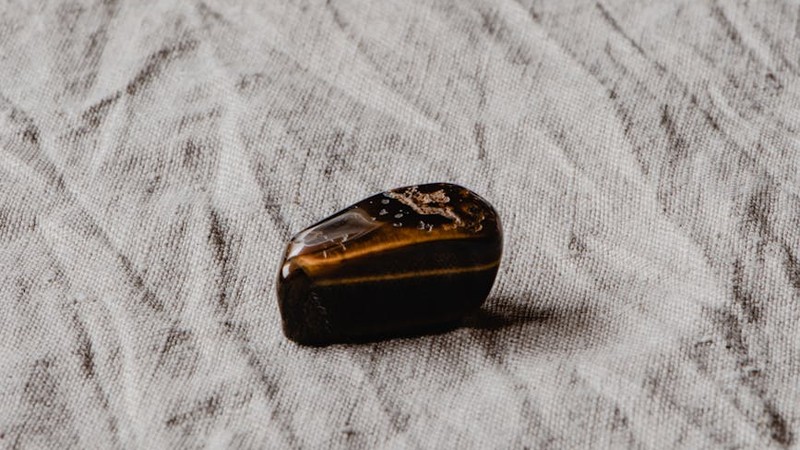
If you've ever held a polished Tiger's Eye stone and watched the light glide across its surface like a golden flame, you understand why this crystal has captivated humanity for thousands of years. Known as the "Stone of Courage and Confidence," Tiger's Eye is one of the most recognizable and beloved crystals in the world. Whether you're a seasoned crystal collector or just beginning your journey, this complete guide will walk you through everything you need to know about Tiger's Eye — from its geological origins to its healing properties, and from everyday uses to expert care tips.
What Is Tiger's Eye?
Tiger's Eye is a member of the quartz family, specifically classified as a chatoyant gemstone. Its scientific name comes from its most striking feature: chatoyancy, an optical phenomenon that produces a silky, luminous band of light that moves across the stone's surface as you turn it — much like the eye of a cat reflecting light in the dark.
This mesmerizing effect occurs because Tiger's Eye is actually a pseudomorph. Millions of years ago, crocidolite (blue asbestos) fibers were gradually replaced by quartz while retaining the original fibrous structure. Iron oxide deposits during this process give Tiger's Eye its signature golden-brown to reddish-brown coloration with silky, parallel bands.
The stone typically displays a rich palette of golden amber, warm brown, and honey-yellow stripes, often with hints of red and blue. It has a hardness of 6.5–7 on the Mohs scale, making it durable enough for everyday wear in jewelry while still being workable for carving and polishing.
Where Is Tiger's Eye Found?
The finest specimens of Tiger's Eye come from:
- South Africa — Particularly the Northern Cape province, which produces the world's highest quality stones with the most vivid chatoyancy
- Western Australia — Home to the famous Hamersley Ranges deposits
- India, Myanmar, and Brazil — Secondary sources with their own unique color variations
- United States — Smaller deposits found in California and South Dakota
Tiger's Eye and Courage: The Stone of Inner Strength
Throughout history, warriors carried Tiger's Eye into battle. Roman soldiers wore engraved Tiger's Eye stones for protection and bravery, while ancient Egyptian priests used it in ceremonies meant to invoke divine willpower. The stone's association with courage isn't just folklore — it connects deeply to how the crystal interacts with your Solar Plexus Chakra.
The Solar Plexus Connection
The Solar Plexus Chakra, located in the upper abdomen, is your energy center for personal power, self-confidence, and decisive action. When this chakra is balanced, you feel capable, motivated, and clear-headed. When it's blocked or underactive, you might struggle with self-doubt, indecision, and a sense of powerlessness.
Tiger's Eye resonates powerfully with this chakra due to its golden color and warm, earthy energy. Many crystal healers recommend placing a Tiger's Eye stone directly on the Solar Plexus during meditation or energy healing sessions to unblock and activate this vital center.
How Tiger's Eye Boosts Confidence
Beyond chakra work, Tiger's Eye is valued for its practical psychological benefits:
- Enhances decision-making — The stone's grounding energy helps cut through mental clutter, allowing you to see situations clearly and make choices with conviction
- Reduces fear and self-doubt — Tiger's Eye is often called the "all-seeing stone" because it's believed to help you recognize both opportunities and threats without emotional distortion
- Promotes mental clarity — If you're facing a difficult conversation, job interview, or important presentation, holding or wearing Tiger's Eye can help center your thoughts
- Builds emotional resilience — Regular use is said to strengthen your inner resolve, making it easier to bounce back from setbacks
For those exploring crystals for protection and grounding, Tiger's Eye is an excellent starting point because it combines defensive energy with proactive courage.
Emotional Healing Properties of Tiger's Eye
While Tiger's Eye is most famous for its courage-enhancing qualities, its emotional healing benefits are equally impressive. This versatile stone addresses several common emotional challenges:
Anxiety and Stress Relief
Tiger's Eye's grounding properties make it a powerful ally against anxiety and chronic stress. By connecting you to the stabilizing energy of the earth, it helps pull racing thoughts back to the present moment. Many people report feeling an immediate sense of calm when they hold a Tiger's Eye stone during stressful situations.
Emotional Balance
One of Tiger's Eye's unique gifts is its ability to help you find balance between extremes. If you tend to be overly emotional, it brings grounding and perspective. If you're too analytical or detached, it helps reconnect you with your feelings. This balancing act makes Tiger's Eye particularly useful during major life transitions — career changes, relationship shifts, or personal growth periods.
Focus and Concentration
For anyone who struggles with distraction and scattered thinking, Tiger's Eye offers practical support. Its energy is often described as "laser-like" — cutting through mental fog and helping you maintain sustained attention on the task at hand. Students, writers, and professionals frequently keep Tiger's Eye on their desks for this reason.
Metaphysical Properties: Chakras, Energy, and Spiritual Protection
Primary Chakra Associations
Tiger's Eye works with two primary chakras:
Solar Plexus Chakra (Manipura) — As discussed, this is Tiger's Eye's primary energy center. The golden-yellow tones activate willpower, self-esteem, and the courage to pursue your goals.
Root Chakra (Muladhara) — The earthy brown and red tones connect Tiger's Eye to your Root Chakra, grounding your energy and creating a stable foundation. This dual-chakra connection is relatively rare among crystals and is one reason Tiger's Eye is considered such a versatile healing stone.
Protective Energy
In many traditions, Tiger's Eye is considered a powerful protective talisman. Its chatoyant "eye" is believed to watch over the wearer, deflecting negative energy and ill intentions. Some practitioners use it as a ward against the "evil eye," while others value it simply as an energetic shield during difficult or confrontational situations.
For a more comprehensive approach to energetic protection, you might combine Tiger's Eye with other stones from our guide to the best crystals for protection and grounding.
Grounding and Stability
Despite its dynamic, courage-enhancing energy, Tiger's Eye remains fundamentally a grounding stone. It helps anchor your spiritual experiences in physical reality, preventing the disorientation that sometimes accompanies deep meditation or energy work. This makes it an excellent companion stone for beginners who are just starting to explore crystal healing.
How to Use Tiger's Eye in Your Daily Life
Wearing Tiger's Eye Jewelry
One of the most popular ways to benefit from Tiger's Eye is through jewelry. Because of its durability and striking appearance, it works beautifully in:
- Bracelets — Tiger's Eye beaded bracelets are perhaps the most common form. Wearing one on your left wrist (receiving side) is said to help absorb the stone's healing energy
- Necklaces and Pendants — A Tiger's Eye pendant worn near the Solar Plexus or heart keeps the stone's energy close to your core chakras
- Rings — Tiger's Eye rings allow for easy tactile contact — simply rub the stone with your thumb when you need a confidence boost
- Earrings — Less common but increasingly popular, especially for smaller polished stones
Check out our guide on crystal bracelets for men — Tiger's Eye is one of the top recommendations for masculine energy work.
Workplace and Office
Place a polished Tiger's Eye stone on your desk or workspace to:
- Enhance focus during long work sessions
- Promote confident decision-making during meetings
- Provide a grounding anchor during high-pressure situations
- Create a protective energy barrier in shared or stressful work environments
Meditation and Energy Work
To use Tiger's Eye in meditation:
- Find a quiet space and sit comfortably
- Hold the stone in your receiving hand (usually the left) or place it directly on your Solar Plexus
- Close your eyes and take several deep breaths
- Visualize golden light radiating from the stone through your core
- Set an intention — courage, clarity, confidence, or protection
- Sit with this energy for 10–20 minutes
For best results, use a properly cleansed and charged Tiger's Eye stone. Cleansing removes accumulated negative energy, while charging amplifies the stone's natural vibrations.
Caring for Your Tiger's Eye
With proper care, a Tiger's Eye stone can last a lifetime. Follow these guidelines to keep your crystals in optimal condition:
Cleaning
- Warm water and mild soap — The safest cleaning method. Use a soft cloth or brush to gently remove dirt
- Avoid harsh chemicals — Bleach, acids, and abrasive cleaners can damage the surface and dull the chatoyancy
- No ultrasonic cleaners — While Tiger's Eye is relatively hard, the internal fibrous structure makes it vulnerable to ultrasonic vibrations
Charging Methods
- Moonlight — Place your Tiger's Eye in direct moonlight overnight, particularly during a full moon
- Sunlight — Brief exposure (1–2 hours) is fine, but prolonged sunlight can fade the color over time
- Earth burial — Bury the stone in soil for 24 hours to reconnect it with grounding earth energy
- Selenite charging — Place Tiger's Eye on or near a selenite charging plate for a gentle, continuous energy refresh
Storage
Store Tiger's Eye separately from harder stones (like diamond or sapphire) and softer stones (like amber or pearls) to prevent scratching. A soft cloth pouch or individual compartment in your jewelry storage works perfectly.
Types of Tiger's Eye
Tiger's Eye actually comes in several varieties, each with its own unique properties and appearance:
Blue Tiger's Eye (Hawk's Eye)
Blue Tiger's Eye, also known as Hawk's Eye, forms when the crocidolite-to-quartz replacement process is incomplete — the original blue asbestos fibers remain partially intact. This gives the stone a stunning blue-gray to deep blue color with the same chatoyant effect. Hawk's Eye is associated with the Throat Chakra and is said to enhance communication, perspective, and calm observation — much like a hawk watching from above.
Red Tiger's Eye
Red Tiger's Eye results from additional heat treatment of natural golden Tiger's Eye, which intensifies the iron oxide content and turns the stone a rich, deep red. This variety is connected to the Root and Sacral Chakras and is associated with passion, vitality, motivation, and creative energy. It's an excellent choice when you need an extra boost of drive and enthusiasm.
Pietersite (The Tempest Stone)
While not strictly a "Tiger's Eye," Pietersite is a closely related stone that forms when Tiger's Eye and Hawk's Eye are broken apart and re-cemented together by geological processes. The result is a swirling, stormy mix of gold, blue, and red chatoyant fibers. Pietersite is rare, expensive, and highly prized among collectors.
How to Tell Real Tiger's Eye from Fake
As Tiger's Eye's popularity has grown, so has the market for imitations. Here's how to protect yourself:
Signs of Authentic Tiger's Eye
- Chatoyancy is key — The defining characteristic is the silky, moving band of light. Tilt the stone under a light source — real Tiger's Eye shows a smooth, continuous "eye" that glides across the surface
- Natural color variation — Authentic stones show subtle color variations and may include small inclusions. Perfectly uniform color can indicate dye treatment
- Temperature test — Real Tiger's Eye feels slightly cool to the touch initially and warms up gradually. Glass imitations tend to feel room-temperature immediately
- Weight — Tiger's Eye has a specific gravity of about 2.64–2.71. It should feel substantial but not overly heavy for its size
Common Fakes to Watch For
- Dyed quartz — Clear or light-colored quartz dyed to mimic Tiger's Eye. The color is often too uniform and lacks natural chatoyancy
- Glass or resin — Man-made materials with painted or printed patterns. These feel lighter and lack the characteristic silky luster
- Fiber optic glass — Sometimes sold as "synthetic Tiger's Eye," this material mimics chatoyancy but has a different refractive quality and feels distinctly glass-like
When in doubt, purchase from reputable crystal dealers who can provide information about the stone's origin. For more guidance on starting a genuine crystal collection, see our beginner's guide to crystals.
Tiger's Eye: Frequently Asked Questions
Which zodiac signs benefit most from Tiger's Eye?
Tiger's Eye is traditionally associated with Leo and Capricorn. Leo benefits from the stone's confidence-enhancing and creative properties, while Capricorn appreciates its grounding and practical energy. However, any zodiac sign can benefit from Tiger's Eye's versatile properties.
Can Tiger's Eye go in water?
Brief contact with water is fine for cleaning, but prolonged soaking is not recommended. Avoid saltwater entirely, as it can damage the stone's surface and dull its chatoyancy. For more details, read our guide on wearing crystals in water.
Is Tiger's Eye expensive?
Tiger's Eye is one of the more affordable gemstones. Small tumbled stones typically cost $2–$8, while high-quality jewelry pieces range from $15–$100. Exceptional specimens with rare color patterns or large sizes can command higher prices, but for most purposes, Tiger's Eye remains accessible to any budget.
Can I sleep with Tiger's Eye?
While some people find Tiger's Eye's energizing properties helpful during the day, its stimulating energy may interfere with sleep for sensitive individuals. If you're interested in crystals specifically for better sleep, check out our guide to the best crystals for sleep.
Conclusion: Why Tiger's Eye Deserves a Place in Your Collection
Tiger's Eye stands apart from most crystals because of its rare combination of beauty, durability, and versatile healing properties. Whether you're drawn to its stunning chatoyant appearance, its legendary courage-enhancing energy, or its practical grounding benefits, this stone delivers on every level. It's equally at home in a meditation practice, a jewelry collection, or a professional workspace — making it one of the most practical and rewarding crystals you can own.
If you're new to crystal healing, Tiger's Eye is an ideal second or third stone after essentials like clear quartz or amethyst. And if you're an experienced practitioner, its depth of properties means you'll continue discovering new ways to work with it for years to come. Either way, the Stone of Courage and Confidence is ready to support your journey — all you have to do is reach for it.

Comments