Unveiling Tiger Eye: Meaning, Types
May 28, 2026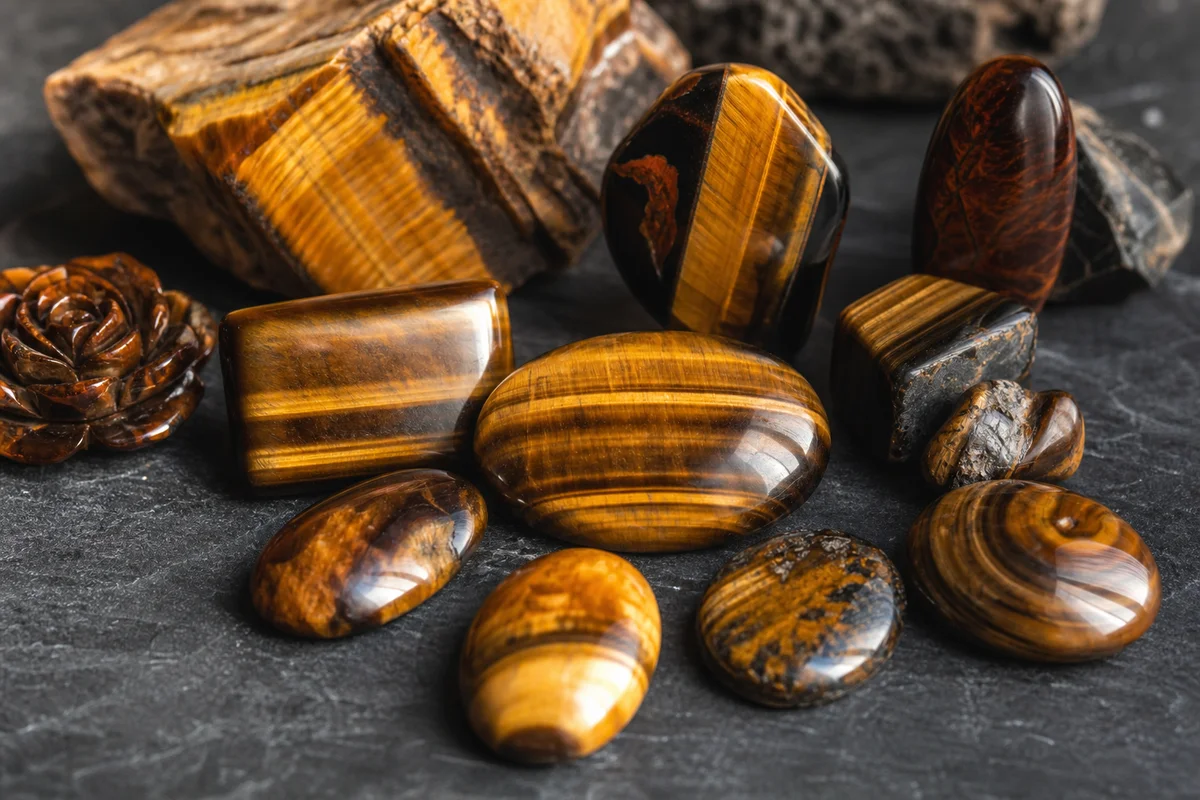
Tiger Eye Stone: Complete Guide to Meaning, Types & Uses
The Stone With Moving Light
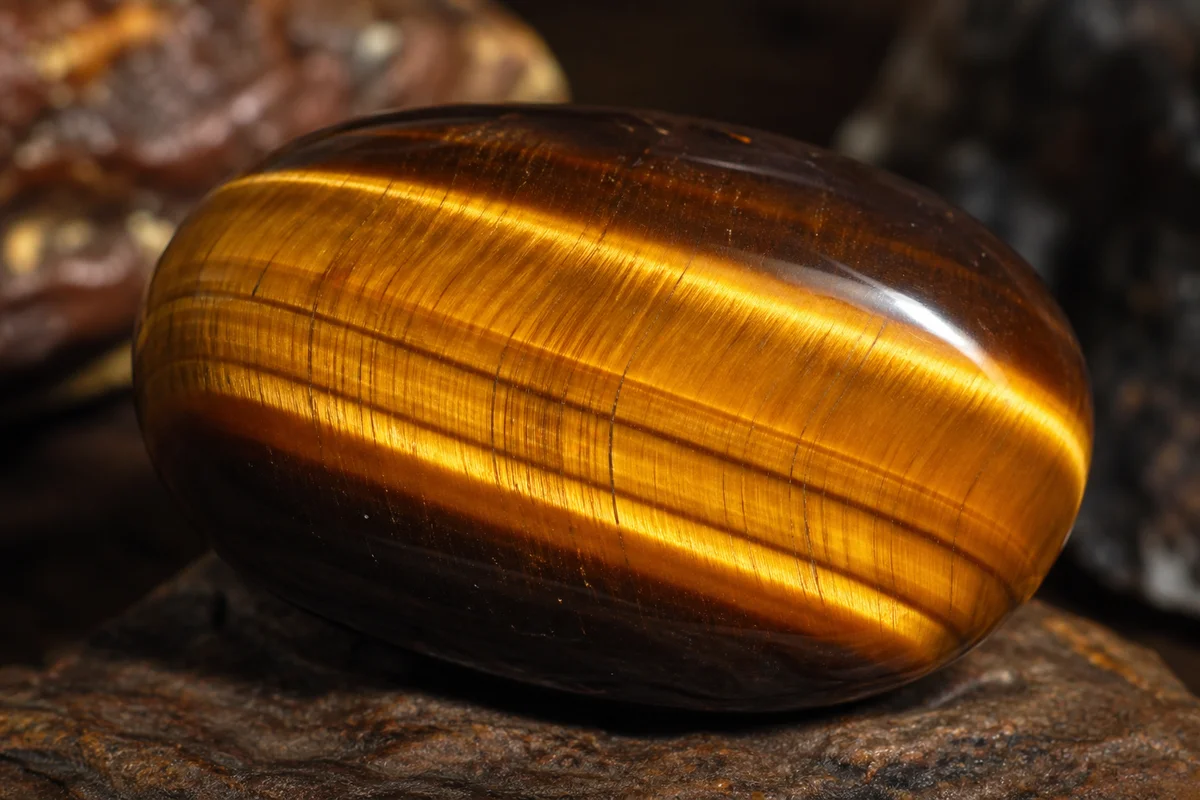
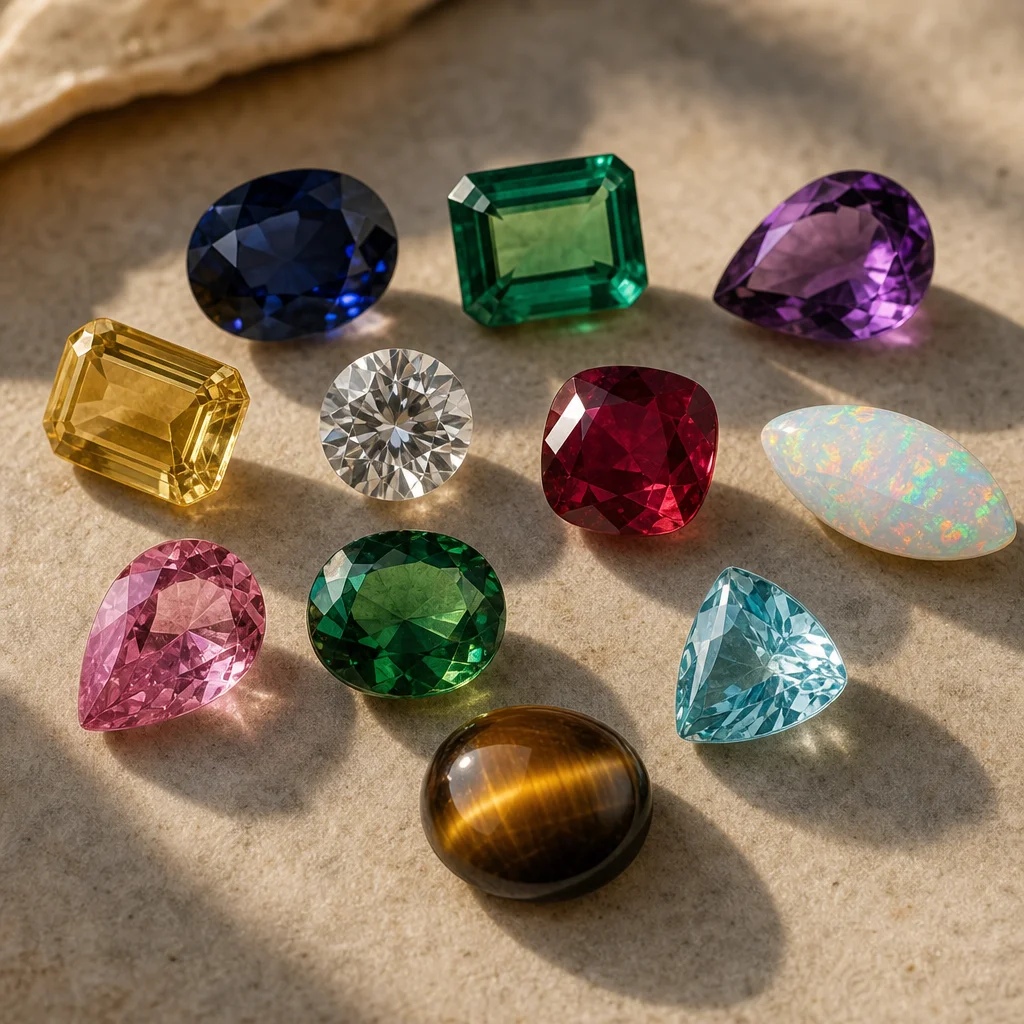
Tiger eye (also spelled tiger's eye or tiger-eye) is a chatoyant gemstone — a stone that displays a silky, moving band of light across its surface when you rotate it. This optical effect, called chatoyancy (from the French "chat," meaning cat), makes tiger eye instantly recognizable and virtually impossible to confuse with any other stone.
The effect comes from the parallel alignment of crocidolite (blue asbestos) fibers that have been partially or completely replaced by quartz (silica). Light reflects off these parallel fibers in a focused band, creating the appearance of a luminous stripe that moves across the stone's surface as you change the viewing angle. It's the same optical principle behind a cat's eye, but scaled up to gemstone size.
How Tiger Eye Forms
The formation of tiger eye is a geological process called pseudomorphosis — one mineral replacing another while retaining the original shape.
- Crocidolite forms first — Blue asbestos (crocidolite) crystallizes in parallel fibrous bands within iron-rich rock formations, typically in metamorphic or hydrothermal environments.
- Silica-rich fluids infiltrate — Over millions of years, silica-bearing groundwater or hydrothermal fluids seep into the crocidolite deposits.
- Quartz replaces crocidolite — The silica gradually replaces the crocidolite fibers through a dissolution-reprecipitation process, maintaining the fibrous structure but changing the mineral composition from sodium iron silicate to silicon dioxide (quartz).
- Iron remains as coloring agent — The iron from the original crocidolite stays behind as iron oxide inclusions (limonite and goethite), creating the characteristic golden-brown color.
The result: a quartz stone that looks like it has threads of silk woven through it, flashing gold and brown as you turn it in the light.
Key Mineral Properties
| Property | Value |
|----------|-------|
| Mineral | Quartz pseudomorph after crocidolite |
| Chemistry | SiO₂ (quartz) with iron oxide inclusions |
| Mohs Hardness | 6.5-7 |
| Crystal System | Trigonal (cryptocrystalline) |
| Luster | Silky to vitreous |
| Streak | White to yellowish |
| Density | 2.64-2.71 g/cm³ |
| Transparency | Opaque |
| Optical Effect | Chatoyancy (cat's eye effect) |
Types and Varieties of Tiger Eye
Golden Tiger Eye (Classic)
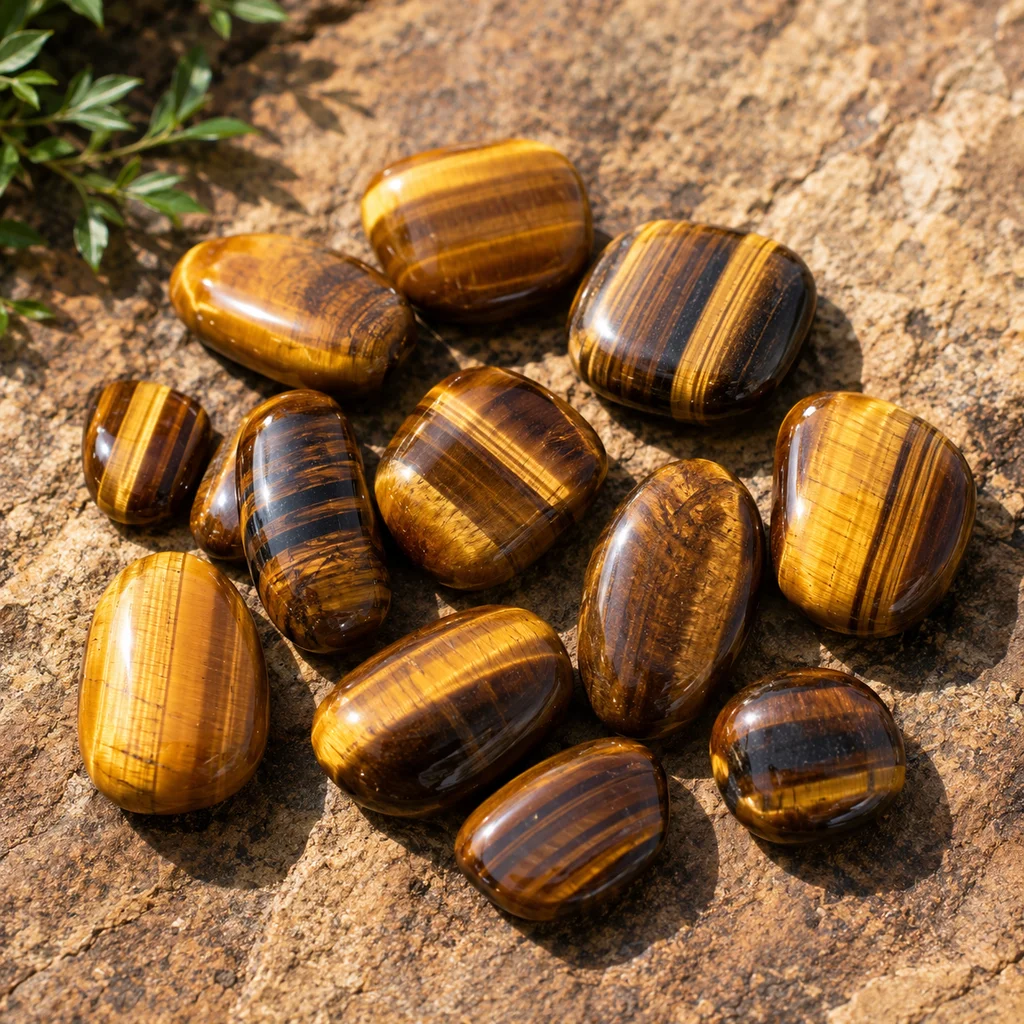
The standard golden-brown variety with the strongest chatoyancy. This is what most people think of when they hear "tiger eye." The golden color comes from iron oxide (limonite) inclusions. The best golden tiger eye shows a sharp, bright band of light that moves smoothly across the stone's surface.
Blue Tiger Eye (Hawk's Eye)
This is tiger eye before complete quartz replacement — the original blue crocidolite fibers are still partially visible, giving the stone a steely blue-grey color with chatoyancy. Blue tiger eye is less common than golden and often commands a slightly higher price. The chatoyancy tends to be subtler than in golden varieties.
Red Tiger Eye (Heat-Treated)
Red tiger eye is almost always created by heat-treating golden tiger eye. The heat oxidizes the iron inclusions further, shifting the color from golden-brown to deep red-brown. Natural red tiger eye exists but is quite rare. If you see red tiger eye for sale at standard prices, it's almost certainly heat-treated — which is fine, as long as the seller is transparent about it.
Multi-Color (Pietersite)
Pietersite is a brecciated (broken and re-cemented) form of tiger eye that shows chaotic swirls of gold, blue, and red chatoyancy. It was discovered in Namibia in 1962 (and later in China). Pietersite is more expensive than standard tiger eye because it's rarer and displays more complex visual patterns.
Tiger Iron
Not actually a single mineral but a rock composed of tiger eye interbedded with red jasper and black hematite. The alternating bands of golden chatoyant quartz, red jasper, and metallic hematite create striking patterns. Tiger iron is popular for decorative objects and statement cabochons.
Where Tiger Eye Comes From
The world's most important tiger eye deposit is in South Africa — specifically the Griqualand West region near the Asbestos Mountains in the Northern Cape Province. This deposit has produced the vast majority of commercial tiger eye for over a century.
Other notable sources:
- Australia (Western Australia) — Produces good quality golden and blue tiger eye
- India — Commercial-grade material
- Namibia — Source of pietersite
- Brazil — Limited production
- China — Source of Chinese pietersite
- Myanmar — Some blue tiger eye
How to Evaluate Tiger Eye Quality
Chatoyancy Quality
The single most important quality factor. Hold the stone under a single light source and rotate it slowly. The chatoyant band should:
- Be sharp and well-defined (not blurry)
- Move smoothly and consistently across the stone
- Show good contrast against the background color
- Be visible from multiple angles (not just one specific orientation)
Color
- Golden: Rich, warm, honey-golden tones are preferred over pale or washed-out yellows
- Blue: Steely blue-grey is preferred over muddy grey
- Red: Deep, even red-brown is preferred over patchy orange-red
- Avoid stones with dull, flat color that seems lifeless under good lighting
Cut
Tiger eye must be cut as a cabochon (domed, unfaceted) to display chatoyancy. Faceting destroys the chatoyant effect because the angular facets disrupt the parallel fiber alignment needed for the light band.
The cabochon should be:
- Symmetrical and well-proportioned
- Cut with the fibrous layers parallel to the base of the cabochon (this maximizes chatoyancy)
- Smooth and well-polished (chatoyancy is harder to see on rough or poorly polished surfaces)
Clarity and Structure
- Avoid stones with visible cracks or fractures
- Small inclusions are acceptable and expected (it's a pseudomorph, after all)
- Watch for stones that look "dull" — this often indicates the fibrous structure has been disrupted or the stone is lower grade
Tiger Eye in Jewelry
Tiger eye is a workhorse gemstone for jewelry. Its hardness (6.5-7), durability, and affordability make it suitable for:
- Men's rings — The most popular use of tiger eye in jewelry, especially in signet-style rings
- Beads and bracelets — 8mm, 10mm, and 12mm beads are standard sizes
- Pendants — Large cabochons show off chatoyancy beautifully
- Cufflinks — Classic formal accessory
- Earrings — Usually smaller cabochons or beads
Tiger eye pairs well with silver, bronze, and leather settings. It's less commonly set in gold because the warm golden-brown tones can clash with yellow gold, though rose gold can work well.
Price Guide
| Form | Quality | Price Range |
|------|---------|-------------|
| Tumbled stone (2-3 cm) | Standard | $2-5 |
| Cabochon (10-20 mm) | Good | $5-15 |
| Cabochon (20+ mm) | Premium | $15-50 |
| Bracelet (8mm beads) | Standard | $10-25 |
| Ring (silver setting) | Standard | $20-60 |
| Pietersite cabochon | Good | $20-80 |
Care and Maintenance
Tiger eye is relatively low-maintenance:
- Water safe — Brief rinsing won't damage it
- Sun stable — Color won't fade with normal sun exposure
- Soap and water cleaning — Fine for regular cleaning
- Avoid harsh chemicals — Bleach and strong acids can affect the iron oxide inclusions
- Avoid ultrasonic cleaners — The fibrous structure can be vulnerable to vibration
- Store away from harder stones — Corundum and topaz can scratch tiger eye
Tiger Eye vs Similar Stones
| Stone | Chatoyancy? | Key Difference |
|-------|-------------|----------------|
| Tiger Eye | ✅ Yes (golden-brown) | Fibrous quartz pseudomorph |
| Cat's Eye Chrysoberyl | ✅ Yes (green-yellow) | Much harder (8.5 Mohs), far more expensive |
| Cat's Eye Scapolite | ✅ Yes (yellow) | Softer (5.5-6), less common |
| Cat's Eye Apatite | ✅ Yes (green-blue) | Softer (5), less chatoyant |
| Beryl Cat's Eye | ✅ Yes (various) | Softer than chrysoberyl, varies widely |
| Silk Stone (satin spar gypsum) | ❌ No | Softer (2), not chatoyant, just fibrous |
FAQ
Q: Is tiger eye safe to wear every day?
A: Yes. With a Mohs hardness of 6.5-7, tiger eye is durable enough for daily wear in bracelets, pendants, and rings. It's harder than steel, so everyday activities won't scratch it. The main risk is impact damage — a hard knock on a hard surface can chip or crack the stone.
Q: How can I tell if my tiger eye is real?
A: Rotate the stone under a single light source. Real tiger eye displays a sharp, moving band of light (chatoyancy) that follows your viewing angle. Fakes — usually glass or plastic with painted-on stripes — don't produce this dynamic effect. The "stripe" on a fake stays in one place no matter how you move the stone.
Q: Is blue tiger eye natural?
A: Yes, but it depends on the specimen. Blue tiger eye (hawk's eye) occurs naturally when the crocidolite-to-quartz replacement process is incomplete, leaving the original blue fibers partially intact. However, some blue tiger eye on the market is dyed. Natural blue tiger eye has a subtle, steely blue-grey color, while dyed specimens often look unnaturally vivid blue.
Q: What's the difference between tiger eye and pietersite?
A: Pietersite is a brecciated form of tiger eye — the fibrous layers have been broken apart by geological forces and re-cemented together, creating chaotic, swirling patterns of chatoyancy in multiple colors. Standard tiger eye has orderly, parallel chatoyant bands. Pietersite is rarer and more expensive.
Q: Can tiger eye go in water?
A: Yes, for brief cleaning. Tiger eye is quartz-based with a hardness of 6.5-7, so water won't damage it. Just avoid prolonged soaking in hot water or chemical solutions, and dry it after cleaning to prevent water spots on the polished surface.
Frequently Asked Questions
How do Tiger Eye stones enhance personal energy?
Tiger Eye stones are known for their ability to enhance personal power and confidence. They stimulate the Solar Plexus Chakra, promoting a sense of self-assurance and helping to release fear and anxiety.
What is the best way to cleanse a Tiger Eye stone?
Cleansing a Tiger Eye stone is essential to maintain its energy. Submerge it in natural spring water for a few hours or place it in the moonlight overnight. Clear quartz crystals can also be used for charging.
Can Tiger Eye be used in healing practices?
Yes, Tiger Eye is commonly used in healing practices. It's believed to support physical health, especially related to the eyes, and can aid in emotional healing by promoting a sense of stability and balance.
Is there a difference between Tiger's Eye and Tiger Iron?
Yes, there is a difference. Tiger Eye is a chatoyant variety of quartz with golden to brownish colors, while Tiger Iron is a mixture of hematite and magnetite, giving it a reddish-brown appearance. Both have unique properties but are distinct stones.
What are the best metals to pair with Tiger Eye jewelry?
When pairing Tiger Eye with jewelry, gold and silver are popular choices. Gold enhances the stone's warmth, while silver reflects its natural shimmer. Avoid harsh metals that may cause discoloration or damage to the stone's surface.
Understanding the Basics
This section covers important aspects of understanding the basics. For detailed information, please refer to the FAQ section below.
Key Factors to Consider
This section covers important aspects of key factors to consider. For detailed information, please refer to the FAQ section below.
Step-by-Step Instructions
This section covers important aspects of step-by-step instructions. For detailed information, please refer to the FAQ section below.
Common Mistakes to Avoid
This section covers important aspects of common mistakes to avoid. For detailed information, please refer to the FAQ section below.

Comments